Video Games: Industry, Politics and Entertainment
The left wants to transform the world but doesn't understand it. What is 'gamer culture'? Is there politics in video games? What's going on with the workers of an industry that is already as big as film and sports?
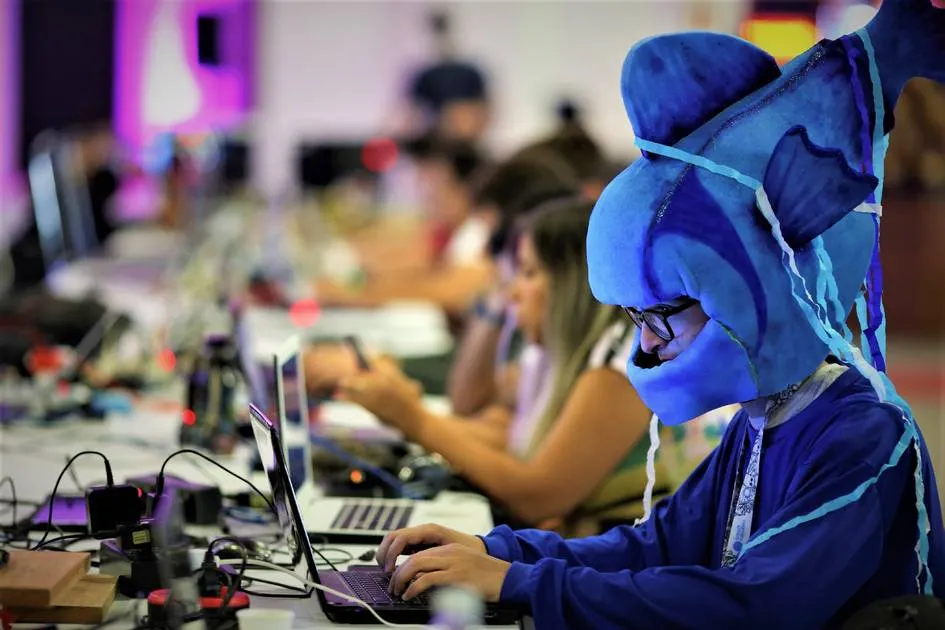
Video games and gaming (roughly speaking, its "culture") are in constant evolution and went from being considered a mere extension of the toy industry to becoming the pastime of 1.9 billion people worldwide. Today, gaming is an entertainment industry as well-established as film, television or music. It has a global market of around 150 billion dollars, thousands of new games per year, and professional player competitions that distribute millions in prizes. For non-gamers, this evolution can be chaotic and hard to follow. That's why, to better understand it, we need to divide it into three stages.
The first stage can be placed at the beginning of the 1990s, with the mass arrival of game consoles in households. During those years, Nintendo was the undisputed leader. At the time, it had its eponymous console (also called Famicom in Japan) until Sega, another Japanese company, managed to challenge its dominance. Back then, Sega hired Tom Kalinske as vice president, a toy industry expert who had worked for Mattel where he created the hugely successful "He-Man and the Masters of the Universe" toy line. Sega managed to capture close to 50% of the home console market share, thus challenging Nintendo's dominance. But over the years, Kalinske's leadership faded: many projects were left unfinished and the emergence of Sony with its Playstation as a competitor shattered Sega's hegemonic aspirations. At this stage, video games were still a hybrid between a toy and an electronics product, and their specific target audience was young boys.
Alongside this movement, the existence of Windows propelled the use of the personal computer (PC) as a gaming machine, giving rise to some of the most legendary franchises in video game history: Civilization, Doom, Monkey Island, Warcraft, Age of Empires, Quake, Half Life, Sim City, and millions of other titles. Up to that point, journalists and intellectuals viewed video games as mere entertainment, and the more conservative ones saw them as a danger to children in terms of the possibility that they might become violent and antisocial. They believed that constant exposure to fictional situations of war, death and destruction could be harmful. The Columbine High School massacre was the epitome of this narrative and consolidated the common-sense notion that "video games = violence."
The second stage of video games is linked to the development of gaming as a culture thanks to the arrival of the internet, which made it possible to create online communities. The emergence of games like Diablo II, Lineage, Ragnarok, and WoW that were played online -- and whose purpose was "grinding" (slang for the action of leveling up and obtaining items) -- gave rise to a new form of interaction, driven by the desire to share knowledge, find other players, and master different playstyles. That's when forums and online communities were born. To better understand them, we can divide them into three levels: micro, meso, and macro, as some scholars have proposed.
Communities at the micro level were created around specific games: WoW, Starcraft, Counter Strike, FIFA, Smash Brothers. These identities overlapped with another more meso type of identification, depending on whether users played on consoles or PC, were advanced (pro) or amateur, fans of Nintendo or Playstation, or retrogamers (players of classic games). These two levels, in turn, overlapped with a macro level, where belonging was directly associated with regions or countries. The Korean Starcraft scene (which had its first competitive league in 1997) is not the same as the European Counter Strike Global Offensive scene, or the Latin American Lineage, Ragnarok or RuneScape scene. More recently, it's not surprising that one of Argentina's main games is FIFA with its own league organized by the Argentine Football Association (AFA) with participation from each club, due to the cultural weight of football in the country. In this second stage, trolling appears as a distinctive feature. This involved the creation of a unique language and a way of communicating based on aggressing others, thanks to the impunity of not having to deal with people's reactions in person. Thus, gamers began populating forums and imageboards like Reddit and 4chan and establishing their own forms of relationships. A unique language based on aggression took shape, ultimately configuring the mainstream of "gamer culture." We can place this golden age of online culture between 2000 and 2010.
The third and final stage is that of public recognition or the definitive leap into the cultural mainstream. As we've already noted, the companies that produce video games today are as large as or larger than film studios, esports (electronic sports) competitions are broadcast on networks like FOX and ESPN alongside traditional sports, and video game streaming companies like Twitch have been absorbed by giants like Amazon. Furthermore, pro-gamers are beginning to be active in the NBA, the Premier League (the British football championship) and Spain's La Liga. Moreover, with nearly fifty years of history (Pong dates from 1972), video games have captured the attention of various academic disciplines that have begun treating them with the same cultural value as other arts. Such is the case of the journal Game Studies, which is dedicated to theoretical research on games in general and video games in particular. The journal works from the recovery of a foundational book, Homo Ludens by Johan Huizinga. The maturation of the video game industry is the evolutionary consequence of a transition that took place since the 1990s. An activity strictly linked to leisure gradually became work.
This blurred boundary between leisure and work also plays a significant role, not only for the audience but for the video game industry's own workers. Crunch, a term used in the industry for unpaid overtime, is a very common practice in video game companies. The excuse most companies use to justify this abusive treatment is that video game workers should feel "lucky" for "doing what you love" or "working at a creative company." In response to this systematic exploitation, initiatives like Game Workers United emerged, an organization whose goal is for video game workers to form guilds and unions to prevent exploitation by employers.
Another case where these two notions collided was the episode involving Ng Wai Chung, a pro-player of Hearthstone (a collectible card game by Blizzard) who in 2019 was removed from the league and stripped of his corresponding prizes after making a statement in support of the Hong Kong protests, which made the company uncomfortable given its enormous player base in China. As long as politics is a problem for business, it will stay outside the industry.
However, although the industry does not look favorably upon the politicization of its platforms, politics has begun to look favorably upon gamer communication platforms. Such is the case of socialist Alexandria Ocasio-Cortez, the youngest congresswoman elected to the United States House of Representatives, who during her campaign used platforms like Twitch and 4chan to bring her message to a "young" audience. Or even Steve Bannon himself, who was Donald Trump's campaign chief in 2016, who used tactics to create online "conversations" drawn directly from 4chan and other platforms, with a strong inclination toward gamer culture. There are even journalists who point to a possible connection between Bannon and Gamergate, a case that involved the entire video game community in the United States. Gamergate was a case involving instances of misogyny and sexism, as well as debates about the relationship between the video game industry and journalism, in which there were all kinds of conspiracy theories and cross-accusations among developers, players, and journalists. Those who point to this connection insist that what appeared to emerge "spontaneously" during Gamergate was later used in Trump's campaign to generate conversations around different topics and try to provoke emotional responses to various issues.
One thing, however, is clear: online gamer culture shaped (or anticipated) the type of interactions that are common on social media today. There may be a debate about whether gamers shaped all types of interaction or whether they were the first to "discover" this kind of behavior. Beyond that, in a world where an overwhelming percentage of the global population participates in this type of digital culture, the importance of understanding its codes and dynamics becomes vital when it comes to expanding the reach of a certain message or, as they say in digital communications consulting circles, "creating conversations."
This article was originally published in Nueva Sociedad (March 2020). It is reproduced here with the author's permission.
Las notas de 421 no tienen paywall
Y a cada colaborador se le paga por su trabajo. Las dos cosas dependen de los suscriptores.