Is China Already Leading the Gaming Industry? The Success of Neverness to Everness
The “GTA of anime”? Neverness to Everness grossed $15 million on its first day, proving that the Chinese industry no longer just “copies” but leads the live-service model. From IP lawsuits to global dominance in gacha.

The free game Neverness to Everness (NTE) was launched on consoles, PC, and mobile devices, generating about 15 million dollars in just 24 hours. China is now the cradle of the "new" Free-to-Play (F2P) games and is carving out a space in the most coveted area of the gaming industry. The reasons are both technical and historical, and require looking at how video games are marketed in the country with the largest population on the planet.
Back in September 2020, many countries were still under strict lockdowns when the relatively unknown MiHoYo (yes, Your Hoyo) released version 1.0 of Genshin Impact. The game immediately caught attention with its anime aesthetic, exploration gameplay reminiscent of Zelda, and an elemental attack system akin to Pokémon. Initially, many frowned upon it, thinking, “what is this generic trash,” and both players and English-speaking media speculated that Nintendo would imminently sue the Chinese for creating a blatant copy of the ultra-popular Breath of the Wild. However, they noticed it was free, which led them to download the game and embark on their journey through the land of Teyvat.
China is now the cradle of the "new" Free-to-Play (F2P) games and is making a mark in the most coveted area of the gaming industry. The reasons are both technical and historical.
There, they realized something. Mechanics aside, this didn’t have much to do with Zelda. Sure, you explore, enter temples, have a stamina bar, and can glide with little wings, but Genshin has a masterful twist: you can apply several of these elements to an enemy to trigger reactions. Remember that Pokémon episode where Pikachu beats Onyx, who is immune to electricity, by first soaking him and then zapping him? Well, it’s that, but made into a game.
Covered in a familiar layer and clearly inspired by other franchises, there was nevertheless a different code: unique characters, free entry, and hyper-casual and cute gameplay, with a push to obsessively farm for artifacts and perfect weapons as you reached higher levels. It was such a special proposition that six years after its launch, it remains relevant. And it set a precedent.
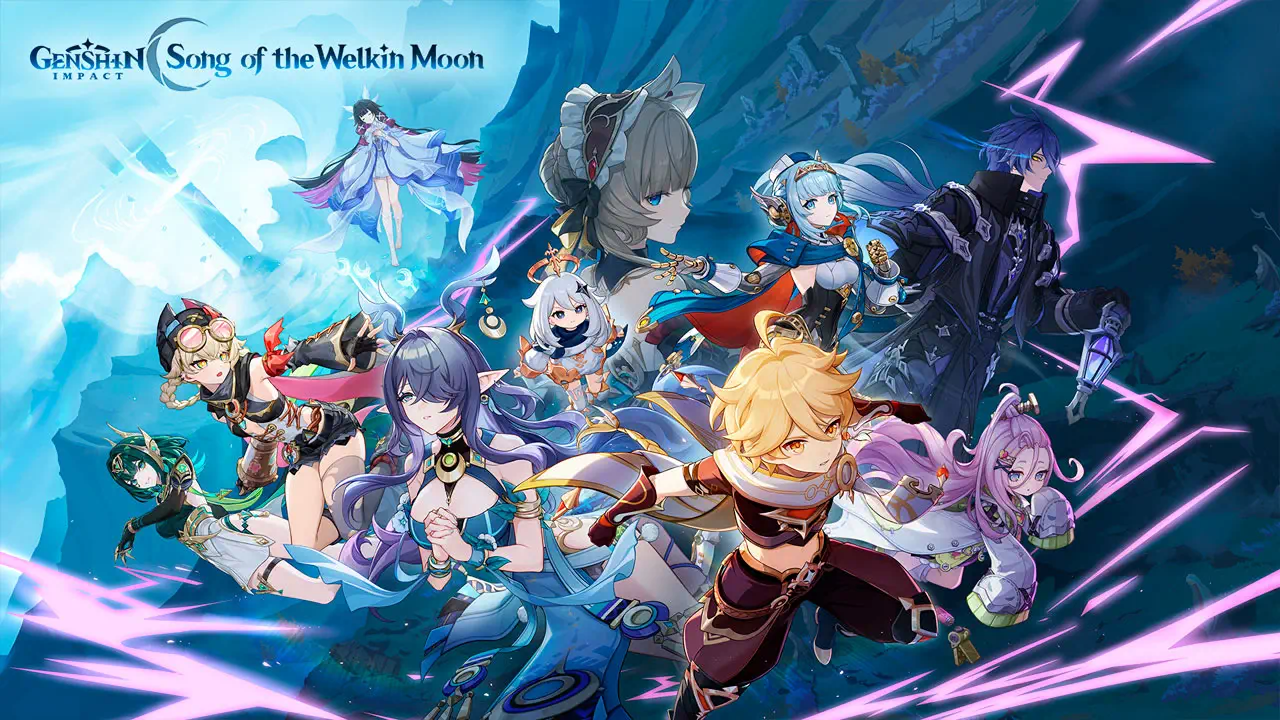
Over time, Genshin became so different from Zelda that nowadays the comparison seems solely intended to downplay the phenomenon. It now boasts over 225 million global downloads and has generated more than 9 billion dollars. The "clone," it turns out, is one of the most profitable games in history.
The cycle repeats, and something similar is happening today, pandemic aside, with Neverness to Everness, the "GTA of anime." NTE launched at the end of April 2026, and the comments followed the same line: a massive open world, vehicles, urban exploration, and a living world system that invites players to get lost in its streets. Once again, the numbers backed it up. The game from Hotta Studio and Perfect World Games generated millions of dollars on its first global day, with Japan and the United States leading in revenue, and PC and PlayStation 5 accounting for about 75% of the earnings.
Powerful, the "GTA of Temu"...
Despondent
Understanding why these games exist and why China seems to operate under a completely different market logic than the United States, Europe, and Japan requires looking at multiple variables. The first is historical. In 2002, there was a fire in a cyber café in Beijing where 25 people died. The story might sound familiar: the establishment had locked the door to avoid inspections, and people couldn’t use it to escape. They died from smoke inhalation.

Just like with Cromañón in Argentina, this fueled panic. Chinese parents turned against video games and demanded firm and swift policies to prevent something like that from happening again. The government responded with extreme measures that forever transformed the local industry: no more consoles. The production and sale of video game consoles were banned from the early 2000s until 2015.
Without Nintendo, without PlayStation, and without Xbox as legal options, an entire generation of Chinese gamers grew up without access to Zeldas, Call of Duty, FIFA, Assassin’s Creed, and God of War, and instead favored alternative platforms. One was the PC, unregulated and also easily disguised as a work tool. The other emerged a few years later: smartphones. When the smartphone arrived, millions of people who had never been able to access a console suddenly had a high-performance gaming device in their pocket, with a vast availability of free titles right from the start. Meanwhile, the PC grew and dominated, eventually surpassing mobile revenue in 2018.
This context changed the business model. Before 2004, online games in China charged for playtime like World of Warcraft or Final Fantasy XIV would. From 2005 onwards, almost all became Free-to-Play, like Fantasy Westward Journey. Chinese companies learned to give players something for free first and then monetize those who wanted to go further. It was a rational response for a market where the entry cost was impossible for most (there was practically no way to play the typical single-player game), and where gaming culture had to be built almost from scratch.
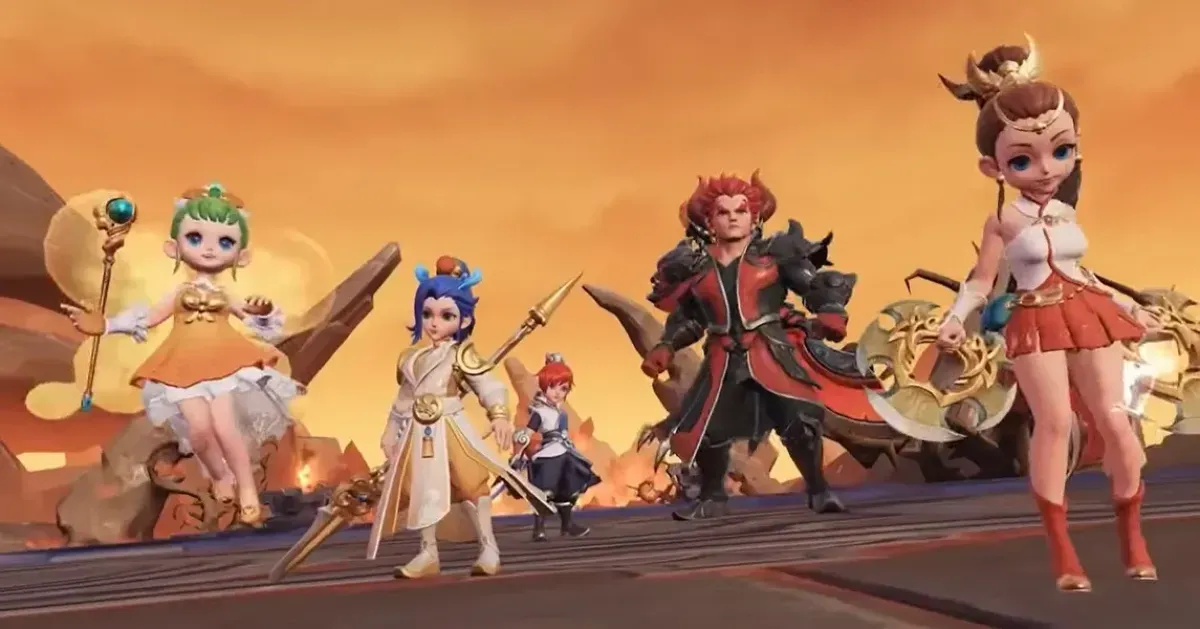
The typical "energy bar" of old mobile games was left behind, which prevented you from playing unless you paid to recharge it. The new format today is what we know as "gacha": the game gives you the bare minimum so you don’t miss out on any content and can play normally. Summoning stronger playable characters, upgrading weapons and gear requires a kind of slot machine inspired by the gachapon from Japan, the machines that dispense random prizes. Almost everything you do in the game earns you virtual coins for the gacha, but when you have bad luck and can’t afford your favorite item, that’s when you have to pay.
The "game as a service" model is now the most sought after by giants like PlayStation, Xbox, Epic Games, EA, Ubisoft, and anyone you can think of.
This is key to understanding how the current industry operates. The "game as a service" model is now the most sought after by giants like PlayStation, Xbox, Epic Games, EA, Ubisoft, and anyone you can think of. A traditional single-player game generates profit once, when someone buys it. A well-designed live service generates profit indefinitely: every new character, every season, every collaboration event is a new opportunity for the player to open their wallet.
Genshin Impact has been active for six years and continues to generate hundreds of millions of dollars annually. Fortnite has been around since 2017 and is still one of the most profitable games on the planet. Major Western studios know this and have spent over a decade trying to replicate that success with mixed results: Anthem, Avengers, Suicide Squad, Concord (all attempts to create the next big live service, which crashed to the ground with varying degrees of violence). China has extensive experience with this model: it built it from scratch because it was its only viable option.
The NPPA and the regulatory clampdown
Current Chinese law explains why games need to be "local" to survive. Everything is regulated by the NPPA (National Press and Publication Administration), a state body that has controlled all digital publication in the country since 2018. Without NPPA approval, a video game does not legally exist in the Chinese market, and this applies to both imported and local titles. What’s more: it is specifically slower and more restrictive for foreigners than for locals, and includes content review, cultural adaptation, and modifications that can take years (something critics say is a convenient excuse for censorship).
In practice: between 2020 and 2023, China approved fewer than 100 imported games per year, while local studios received thousands of licenses in the same period. Mobile games control about 75% of the Chinese market in 2023. The console segment represents only 3.4%, including home consoles, browser games, and others. These numbers reflect decades of an ecosystem built in the absence of such alternatives.
For a Chinese company, the logic is clear: if you want to publish without intermediaries, without mandatory partners, and without the risk of your game getting stuck in endless review, you develop it yourself. It's the only way to ensure you pass those content filters from day one.
Much cheaper
China today is the cradle of F2P hits. Some of the most notable games, besides the aforementioned Genshin, include Honkai Star Rail, Love and Deepspace (which those in the know call the ultimate romantic title), Wuthering Waves, and more. The beauty of these games is that they all target different niches and audiences, and they really don't compete with each other. There are turn-based sci-fi games, romance games, fantasy action games, fashion games aimed at men/women as primary audiences, and many more variations.
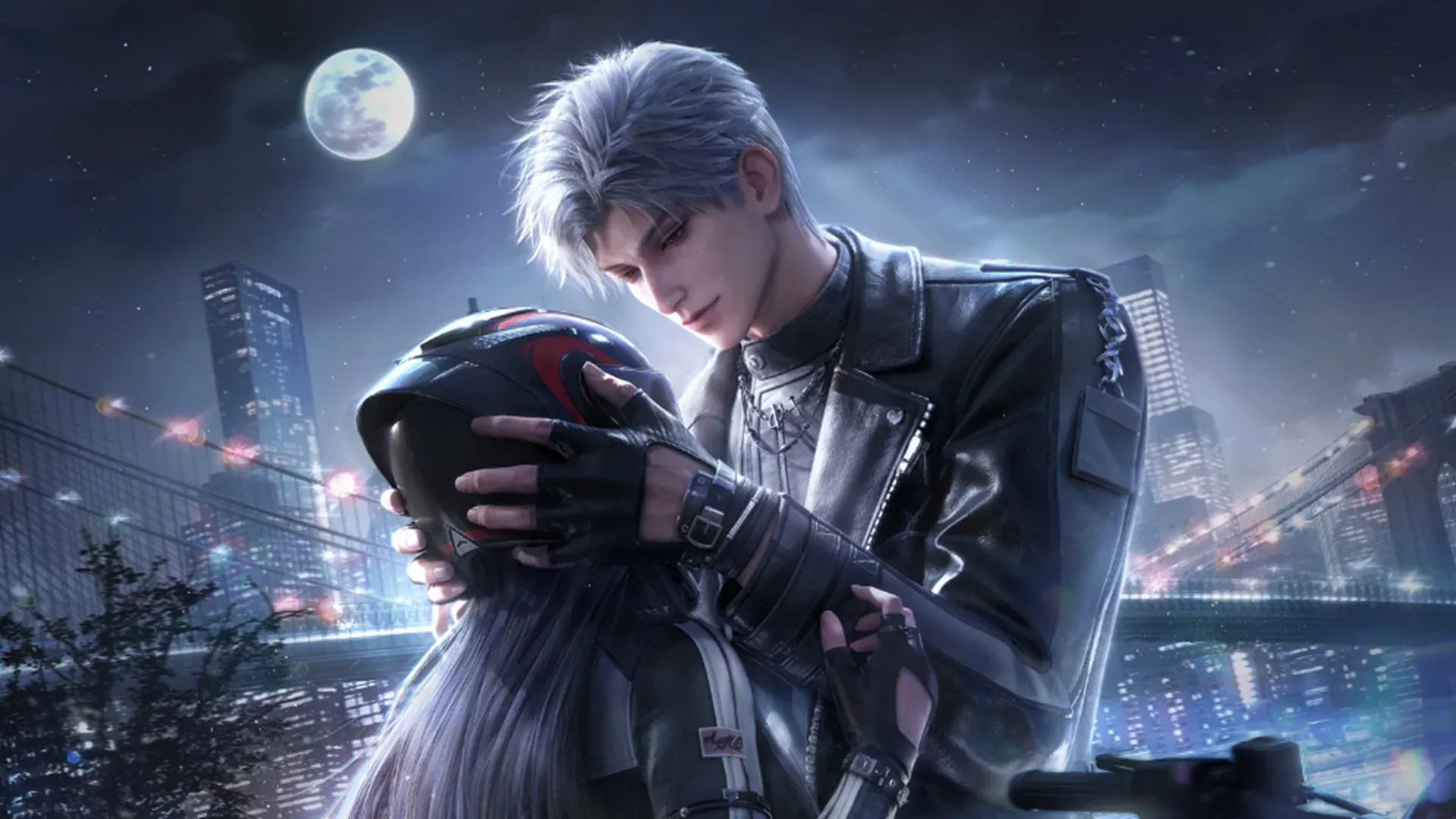
Thinking specifically about Neverness: is it an anime GTA? Yes and no. It's an urban open-world game with exploration mechanics that clearly draws inspiration from Rockstar's work, just as Genshin owes something to Nintendo. But calling it the "GTA of Temu" is an oversimplification. That's an incomplete understanding of how video game development works in China and anywhere else in the world. Doom invented the FPS, and then a thousand followed. Dark Souls defined an entire subgenre, and today there are soulslikes of all kinds. Mutual inspiration is the engine of the industry, not its corruption.
Despite the criticism and the laxity regarding copyright and patents that China is often accused of, the law functions the same way in any jurisdiction around the world. What is protected is the expression: characters, music, code, art. The formats themselves have no owner. No one can patent "open world with stamina bar," just as no one patented "first-person shooter" or "turn-based combat". That's why Nintendo never sued Hoyoverse, and why it makes no sense for Rockstar to do so now with NTE: they belong to the same genre, but they are undeniably different games.
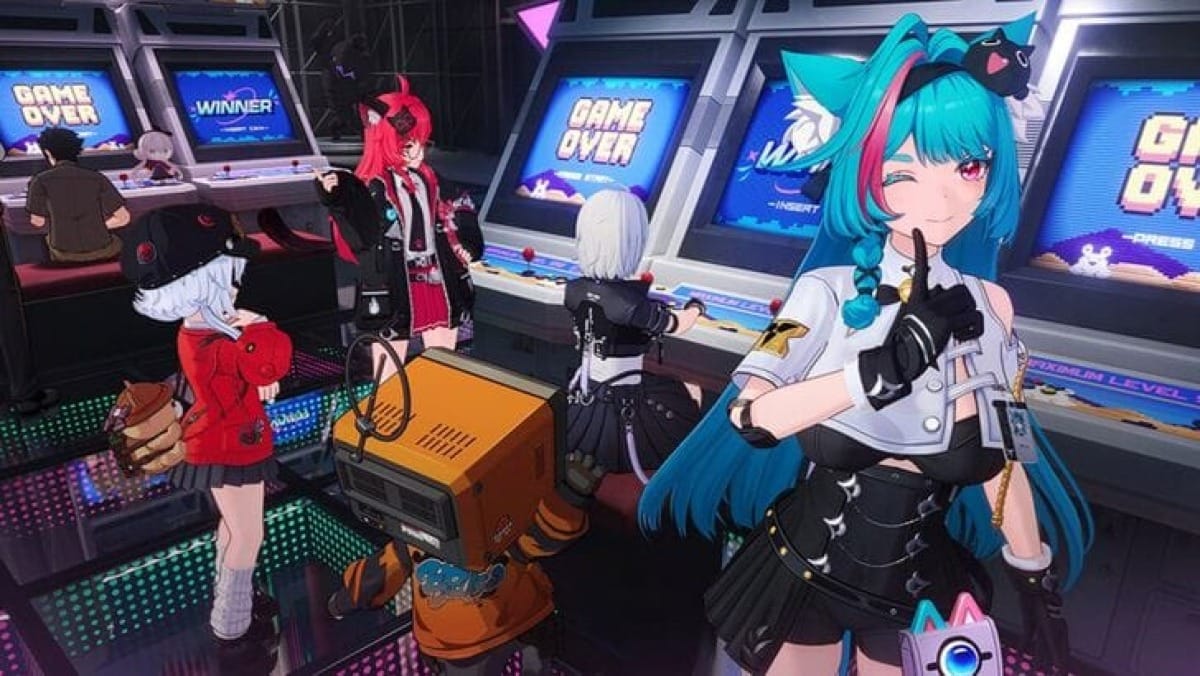
NTE features stories about ghosts and entities, combat where the key is to swap heroes with different roles, and a story progression that requires you to play over several days instead of bingeing it in one sitting. With a narrative that expands through patches and more, this is more of a live service design intended for the long haul (something Rockstar never prioritized in GTA, but at most as an addition in GTA Online), and it's exactly the model that China has perfected over the last ten years.
The narrative surrounding Chinese video games is that they are "clones" of better ones. But this is becoming less and less substantiated. In 2024, Black Myth: Wukong reached the second-highest number of concurrent players in Steam history, with 2.1 million, and before the end of that same year, Marvel Rivals, Delta Force, and Infinity Nikki also launched on PC and console with international success. These are not clones of anything: they are Chinese games with their own identity, with extremely high production values, competing on equal footing with the best Western titles where the only limit for the player is their preference.
NTE arrives in this context. Japan and the United States lead global game revenue on its first day, which means that the market that historically looked down on the Chinese industry is now putting money into its games, and this is only possible if the game is good.
Japanese players have historically spent the most on F2P games, not in absolute terms, but per capita, even surpassing China in individual spending. This explains the anime aesthetic: it's the visual language that this audience knows by heart and prefers. MiHoYo understood this before anyone else with Genshin, and NTE confirms it. The "Chinese art that looks Japanese" is actually a product designed to cater to the market that pays the most per character.
They are not clones of anything: Chinese games have their own identity, extremely high production values, and compete on equal footing with the best Western titles.
In this framework, the prejudice against these games ("GTA of Temu," the "Chinese clone," “waifu game”) has an element of sinophobia that is not always conscious. A European game inspired by Dark Souls like Lords of the Fallen is seen as "a tribute." Even titles from Korea like Lies of P or Stellar Blade (compared to those from China) are viewed as more palatable, more “worthy.”
The irony is that the dynamics of cultural import and export here work exactly the opposite of what the prejudice assumes. China exports a business model that Western companies stumble over, hesitate, and trip over, and the West consumes it massively. If Japan and the United States, the two giants that create the most award-winning games, now lead the revenue of several high-profile gacha games, it means that the market itself says the narrative of the "clone" is outdated.
Las notas de 421 no tienen paywall
Y a cada colaborador se le paga por su trabajo. Las dos cosas dependen de los suscriptores.