Argentine Video Games: A Collection of Pixel Art Demos You Have to Try
Are you curious about the local gaming scene? Local game development never stops, and today we’re bringing you a “McPixel combo”—three platformers and roguelikes available as demos that are taking the scene by storm. Get into the arcade spirit and discover your next favorite games right here.

More and more Argentine video games are coming in for us to review through our form, which is fantastic news: games are being made. The fat guys in our beautiful community are working hard and developing this wonderful art.
Now, for us, this creates a bit of a problem: there’s so much to write about, and not enough Sundays in the year (not to mention the time it usually takes to play a game well enough to review it properly). So today, I’m coming to you with a slightly different proposal: I chose a criterion and gathered a couple of games (mostly still in demo stage) from our forms to group them into one single combo. A happy little box.
Fantastic news: games are being made. The big guys in our beautiful community are working hard and developing this wonderful art.
And, to stay consistent with my choices in previous installments, this week's featured game is McPixel. Because there’s never enough love for the art of pixel and 2D.
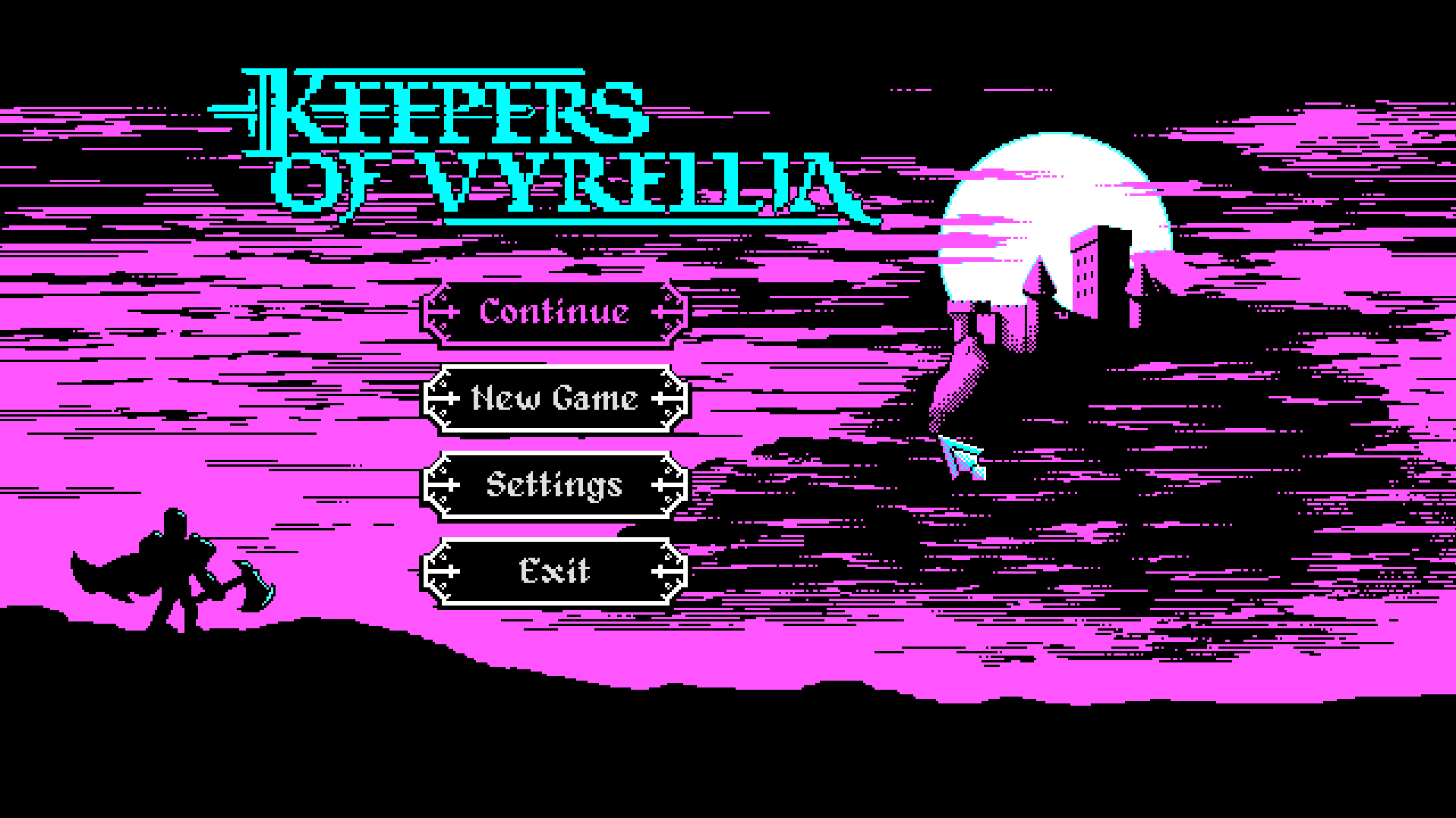
I’ll start with Keepers of Vyrellia, a roguelike deck-building game (like Slay the Spire), with its own twist on design and a striking bi-chromatic pixel aesthetic.
Developed by Ghost Pixel and using the fantastic open-source engine Godot, Keepers of Vyrellia creates a truly challenging and addictive experience. For those unfamiliar with the “roguelike deckbuilder” genre, it involves progressing through scenario after scenario on a randomly generated map until you reach the final boss. How do you advance? You defeat enemies using the cards from your deck as abilities to damage them.
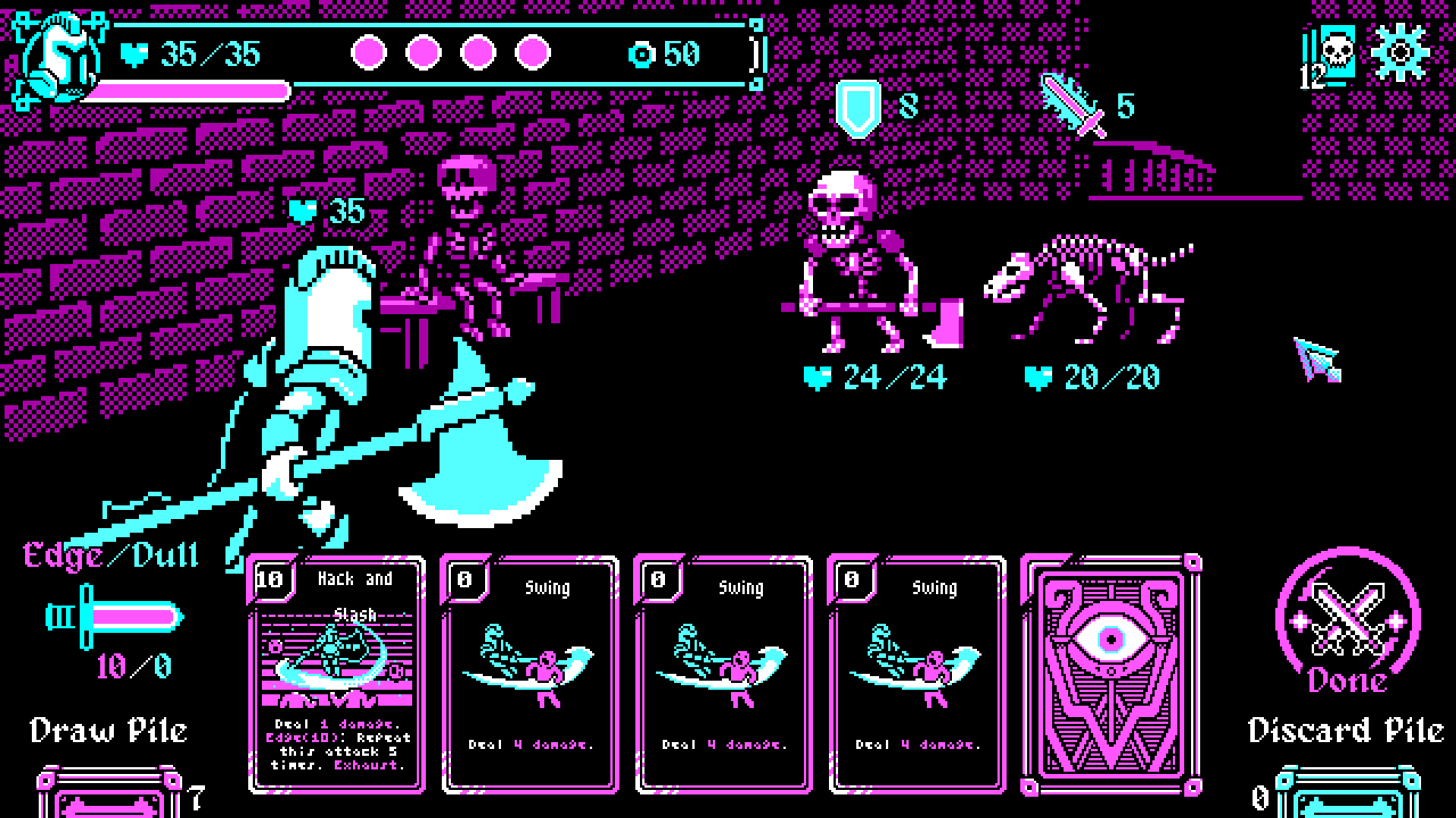
Here comes the unique mechanic: in Keepers, it matters a lot which cards you choose not to play, as they will be your defense during the enemies' turn. This way, resources serve both offensive and defensive purposes. A clever idea to expand the level of player decisions without having to add new elements or mechanics. A smart move that even traditional card games have been implementing lately.
Along with the addictive hook that this type of game generates, Keepers’ aesthetic adds a great finishing touch: in a bi-chromatic scale of purples and cyans, it recreates classic gaming enemy designs in a pixel-macabre way. A great experience to get your brain working on a lazy afternoon.
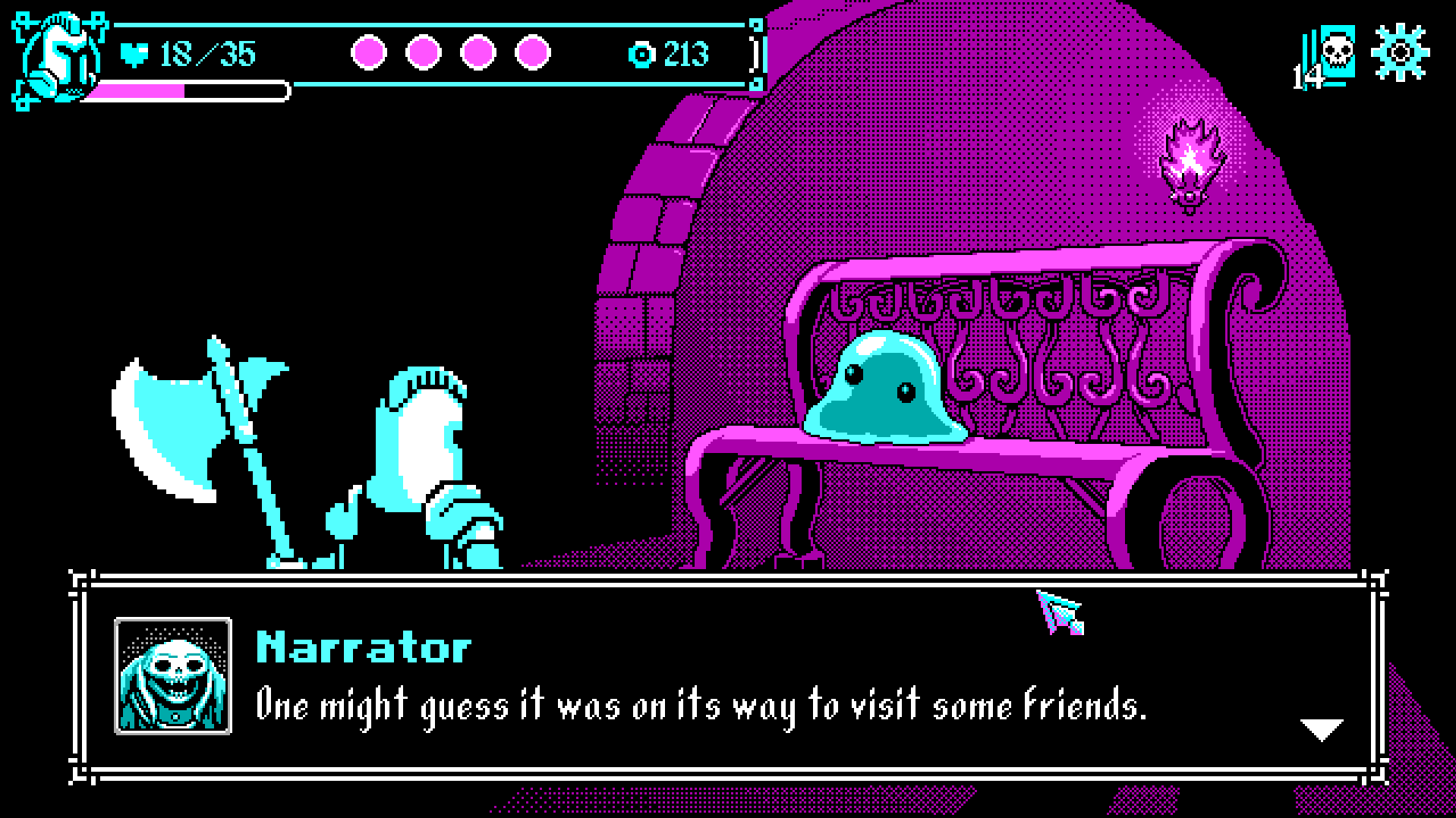
It’s still in demo, and you can try it for free from its main page.
Next on the list is Frog Knight, or my subtitle “The little frog that could.”
A charming platformer developed by Mechanical Maze, where we control a brave frog whose goal is to climb to the top of the dungeon it finds itself in. Luckily, it’s not alone: it has its trusty sword to help it against any adversity it faces.
In addition to the classic strategy of platformers, Frog Knight adds its unique twist: besides jumping and eventually being able to bounce off walls, the game incorporates the ability to use sword attacks to interact with the environment: for example, hitting spheres that allow us to bounce off them and reach greater heights.
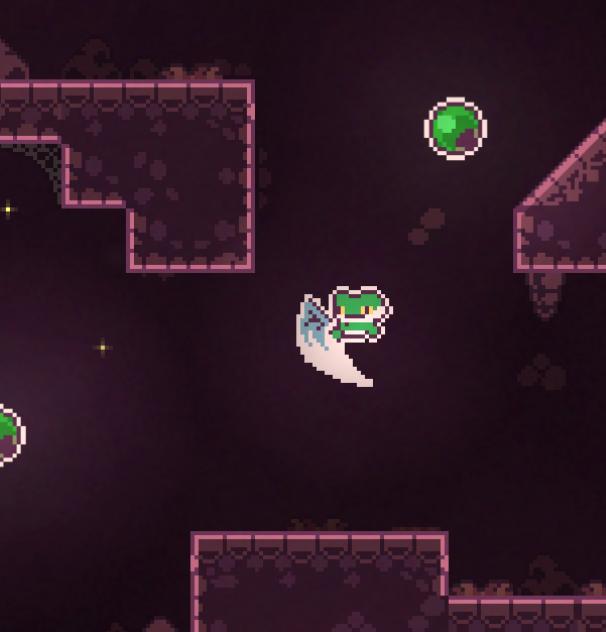
And, while it may seem superficial, there’s a little detail that will delight the old-school platformer fans: the bounce range varies with the timing of the sword strike. So, the chances of reaching a spot or hitting a ceiling depend on timing it just right. A small but powerful detail that adds uniqueness to a well-explored format.
Frog Knight blends stage design beautifully with pixel-art aesthetics: a color palette that complements, smooth and enjoyable motor speed, and a cozy feeling that makes this game a great option to try with kids and in family settings. Plus, a noteworthy detail: there’s a dedicated button to make the frog croak. Essential.
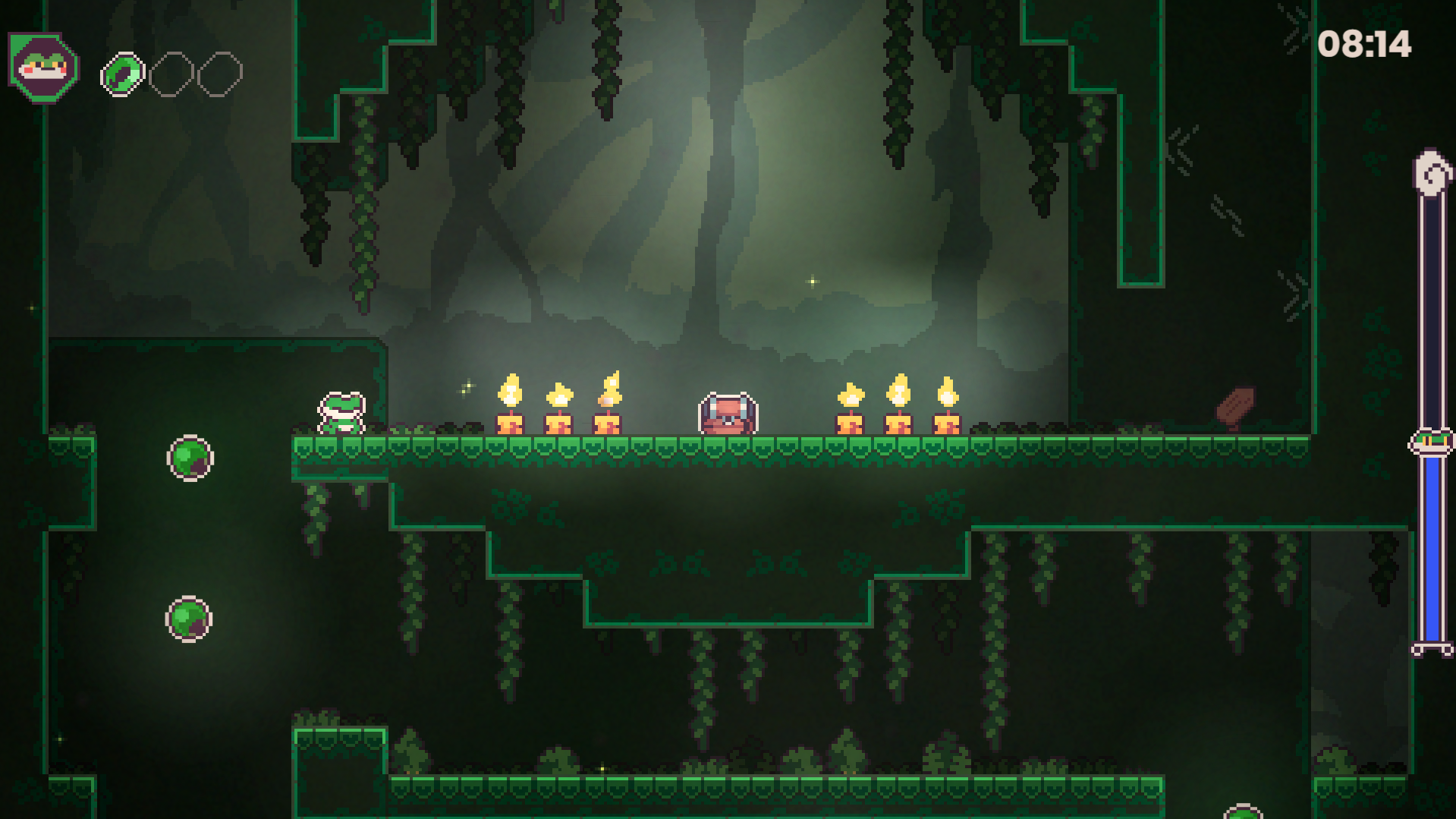
The demo of Frog Knight is available on Steam, download it from here.
In third and last place, I want to talk about Sawi, The VoidBuster.
Yes, another platformer. Also developed in Godot by the team of Neozetti, Maiine, and sp00ka7x. But this platformer has something that none of the other platformers reviewed here have: characters with dialogue and a story.
Why do I point this out as something relevant? Because the other side of the gaming world is, indeed, that of telling stories. The possibility of creating living characters within a system of rules and interface between player and game. Sawi has that: a character that talks, that lives in its world, that interacts with its other NPCs in a more traditional way.
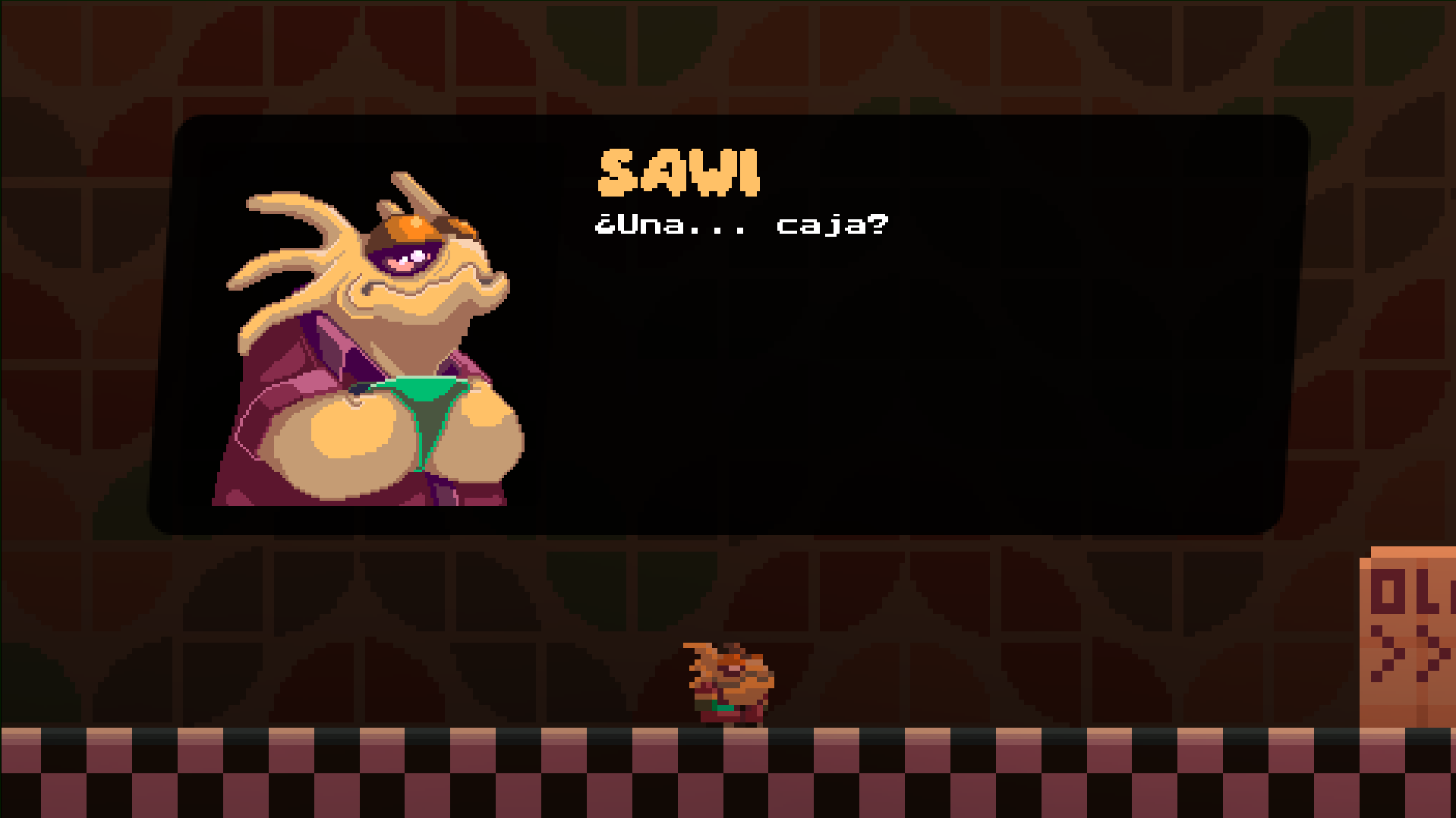
Sawi, a kind of alien (lizard-morph, if you ask me) from space, works as a VoidBuster: it captures spheres of void (“voids”) with the help of its newly designed robotic companion, ClavY. In the best Megaman and Rush or Mario and Yoshi style, Sawi and ClavY explore various platforming maps by joining forces and taking advantage of all possible abilities: bouncing off walls (unlimited, which gives the game a unique verticality compared to other platformers), using ClavY as a platform for an extra jump, or even using it as a gliding vehicle to traverse horizontally without crashing down like a piano. Meanwhile, throughout the journey across worlds and working for clients, Sawi begins to experience a personal crisis. The rest is a story for you to try out.
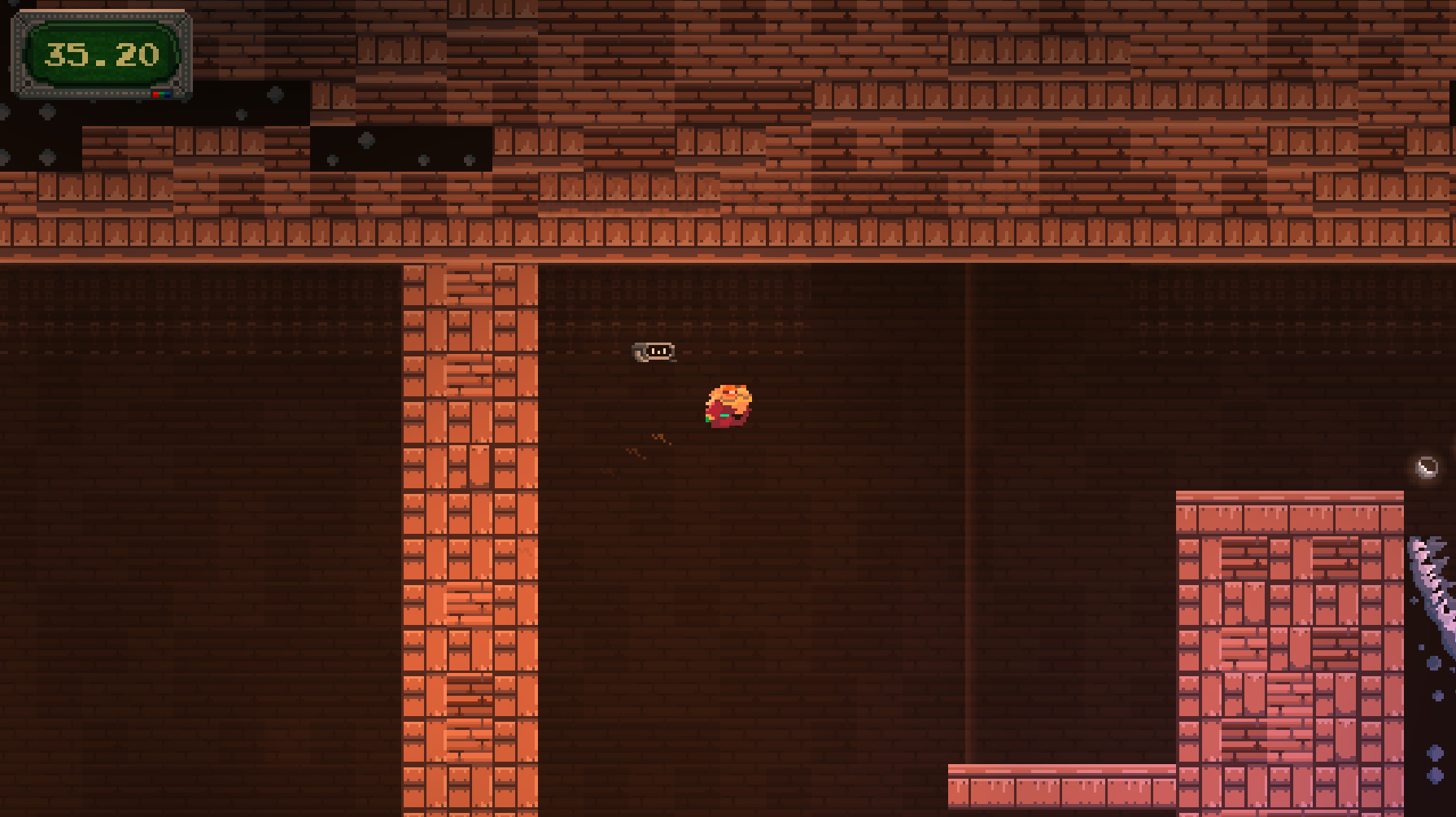
Sawi, The VoidBuster has a more cartoonish tone than the other games, similar to those experiences from Crash Bandicoot. Perhaps the one that comes closest to this without using dialogue is Go, Slimey, Go!, with its own review, but it stands out. Sawi integrates its story/lore into the mechanics and the why's and why-not's of its universe. The cohesive creation of an interactive world.
Three national titles that are still in development caught my attention and, besides winning my affection, deserve more attention and support from our community.
Its aesthetic, while pixel art, takes on a different tone as it's used in a more Sci-Fi setting rather than medieval. Thus, it forms the final piece of this trio of demos that share an art style but not an aesthetic sense. The music, leveraging chiptune sounds, completes this interactive tasting experience.
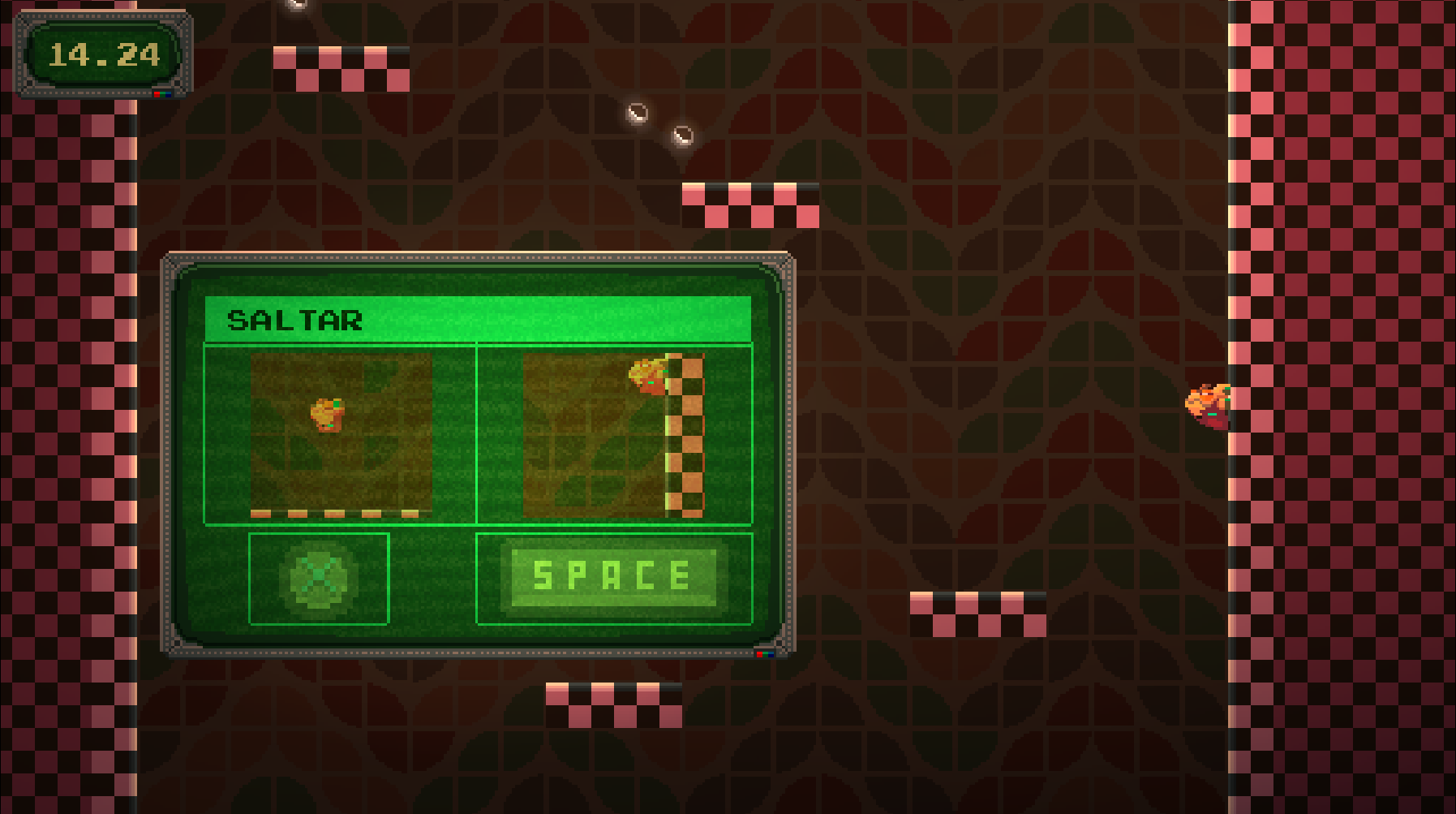
Sawi, The VoidBuster also has its demo available on Steam, here's the link.
Three demos, three pieces of our McPixel combo: food, side dish, and drink. Three national titles that are still in development caught my attention and, besides winning my affection, deserve more attention and support from our community. Don’t forget to try indie demos, and don’t hesitate to share your feedback and experiences with the creators. What we experience while playing is the most important big data for developers.
To wrap up, we remind you that if you have a video game project, a published demo, or a title already available, you can tell us about it in this form, so we can review it.
Las notas de 421 no tienen paywall
Y a cada colaborador se le paga por su trabajo. Las dos cosas dependen de los suscriptores.