WIGAR: The network connecting women and members of the LGBTQ+ community in Argentina’s video game industry. How this nonprofit organization is creating spaces, showcasing talent, and transforming the gaming landscape in our country.
Disclaimer: This note was written with COSMOS playing in the background, a forgotten Japanese band from the eighties, made up of three female keyboardists who created magic in just three albums.
Women play. They always have.
Perhaps in different ways, whether due to social, cultural, or even purely economic dynamics. They may have had to stop playing much earlier than the average men: once the game ceases to be a purely educational or recreational tool in educational spaces, it’s normal for women in our society to drift away from play to focus on other tasks. All of this, of course, stems from easily recognizable social roles and expectations. This article does not aim to analyze the sociological and historical reasons behind this; there are millions of people (especially women) far better equipped to do so.
Fortunately, this generalization has been declining more and more over the last few decades, initially propelled by the acceptance of video games as a legitimate form of leisure and artistic expression, directed by the professionalization of many more sports with female variants, and recently reinforced by the boom of board games as spaces for gathering and entertainment open to everyone.
Women play. They always have. Perhaps in different ways, whether due to social, cultural, or even purely economic dynamics.
In this particularly tumultuous June, and taking advantage of the work we've been doing at 421 covering national video games, it’s essential to have conversations with women in our industry, their spaces, and what they’ve built over the years. That’s the goal of this article.
And I couldn’t think of a better way to approach this topic than by having a conversation with some representatives from Women In Games Argentina, a federal non-profit civil association that brings together women and non-binary individuals within the gaming community across the country. As always, “everything will be done in community and organized, or it won’t be done” (apocryphal quote).
My interlocutors were Valeria “Vale Zumzum” Colombo, a video game designer and programmer, and educator with nearly 20 years of experience, and Ayelén “Ayu” García, an illustrator and educator with another solid 15 years of professional experience.
WIGAR was born in 2019 as a natural evolution of a WhatsApp group of women who met in line for the bathrooms at events like EVA (a true call to action for those who had been frequenting the scene) and said, “why not?” The following year, that same WhatsApp group was offering a panel at one of the largest video game events in Buenos Aires. Over time, they initiated event organization, educational, and job initiatives, while weaving an atypical support network and connections in other industries.
“Suddenly, we started getting calls to fill those spaces we needed to occupy,” Valeria tells me with a nostalgic smile. That’s when they decided to take a step further and turn WIGAR into a formal organization, with statutes and an established board of directors.
One of the initiatives of this great sisterhood is the organization and creation of spaces like Game Jams, express game development events that have served as the starting point for a large number of projects and recognized professionals in the field worldwide. One of the great entry points to becoming a developer of Lo Gordo. The next one is Mujeres de la Independencia Game Jam, from June 20 to July 7.
In addition to serving as a driving force for proposals and initiatives, WIGAR acts as a sort of pseudo-union: conducting surveys and salary and work quality assessments to provide insight to various women in gaming, from permanent programmers to testers or freelance illustrators. At this point, the sense of belonging and internal support becomes evident. “My current studio, Bicho Raro Games, was formed within WIGAR. Many people found their teams and were able to realize their projects thanks to the networking opportunities created,” Vale noted.
In addition to serving as a driving force for proposals and initiatives, WIGAR acts as a sort of pseudo-union: conducting surveys and salary and work quality assessments.
“Many hear about us because they are part of our educational proposals or the Jams we organize nationally; to be part of the community, all you have to do is fill out the form, and you automatically gain access to all the information and training channels we have,” Ayu added when asked how complicated it was to be part of the organization.
At this point in the conversation, my interest and enthusiasm for asking more questions were undeniable. First, because I love anything related to initiatives born from passion that turn enthusiasm into reality. Second, and more importantly, because I couldn’t understand how I had never heard of WIGAR all these years, which left me with a lingering question: What barrier still exists that prevents initiatives like this from penetrating certain circles? This whole movement sounds too good and relevant to have only learned about it through an Instagram message this year. Homework assignment.
“It happened that people had job situations where they didn’t know about WIGAR, they brought them to us, and we were able to assist, advise, and provide them with a support space,” they point out, highlighting the lovely Argentinian custom of turning everything into an organization so that no one is left behind.
To ground the conversation a bit, I asked both of them what they think is currently missing in the industry, whether nationally or globally. Vale was the first to respond: “Right now, when everything feels very pessimistic, we need narratives that shed a bit of light at the end of the tunnel; and narratives that have real characters: if a character is a woman, it should be written by a woman. The same goes for trans characters. Video games are a much stronger way to convey an idea or message compared to a book or a movie, as the player has agency over those decisions. We shouldn’t generate more violence than we already have, and of course, I’m not referring to a GTA or a shooting game.” Then, Ayu took over and said that we need to “continue fostering spaces for more real people to create games; the organic feel comes when there’s someone honest behind it. More personal stories should be told, like someone writing a story. It’s very important for a child here to play a game and feel represented because it takes place in their own country, with protagonists who understand them. It builds a different perspective of the future, much closer.”
To wrap things up, I asked each of them to recommend a game, regardless of whether it’s super well-known or a hidden indie gem: “Bury Me My Love” was Valeria’s choice, while “The Stanley Parable” was Ayu’s. Two choices I completely agree with.
This was part of my conversation with Women In Games Argentina, an initiative I didn’t know about and that I will likely refer to from now on. A new space that makes it clear, in a powerful way, that women play. They always have. Fortunately, now more than ever.
If you’re curious to know what else they do at WIGAR, I recommend exploring their YouTube channel, which has a ton of training sessions, panels, talks, and content about games.
Lastly, if you have your own video game project that you’d like us to try out and review, don’t hesitate to pitch it in our form.
✦ Suscribite
Las notas de 421 no tienen paywall
Y a cada colaborador se le paga por su trabajo. Las dos cosas dependen de los suscriptores.
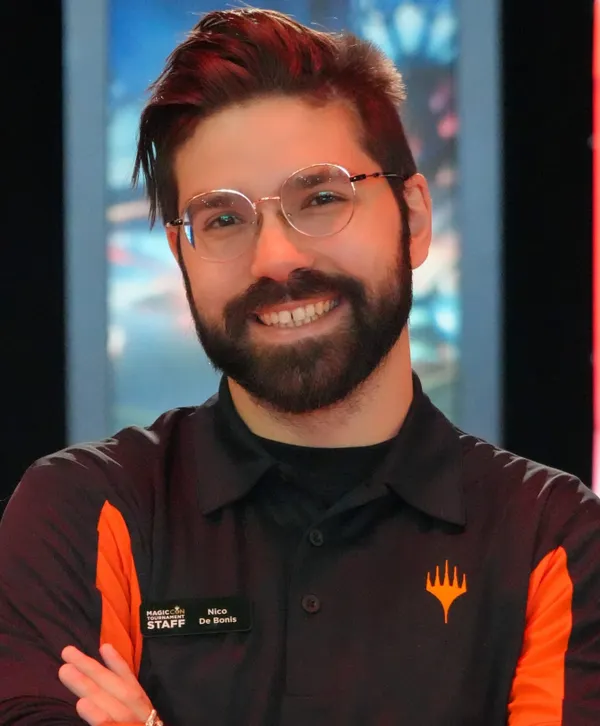
Project Manager en la industria de juegos de mesa, juez de Magic y organizador de convenciones. Conduce el programa de radio Acá Nadie Trabaja, su Final Fantasy favorito es el 7 y prefiere Digimon antes que Pokémon.