Argentine Video Games: Buenos Aires Mirror Line (When Taking a Bus Is Your Downfall)
To the danger of waiting for the bus in the early morning, Buenos Aires Mirror Line adds the terror of being trapped in an endless loop of bizarre journeys.

To the danger of waiting for the bus in the early morning, Buenos Aires Mirror Line adds the terror of being trapped in an endless loop of bizarre journeys.

Tell me how much time you spend traveling by public transport and I’ll tell you who you are. On average, students and workers living around Buenos Aires City, who use public transport as their main means of getting around, spend at least two hours a day just traveling. On weekdays from Monday to Friday, we’re talking about at least ten hours a week and forty hours a month. That’s like spending 20 days a year just existing on buses, subways, and trains.
Using these means of transport means many things, generates many effects, and we experience many things. From the typical rush hour, where we become an almost homogeneous mass, trying to occupy more space than is available while getting lost in our headphones and reading, to the early mornings with fewer passengers, sleepy gazes, curious hands, and reinforced pockets. Traveling every day under poor conditions creates discomfort, stress, and alters our thoughts about the future. Paradoxically, it also enables access to health, our means of survival, and the proliferation of ambitions and dreams. The distance between your home and your destination inevitably influences your existence.
Buenos Aires Mirror Line traps us in the dimly lit streets of a neighborhood from which we can only escape if we take the “right” buses and “learn to see.”
Of all the possible journeys, traveling by bus at night is one of the most evocative for me. There’s something about that desire to return that feels eternal, in the fatigue of a day spent and the risks that emerge at night inside and outside the vehicle. It’s this mystique that makes the video game Buenos Aires Mirror Line (2026) so fascinating to me.
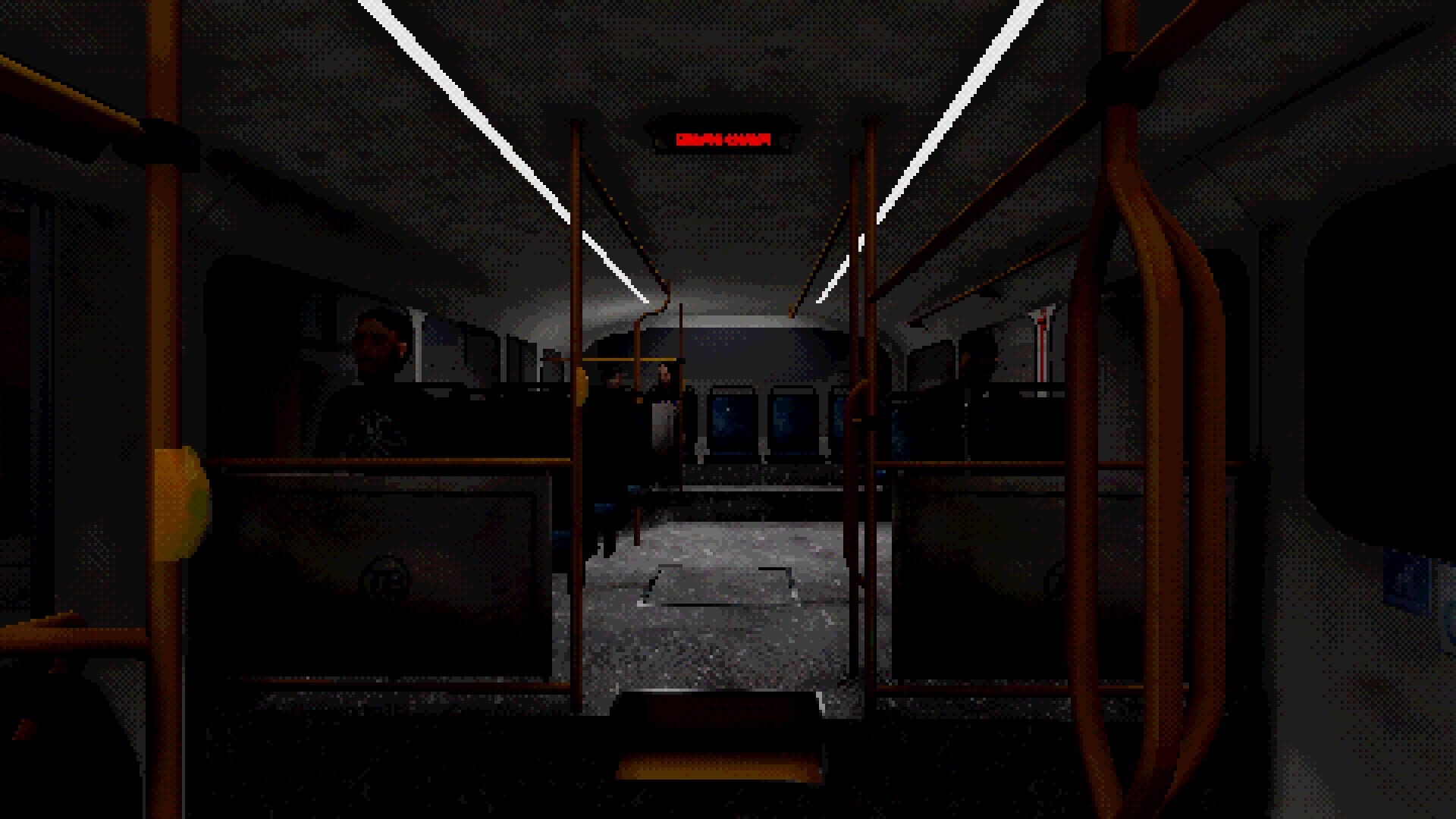
The protagonist wakes up at home with an ambiguous message, indicating a vague objective, and has to catch a bus in the early morning to reach their destination. We do this after a tragic exchange with a street kid, and strange things start happening: abnormal noises, visions of travelers screaming without making a sound, and the red that takes over our eyes. We end up at the same stop where we started, and a Lynchian character gives us some explanations about what’s going on. Buenos Aires Mirror Line traps us in the dimly lit streets of a neighborhood from which we can only escape if we take the “right” buses and “learn to see.”
The main mechanic of the game appeals to our observation: the bus, its driver, and its passengers are virtually always the same, but between trips, there may be a clear or subtle anomaly. For example, the passengers have changed seats, the music sounds different, or there are plastic chairs everywhere. If the trip was “normal,” we repeat the stop where we started, but if there was any “anomaly,” we have to cross the street and catch the bus from another stop. This continues until we reach X number of trips without making a mistake, or we’ll start over from scratch.
On a superficial level, Buenos Aires Mirror Line is a game of intuitions and “spot the difference.” We have to heighten our senses of sight and hearing to be more attentive to coarse or subtle details that reveal the illusion. There’s a time limit to do this, as the trips aren’t eternal, and in less than a minute, we’ll automatically arrive at our original stop. This adds just the right urgency to push us to hurry, become more discerning in our search for the unknown, and not rest on our laurels.
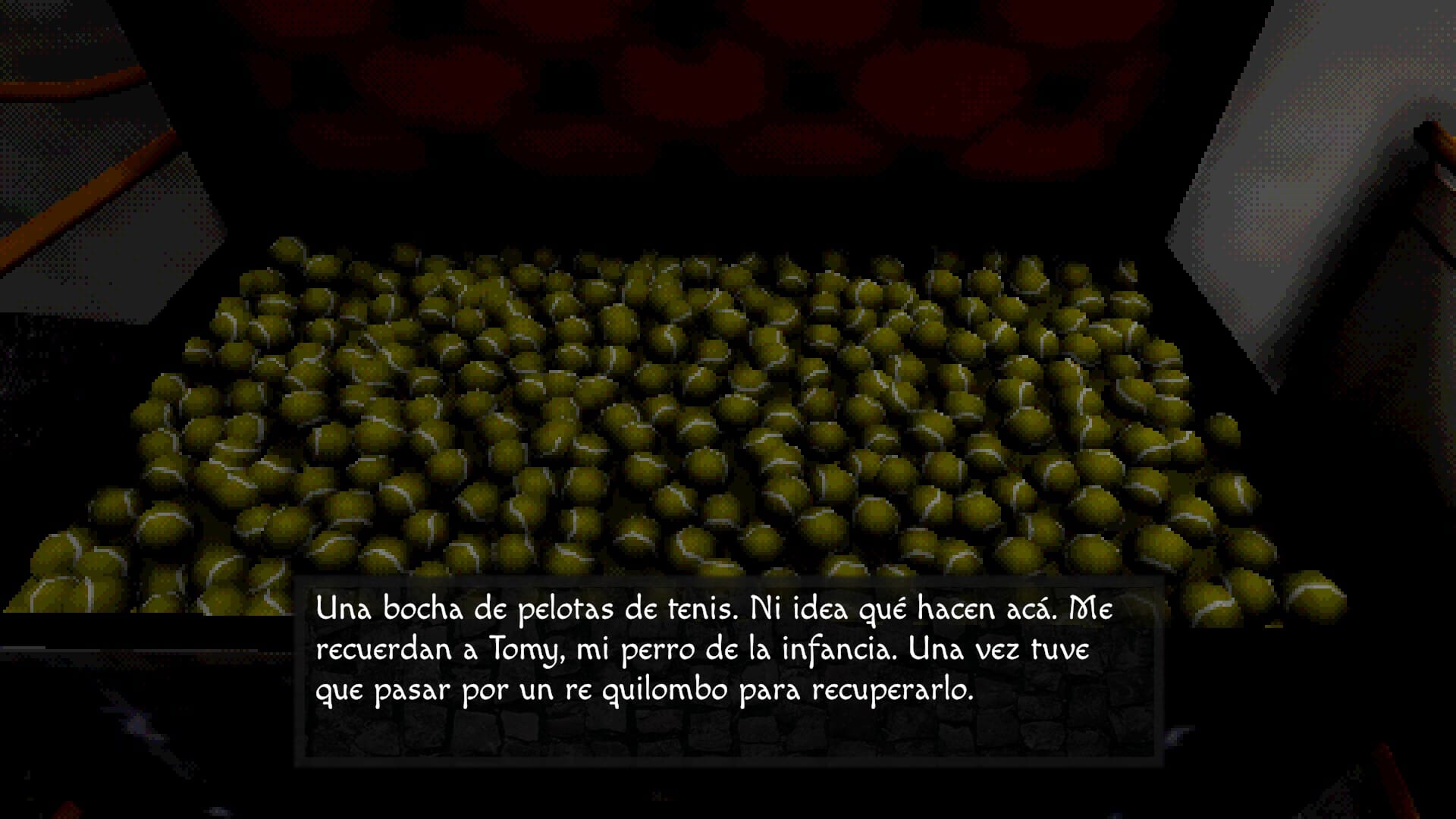
It’s appreciated that as soon as we detect a latent anomaly, we can request a stop and automatically return to the street, without “losing” more time. It’s also a good design decision that if we mess up, the driver will make a comment when we board next time, giving a more or less clear hint about what we didn’t pay enough attention to. While this might ruin some of the challenge for more demanding players, with over 30 anomalies in total that appear randomly, we have plenty of trips to experiment with and continue testing ourselves.
On another possible level of analysis, this is a work about how we perceive time and how repetitive (often unwanted) activities and actions harm our perceptions. Plus, well, the bus as a channel for nighttime terrors, of course.
This is a work about how we perceive time and how repetitive (often unwanted) activities and actions harm our perceptions.
What kind of passenger are you? When was the last time you stopped to look at each suffering face inside a bus? Are you one of those who just sinks into screens? Did you notice the color of the seats or how many there are on the line you take every day? If The VHS Paradise felt like a work about the social spaces we are losing and the lack of interaction, this title felt quite the opposite in several ways. It’s an inescapable social blender, even as we get lost in ourselves. It made me think of all the night trips I had when returning from university, often fighting against falling asleep (and failing), the need to stay alert around me, and the multitude of thoughts that crossed my mind outside the streets and the human beings that were there at that moment.
In Luka “Hizo Algo” Rizzi’s previous game, Mr. Meat, which I already recommended in our list of video games of 2025, explored a very specific slice of a protagonist going through a tough time. The supernatural reigned in a grotesque, bloody, and absurd way, with glimpses of a better past. In this new creation alongside Rafael Di Carlo, the absurd returns hand in hand with what is always there, watching you, and you don’t see it, but there are more shades and mysteries. It’s random and funny enough to create contrasts that made me disconnect a bit (yes, there’s a joke about mate and capybaras, etc.), and then it brought me back with a punch to the gut with an excellently executed disturbing scene.
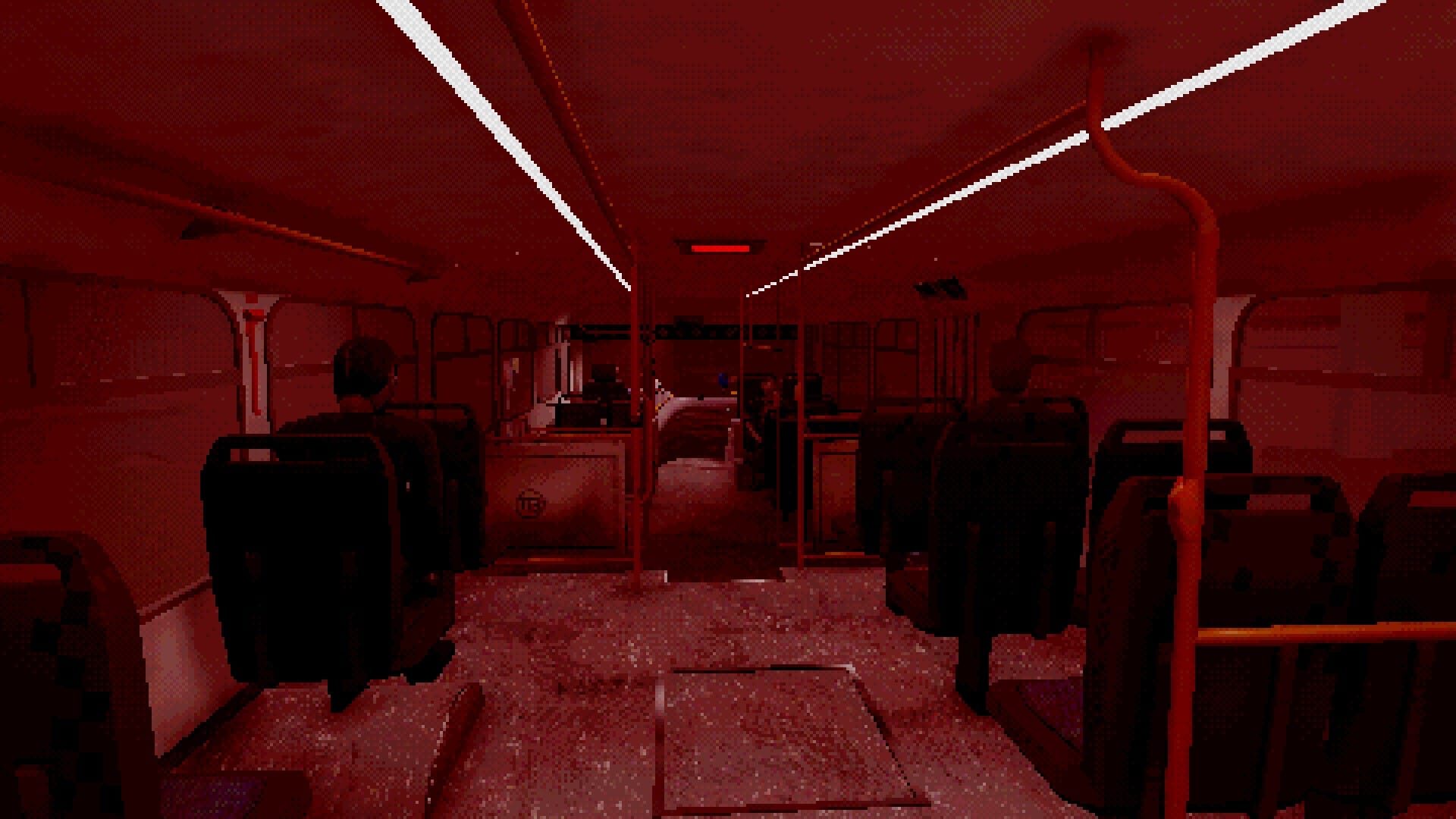
Perhaps the most disturbing aspect of Buenos Aires Mirror Line isn’t turning a vehicle from our daily lives into a prison where our time becomes more insignificant than usual, or creating new anxieties about those nighttime trips. But rather, in the end, we escape the terror of a loop to deal with a reality that is even worse. Without ruining surprises, there are multiple endings, and of the two I saw, none is better than getting trapped in what inevitably robs us of the valuable time of our lives every day.
You can find Buenos Aires Mirror Line on its Steam page and follow Luka Rizzi and Rafael Di Carlo on X.
If you have a video game made in Argentina and want us to write about it, go ahead and fill out this form.
Y a cada colaborador se le paga por su trabajo. Las dos cosas dependen de los suscriptores.