Working the night shift at a video store, stopping movie thefts, and listening to stories from eccentric customers... The VHS Paradise, a first-person video game that uses nostalgia to trap us in a loop that’s as fascinating as it is unsettling.
I can't deny that I miss the ritual of going to Blockbuster. Specifically, the one located at Avenida Mitre 6500, in Wilde, Buenos Aires. It was one of the outings I always had with my parents, or at least with one of them. I would wander around the store, looking at the covers of each movie that caught my eye, discovering titles I had never heard of, checking out the exclusive section of video games, and dreaming of a Nintendo 64 that I would never own, while listening to the recommendations the employees made to my dad.
axAbout fifteen years have passed since the video rental store died. I'm not saying there aren't any more locations, as legendary establishments like El Ciudadano and Noir, café and movies, are still standing in Buenos Aires. I also don't want to imply that everything was glamorous: the high prices depending on the film, the urgency to return movies (which was useful, as it forced you to stay organized), the oversaturation of new releases with few gems depending on the era, etc.
The VHS Paradise (2023) aims to recreate a scene from that historical experience: going to rent movies, albeit with a darker tone. This adds a touch of nostalgia, a reminder of what no longer exists… and also of the feeling that 'something is wrong.'
But a certain capital N changed how we watch, talk about, create, and even think about entertainment forever. The way we explore movies and other types of works is very different; the voices we can hear sound different, if they sound at all (we increasingly rely on fewer human intermediaries for any activity).
In this arbitrary contextual snapshot, The VHS Paradise (2023) seeks to recreate a scene from that historical experience: going to rent movies, albeit with a darker tone. This helps to give it its shades of nostalgia, of what no longer exists… and also of the feeling that 'something is wrong.'
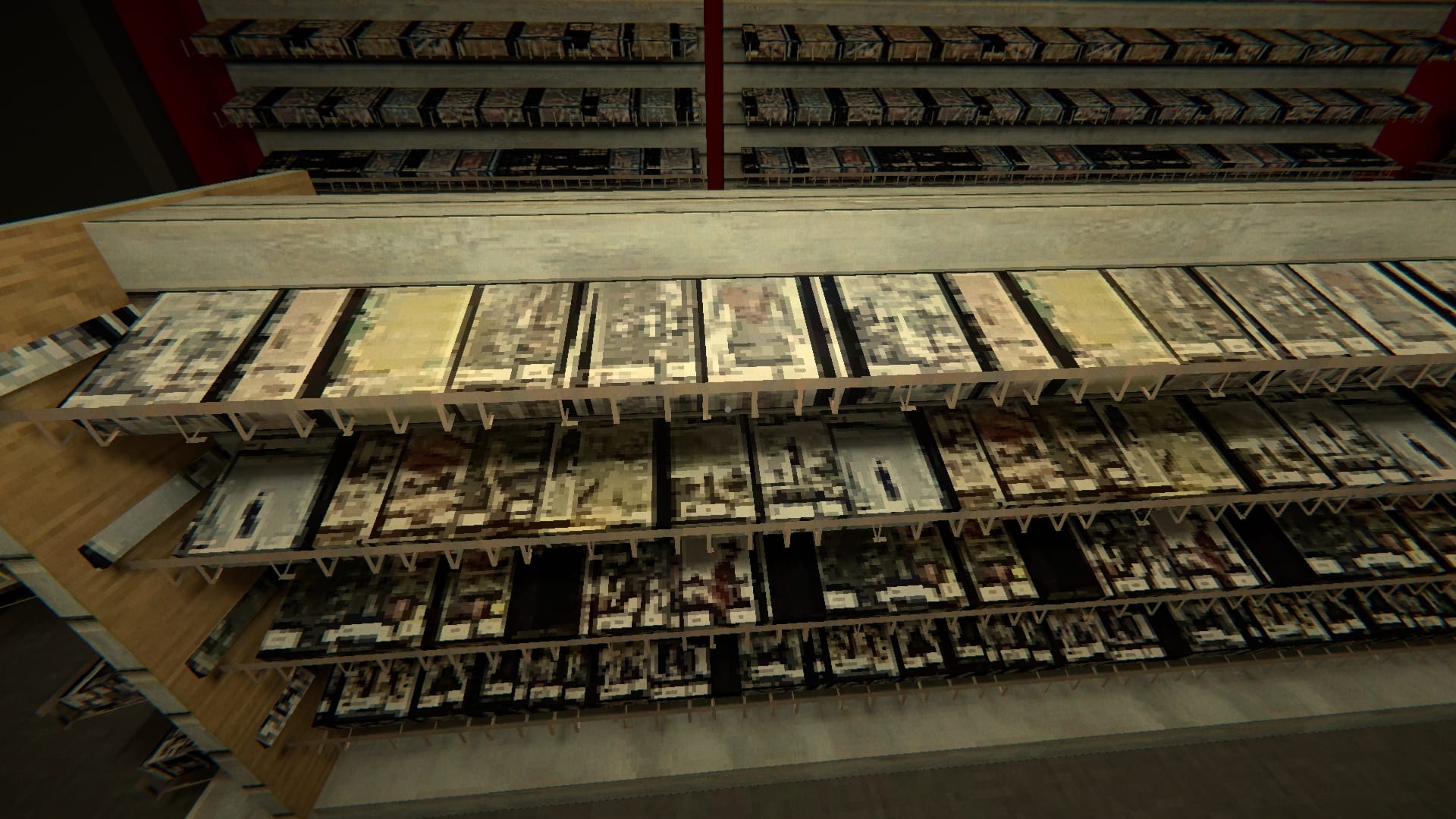
We work in the store named after the game and take our first steps, in first person, as we enter the shop at night. Behind the counter, we read a note asking us to start our shift by interacting with a PC, and that our boss left us a movie to watch after our shift. Thankfully, there's no clock forcing us to start immediately, so we can explore the store a bit, looking at all the unreadable VHS boxes with different details, the posters referencing other Argentine phenomena, previous games by the creator Federico Salinas, aka Fedev, and some more secrets. If we step outside the store, we'll see our car and the almost complete darkness, which creates a feeling of being isolated from civilization.
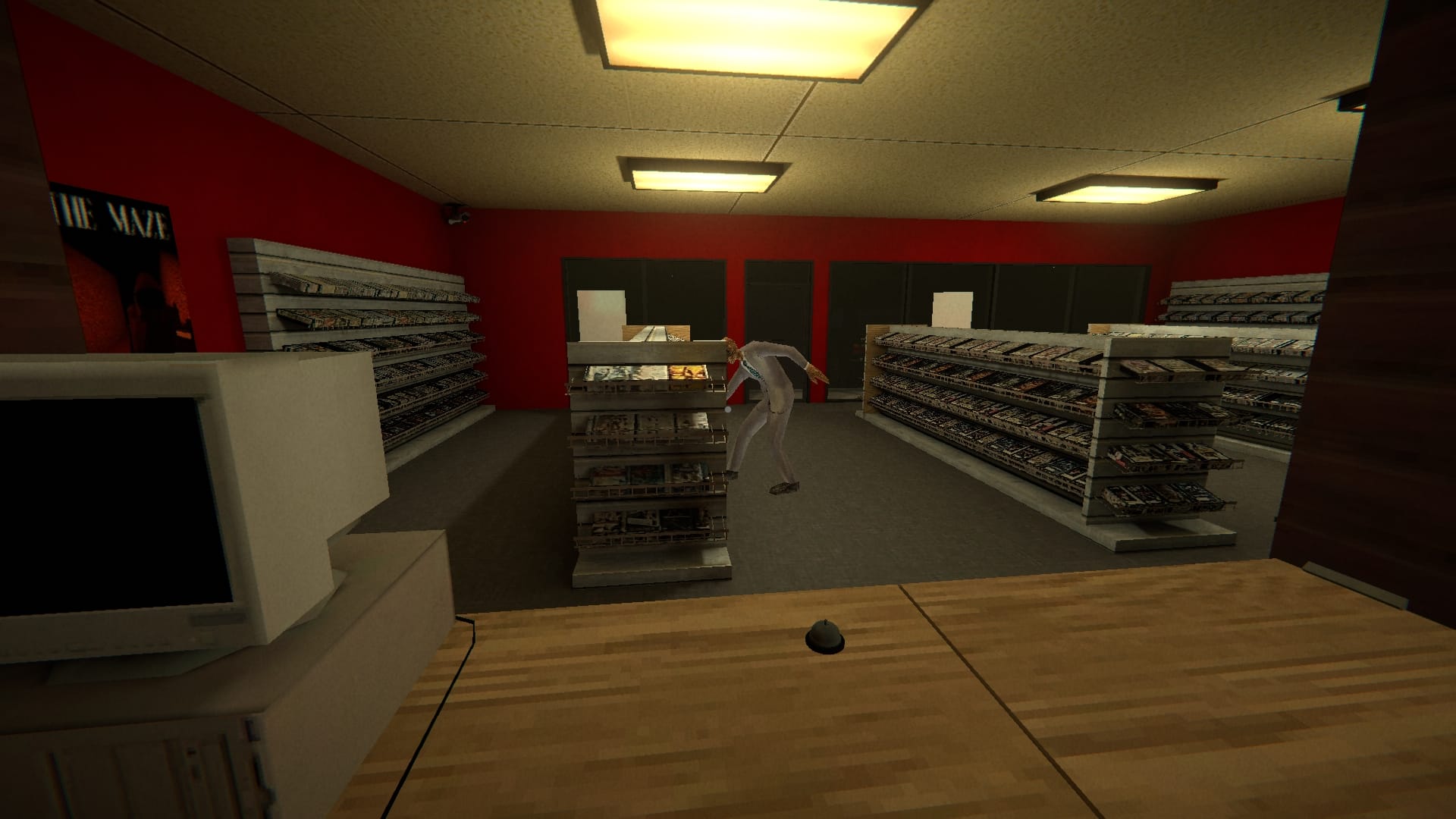
Once we start our work shift, the gameplay structure is simple: a customer will come in one at a time and check different areas of the store until they grab a movie. From there, two things can happen: they either approach the counter and engage us in conversation while paying for the movie, or they run out into the darkness.
I was surprised the first time I saw a woman steal a tape while I was at the counter, and although I ran for a few seconds, I couldn't catch her. The previous two customers had given me their money, as I expected, so this incident threw me off. From then on, my way of interacting with the space changed: I no longer just passively waited behind the counter, but stepped a little closer to the customer while observing them. Never getting too close (let's maintain a minimum level of respect). Although in some cases, I would position myself at the door, waiting for the crime. And when I caught the person, I had to listen to their reasons (sometimes noble, sometimes not so much) and decide whether to forgive them or call the police.
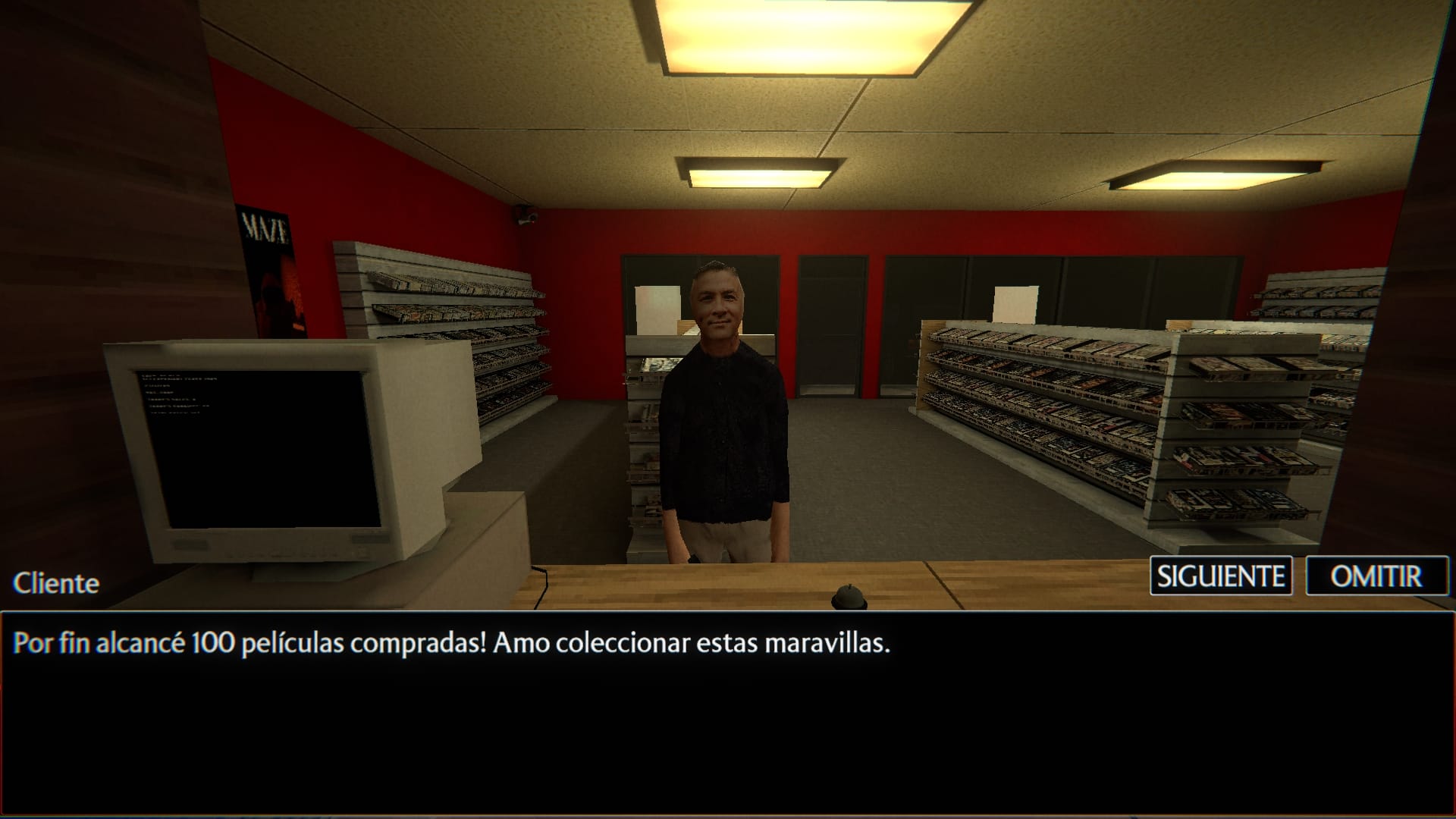
'After a bad day, there's nothing better than spending the night watching a good movie at home,' a customer tells us, who shows up in our store after being fired. 'So true,' I thought internally, without my character reacting. Another buyer talks to us about his collection of a hundred movies… the ones he hasn't seen and just keeps on a shelf. Sometimes we can choose a few lines of dialogue, but not much more. The fun lies in observing these virtual characters, appearing as if from several generations of consoles ago, and getting a little lost in their lives.
A buyer talks to us about his collection of a hundred movies… the ones he hasn't seen and just keeps on a shelf. The fun lies in observing these virtual characters and getting a little lost in their lives.
The VHS Paradise is, among other things, a work about those spaces we are losing. We increasingly need to interact with fewer people to work, study, and do the things that make us feel good. This brings its benefits, as not everyone is good at small talk or feels comfortable in any social context. But Fedev reinforces these human spaces with an empathetic perspective, lending an ear to what each customer has to say. Sometimes I felt a brief disconnect due to some issues in the forms (certain dialogues in Spanish use both question and exclamation marks, while others mimic English). Small oversights for some, surely, but they are noticeable.
It's not just the possibility of having to stop thefts that makes this game interesting, but this darkness, this insidious feeling, which I keep referencing over and over again, because it envelops the entire experience. I would love to talk about the ending I experienced, which I estimate will be the most common at first, because not only is it an extremely effective act that made me sweat at two in the morning in my lonely apartment. But it is also the culmination of that fabric of the scenario that finally begins to crack. For those who have followed Fedev since his previous games, let's just say I found ideas from The Maze (2022), but more refined.
Speaking of endings, The VHS Paradise has a few (the game itself indicates three, but I've found at least two more secrets). This invites replayability, to find solutions to certain problems in the future and to keep interacting with customers. Fortunately, Fedev added a repertoire of random customers that can vary with each playthrough. At the same time, each customer has a particular design, and their actions and dialogues are always predetermined. In other words, the one who tried to steal before will do it again and vice versa.
I can't quite decide if this was the best option, because once you identify each character, you already know what they will do and how to act in advance, which takes away freshness and impact. At the same time, it's a decision that reinforces the strange and unsettling feeling of this place and our role, like a sort of loop from which we cannot escape. It also helps each person feel like that: a person, with their particularities, forms, desires, and anxieties. Something easy to forget these days.
Psicólogo que no ejerce y se dedica a escribir sobre videojuegos. De manera más tímida, de cine y series también. Tengo palabras en Polygon, IGN, Eurogamer, Game Informer, Bloody Disgusting, Into the Spine y otros sitios.