Daniela D’Adamo: The Photographer Who Captured Racing’s Intimate Side Like No One Else
From climbing a 75-meter flagpole to photograph the world’s largest flag to taking exclusive photos of Diego Maradona, then the head coach of Racing. Ten years after his death, Daniela D’Adamo’s photo archive is being unveiled thanks to FUTCON.
First, a clarification: what is FUTCON? As its name suggests, it’s a big festival of soccer culture. We held it for the first time last November at the C.C. Konex, featuring conferences, a jersey fair, a showcase of art, all mixed together over two full days. I don’t want to go on too much about this, so I’ll just say to check out the Instagram and you’ll understand everything.
The thing is that under the umbrella of FUTCON and football culture, there are countless things to do, and one of those was a magazine we published in May of last year. A magazine on paper. Beautifully done. No online version. In other words: only the people who bought it read the articles.
But now that a year has passed and we've just edited the second issue, we thought it would be good to share some of the content from that first edition online for those who missed it. We chose the piece about Daniela D’Adamo because her story is truly incredible, and every time we share something about her, it creates a huge snowball effect of good things. You'll see.
So thank you 421 for letting us use the website for a bit for this. If you like what you read, you can go buy the new magazine here, and while you're at it, mark your calendars because a new edition of FUTCON is coming in November at Konex.
Now, the note.
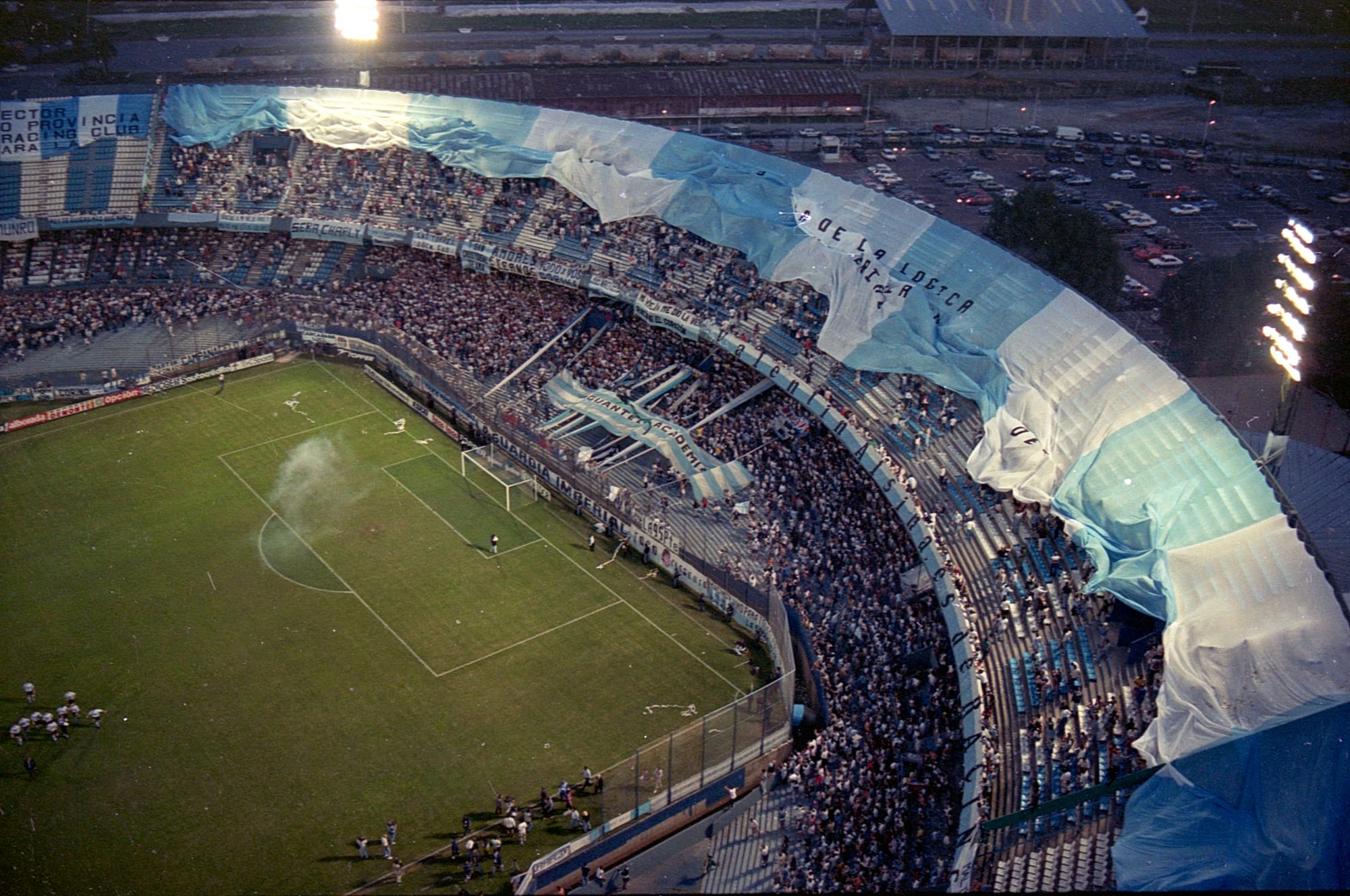
It’s the night of Wednesday, April 23, 1997, in Avellaneda, and while the proud Racing fans unfurl the famous “largest flag in the world” for the first time during a Copa Libertadores match against River, Daniela D’Adamo circles around the Estadio Presidente Perón (better known as “El Cilindro”) in search of the perfect spot to capture the historic moment. The truth is, she’s a bit worried. This is a significant personal mission. Luisito, the third of six siblings (Daniela is the oldest, followed by Marcela, Luisito, Gabriela, Silvia, and Ariel), a die-hard fan of the Academy like the rest of the family, is hospitalized at Muñiz Hospital with an unpromising diagnosis, and she can’t bear the thought of him dying without having seen such a flag. Someone has to take that photo. Tonight, however, Daniela fails. There’s no way to fit the 145 meters of fabric into the frame. She simply doesn’t have the distance.
“He calls me at home and says, ‘I’ve been to the other arch, to the upper stands, to the corner, everywhere: I don’t know what to do!’” recalls Ariel Sarmiento, his younger brother, nearly three decades later. “The following week he calls me again: ‘Ari, I’m going to climb the mast. The complete flag has to come out from there, no matter what.’”
"The mast," as any Racing fan knows well, is a 75-meter tall tower attached to the outside of the Cilindro, on Omar Oreste Corbatta passage, topped by a proper 15-meter mast, where a sky-blue and white flag flutters. Today, it is used to position television cameras. In 1997, however, it was practically abandoned, without lighting, filled with broken glass and both live and dead pigeons. "Look, I know all the nooks and crannies of the Cilindro," says Ariel, "but I've never climbed the mast." It goes without saying that access was forbidden.
But Daniela knew it was her last chance, so on Sunday, May 11, 1997, just before a match against San Lorenzo, barely two weeks after the first attempt to register that blessed banner in a time without cell phones or drones, she didn't hesitate. “We climbed up the spiral staircase one after the other, like in a lighthouse,” says Romi Dueñas, another passionate Racing fan who, back then, accompanied Daniela to matches, training sessions, and gatherings week after week. “The climb was awful; I remember we were singing to scare away the pigeons.”
A few minutes before the match kicked off, when the crowd started to lower that enormous banner, the accomplices were already at the top. “Up there, there was nothing, just an old easel,” Romi says. Daniela took a couple of shots and realized the angle still wasn’t the best. Far from giving up, she asked Romi to hold her legs tightly and leaned half her body out of the tower. She had one hand on the mast and the camera in the other. The wind was whipping her hair around. Literally in the air, she aimed down and fired off several shots as the flag unfurled. “That’s just how she was,” Romi says. “Once she got something in her head, she made it happen no matter what.”
The last photo in the sequence was indeed just as she had imagined it. The sky-blue and white flag, imposing, unfurled in all its glory. The work was done. “When she took it to Luisito at the hospital, he was already in very bad shape and I don’t know if he was aware,” Ariel says. “But Daniela delivered.” Everything that needed to be said was summed up in the center of that flag, the largest in the world.
Beyond logic
beyond reason
I give you my life
and my heart.
Daniela D’Adamo was born on July 4, 1964, and passed away from cancer on June 19, 2015. Her father was a wanted criminal who fled to Uruguay when she was still a baby (one of his robberies inspired Plata quemada, the novel by Ricardo Piglia that was later adapted into a film of the same name by Marcelo Piñeyro, starring Leonardo Sbaraglia and Pablo Echarri). After that incident, her mother partnered with Luis Sarmiento, a Racing fan who at that time hung out with the supporters, and that’s how Daniela practically grew up in the Cilindro. Racing was her life, or at least her life revolved almost entirely around Racing.
Perhaps that's why, when he became interested in photography in his early twenties, what intrigued him most to capture with his Kodak Star 235 (a very simple, compact analog camera with fixed focus and manual rewind) was the everyday life of the club.
Not only did she stroll through the stands of the stadium with complete freedom, but she also took advantage of the fact that everyone at Racing knew her to sneak into training sessions, team gatherings, and even the locker room. If the players had just come out of the shower, she would shout from outside, “Female entry!” so they would at least cover themselves with a towel. She didn’t have a press pass or anything like that, but she still managed to get into every field. She always knew who to talk to. On the other hand, by being there every day, the players eventually got used to her presence. She was one of them. “I remember that on the day of the 6-4 match at La Bombonera, she had driven there in her car, but when it was time to leave, chaos broke out and they had to run, so the players helped her onto the bus and she left with them,” says Ariel. “And that happened many times: everyone looked out for her.”
Over the years, she invested in her training. She bought a semi-professional Canon EOS 5 camera and took some courses, encouraged by her conversations with Carlos Bairo (now the head of photography at the newspaper Olé, who was then a photographer for Clarín), whom she first met in Ezeiza during a national team training session (from that day on, Bairo would always get her into Argentina's matches whenever he could). She never worked for a traditional media outlet, although she did collaborate with Racing XXI, an opposition fan magazine run by journalists Carlos Juvenal (h), Sebastián Acosta, and Mariano Bourgarel. “It wasn't that we asked her for photos,” Bourgarel says. “She would just come and say, ‘Look, I have this,’ and something would always come out of it because the material was fantastic.” No one else saw what she saw.
For example: back in the 90s, when Racing was on the brink of bankruptcy, a group of fans took it upon themselves to transform 14 hectares of a swampy piece of land into what is now the Tita Mattiussi Complex. Daniela was there every day, taking photos but also clearing debris or pulling weeds by hand because they didn't have any tools. “Every Saturday at noon, she would stop by my house and say, ‘Ari, come on, let’s go to the complex,’” says Ariel. “And I was just a kid: ‘Stop bothering me.’ I went a few times, and when I saw what the place was like, I thought, ‘This is impossible, they’re all crazy.’ But, well, they did it: today the complex exists.”
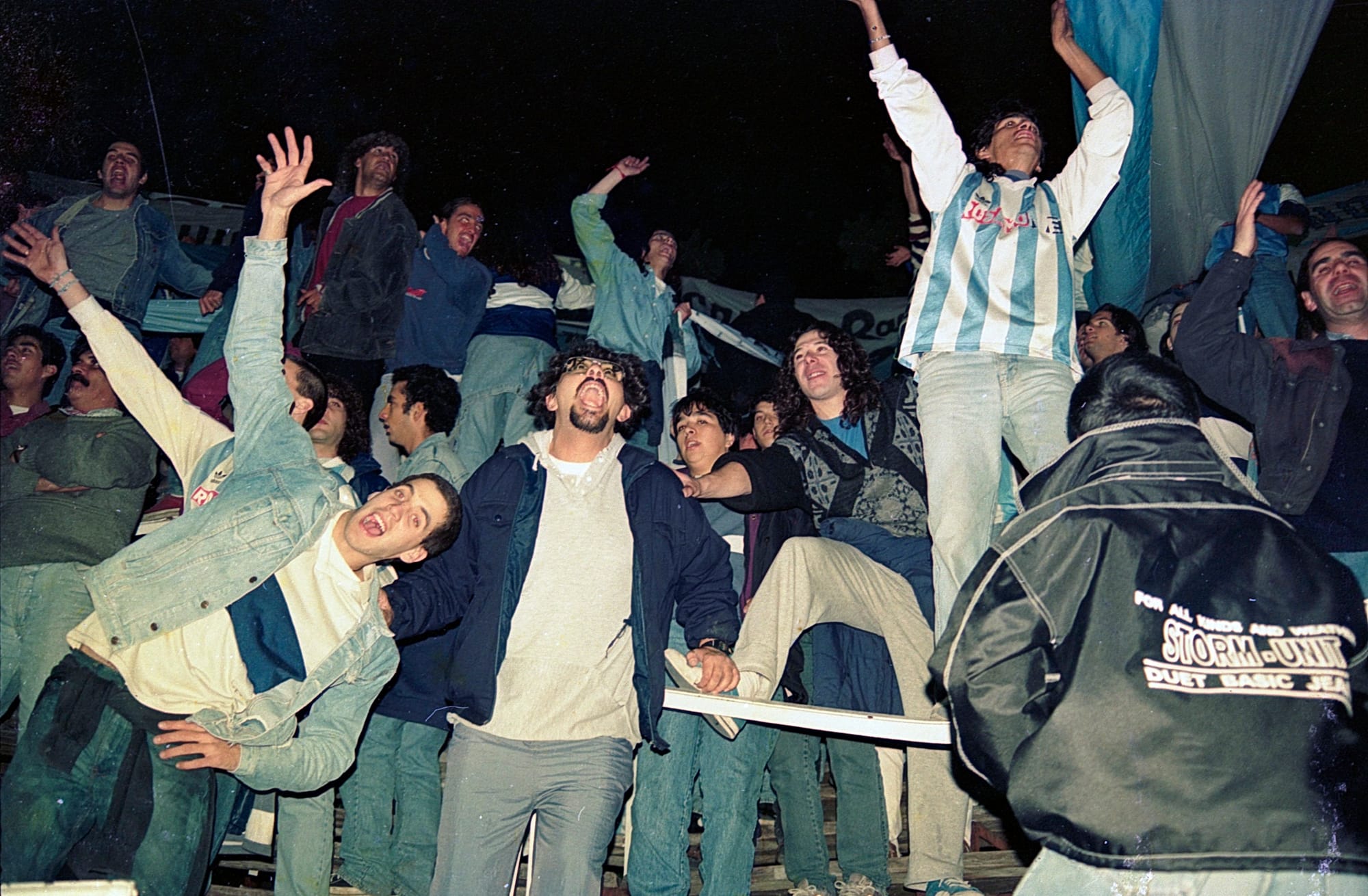
It’s clear that none of this was for the money for Daniela. However, within her informality, she designed a small business model that worked for her to some extent. “We sold to people,” Romi says. “We walked the stands from one end to the other until someone would say, ‘Hey, can you take a picture with my son?’” Then they would hand out a card with a number and wait for the call. They also went to events at affiliates (that was like fishing in a pool: attendees always wanted a photo with the invited players), or they acted as intermediaries between fans and club figures to get an autograph. “You’d give me your nephew Tomás’s jersey, and I’d go to training and ask ‘Lagarto’ Fleita for one: ‘For Tomás,’” Romi says. “Or we’d have Nacho González, who was the most stylish player at the time, sign photos. We sold a ton of those.”
It's worth noting that at that time, Romi was still a school-aged girl, which added an extra layer of peculiarity to the duo. They had met in Córdoba, before a Belgrano - Racing match. Romi was 14 and had traveled alone. When Daniela – who was around 30 – saw that girl waiting for the players at the hotel entrance, she immediately took her under her wing, and they never separated again. “She adopted me,” says Romi. “She was always my second mom.”
By far, the photo that raised the most money was the one of the flag that Daniela took from the mast. No one else had dared to take on that adventure. Their courage gave them exclusivity. Plus, two weeks after that day, a roof was put over the Cilindro, making it impossible to take a similar photo again. “They sold you the framed picture directly, and they sold like crazy,” Bourgarel recalls. “You’d see Daniela all over the stadium loaded with frames, it was funny.” How much money did they make? “It’s not like we could go to Brazil,” says Romi. “At most, we made it to Santa Fe to see Colón - Racing.”
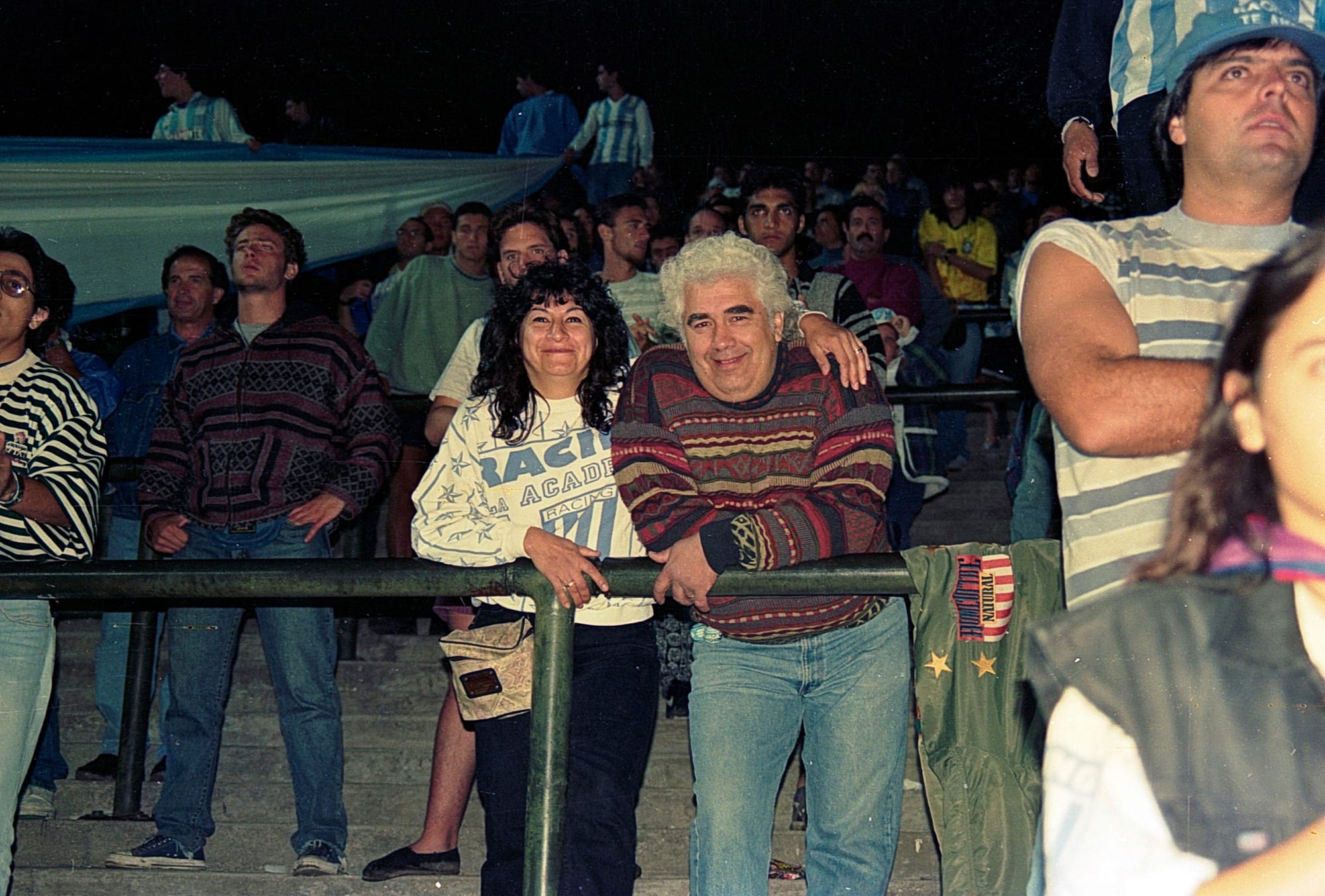
Daniela didn’t have an office: the trunk of her car was her little mobile lab. Her biggest fear was having her camera stolen, so for safety, the Racing fans would let her park in the Corbatta passage, where they parked. In the trunk, she also carried the contact sheets of her negatives, which helped her show people the material without having to develop the entire rolls. Due to budget constraints, she only developed the photos she could locate. This means that almost her entire archive consists of unpublished images.
Although she passed away in 2015, Daniela was already ill in 2001, and her presence at the stadium went from being a norm to an exception. She has very few photos from the Racing championship under Mostaza Merlo. The bulk of her work coincides with the 1990s. “At one point, we lost track of her,” says Dany Bevilacqua, a collector who last year took on the task of digitizing a significant part of Daniela’s archive for the first time. “Until one day, in 2005, we ran into her again at the training ground, and with my partner [the archivist known on social media as HernandoRC], we asked her: ‘Hey, what happened to your photos?’”
It turned out that Daniela had everything in an attic that she was struggling to climb to, so in the end, they never managed to coordinate a meeting. But before she died, she made sure to leave the negatives to Ariel and the samples to Romi, the two best guardians she could ask for for that invaluable heritage. Ariel knew there were two Racing fans dedicated to rescuing historical photos (in fact, he always left them comments on Instagram), and one day he decided to write to them: “I’m Daniela’s brother, the first ones to get the material will be you.”
“It took a few years, but he delivered,” says Bevilacqua. “He showed up at the grill where we stopped before the matches and said: ‘Here, this is for you.’ It was a folder with five thousand negatives. I swear I didn’t even want to enter the stadium: I wanted to go home and see what was there.”
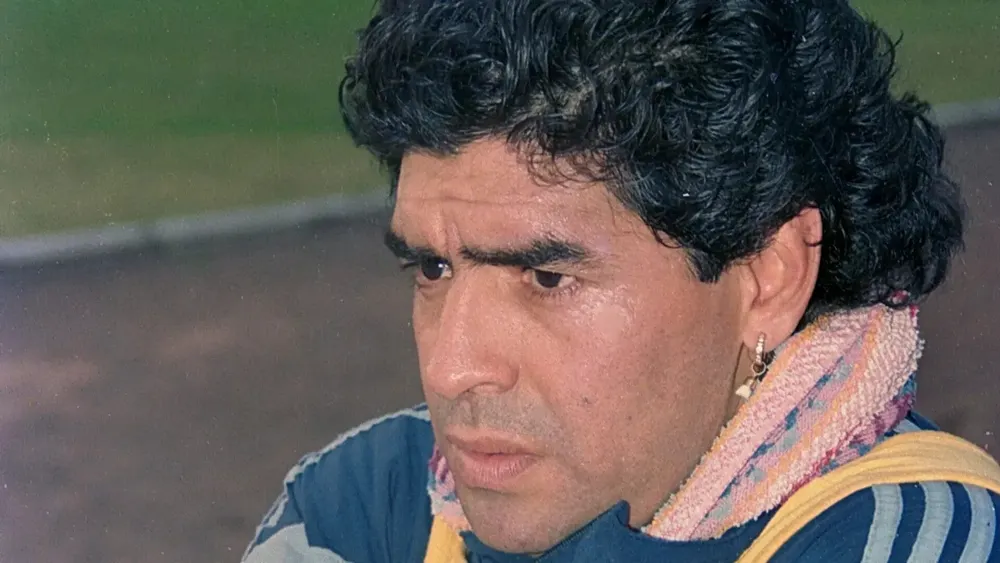
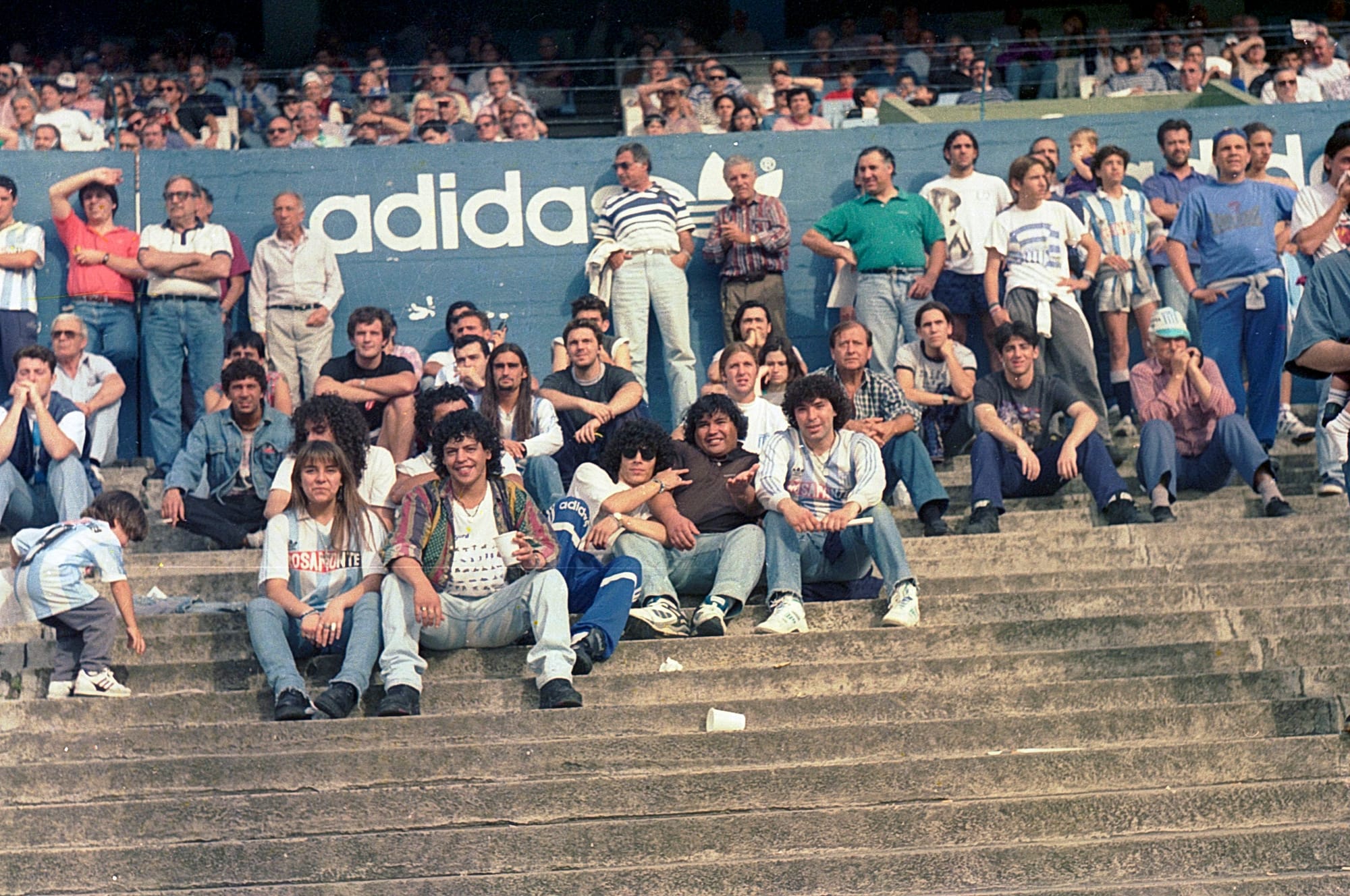
When he finally got his hands on the negatives and started looking at them backlit, he was stunned. The figure of Diego Armando Maradona, Racing's coach in 1995, appeared again and again in dozens of different situations. Sitting on the bench. Signing autographs. Training at the facility. Talking to journalists. Arriving at the stadium. Eating a barbecue. Posing with the main members of the fan club. By now, one is used to seeing an unpublished photo of Diego every day, but not so many, not all together, and not from his time at Racing, which was poorly documented.
“That period totally redefined it for me,” says Bevilacqua. “Think about it, at that time it was tough for the fans: Diego often didn’t go to training, sometimes he didn’t even go to the matches! We beat Boca at their stadium after 21 years and he wasn’t there! But you see the photos and another story emerges. There was a strong bond between Diego and the Racing fans, and it’s crystal clear here.”
Perhaps Daniela’s greatest virtue as a photographer was her ability to access intimate situations with a camera hanging around her neck without disturbing the scene at all. The merit is doubled in the case of a figure like Maradona, and tripled considering that Diego was coming off the suspension for doping from the 1994 World Cup in the United States. It wasn’t easy to get to him, and at first, it even seemed like that door would remain closed. “The one who intervened was Turco García,” says Romi. “We were in Mar del Plata, Racing always concentrated at the Hotel Iruña, and Turco introduced them. The three of them got into an elevator, and Daniela explained everything: ‘Diego, I work in this, and since you arrived, they don’t let me back into training anymore.’ When they came out, Diego started: ‘Well, do you have somewhere to stay? If not, you can stay here. If you want something to eat, I’ll pay.’ And from then on, we could get into all places again. Honestly, he treated us like gold.”
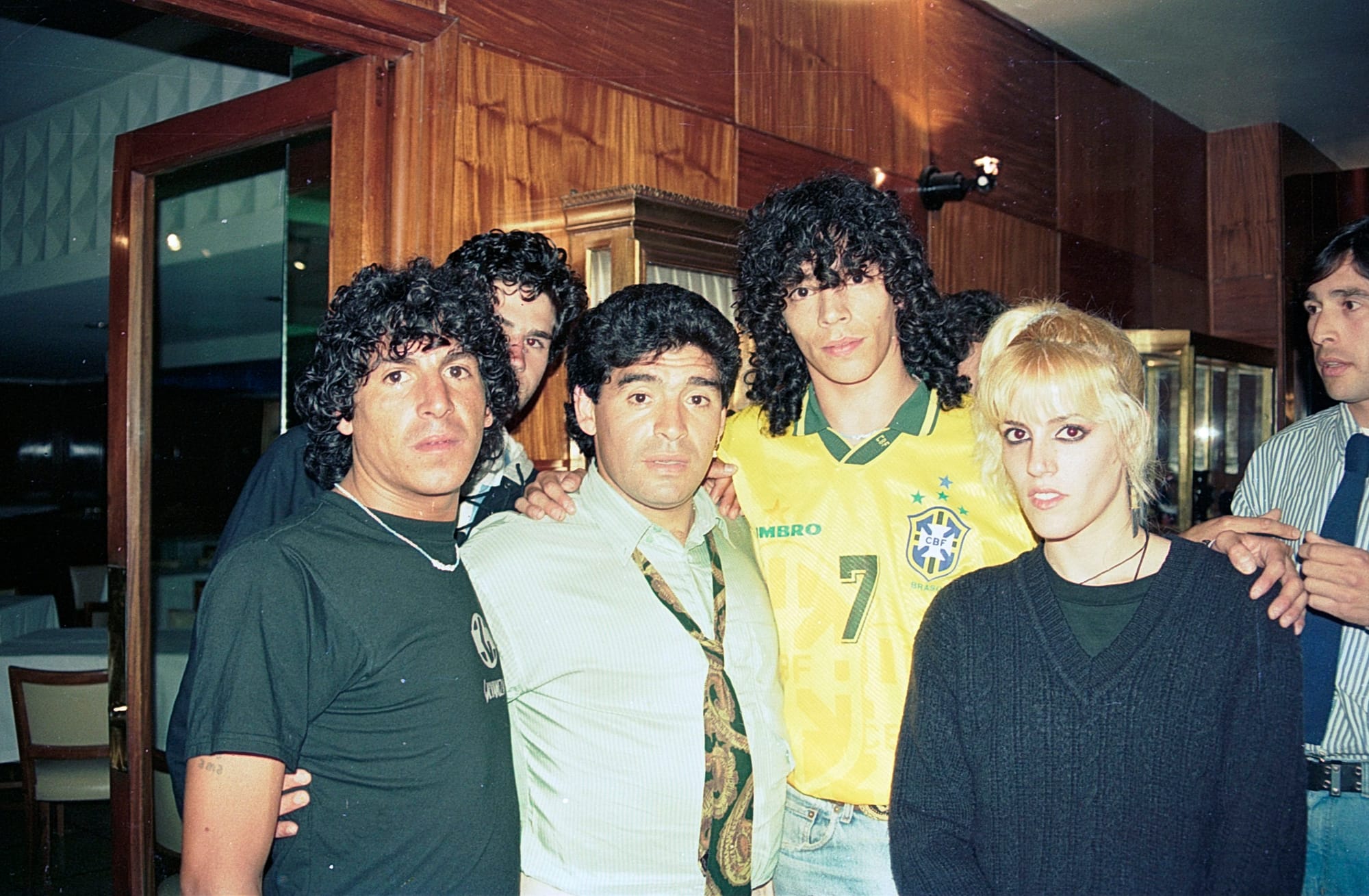
Another great virtue Daniela had wasn’t something you learn in photography schools but is strictly tied to her identity as a fan: she followed Racing everywhere. When professional photographers went home, she stayed at the stadium entrance waiting for the bus to come out. If a door was closed to her, she’d sneak in through a window. Her amateurism gave her her best photos. It also brought her some trouble. For example, when Racing took to the field, the photographer for the club’s official magazine would stand at the tunnel entrance and wouldn’t let her through. He hated that Daniela entered the field without accreditation. But at some point, he had to go in to take the team photo, and in that window of opportunity, Daniela would slip by. In football jargon, you could say she had him wrapped around her finger.
Once she envisioned a photo of the Cilindro from the air, so… she got a small plane. “She wanted to stick her head out the window!” says Romi. “The pilot was going crazy telling her: ‘You can’t do that, ma’am!’” Plus, the idea was to fly over the stadium just as Racing was coming onto the field to capture the fans’ reception. “I said to her: ‘How are you going to do that?’” recalls Ariel. “And wouldn’t you know it, the team comes out, and from the stands, I look up and see the plane passing by… and behind it, the police helicopter!”
Daniela was fearless. “Do you get vertigo?” asked Racing writer Carlos Graneri once. “On the contrary: I love heights,” she said. Perhaps that’s why, before she died, she told Ariel that her wish was to be cremated and have her ashes scattered at the top of the mast. That’s the only unfinished business left for her brother. For this article, we took the liberty of settling another one of those accounts: we digitized for the first time the negatives of the photos Daniela took that night from the mast. She had only developed the last one of the roll, which became a framed picture and went down in history. Today we can finally see the complete sequence.
In the interview Graneri did with her, of which a small fragment survives today as a WhatsApp audio, Daniela describes what she felt when she climbed those 283 steps to take her most famous photo. “You see that the flag is huge,” she says. “And obviously, it’s handled by a lot of people. And there I was up there, right? Seeing that. And it came down in such a way… so neat… so perfect… that at that moment I thought God was stretching it. ‘Take photos at that moment if you can!’”
Las notas de 421 no tienen paywall
Y a cada colaborador se le paga por su trabajo. Las dos cosas dependen de los suscriptores.