The Downfall of Troy Duffy: From “the Next Tarantino” to Hollywood Flop
From cult hero to the villain of his own documentary: the fascinating and self-destructive story of Troy Duffy, the director who defied Hollywood with The Boondock Saints and ended up devoured by his own ego. Misunderstood hero or a complete fraud?
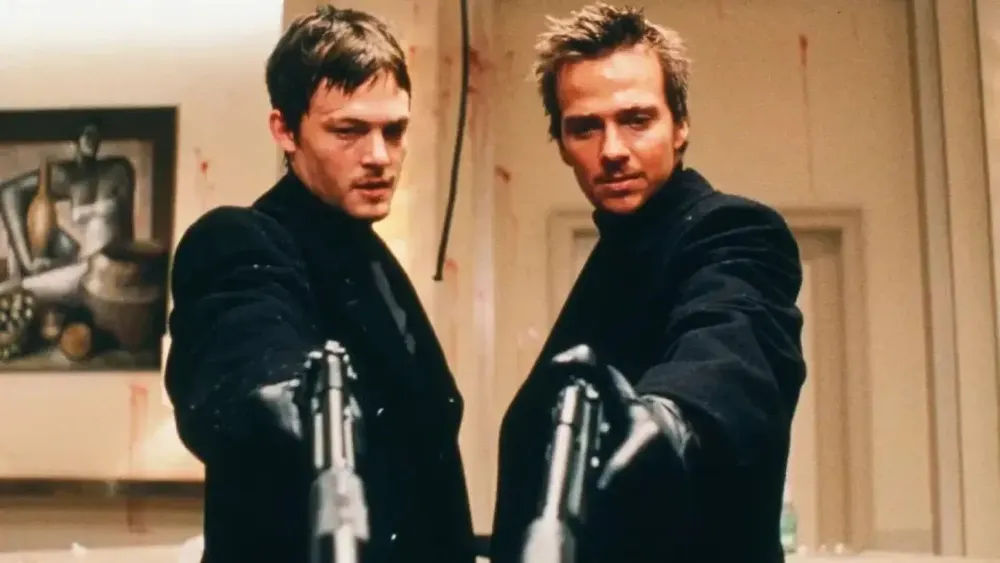
The Boondock Saints (1999) opens in a church. In one of the pews, two stylish and intimidating guys in black jackets and jeans stand out. As they pray and choral music plays, we can hear a male voiceover with a strong Irish accent saying:
“When I raise my shining sword and my fist takes hold of my judgment, I will take revenge on all my enemies”.
There isn't much to say about The Boondock Saints (which was translated as The Fifth Hell here in Argentina). It's the story of the MacManus brothers (Sean Patrick Flanery and Norman Reedus), two Irish Catholics who, through a spiritual calling, become vigilantes who take down the mafias and wrongdoers of Boston, while an eccentric detective (Willem Dafoe) tries to catch and decipher them. It's a film that's quite incompetent in terms of direction, editing, and script, with its take on "vigilantism" resulting in an ideological mishmash. One would think it would analyze the tension between Catholicism, vigilantism, revenge, and the sin of killing, but The Boondock Saints is very uninterested in asking questions and culminates in “yes, we should kill all the bad guys. As long as there's choral music in the background, it's all good”.
What stands out, however, is the fact that if you read the script (I don't know why anyone would want to put themselves through that unless you're me and doing it for journalistic reasons), you can notice a difference: the voiceover at the beginning isn't a man's but a woman's, Anabelle, the mother of the two protagonists, and she says something completely different:
“They were never like the others. From the moment they were born, from the same womb, on the same day, they simply had their own way of being, my boys. And I always knew that one day they would do something of true greatness. I just never expected them to provoke such a reckoning.”
This radical alteration from script to screen is striking because, perhaps unconsciously, it says a lot about its director and screenwriter.
Troy Duffy is not only the director and screenwriter of The Boondock Saints, but he is also the star of Overnight (2003), a documentary that chronicles his brief rise and fall in Hollywood.
Studios were looking for the next golden boy of cinema, and for a moment, Duffy was the candidate. A vulgar, violent, and humorous cinema that was at the same time stylized and erudite.
This isn't the first time I've written about Troy Duffy. Ever since I clicked on his name in the Wikipedia entry for The Boondock Saints, I spent months navigating the digital ruins of the internet to learn everything about him. Why? No idea, but I guess I'm now a sort of Duffologist. In a first piece, I told his story in the context of late '90s Hollywood, where the film industry was completely shaped by movies like Goodfellas, Clerks, and especially Pulp Fiction. A vulgar, violent, and humorous cinema that was at the same time stylized and erudite. Studios were looking for their next golden boy, and for a moment, Duffy was the candidate.
Nonetheless, there's an aspect of Troy Duffy's persona that I skimmed over, his status as an underdog within the industry. What is an underdog? In a competition, it's the team or person considered the weakest, least notable, and with the least power. They are expected to have a higher chance of losing than winning. It's a classic and effective narrative because it always inspires to see someone who was previously overlooked triumph, someone who was expected to lose, because at some point in our lives, we felt the same way. “When they see what I'm doing is succeeding, it's another thing. They wonder: ‘this idiot I saw drunk at the bar and vomiting in alleys, is he doing this?”, Duffy tells the camera in the first few minutes of the documentary.
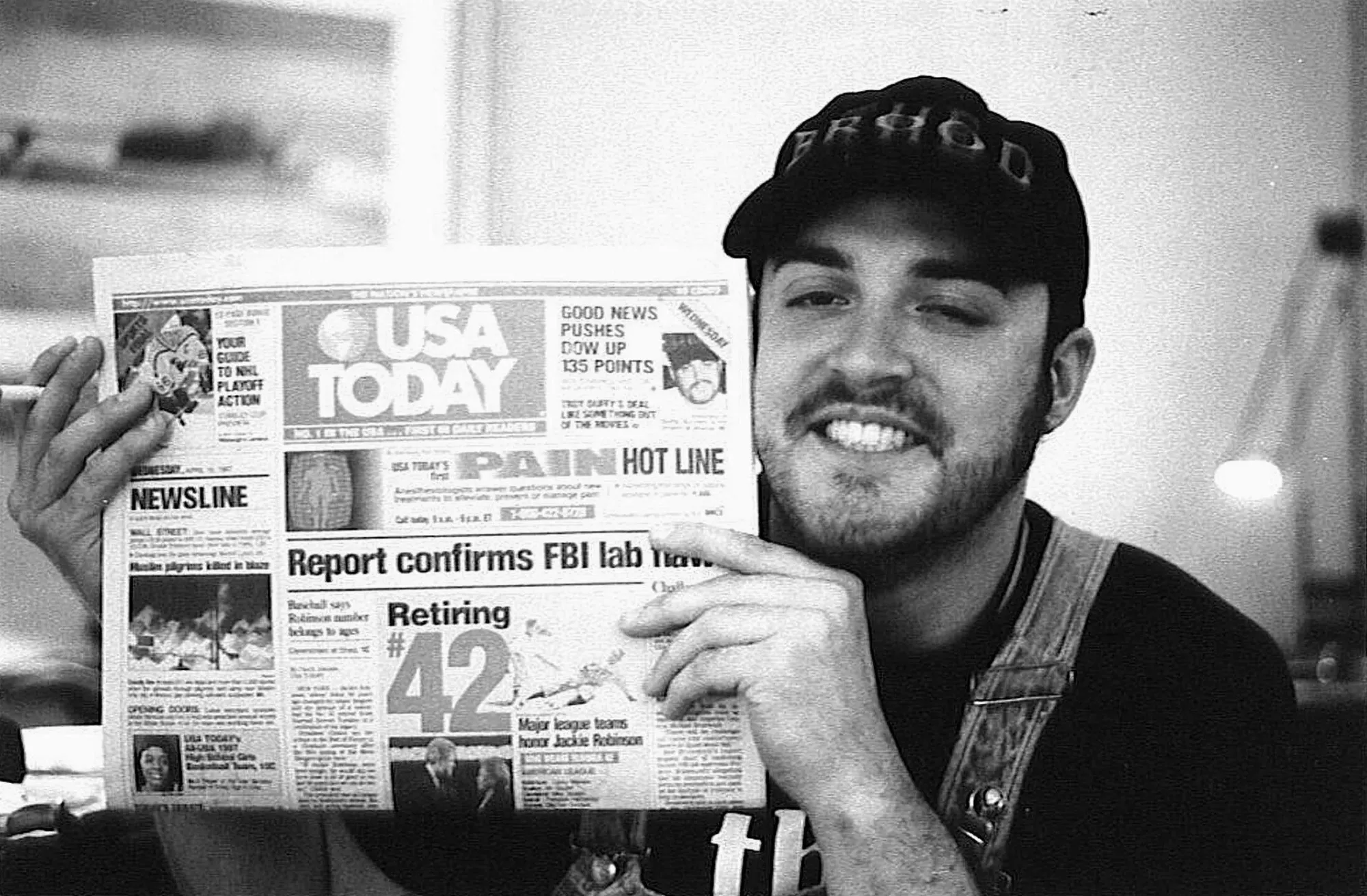
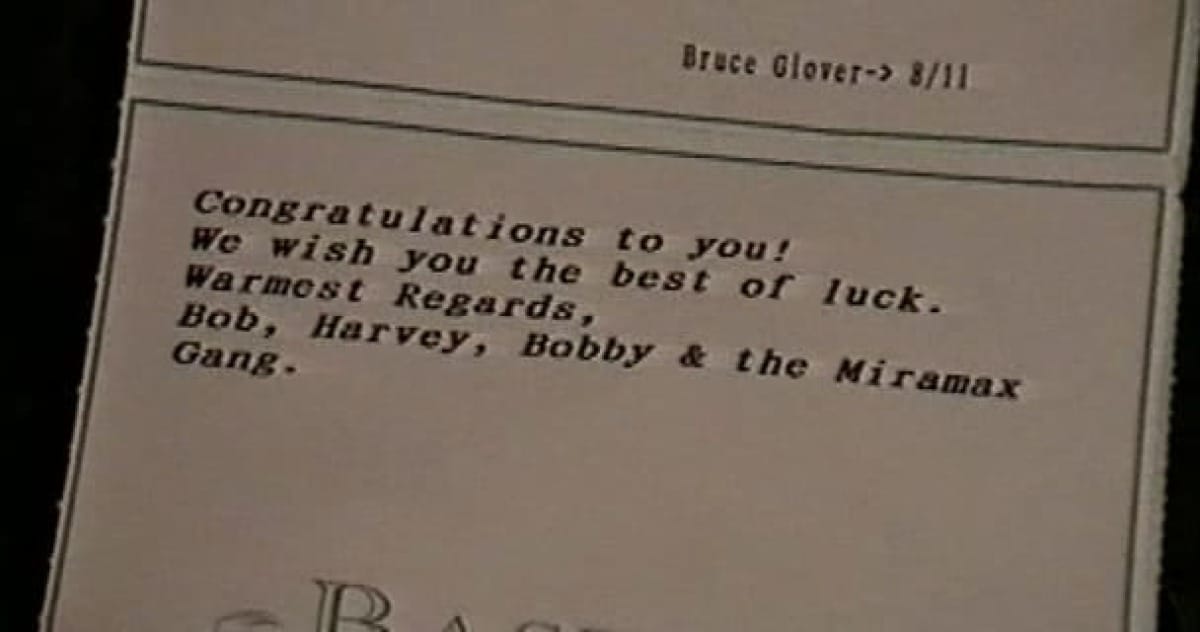
As the audience changes, I'll summarize his story: Troy Duffy, coming from a well-off upper-middle-class family, drops everything to move to Los Angeles, California, to make it in music with his Alternative Rock/Emo band, The Brood. There, he works at a bar where he adopts a neo-white trash identity: he dresses in overalls and trucker hats, drinks alcohol like it's water, smokes cigarettes like they're popcorn, and curses like a sailor. One day, Duffy recounts, he witnesses paramedics removing the body of a woman who died of an overdose from a dealer's house. This incident inspires him to write the script for The Boondock Saints, a sort of wish fulfillment for him and anyone who has witnessed injustice from criminals colluding with the incompetent and complicit law. The script magically becomes one of the most sought-after in Hollywood. It passes from hand to hand, from executive to executive, until it lands on the desk of Harvey Weinstein, then president of Miramax, who had already struck gold with young Quentin Tarantino and Kevin Smith. The Boondock Saints ends up selling to Miramax for $300,000, and it's negotiated that Duffy himself would direct with “total creative freedom.” This captures the attention of all the media in the country, which labels him as the “next Tarantino.” Duffy, excited, takes advantage of the hype around his script to sign with a record label and record his band's debut album, in addition to forming an artistic collective with friends and brothers called The Syndicate. He also asks two friends to film his rise in the entertainment world. From that footage comes Overnight.
Boondock Saints ends up selling to Miramax for $300,000, and it's negotiated that Duffy himself would direct with “total creative freedom.” This captures the attention of all the media in the country, which labels him as the “next Tarantino.”
Overnight does not portray Troy Duffy as a victim of Hollywood studios, but rather as a perpetrator. In the documentary, Duffy is a tyrant, intoxicated by the power, fame, and clout that a script he had not yet filmed at the time of the documentary gave him. The plan to film The Boondock Saints as agreed with Miramax is canceled for various reasons (money, actors, hype dying down, etc.), but Overnight highlights Duffy's abrasive and paranoid attitude towards “the system” as a significant factor. In one scene, Duffy is having coffee with his father and members of The Syndicate. He claims that the band is already a “fucking success” without having recorded a single track for their debut album; that everyone thinks he and his band are “fuck ups” except the “right people” who see the “talent” in them. He brags to his friends about how he shows up dirty and disheveled, hungover and in overalls to meetings with industry executives. “If our music and this film are accepted, we will achieve something no one has ever done; be accepted on a large scale”, he concludes. His father doesn't say a word, just stares at him.
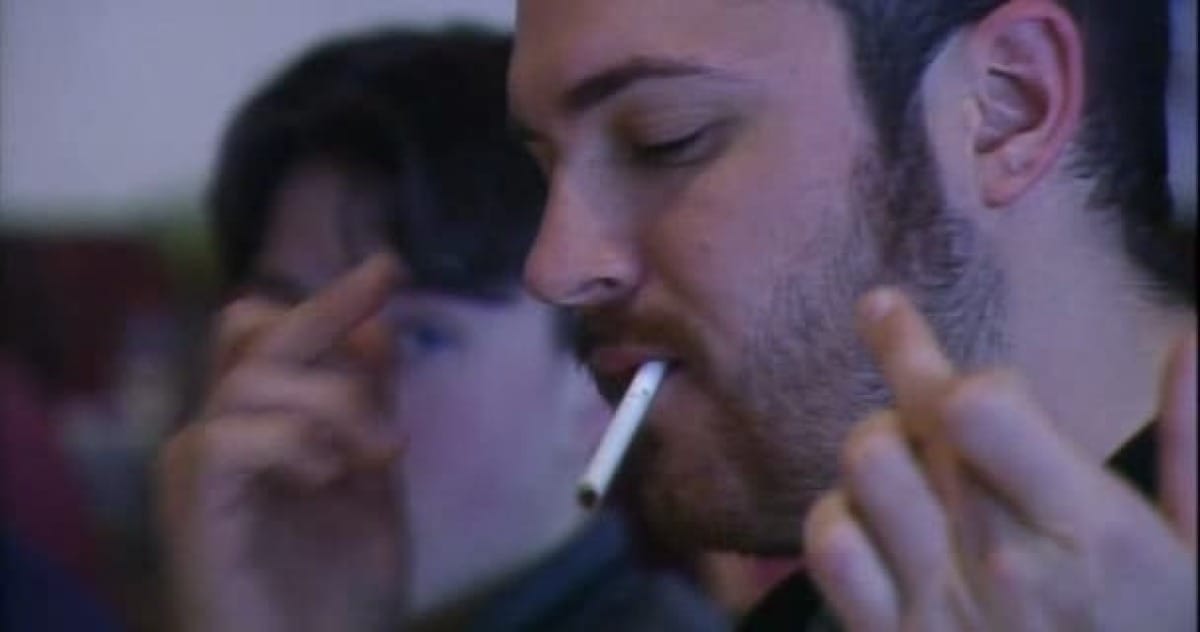
Here's what's interesting about Overnight and Troy Duffy's story. The documentary makes no effort to portray its protagonist as an “underdog,” but rather Duffy himself constructs the narrative/epic. In the documentary, there is not a single instance of Duffy being belittled by the industry or others; it is he who mentions the times he was belittled. Finally, when Miramax stops returning his calls and cancels the making of The Boondock Saints, that “antagonist” now has a face and name: Harvey Weinstein. It's the kind of self-mythologizing that leads him to speak ill of actors like Keanu Reeves and Ethan Hawke, and even to think that after making The Boondock Saints with an independent producer and half the budget, Harvey Weinstein and the industry are out to get him and want him dead. But, above all, and more seriously, the idea of being an “underdog” leads him to fight with his friends over money issues. Especially with “Tony” Montana and Mark Brian Smith, who are directing the documentary that would later become Overnight, deliberately portraying a negative image of Duffy. “Over time, we saw him become someone who disturbed us a lot, and we tolerated a lot of mental abuse during that process,” declared the documentary's directors in an interview.
How authentic is what we see in Overnight? Troy Duffy has spent years trying to salvage his reputation, claiming that the documentary was a vendetta by two former friends embittered over money issues. “I was there,” Duffy recounts in an interview with Indie Film Hustle Podcast, “I knew what really happened and how the documentary was maliciously edited to create false impressions.” And yes, the editing has the power to dictate the course of a story, whether fiction or documentary. And, if we're fair, the great ally of Overnight is the editing, in the moments it chooses to show and the contexts without allowing any room to humanize its protagonist. Duffy is always smoking, drinking, cursing at someone, and bragging that his movie and band are going to change everything for a group of friends who realize before he does that everything was destined to fail. Even in scenes where he is talking to his mother, which should portray him in a more vulnerable light, the editing shows him as a spoiled brat. There is definitely anger and resentment from Montana and Smith towards Duffy, who, to be fair, gives himself away by doing so many reckless things knowing full well that he has cameras filming him all the time. Overnight is, then, the product of poor communication, out-of-control egos, and innocence in front of a cannibalistic industry.
So, is it valid to label Troy Duffy as an “underdog” or is it a narrative he created about himself? Even though his failure in Hollywood is due to a self-destructive attitude, I feel that, to some extent, it is. It's hard to define, especially because, as I mentioned, before Duffy, guys like Tarantino and Kevin Smith had already made it in Hollywood, reclaiming themselves as fat cinema. I suppose at some point Duffy felt overlooked by others, just like everyone has at some point, perhaps due to his personality, perhaps due to something that happened to him as a child that led him to harbor some resentment towards others and that his encounter with the film industry fueled that narrative.
We return, then, to the beginning of The Boondock Saints, where the voiceover of the mother is replaced by a male voice that swears “to take revenge on all his enemies”. It's not crazy to think that this alteration from script to screen symbolizes a vendetta against Hollywood and Harvey Weinstein (many years before the #MeToo explosion).
What happened to Duffy after the fiasco with Miramax? The Boondock Saints premiered in 1999 in just five theaters after failing to secure distribution at festivals and due to concerns that the film's content would inspire school shootings following the Columbine massacre. The reviews were not very favorable either.
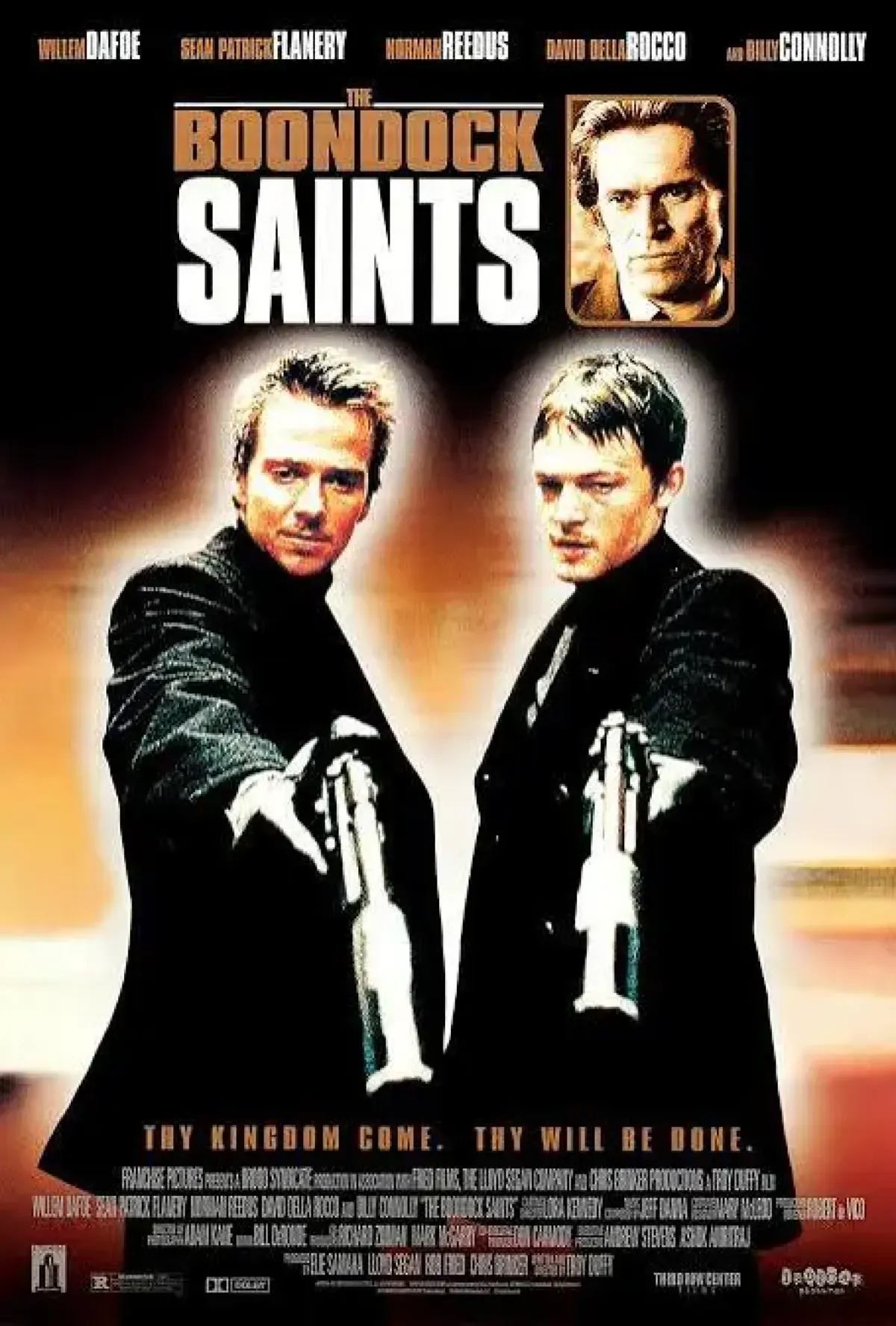
Although the positive reception and circulation that Overnight had at festivals in 2003 should have meant that Duffy was already a dead man in the industry (he earned a scolding from none other than Roger Ebert), The Boondock Saints made a surprising comeback and became a bestseller on DVD, achieving cult film status and a fandom eagerly awaiting the sequel, and so it was: Duffy managed to film The Boondock Saints II: All Saints Day (2009), which nobody liked. In 2011, he appeared in another documentary, Off the Boulevard, which he stars in alongside other musicians and filmmakers. I searched everywhere to catch a glimpse but had no luck. According to the synopsis on IMDB, the documentary is “a story of art and heart; and the dedication needed to achieve your dreams”. A review of Off the Boulevard states that Duffy, in his narrative arc, struggles “tooth and nail to get his cult film made”, and that he is still fighting “against the stereotypes about himself that were captured in the documentary Overnight”. In this documentary, Troy Duffy is portrayed in a more positive and empathetic light. Guess who produced it and who his director is friends with. In 2020, he co-wrote the comedy Guest House, starring Pauly Shore. After that, he didn't do much else, an interview here and there.
The Boondock Saints made a surprising comeback and became a bestseller on DVD, achieving cult film status and a fandom eagerly awaiting the sequel.
Have you noticed that here, when a celebrity wants to regain relevance, they start hosting a streaming show? Well, in the United States, they do the same thing but with podcasts. Troy Duffy did just that: at the beginning of 2025, he launched The BoonDoctor Podcast, where he talks about secrets of the industry and random topics like aliens, beer, and neo-Nazis. Of course, he also discusses the behind-the-scenes of The Boondock Saints (he recently published an e-book that serves as a novel prequel to the movie). The most interesting episode of his podcast is the one where he again tries to refute Overnight. It's interesting not for the content, but because it shows that Troy Duffy is still trying to redeem himself as the “underdog,” as someone who was unjustly rejected by the system, and therein lies the problem.
Troy Duffy is not a cult figure, but The Boondock Saints is. What truly embodies the “underdog” spirit is that project he never stopped pursuing until it became a reality. And don’t get me wrong, the movie is terrible, it’s worthless, and most likely its cult status is the same as that of films like The Room and Un buen día, but you have to admit there’s something endearing about that quixotic will to finally beat the Hollywood system at something, maybe not triumph, but at least to say “I did it without you.”
Las notas de 421 no tienen paywall
Y a cada colaborador se le paga por su trabajo. Las dos cosas dependen de los suscriptores.