How Argentine comics survived the collapse of mass culture, transforming into a refuge for urban tribes where readers no longer merely consume, but participate and build community.
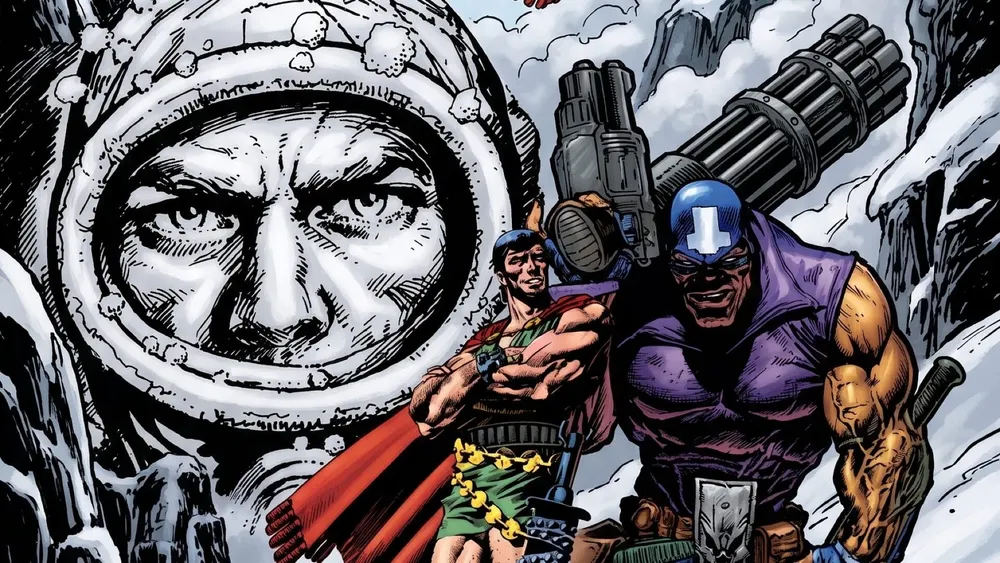
During the "Industrial Era" of comics (1950-1990), our attention economy was an ecosystem based on scarcity: four broadcast TV channels, a few AM and FM stations, the newspaper, and whatever the corner newsstand had on display. Those of us who grew up in the eighties lived in a forced monoculture: we all watched Robotech, we all orbited around Star Wars or The A-Team, and we all read Mafalda, Nippur, or Fierro. The options were limited and, therefore, massively shared. The "we" was built by default.
Starting in the nineties, the monoculture began to fragment. The first impulse came with cable TV and currency parity, which unleashed a tsunami of movies, books, comics, and imported video games. This diversification deepened when the audience discovered they could also collect manga and superheroes in local editions, a phenomenon often blamed for the decline of local comics. However, the reality was different: historic publishers like Columba or Record were already showing signs of fatigue and collapse since the mid-eighties. To make matters worse, the arrival of the internet around 1995 opened up a range of distractions that were previously unimaginable and has continued to expand ever since.
From the nineties on, the monoculture began to fragment (...). What was once a mass phenomenon is now a constellation of microcultures. But in that balkanization, as we will see, lies its new and strange form of survival.
Today, the remnants of the monoculture barely survive in football, video games, and some random media phenomena. I admit, with more pride than shame, that I still don't recognize a single Taylor Swift song; in the eighties, on the other hand, it was impossible to escape Madonna or Michael Jackson. It’s no coincidence that gaming has become the giant that devours other industries: it’s the only medium where the viewer is the absolute protagonist. In video games, the asymmetry between sender and receiver dissolves in the glorification of the user, whose subjective vision places them at the center of the diegetic world. There is no passive consumption; the user is the hero or villain who bears the weight of their own decisions.
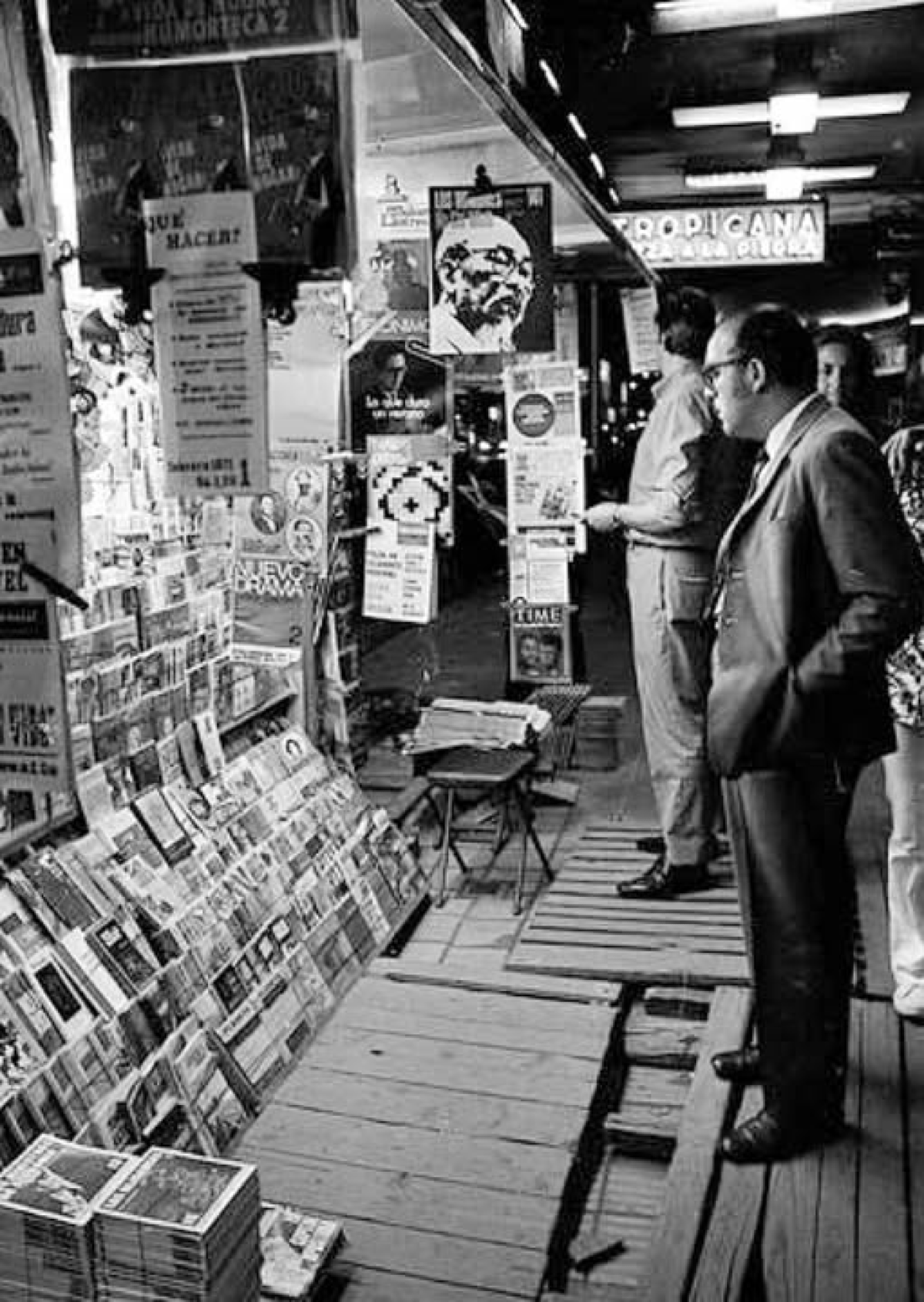
Magazine Kiosk (1971).
Meanwhile, the great temples of the 20th-century monoculture are creaking. Disney is a case in point: the colossus that tried to monopolize our imagination by buying Marvel, Pixar, and Star Wars now struggles to find its direction. Neither political pivots towards diversity nor desperate attempts to win back male audiences have halted the collapse of its stock or the exodus of subscribers. Disney's diagnosis reflects an entire era: microcultures are devouring the foundations of mass consumption like invisible piranhas. The same is happening to superhero comics: they are selling less and less and becoming increasingly expensive, gradually reducing to a niche in the aisle of symbolic goods.
It’s the same transformation, albeit on a different scale, that Argentine comics have undergone from the Industrial Era to the present day. What was once a mass phenomenon is now a constellation of microcultures. But in that balkanization, as we will see, lies its new and strange form of survival.
From physical proximity to a community of interests
This collapse of large monocultural structures has a correlate in how urban life has changed over the past forty years. Our social circle, from which friend groups, couples, and even enemies emerged, almost always depended on geographic coincidence: school, the club, neighbors on the block, vacation companions. Today, for the modern urbanite living alone in a two-room apartment in Caballito or Rosario, the "neighbor" is an imprecise, outdated category; a stranger barely encountered in the elevator. Geography is no longer the main shaper of our social identity.
This balkanization of cultural consumption and its communities, which for relational marketing is the panacea for target stratification, is both a curse and a refuge for urbanites. In a world where social media promises global connection but returns an algorithmic, Tinder-like loneliness, cultural niches operate as the new "neighborhood clubs." Argentine comics, having lost their massive industrial scale before other phenomena, were forced to learn how to survive in fragmentation sooner than anyone else, taking refuge in the communities they managed to build.
Comics as territory
For some time now, a recurring complaint has circulated in the national comic scene: comics are only consumed by their own authors and other industry agents. The “average readers” are missing; those sacred civilians, the true muggles free from any professional contamination who, not being producers or competitors, represent the only genuinely interested subject solely in reading.
Part of the toxic nostalgia for the golden ages of the 20th century is also the idealization of those masses of passive consumers; pure receivers whose participation was limited, at most, to the letters section. There is a widespread, often unconscious desire to return to that glorious asymmetry, as long as one is the one left on the side of the “famous authors,” that is, the protagonists. We all assume that if mass appeal ever returns, we won’t be part of the anonymous crowd, of course not.
The person complaining almost always positions themselves in this scheme as a sender, never as a receiver, without considering that, in the industrial era, the comic artists who managed to enter that category were very few: a couple of dozen. Nowadays, the sender/receiver division is a much more fluid and interchangeable matter. While average readers still exist, many more decide at some point to participate as senders in one of the possible roles: scriptwriters, artists, full authors, editors, cultural managers, promoters, and critics.
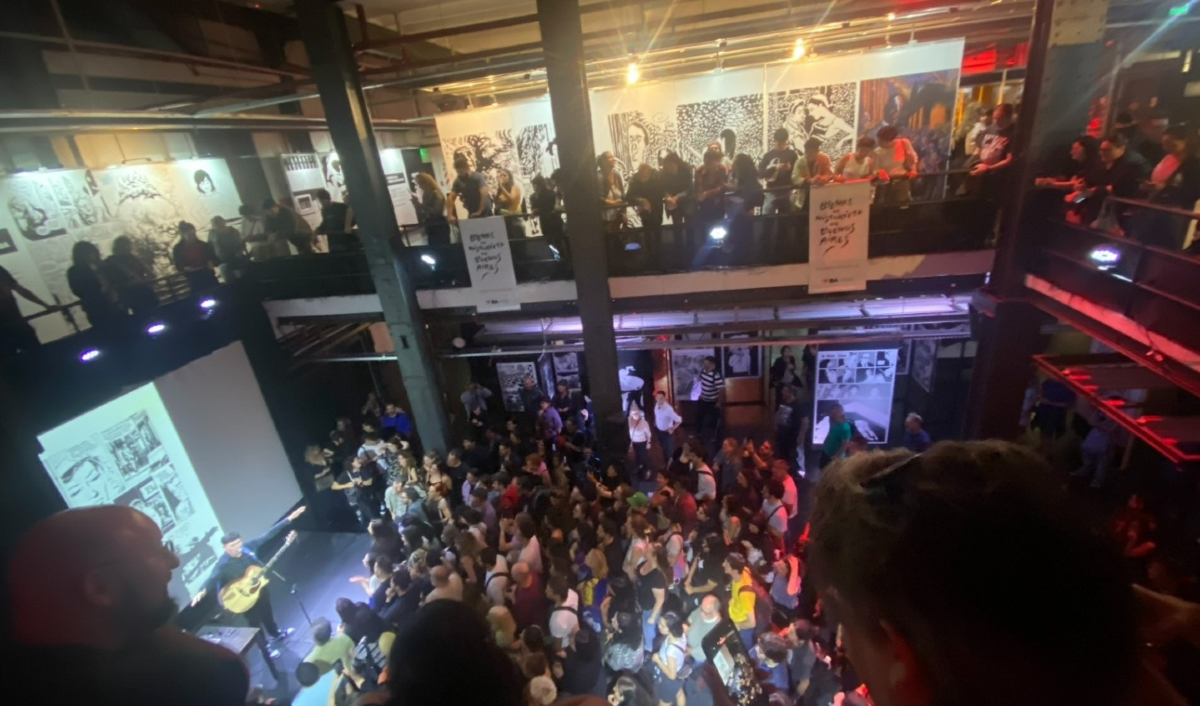
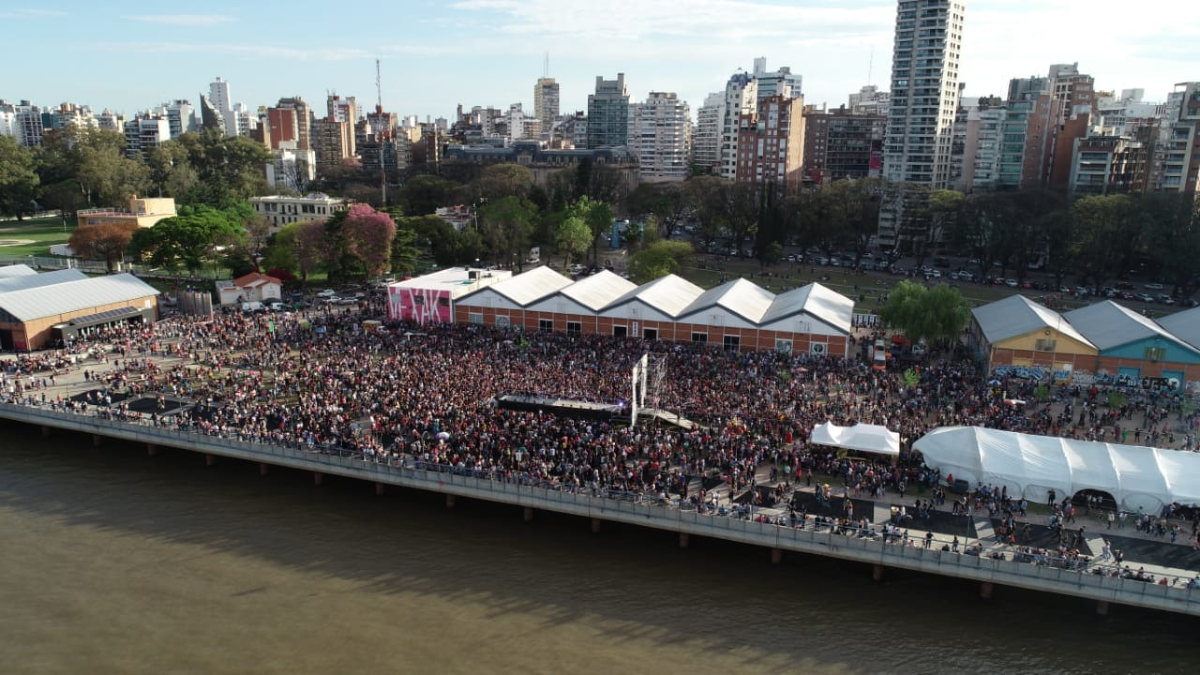
First Buenos Aires Comics Biennial, 2026. Source: Facebook.
Comic tribes: between prejudice and hybridization
Nowadays, in Argentine comics, more and more people are understanding that in these times, community has replaced mass appeal. It’s no longer about consuming, but about participating. And comics are no longer something that is simply read and collected: it’s a social practice. As it could not be otherwise, comics “in themselves” remain the epicenter, but they are no longer the only focus; other forms of meaning-making circulate through communities to be shared, discussed, and judged: events, festivals, awards, critical publications, academic congresses, exhibitions, channels on YouTube or TikTok. Authors and editors no longer have a monopoly on meaning-making. I would even venture to say that comics are moving away from the center to become something more akin to a score, a syllabus to be discussed in hallways, social networks, award ceremonies, and pizza shop conversations.
Community has replaced mass appeal. It’s no longer about consuming, but about participating. And comics are no longer something that is simply read and collected: it’s a social practice.
The environment is made up of various distinct and interconnected communities. Most come from a historical formation in one of the previous industrial anchors, whether national or international. So, without anyone asking me to, I take on the mission of making a classification, with the inevitable danger of overgeneralizing and offending more than one. I apologize in advance, but it’s nothing we don’t already know.
Taxonomy of comic tribes
Fanboys / Fangirls: Readers of superheroes and Anglo-Saxon franchises in general. It’s one of the majority tribes, with its own protocols and customs. They profess the endless rift between Marvel and DC Comics, and always discuss the development of continuities, crises, and narrative reboots. In recent decades, this interest has extended to evaluating the transfer of intellectual properties to cinematic universes, directors, and castings. In national comics, they express themselves through local versions of superheroes; a custom with many years of experience, from the old Sonoman by Oswal in the magazine Anteojito in the sixties, to Cazador or Caballero Rojo in the nineties, or currently the characters from Cromacomics, Manta, or Webcomic Mutante.
Gus Casals and Ian Veneno, between eighties music and superheroes.
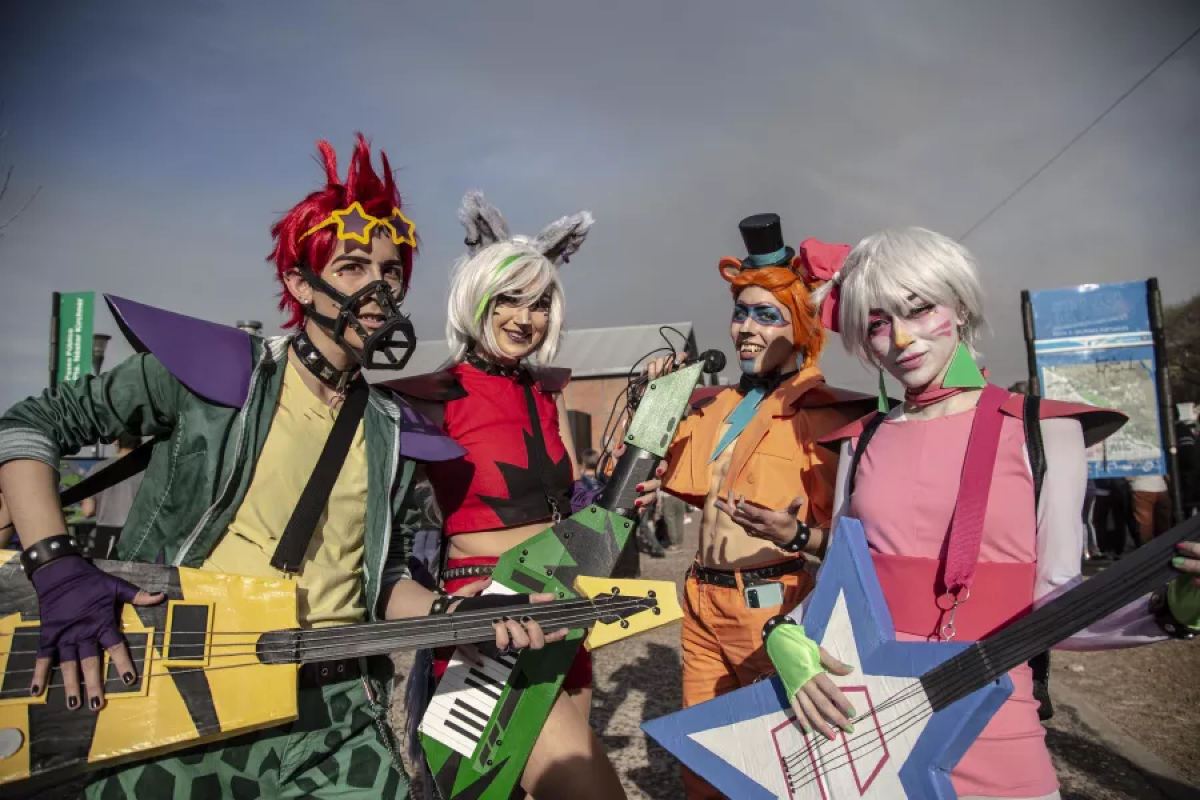
Otakus: Fans of manga and anime who compete with fanboys for demographic supremacy. They made a strong entrance in the nineties, and their biggest contribution was gender balance. From the start, there were as many girls as boys among otakus; a parity that has gradually dissolved the notion, deeply rooted in our country, that comics were always a boys' thing, nerds at best, or at worst, outright misogynistic incels. Manga publishing in Argentina is carried out by giants like Ivrea, Ovni Press, and the local branch of Planeta, as well as independent labels like Gutter Glitter and Módena.
Manga and anime cosplayers. Crack Bang Boom. Source: Clapps.
Columberos, Fierreros y Eternauteros: Just as fanboys and otakus base their consumption on two markets where comics are still an industry (the American and the Japanese), readers of classic national comics rely on the industrial production of past decades in Argentina. Argentine comics were recognized at times as among the best in the world, and national authors have supplied other industrial markets, like the Italian, for decades. This vast body of work is now being published through various publishers such as Primavera Revólver, Deux, Comic.ar, Triskelion, Historieteca, or Loco Rabia, which rescue this material to turn it into collectible books.
Graphic Novel Readers: The new format that has spread worldwide is the much-debated graphic novel, often presented as something distinct from industrial comics. Its main feature is that it’s a global standard, not tied to a specific country, allowing for easy co-publications and international reissues without complex adaptations to different printing standards. In Argentina, this is one of the fastest-growing communities in recent years. Hotel de las Ideas is the publisher that best represents this sector, having established itself as a reference point for both authors and readers. Other publishers feeding this market for both adults and kids include Maten al Mensajero, Editorial Común, Sector Editorial, Musaraña, and Loco Rabia.
Fanzine Creators and Animators: The DIY and punk side of Argentine comics remains healthy thanks to the ever-present section of fanzines and self-published works often found at events. At these fairs, productions exploring the possibilities of risography and screen printing coexist, like those from Estudio Mafia, alongside fanzines created by animators like Paula Boffo (Sukermercado), Estampita, or Ezequiel Torres, along with authors and small publishers pursuing personal explorations like Von Chuyo, Brian Janchez, Ediciones del Cosmonauta, Iván Riskin, or Natalia Novia.
Webcomics and Webtoons: The alternative of online publishing has been practiced since before social media existed. Its peak moment was twenty years ago, with the birth of Historietas Reales on Blogger and later on WordPress. Since then, attempts to establish the internet as a medium for production, distribution, and consumption have never ceased. Today, there are comics with massive audiences on social media platforms like Instagram or X, as well as on sites like Webtoon or Tapas. In Argentina, online formats are thriving, with notable examples like Loco Rabia Zine, Gcomics, Multiversal Ediciones, and the site Webcomic Mutante, hosted on El Destape's website. The latter not only publishes comics but also holds contests, calls for submissions, and in-person drawing meetups to strengthen its subscriber base and sense of community.
Omnivorous readers and the community in eternal conflict
The reality of the field shows us that these tribes are not isolated compartments, but rather highly porous territories. While there are "Taliban" readers who only read Batman or Ivrea, it’s quite common for today’s comic consumers, as they engage with the field, to become omnivorous readers, increasingly open-minded. It’s usual for libraries to turn into ecosystems of contrasts where a prestige volume of Batman, a fanzine by a feminist author, and a collected edition of Dago coexist.
Mariano Cholakian (from La Batea) and Andrés Accorsi (from Comiqueando). Two generations of comic promoters.
This cultural nomadism is complemented by the influence of the graphic novel format as a bridge to other traditions. Through this route, the narratives of Franco-Belgian comics enter strongly, from the science fiction classics of Moebius or Enki Bilal to the Nouvelle BD of Marjane Satrapi or Lewis Trondheim, as well as a growing production from the rest of Latin America and other European or Asian countries that escape the mainstream of central markets. In this coexistence of aesthetics, contemporary Argentine comics find their true vitality, but also their frictions, conflicts, and palace fights.
Events, fairs, and other federal gatherings
Among all the disputes that have always existed within comics, the most interesting (perhaps the only interesting one) is the aesthetic fight. Today we have a community that expands from massive cosplay at Argentina Comicon to the elegant exhibition of José Muñoz at the solemn Casa de la Cultura during the Biennial of Comics. These universes seem to become irreconcilable over time, with aesthetics and pursuits that are too different, yet in the right contexts, they continue to coexist.
It’s quite common that, among those of us who have spent decades wandering the halls and pages of national comics, our friendships, rivalries, football teams, partners, and ex-partners have been forged among the panels. Comics have shaped our biographies.
In national comics, many of the worst practices from larger and more prestigious fields, such as Contemporary Art or Literature, simply do not exist because they have no place to anchor.
More than once, I’ve considered that, once and for all, I should abandon comics. There are plenty of reasons: there’s never enough money, egos and fights abound; the medium demands a lot and gives back little. It doesn’t provide much social prestige, quite the opposite. But that’s precisely what makes it inevitably attractive. In national comics, many of the worst practices from larger and more prestigious fields, such as Contemporary Art or Literature, simply do not exist because they have no place to anchor. Without official institutions, museums, major awards, or state budgets, comics are weak economically and in prestige but self-sufficient and, above all, free from any officialdom. It’s not a fertile ground for the sociopaths and narcissists that abound in other media. In the war between schizos and psychopaths, comics, even on a global level, are an important schizo stronghold.
That’s why, after so many years, I couldn’t trade comics for anything else: nowhere else would I find the same vitality or that healthy innocence to tell any story, no matter how silly, without worrying about trendy critics, how to win a big contest, or how to please the next official culture bigwig.
And besides, it comes with drawings. You can’t ask for more.
✦ Suscribite
Las notas de 421 no tienen paywall
Y a cada colaborador se le paga por su trabajo. Las dos cosas dependen de los suscriptores.
Soy Diego Agrimbau, guionista de historietas. Exploro el drama, la ciencia ficción y la narrativa formalista en obras como Diagnósticos, Pandemonia y El asco.