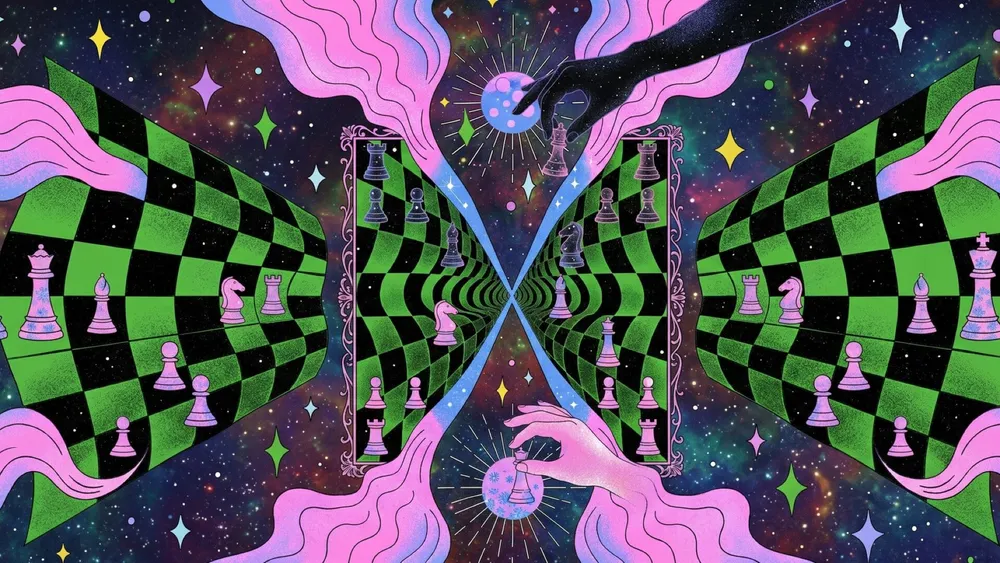
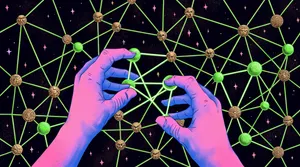
Did you know that physics predicts the end of the universe, and that the far-right is trying to use this idea to their advantage? From the “apocalypse of thermodynamics” to the justification of authoritarianism, “entropy” is the most hotly debated scientific concept. Do you know what it is?
"No one really knows what entropy is."
John von Neumann, to Claude Shannon.
In 1984, chemist Ilya Prigogine and philosopher Isabelle Stengers published Order out of Chaos, a popular science book. He, a Russian-born Belgian physical chemist, won the Nobel Prize in 1977; in 2003, he would sign a "Humanist Manifesto" alongside figures like Kurt Vonnegut and Oliver Stone. She worked with Donna Haraway and Bruno Latour, and was a pioneer of the new materialist turn in European philosophy. They are both prominent figures in their respective fields, with a political sensitivity that we might call progressive, even if they didn't stand out for their political expressions. Their intervention in public debate was, rather, through books like this one.
One thing that helped the popularity of Order Out of Chaos was its foreword writer: Alvin Toffler, a consultant who built his career promoting a liberal technocracy, in which Silicon Valley would take the place of the Paris Commune or the Soviet of Moscow. Toffler was highly influential for a wave of centrist politicians (both Democrats and Republicans) from the eighties to the early 2000s.
A good question is: why would a proto-neoliberal propagandist be interested in a book on physical chemistry? What does the politics of Reagan, Bush Sr., or Clinton have to do with exact sciences? How do we get from Prigogine's humanism or Stengers' posthumanism to the radical centrism of the Big Tech industrial complex?
Why would a proto-neoliberal propagandist be interested in a book on physical chemistry? What does the politics of Reagan, Bush Sr., or Clinton have to do with exact sciences? How do we get from Prigogine's humanism to the radical centrism of the Big Tech industrial complex?
A clue lies in the very title of the book. Prigogine and Stengers reflect on thermodynamics, suggesting that certain open systems, which they call "dissipative," operate under non-equilibrium conditions, allowing them to evolve in a non-deterministic way: to produce order from chaos. The authors are thinking about structures that can be studied by the exact sciences: hurricanes, living organisms, laser beams. Toffler is thinking about society: according to his argument, we are transitioning from an industrial civilization, which operates under Newtonian deterministic equilibrium, to a new information society, which is dissipative and chaotic. Today we might call it "neoliberal".
It won't be the first or the last time that politics appropriates scientific vocabulary for legitimacy: from the so-called "social Darwinism,” often used to justify eugenics, to the same "scientific socialism,” examples abound. But in this text, I want to focus on a particular case: the concept of "entropy."
Brief Introduction to the Second Law
Do you, the one reading this, know what entropy is? Could you give me a definition? I think most people have, at best, a vague impression of what it means, something like degradation, decay. But things are a bit more complex: the concept originates in physics, specifically in the laws of thermodynamics, but it became popular when it was metaphorically taken up by cybernetics theorists in the 1940s.
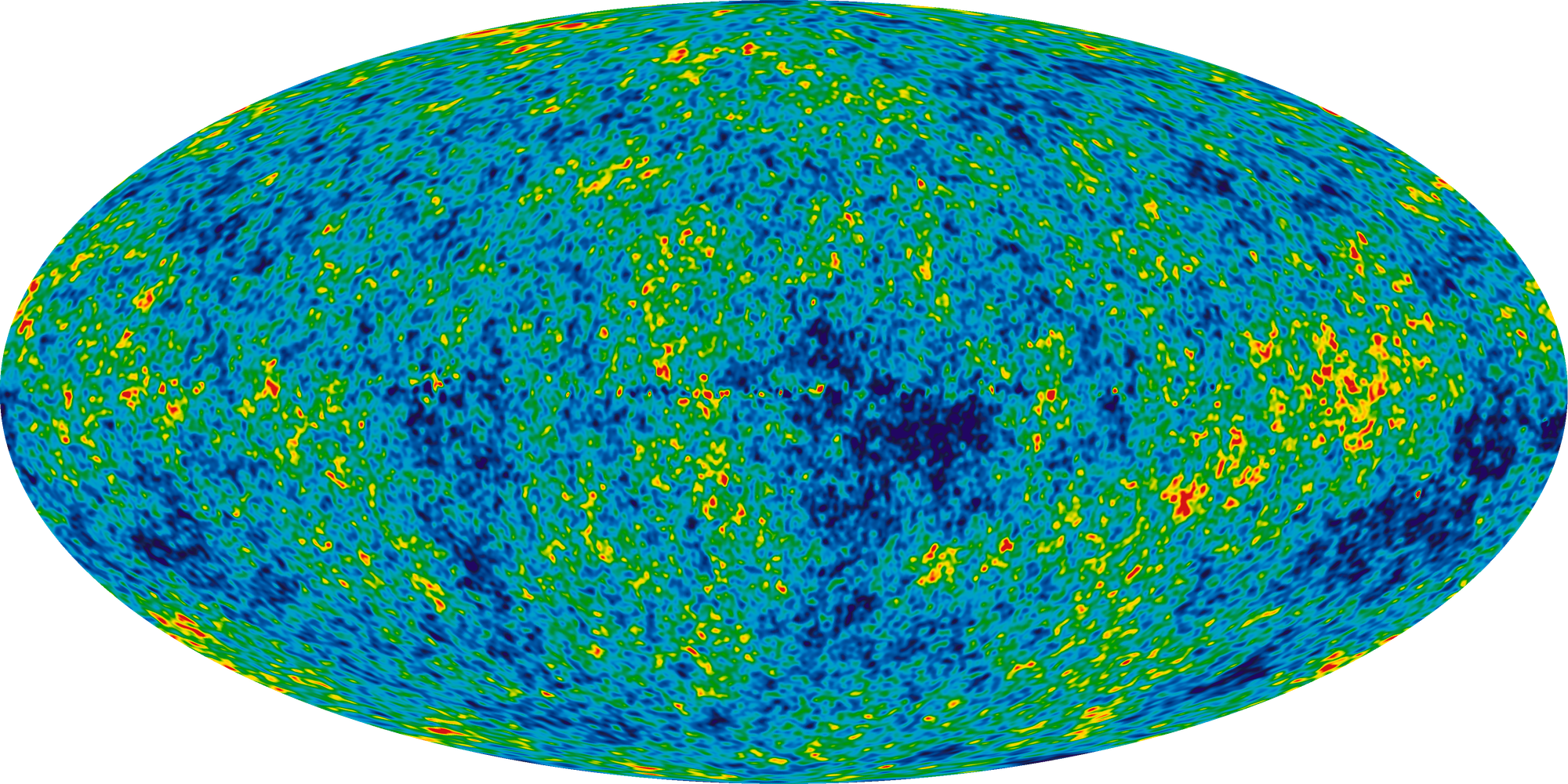
Thermodynamics has four main laws, uncomfortably numbered from 0 to 3. For this case, we are interested in the first and second. The first states that in a closed system, energy is constant: it can be transformed, but never created or destroyed. The second law defines the irreversibility of natural processes: in a closed system, energy tends to dissipate, that is, to move toward a state of maximum homogeneity. This measure of energy distribution or temperature is what we call "entropy," and in a closed system, it always increases. The problem is that the universe is a closed system: thermodynamics dictates that, within millions of years, the universe itself will reach a point of maximum entropy, where all energy is homogeneously distributed. At that moment, it will reach a state of equilibrium, where no energy is available for thermodynamic processes to occur: this is known as "heat death," the theoretical maximum lifespan of our universe.
I think it's clear why the concept of entropy is so attractive. In some way, physics reintroduces an image of the apocalypse, which is no longer religious but scientifically probable. And, what’s worse, it seems to be necessary.
Entropy plays a complex role: on one hand, it proves that our perception of the linear sense of time is empirically verifiable. Classical physics, whether Newtonian or Einsteinian, could function the same way if time flowed backward or forward; thermodynamics does not. Thermodynamics has a unique, irreversible direction, what we call "the arrow of time": forward, entropy increases; backward, it decreases. According to the classic example: we've all seen a glass fall to the floor and shatter, but it's nearly impossible for a pile of shards to spontaneously form a glass.
On the other hand, entropy plays an impossible game: it allows something constant to come to an end. If, as the first law states, the amount of energy is constant and cannot be destroyed, why should there be a state of heat death? Because energy tends to dissipate, to exist in a homogeneous distribution such that there are no significant energy differences allowing thermodynamic processes to occur. For movement to exist, there must be differences between one place and another: when everything is at the same temperature, nothing moves. In this sense, entropy produces the image of a death that does not occur through reduction or disappearance, but through simple stillness. A good example is coal: when we ignite it, part of the energy available in it is transmitted as heat, true, but there is a part that remains unusable in the ashes. And, remember, time is irreversible: we will never get new coal from the embers.
It's clear why the concept of entropy is so attractive. In some way, physics reintroduces an image of the apocalypse, which is no longer religious but scientifically probable. And, what’s worse, it seems to be necessary.
These characteristics will lead a group of scientists (mathematicians, physicists, psychiatrists, and even anthropologists) to use this concept for a new purpose in the 1940s. In a series of multidisciplinary conferences, these men and women will attempt to establish a new discipline that promises to unify the exact and natural sciences with the social and human sciences: cybernetics. If I may simplify brutally, cybernetics proposes that different systems, whether biological, physical, social, or psychological, operate under the same logic, defined by adaptation to the environment through feedback cycles. What’s important for our approach is how cyberneticians use entropy: for them, it is a central element in their theory of information. In this way, they legitimize their controversial new scientific discipline based on thermodynamics.
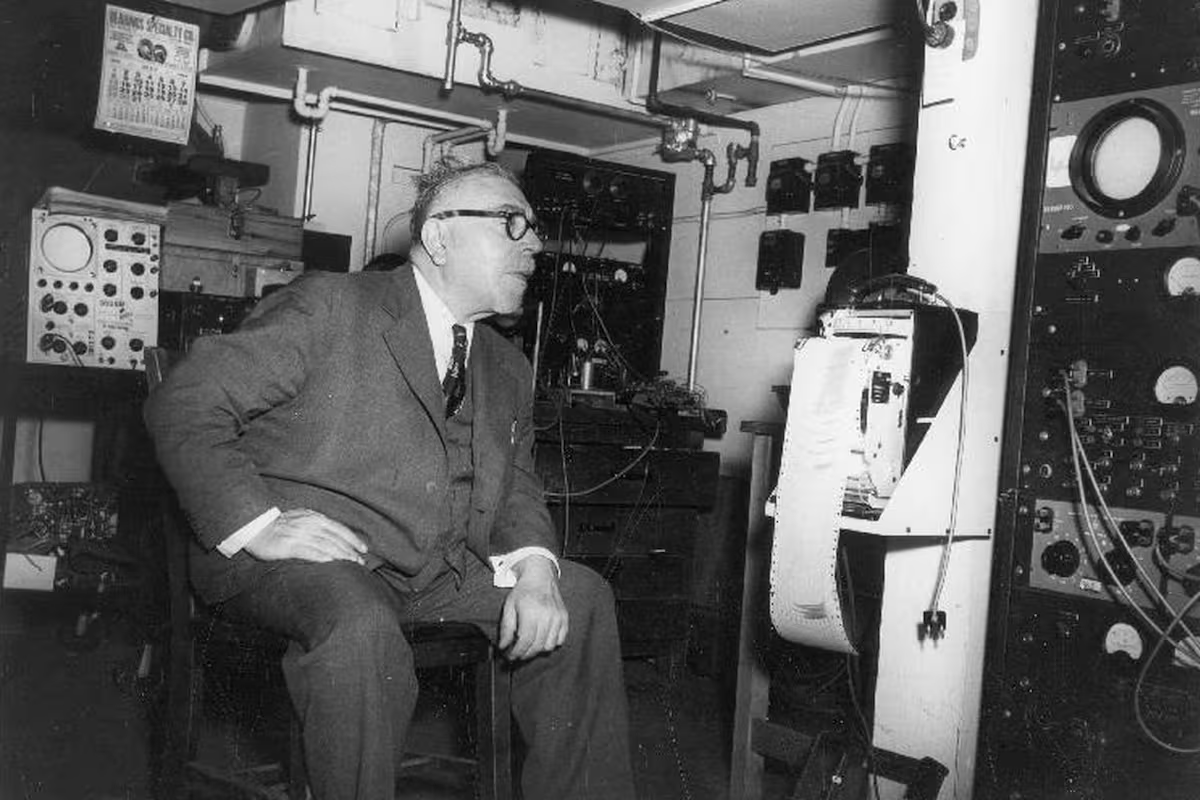
Cybernetic systems are defined by their relationship with information: they must obtain information from their environment to modify their behavior and thus restart the feedback loop. In this context, what does entropy represent? Unfortunately, there was a clash between two leaders in cybernetics, who used the same word with literally opposite definitions. For Norbert Wiener, entropy is the opposite of information: the more homogeneous a message is, the less likely it is to discern new information. In other words, it is equivalent to noise. For Claude Shannon, entropy is equivalent to information because it measures the level of disorder: a completely ordered message is entirely predictable, providing no new information; a high-entropy, disordered message has greater randomness.
This wasn’t a serious problem for cyberneticians: to understand a formula from Shannon, Wiener simply added a negative sign at the beginning, and vice versa. But the implications for the popular use of entropy are enormous: do we understand it as noise or as information?
Ultimately, what matters is that while Wiener and Shannon used equations similar to those in thermodynamics for cybernetics, the meaning they assign to the concept of entropy remains symbolic, metaphorical. In physics, entropy is a singular concept; in cybernetics and information theory, it is open to interpretations. From there, it enters common sense and, more interestingly, the political vocabulary.
Does organization triumph over time?
The first law of thermodynamics, which states that energy cannot be created or destroyed, is better known as the “law of conservation of energy.” It shouldn’t be surprising, then, that many political uses of thermodynamics have a conservative tint.
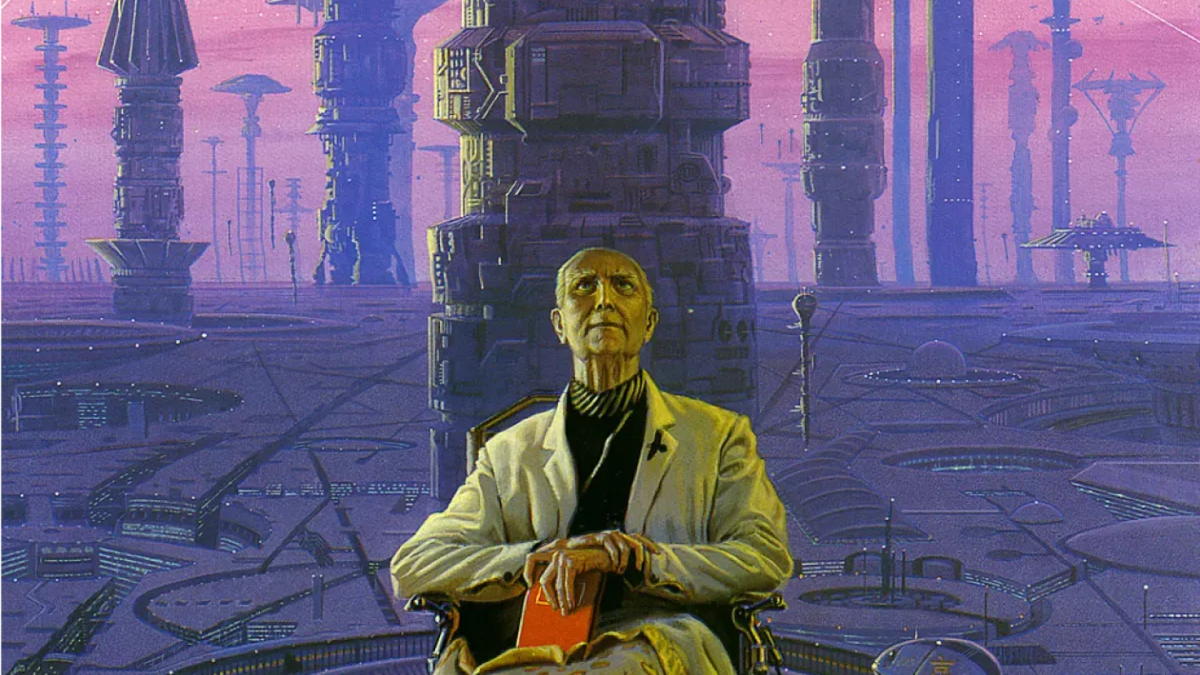
It is inevitable that the first question that arises when we confront the concept of entropy is whether it is possible to stop or reverse it. It is intolerable to think that the universe is inexorably heading towards death, that the very principles governing the functioning of reality necessarily tend towards an end. It matters little that an exorbitant amount of time is still ahead, that humanity will likely have gone extinct long before reaching heat death, and that without a doubt it won’t affect us, nor the grandchildren of our grandchildren. The most famous formulation of this existential anxiety about entropy is represented by a story from Isaac Asimov: “The Last Question,” published in 1957. The text recounts the existence of a supercomputer, Multivac, which becomes more powerful over thousands of years; at various points, someone asks how to reverse or stop entropy. Each time, Multivac responds that it does not have enough information to solve the problem. In the final scene, as thermodynamic equilibrium approaches its conclusion, the computer finally has an answer: it says, “Let there be light.” And light is made.
The meaning is clear: at the limit point, theological and scientific questions coincide; the only possible solution to the problem of heat death is a new big bang. But that answer is unsatisfactory, as it has little to do with human action.
In 1910, American historian Henry Adams gave a lecture where he attempted to apply the concept of entropy to a civilizational history. For him, the second law of thermodynamics demonstrates that any expenditure of energy alters, degrades, or somehow spoils it. Humanity finds itself in a special position: being capable of thought, it has a much greater capacity to accelerate entropy; in fact, Adams will ultimately argue that the very act of thinking is an entropic expenditure. In this way, he will develop a fundamentally anti-progressive conception of history: against the scientistic theories of progress, particularly those based on Darwinian evolution, Adams proposes that humanity is the species that degrades the fastest and degrades everything around it. Surprisingly, from the right, his arguments seem to anticipate certain contemporary discourses on climate change.
However, Adams is not a prophet of collapse. He wants to provide an answer to this problem. To do this, he will make a (very poor) reading of a theoretical experiment: Maxwell's Demon. This was an intellectual exercise developed by physicist James Clerk Maxwell to attempt to dispute the second law of thermodynamics: his proposal is to imagine an entity (a demon) that operates a door between two chambers, allowing only the particles of lower temperature to pass through, thereby reducing the total entropy of the system. The consensus on the experiment is that it doesn’t make much sense, as it is impossible for such an entity to exist without consuming energy itself. Beyond these details, what interests me is that the idea that entropy should be combated is shared by physicists and historians, chemists and politicians. In Adams's case, he will argue something like that the militarization of society is the only process that reverses entropy, functioning as a “Maxwell's Demon of History.” There’s no need to dwell too much on this.
Let’s fast forward a few years: in 1944, Erwin Schrödinger (yes, the one with the cat that is both alive and dead) published What is Life?, a book where he introduces the concept of “neguentropy,” which would be something like the opposite of entropy. According to him, living organisms are formations that maintain internal organization for a certain time without energy degradation: they are neguentropic.
A possible reader of Schrödinger, and a sure reader of Wiener, was Ramón Carrillo, the legendary first Minister of Health of Argentina, under Peronism. In a series of forgotten texts, Carrillo proposed a “cybernology” as an art of governance, based on a “biopolitics” (yes, he used the term long before Foucault), a politics of health and life for the population. Inspired by his readings of cybernetics, Carrillo would continue this work of philosophical anthropology during his exile in Belém do Pará, Brazil, where he wrote the foundations of a “general theory of man” (!). In this theory, entropy occupies a central place: it implies a series of disaggregation processes, but which could be reversible through other processes of union and integration. Beyond the mystical drifts Carrillo incurs, his work is a classic example of organicism: he conceives society (and even the entire planet) as an organism, against vitalist or mechanistic readings. This is traditionally a conservative position, in both political and energetic senses.
The problem posed by this kind of thinking is whether the organism is an open or closed system. We could only speak of a refutation of the terrible fate of the second law if, in a closed system, entropy could be reduced. However, as we know, living organisms exchange energy with our environment: in this case, it is possible that internally we are neguentropic, but we do so by transferring entropy outward. It doesn’t matter whether we consider an individual organism, a society, or even the entire planet: they remain open systems within the vast closed universal system.
Today, the political uses of entropy tend to address this dilemma. To the old concept of “neguentropy,” as a potential force to reverse energy degradation, they prefer to oppose the concept of “extropy,” which would imply accelerating dissipation outward to form an enclave that resists chaos. The Neoreactionary movement, led by Curtis Yarvin and Nick Land, seeks to theorize precisely this. They read processes of social disaggregation as entropic processes: immigration, ethnic and political pluralism, sexual diversity, the decline of the legitimacy of family and state institutions, but also globalization and the transnationalization of exchange under capitalism.
From that perspective, it makes sense to be both authoritarian and liberal at the same time. (...) For Land, Yarvin, and their reactionary or libertarian followers, the goal is to channel all the disaggregating potential of entropy outward, through the channels of global capitalism, to preserve a non-entropic state within the organism.
In this sense, his critique of liberal democracy should be understood through a thermodynamic lens: liberal democracies internalize entropy, while conservative systems, hyper-hierarchical ones promoted by the Neoreactionaries, externalize it. Thus, it makes sense that there is no real contradiction in worshiping capitalist acceleration while rejecting the social effects it brings; in other words, from that perspective, it is coherent to be both authoritarian and liberal at the same time. Because the aim is to exploit certain entropic processes in an extrinsic way: for Land, Yarvin, and their reactionary or libertarian followers, the goal is to channel all the disintegrative potential of what they perceive as entropy outward, through the channels of global capitalism, to maintain a non-entropic state within the organism.
And yet, one might wonder if this isn’t just mere cope. That extrinsic enclave will only be able to resist, albeit precariously and temporarily, against an entropic process that remains inexorable. All political uses of the concept of entropy that aim to combat it are doomed, physically, to fail. Some questions arise for me at the end of this essay: does it make sense for us to spend our time trying to fight against a thermodynamic process that is fundamental to the universe? But at the same time, isn’t the most natural response to want to escape death, to reject the ultimate fate of cosmic destruction? What else could we do? In other words: perhaps once entropy is discovered, it necessarily becomes a subject of disputes over how we organize human life: how we expend energy, how we manage it, from what sources we extract it, with what efficiency; those are entropic questions, because politics, as the art of deciding and governing our shared life, is entropic.
✦ Suscribite
Las notas de 421 no tienen paywall
Y a cada colaborador se le paga por su trabajo. Las dos cosas dependen de los suscriptores.
Dante Sabatto es sociólogo. Investiga y escribe sobre pensamiento contemporáneo, con un foco en aceleracionismo, horror cósmico y postcapitalismo. Sus textos exploran la intersección entre estética, técnica y política en la cultura del siglo XXI.