Protect and Survive: A Guide to Surviving a Nuclear Apocalypse
A fierce, propaganda-laden guide on how to prevent the end of humanity in a nuclear catastrophe.

A fierce, propaganda-laden guide on how to prevent the end of humanity in a nuclear catastrophe.
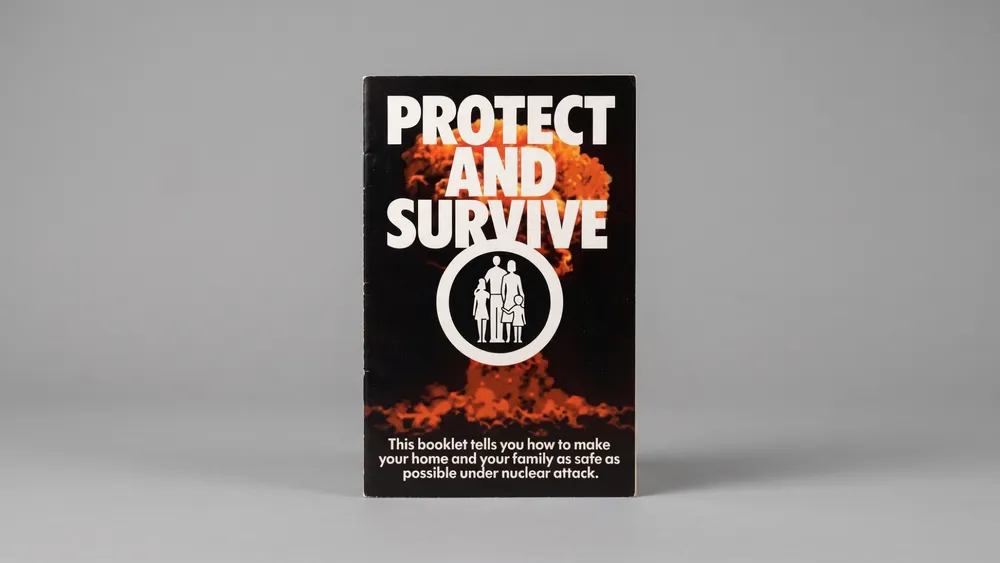
Metaphysically, the manual Protect and Survive is realistic. If you're within the closest radius to the bomb's heat and explosion, there's not much you can do; hopefully, you die quickly.
Ideally, you should have a safe room in your basement, with a sealed entrance covered by any solid material: sand, clothing, cardboard, wood. When the death dust settles, only that material will be able to contain the radiation.
Importantly, after the explosion, you need to go out and extinguish any fires in the house before an alarm indicates that radioactive rain is about to fall. If you hear it, turn off the lights, gas, and fuel to prevent fires, get into your bunker room, and let's hope you've saved enough water, food, and supplies (like gloves, bags, and alcohol for cleaning, etc.) for the next two weeks. And also the radio, so whatever remains of authority can send out new directives. And this manual, Protect and Survive, to check off the actions we recommend. It even comes with a questionnaire for you to review. Very practical. Sincerely, the Information Office, at the Loyal Service of Her Majesty.
Metaphysically, the manual Protect and Survive is realistic. If you're within the closest radius to the bomb's heat and explosion, there's not much you can do; hopefully, you die quickly.
Needless to say, these efforts will likely have the effect of a fart in a basket. In Black Rain by Ibuse Masuji, we learn about the martyrdom of a family dealing with the death of their adopted daughter from post-Hiroshima cancer, but not shortly after, rather years later. Just when they thought she could live a normal life, Little Boy reminds them that it hasn't left yet. In the words of Truman, the atomic bomb is the “chaining of the basic power of the universe”: when it explodes, it's as if the sun makes an appearance for a few seconds over the Earth's surface. A later study indicated that, in the event of a bomb falling, it's somewhat better to simply run in the opposite direction of the explosion, rather than hide in an improvised “bunker.” Either you have a real bunker, well sealed under meters of earth with steel walls and food for a good while, or, well, you won't get very far.
The dawn of the atomic age meant knowing that, finally, we were capable of wiping ourselves out entirely with a war that would last, at most, a few days. Movies about this possible war (Threads, The Day After, Testament) are quite clear in showing the hell that such a war would entail, with the best possible ending: the regression of everyone to medieval levels of population due to hunger and disease is the happy ending. The destruction of ecosystems and entire species, along with the disappearance of cultures, followed by hundreds of years of suboptimal living is the scenario where not all the candies are fired off.
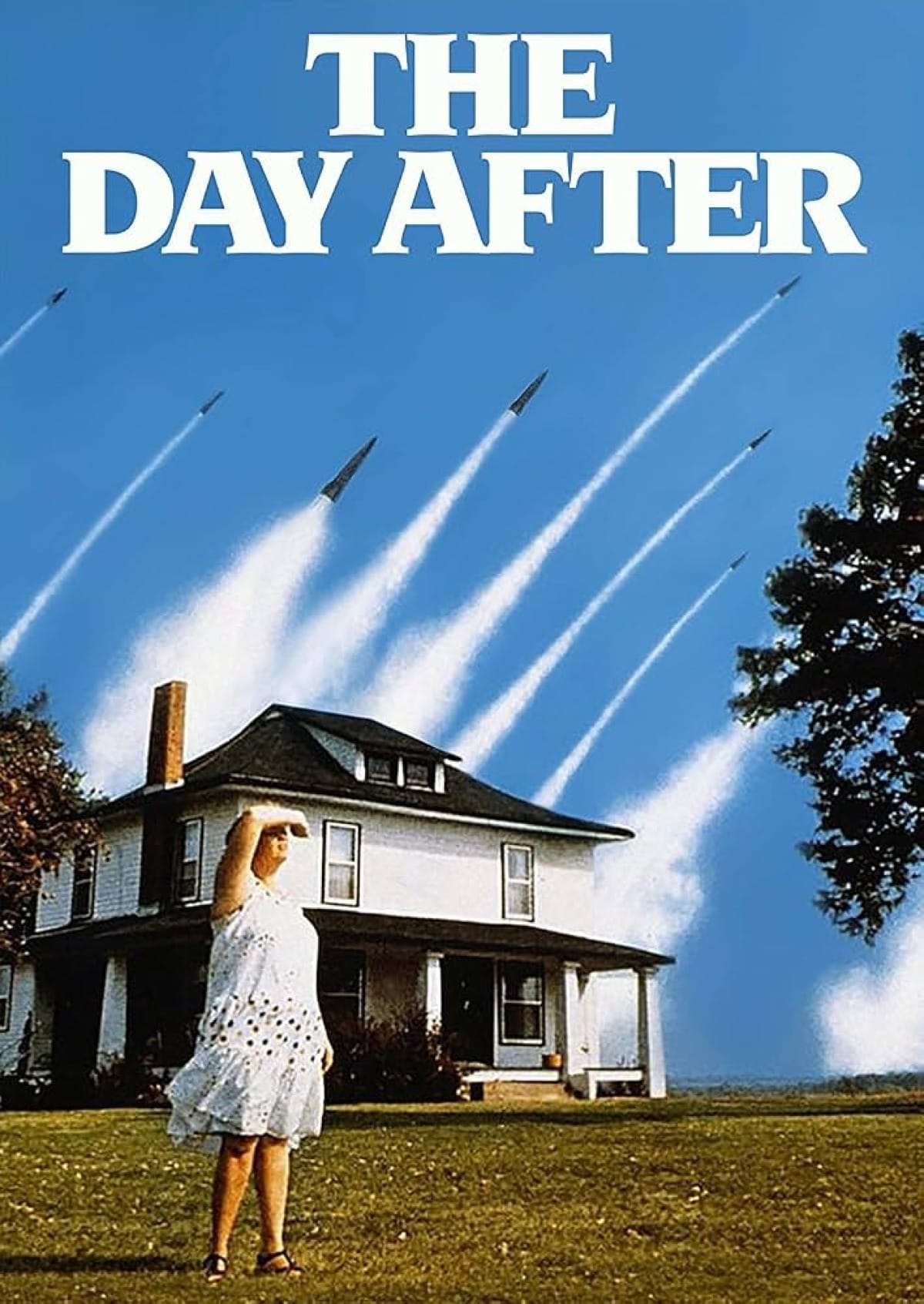
The atomic age imposes a political “atheology,” where spirit and God are no longer part of the equation, but rather the scientific confirmation of reality. This won't be another war; it will be the war, the last one, our end, and what will remain is dust. It won't bring Christ (no matter how much present-day evangelical reading is done) but will strike us from the equation of earthly life. That is the meaning of Ray Bradbury's story There Will Come Soft Rains: us? We're gone. The Earth? It stays; it can handle everything. Why adopt this stance? Because humanity (not God, us) made Hiroshima and Nagasaki its Sodom and Gomorrah. And if theologians from all faiths keep telling us that our evils are not the responsibility of the divine and that the gods will not intervene (clearly, they didn't stop us), well, it's better to discount them: it's just us on the blue dot, either we sit down to talk, or we all arm ourselves so that no one fires a shot.
This won't be another war; it will be the war, the last one, our end, and what will remain is dust.
Protect and Survive is not realistic by accident, but its realism is not perfect. It is the product of an era and its administration, of its macro ideology. In this framework, it is a desperate gasp of civility in the event of its spontaneous death: British citizens, as individuals and families, must understand that they must stay here and wait for a new order. Britannia will prevail, says Milk Snatcher.

When it leaked, the manual was deeply criticized for claiming that in the event of nuclear conflagration, survival was possible: you know, instead of the State taking responsibility, millions of lives must be adjusted to try to manufacture an amateur bunker amidst all other responsibilities; that’s really going to work. It’s also part of the macro illness of England post-World War II: no longer being an Empire, deeply depending on its first rebellious colony, believing itself to be Horatio Nelson at Trafalgar for winning a war thanks to Yankee help and war crimes...
However, in the immediate invocation of solar power over the surface, neither Albion nor anyone else can survive.
Y a cada colaborador se le paga por su trabajo. Las dos cosas dependen de los suscriptores.