Urbanofilia: The City in Dispute
Urbanofilia: The City in Dispute
Thousands of times a day in any city, someone walks from their home to work, turns at the usual corner, crosses when the light allows, and sees nothing. Not because there’s nothing to see, but because the body has learned the route and has delegated its attention elsewhere. The city has ceased to be a problem for that body. It has become a landscape and choreography.
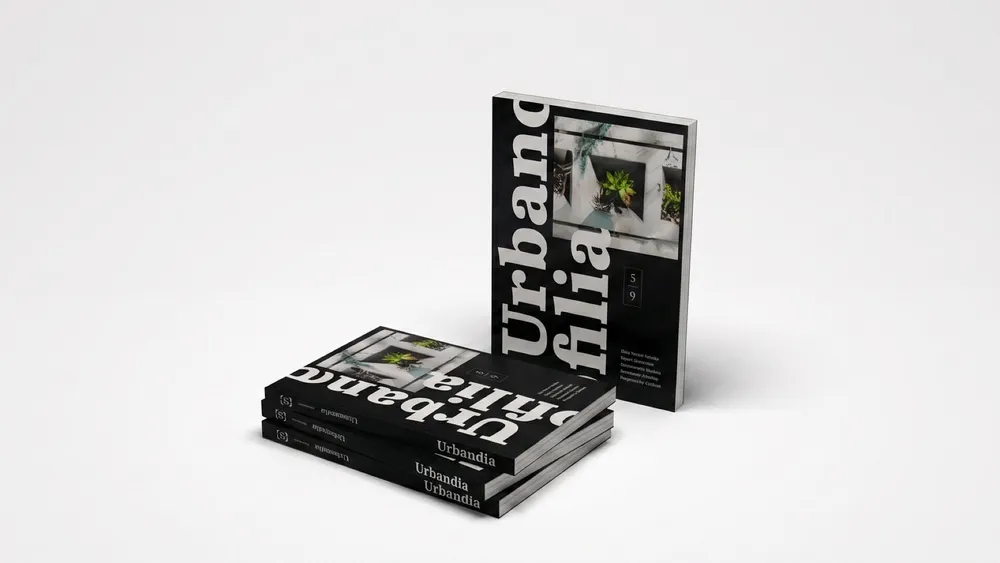
Urbanofilia, the collection of essays published by Federico Poore, Laura Ziliani, Felipe González, and María Migliore with El Gato y la Caja, aims to interrupt just that. It’s not a manual on urbanism or a guide to good municipal practices, though it flirts with both genres. Rather, it’s an attempt to reactivate our gaze, making the familiar strange, so that the usual route stops being a given and becomes a question.
The editorial endeavor is commendable (and also has a blind spot worth discussing). Because there’s a difference between looking at the city with more attention and transforming it; and this is where it’s useful to read Urbanofilia not just as a declaration of urban love, but also as a tool to challenge and question: is it enough to re-educate the gaze of those who walk, if the decisions that truly shape the block, the street, and the neighborhood are made elsewhere, with a different logic and power?
It’s an attempt to reactivate our gaze, making the familiar strange, so that the usual route stops being a given and becomes a question.
One of the first symptoms of this urban "blindness" that the book seeks to cure becomes evident in the distribution of public space. If one looks at the city through the lens of disillusionment proposed by Urbanofilia, the street ceases to be a mere transit place and reveals itself as a stage of deeply asymmetric territorial dispute. It becomes unavoidable to question the design of environments historically conceived with an implicit subject in mind: the motorist. This reasoning forces us to challenge the hegemony of private combustion engines against public transportation. The underlying question in this type of reading is structural: who has the right to fluidity, to the comfort of movement, and who is condemned to waiting or exposure? Dismantling the "car-centric" common sense is not just an ecological whim of the times; it is, at its core, an unavoidable demand for the democratization of urban space.
This diagnosis is compounded by another major tension that defines contemporary metropolitan life: the ceiling. When that newly trained gaze rests on the real estate market, what emerges is no longer the organic development of neighborhoods, but the gears of an exclusionary machine. Following the critical thread enabled by the book, phenomena like gentrification, unaffordable rents, and speculation on vacant land cease to be read as insurmountable fatalisms of the free market and are understood as results of political decisions. Here is where the proposal shows its greatest analytical yield: it allows us to take the individual anguish of someone struggling to pay rent at the end of the month and locate it on a map of structural inequalities. The metropolis that emerges from this exercise brings us back to a foundational discussion: the city contested exclusively as a financial asset for a few, versus the claim of what Henri Lefebvre demanded half a century ago as an inalienable "right to the city."
Unaffordable rents and speculation on vacant land cease to be read as insurmountable fatalisms of the free market and are understood as results of political decisions.
This very tension (between the city as lived experience and the city as commodity) is what Michel de Certeau described as the distance between the "tactics" of the walker and the "strategies" of those who design from above. Urbanofilia stands on the side of tactics: it bets that sharpening the pedestrian gaze is, in itself, a minor but real political act.
All of this is also wrapped in the aesthetic and rhetorical scaffolding characteristic of El Gato y la Caja's project. The editorial proposal is not a minor detail; it acts as a crucial bridge that lowers the reader's defenses. By using a direct register that escapes the dryness of academic papers without losing rigor, the text democratizes debates that often remain encapsulated in the hallways of universities or in closed urbanism institutes. They manage to ground hard concepts in everyday language, allowing indignation, surprise, or neighborhood complaints to acquire solid empirical foundations.
The book itself seems aware of the limits of mere individual observation. From its paratext, Urbanofilia warns that its address goes beyond the pedestrian or the passenger, and also seeks to speak to those who concentrate power to effectively intervene in urban design. The gesture is honest and necessary, but it raises a question about the text itself: what real tools does this essay offer to those who design public policies? Is sensitive dissemination enough to confront the voracity of the real estate market or the underfunding of transportation?
The response that emerges from the reading is ambivalent. As a technical manual for municipal management, Urbanofilia may fall short in the fine-tuning of the State; it is not a text that provides the exact legal or budgetary engineering to halt gentrification or redesign the transportation matrix. However, to demand that would be a misreading, because its true political power lies in the dispute over common sense.
What real tools does this essay offer to those who design public policies? Is sensitive dissemination enough to confront the voracity of the real estate market or the underfunding of transportation?
El Gato y la Caja demonstrates here its greatest editorial virtue, which is translating dense structural problems into the language of public urgency. By showing that traffic congestion, the housing crisis, or the lack of green spaces are not "geographical accidents" but the result of sustained political decisions over time, the book sets the stage for the public agenda. It does not hand the solution on a silver platter to the official or urban planner, but it snatches away the excuse of ignorance.
At the end of the day, reading Urbanofilia functions less as a map of definitive solutions and more as an uncomfortable but necessary magnifying glass. It fulfills the promise of its initial proposal: it makes traversing the city stop being a reflexive act, tamed by habit. Perhaps re-educating the gaze alone is not enough to completely transform the urban power matrix, but it is the unavoidable first step. Because, as this essay makes clear, no one can start fixing a city if they don’t first realize that it is broken.
Las notas de 421 no tienen paywall
Y a cada colaborador se le paga por su trabajo. Las dos cosas dependen de los suscriptores.