Hyperobjects, by Timothy Morton: Plastics, Capitalism and the End of the World
Morton claims the real end of the world happened during the Industrial Revolution. Ecological politics and ethics.

Morton claims the real end of the world happened during the Industrial Revolution. Ecological politics and ethics.
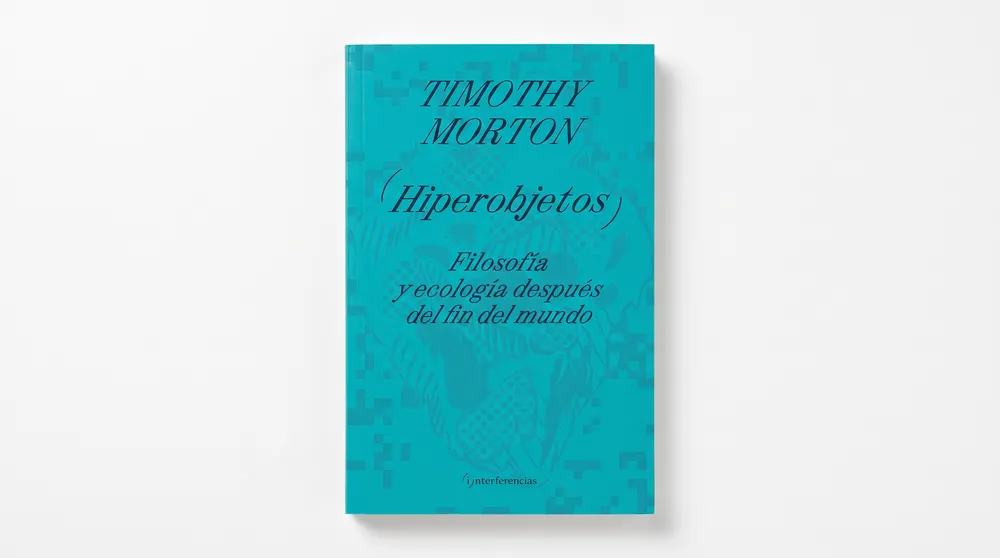
This review is based on the Spanish edition published by Adriana Hidalgo.
When you sit down to read Timothy Morton's Hyperobjects, an essay on philosophy and ecology after the end of the world, you have to be ready for the adventure of diving into the trip it proposes, on the premise that planet Earth and humankind have finally fused together and changed each other's fate. At the dawn of humanity this wasn't the case.
The British philosopher coined the term hyperobject to explore what's coming for us as a species. To qualify as one, it has to tick these boxes: be viscous, because it sticks to things it has nothing to do with; have no fixed location, being everywhere instead; and also carry a certain timelessness. The climate, a black hole or the materials sitting on the Earth's crust are some examples; entities that have accompanied human existence from the very beginning. They were always there.
But the future got here a while ago, and we know that the life we lead has completely changed our surroundings, the air and the soil. That's why a plastic bag is also considered a hyperobject, since it can end up inhabiting the Earth for 500 years, modifying everything in its path. Morton explores these complex phenomena right when global warming, far from being a theory, is a reality you can almost touch. Morton claims that the real end of the world happened in 1784, when the steam engine that powered the Industrial Revolution was patented. And surprise: capitalism is a hyperobject too.
Morton claims that the real end of the world happened in 1784, when the steam engine that powered the Industrial Revolution was patented. And surprise: capitalism is a hyperobject too.
Timothy Morton, considered one of the most influential living philosophers, published the book in 2013. It was recently released in Spanish by Interferencias. It sports the very pretty cover typical of this series, with an embossed illustration you can feel with your fingers and catch against the light. Its 310 pages weigh enough that you won't forget — you're aware you're carrying the weight of the theory the author lays out in his essay. Two chapters, several photographs, and a dozen unanswered ontological questions: we're just humans trying to understand what surrounds us.
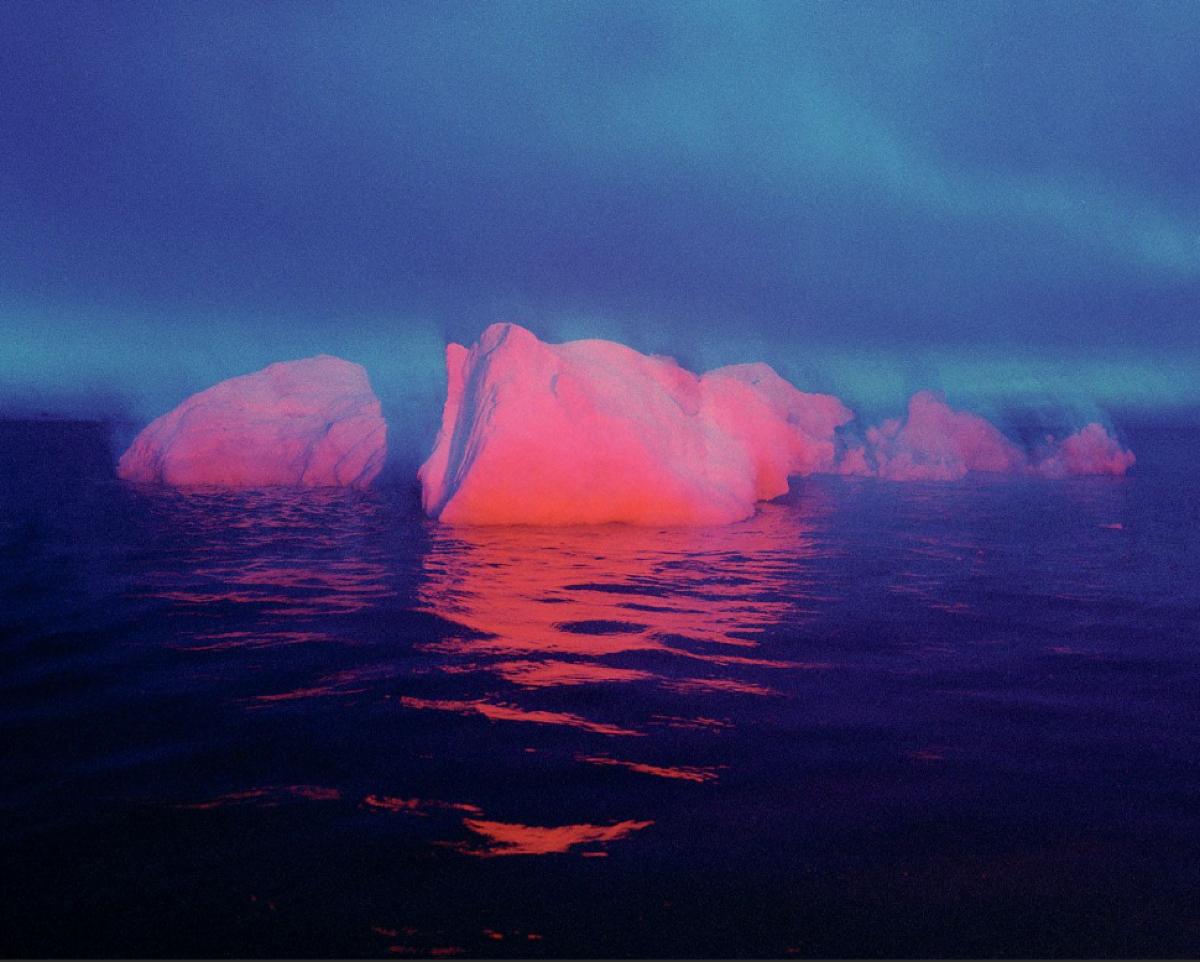
The goal of his work is to challenge readers to stop looking the other way. "The strategy of this book, then, is to awaken us from the dream that the world is about to end, because action on Earth (real) depends on it," he argues. Still, he makes clear in the opening pages that there's still hope for ecological politics and ethics. "The firm belief that the world is about to end 'unless we act now' is paradoxically one of the most potent factors inhibiting a real commitment," he insists in his own words.
Besides teaching philosophy at Rice University in Texas, Timothy Morton won a scholarship on the strength of his academic record. He's the author of 25 books and has been translated into more than 20 languages. Among the best known are "Dark Ecology," "Spacecraft," "Humankind" and "All Art Is Ecological," and in all of them he goes for a tone that always comes out provocative, mixing both science and art in a sharp, on-target way to tell his theories.
The author's cultural diet peeks out between the lines throughout the book. Maybe those are the crutches a text like this needs in order to read smoothly. His theory takes shape amid examples and references that roam pop culture, music, literature, film, academic papers and ancient philosophy. From Twin Peaks to The Lord of the Rings, by way of the Beatles, Slavoj Žižek, Apocalypse Now, Kafka and Aristotle, among many others. Many: there's a solid source guide at the end of the book, organized by chapter, kindly laid out for the reader to consult.
There's a very sweet, very particular story linking Morton and Björk that I think defines the personality of his work. In the age of the Internet, the Icelandic singer decided to send letters to the people who had written her favorite books. Timothy made the list. "I've wanted to write this letter for a long time," she noted in her second sentence. And it turned out he loved her music. As if that weren't intimate enough, Björk told him she was searching for a label for her art, a definition. Both for herself and to be able to explain herself to others, across generations.
In our day-to-day, how much do we really choose, if it was previous generations that changed forever the planet Earth we now live on?
Right there was the seed of something bigger than their bodies of work combined, a mutually fed influence shared with everyone, since some fragments of their letters were exhibited at the Museum of Modern Art in New York in 2015.
In one passage, Morton says the slogan of his philosophy is: "Thinking should teach us how to laugh and how to cry."
The Anthropocene calls us to action, but in reality there aren't that many tools for escaping the system. It's estimated that in a single week a human ingests around 2,000 microplastics, the equivalent of 5 grams, or the size of a credit card. In our day-to-day, how much do we really choose, if it was previous generations that changed forever the planet Earth we now live on?
"Not all of us are ready to feel disturbed enough," Morton told The Guardian in a 2017 interview. Are you? And what are you going to do about it?
Y a cada colaborador se le paga por su trabajo. Las dos cosas dependen de los suscriptores.