Muñiz: A Pioneer of Argentine Science
Muñiz: A Pioneer of Argentine Science
I don't know if this happens to you, but I often wonder who the person was that names a street of Buenos Aires. What did they do? Were they a good person? Almost always the answer is no: Ramón Falcón has an avenue, for instance. But sometimes you get a surprise. I recently moved to a passage named Gertrudis Medeiros. Of course, I looked up who she was, and she was totally impressive. Born in 1780, she was the head of an intelligence network that provided reports to Miguel de Güemes about the royalist troops. According to what I read, she used corn kernels that she would place in different pockets to count the enemy troops: one pocket for artillery, another for horses, and so on. In fact, in 1814, the Spanish arrested her and tied her to a carob tree before taking her to Jujuy, where she was imprisoned for a while. However, she managed to keep sending intelligence reports even while detained.
I often wonder who the person was that names a street. What did they do? Were they a good person?
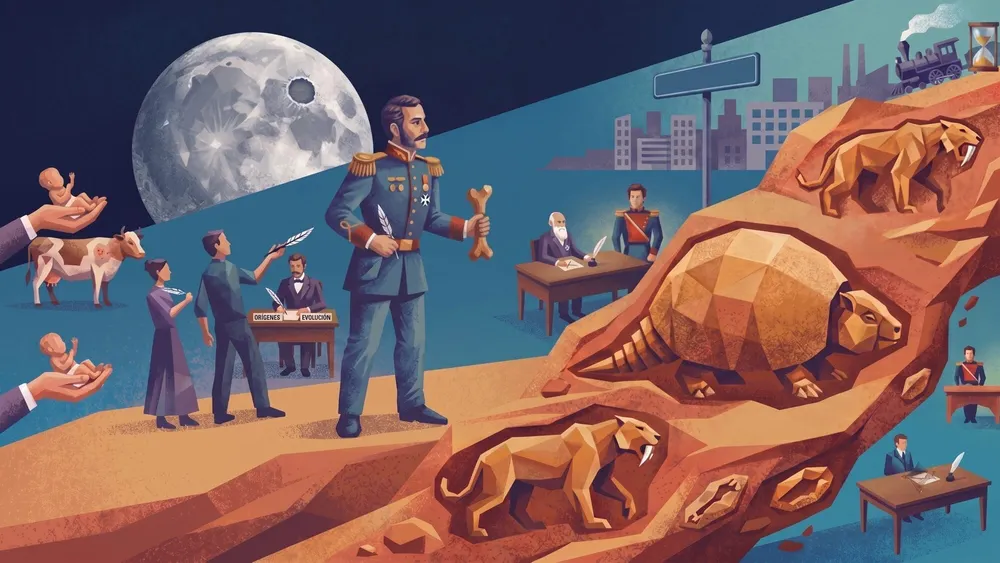
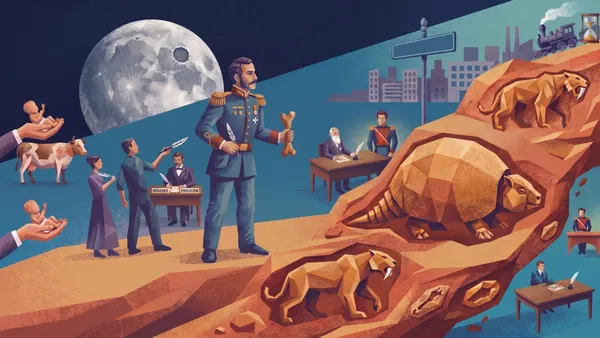
Another person who has streets, a city, a hospital, A CRATER ON THE MOON, and who was also quite a big deal is Francisco Muñiz. And, moreover, he is the protagonist of this story.
Muñiz was born in 1795, named Francisco Javier Tomás de la Concepción. When he was eleven, the English invasions occurred, and he wanted to enlist as a cadet in the Andalusian regiment because his parents were Andalusian (and because he wanted to defend the Homeland). He fought against the English and was wounded in the leg. At that time, he was treated by Cosme Argerich (another person who has a hospital named after him), and as he later recounted, from that moment on, he wanted to become a doctor.
After graduating in 1825, he was appointed surgeon of the Cavalry Regiment on the border of Chascomús, a pretty important place because that’s where Argentina ended at that time. Beyond Atalaya was Pampa territory. However, it would be another 120 years before it was inaugurated, and the medialuna as we know it today didn’t exist either, as it was brought by Italian and French immigrants in the early 20th century.
The thing is, two important things happen to Muñiz there. The first is that he becomes friends with Juan Lavalle, and the second is that he starts to take an interest in nature, especially in the bones of buried animals.
By the end of that year, the War of Brazil began, which pitted the United Provinces of the Río de la Plata against the Empire of Brazil for control of the Banda Oriental. In 1826, Muñiz joined the Republican Army as a military doctor and eventually served as chief surgeon with the rank of lieutenant colonel. In May 1827, during the battle of Yerbal, Lavalle was shot in the left leg. At that moment, Muñiz was far away, but as soon as he found out, he traveled for six days to attend to him, crossing areas controlled by Brazil. He arrived, and Lavalle recovered without losing his leg, which, in 1827, without antibiotics, was a big deal.
After the war, in 1828, Muñiz settled in Luján, where he spent about twenty years and began to forge a friendship with Juan Manuel de Rosas, eventually becoming his personal doctor. In fact, in 1841, Muñiz presented him with his first major paleontological collection: eleven boxes of fossils.
The 19th century, despite being a huge century, had three major problems: the aforementioned issue of medialunas, the previously mentioned absence of antibiotics, and the fact that there were no dinosaurs. In reality, by then some dinosaur remains had already been found. The word dinosaur was first used in 1842, but the truth is that the vast majority of people did not know these animals had ever existed.
During his years in Luján, Muñiz excavated the riverbanks and gathered fossils of glyptodonts, megatheriums, mastodons, extinct horses, and other animals from the Pampean fauna. He didn’t discover the glyptodon by himself, but he did obtain the most complete specimen up to that time.
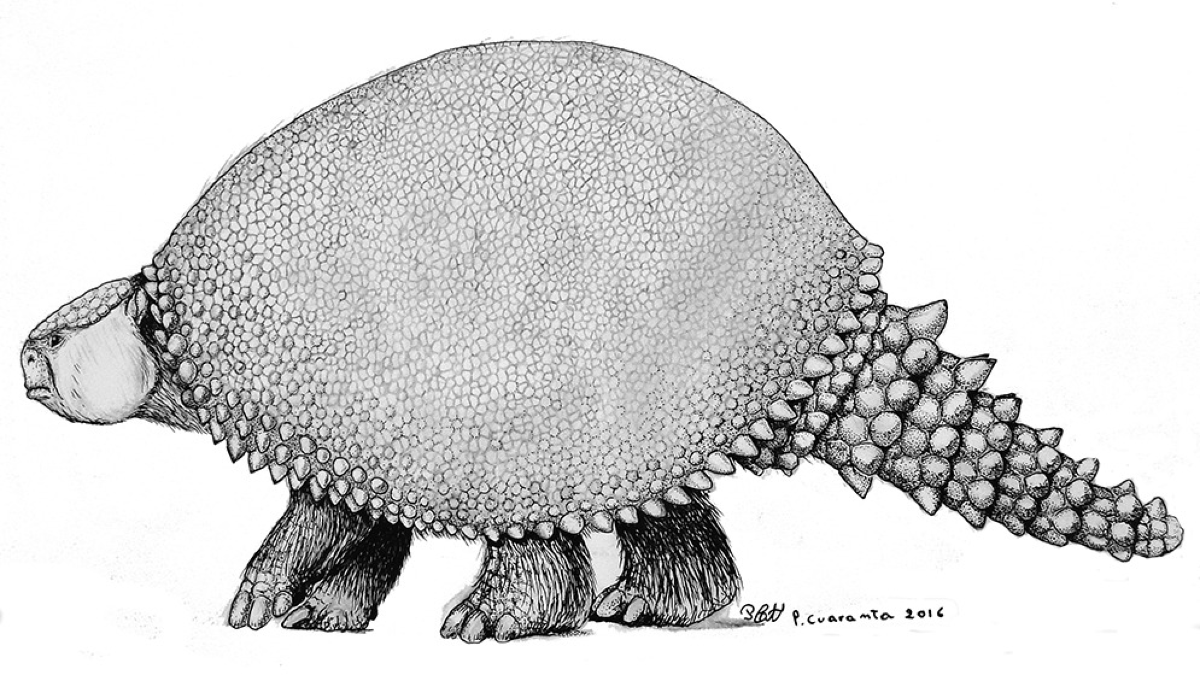
In 1844, he described a large fossil feline with enormous teeth and named it Muñi-felis bonaerensis. Yes, he named it after himself: surely, Francisco was a person with a significant ego, just imagine, he saved Lavalle, was friends with Rosas, and was discovering animals that no one had ever seen before.
But this is just the beginning. Muñiz lived until the 1870s.
Little by little, he became known, and his work reached Europe. He ended up exchanging letters with none other than Charles Darwin. Although Darwin had passed through Argentina a few years earlier, they didn’t get to meet in 1833. He did meet with Rosas, and they actually chatted for a while. Darwin describes him in his diary as someone who spoke very good English, was incredible at riding horses, and would surely be someone important very soon.
Francisco was a person with a significant ego; just imagine, he saved Lavalle, was friends with Rosas, and was discovering animals that no one had ever seen before.
Darwin was interested in a variety of short-nosed cattle known as the ñata cow, especially how characteristics had changed in domestic animals. Darwin used the data that Muñiz sent him and even thanked him in the second edition of the Origin of Species.
Still, for me, the most important thing Muñiz did was the first public production of vaccines in the history of America. And I’m not exaggerating. Since 1828, Muñiz was put in charge of administering smallpox vaccination in the Luján department. The only vaccine available at that time. It had been discovered in 1798 when Edward Jenner administered the liquid from a cowpox sore to a 5-year-old boy, similar to the ones that caused smallpox in humans.
Today we know that this sore appeared on cows due to a virus very similar to the human smallpox virus (the cowpox virus). By coming into contact with that virus, which cannot make us sick (because it’s a cow virus), the immune system generates a memory response against this virus that, fortunately, is enough to protect us from human smallpox. Thus, the five-year-old boy became the first vaccinated person in the history of humanity.
Thanks to the smallpox vaccine, we managed to eradicate smallpox in 1978, a virus that killed over 300 million people just in the 20th century.
Back to Muñiz. In 1844, Buenos Aires ran out of vaccine. The vaccine came from Europe, and sometimes supply was complicated, especially when there was an Anglo-French blockade in the Río de la Plata. Rosas then asked Muñiz to solve the problem.
Muñiz traveled from Luján with one of his daughters, who was just a few months old and had been recently vaccinated. Since the vaccine caused small sores from which the liquid could be extracted, it could be transported within people. With the liquid from the blisters on the baby's arm, several dozen people were vaccinated, from whose blisters the liquid was extracted, allowing the chain to be restarted.
But in addition, living in Luján, a place with a lot of cows, Muñiz began to search for something similar to what he saw Jenner do, so he could produce the vaccine in Argentina using cows. Eventually, he found it and conducted a small-scale trial, vaccinating a few children with that preparation, which worked because they did not contract smallpox. A few decades later, the vaccine began to be produced in our country using cows with Muñiz's method.
In 1844, Buenos Aires ran out of vaccine. (...) Rosas then asked Muñiz to solve the problem.
On February 3, 1852, the Battle of Caseros took place, probably the most significant military conflict in Argentine history, which, in just a few hours, ended two decades of Juan Manuel de Rosas's hegemony. Following Urquiza's uprising, which culminated in the Battle of Caseros, Muñiz, already 56 years old (which was quite old at that time), took charge of organizing the medical corps of the Federal Army and attended to the wounded after the battle. He did the same in the Battle of Cepeda, organizing the army's medical care that faced Urquiza.
He was also a deputy and senator. And he even had at least one photograph taken, which was quite rare back then. He was also a doctor for the Argentine Army during the War of the Triple Alliance against Paraguay. My goodness, he lived through almost all of Argentine history from the inside.
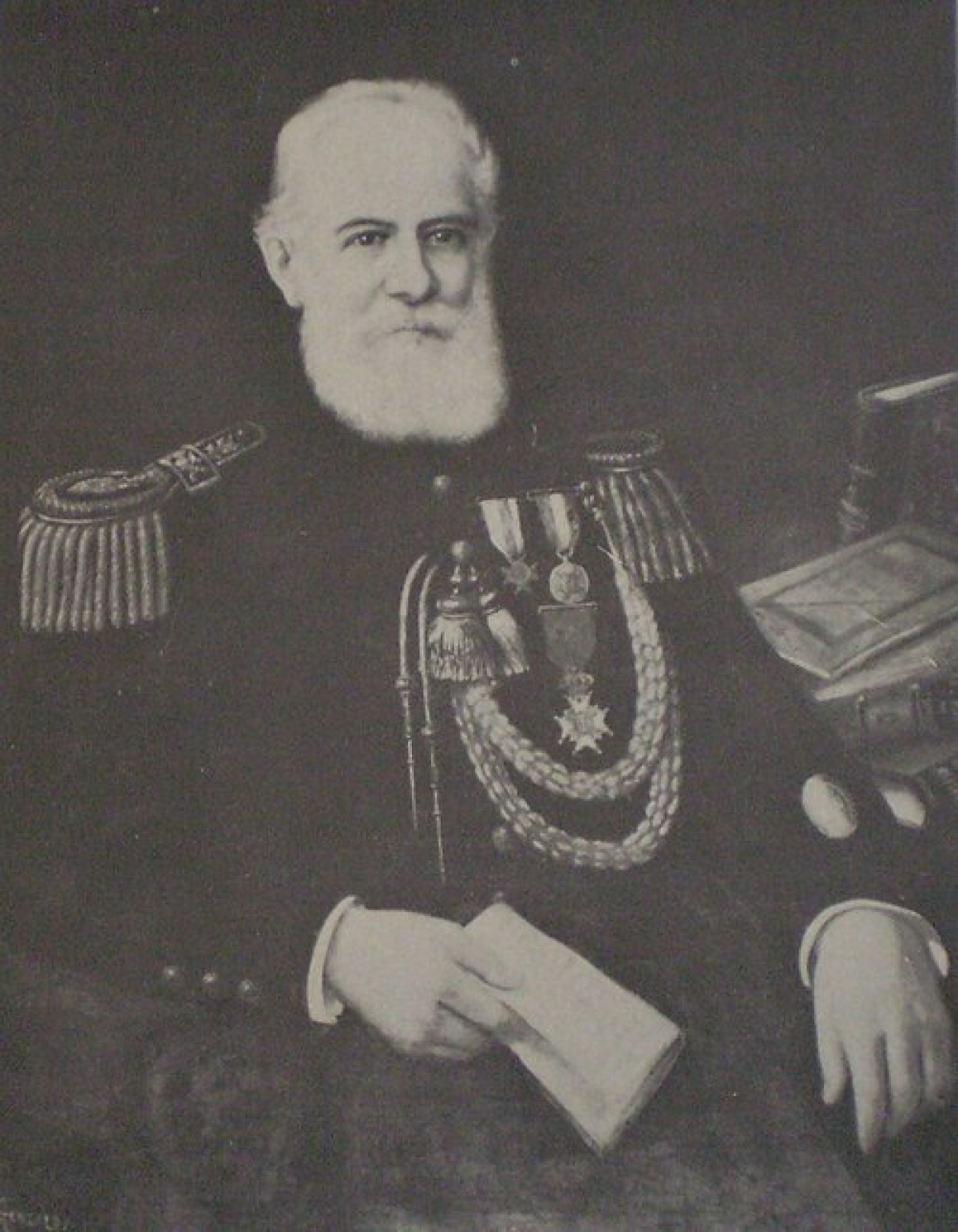
The funny thing is that I only came across Muñiz relatively recently thanks to the Yellow Fever Epidemic of 1871, an event that has obsessed me for years. The epidemic caused the death of around 10% of Buenos Aires's population, led to the evacuation of the city for the first and only time in history, and resulted in the creation of a cemetery (the one in Chacarita) and a train to transport the dead.
When the epidemic occurred, Muñiz was 75 years old, living in Luján, in a nice house, and had lived more than double the life expectancy of the time. He could have said, 'I've done enough, let someone else handle it.' But no, Muñiz traveled to Buenos Aires, probably on the Ferrocarril Oeste, which later became known as Sarmiento, to assist the sick. He contracted the disease and died on April 8, 1871.
After all that, it seems quite fair that today he has streets, a hospital, a city, and a 29-kilometer crater on the far side of the Moon.
Las notas de 421 no tienen paywall
Y a cada colaborador se le paga por su trabajo. Las dos cosas dependen de los suscriptores.