Ride and Play: A History of Argentine Skate Rock
From the ramp at Ciudad Universitaria to Massacre Palestina: the history of Argentine skate rock, as told by those who lived it.

From the ramp at Ciudad Universitaria to Massacre Palestina: the history of Argentine skate rock, as told by those who lived it.

"We spent all day skateboarding and at night we'd sneak into a garage to play music." In just one line, Guillermo Cidade, better known as Walas, lead singer of Massacre and a skateboard activist in Argentina since the early eighties, succinctly defines what was once called (or perhaps still is?) skate rock.
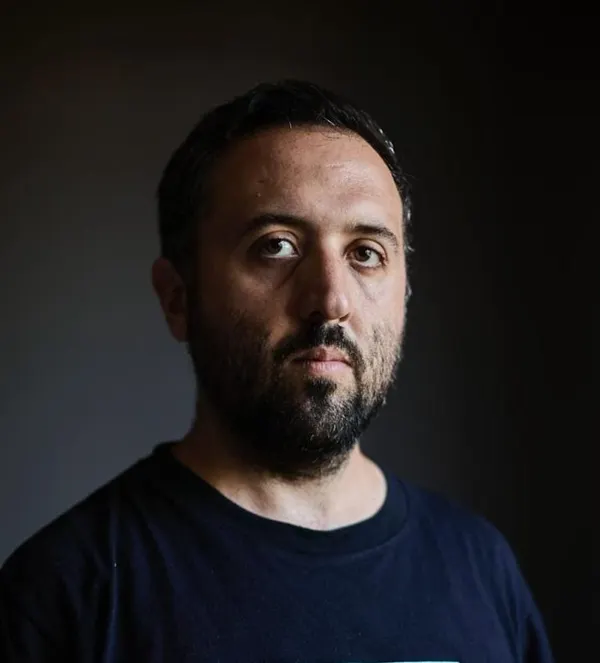
Walas (guitar), José, better known as Topo (bass), Paco (drums), and Richard (vocals), the original lineup of Massacre Palestina (before they simply became Massacre), were four teenage friends skating in a Buenos Aires just emerging from dictatorship, who, almost unintentionally, founded the first local skate rock band. "Our cradle is two places: the Mariano Moreno school and the ramp at Ciudad Universitaria, the first ramp with vertical walls built in Buenos Aires, made by a crew of skaters from which Massacre Palestina emerged," Walas explains in a conversation with 421.news.
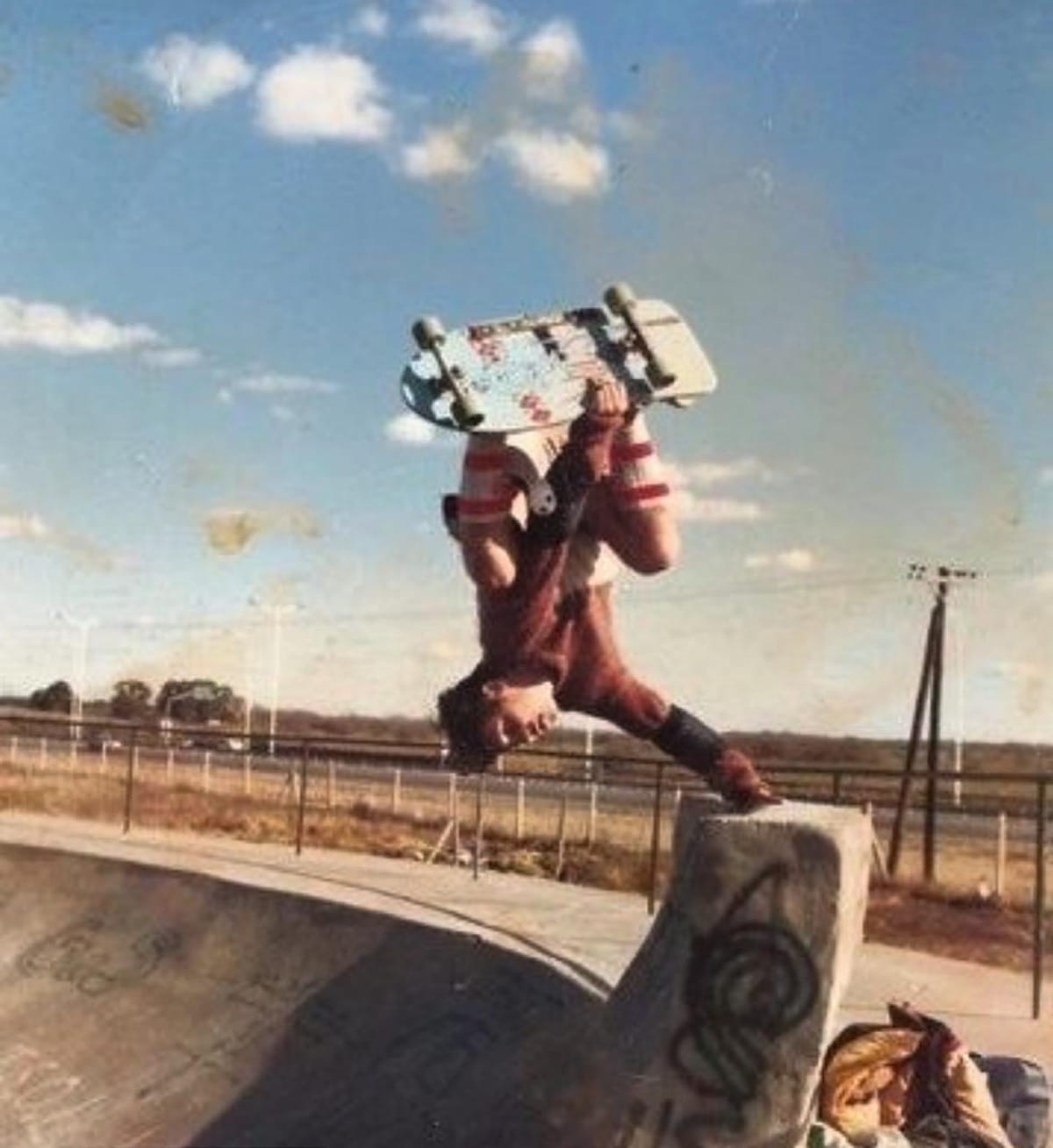
The story of skate rock begins far from Argentina. In the early years of the 1980s, the magazine Thrasher (founded in 1981 in San Francisco by Argentine Fausto Vitello, also the owner of the well-known truck brand Independent) began publishing a section dedicated to bands of that era called Skate Rock. Years later, they added a series of compilations that became holy grails of musical education for future generations. Cassettes that are now considered incunabula where hardcore punk, surf punk, rockabilly, metal, garage, ska, and any other music capable of interacting with skate culture coexist. There weren't too many strict rules for being part of it, but if you were in, your band earned the skate rock label. Some had skaters in their ranks. Others were simply adopted by skaters.
They were four teenage friends skating in a Buenos Aires just emerging from dictatorship, who, almost unintentionally, founded the first local skate rock band.
For Walas, the connection between both worlds can even be traced back before those compilations. "The first thing that blew my mind was Devo and the Plasmatics," he says in a conversation with 421. Although the members of Devo, the American new wave band formed in 1973 in Kent, Ohio, were not professional skaters, they appeared in skateparks, wore helmets and knee pads as part of their aesthetic, and filmed videos featuring some of the best riders of the time. So why couldn't we say they were doing skate rock?
Later, more radical examples would emerge, like Circle Jerks, JFA, Aggression, Agent Orange, T.S.O.L., and dozens of projects that, with or without skaters among their members, with or without album covers alluding to skateboarding, and with or without songs about sliding down a ramp, would end up forming the soundtrack of the first generation of modern skateboarding.
It wasn't until the mid-eighties that the concept and sound of skate rock began to filter down south through a friend of Walas, Enrique "Henry" Candiotti (1965-2012), the son of an Argentine diplomat who lived between Europe, Argentina, and the United States, and who became one of the most influential skaters in the country. Thanks to his father's travels, Henry brought magazines, videos, music, and trends from the Californian scene of the time almost in real-time to these latitudes, in addition to building, along with his friends (like Walas, who at that time was still known as Willy, one of the best local skaters), the first half pipe in Buenos Aires at Ciudad Universitaria. "We were like the chancellors of this, the first to transculturate that California culture to Buenos Aires," the singer asserts.
"We were definitely skate rock, no doubt about it. We were about 15 years old and influenced by being part of the punk rock and alternative scenes. We went to see bands like Los Laxantes, Alerta Roja, Los Baraja, and especially, Sumo. We also frequented the Parakultural and the underground theater scene. We hung out with all that half-intellectual, half-bohemian, half-decadent crowd. Batato Barea, Urdapilleta, Tortonese, Las Gambas al Ajillo, Enrique Symns, the intellectuals like Pichón Baldinu, Levinas, even Indio Solari was part of that crowd. That's where we appeared, mentored by those who are almost our older brothers: Los Fabulosos Cadillacs," Walas recounts.
 Martín Sanzano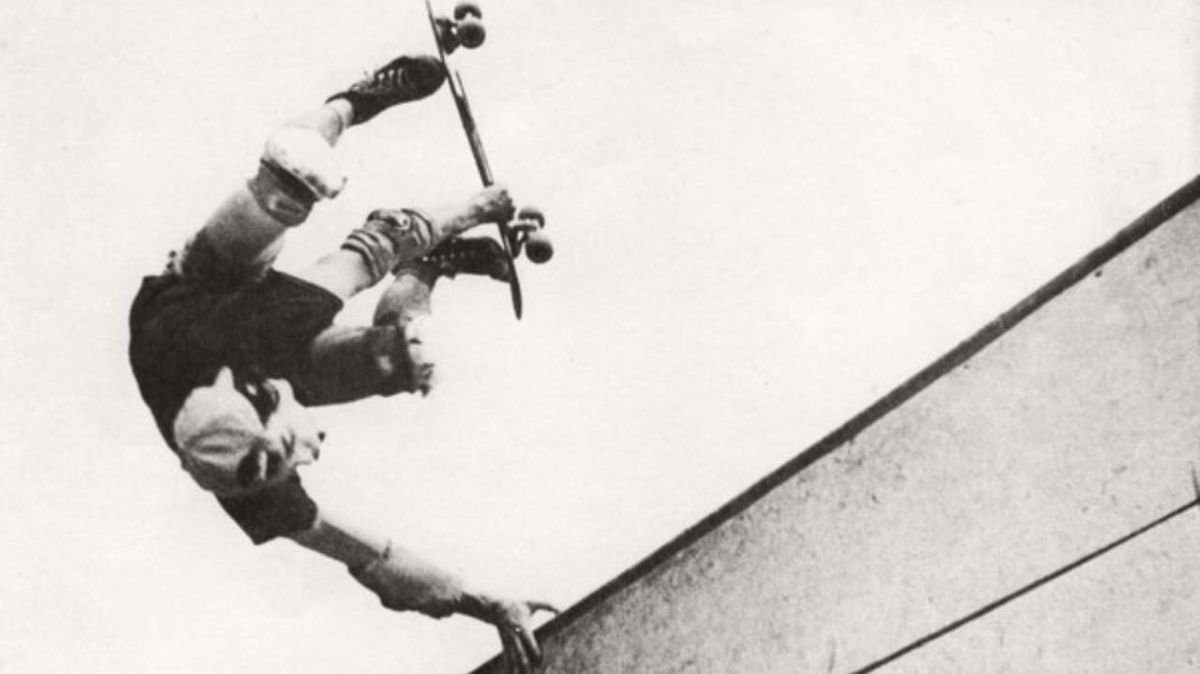
It's impossible to talk about skate in Argentina without mentioning Mar del Plata, the city where the Cadillacs had their first public show (as Cadillacs 57), and where Walas discovered much of what would become his world. "I was like a kind of Marco Polo," he says.
"One summer during vacation, I discovered the Mar del Plata skate scene, which was already in decline at that time, and I brought it to Buenos Aires, with photos of the places where you could skate there. We did what could be called the first skate tour in the history of Argentine skate: five or six kids from Buenos Aires traveled during Holy Week to meet the Mar del Plata scene. There we met the key figures of that scene, who today are almost like national heroes, like Mosca Benjalele or Tatú Martínez."
Born and raised in La Feliz, Pablo "Tatú" Martínez is 57 years old and has never stepped off his skateboard. He is one of the leading figures in the discipline in Argentina, just like his sons Milton and Ezequiel Martínez, both internationally renowned. Tatú also emphasizes Candiotti's role as a fundamental piece in accessing all that information that trickled down from the northern hemisphere.
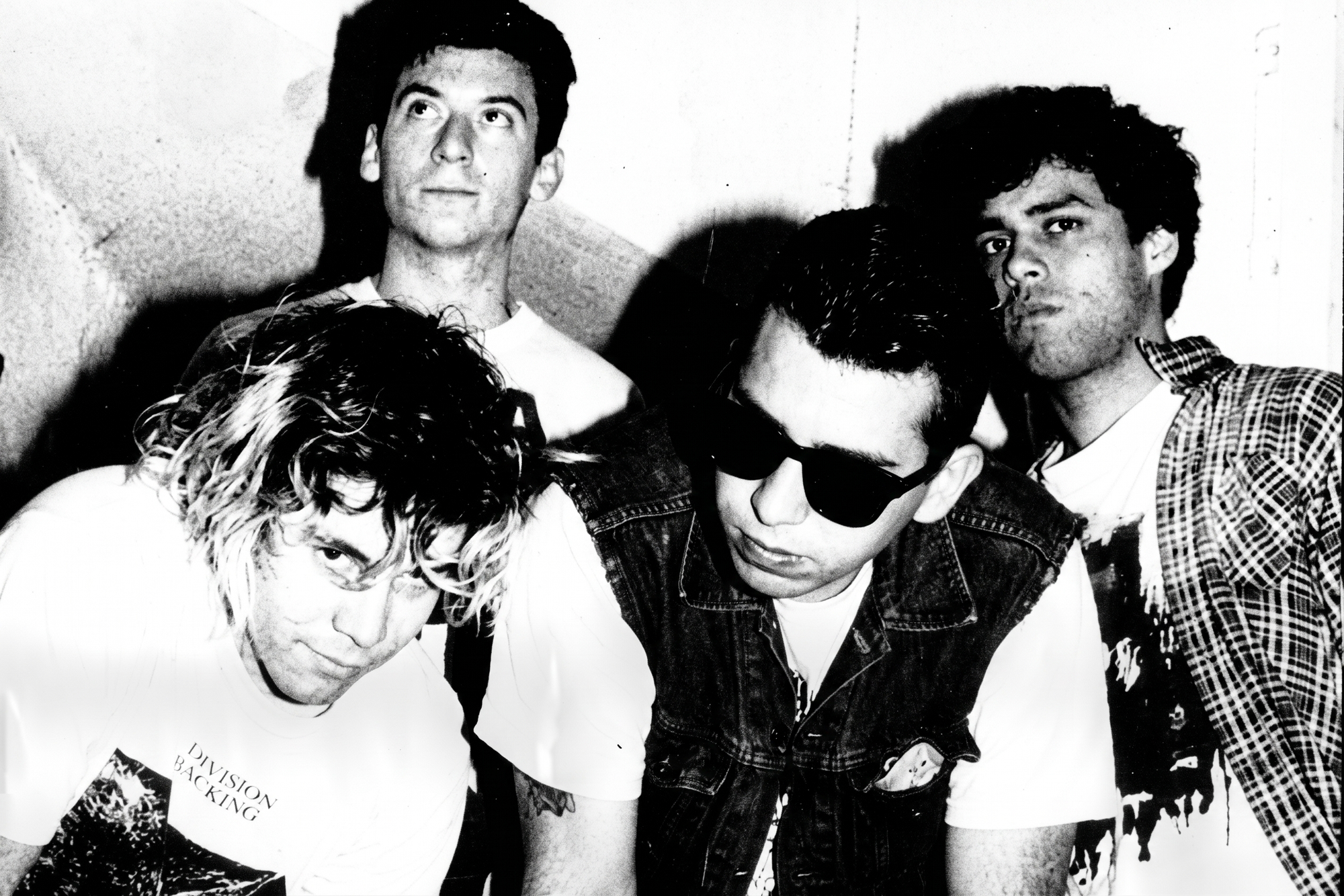
"One would photocopy the magazines he brought, and that's how everything started spreading," he says from his workshop, where he recycles and custom-makes skateboards with the passion of an artisan and the skill of an expert. Tatú not only had his own shop in Mar del Plata (Shifty Skateshop), but he also witnessed the evolution of skateboarding from the eighties to today. "In one of those magazines that Henry brought, I saw the name Minor Threat for the first time, long before I heard anything from them," he recalls.
"Mar del Plata was much more advanced than Buenos Aires," Walas asserts, giving a simple explanation: "surfing." Many surfers traveled to California and returned with boards, magazines, and, of course, music. That's how legendary places like "El Poolcito" emerged, located at Alem and Avellaneda, just around the corner from where the Cadillacs practiced, Tatú remembers. An old empty pool from a hotel built in the sixties that was demolished, and that during the eighties and until the early nineties served as a meeting point for skaters, punks, surfers, musicians, and artists.
An old empty pool from a hotel built in the sixties that was demolished, and that during the eighties and until the early nineties served as a meeting point for skaters, punks, surfers, musicians, and artists.
"The first punk band I ever saw in my life, the first punks I ever saw, was right in the vacant lot where El Poolcito was," Walas recalls with an enviable memory. "It was a band called Los Putrefactos. They showed up one day coming from or going to rehearsal. It was the first time we saw punks in Mar del Plata. And it was also in Mar del Plata where I saw my first punk records. A Chilean kid who had just come from the United States had a stack of records, and on rainy days when we couldn't skate, we would go to someone's house who had a turntable to record them onto cassette. There were about twenty records that today are classic staples of punk rock and new wave."
Another authoritative voice on Mar del Plata is Aku Almada, bassist for the band Loquero, a gem of Argentine punk. Aku was also part of the skate rock group Rescuai and published the fanzine Disaster Skate Rock Zine. Like Walas and Tatú, he also lived in El Poolcito. He skated through the streets of the city long before the first public skateparks appeared.
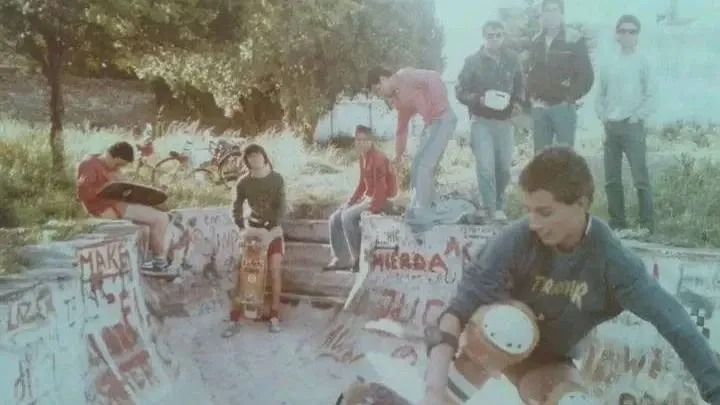
For Aku, Mar del Plata was one of the foundational centers of Argentine skate culture. He had moments of close connection with the capital of the country. "A delegation would form from Buenos Aires that would meet up with the people from Mar del Plata," he tells 421. He refers to the same delegation that Walas talks about, which laid the groundwork for a back-and-forth that continues to this day.
Aku recalls that in those years, the connection between Mar del Plata and Buenos Aires was constant through competitions, trips, and meet-ups among skaters who, in many cases, were also involved in music. He says that skate was "very much related to punk and heavy." He agrees that the first time he saw skate rock materialized in Argentina was at a Massacre Palestina show.
Juan Manuel López, better known as Pitu, one of Argentina's most recognized professional skaters, says something very similar. Born in Avellaneda in 1978, he started skating at 7, began competing at 9, and turned pro in his teens. At the same time, he developed a music career linked to punk and hardcore.
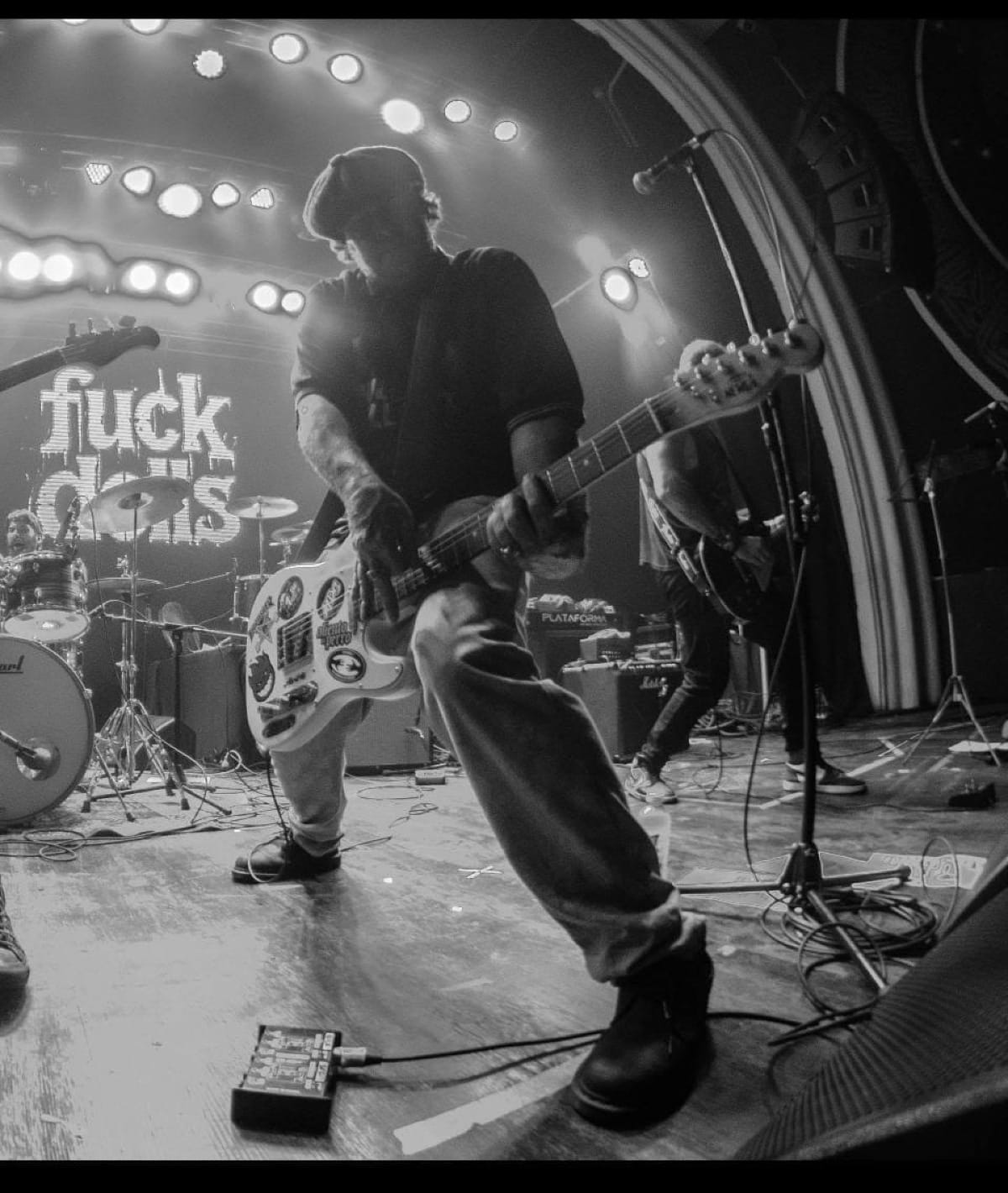
Among his various projects and roles, Pitu was the manager of 2 Minutos, collaborated with musicians like Señor Flavio (Los Fabulosos Cadillacs), and shared the stage with bands like Discharge and Black Flag. He currently plays in Fuck Dolls and in 2 Minutos x Marcelo y Pedro, the new band of two former members of the emblematic group from Valentín Alsina. For a few years now, he has been promoting the Hall of Fame of Argentine skateboarding (which, of course, already includes Walas and Massacre Palestina), dedicated to recognizing key figures in the national skate culture.
For him, there’s no doubt about the starting point. "For me, the first band I know of that fits into what’s called skate rock is Massacre Palestina." He also mentions Cero de Pulso as an early project made up of "real skaters" (formed in 1987 by vert skaters Chara, Juli, and Globu), but Pitu emphasizes: "Massacre Palestina was the first Argentine band to consciously embrace that identity."
"They themselves, right from the start, called themselves that. In the lineup with Topo, Paco, Walas, and the first singer, Richard, they already said they were doing skate rock. And in the late eighties, early nineties, to stand up and say 'we're skate rock, dude' was risky. Everything was wrong. Hardcore, heavy metal, the skinheads who wanted to beat you up. Skate was always a bit on the sidelines of all that because it crossed various genres. There were punk skaters, skin skaters, heavy skaters, mod skaters. Massacre stood firm and did what they had to do. For me, without a doubt, they have always carried the flag of skateboarding and skate rock high," says Pitu.
However, he makes some concessions. He says that bands like Minoría Activa, a hardcore group that emerged in the early nineties during the genre's peak in Buenos Aires, could be included in the list of bands in the style because their leader, Esteban "Moncho" Seijo, is a skater. He also mentions another band from the same era, B.O.D., where Gianfranco "Giani" De Gennaro, a local skate legend, played guitar, whose ongoing and invaluable contribution to skating and music deserves a separate chapter in this story. However, for Pitu, "skate rock in Argentina does not exist as a genre."
"What exists are bands followed by skaters, like Cero de Pulso and Massacre Palestina, which can be called skate rock because the skaters themselves have adopted them, or because they have lyrics about skate. They fit within that label. Although the genre itself, like ska or New York hardcore, does not exist. I once discussed this with Flavio Cianciarulo from Los Fabulosos Cadillacs, and we reached the same conclusion. We were banging our heads against the wall because the genre doesn't exist. There is no skate rock genre."
On the other side of the table is Tomás Spicolli, from Campana and a member of one of the bands that followed the legacy of Massacre Palestina, Delmar, which is still performing. For him, purity in definition is the least of it: "If you listen to the sound and it connects with that feeling of skating, it's skate rock. No further explanation is needed. It's a matter of feeling," he asserts in an information-packed phone conversation.
For Tomás, who has spent as many decades skating as he has making music and art (check out Galería Masao) in multiple projects (Milhouse Crew, Tildaflippers, SS Saltamontes, Los 7magnificoz, to name a few, all unique in their own right), Massacre Palestina was the starting point for all this locally. "No one did it better, and no one did it before," he maintains.
Massacre Palestina was the starting point for all this locally. "No one did it better, and no one did it before."
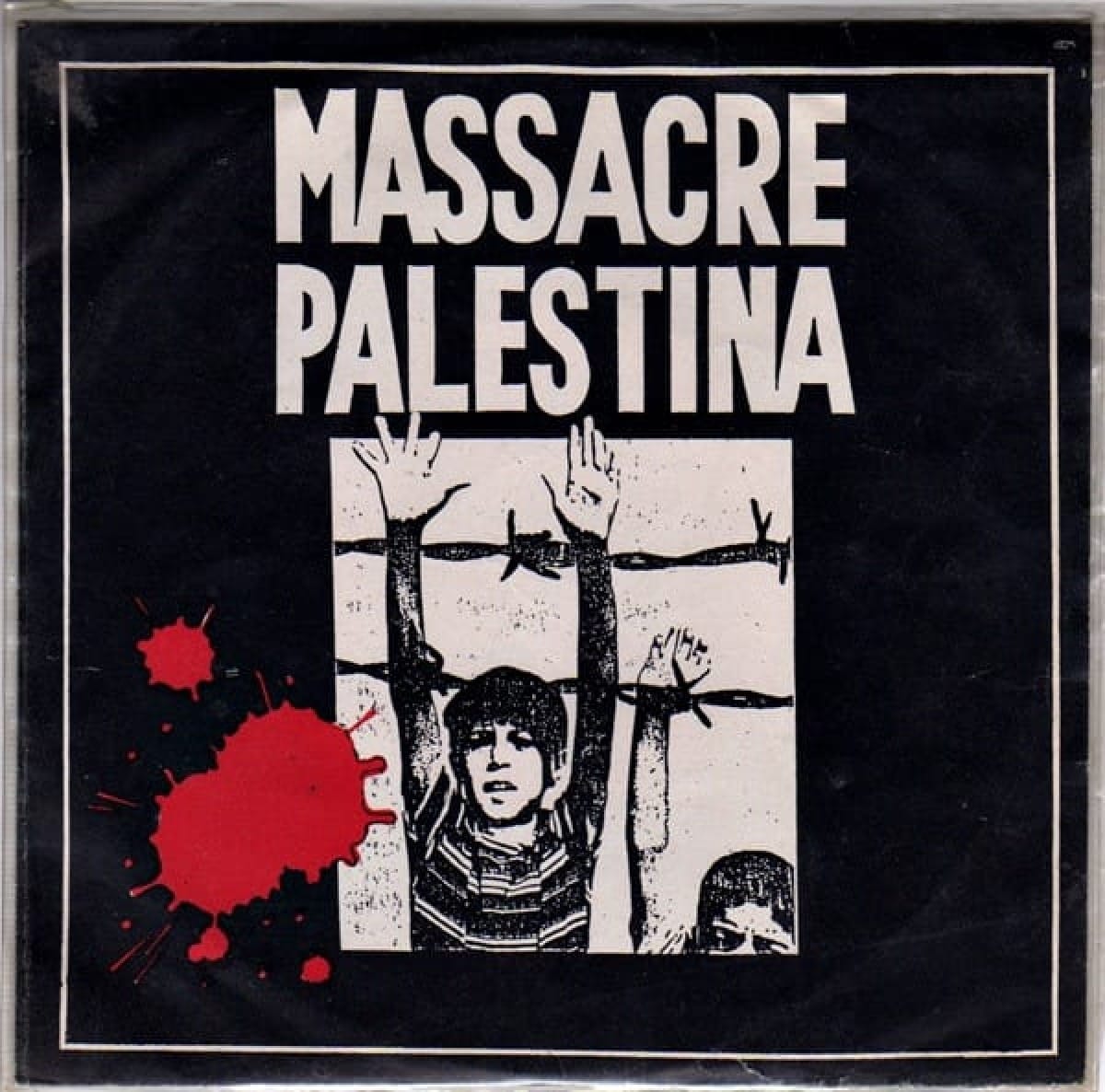
Like everyone from his era, he recalls the impact of coming across the black cover of the first EP for the first time, the one with a kid raising his arms and the red blotch, which kicks off with “Diferentes maneras”, perhaps the first song about skateboarding recorded in Argentina. "Water will no longer pass through the floor / Now is when fun will pass / Under your feet and your boring city / Kilometers of great transition,” sings Richard. "One day we realized that we had all met by watching Massacre Palestina. There was the common denominator," says Tomás.
When he reconstructs the eighties, he also places Cero de Pulso immediately after Massacre. But he offers a broader definition of the matter. From his perspective, a band doesn’t have to be made up of skaters to be skate rock. "The Minutemen weren't skaters, but that combination is everything," Tomás asserts.
"A band might never have skated, and still be skate rock. I was lucky enough to start making bands with friends with whom I shared artistic and musical sensitivity, and we all skated." They even dared to give a new twist to the concept and called it "skate-core."
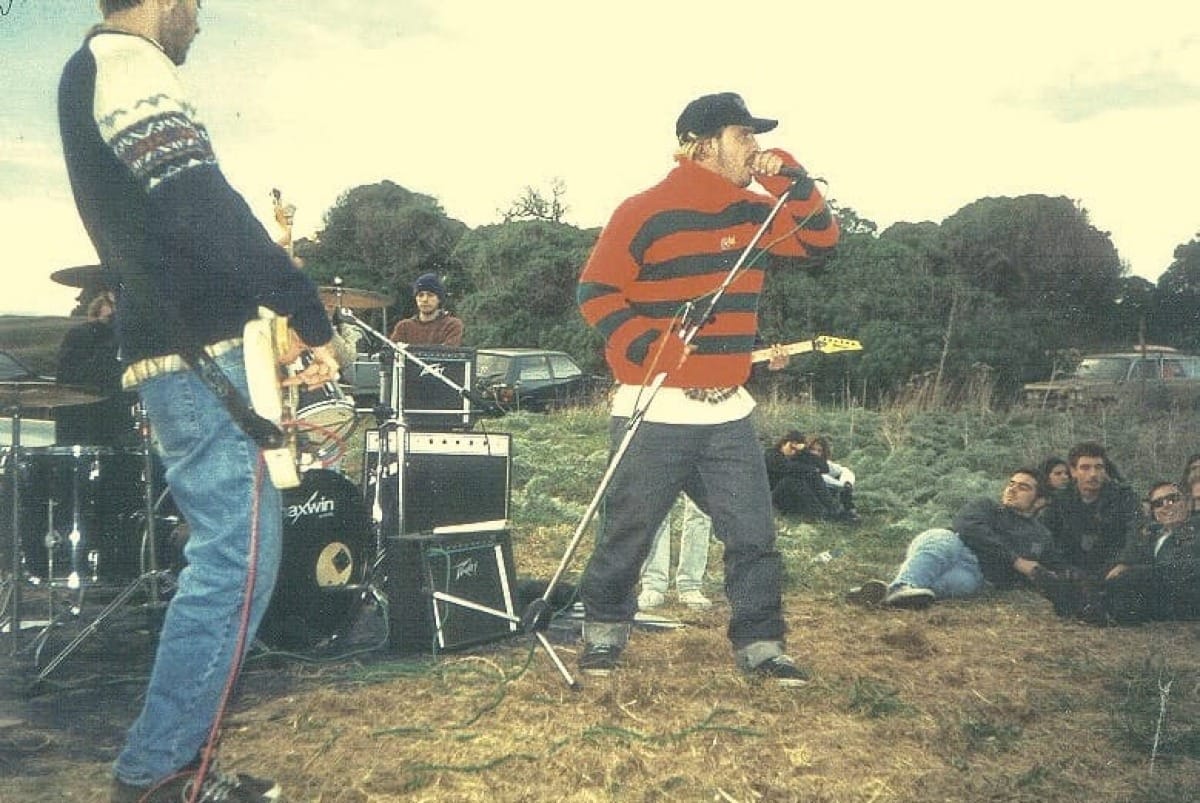
In the legacy of Massacre Palestina, names like Evidencia Jinnah also appear, a melodic hardcore punk group that lasted from the late eighties to the mid-nineties, featuring Daro Mondello on guitar (brother of Tordo Mondello from Massacre), Pablo Antico on drums, Rodrigo Alonso Werner on bass, and Rama Pantorotto on vocals, currently recognized for his role as a sports journalist.
Another band from that same scene is 13 al Diablo, the first musical project of Mariano González, a well-known professional skater who has been promoting skate culture practically since childhood, a collector and plastic artist. "The only one who skated in 13 al Diablo was me," Mariano clarifies in a phone conversation with 421. "Many skaters came to see us, it’s true, but I don’t know if I would strictly categorize it as skate rock," he clarifies.
However, two songs by 13 al Diablo were part of the first volume of the compilation Skate Rock Argentina Dagger Style, a series released by Frost Bite Records, led by Rodrigo Ibáñez, another key figure in the independent scene of the nineties, which had four editions and condensed, alla Thrasher, the national skate rock sound: Massacre Palestina, Cadena Perpetua, Charlie Brown (later Charlie 3, another band formed by skaters), Fun People, Cucsifae, Restos Fósiles, No Demuestra Interés, Killer Dolls, Vieja Escuela, Existencia de Odio, Uaita, Dixie Dynamite, among other classic names from the era.
Frost Bite Records also released the only album by 13 al Diablo, Sessions (1994). The band started in 1992 with a "fusion of styles," explains Mariano González. "At that time, you would go to any new show that showcased something different," he explains. For years, Mariano had his own skateshop (“One Love”) in the legendary Bond Street gallery and actively participated in the hardcore and punk scene not only by playing but also by offering the window of his shop for bands of the time to post their flyers.
Today, he splits his days between art sessions at Atelier Vog in Palermo and skate sessions at the skateparks in that area (Haití and Skate Plaza are his favorites). From his perspective, in skate rock, "the common thread has to be the passion for wheels, for that beautiful folklore of skate. Friends, traveling, living on the board, and suddenly getting together with those same skater friends to make music. If we want to be orthodox, for me, the essential thing is that the band members skate or at least love skate," he says.
One of the many bands that asked Mariano for permission to put up a poster for their next gig in the window of 'One Love' was Eterna Inocencia. This is how Guillermo Mármol, their singer, remembers it, and we could describe him as a true skate enthusiast. Formed in 1995 in Quilmes, the band made their debut with Punkypatin, a name that captures the spirit of that original lineup quite well.
"The name was given by my older brother, who for many years was the designer of the albums and the aesthetic of Eterna Inocencia," Guillermo tells 421. "I think he wanted to show what a bunch of 16 and 17-year-olds were doing in the mid-nineties. To connect and continue the legacy of Massacre Palestina. In that same vein, there was also Fun People with songs like 'Skateboard From Hell' [N. del. R.: part of Kum Kum (1996), a masterpiece from one of the best bands Argentina has produced, whose leader, Nekro, was also into skating]. The album really summed up what our days were like. Basically, trying to find a good place to skate, a spot to develop the art of skating. Listening to music until the early hours of the morning while skating. That's where Punkypatín comes from."
In their second album, Días tristes (1997), when they were still singing in English, Eterna Inocencia included not just one, but two songs dedicated to skating: 'Sk8 for life' and 'Skaterboarding these days'. However, when Guillermo thinks of a song related to skating, only one comes to mind. "Just months before Massacre released the album Galería de Esperanza (1994), I became a huge fan of the band, and I immediately went back to discover Sol Lucet Omnibus (1992), which I had on cassette at the time. The song 'Nuevo Día' is, by far, the symbol of what skate rock means to me."
Guillermo recalls putting on his walkman and racing down the slopes in downtown Quilmes that lead to the river while listening to that song. "It was always on the homemade playlists we made back then," he says. His devotion to the song is such that just a few days ago he released an acoustic version of 'Nuevo día' with his new solo project, while he continues to schedule dates to perform with Eterna Inocencia all over the country and the region.
If we fast forward a few years and move past the late nineties, we can talk about Amoeba, a band formed in Buenos Aires in 2003 that, according to their guitarist, Gonzalo "Pájaro" Rainoldi (a lifelong skater, producer, anarchist, vegan, and incurable music lover), never set out to make skate rock; it just happened naturally. "The first band I went to see live when I was 14 or 15 was Massacre Palestina," Pájaro says during a WhatsApp video call. "I remember Topo with a stage presence that felt like a band from abroad," he adds.
If we fast forward a few years and move past the late nineties, we can talk about Amoeba, a band formed in Buenos Aires in 2003.
For Pájaro, skate rock is "clearly a mix between hardcore and punk." He elaborates: "When I say punk, I mean bands like Crass, or something more rudimentary like Rudimentary Peni, what I would call 'rudimentary punk,' more straightforward, more basic. In Invasión 88 [N.del.R.: another holy grail of musical information] there were a couple of bands that represented that side well, like División Autista or Conmoción Cerebral. And add a surf touch, in the line of Dead Kennedys."
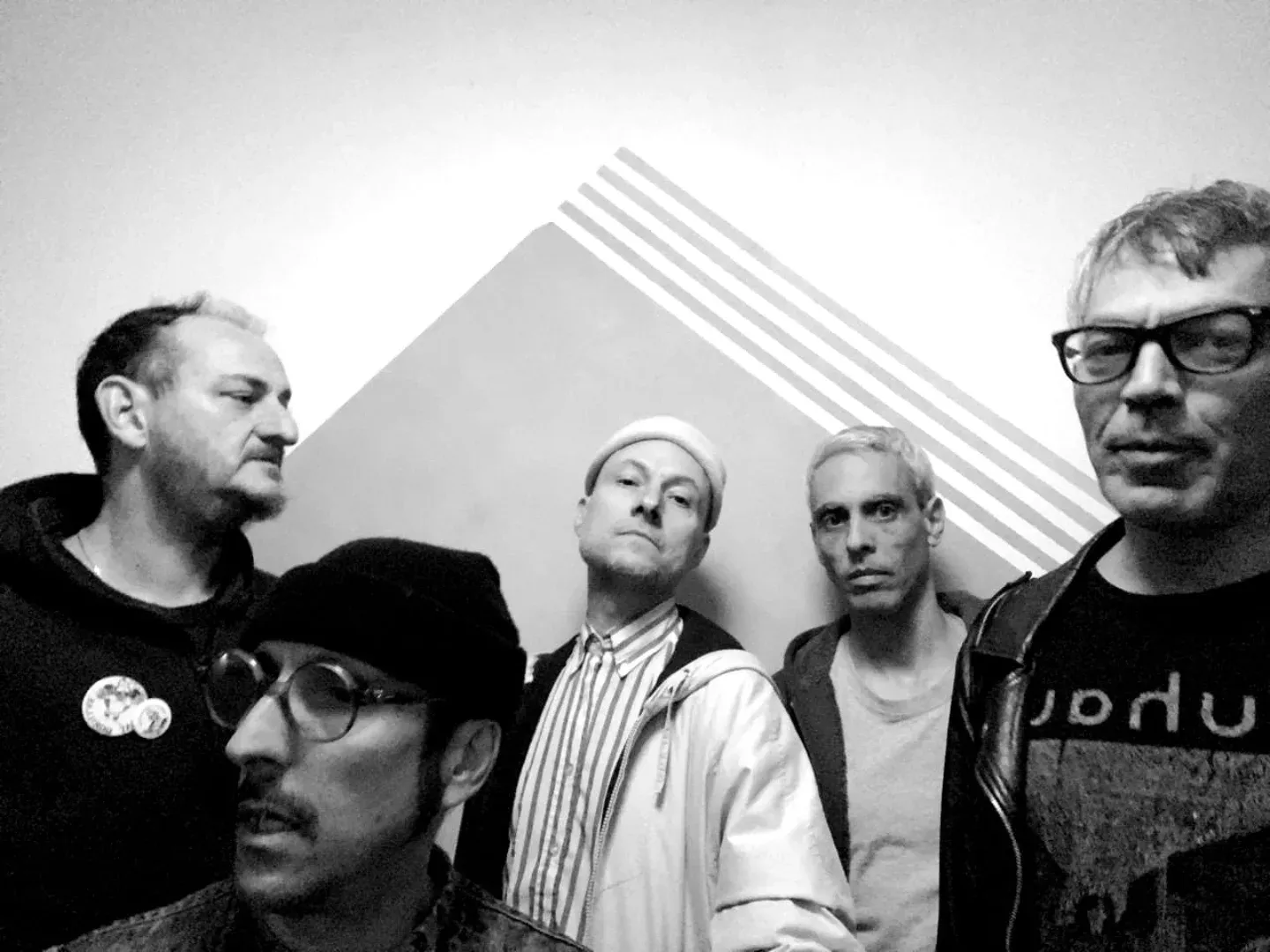
Although, according to Pájaro, there has never been a band in Argentina that had exactly the skate rock touch, internationally he attributes it to the Big Boys, a seminal band from the eighties hailing from Austin, Texas. "They are the ones who brought funk guitar into punk. From there, the Red Hot Chili Peppers emerged. I was a huge fan of Big Boys, and in fact, my own way of playing is influenced by both them and Dead Kennedys," he explains.
Amoeba is the logical product of hanging out with that group of friends after skating through the streets of Congreso. "We would get together to listen to records: Dead Kennedys, Agent Orange, JFA, Agression, Big Boys, hardcore punk in general, Minor Threat, Fugazi. One day we said: let's form a band. Many of the bands we listened to were already categorized as skate rock. So, naturally, we ended up playing that and writing songs about it too." For example, "A la rampa," from Tumba Tu Tumba (2006), released by Sniffing Recording Industries, another important label for the, let's say, scene. Although Pájaro doesn't quite agree with that term.
"For me, there was never a skate rock scene here," he states. "At that time, there was Massacre Palestina, standing alone in their own world. And in the 2000s, when we started with Amoeba, there were also Los 7magnificoz, with whom we released a split on vinyl. There was something, but it was more about specific bands than a real scene. I also see other bands with skaters, but they don't sound like skate rock; they do other things," he argues.
Pájaro recalls that just over a decade ago there were Los Valientes (with songs like "Wallride," the name of a skate trick) and Los Caídos, two fast and noisy bands that created something resembling a scene, but it was too small. "They were always isolated groups, and I think that's going to keep happening because there are a lot of younger kids making music now too. I think in the end, it's the same thing, the desire to create. If you want to go out and skate, you want to pick up a guitar and make some noise. It's all part of the same thing. Just before you called me, I was reading a book by Deleuze and Guattari, where they talk about how to counteract capital, you have to look for lines of flight that break away from normality. It's a bit like that."
Regarding the scene, Tomás Spicolli has a perspective that goes a bit further: "The scene always exists; it depends on where and how you look at it," he says and insists: "It's not a tangible physical entity; it's a feeling. If in the eighties you asked someone from the mainstream cultural scene if there was a skate rock scene in Buenos Aires, they would say no. But it was happening."
It's true that over the years, skating has changed. Or rather, it has magnified. New generations, new influences, and new sounds have emerged. "Skaters started listening to more hip hop," points out Walas. However, certain symbols have remained: the Misfits skull, the Ramones eagle logo, the pogo dancer from Circle Jerks, or the lightning bolt on the dome of the White House from Bad Brains' first album, to name a few examples.
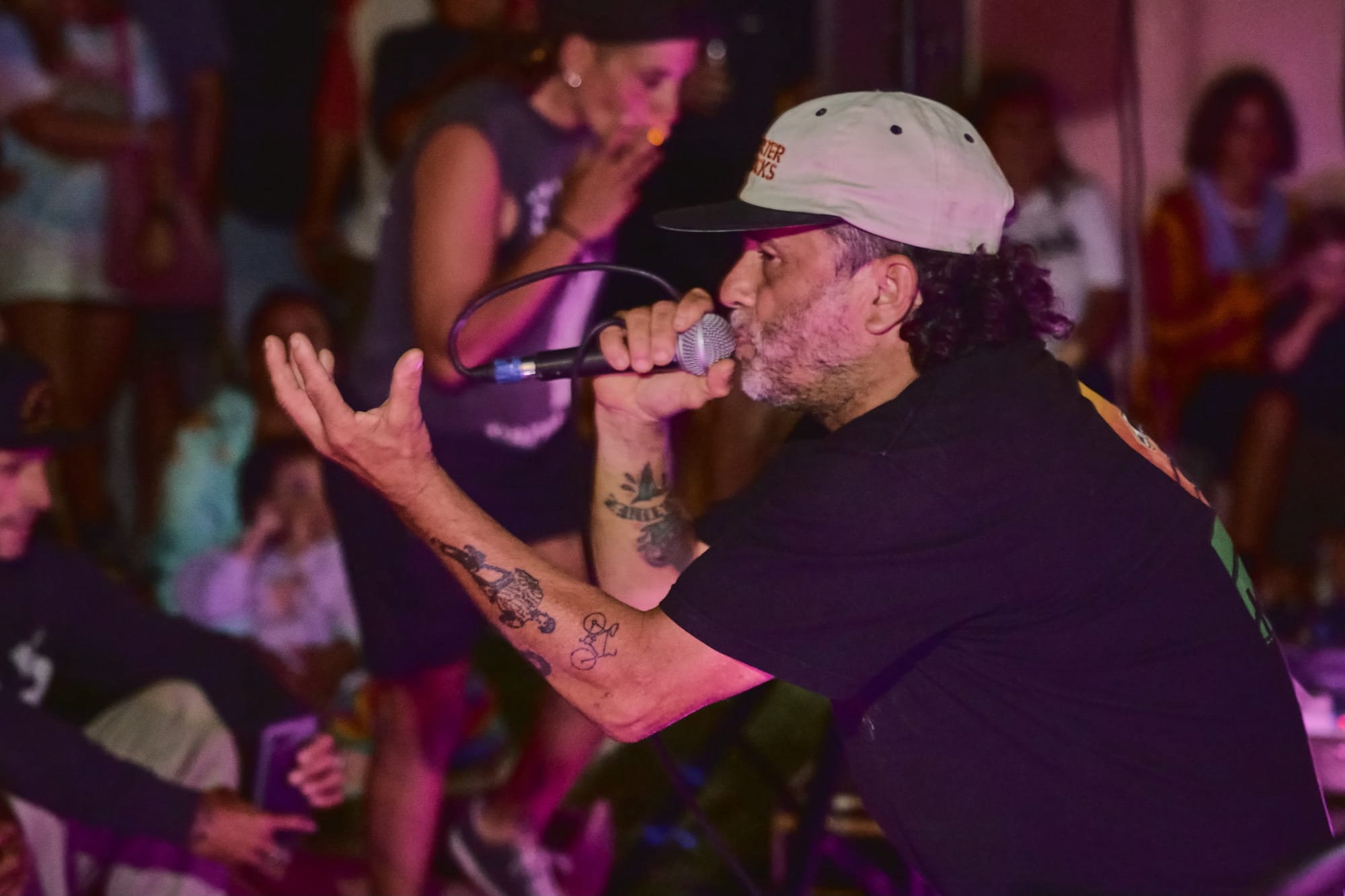
So, the question is: does skate rock still exist? Tomás mentions Harry Chinaski. "This is contemporary skate rock," he asserts. "The singer is a pro and the guitarist played in Chocokrispis, a skate rock band from the nineties," he details. For his part, Walas doesn't hesitate to throw out another current example: "Los Cortos is a relatively new skate rock band." He talks about the most recent project of Tatú Mártínez, who after decades of observing from the ramp, finally dared to take the mic and lead his own old-school hardcore band.
"Before, I always went to rehearsals of other bands or they called me to listen and give my opinion, even though I never studied music or played anything formally," Tatú explains. "Forming a band was something I had on my to-do list. I hadn't done it before because I didn't have anyone to do it with; there weren't other skaters interested in starting something. About two years ago, it finally happened," he says. Los Cortos sounds like "a mix of styles, with hardcore from the beginning, real origins," he defines. And he concludes: "It's what comes naturally to us. Because for me, skating and music have never been separate things."
Y a cada colaborador se le paga por su trabajo. Las dos cosas dependen de los suscriptores.