What's Playing Today in Tango and Folklore: Four Essential Albums
What’s happening with popular music today? From Odisea XXII’s disruptive tango to Tremor’s folktronica, via Di Pascuale’s fusion and Valen Bonetto’s roots music. Four musical cornerstones that defy algorithms and reinvent our cultural identity.
It's not easy to reflect on cultural terms in 2026. For music, it has also become complex with the return of methodological and content agendas from major record labels and distributors.
But we will attempt to provide a map of popular music today. A proposal that often serves more as a catalyst than as a proven hypothesis. However, it is still a useful tool. We will present four tango and folklore albums that serve as cardinal points for navigating contemporary Argentine popular music. Or, for the uninitiated, a way to start doing so.
What's happening with popular music today?, by La Orquesta Típica Di Pascuale
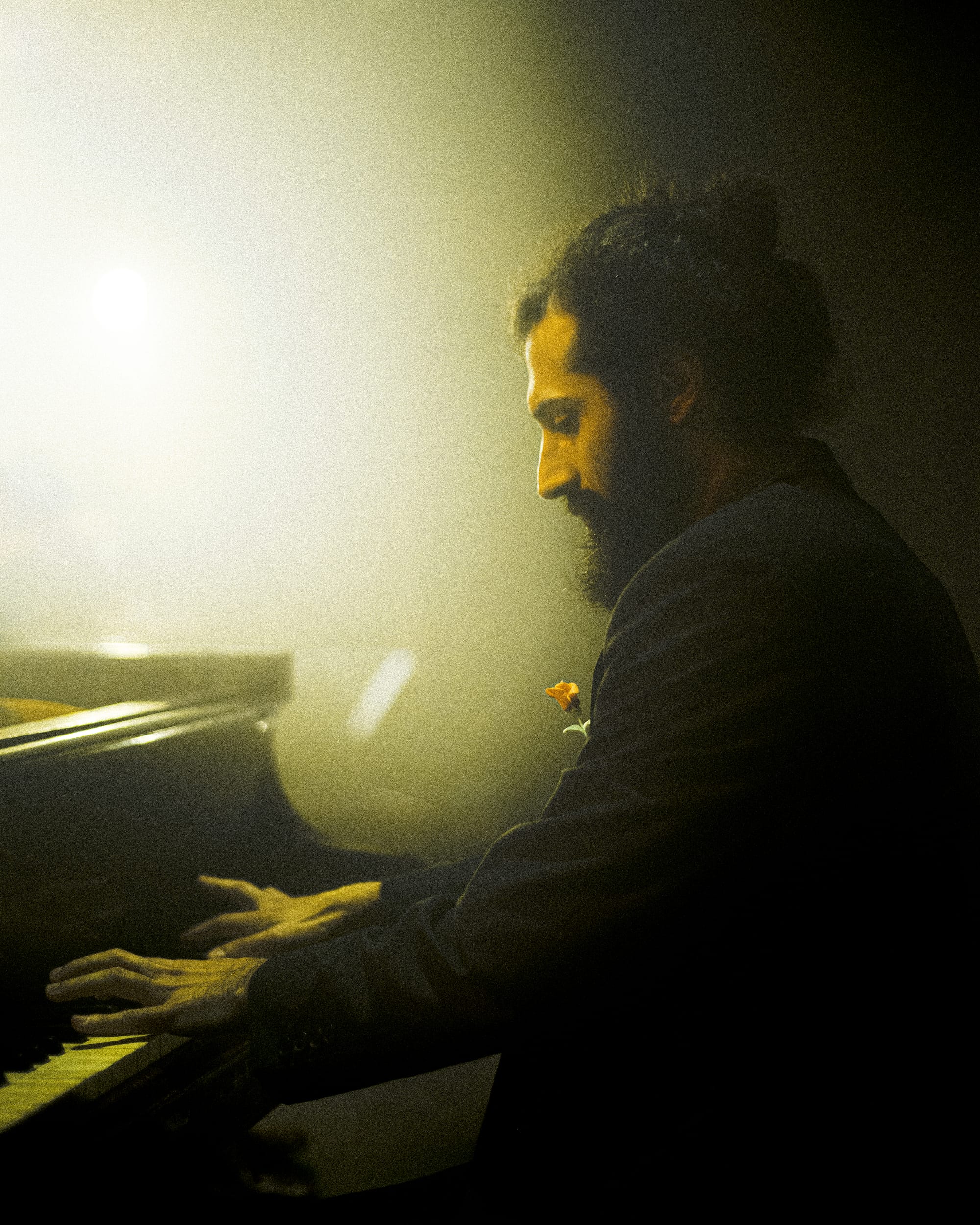
Perhaps, at first glance, the title of this album catches your attention. The thing is that Juan Ignacio Di Pascuale spent over three years brainstorming this project. At first, it seemed almost impossible. The cycle he carried out with the Típica at the Hasta Trilce theater seemed like it would only remain a collective live experience. A cycle, not to mention, where the vast majority of artists who are now part of the most active Argentine popular music passed through. A cycle that forged a mark for that catalyst that now serves as the album title.
The LP features ten songs where, starting from the world of a Típica, and with arrangements by Juan Ignacio, they blend rhythms ranging from chamamé to folklore and jazz, among others. It includes collaborations from major figures in the current popular music scene, to name a few: Pipi Piazzolla, Nadia Larcher, Daniel Maza, Marcelo Moguilevsky, Sebastián Espósito, Abel Tesoriere, Inés Cuello, Eliana Zarabozo, Flor Bobadilla Oliva, Luciana Jury, Carlos Moscardini, María Pien, Carmen Sánchez Viamonte, and Nacho Mozetic, with several of them contributing to the final track list. Many of the versions that didn't make it onto the album continue to resonate in their live performances, also featuring Di Pascuale's original arrangements.
We will present four tango and folklore albums that serve as cardinal points for navigating contemporary Argentine popular music. Or, for the uninitiated, a way to start doing so.
Luciana Jury, besides being a prominent singer, has a wild plan: to continue spreading the work of Gabo Ferro (1965-2020). Featured in El veneno de los milagros (2014), “El extrañante” devours an album once again, in this case one where the best composers of the 21st century converse. With an even more heart-wrenching interpretation, this is the dramatic high point of the map envisioned by Di Pascuale, the moment where the essence of the work explodes. Following that on the album is “La vida, la muerte,” a rallying cry written by Juan Saraco (from Duratierra) and performed by Nadia Larcher. Her voice, in this case, also devours everything else, even as the Típica remains present. For a bit of calm, along with an intellectual gesture, there’s the version of “Doña Carmen,” composed and played by Carlos Moscardini. Because in the face of so much boldness, sometimes the embrace of a beautiful melody is necessary.
Carmen Sánchez Viamonte represents a new generation that, if we're being unfair, falls under the umbrella of Argentine indie. She is the youngest artist to participate in this album and a fresh addition. “Electricidad” is part of her album Mala (2023) and serves as an existential ballad. In Di Pascuale's proposal, she sheds the electric sound of the rock school but keeps the dreamy mood floating in lines like the first: “I've always been a bundle of nerves. / Addicted to solving mysteries.” In contact with 421, Carmen says: “I always dreamed that my songs could be orchestrated someday. So when Juani came to me with the project, first for the live show and then for the album, I immediately said yes. It was very beautiful and powerful. Orchestras have that empowering quality.”
Perhaps from tango, then, we can unveil the hypothesis of the current state of popular music. Because, as Fernando Cabrera said, sometimes the future lies in the past.
And we have killed it, by Odisea tango XXII
The kids from Odisea are so young that they are betting on making it to the 22nd century alive. This is a project led by Ulises Thayer, a young prodigy who has been talked about in the circuit for some time. There was another album to test his first compositions, but the truth is that this LP, referencing Nietzsche from its title, is like Thayer's official debut in society. It features nine instrumental tracks produced and mixed by Ignacio Zavalla and mixed by Pablo Barros. Music ready for the next century.
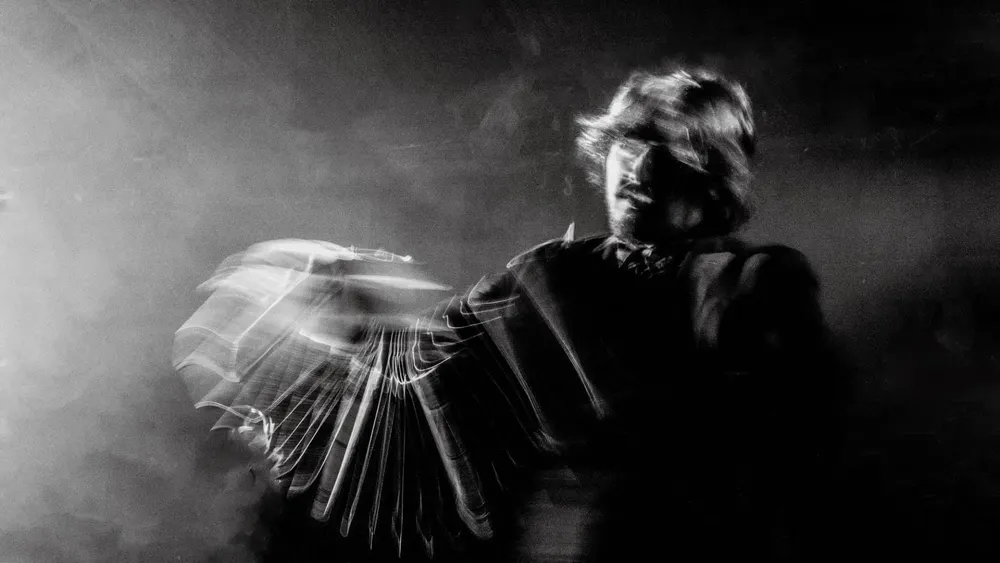
While you can hear extreme references like Waldo de los Ríos and things from the group Alas, it is also clear that this particular LP is immersed in the jazz-rock of the seventies and starts from tango. Music understood as a starting point, both in sound and composition, but also as a container for everything else. In And we have killed it, a sextet featuring Elías Alem (drums), Mateo Pérez Valente (bass), Miguel Thayer (double bass), Facundo Díaz (guitar), and Agustín Matera (synthesizer) along with Franco Bruschini's bandoneón, which is linked to both tango and local jazz. Amidst the rhythmic madness, and some somewhat elusive melodies, Matera's synthesizer challenges jazz-rock with tango and gives a well-defined texture to Ulises' compositions.
The kids from Odisea are so young that they are betting on making it to the 22nd century alive. This is a project led by Ulises Thayer, a young prodigy who has been talked about in the circuit for some time.
A sample of this comes in the second part of the album. First with “Brindis por Pillud,” where they play with the popular racinguista language and you can hear novel characteristics in the harmony. And you don't have to be a musician to perceive them; just let yourself go and close Instagram for a while. And if that excites a palate with an excess of mastery, “Don Sploindor” is also there to understand this composer through the spaces and silences of the group. Don’t expect something soothing; rather, it will help you catch the bus and hop on when it’s already in motion.
Since he was eight years old, the composer from Odisea has been studying with Agustín Guerrero. A fundamental part of the first wave of contemporary tango that emerged by breaking with the paradigms of traditional tango. Thayer is also currently studying composition at UNA. In contact with 421, Agustín Guerrero speaks about his student and colleague: “His music has intellectual depth but also freshness. That ease of a kid his age doing what he feels like. He has a context that has always encouraged that, both his family and our learning space. In our meetings, we prioritize finding a unique voice, which is the only thing that matters as an artist.”
The album features cover art by Pontenpie, a key figure in the independent tango circuit, and a text on the back cover written by Agustín Guerrero himself. There he says, in part: “Could it be that the existence of Odisea Tango Siglo XXII announces a new way of perceiving and understanding the world from the Buenos Aires conurbano, the suburb of the suburb called Buenos Aires?” thus raising an alternative flag again, signaling a new generation of tango that grows at the edge of the lights and affirming that the world is filled with poets with recipes for outlandish songs and that this sound, in Odisea, might be a germ of new thought.
While it clarifies, by Valen Bonetto
It feels like Argentine folklore has made a unanimous decision: there’s no possibility for creation within the confines of a studio. In other words, you have to go out and seek new songs, hear them live, gauge what’s happening with that composition in the various circuits of the country. There may be an audience that says, or is satisfied, with the sound of a Soledad or León Gieco album in a studio. Production, arrangements, guests, all top-notch. But I wouldn’t recommend starting with Duratierra, or José Luis Aguirre, or Maggi Cullen, or Juan Iñaki through a studio album. Not to mention, the best-selling album in the history of popular music is Mercedes Sosa en Argentina (1982), meaning it’s a live album.
And the same goes for Valen Bonetto's songs. And there’s the first gesture of this album, trying to play it straight through without too many production twists. You can feel a bit of that, you can smell it.
Valen Bonetto is a singer-songwriter and trans activist born in Córdoba (Laguna Larga). He currently resides in Buenos Aires, where he forges a political song rarely seen in that genre. What’s important here is what he says, who speaks through his lyrics. Rather than a proclamation, Bonetto builds social commitment through the everyday. At times he even seems like a chronicler. The song that shares the album's name, which features the significant Camila Vaccaro, is essential in that sense. Bonetto recently turned thirty and is now playing with Duratierra. While it clarifies is an album practically recorded live. He conceived it with his uncle, Jorge Bonetto, and in a week, at his studio in Córdoba, they finished it.
It feels like Argentine folklore has made a unanimous decision: there’s no possibility for creation within the confines of a studio. In other words, you have to go out and seek new songs, to hear them live.
Among the seven new compositions, you can hear chacareras, cuecas, and some litoraleño and Andean rhythms. But above all, there’s chacarera. It’s a moment where you can appreciate both the rawness of the arrangements in his right hand and the breakdown of the lyrics. In the case of “La del tren,” there’s even a radio in the background. Bonetto explains that it was born from his experience on “Brotecitos, otro será el cantar,” the radio cycle on Folklórica Nacional that he did with Susy Shock and Ferni, the first transfeminist folklore and tango program. In that space, he thought about what constituted him as working class, and right away, the train came to mind. Part of the lyrics say: “Tren Sarmiento becomes a breeze / in the flames of my country. / Who sweeps away the ashes / with no place to depart?”
In an interview for De coplas y viajeros, Bonetto stated: “I believe that the songs from Mientras aclara are very contextual. Except for the last one, ‘ODL,’ they were all composed in the last two years. Therefore, they have, for me, a strong political content, beyond being songs that talk about more everyday things.” He also mentions María Elena Walsh and Eladia Blázquez, individuals who dedicated themselves to narrating certain margins and proposing certain conversations. “I feel a responsibility there, in a good way. Being honest is a commitment I made to myself a long time ago.” In “La bruja,” there’s a hint of zamba. It’s a somewhat enigmatic song with a provocative title. At one point, he sings: “Back again, the afternoon, / who will you sing with if the witch comes looking for you?” Because on the edges, like in live albums or jam sessions, sometimes the transcendental is present.
Takuy, by Tremor
“There’s something violent about forgetting the territory: thinking that where there is concrete today, there once was nature. That tension also runs through our music,” says Leonardo Martinelli, composer and guide of Tremor. The folktronica trio, defined as such when there were no possible definitions, returns to original music and consolidates twenty years of career. Essentially instrumental but with short verses that effectively invite female voices close to criolla music but with distortion. Nowadays, Tremor feels somewhat sheltered when talking about their music as a blend of acoustic and electronic, ancestral and futuristic, ritual and industrial: the imaginary folklore. And if we add the “K” to that definition, in terms of historian Sergio Pujol, it becomes a bit more original. The imaginary folklore that makes our dead dance, then, and also all the living beings of our land.
Rhythmically, the album explores the African heritage in South America, incorporating Afro-Peruvian, Río de la Plata, Colombian, Brazilian, and Argentine resonances. Melodically, these new ten tracks are propelled by aerophones, violins, sachaguitarras, and multiple acoustic instruments that expand the project's sound palette. It might help in collective yoga sessions, but it’s essential to hit play while on the train, along General Paz, or if you’re looking at a used book with the sonic chaos of the Corrientes corridor during rush hour. In other words, Takuy can help you improve the everyday in the toughest moments.
And perhaps the biggest novelty of this return of Tremor is the trio's update. Gerardo Farez left, and the quirky Alex Musatov joined on violins and digital explorations. Musatov navigates the scenes of emerging popular music with the ease of an artist who can play one day with Fernández Fierro and the next with David Lebón. In this album, his personality shines through in “El camino,” a song where he takes the helm and generates, from his violin, an idea made of riff. It’s euphoric and stirring, just like Musatov’s bow. Tremor is completed by the aforementioned Martinelli and the eccentric Camilo Carabajal on bombo legüero and percussion.
Two more songs that serve to think about the LP are “Ánima digital,” where Ignacia sings with power and firmness, just as she did a few weeks ago with the very Aterciopelados in their Buenos Aires show, and “Takuy,” which mentions the video directed by Mario Martinelli and Daniel Casabe. A track that captures the essence of the new search and the depth reflected in that video, where after innovating with an electro-artisanal device, the plants end up dancing. In “Resonante,” the closing track of the album, Santiago Vázquez and Lucy Patané join for an ambient hang that could sound inside the sea.
They say that “Takuy” is a Quechua word with two possible translations: “to mix” and “to remain.” Both definitions encapsulate the spirit of Tremor. On one hand, the combination of traditional Latin American rhythms and contemporary tools; on the other, the persistence of an artistic quest. All of this, now, in such a psychedelic framework that even the mints and ferns dance.
Las notas de 421 no tienen paywall
Y a cada colaborador se le paga por su trabajo. Las dos cosas dependen de los suscriptores.