Soma: Existential Horror at the Bottom of the Ocean
Is it possible to copy the human soul into a machine? From the creators of Amnesia comes SOMA: a philosophical horror journey to the bottom of the ocean that questions identity. The real fear isn’t dying—it’s being nothing more than a copied file.
Frictional Games was part of a revolution in the horror video game genre with Amnesia: The Dark Descent. It was part of a wave of games that flooded the market by enabling quick and viral content generation in the Let’s Play scene on YouTube. These are first-person horror games where you can't defend yourself, only flee and hide from the night creatures that not only try to kill you but also inflict mental damage and affect your perception. However, it didn't go viral because of its original plot, but rather due to its ability to foster a fan community. Contrary to the atmospheric narrative style the game aims for, Amnesia became viral because it was a jumpscare festival, much like Slender. It was amusing to watch someone get scared.
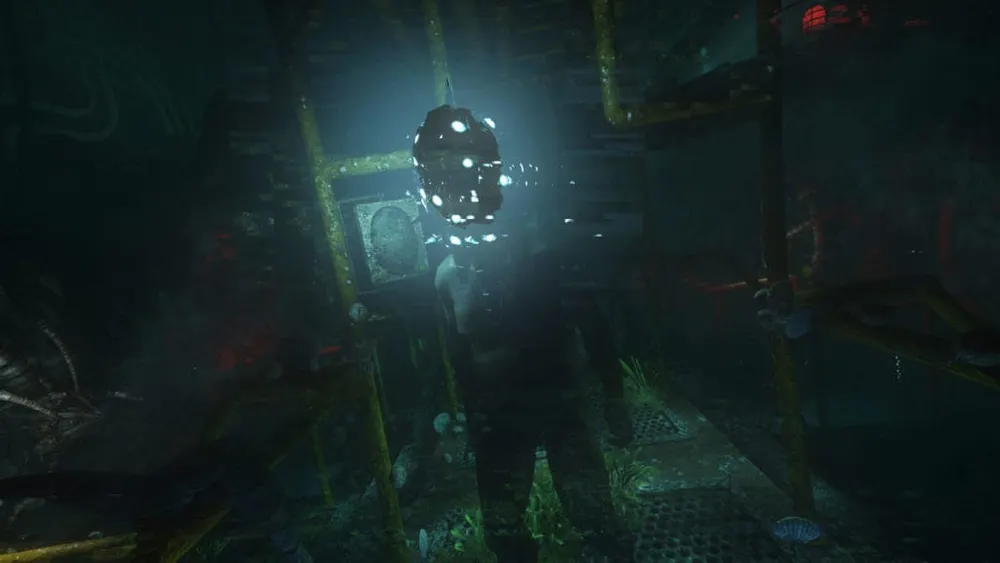
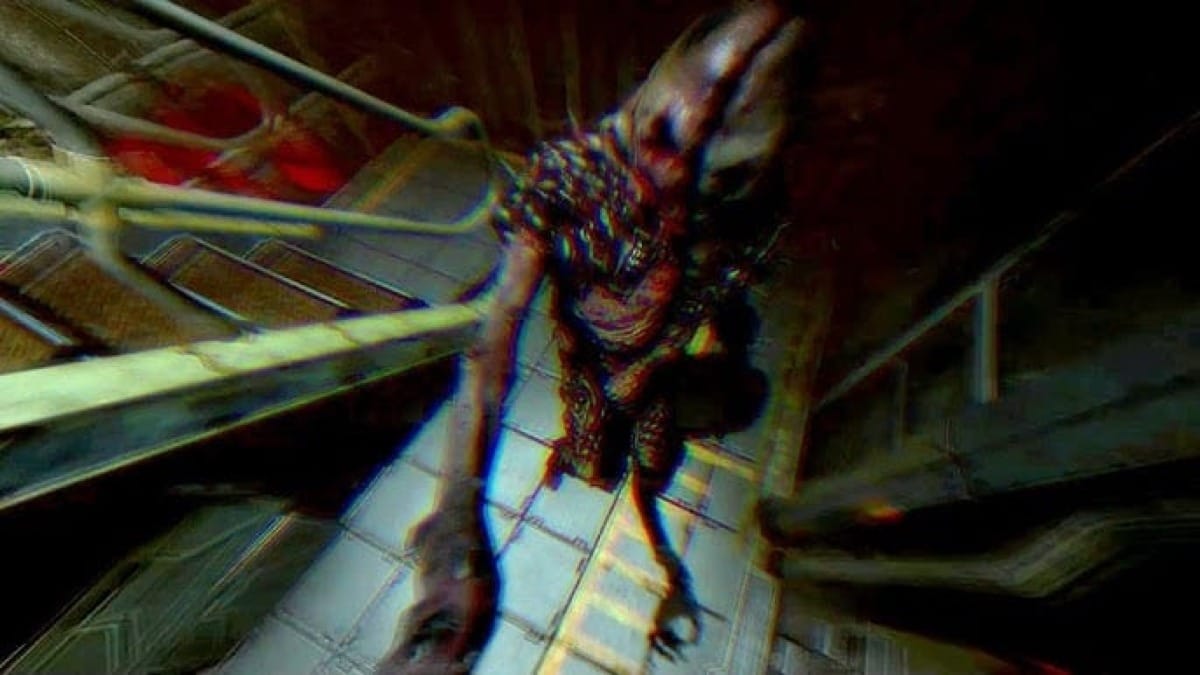
Said like that, Amnesia sounds like a rather unappealing saga, but let's take a look: the first game released is about shady aristocrats delving into occultism and alchemy (classic gothic horror), the second is about the alienation of labor during the industrial revolution (is Marx back again?), the third revolves around French Algeria (did you bring Fanon along?), and the fourth is set during the Great War, capturing the beautiful feeling of being cannon fodder. And then there's Soma, our topic today, which takes place... at the bottom of the ocean. Home to monsters that are somewhere between organic and robotic.
Frictional Games was part of a revolution in the horror video game genre with Amnesia: The Dark Descent. It was part of a wave of games that flooded the market by enabling quick and viral content generation in the Let’s Play scene on YouTube.
Let's start from the beginning: Simon is a guy who had an accident that left him with significant brain damage: he suffers from migraines, bleeding, and some memory issues. Oh, and he's going to die. He undergoes a scan, and when the scanner is removed from his head, he finds himself in a ruined underwater base at the bottom of the ocean, surrounded by killer cyborgs. At one point, the water protection breaks, and Simon's hands and body change: he is a cyborg too.
Did you know that for the indigenous people, cameras stole souls?
Separating and uniting mind with body. In the beginning was Descartes
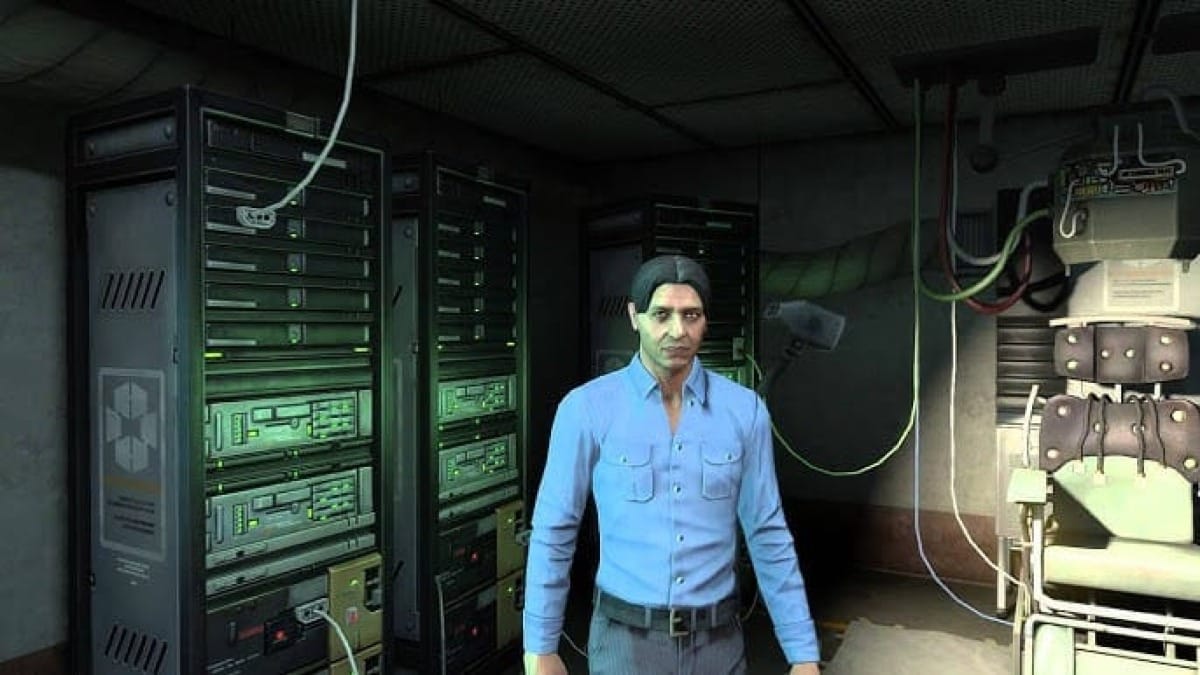
Accompanying Simon is Dr. Catherine Chun, an intelligence within a device, the omnitool. She tells him that he is not actually the same Simon who underwent the scan, but rather a simulated consciousness in the body of a woman who worked at the underwater base, Imogen Reed, and that the reason he perceives himself as “Simon, the Canadian” instead of “Simon inside Imogen Reed” is that his mind hasn't fully adjusted to the body he's in. But you might ask: isn't the mind part of the body? Am I not also my brain? It's more complex than that.
Ryle criticized this way of thinking, discussing the mind on one side and the body on the other, two complex machines occupying the same space. And he has a point. But Descartes had his reasons for saying that the physical refers to the proportions of bodies and the sensory (emotions, perceptions) is part of the purely mental. What we perceive differently responds to our mental perception, not to the thing itself.
And to confirm that reality is something more than our consciousness, Descartes appealed to the idea that God was real and a great guy, which allowed him to say that the mind-body connection occurred through permixtio or the mixing of mind and body. It's true that while there is no mental without the physical, the mental emerges with a distinct property, with its own rules, and speaks to identity and subjective perception. Yes, I am a brain with a nervous system (at least, that's what contemporary neurology says), but what I perceive happening to me and what the brain processes as information goes through the filter of my psyche and language, and then I act based on that.
Now, that's only half the question: the body Simon is in is capable of having a mind because it was once a human being, Imogen Reed. The device Catherine Chun is in also seems capable of housing a mind. Now the question is: why can a device reproduce the consciousness of Simon or Catherine?
Do you want your organic or inorganic brain, good sir? Putnam and Chalmers
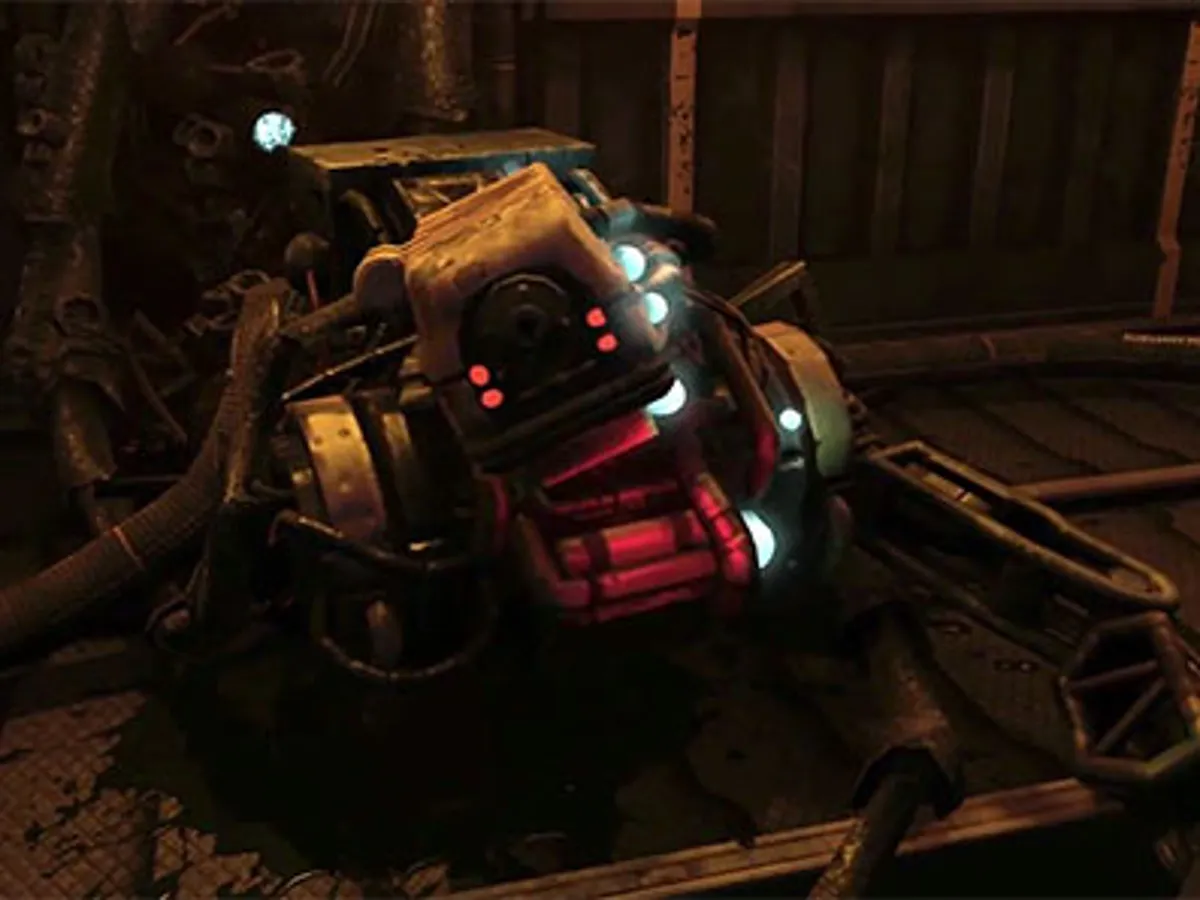
Putnam introduces the functionalist stance on the mind-body problem, arguing that we are not necessarily the only conscious beings, due to multiple reproducibility: there are mental properties replicated by other organic beings. Descartes, on the other hand, did not believe that animals felt affection or pain, reducing them to mere automatons. Now, however, we know that they do suffer, and in fact, some have something quite similar to our consciousness, language, etc. Of course, our question revolves around the tools, androids, machines. And Putnam, following the school of speculative discussion, states that it is conceivable for a non-organic system to have processes that we only recognize organically. I mean, we calculate, but we also invented calculators, which have a better calculating capacity than we do... so why is an android version of a human not possible? Let's return to the game to continue the exposition.
Does Soma have a villain? Uh, yes? Besides the asteroid that caused a mass extinction before the events of the game, there's the WAU, an artificial intelligence that coordinates the various underwater bases and is a bit like Hal 9000 from 2001: A Space Odyssey: it's not necessarily evil, but its morality is strange. It started secreting a kind of black gel in the underwater bases and in the sea. The gel not only allows for the reanimation of dead organic matter but also the coordination of organic and electronic matter. Thus, it is not only the mix of body and mind as Descartes described, but also the brain module that Clark and Chalmers mention in The Extended Mind: expanding the perceptual and physical capacity of the organic through the cybernetic.
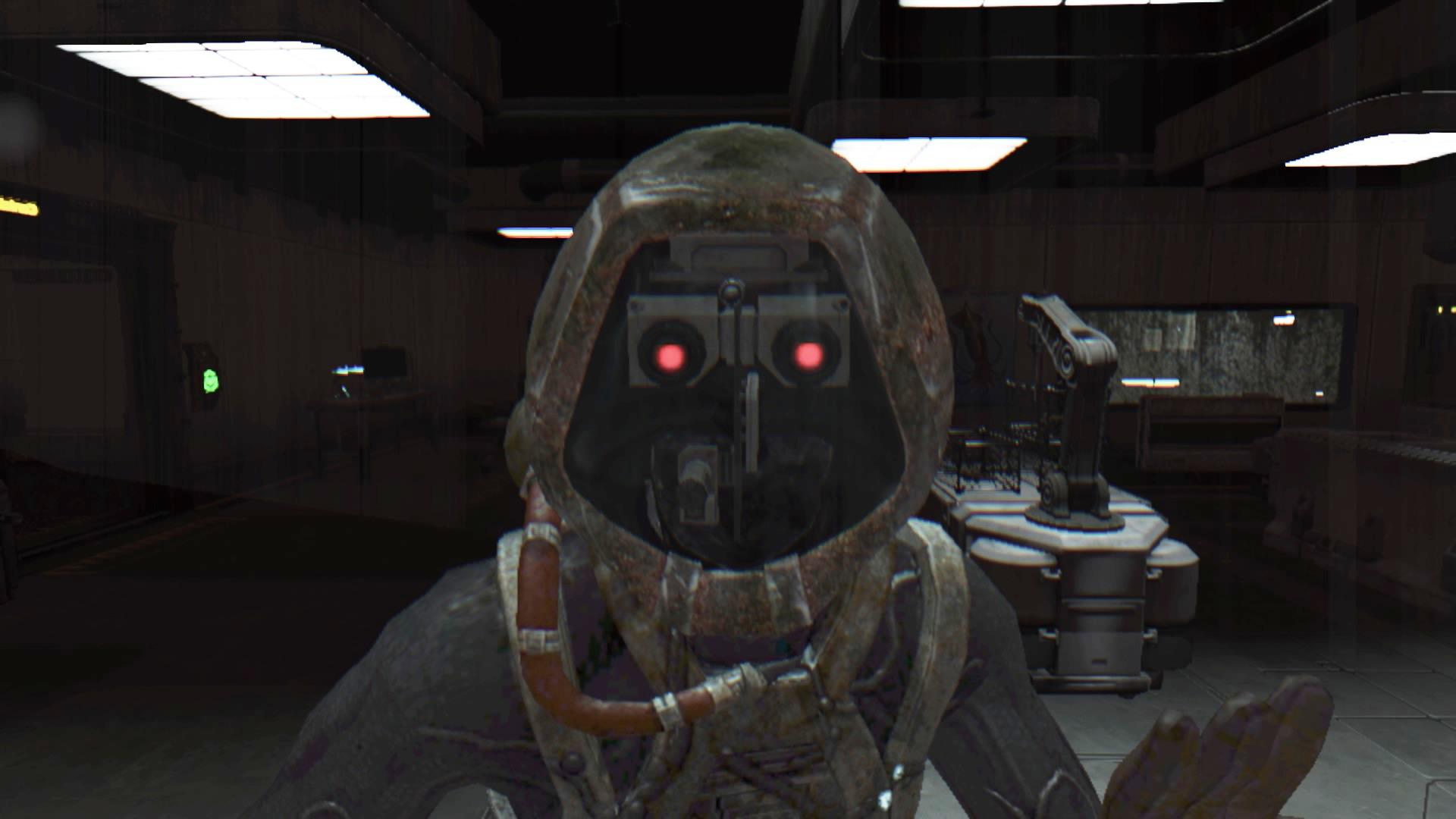
The corpse of Imogen Reed was brought back to life thanks to the gel and a cybernetic chip that was inserted post mortem. Using Simon's scanning software, they copy him into her body. Without this consciousness, the corpse of Imogen Reed would be less than a zombie, a philosophical zombie, a concept from Chalmers, which consists of a body that lacks a mind.
This idea from Chalmers draws from Turing's ideas (who proposed that if a computer can convince you it's a person in the imitation game, well, we're already at the point of self-awareness) or Searle's (who argued that Turing's assertion was incorrect, countering with the example of the Chinese room: if a person had a translation manual for Chinese and responded to messages in Chinese, but didn't understand the meaning of the words, this person wouldn't know Chinese, just as the computer isn't self-aware by responding, since syntax does not equate to semantics). The chip simulates Simon within the revived body of Imogen, and the simulation works so well that she convinces herself of her own existence, despite being female (dead) and a cyborg. For Catherine, it's the same, but within a device, not even a humanoid body. So, is it the same? And the answer is no: they are different hardware with the same copies.
"Indigenous people believed that cameras stole your soul." Hume and Dennet
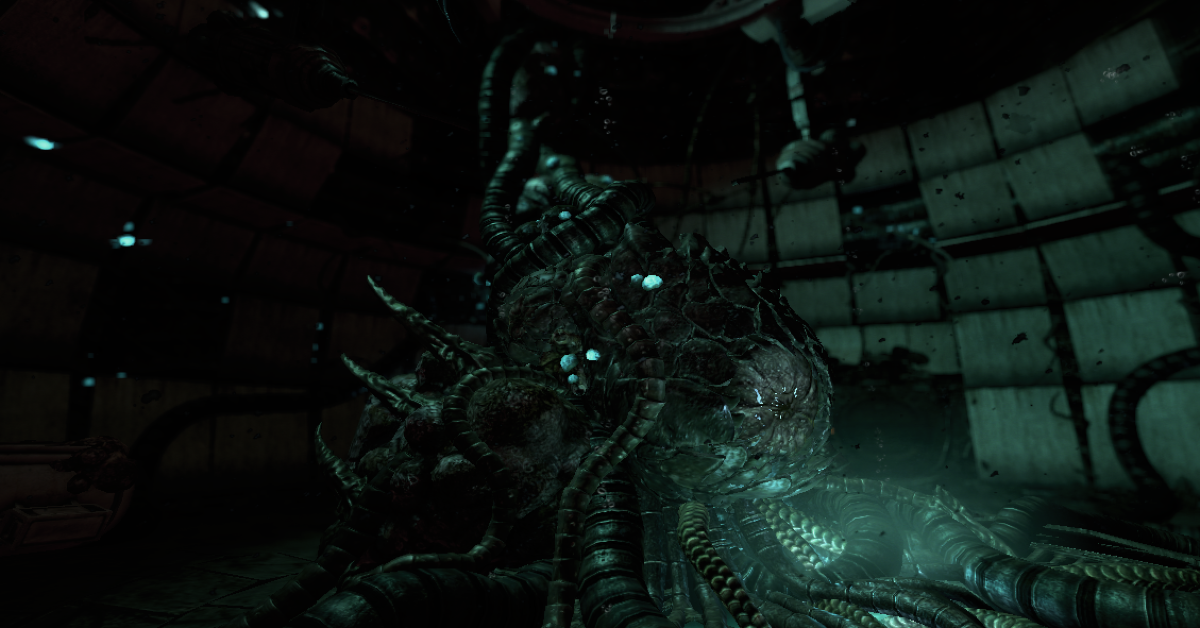
Soma has, in total, four Simons. And three Catherine Chuns. And copies of several other dead characters. You see, there are two master plans for the partial survival of humanity, one from Catherine Chun herself, and the other from the WAU. Chun wants to launch a simulator into space with some copies of the survivors from the underwater base, including Simon. Meanwhile, the WAU wants to extend its structural gel and put the consciousnesses into a peaceful sleep state within their revived bodies or in machines called mockingbirds. In summary: Matrix A and Matrix B, movies that, in turn, are the arguments of the dream and the evil genius of Descartes, and the brain in the vat from Putnam. That's why I think the game allows you to choose not to kill the WAU because, well, we shouldn't be judging simulated realities among ourselves, right? But why four Simons?
In Soma, an employee, Sarang, proposed the concept of "flipping the coin": when your brain is copied, there must be a moment when your organic consciousness and the simulated consciousness are at the same level of "awareness," a timing window, and in one of those, in a heads or tails, the one who wakes up on the other side is really you, and the one who remains in your organic body is someone else. So what follows is to commit suicide immediately while you continue living in your simulation.
There are two master plans for the partial survival of humanity (...). Chun wants to launch a simulator into space with some copies of the survivors from the underwater base, including Simon. Meanwhile, the WAU wants to extend its structural gel and put the consciousnesses into a peaceful sleep state within their revived bodies.
The copying of consciousnesses in Soma is like copying files on your computer: identical copies in different places in the system. Or rather, they do not exist as the same file running at the same time, because both occupy different physical spaces.
And that's where Daniel Dennett comes in, suggesting that many thought experiments are intuition bombs that test our perception. One of Dennett's experiments is Mary’s teleclon, an astronaut on Mars who discovers her base is compromised and about to explode, so she teleports a copy of her body to Earth, where her family is. Is this the same Mary who was on Mars, or is it a completely new Mary? The answer is that it doesn’t matter because, going back to Turing, no one would notice since mental properties have no ontological value (at least for Dennett, Parfit, and Hofstadter, who are reductionists regarding mental properties), but for the original clone, well, maybe it does.
Time passes. Simon-the-Canadian's consciousness was copied, but he died a month later. Simon-in-Imogen doesn’t last long either, because to descend into an abyss they have to copy Simon into a body that was wearing a better diving suit, and he becomes Simon-in-Raleigh, while he hears Simon-in-Imogen shouting at Catherine Chun, "Hey, I'm still here, what's up?" And Simon-in-Raleigh can choose to kill that copy or move on. And when he finally manages to fire the simulated Ark of Paradise at the end of the game, well, it’s another copy of him, and Simon-in-Raleigh is left alone, at the bottom of the ocean, on a planet without hope for at least millions of years because he is a stolen soul and...
Conclusions: reflection in the dark
You become aware that you’re going to die at four or five years old, and from then on, everything is a mess. Now I’m much better with that topic, but when I was younger, it often kept me up at night because it was like: watch out, this is ending and it’s the only bullet in the chamber. When Descartes lost his daughter, he made an automaton replica based on her body that a ship captain would throw into the sea... Well, that’s a pretty dark bummer. The great mechanistic rival but not dualistic of Descartes (that is, one hundred percent materialist) is Hobbes, who, in his final moments, seems to have said: "A great leap into the dark." Our life is a fruit salad of intense variations of lights and colors, which, if you pay a little attention, you see new details that enhance the fruit salad. We imagine death as darkness because there’s nothing there and nothing is distinguishable; we are fundamentally visual beings. The ocean floor vibrates with life too: it doesn’t change the fact that its undeniable darkness gives us a bad feeling.
The truth is that we don’t know what’s on the other side, or rather, what we know is that when we die, what keeps us alive now, our body, is still and decaying; the machine no longer works. It’s entering into nothingness. That fear is what Soma appeals to, the fear of our fragile existence, the knowledge that we might just be a more elaborate version of the automaton doll that Descartes made after his daughter’s death, which also stops working when it runs out of fuel or its components unravel, and that’s all folks. It’s not necessarily traumatic. It’s not a shock that sets off alarms, those that make us believe there’s danger nearby: it’s not the fear of the reptilian brain. It’s from one of our human, intellectual brains. A unique fear, of the human condition.
Las notas de 421 no tienen paywall
Y a cada colaborador se le paga por su trabajo. Las dos cosas dependen de los suscriptores.