Shadow of the Colossus is more than just a game: it’s a haunting, desolate world. Amid tragic colossi and empty landscapes, a community of players spent years searching for the secret hidden within its ruins. Is the emptiness a design flaw or a mystery waiting to be solved?
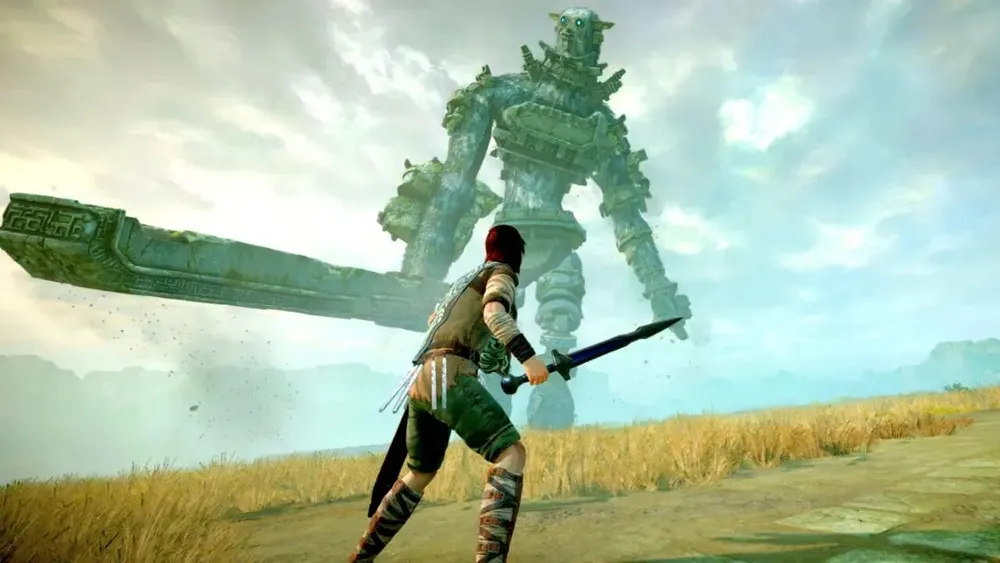
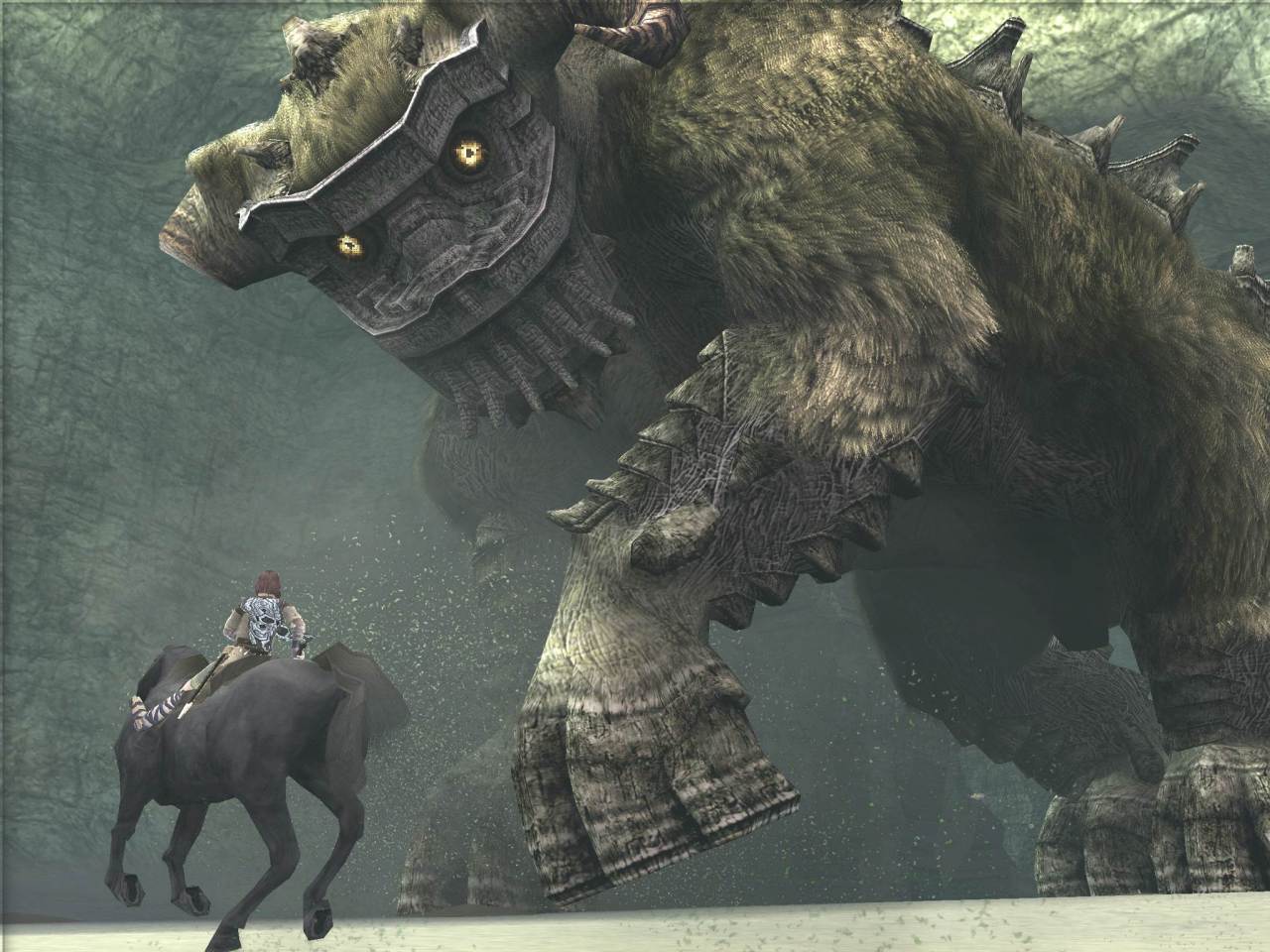
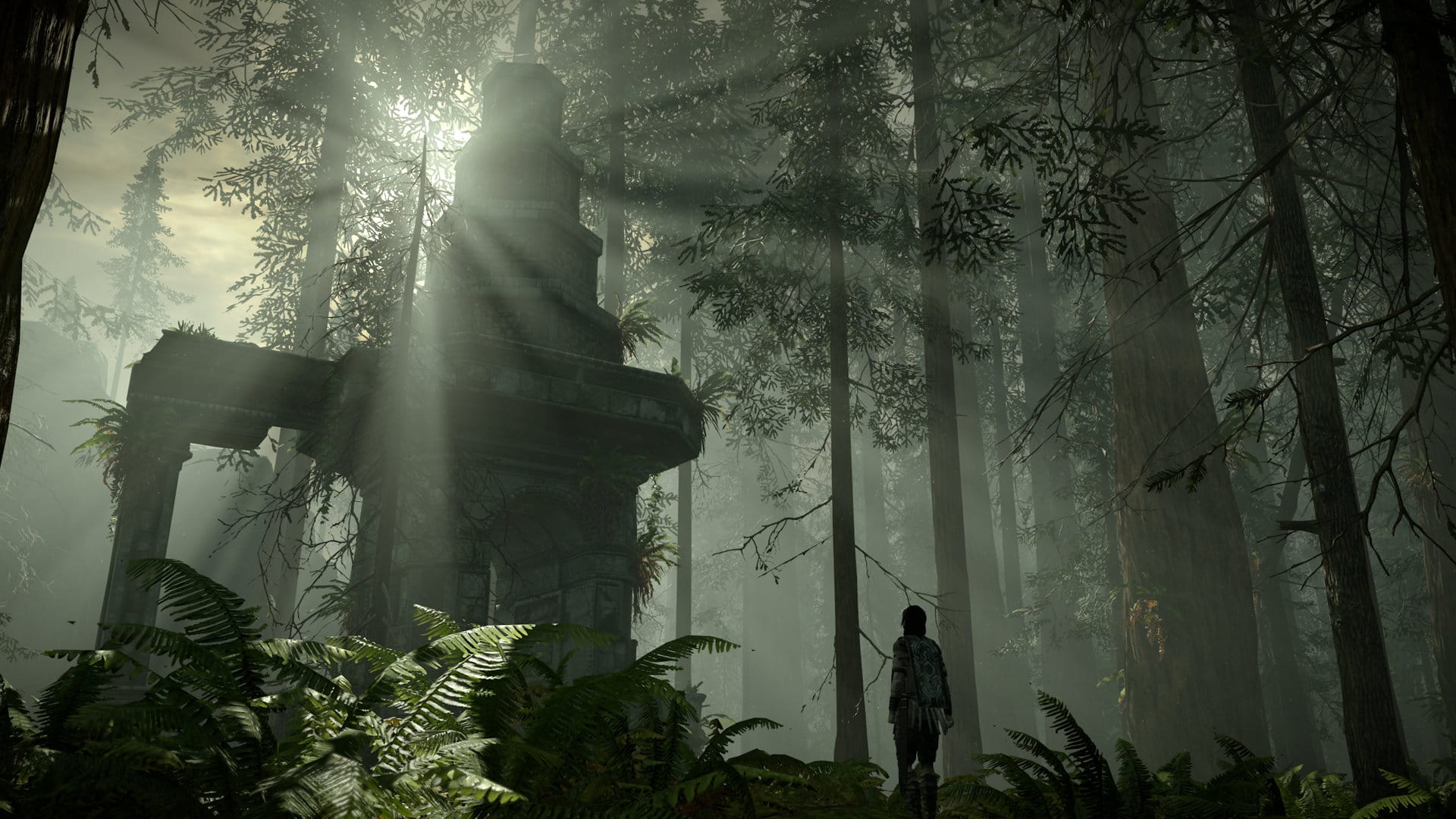
Shadow of the Colossus is a video game from 2005 originally made for the PlayStation 2, a spiritual successor to Ico and part of an unofficial trilogy with The Last Guardian (from the same development team). In Shadow of the Colossus, you play as Wander, a young man who arrives in forbidden lands with the body of a girl (Is she his partner? His sister? A queen? All we know is that she was sacrificed) and makes a pact with a supernatural entity to revive her. In exchange, Wander must search a vast and empty world for sixteen colossi, enormous creatures that are part animal, part ruin, their bodies covered in stone, fur, and grass.
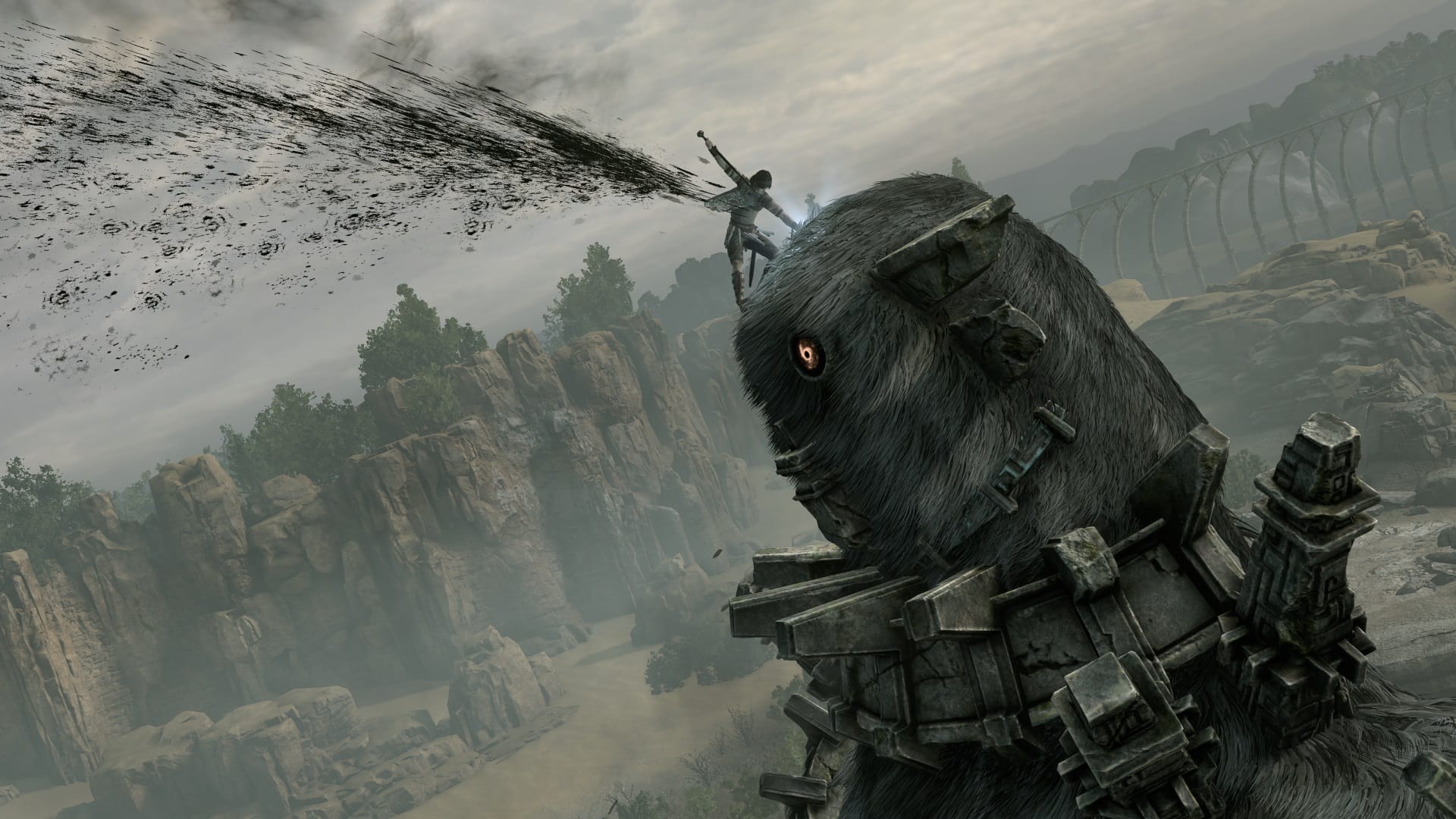
Wander rides Agro through a world that is forbidden to enter, sealed off except for a bridge, illuminating with his sword that vibrates to indicate where the colossi are. Each one is part of a puzzle, an “inverted dungeon,” in the words of its creator, Fumito Ueda, in homage to the Zelda dungeons he was a fan of. One colossus must be made to crouch with an arrow shot to climb on top, another must be drawn out of the sand, another is scared of fire, and another must be forced to lower its wings to climb up them. One looks like a flying dinosaur, another a cat, another a sea serpent. The colossi are beautiful and tragic, trapped in their sands, and the death of each one, which happens because of us, feels like an irreparable tragedy. The music (a high point of the game) becomes somber, the colossi bleed and collapse like ruins. Because as Wander kills them one by one, he loses his humanity, possessed by shadows, the price he must pay to revive Mono, who lies waiting for him in the temple in the middle of the map. Those who fight monsters must take care not to become a monster themselves.
Wander must search a vast and empty world for sixteen colossi, enormous creatures that are part animal, part ruin, their bodies covered in stone.
The members of Team Ico, led by Ueda and with Kenji Kaido as producer, didn’t want to make Ico 2, a game that didn’t achieve much success (but became a cult classic). They moved away from puzzles, levels, and planned a multiplayer game (ironically, in such an empty world) with 48 colossi. Pushing the limits of the PS2’s capabilities, combined with Ueda’s perfectionism and fan pressure, they repeatedly went over deadlines and budgets. They decided to make the game single-player, starting with a more feasible twenty-four colossi, and later reducing it to sixteen. The game swept every award presented and is often cited as one of the examples used to argue that video games are a form of art.
Fans devoured the game (which is quite short, about seven or eight hours), and began to explore the vast, ruin-filled, empty world. The ghostly architecture evoked a need for answers; it couldn’t be that this entire empty world was, precisely, empty. Then, a user named Arcadia invited anyone who wanted to join him on the PS forums at the end of 2007 for a Quest for the Last Big Secret, the Search for the Last Great Secret.
The thread (available on the Internet Archive, as long as we have it) is a frenzy. It lasted until 2016 and had nearly six thousand posts. Arcadia’s original proposal wasn’t absurd: in the central temple, there are four glyphs resembling four geographical features. One of the very few lines of dialogue in the game speaks of an intersection, and the cross formed by the four spaces has its own right above the rarest colossus, which also has a closed door. Eight colossi had been discarded, but how beautiful it would be if one were hidden behind it, even just to see its lifeless body. The forum members dubbed themselves Secret Seekers, and with the devotion of a cult, they embarked on a quest where each failure renewed their faith. Someone played the game 16 times in a row because playing is not wasting time. Someone wrote a fan theory of twenty-five thousand words. Someone claimed the Secret already existed and had been found: climbing with a glitch to the top of the temple where there’s a garden with poisonous fruit. They replied that Team Ico would never hide the Great Secret behind a glitch. This is like a Church, they said: if you don’t believe, don’t come to the thread.
If you flip through random pages of the thread, you see players who, over time, recognize each other, greet each other, and say, "hey, you didn’t give up, you’re still around." Because there was love for the game, there was camaraderie, there were inside jokes that today would be memes. A relic of an Internet where there was space for mystery, for cyber friendships of people who were just usernames. A nostalgic glimpse of how we used to inhabit digital spaces. It meant going to your home computer, “logging onto the Internet,” and being the protagonist of an adventure. "The world used to be a bigger place," Barbossa tells Jack Sparrow, who replies, "nah, the world is the same, it’s just that now there’s… less in it." People searching for answers in an empty world, mirroring the protagonist’s quest in the game. Things that can’t be done in the era of video games as a service or in games with over a million lines of dialogue.
In "The Weird and the Eerie," Mark Fisher defines the two concepts that give the book its title as two perfect counterfaces of the same idea. The symmetrical opposition between presence and absence. The weird (weird) is the presence of something that shouldn’t be there, something wrong, that doesn’t fit. A Lovecraftian monster that somehow crossed into our dimension, and just seeing it makes one lose their sanity. The eerie (eerie) occurs when there’s a lack of absence or a lack of presence, meaning there’s no presence where there should be something, or there’s a presence where there shouldn’t be anything. Fisher acknowledges that this latter case overlaps somewhat with the concept of weird, but identifies the difference in that the eerie necessarily involves speculation, facing the unknown that we suspect is lurking around. For example, it would be eerie for a bird to sing in a place it shouldn’t, in a way it shouldn’t. Or a gigantic and practically empty peninsula, save for sixteen wandering colossi and a forum of players obsessed for over a decade with finding the Last Great Secret, like the urban legend of a cursed game.
The ghostly architecture evoked a need for answers; it couldn’t be that this entire empty world was, precisely, empty. Then, a user named Arcadia invited anyone who wanted to join him on the PS forums at the end of 2007 for a Quest for the Last Big Secret, the Search for the Last Great Secret.
Empty spaces have something that generates a particular type of obsession. In "House of Leaves," the 2000 novel by Mark Z. Danielewski, a man discovers that his house is bigger on the inside than on the outside. He tears down a wall and finds that his house is infinite, with room after room. With spelunking gear and camera in hand, he becomes obsessed and delves deeper into the house. Similarly, in Susanna Clarke’s 2020 novel "Piranesi," the protagonist lives in another “house,” a kind of temple with hallways flooded by some ocean and filled with an infinite number of statues. Unlike Navidson, the protagonist of House of Leaves, Piranesi loves the house and never remembers not having lived in it. One can also see the obsession with backrooms, a phenomenon born on 4chan, to which the community invented a huge lore and which is coming to the big screen this year. And just as I could never stop thinking about these three spaces I just mentioned, I couldn’t stop thinking about the Forbidden Lands of Shadow of the Colossus and their desolate grandeur, about riding in silence for long stretches across a barren landscape. Even less could I stop listening to the soundtrack when I needed to give myself courage.
The eeriness of the void is accompanied by an unbearable urge for answers. Why would they give you a parachute that was useless when you had to kill a colossus in a challenge? And a harpoon, if all Wander needed was his sword and bow? Did the references to Leviathan, to the Bible, merit searching for clues in the game’s texts? The Secret Seekers were willing, years later, to find answers to these questions. And they did. They discovered that by using the game’s physics, one could make Agro jump incredible distances. That there were three giant eagles you could cling to that would take you for a ride, and also other birds that would sink with you in the sea. They discovered areas you could reach by shooting yourself in the feet with explosive arrows. Each discovery was cause for celebration, no matter how insignificant, like finding a wall in the temple where you could grab onto a ledge. They were signs that there was intention behind the design.
Defeat came when, a few years later, a user named Pikol appeared. He had scanned the entire map using emulators and noclip, a technology that was becoming more common. He shared it with the community. But the Seekers didn’t want to find the Great Secret that way: it would be cheating. Many of them felt it was like raising a white flag and gave up the search. Others continued searching for years: they found items that had been hidden in the game’s design, like one that allowed you to view the fight from the colossus’s perspective; they found a giant dam in the middle of the sea that served as a temporary storage place for objects; they discovered how to access the lands from the opening video. You had to get there through glitching and emulation, but once there, you could walk on solid ground.
A user named NomadColossus continued making videos about the game for years after it became known that there was nothing, and he still does so even today. He found the place where he believes the eight missing colossi were originally planned to be located. His obsession is so recognized that when the remake was made for PlayStation 4 in 2018 (the only change was the controls, but not its content), they specifically thanked him. The forum was already dead by then, but all the Seekers, perhaps now moved to Reddit, began searching and found that scattered throughout the Forbidden Lands were 79 glowing stones and coins, hidden in remote places. It seems the game did have more to offer them, because when they collected all 79, a door opened at the base of the sanctuary, a door that had been closed until then. Inside, there wasn’t much, just a throne and a sword. It was enough.
✦ Suscribite
Las notas de 421 no tienen paywall
Y a cada colaborador se le paga por su trabajo. Las dos cosas dependen de los suscriptores.
Nací en Río Gallegos en 1989. Soy abogado y doy talleres de escritura. Publiqué las novelas Los restos diurnos (2023) y Lapislázuli (2025). Vivo en Villa Crespo.