Gabriel Knight: the great Sierra saga
Gabriel Knight, the Sierra saga, was one of the most important graphic adventure series of the 1990s.

Gabriel Knight, the Sierra saga, was one of the most important graphic adventure series of the 1990s.
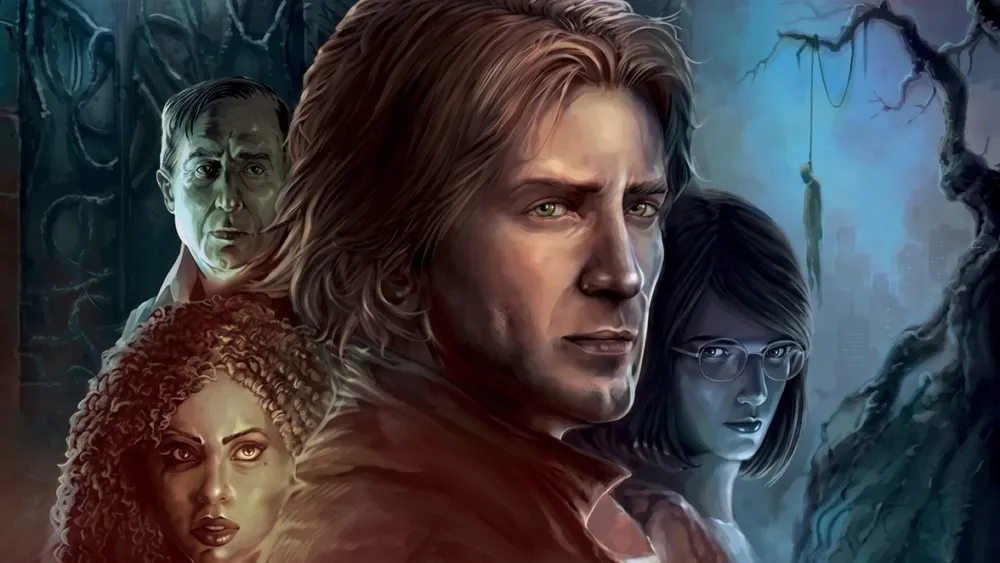
Written and designed by novelist and systems engineer Jane Jensen (Pennsylvania, 1963), Gabriel Knight became a classic saga during the golden age of graphic adventures, at a time when the technological transition from floppy disks to CDs opened up a whole new universe of possibilities for experiencing what video games could offer.
Unfinished after its three installments (1993, 1995, and 1999), it represented an ambitious leap in how stories were told in the digital medium: a narrative with the depth of a novel that combines the mysteries of Agatha Christie, the flair of comics like Hellblazer, the works of Neil Gaiman and Anne Rice, the depth of historical research, and, over time, a Hollywood-sized production. Each of its three installments also represents the exploration of a different technological and aesthetic milestone at a time when a new disruptive possibility emerged every two or three years.
When the teenage Jane Jensen, who aspired to be a writer, stepped into a computer lab to take “Computer Science 101,” she found herself in two fascinating worlds: programming (which she found incredibly fun from the start because “it was like solving multifaceted puzzles”), and Colossal Cave Adventure, an interactive fiction game.
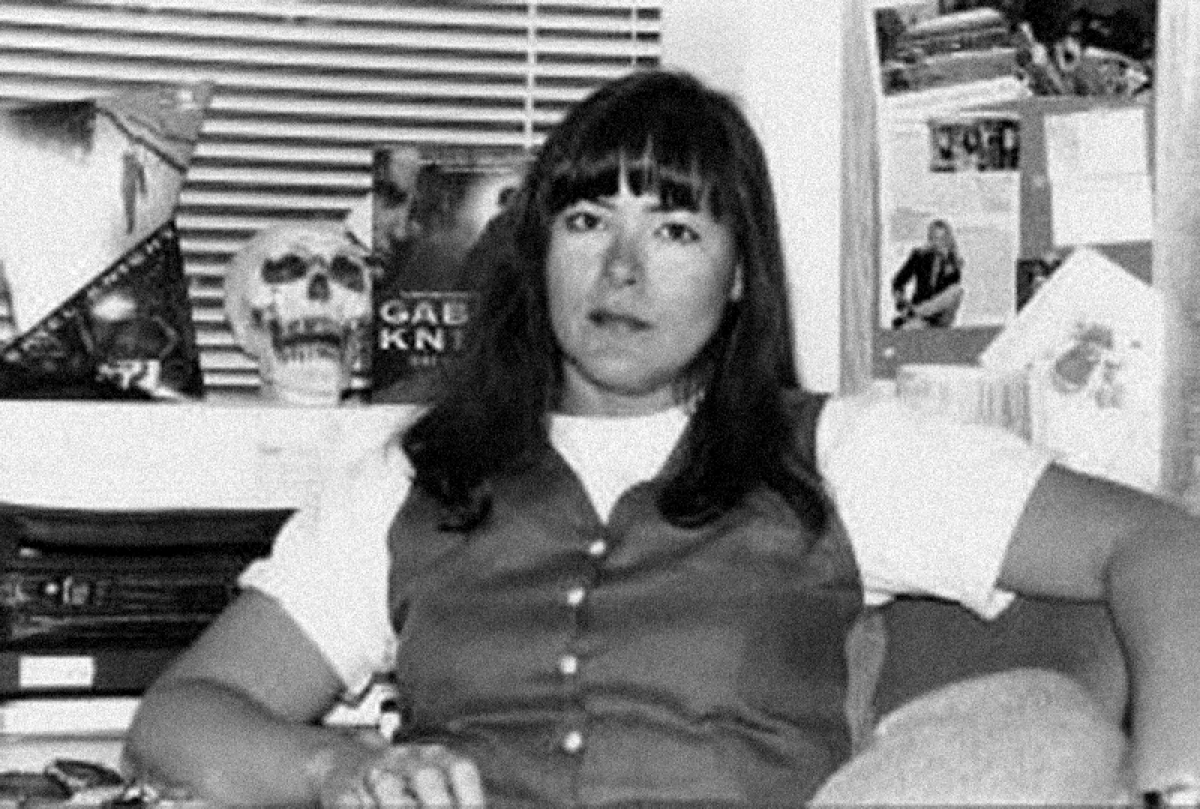
She knew there was no way to make a living writing books, so she ended up studying Computer Science at Anderson University in Indiana and got a job at Hewlett-Packard. But her second serendipity came when she encountered King's Quest IV: The Perils of Rosella (1988), the hugely acclaimed graphic adventure from Sierra Online. To the narrative experience she had with Colossal Cave Adventure, King’s Quest IV added layers of graphics, audio, and, above all, challenges for the intellect. Jane was hooked within ten minutes and told herself, “I have to work with these people.”
Gabriel Knight became a classic saga during the golden age of graphic adventures, at a time when the technological transition from floppy disks to CDs opened up a universe of possibilities.
From that moment on, Jensen began bombarding the company to let her in, even if it was just to serve coffee, hand out snacks, or whatever they did at a video game developer in the early nineties. She finally got into Sierra as a writer, tasked with drafting the instruction manual for Police Quest III, until the game's development timeline began to lag and they asked for her help with the script.
To cut a long story short, Jensen went on to write scripts for several smaller graphic adventures until one day she ended up co-designing King's Quest VI: Heir Today, Gone Tomorrow alongside none other than Roberta Williams, co-founder of Sierra. When it finally released in 1992, the game was a success not only in sales but also in critical acclaim. And that acclaim had a lot to do, in large part, with its narrative innovation. For the first time in the series, the video game followed a non-linear storyline, and if players got stuck on a puzzle, they could wander to another area while they thought of a solution.
The story was more coherent, deeper, with more interesting characters and voice acting that gave each character more personality. The rendering was also better, and the true density that allowed for expansive storytelling was technological: with this video game, Sierra was beginning to say goodbye to the 3 1/2 disk format and starting the transition to CD.
In short, the game performed so well, especially due to its storytelling innovation, that the duo Ken - Roberta Williams gave Jensen the green light to lead her own graphic adventure (for those who want to dive deeper into this behind-the-scenes story, I leave a series of articles).
Obviously, Gabriel Knight didn’t invent the crossover between literature and video games. Before that, there was the golden age of text adventures, and some of them, leading up to graphic adventures, adapted books, such as The Hitchhiker's Guide to the Galaxy (1984), developed by Douglas Adams himself. But it was indeed an initiative that fully embraced the current hardware to compose a story with the depth of a novel.
One concept studied in writing workshops or in writing theory is communicating vessels. A concept developed (I shake my head with respectful disapproval) by Mario Vargas Llosa, which he took from physics to discuss how the proximity of different narrative lines works to enrich a work: an organic operation that connects different episodes, integrates what happens in different parts of a text, and shapes its atmosphere and reading.
 Facundo Olano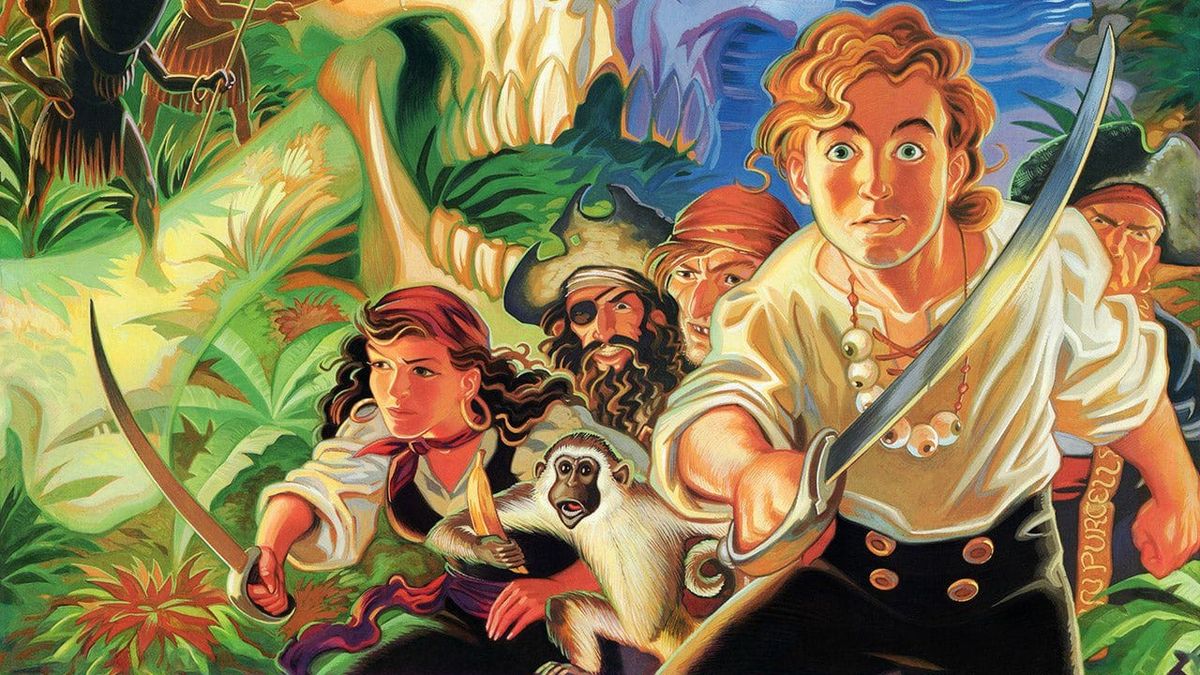
In Gabriel Knight, this complexity comes together in the way the story is presented in layers that connect directly with the puzzles and the information they require and provide. It works much like a novel that reveals itself gradually. But something important for density in a video game is that, when integrating the narrative of an interactive environment full of possibilities, the foundation cannot be solely literary. It must also be computational.
While the “school” of LucasArts (with the SCUMM engine at the forefront) sought to stylize the interface to prioritize pure point-and-click and visual gags, Jensen proposed something different. Her team approached the new graphic adventure in the opposite direction of what was usual: first the story, then how to make it work from the design. Sierra even sent its writers to a script workshop.
Gabriel Knight, a frustrated writer and womanizer who owns a used bookstore, begins to take an interest in a series of murders involving voodoo paraphernalia occurring in his city, New Orleans. Initially, he investigates to gather material for his writing, but gradually he becomes immersed in a supernatural plot that reveals a secret about himself: Gabriel comes from a lineage of Schattenjägers, shadow hunters descended from inquisitors who, it is said, were commissioned by Christ himself to "serve the light."
Jensen proposed something different. His team approached the new graphic adventure in an unconventional way: first the story, then how to make it work from a design perspective.
Gabriel is a charismatic, lovable, vulnerable, cheeky, somewhat lazy, and intelligent character. He was directly inspired by graphic novels like (I stand up) Hellblazer or (I cringe in painful discomfort) the works of Neil Gaiman, which were at their peak popularity and which, at that time, Jane Jensen consumed as if they were water. But he was also influenced by Anne Rice's series Interview with the Vampire, which Jane devoured while in college and which connected her to the mythology of New Orleans. She also became deeply engaged with Angel Heart, a psychological horror film set in that city, where the protagonist gets caught up in a tangle of voodoo magic and satanism.
Jensen also created Grace Nakamura, a Nikkei student who worked at the bookstore and who, both in the first adventure and the subsequent ones, played the role of "research assistant," fitting the archetype of the bookworm with glasses and the reading intelligence of the saga, organizing, cross-referencing data, and outsmarting her boss in a sort of "enemies to lovers" dynamic. The verbal duels between Gabriel and Grace made both characters very endearing. They were joined by Mosely, Gabriel's childhood friend and a katraska detective (the comic relief), who provided information about the voodoo murders.
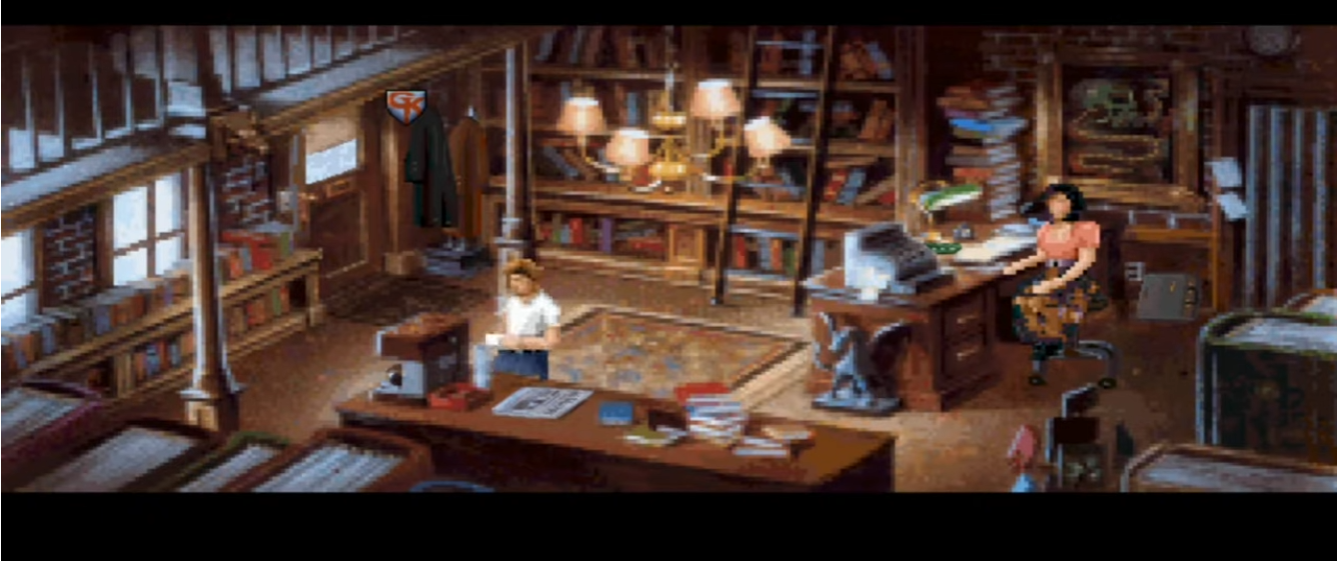
The game introduced a day system that advanced only when you completed that day's investigations, structuring the plot like an interactive novel. By dividing the game into chapters, Jensen introduced another narrative device from novels that would address one of the most common complaints about graphic adventures, especially those produced by Sierra: softlocking. Many graphic adventures allowed you to proceed to the end even if you didn't have a crucial item, finding yourself in a dead end or leading you directly into a death loop from which you could only escape if you had saved the game in multiple different slots. In Gabriel Knight, it was impossible to finish a chapter without having completed everything necessary to progress. While the old Sierra adventures earned a reputation for being tricky and hostile (which drove designers like Ron Gilbert away), Jensen used the rigor of her parent company's design not to frustrate players with random deaths, but to compel them to engage in a reading pact: just like in a detective novel, you couldn't turn the page until all the clues of the chapter had been gathered.
Of course, for many games, softlocking was not a bug but a feature. Both for commercial reasons and as a statement against the player. But we'll discuss that later. The point is that Gabriel Knight sought other paths.
With the success of King's Quest VI, Sierra had a significant pony to ride, especially with the possibilities available in the CD format. If the game was going to have a ton of voiced dialogue, it would be great to feature a couple of respected faces. That's how they brought in Mark Hamill, who had been playing Luke Skywalker for 16 years and was at that time voicing the Joker in the animated series of Batman; Michael Dorn, Dr. Worf from Star Trek; and Leah Remini, who had just come off the sitcom Saved by the Bell. The narration was handled by actress Virginia Capers, who gave it a spectacular gothic storytelling tone.
For the role of Gabriel, casting director Stu Rosen suggested Tim Curry, a master of characterizations. Anyone who has seen It, Rocky Horror Picture Show, Legend, or Home Alone II immediately understands this guy's expressive potential. There was a small issue: Curry was irredeemably British. But instead of breaking the character, he added an exaggerated Southern accent that solidified the protagonist's personality.
One more detail? Despite being stars with established careers, the actors did the role for the fun of it. Why? Today we have renowned actors starring in video games like Death Stranding or Cyberpunk 2077. In 1993, actors didn't see video games as a serious or "profitable" industry, so the participation of Curry, Hamill, Dorn, and others was more out of curiosity, innovation, or artistic challenge than anything else. Curry would lend his voice to other games in the nineties. For Mark Hamill, 1993 would also be the year he began a long career as a voice actor in video games, which continues to this day.
Jensen went all out with her research on New Orleans. Since Google was going to be invented five years later, she called a bookstore there to send her books with photos of the city. Gabriel Knight is filled with real locations, like Jackson Square Park, rendered in the 256-color palette of Sierra's Creative Interpreter, the company's graphic engine, which had the versatility to provide the warmth or coolness needed.
With all this groundwork laid, Gabriel Knight: Sins of the Fathers hit the scene in 1993. And it did incredibly well. So everything was set for a sequel.
The one who handled interactive narratives in digital spaces during that time was Beatriz Sarlo, one of Argentina's most important intellectuals and literary critics. In the last quarter of Instantáneas: Medios, ciudad y costumbres en el fin de siglo (1996), Sarlo analyzes Doom (1993), Full Throttle (1995), and Myst (1993) to unravel a question full of future possibilities: What forms of interaction can a video game provide that other media cannot?
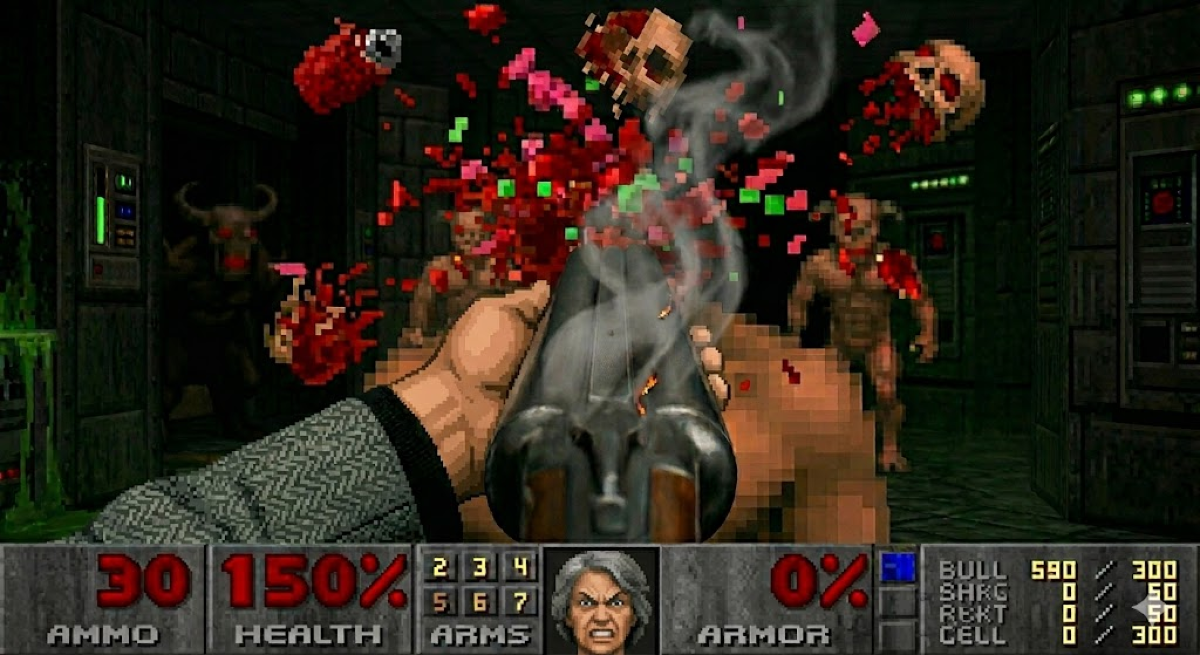
In those chapters, which many still cite today as a funny curiosity, we find a fascinated Beatriz Sarlo captivated by the gameplay of Doom. Not because it has a great story, but precisely because it almost doesn't have one. A space with a very simple premise, because the game, presented from an immersive first-person polygonal perspective, constructs a space that unfolds as we traverse it. A game where the gaze creates the landscape from our own eyes. What matters is not what it tells but what we do with the environment.
Sarlo also finds something valuable in Full Throttle, a game technically much more limited than others of its time, but which works because it knows exactly what it wants to be: a story of caricatured, ridiculous, and charming bikers, where nothing pretends to be deeper than it is, no developer is trying to be intellectual, and everything is put in service of the same idea.
And then there's Myst. Myst is mounted on a shell: "the outrageous pretentiousness of these puzzles is perhaps why Myst seems such an intellectual game." Pretentious, overblown, cluttered, a theme park built with remnants of Tolkien, Magritte, and a cultural hodgepodge of the nineties. Sarlo identifies a problem there that ruins her illusion for the future: "Myst is a novelistic allegory of our relationship with the cyber-world that lies ahead: no one will be able to navigate it without reading skills." To progress in Myst, you have to read. You have to take notes. You have to interpret texts. You have to reconstruct meanings.
Sarlo analyzes Doom (1993), Full Throttle (1995), and Myst (1993) to unravel a question full of future possibilities: What forms of interaction can a video game provide that other media cannot?
That issue that Sarlo accused Myst of lacking was, after all, not present in Gabriel Knight. Jensen's references were bestsellers. She took German castles, historical conspiracies, Templars, werewolves, voodoo, and romance novels, and turned them into a concise and captivating interactive product where information emerged from photographs, tourism visits, conversations, an ancient poem, a book, a police interview. The experience was a case of engaging multimedia narrative integration: everything was in the right place, and discovering the next section of the plot was fun. Many aspects of environmental narrative, emergent design, or interactive storytelling were already present in the design of the first Gabriel Knight.
Fue fueled by the success of the first installment, Sierra immediately hopped onto the Gabrielnetta. So, while the production of Sins of the fathers was ambitious, for its sequel, The beast within, the company embarked on a Hollywood-style madness. True to their policy of embracing every technological innovation, Ken Williams decided to produce the game in full-motion video (FMV) format, featuring real actors. The future of the industry was right there, crystal clear. They conducted a first test with (the also classic) Phantasmagoria, and when Jensen saw the filming results on the green screen, he said: “this is it, let’s go this way.”
So the heads of the studio put a million dollars on the table and production began on an adventure that would feature wolves, horses, various locations in Germany with a multitude of characters, and even an opera.
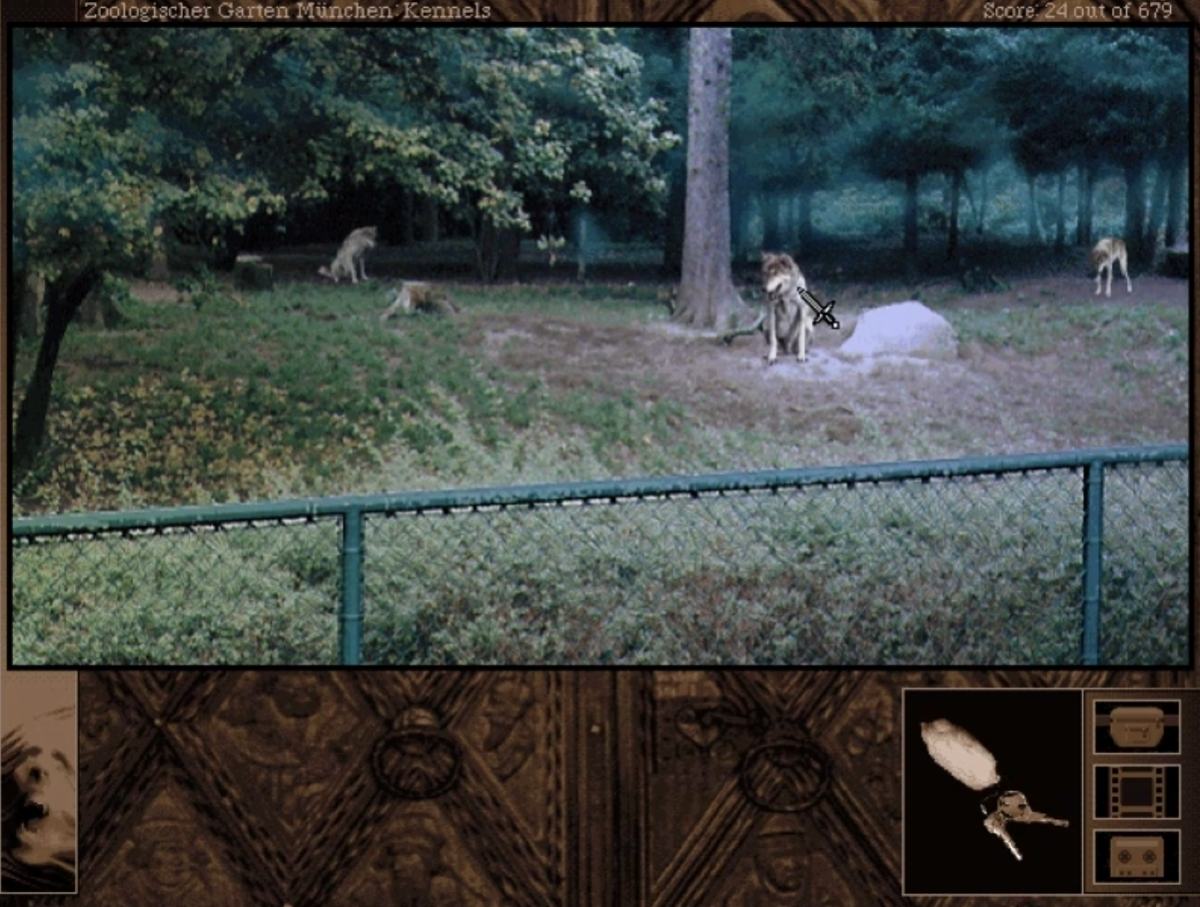
In this installment, a mob shows up at Gabriel's house asking him to save a girl who seems to have been kidnapped by a werewolf. Gabriel was going to face a plot involving werewolves, which was perfect for exploring the symbolic aspect of (quote Jansen) “carnal incontinence.” Moreover, it was a perfect opportunity to give fans more of what they loved in the first installment: a cocktail of historical and supernatural elements anchored in real locations, like the story of King Ludwig II of Munich, a quasi-hermit who died under mysterious circumstances and dedicated his life to building gigantic and bizarre structures.
Creating an FMV game was a costly and lengthy process. The script had over 600 pages, equivalent to five movies, and it wasn’t just about filming scenes; the actors had to perform mundane actions like opening a doorknob, picking up a cup, or wiping their nose. All of this, which in cinematic language can be likened to inserts, had to be edited in post-production along with the foley, but without the support of linearity. Programming which clips played alongside which sounds based on the player's actions was no small feat in 1995. Most of the game was filmed outdoors, with part of the crew in Seattle and another in Oakhurst, and with the additional chaos of filming animals, especially three adult wolves without sedation.
Tim Curry bore no physical resemblance to the character whose voice he provided (well, neither did Hamill to Mosely nor Remini to Grace), so a new casting had to begin. They ended up hiring Dean Erickson, a thirty-something Wall Street employee who dreamed of breaking into the film industry. Erickson was a perfect fit for the role, and he had the determination to go through the script a thousand times while trying to take the opposite path that Tim Curry followed: shifting from a Maine accent to one with poorly concealed British undertones.
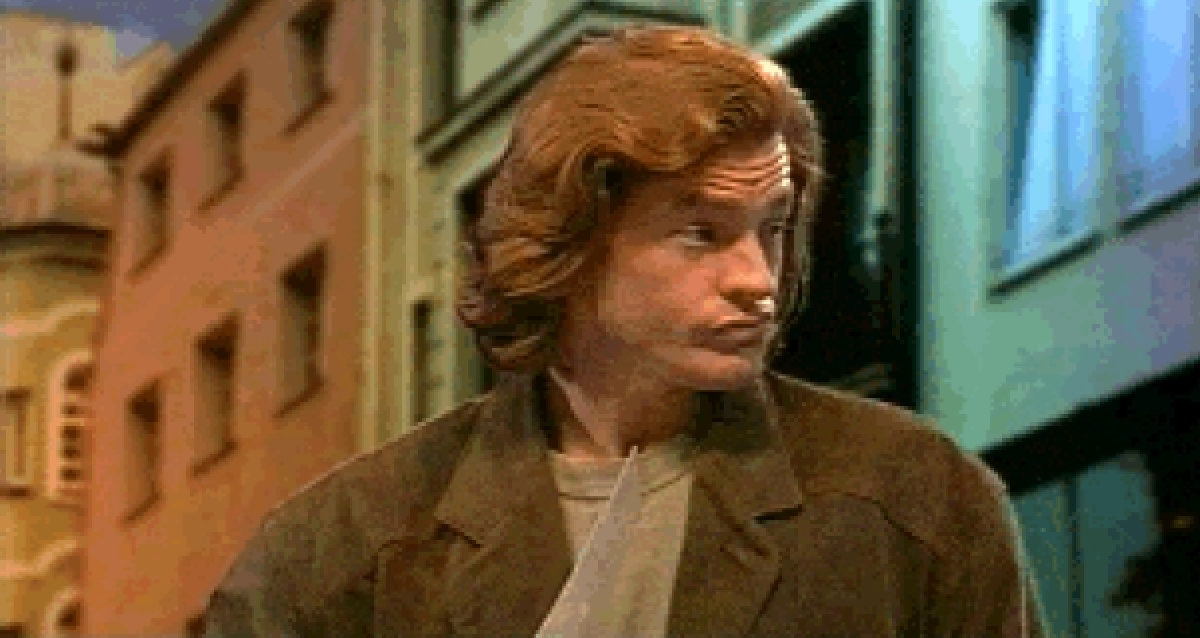
Additionally, since fans of the first installment were so hooked on the dynamic between Gabriel and Grace, Jensen decided to make her a playable character, with long sections where we explored mysterious places and joined tours to uncover as much as possible about the history of Ludwig II, which ultimately led us to discover a whole real plot from Munich's past. On top of that, there was the enormous challenge of weaving the story with puzzles that felt organic and could be represented correctly with a camera.
In 1995, the release of The beast within broke all records again. The story was much more intricate, the design based on photographs of the streets of Munich captivated many players, the chemistry between Gabriel, Grace, and the villain of this edition was explosive, and the plot of mysterious kings and werewolves based on real events fascinated fans. The game received impeccable reviews from both Computer Gaming World and Rolling Stone. And a new generation of fans set out to explore Munich and the castles featured in the game.
To this day, The beast within is one of the most remembered graphic adventures from that brief interregnum of full-motion video, which feels so strange to contemporary players, and most of whose titles are riddled with issues, especially in achieving player immersion in a flowing plot and gameplay that doesn’t feel ridiculous.
To this day, The beast within is one of the most remembered graphic adventures from that brief interregnum of full-motion video.
Everything was set to kick off production on a third installment, but for Jensen (and in his own words), The beast within was going to be the pinnacle of his career. But the nineties were the nineties. Technologically and financially speaking.
When asked what happened to graphic adventures, Jensen replies that “Doom happened, the shooters came.” Well, it might be a bit more complex than that.
Yes, it’s true that around that time, just after the release of Gabriel Knight 2, there was a new technological leap that would begin to cement the decline of the genre: new GPUs were becoming faster and, above all, cheaper, allowing more and more people to frantically navigate a map filled with Nazis or demons blowing everything up. A shooter, moreover, doesn’t have the disadvantage of requiring a solid plot to get started: you pull out a gun and start shooting.
But the poisonous bite that would kill the Gabriel Knight saga (and the rest of Sierra) was something else. By 1996, Ken, Roberta, and their permanent staff of star designers had been tempted by a very juicy offer. Comp-U-Card International, which wanted to expand into the gaming business, offered them a transfer with so many zeros that it was hard to refuse, especially since the Williams had long wanted to focus exclusively on producing games.
Well. Bad move.
In 1998, CUC merged with HFS Incorporated, a company involved in... mortgage services and travel packages. Despite having nothing to do with each other, the new company soon got embroiled in an accounting fraud scandal that led an advertising firm to buy the software division that had acquired both Sierra and Blizzard, renaming the former as “Havas Interactive” and refocusing them on... advertising.
To do this, they divided the company into six, closed the Oakhurst headquarters that Roberta and Ken had founded twenty years earlier, and laid off twenty percent of the employees, in what became known as the “Chainsaw Monday” of February 22, 1999. Ken and Roberta, who could make no decisions regarding this, resigned. According to Roberta, when they sold Sierra in ’96, things were going very well for them.
Under these conditions, Jensen would have to produce a third installment attentive to the technical innovations of the medium, coherent in its puzzles and story, and with a team that had suddenly shrunk to seven people.
The Beast Within had become an instant classic, so Jensen had the green light to work on the third part. Tim Curry, Mark Hamill, and Leah Remini were set to return to voice this installment (Hamill was just going to switch characters). As in the previous two occasions, Jensen conceived a story (a novel filled with mysteries and characters in the style of And then there were none by Agatha Christie, which included the search for the Holy Grail, the heir of Christ, and a plot against the formation of the European Union), assessed the innovations of the medium, and, in line with the company's policy of experimenting with the technology of the moment, began searching for a 3D graphics engine.
But things were getting hairy, and the narrative density was going to be one of the biggest problems. The 3D format, which allowed players to explore the entire environment through a free camera, had sparked the ambition to design puzzles with new logic, unexplored in the first two editions, giving players a more ubiquitous focus, like the famous puzzle from Le Serpent Rouge, based on a series of poems linked to an ancient church that, as we read them, allowed us to mark geographical points on a map and trace a drawing that indicated the location of an important place. All of this was processed on a laptop that Grace had in her hotel room, and that computer, named SYDNEY, was meant to be a crazy narrative piece: an encyclopedia of the Schattenjäger universe where one could load data, tag it as belonging to a secondary character, compare it with fingerprints, tire tracks, and consult entries about the Templars, the church, the mythology surrounding the Holy Grail, and even clues about the continuation of the saga.
From Sierra, they decided that Gabriel Knight 3 needed to have its own graphics engine, designed from scratch. So far, so good—a new challenge, exciting. They chose a highly experienced programmer named Jim Napier, who began designing an engine that handled polygons, renders, sounds, everything Jensen had in mind for this cutting-edge installment, but halfway through development, the company decided to pull him from the team to finish SWAT 3, a strategy game that was behind schedule.
The new graphics engine not only remained unfinished, and the team had to wrap up work in which they were not specialists, but precisely for this reason, the script that Jensen had written for this installment began to get scattered across thousands of lost lines of code, inevitably triggering continuity issues, incoherent dialogues, and truncated scenes. The remaining employees said that the 3D designs of the characters were hideous and unnatural. Tim Curry's performance, who knows if it was due to overconfidence or rushed recording, sounded exaggerated and very over the top.
Meanwhile, the company's enthusiasm had gone down the drain. And so had the public's interest in graphic adventures. Even Grim Fandango, Tim Schafer's game that is now a classic and had launched to excellent reviews, was selling very poorly. When Chainsaw Monday arrived, it was obvious that Gabriel Knight 3 was next on the chopping block. The team did everything they could to convince the new owners that the game was almost finished while they themselves were undergoing a brutal crunch to try to meet a deadline they never reached. "Vacation? You'll have your vacation when they kick us all to hell."
Gabriel Knight 3 was released in 1999. The game turned out well; it was finished, playable, coherent. The story was good, entertaining, even creating an interesting point of tension between Gabriel and Grace. But development was significantly delayed, costs skyrocketed, and puzzles had to be redesigned against the team's wishes because otherwise, they wouldn't have met the deadlines.
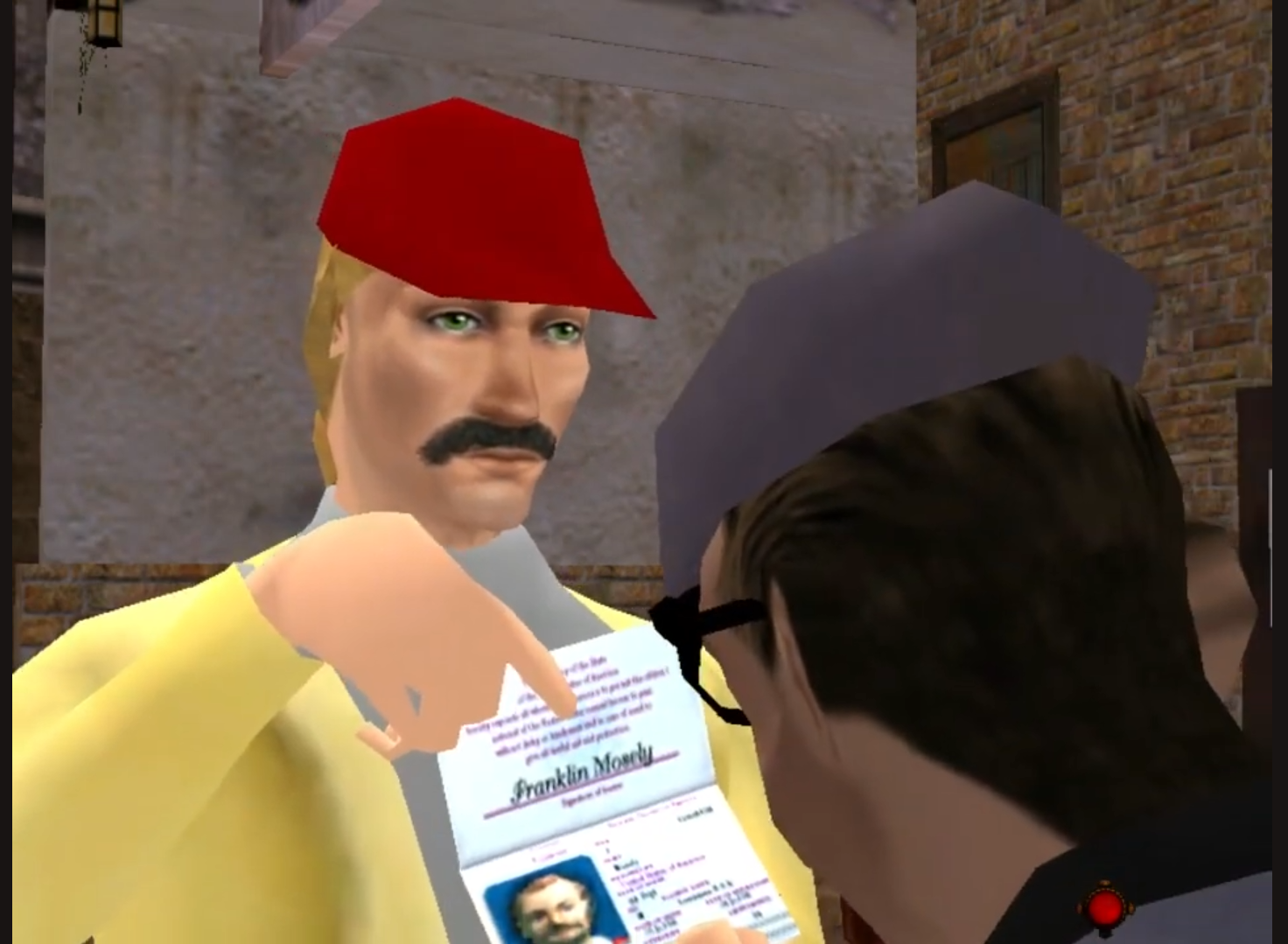
Jensen, however, did not come out unscathed from this (could we call it?) failure. Due to the need to reformulate some puzzles, there was one in particular that went down in history as one of the most ridiculous in graphic adventures. One that makes sense in Monkey Island, where it precisely escapes believability like the plague in search of comic effect, but completely breaks the uniqueness of Gabriel Knight. The puzzle was hastily designed by Steven Hill, the game's producer, nobody liked it, and it ended up being received by critics as "the puzzle that killed graphic adventures." Basically, Gabriel disguises himself as his friend Mosely by wearing a cap and sticking a bunch of cat tail hairs under his nose to simulate a mustache. Fun fact: Mosely doesn't even have a mustache. It's so bad that it has its own entry on Wikipedia.
When the game hit the market, the general public's interest in the genre had already hit rock bottom, and the final result was riddled with problems. With no budget or interest from the new executives to produce a fourth installment, the working relationship came to a natural end. After its release, Jane Jensen turned her attention to her career as a novelist and, years later, co-founded independent studios like Oberon Media and Pinkerton Road to continue making the games she was passionate about.
When the game hit the market, the general public's interest in the genre had already hit rock bottom, and the final result was riddled with problems.
Jensen is one of those creators whose peers, whenever they mention her, only say flattering things, emphasizing that "her thing is telling good stories." That versatility and focus is what saved the game.
Without venturing to guess what Sarlo would have thought of Gabriel Knight (I would genuinely have been afraid to ask him), we might think that this video game seeks a concatenation of the simple and the dense. Its immersion doesn't come from a first-person experience nor from 100% passive enjoyment, but from what a fan like Jansen seeks in mystery and detective novels, with an interest in the romantic plots of Anne Rice, the aesthetics of Hellblazer, and the supernatural tone of Neil Gaiman. By nature, Jensen's style is closer to Michael McDowell or Michael Crichton than to King. Closer to the script than to visual impact.
But Sarlo has a point with his virulent description of Myst: if you have to keep looking at the manual or the online guide of a video game to get through it, you destroy the gaming experience and the experience of the story.
Do you remember the "problem" of softlocking that the chapter division was supposed to solve? Sometimes these "inconveniences" were a resource for companies to force you to buy their manuals so you couldn't get through the game without them. Sometimes there was even a directly hostile design: when Douglas Adams released the adaptation of The Hitchhiker's Guide to the Galaxy, he intentionally added a pretty nasty mechanic, with hidden and deceptive mechanics to subvert the expectations of the already experienced player.
Doom ended up being one of the big winners of the decade precisely because new video cards became cheaper, processors became more powerful, and millions of people discovered how great it was to enter a map full of demons and solve problems with gunfire. Sarlo saw a tension between two possible futures of video games: the perceptual future of Doom and the overwhelmingly literary one of Myst.
While Doom innovated fully with space, Gabriel Knight bet on a story. The medium ultimately demonstrated that both lines were fundamental to the industry: embracing three-dimensionality, simulation, and spatial immersion, but also preserving the old literary ambition of graphic adventures. Gabriel Knight appears as a pivotal work not for its technical resources (which are quite modest), but because it showed that a graphic adventure could aspire to the thematic complexity of a suspense novel, incorporating history, religion, folklore, sexuality, violence, and moral ambiguity.
The emphasis on reading (which Sarlo feared) indeed remained. The evolution of video games continued through the refinement of spatial simulation from Doom, but also through the expansion of narrative. Gabriel Knight can be seen as an ancestor of games like Disco Elysium, Kentucky Route Zero, Pentiment, or even Silent Hill 2, another revolution in storytelling within video games, considered by many (myself included) as one of the best scripts in the medium.
The virtual medium, by its nature, constantly creates a world through its participatory integration. A lovely example of this is the documentary “Grand Theft Hamlet”, where two actor friends try to recruit a troupe to perform Shakespeare's play in the interactive world of GTA V Online. That creation of realities also appears in the systemic simulation of S.T.A.L.K.E.R.: Shadow of Chernobyl, The Elder Scrolls V: Skyrim, or Red Dead Redemption 2; the infinite investigation of Return of the Obra Dinn; games that break the interface as a narrative resource that involves the player, like Pony Island, Doki Doki Literature Club, or the vox populi case of Metal Gear Solid that proverbially forces us to switch the joystick port to beat Psycho Mantis; even the cassette model, audio recordings, or voice notes popularized by Bioshock.
Gabriel Knight can be seen as an ancestor of games like Disco Elysium, Kentucky Route Zero, Pentiment, or even Silent Hill 2.
The development of Gabriel Knight within one of the most innovative companies of its time, during a period of technological transition, is the perfect case study of how the industry explored more solid narratives that transcended the screens.
Gabriel Knight has fans. Not just from the video game, but also from its extended lore in novels and comics. Many people are hoping for a fourth installment. But let's start with the basics: how easy is it to play the existing entries in the saga today?
Sins of the Fathers had a remake in 2014, directed by Jensen for its twentieth anniversary, which can be found today in virtual libraries. It also adds the achievements and trading card system that many players crave when gaming. It's a pretty decent edition with updated graphics, but we definitely miss the performances of Tim Curry and Mark Hamill and a certain charm of pixel art.
The second and third installments are another story. GOG has ports for each of them, but in both cases, you'll need to use patches to fix performance issues and avoid throwing your computer out the window every time the game crashes. Blood of the Sacred, Blood of the Damned, in fact, had complicated gameplay right from the start, and that same system has seen practically no changes. If we judge it by accessibility, it's almost abandonware. Another very viable option remains, of course, “Steam Green” and emulators.
Additionally, there's a matter of media literacy. The point-and-click style of the first edition doesn't pose a challenge for most contemporary players, but the FMV of the second and the free camera in the 3D environment of the third can be a significant generational shock, much like many Americans who don't know how to drive a manual transmission car because they've grown up with automatics.
Jensen continued to work, releasing video games and writing outside of the big companies. She developed a career as a writer under the pseudonym Eli Easton, took some time off to live on a farm, and then returned. She also has a hyper-secret pen name she uses to publish Twilight fanfiction.
In a conversation published six months ago about the future of Gabriel Knight, Jensen and the interviewer sound like two people struggling to make ends meet, not because they're short on cash, but because creating a game of that caliber requires an absurd amount of resources: “it costs at least a million to make a game.” Yes, it's much easier today to access development tools, but financing large-scale productions is far more difficult. Other games can be made, but not THAT game. The remake of Sins of the Fathers, in fact, was funded through Kickstarter.
In that same conversation, which wraps up with about 40 minutes of somewhat delirious discussion about dream interpretation and the theory that many sinister entities from the saga exist in real life, we can see Jensen's sadness when she says that Gabriel Knight “was left hanging.” The third installment leaves us with a couple of cliffhangers: at the end of Blood of the Sacred, Gabriel realizes his feelings for Grace. However, she leaves him a note on the pillow as she departs.
The possibility of a fourth installment exists, but for now, it hinges on an external studio taking the initiative. After all the tangled web of purchases, acquisitions, and restructurings, the intellectual property of Gabriel Knight currently belongs to Microsoft. Both Jensen and her husband and composer Robert Holmes have stated that they would love to return to the saga; they even have some solid ideas for a continuation involving a plot about witchcraft and covens, but at this point in their lives, they’re not going to start a studio from scratch to fund it.
The truth is that the democratization of game engines and the current state of video game production is already a fertile ground for revisiting those complex stories.
Y a cada colaborador se le paga por su trabajo. Las dos cosas dependen de los suscriptores.