Indie Dev Argentina 2026
The third edition of Argentine Independent Videogame Expo.

The third edition of Argentine Independent Videogame Expo.
The Argentine video game industry has been around for decades. It must have taken quite a few years to make it onto the front page of foreign specialized sites that many of us grew up with, like Eurogamer or IGN, and to have works whose international success took time to arrive, but it did, like Storyteller (Benmergui, 2023). However, the Argentine engine Godot is one of the most widely used internationally, and some of our upcoming releases are eagerly awaited worldwide, like The Path into The Abyss (MXR Productions) and Tenebris Somnia (Andrés Borghi & Saibot Studios).
This is an industry with various challenges, whether they be costs, regional policies, or the global scale, among others, and we could even complicate the question of when a video game is truly Argentine. The truth is, whether we matter to the rest of the world or not, we have a history of hundreds of games, developers, and events, with their riches and peculiarities, that seems far from dying. That’s all that matters.
We have a history of hundreds of games, developers, and events, with their riches and peculiarities, that seems far from dying.
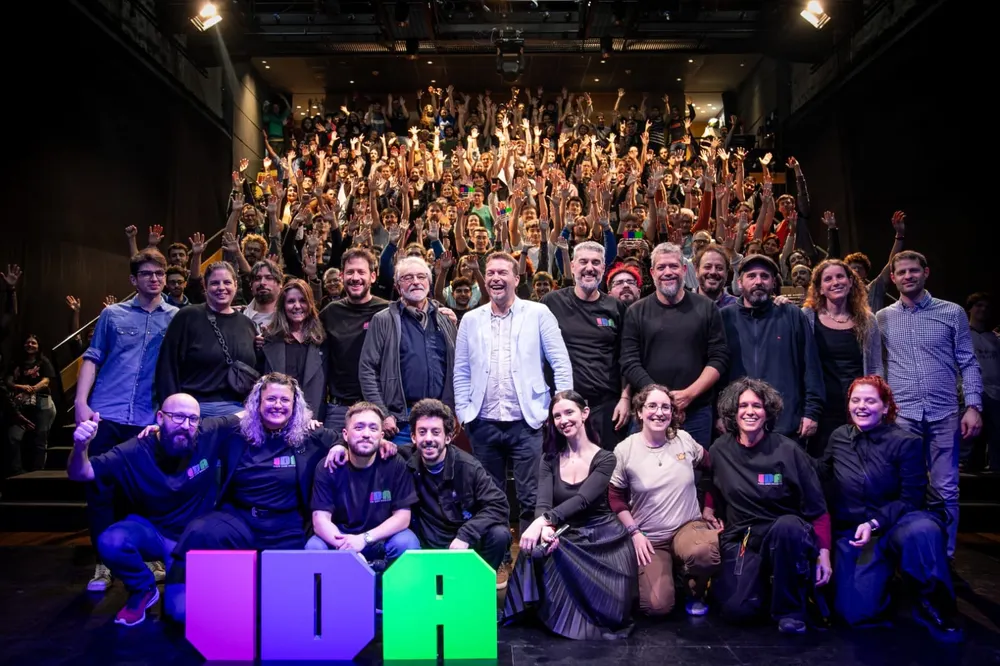
If this Sunday column from 421 has an indirect goal, it’s to contribute a grain of sand to the analysis and conversation about native video games. I simply try to extend the long-standing work of other people and local media, like ExtraGamers, No Gaming News, and Press Over. The latter takes center stage this time, as last Saturday, August 1st, the third edition of IDA (Indie Dev Argentina) took place, an exhibition of independent video games created and organized by Press Over.
The general proposal was the same as always: to focus on local development and some of the most interesting games to pay attention to. Among the video games to try were some titles we’ve already written about, like Into the Grid (Flatline Studios, 2025) and Keepers of Vyrellia (Ghost Pixel), along with many more gems to discover. The total list included 25 titles, which you can check out here, and among the most interesting ones, in my personal opinion, are Gaucho: Subway Escape (SymbioStudio), Human.exe (Weird Engine), Xplorite (Indie Two Games), La Hija del Delta (Bicho Raro Games), and Treetopians (Aparato Games).
Rather than focusing specifically on any one title (they will each get their personal moment in this column), I’d like to highlight the variety of proposals that were at hand. From first-person horror experiences to 2D metroidvanias, passing through anime-style visual novels, resource management titles, graphic adventures, bursts of mini-sports games, tributes to classics like Mega Man, and so much more.
Drawing from a certain online discussion, I’m not against Argentine video games being adorned or based on our signs and symbols, with certain key elements that repeat (the mate, capybaras, gauchos, the Malvinas, soccer, etc.). I am, however, more reserved when the entire core seems to be centered there (in the reference for the sake of reference, for example) and the work or overall experience ends up being harmed or uninteresting because of it. Some of my favorite titles, like MADiSON (Bloodious Games, 2022) and the works of LCB Studios, have traits of our idiosyncrasy but often lack these symbols.
However, if you’re part of the "detractor group," I reiterate: the collection of creations showcased at IDA 2026 was of such a level of heterogeneity and quality that it moved me. I’m going to contradict myself a bit here, but the rhythmic proposal of Gaucho: Subway Escape was the one that captivated me the most, with its character thrown into a post-apocalyptic reality with military control and the most original creatures hiding in the B subway line. Excellent interaction between the comic-style gritty and violent artistic display and its frantic gameplay that demands the best from you.
The collection of creations showcased at IDA 2026 was of such a level of heterogeneity and quality that it moved me.
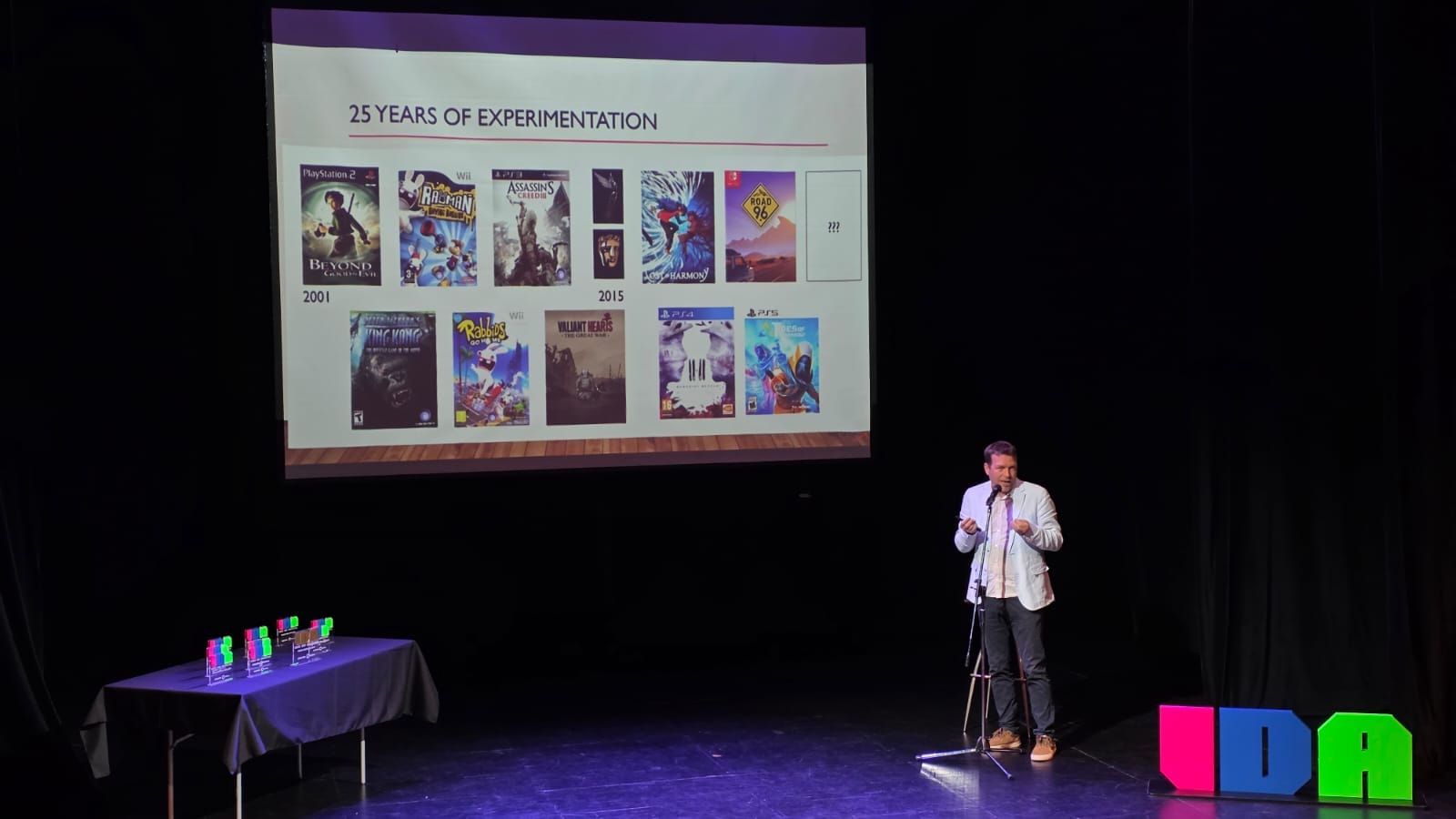
The heart of the event was these titles and everything you could share with their developers. However, IDA 2026 also featured 22 talks, two of which had international guests and the rest local. The selected visitors were Frenchman Yoan Fanise, former sound designer at Ubisoft and co-founder of DigixArt (Road 96, 11-11 Memories Retold, Tides of Tomorrow), and Spaniard Josué Monchán, localizer and writer for Brainwash Gang (Grotto, Laika) and Pendulo Studios (Yesterday).

Fanise focused on his personal experience, transitioning from working in a huge AAA team to being the creative director of an independent team, with all its benefits and challenges. Monchán, on the other hand, started his talk by discussing how killing is the predominant action in most mainstream video games we know, about works that try to say something about war, and how games are intimately linked to the United States military (the presentation began by showing a tweet, copied below, from the White House post-bombing Iran in March of this year). Then he took a turn and told us how he really wanted to talk about narrative structures and how we (wrongly) think that stories cannot exist without conflict as a fundamental narrative element.
UNDEFEATED. pic.twitter.com/Jt69bcag5y
— The White House (@WhiteHouse) March 12, 2026
Contrary to what one might initially think, the international talks were of great interest because they addressed, at different levels, global issues that affect us all. While Monchán emphasized our apparent inability to think of stories without other structures and possibilities, and how living from conflict to conflict inevitably permeates our existence, Fanise was clear about how many of DigixArt's searches and decisions have to focus on the “evolution” (rather deterioration) of patience, on audiences segmented by gender and themes, being swept away by high production values, and the need to keep you constantly active.
It’s impossible not to think about concepts from our conceptual network, such as cognitive sovereignty and human autonomy. How do we escape algorithmic searches and help reverse the trend of declining attention and retention? How can we imagine other possible worlds if we can’t change the foundations and structures from which our reasoning seems to operate?
On top of global conflicts and issues, we have our own, with regional characteristics. Alongside the lines I timidly mentioned at the beginning, the local talks delved into our production ecosystem (Ojeda, Krepki & Cardoso), the challenges of being solo designers (Calvo & Fillmore), sales crises in the market (Fernández, Orsetti & Cerrutti), and the obstacles faced in specialized journalism in current times (Curci, Grazzini, Pereyra & García). It deserves its own article, but if the world of video games (at least mainstream) is in a complex moment of costs, productions, studios closing, and an uncertain future on several fronts, it’s to be expected that all of this resonates in how we think about and live our local industry.
But if IDA made one thing clear, it’s the desire to create for the sake of creating and to keep paddling toward the future. Those who spoke in the journalism talk didn’t stop making jokes (or jokes) about how one should pursue something else, but the conversation was filled with advice and encouragement for listeners to embark on their own processes of journalism, communication, or content creation. While watching a very young boy play Xplorite, I couldn’t help but overhear how his even younger brother was talking to his dad and the game dev. The latter encouraging him to talk to the young boy about his creations, and the father privately asking what he should do to keep encouraging his son.
While watching a very young boy play Xplorite, I couldn’t help but overhear how his even younger brother was talking to his dad and the game dev.
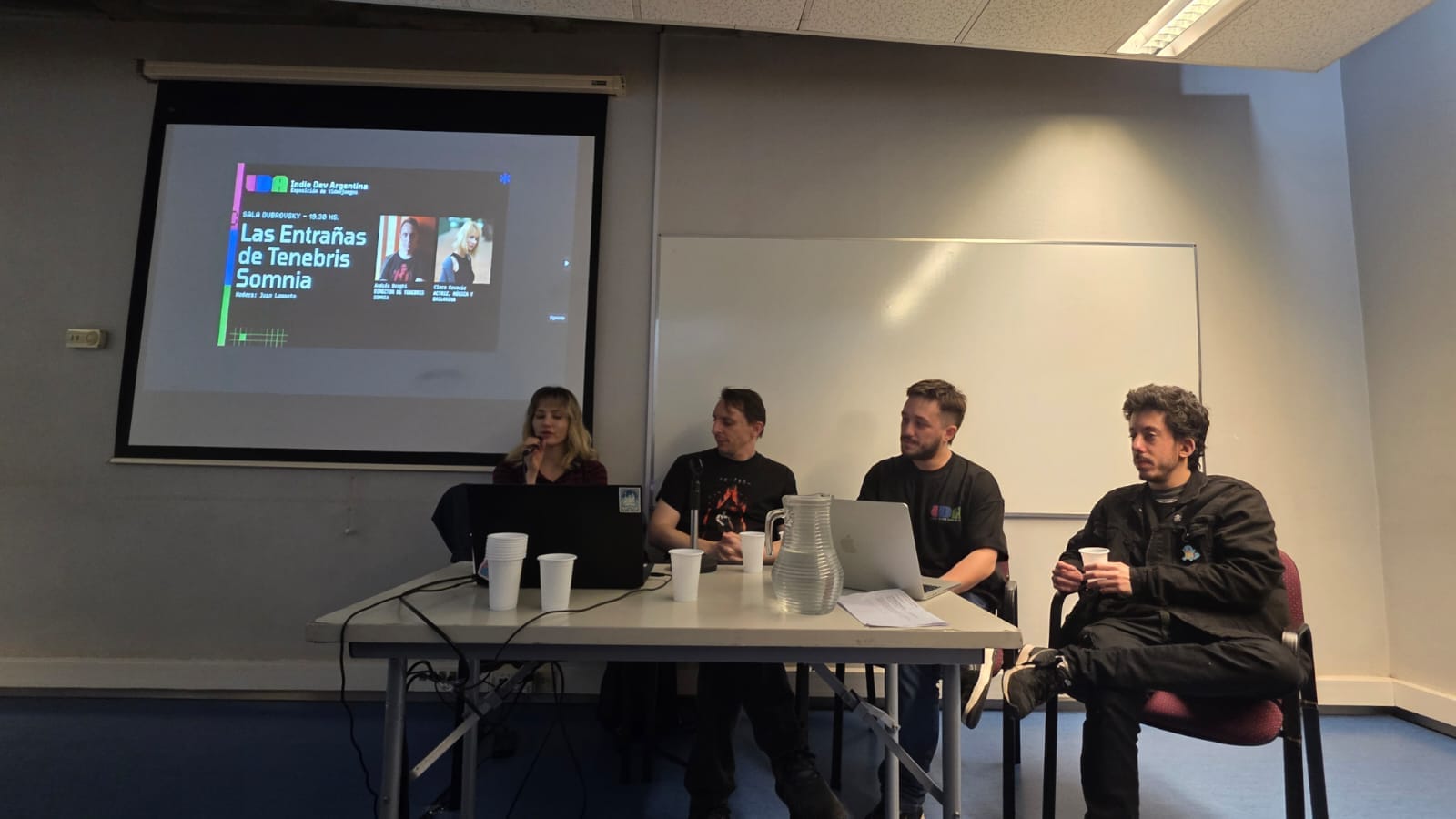
In the last talk I attended, director Andrés Borghi and actress Clara Kovacic discussed the development of Tenebris Somnia, sharing several anecdotes about the upcoming horror game that combines retro aesthetics with live-action videos like no other title in the genre has achieved. It was beautiful to hear these two share their adventures in finding real locations to film, the fine-tuning of artistic searches to ensure ambitions don’t swallow everything, and many other interesting moments. These are stories you could find with any of the other developers at the event, with their eyes lighting up every time they spoke about their creations.
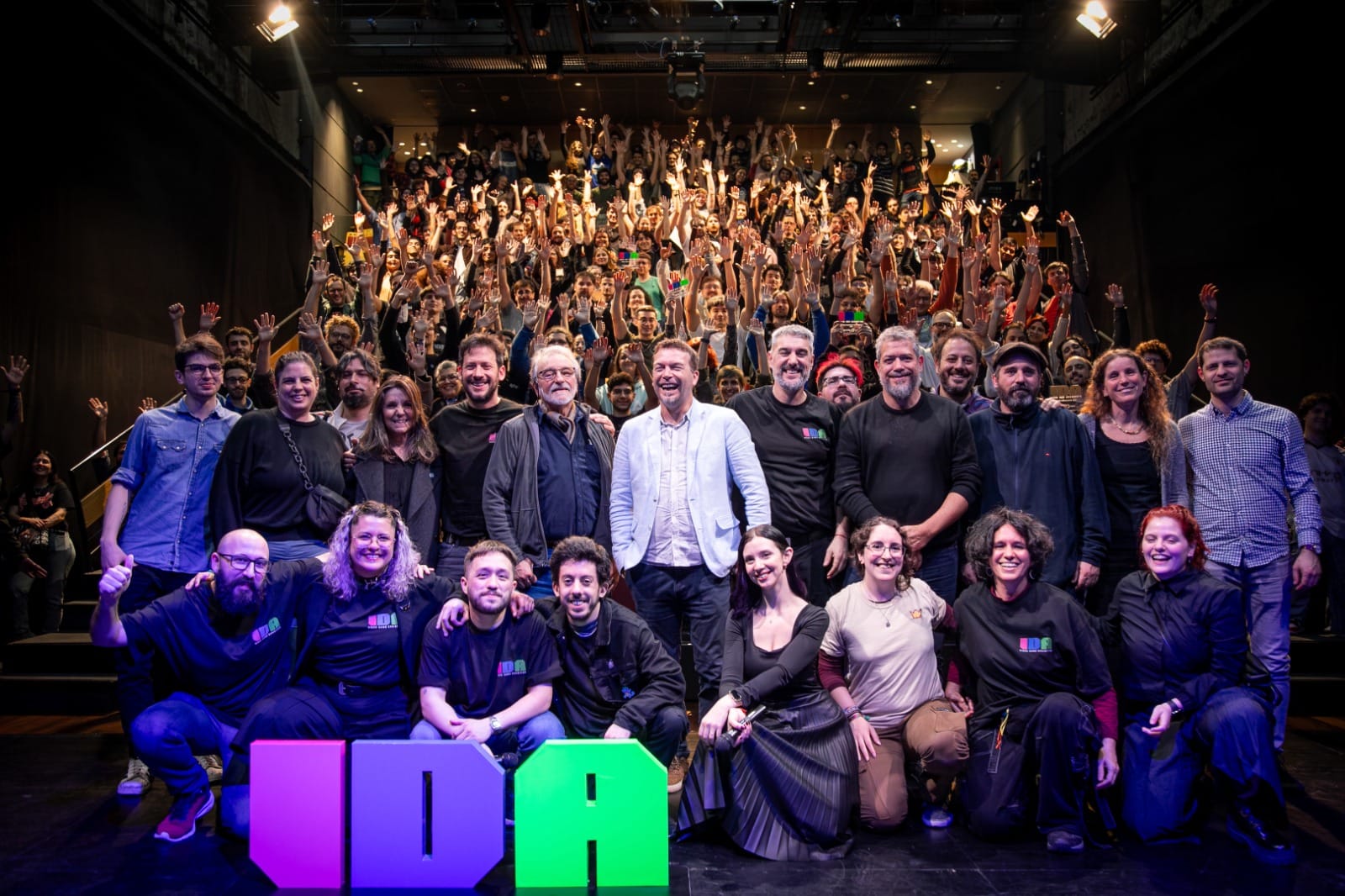
Still being an outsider, it’s hard not to feel hopeful and think that, despite everything, there’s an Argentine video game industry here to stay.
If you have a video game made in Argentina and want us to write about it, go ahead and fill out this form.
Y a cada colaborador se le paga por su trabajo. Las dos cosas dependen de los suscriptores.