Argentine Video Games: Cards, Hackers, and Cyberpunk in Into the Grid
Into The Grid blends cyberpunk with TCGs. Explore clusters, hack the Grid, and manage your alert level in a fast-paced, strategic, and brutal card-based roguelite.
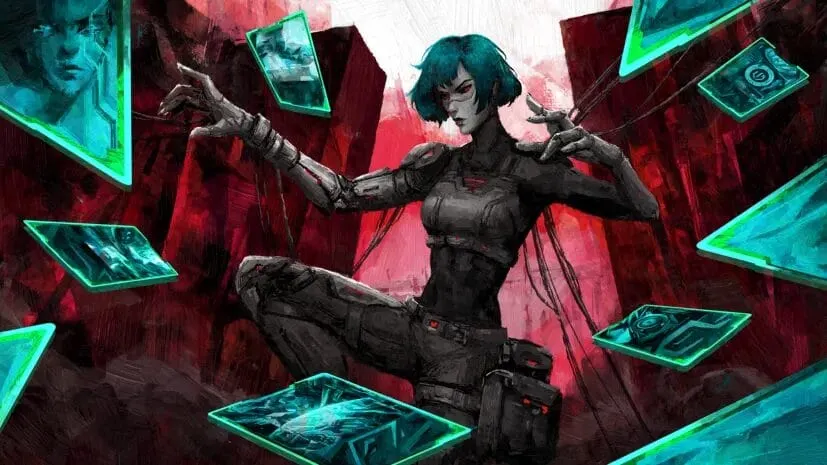
Playing card games has that certain something. From being amazed by the art to that feeling of discovery as we start understanding effects, general mechanics, and how to create the combinations that suit us best. Luck is an intrinsic element of the genre: after all, we never know what cards we’ll draw next turn, and that’s part of the fun. However, a big part of mastering these games is about becoming greater than luck.
One day, someone had the brilliant idea to mix roguelites with “deckbuilders” (games where you build decks of cards as you progress). In roguelites, we start “runs” (games) with a clear beginning and end; many of their elements are randomized, and when we finish, whether victorious or defeated, we have to start over. But we always gain some kind of resource or currency that allows us to buy permanent upgrades, so we’re a bit better positioned and not so exposed for the next round. This fits perfectly with card games, as in that randomness, we’ll face different decks and obstacles that require us to think carefully about the possible combinations we have.
Born from cyberpunk, Netrunner and its teachings, in Into The Grid we are a Runner hacking, precisely, the Grid, a digital infrastructure.
Some of my favorite works in the genre are Balatro (LocalThunk, 2024) and Slay the Spire (MegaCrit, 2019). Both take their premise to the max; each game is different from the last, offering practically infinite possibilities for “builds” (broadly speaking, the composition of your deck) and allowing you to reach that magical point where the experience and knowledge gathered let you see the zeros and ones to break the game to your liking.
When I try out a new title in this genre, I don’t expect much: maybe a minimal twist, an artistic aspect in the cards that makes me appreciate them for prolonged seconds, and/or a gameplay loop that makes me want to play a game over and over, regardless of how it went. Fortunately, the Argentine game Into The Grid (2025), created by Flatline Studios, checked all three boxes.
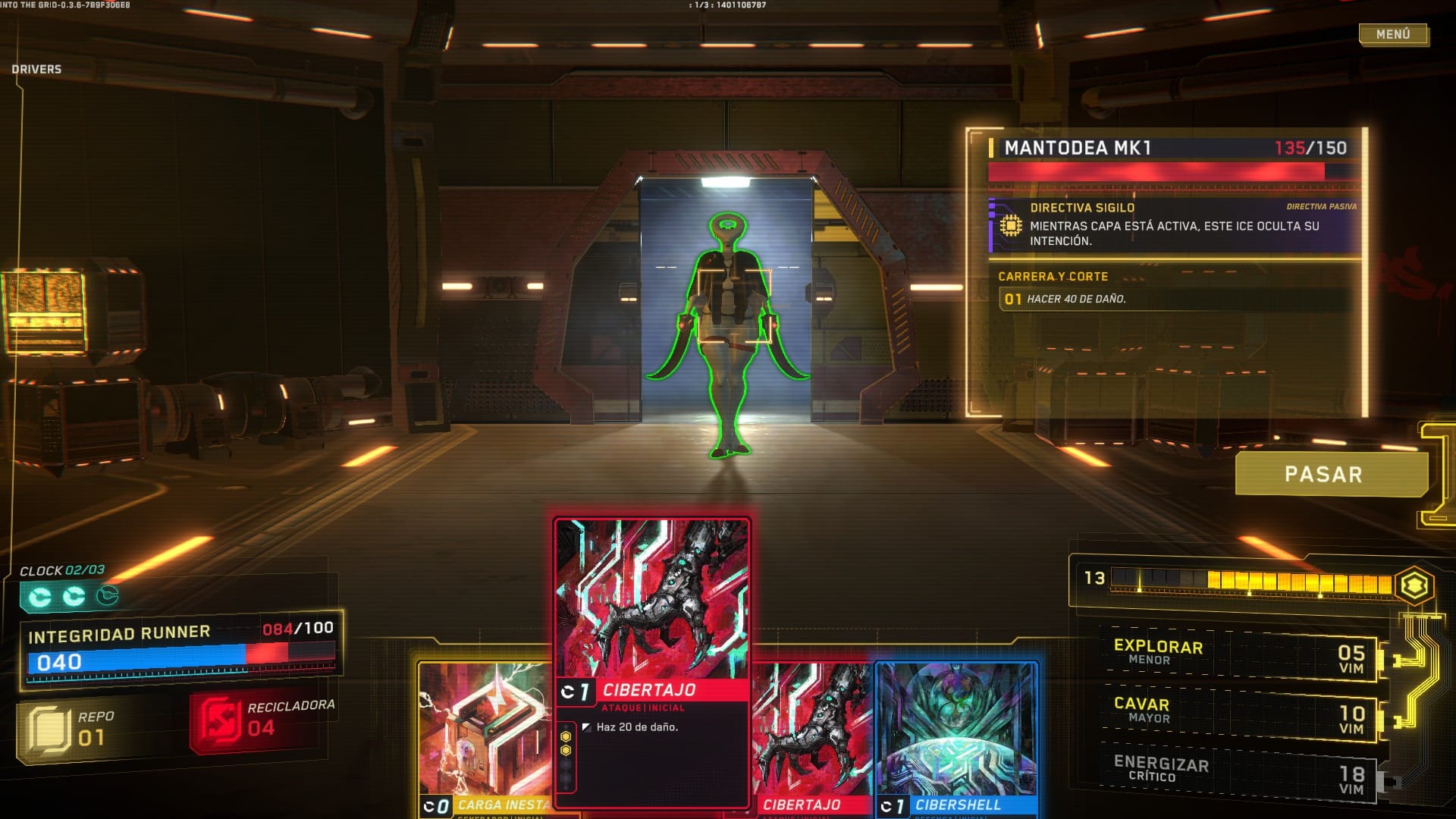
Born from cyberpunk, Netrunner and its teachings, in Into The Grid we are a Runner hacking, precisely, the Grid, a digital infrastructure. It consists of Layers, each with Clusters that function like rooms. Inside the Clusters, we’ll find Sentinels, the cybernetic enemies to defeat, Doors that open when certain conditions are met, and Nodes (“machines”) that offer various rewards.
The battles are what you’d expect: we receive a hand, each card has an action and/or effects, whether it’s attacking, giving us barrier points, or some extra upgrade, and we have to spend a type of energy called Clock to use them. On our turn, we already know what the enemy will do when it’s their turn to move, so we have to anticipate as best as we can and devise our best strategy. As interesting extras, each of our cards generates a certain amount of Virtual Memory (VIM), which allows us to use unique abilities (Commands) from time to time, like drawing an extra card or choosing one from the deck to add to our hand, and there are cards with other effects based on our total VIM. Also, while we always fight against one enemy at a time, sometimes this enemy has special parts that we can (or must) attack first to generate some beneficial effect.
In the early runs, I didn’t notice a very diverse range of options in combat. They were resolved in a very conventional way, with few additions that added some spice to the mix. Luckily, as I started permanently acquiring new decks of cards, the options began to open up. For example, I started creating a build around Ferocity, an effect that slightly increases the damage percentage my Runner can deal. The improvement is marginal at first, but with many cards that grant Ferocity successively, you can wreak havoc in just a few rounds.
The turning point of Into The Grid, however, lies in its exploration. Instead of choosing a path on the map, like in Slay the Spire, we have to move through these Clusters, not knowing exactly where to go. We can circle around several times, facing various unnecessary enemies, without finding the room we need to move to the next Layer. This level of exploration changes the equation and the overall feeling of the experience quite a bit, creating something more organic to a certain extent and similar to a board game. While we can move as many times as we want within the rooms and return to previously explored ones within the same Layer, there’s a transversal mechanic that influences everything we do: the Trace and Alarm system.
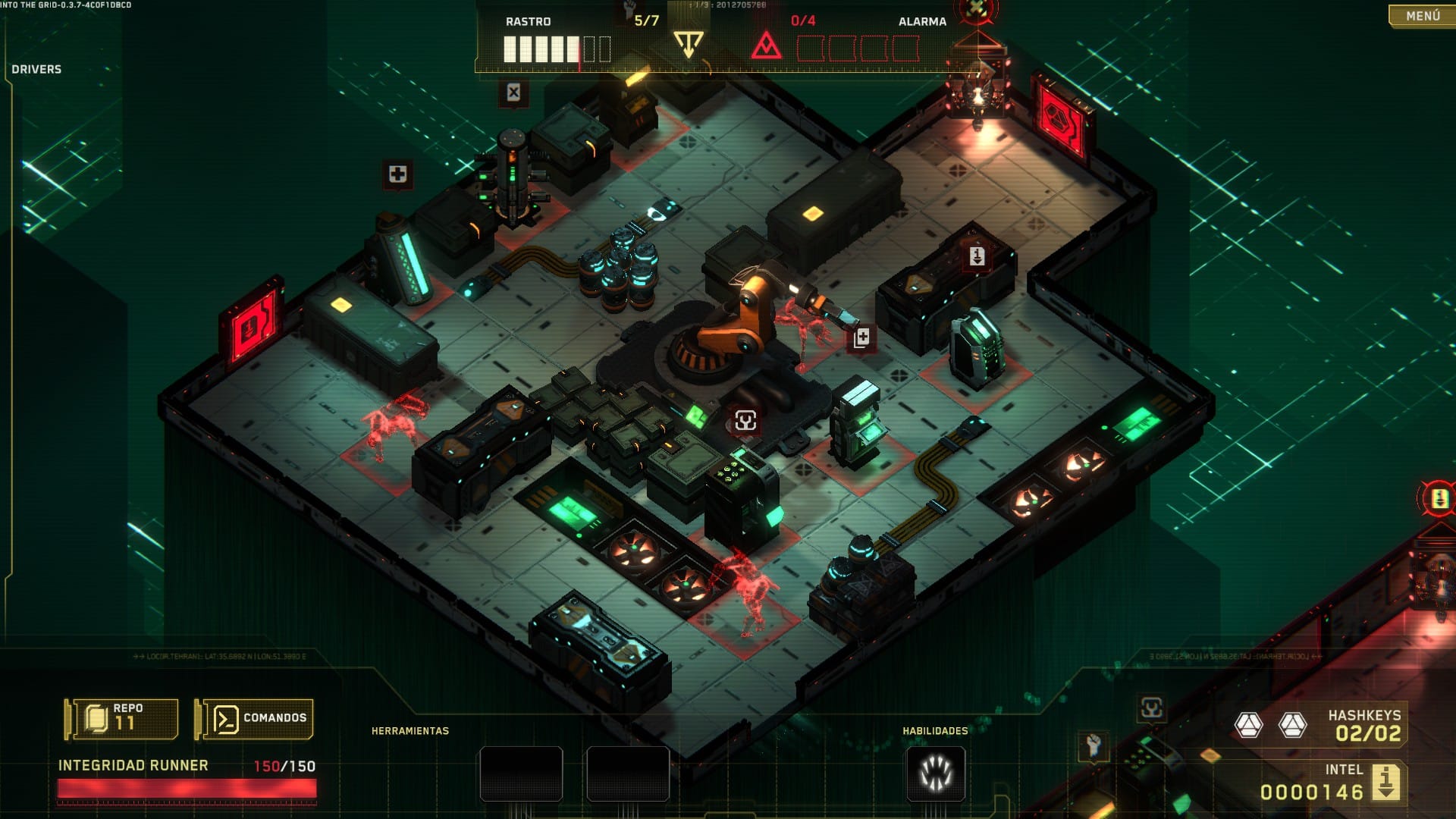
As we perform certain actions, like fighting Sentinels or choosing some rewards, we gain one or more Trace points. If we reach our maximum allowed Trace, this counter resets and gives us an Alarm point. The higher the Alarm, the tougher enemies we’ll face along the way. To complicate matters further, some rewards require an item called Hashkey, which forces us to face enemies or take other unfavorable rewards, and each Cluster has a Watcher, a creature that adds extra Trace when we perform a certain type of action based on its type, and we can only break it with a specific tool. For example, the worst Watcher I encountered makes you gain two Trace for each battle against a Sentinel.
The turning point of Into The Grid lies in its exploration. Instead of choosing a path on the map, we have to move through these Clusters, not knowing exactly where to go.
It’s in the interplay between this type of exploration and the Trace and Alarm system where Into The Grid shines in gameplay and conceptually. In the cyberpunk genre, no longer so far from our era, corporations own every aspect of our lives and judge every step we take. The oppression of the capitalist system—whatever adjective you want to add—is exacerbated to the maximum by the corpos. We’re left to live with the least technology possible, as far away from civilization as we can, or to try to blow up the system in some way. The latter path, in the genre of cyberpunk, often relies on using the technologies we fight against, and the loss of our own humanity in the process.
In Into The Grid, we have to immerse ourselves deeper into the system, grabbing every help from this Grid for our Runner, a poor hacker who gives everything to have some dignity for himself and his family. There isn’t a grand story developed, but I’m not sure it’s necessary. The eternal struggle against megacorporations (a reality that, to a greater or lesser extent, we’re living) is a classic.
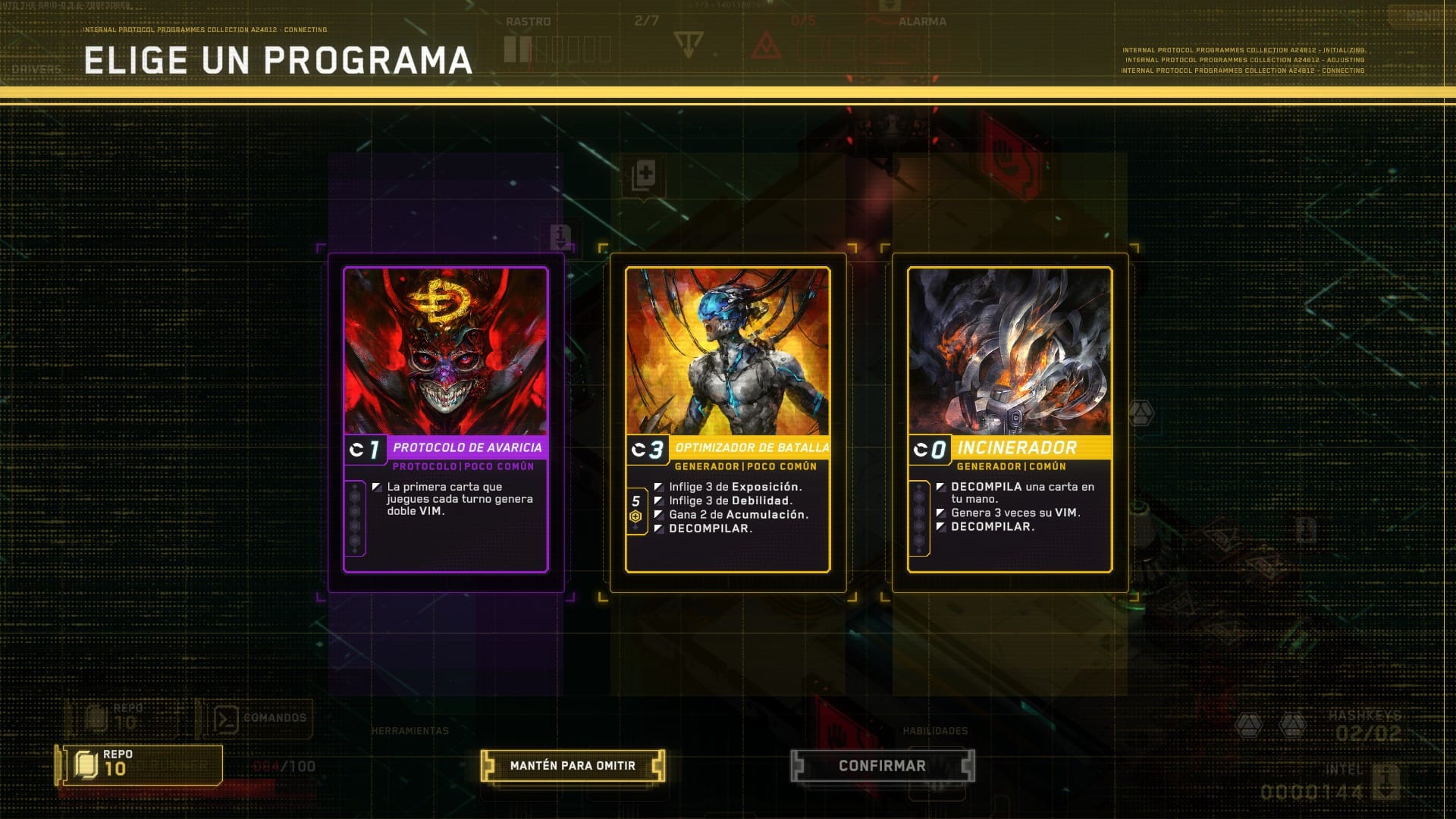
Playing Into the Grid is suffocating. As it should be. With few resources, recovering health is a struggle, and we can go a long time without new cards. Every step we take is marked by a Trace, an Alarm, and the inability to ever feel at ease. In any good card game, every action is a stimulating decision-making process, and here it is, both inside and outside our deck. What reward do I choose from this machine? Do I fight this enemy blocking that path? What do we sacrifice by playing?
Playing Into the Grid is suffocating. As it should be. Every step we take is marked by a Trace, an Alarm, and the inability to ever feel at ease.
We are almost insignificant against the corpo. In the early hours, perhaps too much so: it’s hard to get past the boss of the first Layer without having unlocked many permanent upgrades, but they will come with failures. Failures that, fortunately, here have the potential to be infinite.
You can find Into The Grid on its Steam page and follow Flatline Studios on X and Bluesky. It’s worth mentioning that the game is in Early Access at the time of writing. This means it’s fully functional and offers many hours of gameplay, but it’s being updated and altered continuously in various aspects (overall balance, difficulty, number of playable characters, variety of enemies, rewards, interface, etc.). I believe what’s been written so far attests to its playability, and you can already dive into its virtual world.
If you have a video game made in Argentina and want us to write about it, go ahead and fill out this form.
Las notas de 421 no tienen paywall
Y a cada colaborador se le paga por su trabajo. Las dos cosas dependen de los suscriptores.