Game Boy: Get Back to Playing Without Any Distractions
Do your legs go numb from watching Reels? There are alternatives: go back to the Game Boy and the joy of playing without constant notifications. A way to put down your phone, beat the algorithm, and reclaim your attention.
Your legs must have gone numb while you were in the bathroom from all those reels you watched and sent to that group of friends where no one actually talks, only communicates through memes and videos from accounts desperate for your attention. But what would you do if you had the chance to embody Kratos and wield his blades of chaos to save your lost brother in God of War: Ghost of Sparta; or if you could step into the famous Cave of Origin to finally catch Kyogre in Pokemon Sapphire? All of this, without receiving a single notification to interrupt you.
This isn’t fiction; this was reality until just a few years ago. The new millennium had begun, televisions still had huge boxes behind them, video rental stores were slowly transitioning to DVDs, and video game technology was advancing by leaps and bounds. Sega had launched its futuristic yet unsuccessful “Dreamcast” in 1998, already limping along from the financial crises of the blue hedgehog, and it was completely overshadowed by the announcement in 1999 and the upcoming launch in the early 2000s of the PlayStation 2.
Thus began what I, at 28 years old, call “The Golden Age.” Xbox and PS2 were the spearheads of consoles: GTA, Call of Duty, Halo, God of War, and many more titles put Microsoft and Sony far ahead. But there was also an incredible and magical world, where Nintendo had been king since 1989: the beautiful realm of handheld consoles. More specifically, the Game Boy.
A Brief History of Handhelds
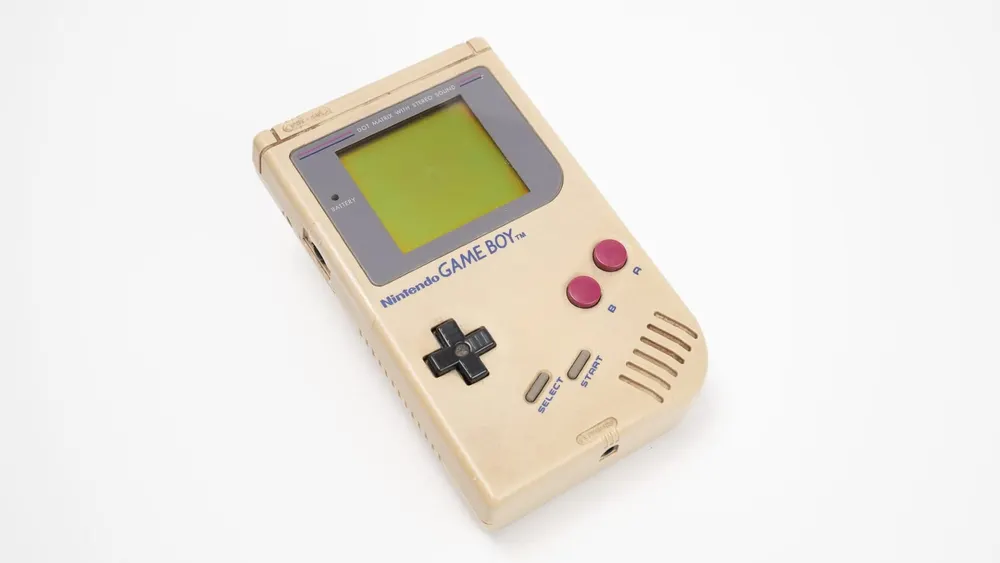
In 1989, the giant from Kyoto launched its first handheld console, the Game Boy. That same year, Atari and Sega also contributed to this segment of video games with their respective consoles, but they didn’t come close to the numbers or generational shock that Nintendo’s little gray rectangle caused. Relying on the exclusivity and recognition of titles like Super Mario Land 2, Metroid 2: Return of Samus, The Legend of Zelda: Link’s Awakening, Pokémon Red, and Tetris (you can learn more about the history of Tetris in this amazing article by Sole Zeta), Nintendo thus conquered the hearts of a completely diverse audience: from children to adults, businesspeople and workers, from Japan to the entire world. The few drawbacks of this little console were the lack of light on its screen, the single monochrome option, and the use of 4 AA batteries for operation.
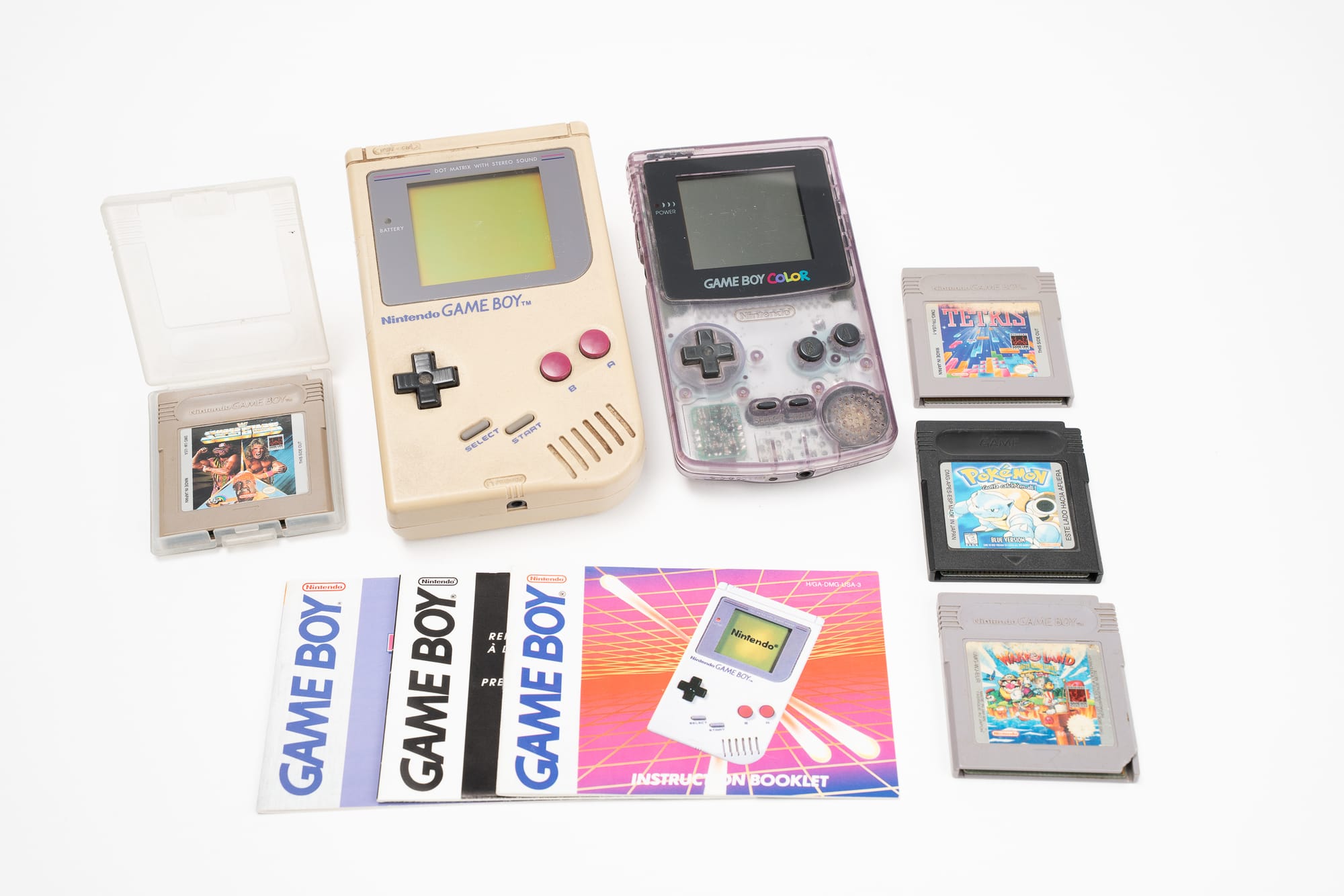
As is customary for the masterminds at Nintendo, iterations of the famous Game Boy began to emerge shortly after. “Game Boy Light,” “Game Boy Pocket” (exclusive and only in Japan), until in 1998, the market received the gift of color and a reduction in battery usage with the powerful “Game Boy Color.” Not long after, with a delayed launch, the “Game Boy Advance” arrived, changing the original vertical design to a horizontal one. Finally, in 2003, putting a grand finale on Nintendo's Game Boy era (in this house, we don't talk about the Game Boy Micro), we met the spectacular “Game Boy Advance SP,” which is, in my humble opinion, the ultimate portable console from Nintendo.
In 1989, the giant from Kyoto launched the Game Boy. (...) Nintendo thus conquered the hearts of a completely diverse audience: from children to adults, businesspeople and workers, from Japan to the entire world.
The SP in this console's title stands for “Special Project,” and many like me believe it’s truly a piece of very special hardware. The clamshell design, front-lit screen, rechargeable battery, the option to have it in your favorite color, and most importantly, an endless library of titles ranging from “Game and Watch” to the last cartridges of its predecessor Advance (thanks to backward compatibility) and all those announced for that then-new era of Nintendo: Pokemon Fire Red and Leaf Green, The Legend of Zelda: The Minish Cap, Metroid: Zero Mission, Warioland 4, Castlevania: Aria of Sorrow, Pokemon Emerald and Sapphire, Final Fantasy VI, and many others that contributed to the legend of this console.
This was perhaps the first portable console of my generation. Trips to grandma's house stopped being boring, the first nights with this beast felt endless, and hiding under the blankets so your mom wouldn’t see the screen light was the perfect technique to enjoy it. No, you couldn’t take it to school, but you’d get home and it was waiting for you on the nightstand, just like every day. The smell of a new cartridge and the colorful letters appearing on the screen meant an adventure that could be transported from the car to the bedroom, to the bathroom, to the kitchen, to your parents' friends' house (which, for some reason, always smelled like lentil stew and had a kid you didn’t like, and your parents forced you to share the console with him... Sorry, maybe that was too personal). The Game Boy Advance SP was the gateway for many to those unique and unrepeatable experiences that handhelds offer. While by 2003 its technology was a bit outdated, no one ever bought a Nintendo product to have the latest in hardware or software advancements: it was bought because it was unique and nothing else would provide that entertainment.
At least, not until the end of 2004.
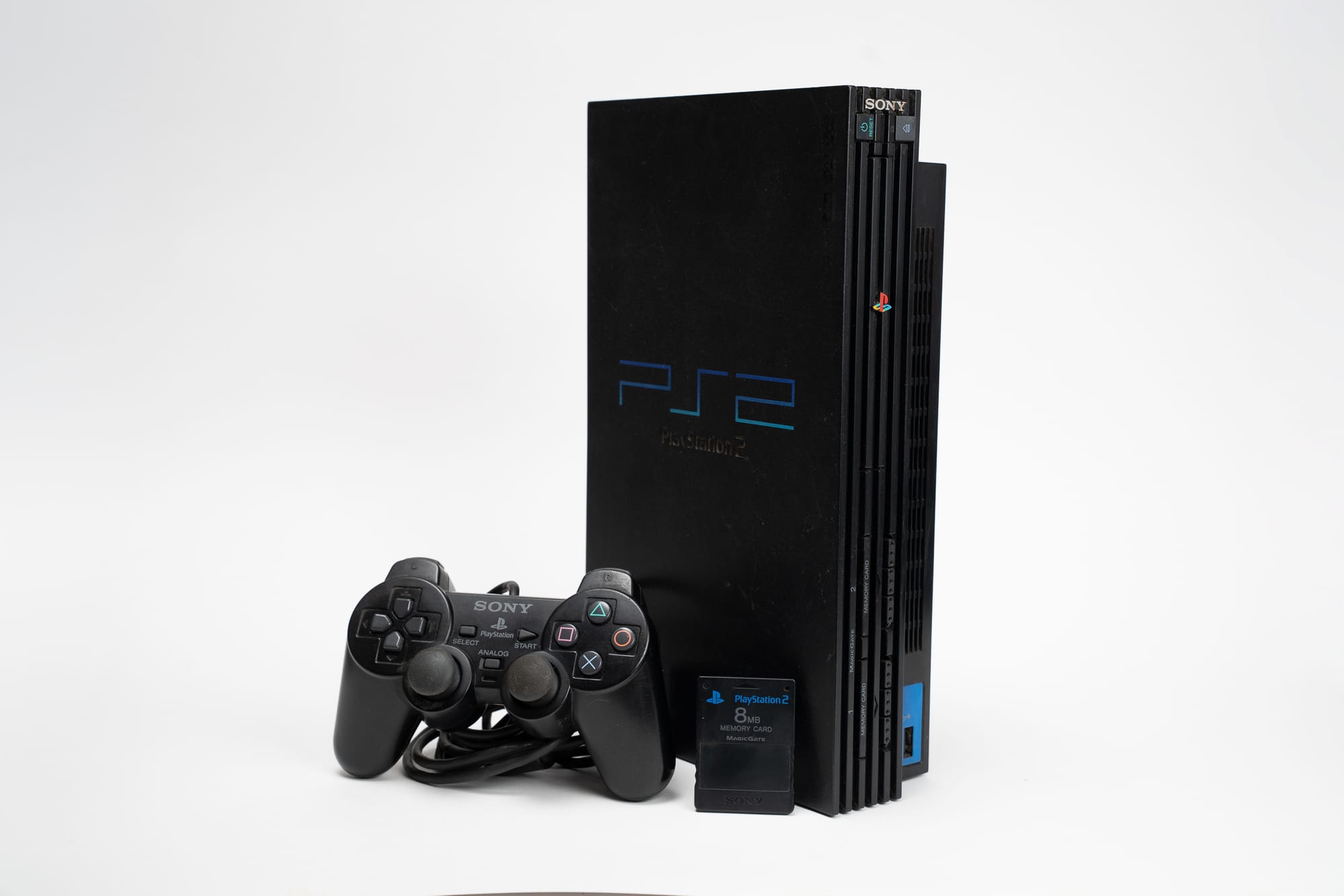
At Sony's headquarters, where the PlayStation 2 party never stopped, Ken Kutaragi, the “father of PlayStation,” accepted the challenge to design a handheld console that would surpass all known limits. In October 2004, Sony unveiled the new “PlayStation Portable,” and on December 12, it hit the market, although it didn’t reach the Americas until February 2005. With a 4.3-inch LCD screen, a game battery lasting 3 to 6 hours, UMD and Memory Stick reader, WiFi: it was a beast. This truly felt like the new era of portable gaming, a console that not only served to play. You could watch movies or series, browse the internet, read books or documents. If all that seems like too little, remember we’re talking about a Sony console: this machine had incredible titles like God of War: Chains of Olympus, Metal Gear Solid: Peace Walker, Patapon, GTA: Vice City Stories, Crisis Core: Final Fantasy VII, Silent Hill Origins, and many more games. Its design screamed PlayStation!, and it was the perfect combo of a portable console with graphics close to the PS2 and the ability to use any of its extra functions. A true titan.
But wait, wait, wait: Nintendo wasn’t in the shadows, crying over a lost battle and lamenting being left behind. Because that same year, and on almost identical dates, we saw the Nintendo DS on the shelves, the successor to the Game Boy Advance SP and the company’s new handheld project. Keeping the clamshell design, but now with two screens, one of which was touch-sensitive. The first edition of this handheld is perhaps the most versatile and successful among its future siblings. The announcement of the new Japanese hardware came hand in hand with a gigantic library of completely new games. Pokemon Gold and Silver, Dragon Quest V, GTA Chinatown Wars, New Super Mario Bros, Animal Crossing: Wild Worlds, The Legend of Zelda: Phantom Hourglass, and many more names. Maintaining the tradition of backward compatibility, Nintendo installed a Game Boy cartridge reader on the bottom of the console, and on the top, the general cartridge reader. This machine was, at that moment, the future of Nintendo's handhelds, and it became the second best-selling console in history. The evolutions over the years kept it relevant even after the launch of the Nintendo Switch, as the online store for the 3DS continued to operate until 2023.
Nintendo and Sony were the two big heads of gaming during the 2000s. Both conquered the hearts of the most daring portable gamers.
Nintendo and Sony were the two big heads of gaming during the 2000s. Both conquered the hearts of the most daring portable gamers. We could argue that Sony's exclusives were far better than Nintendo's, or that the versatile style and design of the DS outshone the PSP. It would be a never-ending battle, although it’s true that by 2018, Sony gave up on handhelds, ceding the throne to Nintendo. But the important thing in this story is to remember that in those three years when the companies poured their hearts into designing their handhelds, we, the fans, couldn’t really root exclusively for any: they defined the mythical age of consoles. Each with its unique style and design made us believe that entertainment and passion for video games could be found in any corner of our lives. You simply inserted a cartridge or a UMD, turned on your console of choice, and it didn’t matter if you were lounging on a beach chair in Monte Hermoso or heading home at night after going to the movies to see Troy, in front of you was an adventure and a world to discover.
Why would I want one if I can emulate it on my phone?
It’s now 2026, and our lives are tied to high-tech devices that fit in our pockets. I always remember that interview with the beloved and legendary Ricardo Iorio (R.I.P.), in which he describes the cellphone as “the Library of Alexandria multiplied by three hundred thousand, at the speed of light.” It is, indeed, the most accessible entertainment device we have in our daily lives, and its technology is now capable of running games that none of the previously mentioned consoles could reproduce. Games with top-tier graphics like Alien: Isolation can now be played on your phone. So, why would I want a 20-year-old handheld console with ancient games?
Let’s be honest with ourselves: how many of us have really completed a game on our phones? The only ones that stay installed for more than two weeks in our library are Candy Crush, Clash Royale, and Subway Surfer. Those are the instant gratification games. I also tried to maintain a regular playing schedule for Stardew Valley, but the slightest notification interrupted my farming session. The same happened every time I tried to complete a Pokedex in Pokemon Fire Red, thanks to an emulator and a ROM downloaded from a sketchy website. At this point, quoting Juan Ruocco, “we have lost the power of choice.”
That’s why I propose, inspired by the strategies to reclaim our attention, that you imagine a device that has no notifications, no thousand apps, no constant stimuli begging for your eyes and clicks. A machine that lets you play in peace without needing to think about that other screen waiting for you to turn the gears of the Internet. We have the beautiful opportunity to enjoy moments with our minds free from any distractions. We have the privilege of being able to sit for hours enjoying immersive worlds and legendary stories that will be memorable. Today, right now, we can enjoy those experiences in the way they should be experienced. With our full attention.
The Immaculate Nature of the Used
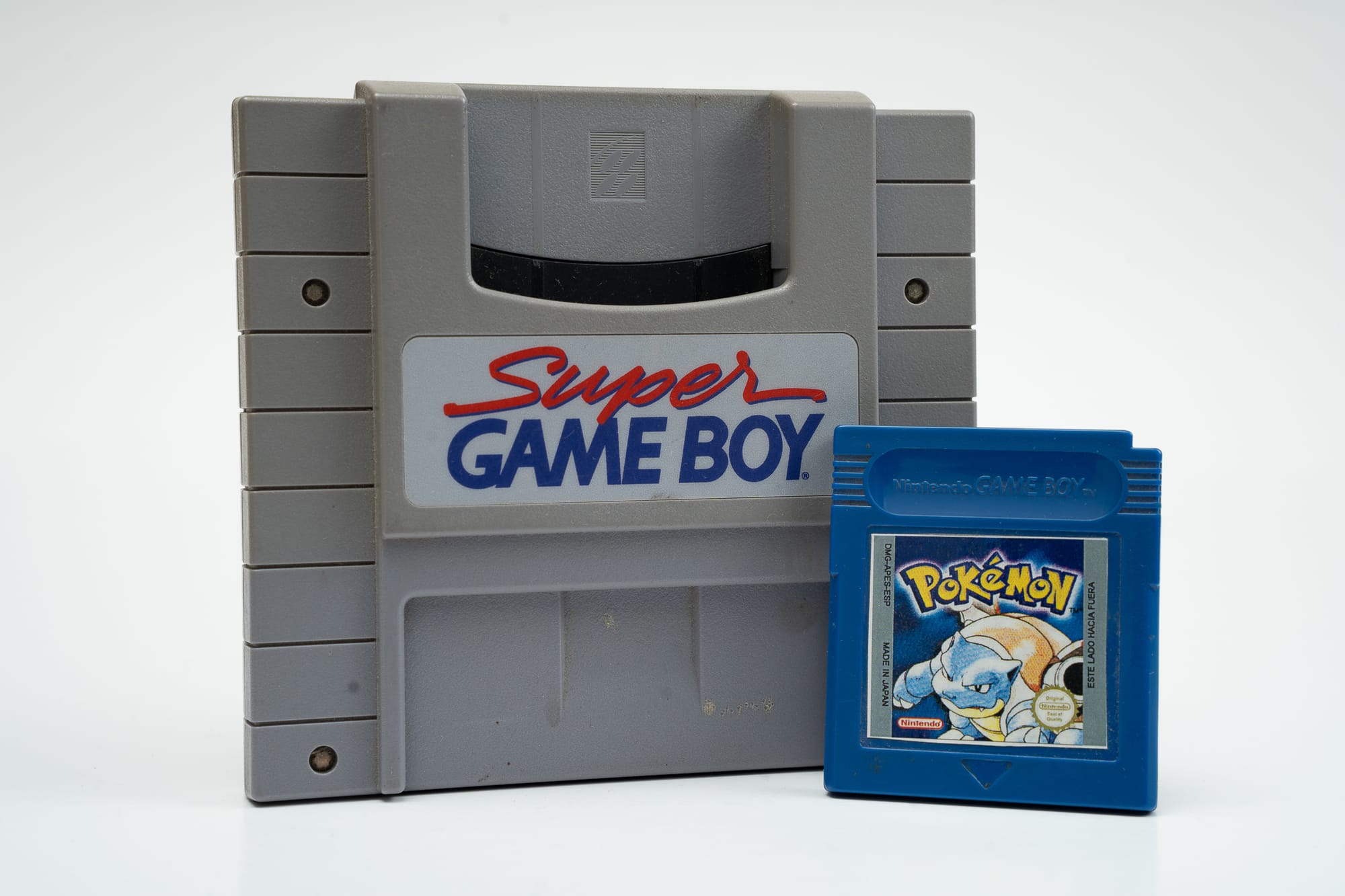
Recently, I decided to delve into the concept of “low tech, high life.” Partly thanks to Juan Ruocco’s article and partly due to that constant feeling of loss of independence when it comes to paying attention. I decided to return to writing on paper, reading physical books, and I got myself a Game Boy Advance SP in excellent condition, complete with its charger, manual, and box. Along with it, and to not have it solely as a collectible item, I got Pokemon Sapphire, one of the first games from Game Freak that I completed in some lost year of the 2000s. The condition of the console made me realize it hadn’t been used much. Maybe it was a gift that was stored away and never taken out, a piece of hardware lost on the top shelf of a closet, who knows what other mysteries it held.
I propose that you imagine a device that has no notifications, no thousand apps, and no constant stimuli begging for your eyes and clicks.
The first sensations of using a console were excitement and nostalgia, something strange for a brain too jostled by algorithms. But at some point, I left it behind, and it turned back into a collector's item, or worse, a decorative piece. It took me a while to understand that I had actually gotten frustrated by a game obstacle where I had to 'grind' and level up my Pokémon to face the final gym leader. Facing the grind again, it was then that I realized that was the experience I had been longing for. I spent hours discovering new skills and exploring a gigantic map, listening to the distinctive song of each city, catching all kinds of Pokémon, and completing the Pokédex. All without distractions, with no more stimuli than the game running on the small screen of the Game Boy. I don't intend to replace the use of a cellphone or deny the usefulness of these devices. But I do want to make it clear that the beauty of the Game Boy can only be appreciated after clearing your attention from so much algorithmic stimulation.
By no means do I want to say that the options to emulate these experiences on a cellphone or computer are unviable. Just recognizing that by getting a used console and some cartridge or hack that can give us thousands of game options to enjoy is a way to take care of our well-being and distance ourselves from those anxieties about the imminence of what can easily disappear one day. Remembering that by taking one step at a time and focusing on just one thing, we can return to enjoying the art of restriction. Not to mention that it can also benefit us financially. There are many questions we can ask about the direction video games are taking. Is the sophistication of entertainment systems a positive thing, or should we really focus on the simplicity of just sitting down and playing? For my part, I'm going to grab my Game Boy Advance, put my cellphone down a bit, and try to complete as many Pokédex as I can.
Las notas de 421 no tienen paywall
Y a cada colaborador se le paga por su trabajo. Las dos cosas dependen de los suscriptores.