Japanese manga has taken the Argentine market by storm, accounting for more than 70% of sales. Fueled by the pandemic and its synergy with anime, this phenomenon is already spawning local adaptations, such as the Messi manga.
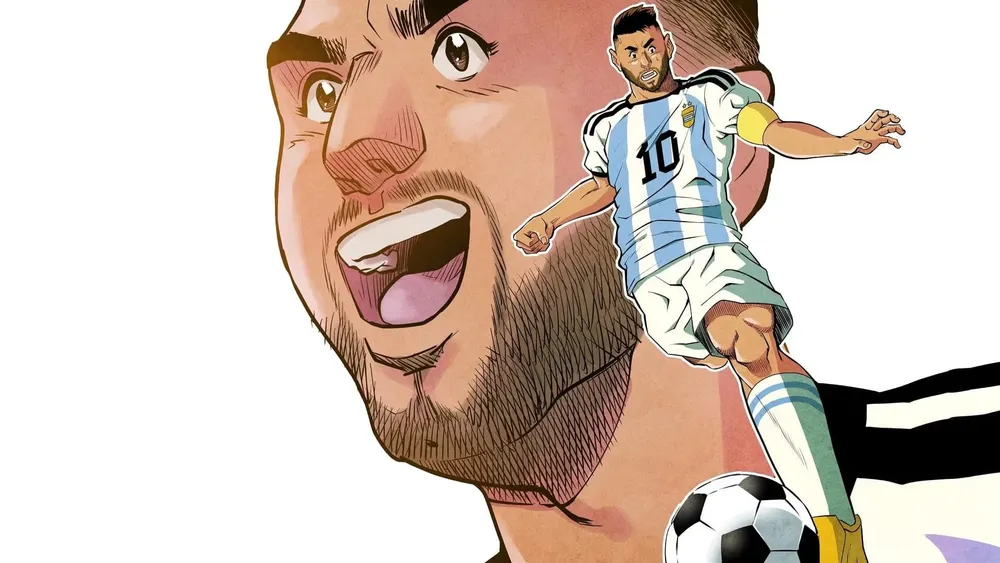
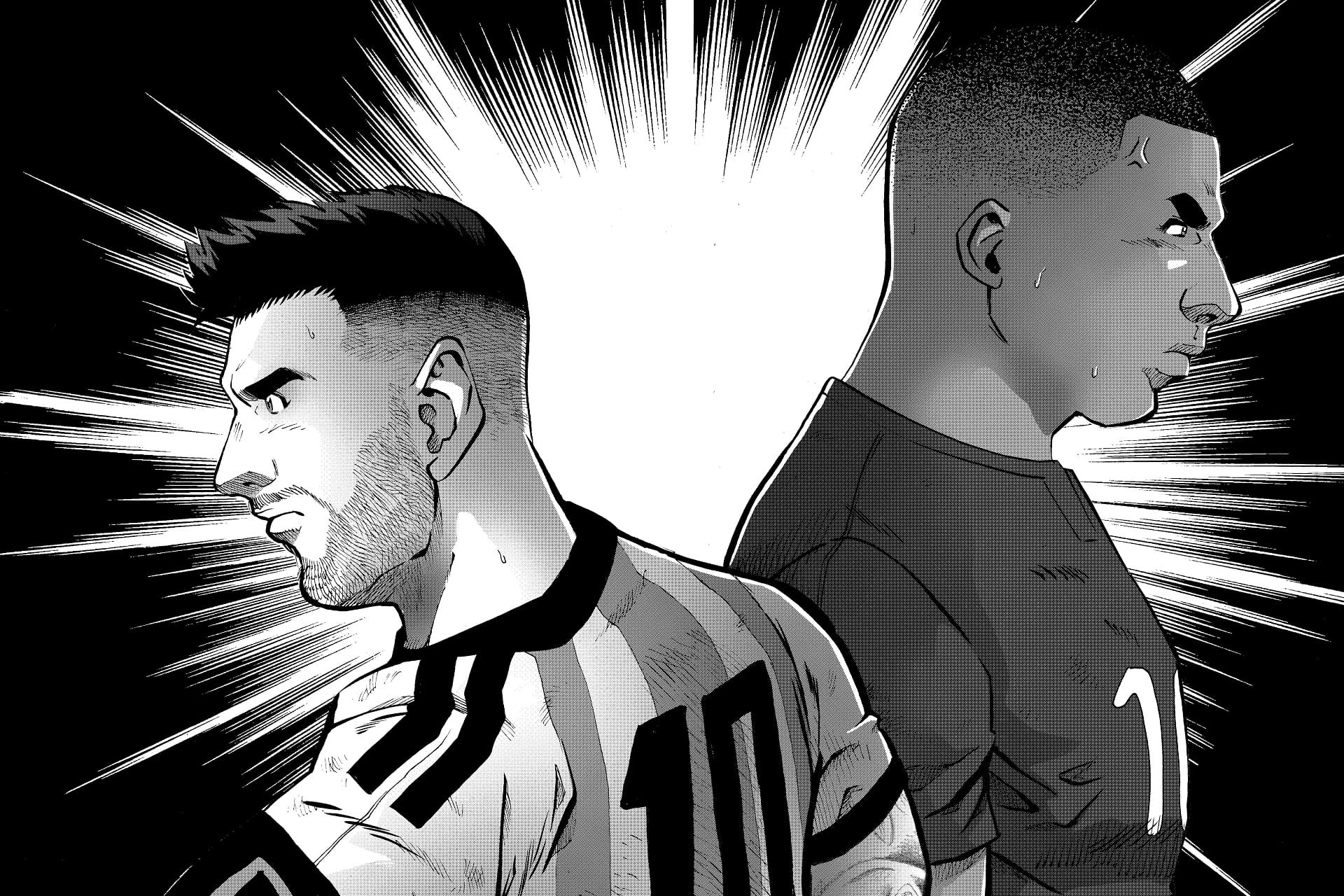
Cover image: "Pulga", a national manga published by Editorial Planeta.
In the comic shops where the superhero once reigned supreme, today it's the Japanese manga that takes the lead. An unending flood of Japanese culture that transcends the panels has turned the Argentine market upside down and is changing the way we read and create the ninth art.
It's no secret that manga has taken over the local and global comic scene. With the Coronavirus pandemic in 2020, the Argentine market solidified a shift that had been brewing even before the turn of the century. Japanese comics have moved from niche to mainstream: publishers and sellers report that manga accounts for over 70% of total sales in the country.
Japanese comics have moved from niche to mainstream: publishers and sellers report that manga accounts for over 70% of total sales in the country.
"Everyone knows what manga is and how to read it. It has established itself as a genre; there are even kids who grew up with the first issues that arrived in the country 25 years ago," says the editor of a major publishing house. In fact, the first cosplay contest at Fantabaires 2000 took place a quarter of a century ago, and the founder of the Ivrea publishing house (the leading reference for the genre), Leandro Oberto, described it as "the most tangible sign of a generational shift" in issue 20 of Lazer: "The specific context of the COVID-19 pandemic, which confined much of the world to their homes during 2020 and 2021, led to a second boom in manga."
This shift is elaborated by Diego Labra, a PhD in Social Sciences and author of the book Manganimé, an Argentine saga. "Anyone who walks by a kiosk or enters a bookstore in Argentina today can clearly see the dominant place manga occupies among the comic offerings," he asserts. Published in 2024, his text states that "just like in many other countries, the specific context of the COVID-19 pandemic, which confined much of the world to their homes during 2020 and 2021, produced a second boom in manga."
"Nowadays, there's a feeling that manga has taken over everything," laments a purist comic shop owner with over a decade in the scene to 421. He attributes the reasons to the "audiovisual support" that manga has in anime. "During the pandemic, there was a lot of content on platforms and that made us sell more," he explains. In this vein, a colleague adds that many viewers aged 4 to 10 have joined as reading audiences.
Labra describes a "close relationship" between manga and anime as a "symptom of the functioning of the Japanese cultural industry." Hence his play on words "manganimé" that titles his book, referring to the combined consumption of both. This isn't new, as a parallel can be drawn between today's Netflix series or Crunchyroll and what used to be Magic Kids, as Labra highlights in Random Podcast with Juan Ruocco. History is cyclical.
"The usual crowd still buys comics, but manga sales have skyrocketed; they must easily account for 70% of total sales. We even had to remove a superhero t-shirt display to make room for three shelves; there was no more space for the volumes," says the manager of an old and well-known comic shop when asked by 421. "It's that kids watch anime, get hooked, and want to continue. They can't wait for the next season of the show, so they read it," he concludes.
So, why does anime drive more people to buy manga than the also incessant superhero movies? The key lies in the adaptation. While comic adaptations are free to interpret when they hit the screen, anime strives to recreate the manga. That's why among comic sellers, a new reading habit is emerging: "Since they are so similar, buying manga is a type of merchandising for anime," one of them defined.
It's not just that. Japanese comics offer variety. Until now, comics have been described (with some intent) as a literature limited to the superhero genre. The reality is that, paraphrasing Brad Bird (see above), who says that "animation is not a genre, it's a medium," the same applies to manga. It's a form of art for storytelling. While comics have been dominated by the superhero genre, today manga better represents the endless narrative possibilities.
"The secret of manga in particular and Japanese culture in general is the metabolization of their culture as a pop object. So it’s a complete universe: you have all genres, all themes," says an editor. Nevertheless, that doesn't mean that manga as pop culture doesn't have a mainstream. A note by Naoto Naka for 421 summarizes it: "Anime has gone through a normalization process, closely linked to the expansion of its audience through platforms like Crunchyroll. Its mainstream programs have adapted to the international market."
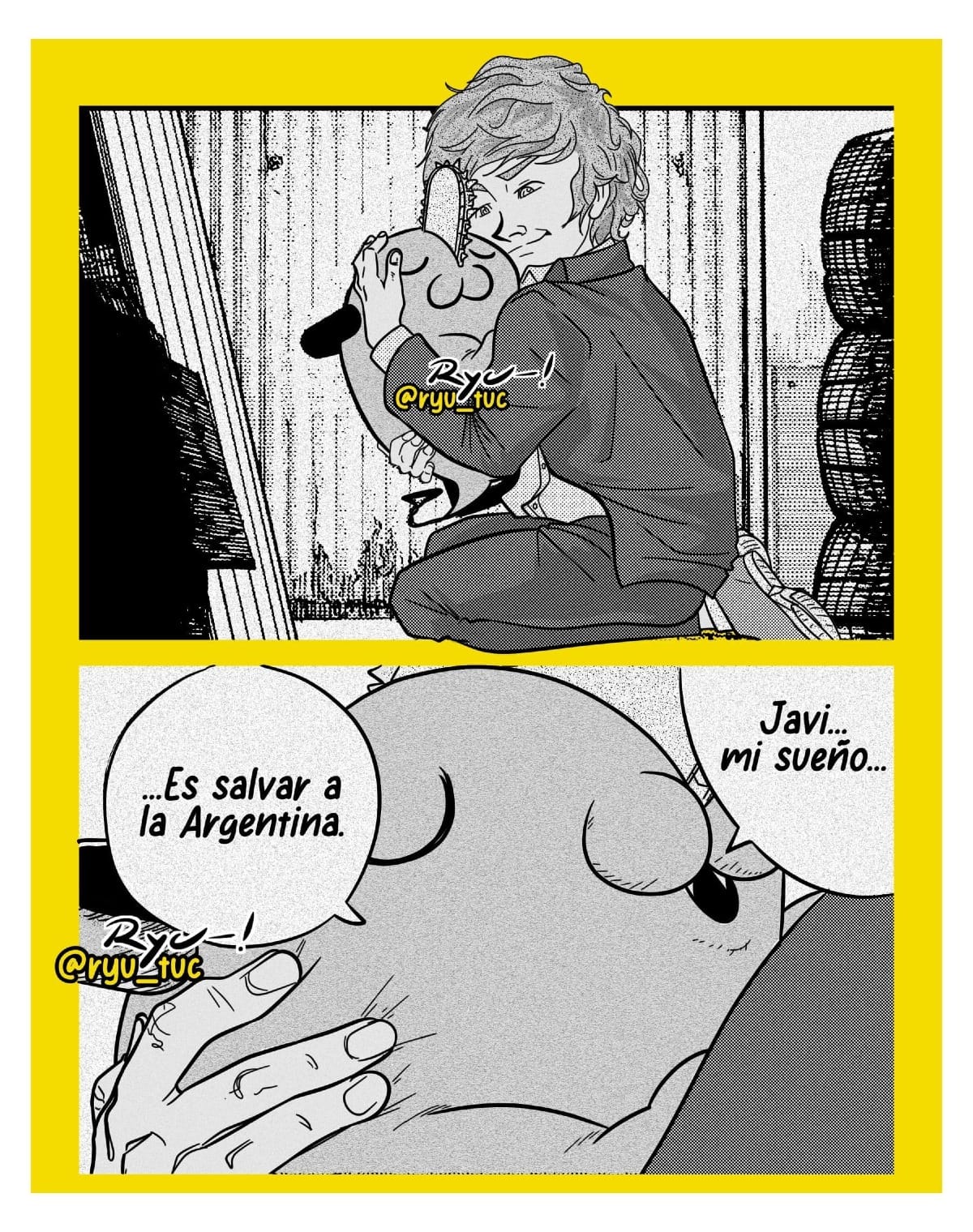
“Chainsaw Man” was reinterpreted by libertarian supporters, such as @ryu_tuc on X
When discussing the success of the Japanese strip in broadening its audience, it’s because manga is organized according to its readers and not by genres, as is often done in Western literature. Naka defines it as a "demographic cut": kodomo for children, shonen for teenagers, shojo for young women, josei for adult women, and seinen for adult men. If we add the genres, we would be further diversifying its content offerings.
The rise in manga sales, due to its range of possibilities for new audiences aside from the already established ones, has opened up the market. Thus, new comic shops focusing specifically on manga, called "manga shop," have emerged. Skeptics argue that they are no longer comic shops, pointing out that they are part of a trend, making it relatively easy to start a business without much expertise. Thus begins a competition: "New comic shops with a special focus on manga, called 'manga shop,' have appeared," says one source.
"As a kid, I always watched anime, but I got hooked on manga during the pandemic. Before that, I worked in gastronomy and then in wholesalers in Once, so I thought selling a comic shouldn't be too hard. So I hit the ground running in 2021, and the business started to take off," says the owner of a manga shop on Santa Fe Avenue. "Here, 90% of what we sell is manga. We target a teenage and young adult audience," he adds.
It's worth noting that we are talking about a product that is relatively inexpensive within its category. "An average manga costs $9500. With that, you read something, but at the same time, you have the complete volume of the comic Watchmen, for example, which costs over 30,000. What happens with manga is that there are titles that are very long, between 10 and 20 volumes. So you buy a little at a time, so you don't even notice. Whether that’s good or bad is up to each person to decide. But hey, manga is economical," says the entrepreneur.
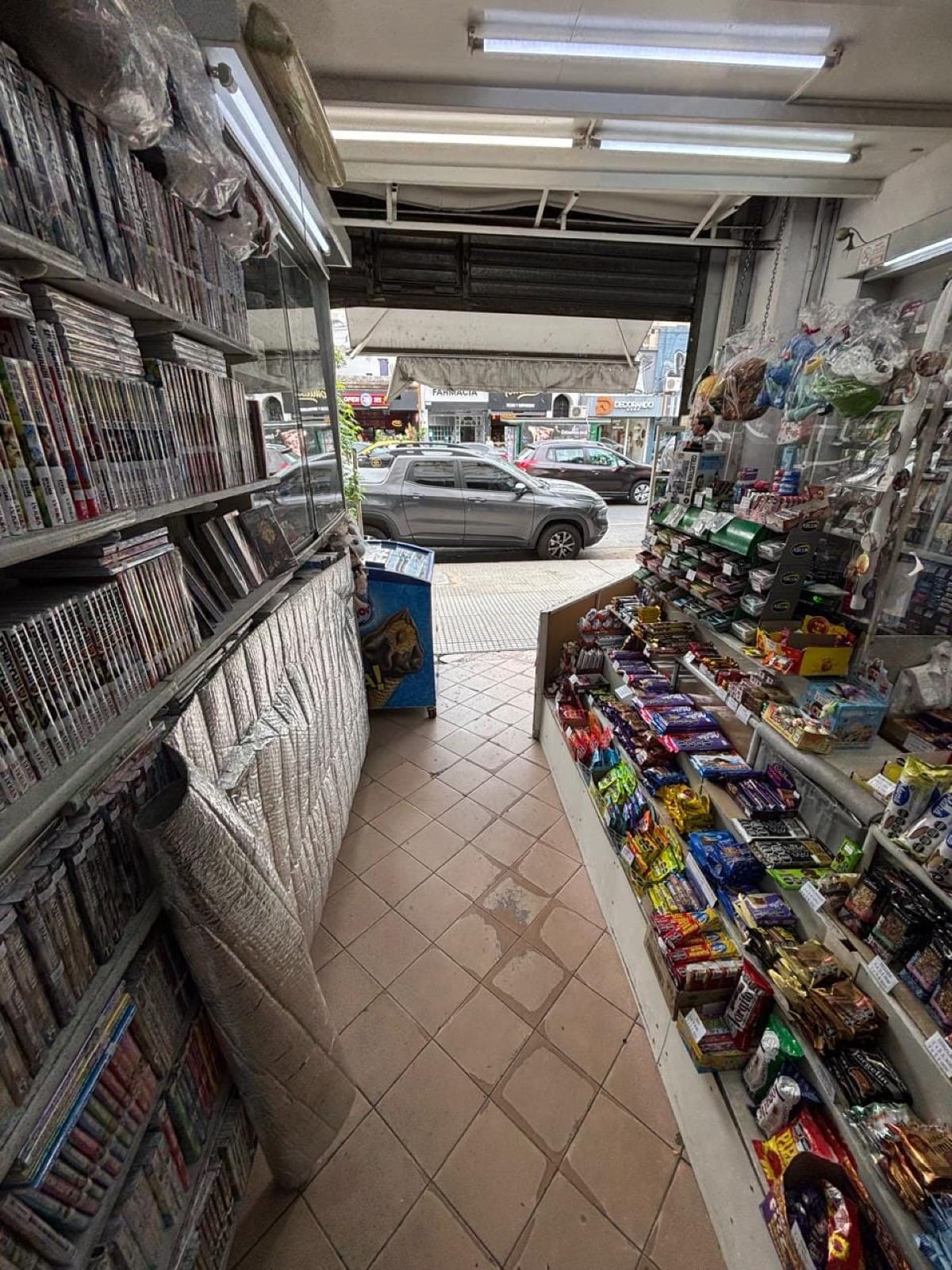
An increasing demand from readers and the relatively low costs of distributing manga have meant that its distribution is not limited solely to manga shop. Those walking the streets of Palermo may have noticed themed cafés that have a catalog of various tankobon, so you can sit down, drink, and read something. Another paradigmatic case is kiosks that have integrated manga into their business: "During the pandemic, we had to add another line of business, because otherwise, we would have gone under," confesses a kiosk owner in Colegiales.
A newsstand converted into a manga shop, as a response to the crisis.
"The best moment for manga publishing in Argentina is today: the present. It has never been better, and this is a global trend. The pandemic boosted publishing markets, especially for manga, and that has been felt a lot here," Labra states on the Random podcast. In our country, Ivrea is the main exponent of the phenomenon, led by Oberto, who some define as the 'Citizen Kane of national manga.'
The Ivrea publishing house is "a key link in the local value chain," Labra asserts in Manganimé and adds in Random that "it has always gone with low prices and thus beat European publishers," in what the sociologist describes as a "market populism." This means that the label "built its manga line following what is trendy, with a lot of synergy with television."
"Ivrea is what it is because Japanese anime does its advertising on TV," Labra describes. It's the feedback loop between manga and anime, the main hypothesis of his book. He also states that the success of the publisher stems from a crisis in the local comic market, where "local agents played an active role in importing manga to Argentina, acting as mediators who sought, negotiated, and adapted (symbolically, but also materially) Japanese cultural products to make them accessible to more consumers and profit from it."
"Ivrea is what it is because Japanese anime does its advertising on TV." (...) It's the feedback loop between manga and anime.
This entire phenomenon did not go unnoticed, nor did it escape detractors: "The appearance of manga in kiosks and specialized stores in Argentina was denounced by some artists and editors as a Japanese invasion. However, that master plan never existed," Labra clarifies. For him, manga is a "viable response to the problems identified in their own comic fields, such as declining sales and the aging of the reading audience."
Another point worth highlighting is the translation of manga into the Rioplatense dialect. Ivrea's approach, initially striking for differentiating itself from imported comics that already came with a neutral translation, ended up becoming the norm for the medium in our country: a case in point is the independent publisher OVNIPress, licensee of DC Comics in Argentina, which adhered to the norm by relaunching its manga line.
"Our manga division opened five years ago. We started with the first licenses like Attack on Titan and Akira, which coexisted in some way with the comic ecosystem. Fortunately, we've always done well, even though we're not market leaders due to having many fewer licenses. Despite that, we do what we can with strong titles," recalls Rodrigo Molina, press officer for OVNI, to 421. "It's very difficult to obtain manga licenses due to the competition. Ivrea is the market leader, with a significant share. So, within what we can, sometimes we pull off a surprise and manage to get important titles," he clarifies.
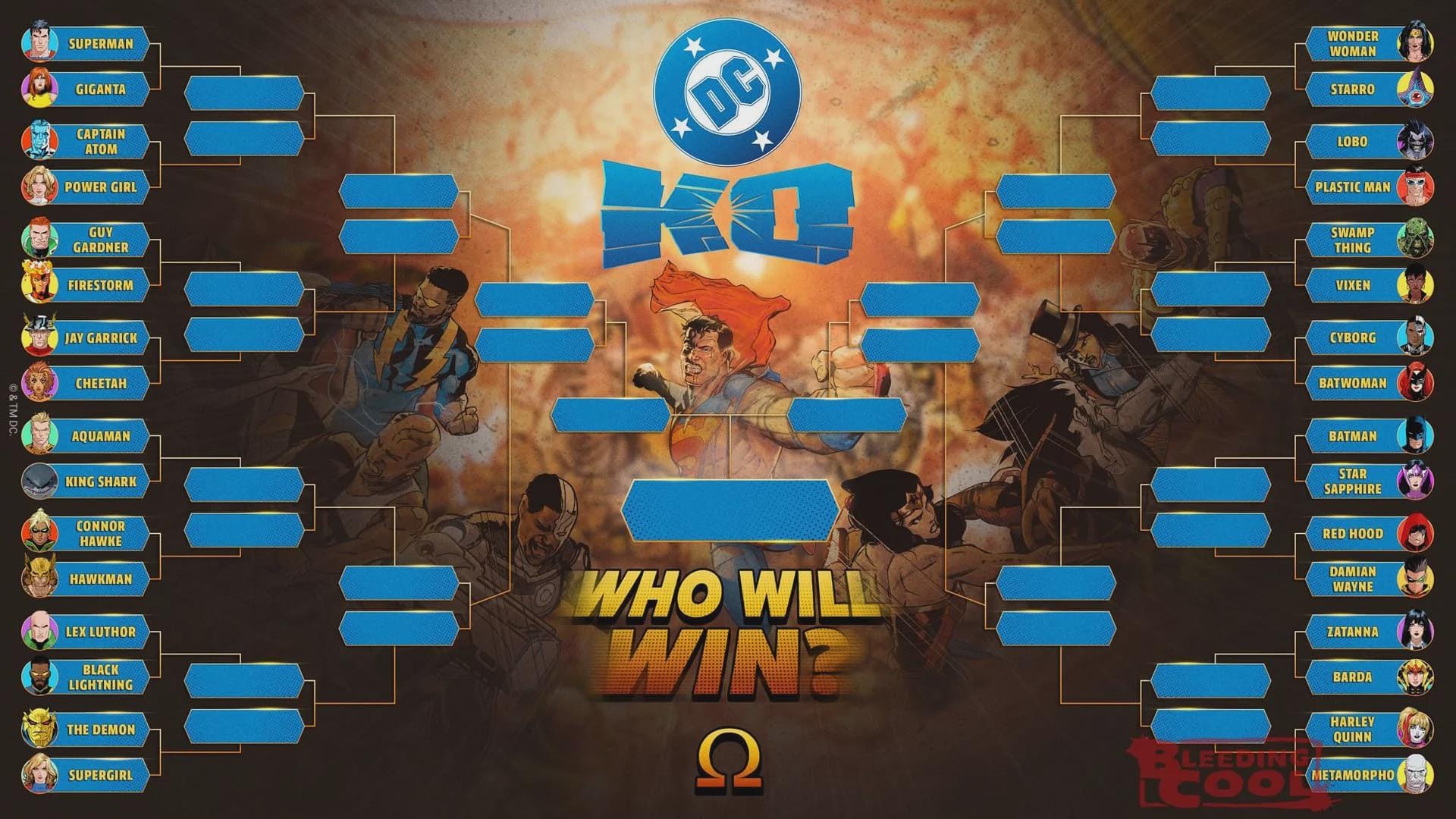
When asked if the label is concerned about the sales advantage of Japanese comics over Western ones, Rodrigo responds: "We're aware of that, but we have a catalog that's the opposite, 70-30 in favor of comics. The thing is, the comic niche is very tough, and it's people who have money in their pockets. So, the fact that we have little manga doesn't really affect us. In fact, we have events like DC KO that you can't tell if they're manga or comics, and they've been working well." It seems that even American comics are adapting to Japanese storytelling.
The DC KO storyline, the tournament arc featuring the superheroes of Detective Comics. Bleeding Cool
"There was a turning point during the pandemic. A bubble formed around manga, with a lot of consumption that was hard to retain. Lockdown made many turn to reading more or less affordable material, leading to a boom that has since faded: there are even kids who started with manga and then got into comics," contrasts Rodrigo, although he acknowledges: "What manga has is a significant advantage over comics, which is the entry point to reading."
Matías Mir, editor of OVNI Manga, delves into the behind-the-scenes of the manga boom for 421: "In Japan, they started to see the potential in our country; they understood that they have a market that isn't being tapped. They realized the popularity of their content during the pandemic and the number of Westerners consuming it. Although the initial contact is incredibly complicated and the work is tough, over time the relationship with them flows. Once, an editor came to invest in local production; I received him, and it was one of the most bizarre adventures I've had in this job. He was a fan of the national team and talked to me about Messi," the young man recounts.
In Japan, they started to see the potential in our country; they understood that they have a market that isn't being tapped. They realized the popularity of their content during the pandemic and the number of Westerners consuming it.
The so-called manga invasion isn't limited to the importation of Japanese titles. Just a few months ago, the publisher Planeta released a second issue of Pulga, the manga about Messi. With the script by Lucho Saracino and the drawings by Lea Caballero, two figures in the field, they managed to sell the rights of the strip to Korea. "The existence of local manga and the fact that we sold the rights shows how any culture consumed by another eventually comes back," one of the minds behind the project proudly states.
"Tomás Linch (editor of Planeta Cómic) called me to take charge of a manga about the life of a young footballer who becomes the greatest of all time. The editorial realized that there were three audiences here: the manga audience, the Messi audience, and the comic audience. Plus, it was published in Korea. It was crazy; an Argentine manga is something unprecedented," Lucho Saracino tells 421.
Pulga. Source: Editorial Planeta
Saracino is a writer, known for his work as a scriptwriter for comics. Among his recent works is an issue of Batman. "If you think about it, all of this is actually quite natural because comics originated in the United States, came to Argentina, and suddenly we started making them ourselves. With Pulga , something similar happened: we managed to understand the rules of manga, produce it professionally, and make it compete in the East. This manga has an Argentine accent, and we have to see what happened when they read it over there. I’m blown away by that."
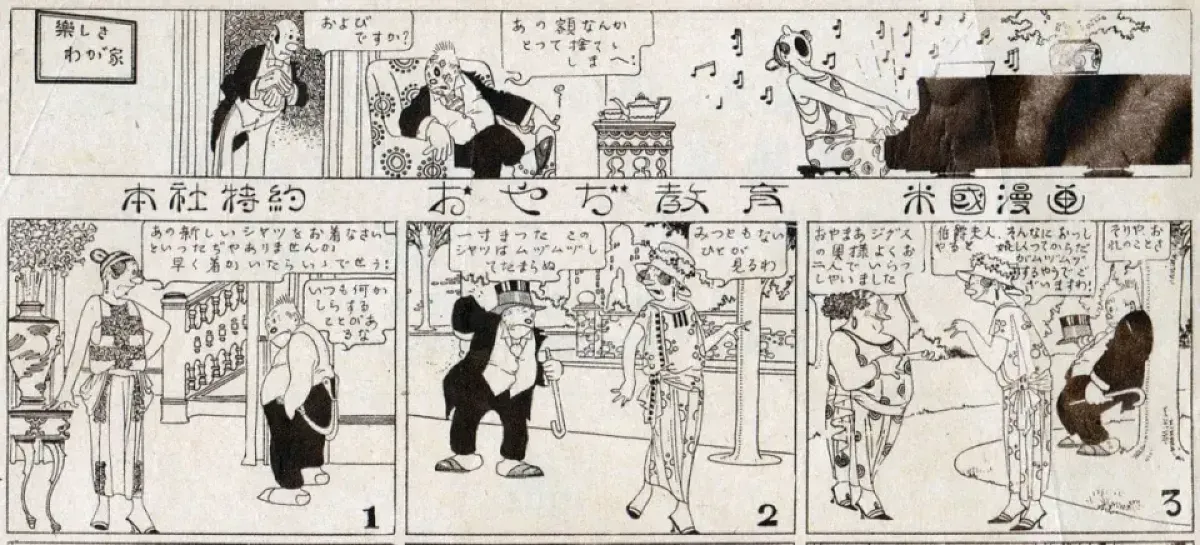
In his book Comics and the Origins of Manga, awarded by the Eisner Awards in 2022, historian Eike Exner delves into these cultural exchanges. Paradoxically, amid a fascination in Japan with American culture in the early 20th century, a Yankee strip called Bringing Up Father became popular. At that time, on the other side of the world, that comic was read backward and was referred to as "American manga," as local production was named ponchi-e, published in the magazine Japan Punch.
“Bringing Up Father” in Japanese, with numbers indicating the order of the panels. Source: Anime Herald.
Over the years, the term manga (which in Japanese refers to artistic sketches) was appropriated by Japanese comics, which integrated resources like speech bubbles influenced by American comics. After World War II, a fan named Osamu Tezuka, now recognized as "the God of manga," drew inspiration from American comics to create iconic series like Astroboy and Kimba.
Returning to Argentina, Pulga is a paradigmatic case, though not the first. There are already dozens of independent titles of national comics that were born with a strong inspiration from manga. If we look back at history and trace the influence that American and European comics had on the strips of our country in the mid-20th century, it’s possible that today the Argentine Akira is just around the corner. As Labra says in Random, "manga is an open story."
✦ Suscribite
Las notas de 421 no tienen paywall
Y a cada colaborador se le paga por su trabajo. Las dos cosas dependen de los suscriptores.