Tropical Gothic: Caribbean Vampires and Zombies
The genre that shifted the horror of medieval castles to the sweltering heat of the Caribbean.

The genre that shifted the horror of medieval castles to the sweltering heat of the Caribbean.
Note: This article on literature in Cali was written before the devastating 7.4-magnitude earthquake that struck Colombia on Monday, August 10, 2026. The 421 team extends our solidarity and deepest condolences to the families of the victims, the injured, and all the people of Cali and the affected regions during this difficult time. We are publishing this content on the city’s cultural richness as a tribute to its spirit and its people.
A common reference (which we cannot overlook) arises when discussing the emergence of tropical gothic, and that is the conversation held in Mexico between Colombian writer Álvaro Mutis and Spanish director Luis Buñuel. Mutis boldly claimed that gothic tales could also be set in hot climates, to which Buñuel responded with skepticism. Gothic required medieval castles, dilapidated mansions, and winter weather, with its autumn and winter; its dry branches, its decadent courtiers, perhaps even the Slavic accents of a more eastern otherness.
In 1973, Mutis countered this with a short story titled The Mansion of Araucaima, in which he sought to prove that heat was the source of an entire aesthetic. In a coffee plantation house in Colombia, he set seven characters: Don Graci, an old pedophile and homeowner; Paul (a one-armed mercenary); Cristóbal (a black Brazilian servant); Camilo (an impotent pilot); a friar (a Jesuit priest prone to sex); La Machiche (a nymphomaniac who has been involved with several characters in the house); and Ángela, the girl and newcomer who sets the events in motion.
Mutis boldly claimed that gothic tales could also be set in hot climates, to which Buñuel responded with skepticism.
With her arrival at the house, by accident and out of fear of the night, emotions are unleashed that disrupt the order within the mansion, triggering a series of deaths, as dictated by the violation of one of the owner's maxims for the place: If you enter this house, do not leave. If you leave this house, do not return. If you pass by this house, do not think. If you dwell in this house, do not offer prayers. However, Mutis presents his story with a somewhat clunky structure. He lists and describes each character, who later interact in chapters titled The Events and The Funeral. It’s a text that could be likened to a plot written for a role-playing game. However, its significance lies in being the starting point that Carlos Mayolo and Luis Ospina would work on thirteen years later in an adaptation that I will discuss later.
Having presented the first important precedent of tropical gothic, let’s turn to Andrés Caicedo. It can be said, as an introduction, that he founded the Cineclub de Cali and its magazine, Ojo al Cine. He wrote short and long stories; plays and a novel, Long Live Music! All before turning twenty-five. He traded the Rolling Stones for Richie Ray and Bobby Cruz. He committed suicide by taking about sixty pills. He died with a drive similar to that of Ian Curtis or Rimbaud. He became the pop idol of depressed teenagers in Cali and occupied, for a time, that uncomfortable place in the city. Recently, he has experienced a revival of reissues and translations, spurred by comments made by Alberto Fuguet about his work. He has always been an uncomfortable figure for official Colombian literature.
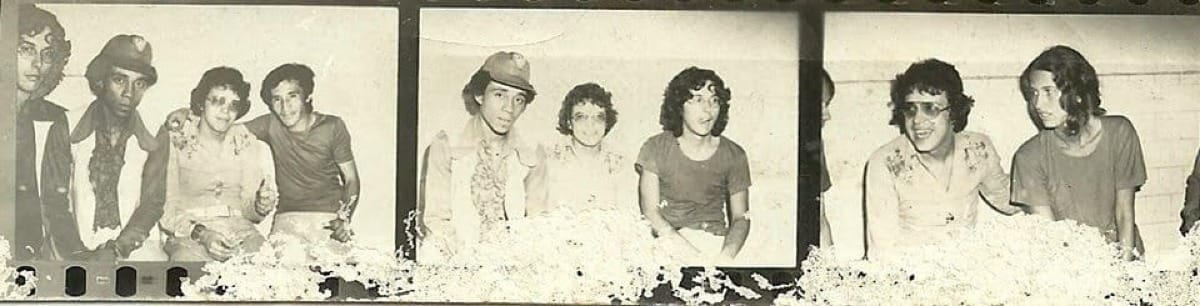
Caicedo was the curator of the films presented at the San Fernando theater from the cineclub, many of which were horror films and a significant number of B-movies. Dying in 1977, he left as his legacy his screenings, a couple of scripts (adapted by Mayolo and Ospina), and a collection of stories and tales that we can read as the miscellany that enables an aesthetic. Those three films (which may seem few to discuss a genre, to be honest) that usually make up the triad of tropical gothic in Colombia, Pura Sangre (1982), Carne de tu carne (1983), and The Mansion of Araucaima (1986), were filmed after his death. The last one, as is known, is an adaptation of a text by Mutis; the first two are based on scripts that Luis Ospina and Sandro Romero Rey found among his papers.
However, Caicedo was not strictly a genre writer. Although horror sometimes appears, either as a state of mind or as dislocated realism, few stories treat it in a way that is characteristic of the horror genre. Here, a city like Cali is important, as it, while not a condition for the existence of tropical gothic, ultimately provides a space for it to develop. The final part of the first paragraph of Infection, a story Caicedo wrote at just 15 years old in 1966, can be read as a prescriptive declaration:
Cali at this hour is a strange city. That’s why I say this. Because it’s Cali and because it’s strange, and despite everything, it’s a whore city.
Infection is significant for its peculiar perspective on Cali and for being one of the first stories we know of Caicedo, but also because that declaration of Cali as a strange city occurs at noon, when the sun beats down hardest on a city located in a valley at the foot of the Andes, which has always been a crossroads: southward through the Pan-American Highway or toward the Amazon or the Pacific Ocean; toward the center and north of the country if traveling from the south of the continent. It’s during those hours when the breeze from the Pacific Ocean has yet to cross the Andean tropical forest to bring calm.
The sun. How to sit in a park and say nothing. One-thirty in the afternoon. Walking, walking. Walking with a friend and looking at everyone.
That’s what the first part of the story says. The title, moreover, is suggestive. The characters in Caicedo’s stories, adolescents, are sick for life. The author transmits his virus to them, the one that makes them perceive the city as strange, allowing them to see vampires in a small movie theater or zombies on a city bus.
 Marcelo Acevedo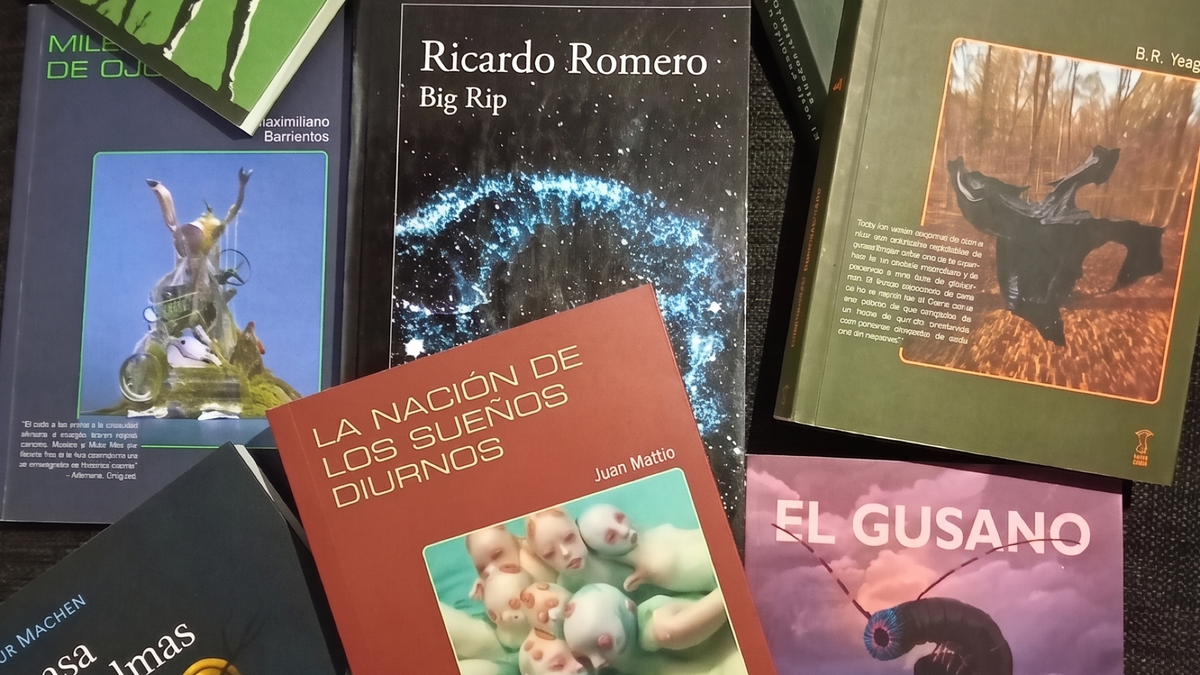
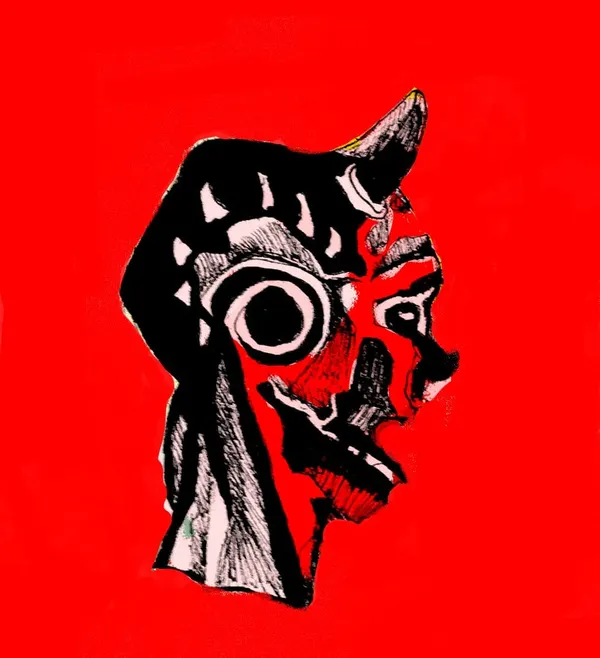
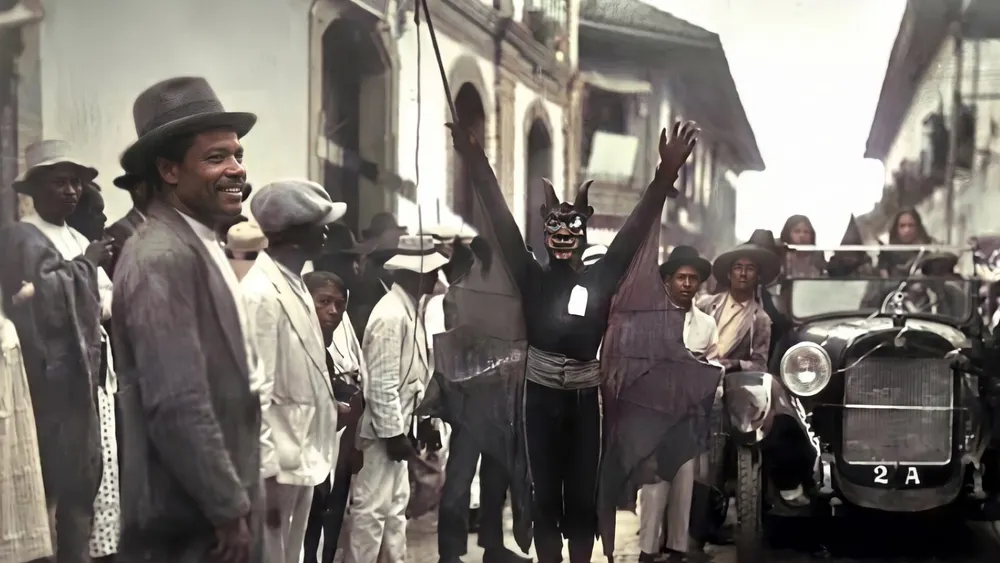
Most of these stories occur under the moon, which is a striking way (almost an oxymoron) to refer in Cali to the sun and the heat of the morning close to noon that extends into the afternoon. This is similarly the case in Caicedo’s longest story, The Crossed, and in the most Lovecraftian passage of his literature. There, the protagonist walks through one of the protective hills of the city, the hill of Tres Cruces, and enters the “Tunnel of the Infernal Spider.” The fact that it is this particular hill is noteworthy, as one of the many urban legends of Cali says that beneath this hill lives a demon named Buziraco, who in the past was seen as a giant bat shadow with horns that covered the city and announced tremors and earthquakes, droughts, and plagues. Buziraco (some say he is the Yoruba deity of thunder, Changó, who came to Cali fleeing from Cartagena, where he was worshipped on the hill of La Popa by men and women of the African diaspora) was imprisoned beneath the hill by priests, who built the three crosses in 1937. It is to this hill that the crossed one descends, amidst humidity and darkness, to encounter a creature that, interestingly, predates the appearance of the spider at the end of It by Stephen King by twenty years.
And peering through that total light, I could see the being that, dwelling behind it, made it. The gigantic spider, advancing toward me behind the shield of light. Hairy and black. And with the source of light in its belly, that’s where I dove in like a dove, to plunge the knife into its belly. Have you never plunged a knife into a spider’s belly? That’s all you need. The liquid that fell on my face, anything but pulling out the knife, a consciousness of legs weaving in the air, hairs falling on me, and the light that first wrinkled and then unraveled completely, could its fibers be the hairs that fell on me so much?
The crossed one manages to exit the tunnel, but only to find a deserted city.
The hill, located in the western Colombian mountain range, is also the setting for part of the events of Carne de tu carne by Carlos Mayolo, which is based on a posthumous script by Caicedo found by Luis Ospina and Sandro Romero Rey, titled Do Not Abandon Me, Neither by Night nor by Day. According to Romero Rey, the script revolved around a story of incest between two siblings amid the events of the explosion on August 7, 1956, when trucks loaded with 42 tons of dynamite exploded in the city center, killing around 4,000 people. The first image of Mayolo’s film is a tribute to the low-budget cinema that inspired them to become directors: a poster with the names of Roger Corman and Roman Polanski. Carne de tu carne aimed to be a B-movie, but one in which Colombia’s political terrors mobilized ghosts and vampirism among the ruling classes.
In the film's opening scene, an elderly woman tells a teenager, her grandson, those very words that come from the mouth of Count Vlad in Bram Stoker's Dracula: flesh of my flesh, blood of my blood. What follows is the story of a family where the father is a conservative landowner, a "chulavita," a killer of peasants and liberals.
Set in 1956, Carne de tu carne is framed by the political context known in Colombia as the period of la Violencia, during which paramilitarism emerged as the hidden hand of the alliance between the State and wealthy landowners, who founded and maintained private armies that persist to this day. With an intensification after 1948, following the assassination of Jorge Eliecer Gaitán, a liberal politician who was in the running to govern the country, there are several nods from Mayolo to the reasons behind the family's wealth that stars in his film. In the second scene, amidst the mountains with the valley in the background, a group of chulavitas excavate a guaca from the estate where they committed a massacre. To open a guaca, in many places in the Andes of South America, also implies unleashing a punishment, a corresponding curse.
Days pass, and the family's daughter returns to Colombia from the United States for the reading of her grandmother's will. On the night of her arrival, the family gathers with the children to watch a series of home movies. On screen, the ghosts that these people, as a good family, want to hide are visible. A communist uncle and a suicidal writer, a nod to Caicedo. However, that night will be the one of the explosion on August 7th, and the teenage siblings will be sent to a house located in the Cañasgordas area, in the south of the city. In the mountains, the siblings will grow closer until they succumb to incest and vampirism. Mayolo once said:
The writing of the script always had as its embryo that, by committing incest, the characters became vampires and cannibals.
Then comes the real appearance of those ghosts from the family movies and the terrors of the mountain. The crickets are always singing, just like the cicadas. Of the three cornerstone films of tropical gothic, it is Carne de tu carne that features truly fantastic scenes. The aforementioned ghosts are one way. The second is a direct reference to one of the creatures from Colombian Andean folklore, the Madremonte; an anthropomorphic creature covered in vegetation and moss, avenger of nature.
With Carne de tu carne, Mayolo does what Ospina does with Pura Sangre. Both draw on the local bestiary and the terror of the provinces. An intention that Mayolo himself declared a year earlier in a short text published in Revista Caligari, titled Universo de provincia o provincia universal. Decentering as a key movement seems to be Mayolo's proposal. Not only from the capital but from everything that stands as the only possible sun:
All these things make us think that perhaps our collective unconscious is in the province, just as the province created neorealism or Cinema Novo, or Birri's cinema in Argentina, or that school from Cuzco lost among the mountains, and even the very western is the child of that provincial unconscious that every gringo today has replaced with a hamburger.
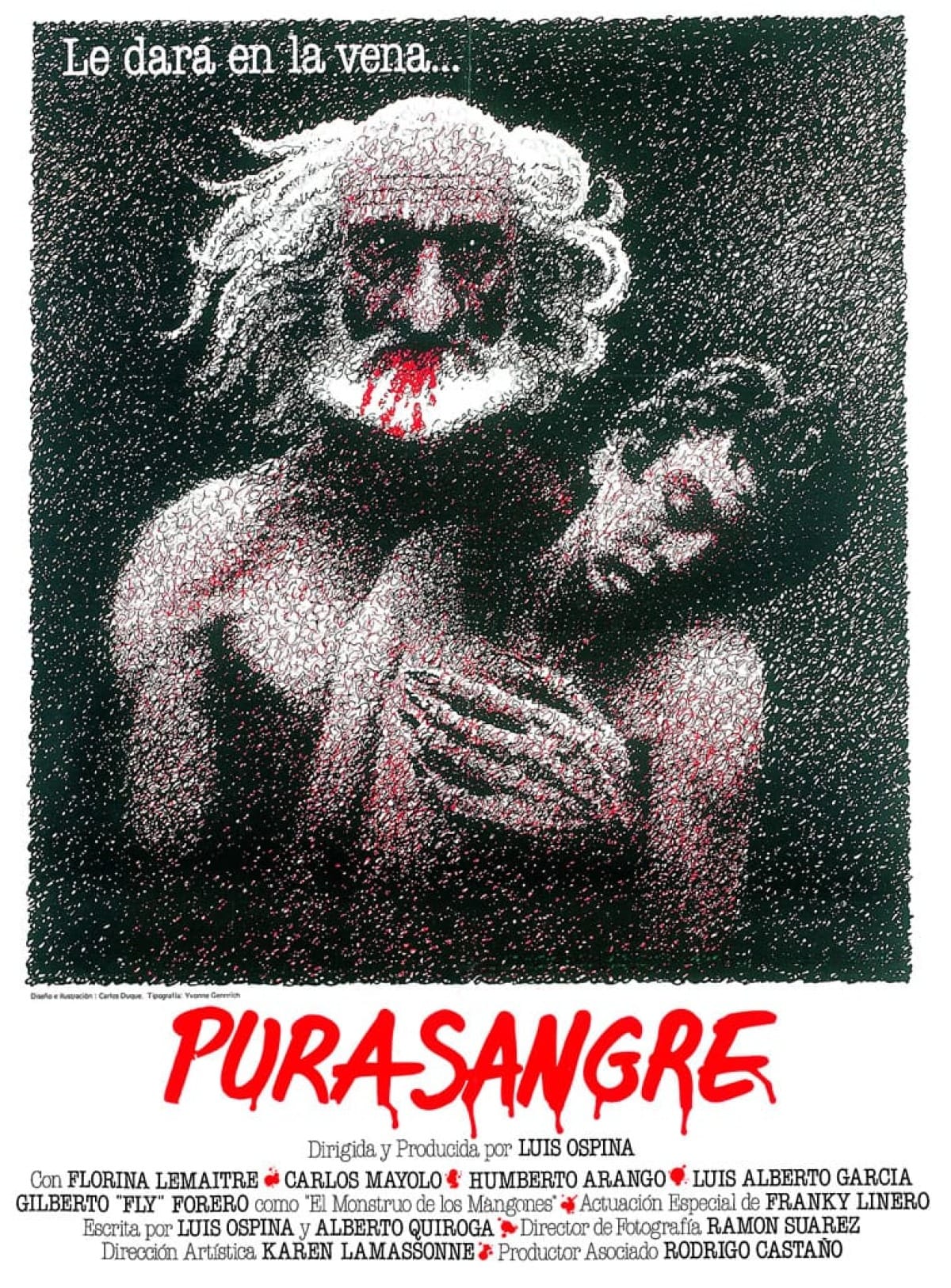
Pura Sangre, by Luis Ospina, draws from another tale of the local bestiary by taking the so-called “monster of the mangones.” With the film, Ospina materialized one of the fears of his childhood, as in the early sixties, after a series of children's corpses were found in various vacant lots around the city, the legend of the monster began. It was said, above all, that he was actually Adolfo Aristizabal Llano, one of the influential rich men in the city who supposedly kidnapped children to steal their blood and use it in his own body, as he suffered from a rare disease. In Pura Sangre, an industrial and wealthy sugarcane lord needs blood transfusions to keep living. His men then go out to hunt children and young boys. The motivations and actions of this vampire are practical, and the treatment of vampirism is realistic; he is a sugarcane lord, a dark monoculture that arose from dispossessed lands and modern slavery. His bite is an extended movement, carried out on the bodies of his gang of thugs, who drug and kidnap their victims. Meanwhile, the vampire waits in a penthouse, his castle, located in the center-west of the city. Transfusions arrive for him, but the bodies do not.
In Pura Sangre, an industrial and wealthy sugarcane lord needs blood transfusions to keep living. His men then go out to hunt children and young boys.
In Pura Sangre, Ospina's direction is evident, the hand of a more seasoned director than Mayolo, who manages to give the film at times a noir finish that shows, between blinds and chiaroscuro, the industrial vampire in his sickbed. The penthouse is a closed space that only the vampire's son and the nurse who supplies the blood of young boys can enter. Through a window, Cali can be seen from above. Below, meanwhile, the vampire's heir manages the sugarcane business and delivers a message that we complete as spectators. This is, if one knows the history that, generally, sugarcane mills carry with them across the continent, with the slavery of people from various places in West Africa being the first of its effects. Again, and as in Carne de tu carne, those who dispossess lands are the same ones who bleed bodies; the same ones who pay for and arm armies and private forces. The strongest sign of Colombian violence is always found in tropical gothic, that vampirism perpetrated by paramilitaries. Meanwhile, the sugarcane fields create a setting and atmosphere for the terrors of the hot land.
In Mayolo's adaptation of La mansión de Araucaima, there is another modulation of the castle, transformed into a penthouse in Pura Sangre and into a sugarcane estate in the adaptation of Mutis's tale. Among ceibas and sugarcane fields, the events of the film unfold, which comes to finish what the book began, according to this rigid text lacking an enveloping atmosphere. Things that Mayolo does achieve: from the start, the heat is felt and merges with the sound of the cicadas, whose song is always heard in the Valle del Cauca when the sun sets. If in Carne de tu carne the treatment drew from B-movie horror and in Pura Sangre from a more noir B-movie, in La mansión de Araucaima there is one closer to a surrealism enabled by a series of characters who seem to live in a timeless house, in a place where characters like a monk pulled from an abbey and a slick-haired pilot with Ray-Ban glasses coexist. Here, Mayolo gives a nod to Buñuel in films like Viridiana or The Exterminating Angel, where a group of people lock themselves in a house to devour each other under laws that are not those of exterior realism. The house appears lonely among the sugarcane fields, and its view evokes another of the hot gothic settings on the continent: the cotton house of the southern gothic of the United States.
The southwestern region of Colombia has a connection to the deep south of the United States through the dark and bloody history of lords and families who have built wealth with monocultures like sugarcane and cotton. Both geographies share a history of slavery that never left and has, on the contrary, modernized, just as many other forms of capital production have. It is not just the houses, the decay, and the slavery; but also those long corridors with trees that seem to weep, located on either side of a hallway leading to estates inhabited by strange forces; the valleys without cliffs and the open sky nights, which contrast with the stormy clouds of European gothic; tales whose terror lies in the rare nature of characters whose madness has the same impact as a ghostly apparition. That madness of Mrs. Emily, from the story A Rose for Emily by Faulkner, is not far from the type of familial madness that consumes itself in Carne de tu carne, for example. The events of La mansión de Araucaima, realistic, are closer to this gothic. It is the same kind of decadent path that characters from two other works by Faulkner, like Absalom, Absalom! or As I Lay Dying, travel. In this sense, tropical gothic does not only address the treatment of creatures from the local bestiary, set to embody manifestations of political and economic power; but also to make these last ones something more diffuse, unleashed in emotions of love and hate, unsettling and hot.
Tropical gothic is not, therefore, the first to propose heat as an aesthetic for terror. Although one of those early exercises, curiously, involves a sugarcane landscape. White Zombie is a 1932 film directed by Victor Halperin, and while it showcases that typical white gaze of Hollywood towards otherness beyond the United States, there is not much difference between this viewpoint and that of classic gothic literature, which always constructed the monstrous upon those bodies more eastern or further south, with different accents; Balkan, Asian, African, indigenous, or oriental. In the film, the couple composed of Neil and Madeleine travels to a fictional Haiti in the Caribbean. They are about to get married, but their sponsor, a white sugarcane planter named Charles Beaumont, plans to make Madeleine appear dead (he wants to keep her) using the dark arts of Legendre, a local sorcerer who is also portrayed by Béla Lugosi. Here is another connection, that of the first Count Dracula of cinema acting in the first zombie film. The planter and the sorcerer have a French and colonial past. Legendre also lives in a castle built by black slaves and sugarcane workers. The zombie is collective terror. They are the ones who, in that way, keep the mill moving. It is known that in the history of Haitian zombies, the execution of the desire of capitalist lords is hidden: to have full-time workers who do not eat or sleep, to zombify the proletariat.
The southwestern region of Colombia has a connection to the deep south of the United States through the dark and bloody history of lords and families who have built wealth with monocultures like sugarcane and cotton.
Legendre will turn Madeleine into a zombie. This first moment of zombies is feminine and Caribbean. It carries with it one of those vices of romantic literature, where sensitive and desperate men experience the loss of the beloved woman as her absence and subsequent desire for recovery. This type of female character, always catatonic or dead or ghostly, also founds the subgenre of zombies. Their mode is somnambulism, the figure of the blonde sleepwalker is central in White Zombie and in I Walked with a Zombie, a 1943 film directed by Jacques Tourneur. Set in the Caribbean, both films have inverted one of the values of gothic and make heat one of its possibilities. And while both are products of a huge machinery established in California, this is no reason not to bring them up. Both in Caicedo's literature and in Ospina's and Mayolo's films, references to pop cultures are abundant; they are material for anthropophagic exercises of consumption and creation. Author cinema was never a viable path for the members of the Cali Group, who had been formed with the genre films that Caicedo and Ospina obtained and screened at the film club:
We were Colombians who could also film in a town, the horror series, cheap movies. This type of cinema also influenced us because it was feasible. Carne de tu carne was a homemade film, it was a B-horror movie, with homemade ghosts.
In this sense, the provincial consumer also opened up to global consumption and its references, leaving aside the easy route of the costumbrista sainete, which the consumer from the global north always expects in a package tailored to their digestion.
I Walked with a Zombie also shifts this uncomfortable otherness of gothic terror to a Caribbean island, whose obvious inspiration is Haiti and its voodoo. However, the transfer made is the reverse. The white people from the United States return to visit the place of the weird, they are the ones who seek it out, and the evil does not come to them, as occurs, for example, with Dracula or Frankenstein, to name classic cases of the genre. It is Betsy, the nurse protagonist of the film, who immerses herself in the ritual of the black sugarcane workers of San Sebastián island. She takes Jessica, the wife of the current heartthrob and zombified woman, by the hand. She wants to save her: Betsy opens her head to believe in the powers of Changó and Damballa, the Haitian loa. Jessica seems like one of those pale women from the literature of Poe or Villiers de L'isle-Adam. Tourneur manages to convey those silences, which the darkness of castles and cold atmospheres seemed to define as the unique marks of European gothic. The drums and the choirs in the Houngan (the name given to the voodoo temple in the film) or the appearance of Carrefour, that human god who guides Betsy, distort the atmosphere in a different way, making it clear that there will be noise and that there will always be people on camera, and that, even so, there will be terror.
I Walked with a Zombie (1943) - Jacques Tourneur.
In the scenes where the nurse leads her blonde zombie by the hand towards the Houngan, with the drums of the ceremony echoing in the background as they pass through the sugarcane fields, there emerges a new way of representing terror in cinema, an unexplored form of the gothic until that moment. The brothers Paul and Wesley (the former as the protagonist and the latter as the one who tried to escape with his brother's wife before she was zombified) hint at this when the younger brother, Wesley, remarks just after hearing the drums that his sugarcane workers prefer warm wind nights for their ceremonies, which makes him nervous. The Caribbean heat, which allows one to hear the surroundings, contrasts with the northern gothic storm that silences everything. It seems that the landowners of the large plantations replace the decadent aristocrats of the cold in the heat. The master devouring the worker is the form, although this principle is the same as what underlies what became known in the 20th century as Latin American social realism.
Another way of consuming the body of the worker, however, began to emerge in Latin America. A type of vampirism that could wear the glasses of intellectualism and well-meaning postulates; a vampirism that Mayolo and Ospina called pornomiseria. This was (and is) a type of cinema that exposed the miseries of the Global South, then categorized by the North as the Third World, in sellable documentaries for European festivals, made under the same welfare ethics of an NGO. All to satisfy the fetish of the noble savage à la Montaigne. Mayolo and Ospina write in a 1977 text titled What is Pornomiseria?:
This profit-seeking did not allow for a method that uncovered new premises for the analysis of poverty but, on the contrary, created demagogic schemes until it became a genre we could call miserabilist cinema or pornomiseria.
However, it would be the following year that their response would gain more weight by filming a false documentary, sharp and at the heart of the matter. With Agarrando Pueblo, where a couple of cameos from Caicedo can also be seen, they go against the actions of the hunger vampires. They roll through Cali looking for scenes of urban misery to gather what is supposed to be a good miserabilist film; they throw coins into a fountain to make several children jump for them, hire a family to recite the Our Father and sing thank God for having artists who give them a voice, as they apparently do not have one.
Before pornomiseria, however, there is the aesthetics of hunger, from Brazilian director Glauber Rocha. In his manifesto, which advocates for a new Latin American cinema, Rocha speaks of
characters eating dirt, characters eating roots, characters stealing to eat, characters killing to eat, characters fleeing to eat.
Mayolo and Ospina merely revisit what Rocha first denounced; the miserabilism of European directors and Latin Americans who want to satisfy that palate; the need to sell charity in their land, to turn the cannibal into a noble savage and, in that same process, to cannibalize the cannibal (turning him into a formal datum of their field of interest): becoming a vampire of hunger. Rocha states in his manifesto, written in 1964:
For Europeans, it is a strange tropical surrealism. For Brazilians, it is a national shame. The Brazilian does not eat, but is ashamed to say so; and above all, does not know where this hunger comes from.
A colonized and kidnapped subjectivity makes the Latin American a person who physically feels hunger but is unaware of its reasons on an intellectual level. This is undoubtedly the gravest damage of the colonizing attitude. The second, on the other hand, is also denounced by Rocha and could be named as a nostalgic mannerism that Europeans or first-worlders have for the primitive. Rocha precedes Mayolo and Ospina in denouncing the foreign taste for Latin American misery. What for a person in Latin America or any other country on the continent is a harsh reality, a tragedy, satisfies some area of interest for the external eye or, worse, the paternalistic feeling of commiseration, which had become the way to understand local problems. The germ of tropical gothic must also be sought in the political denunciation of the “good” as a vampire and in how the creative form, that of the documentary, is used to devour itself and transform into corrosive satire.
Between the estrangement of the gaze in the face of heat and political parasitism, tropical gothic is a genre that commits anthropophagy, in a manner similar to how Latin American weird literature interacts with pop forms from other geographies. The story The Ghost and the Darkness, by Argentine writer Leo Oyola, for example, narrates the tale of a worker from a sugar mill in Tucumán, Argentina. The sugar lords, allied with the military dictatorship, offer sacrifices to a fantastic creature (the familiar) that brings them wealth and eliminates (makes disappear) their detractors.
With similar settings and a direct relationship between economic power and an armed and terrifying arm, Oyola's narrative could be linked to Pura sangre and the Cali tropical gothic. Jenny Alzate, a Pereira-born author settled in Cali, has published in 2020 Buzirako Fútbol Club, a collection of stories in which the figure of the demon trapped beneath the three crosses takes on various forms throughout the tales, which adopt the frenetic rhythm characteristic of the city and its popular imagery as a direct mention. In her stories, Cali is read as a city that has never ceased to hold the superstitions of a rural people.
In a story by Bogotá author Luis Carlos Barragán from 2017, titled Euphoric Night Walkers, a group of inhabitants from a fictional town on the Colombian Pacific takes revenge on the soldiers who have come to commit a massacre in their land. The tumbajuanos lurk in the woods and, slowly, approach the soldiers. One night they pounce on them, in an episode that the press labels as collective hysteria:
The euphorics open the chests of the soldiers with machetes. The armed men fall one by one until the gunfire ceases, and only blows, laughter, and screams are heard; the euphorics convulse almost with pleasure. The old ladies eat the entrails and the eyes; the women tear off the soldiers' genitals and swallow them; the children open the throats of their victims and bite them until they have pieces of muscle. This is the communion of saints, this is the blood that grants the forgiveness of sins.
There is a sense of social justice in the zombie cannibalism of the people of Tumbajú. At the same time, Barragán's story represents an inversion in the victim-victimizer binomial that many works of Colombian literature tend to fall into. In the realism of Colombian literature (in the 1990s and early 2000s) that precedes authors like Barragán and that took the armed conflict as a theme, the tumbajuanos would not have stood a chance, and the soldiers would be the ones lurking.
It seems that tropical gothic is, above all, vampiric and cannibalistic. Whether in its realistic and satirical mode or fantastic or noir or surreal. It is a genre in which some parasitize others not only to survive but also to accumulate.
On the other hand, there is a question that haunts it: is it possible to speak of a genre when the list of films is not that extensive and, even less so, the list of literary works? With tropical gothic, it happens that sometimes the expectation is greater than the major discoveries; it occurs that there is an abundance of texts, essays, and notes about the Cali Group, and that this city began to take the genre as a common ground, giving it the same treatment it has given to Caicedo. Tropical gothic is not a closed genre; rather, its limited production generates a genuine desire to see more. It is a movement that finds in the current interest and in the great production happening on the continent, an appealing precedent, with solid theoretical and symbolic foundations.
It seems that tropical gothic is, above all, vampiric and cannibalistic. Whether in its realistic, satirical, fantastic, noir, or surreal modes.
At the same time, not every horror story set in a hot atmosphere should be labeled as tropical gothic, and perhaps this is a way to protect it from the same flattening vices that give rise to cases like magical realism. In Cali, for instance, this open genre found a nest, thanks to the intersection of local legends (there's no horror literature without superstition, says Lovecraft), the consumption of a ton of B-movie horror films from the Cineclub, and a series of social parasitisms typical of Colombian political violence. Perhaps the perfect alliance between the monsters of the American cinema that Caicedo adored and the Marxist realism of Mayolo.
Y a cada colaborador se le paga por su trabajo. Las dos cosas dependen de los suscriptores.