Lacan and LLMs: The Unconscious as a Symbolic Machine
Where Lacan, cybernetics and LLMs meet: the unconscious is structured like a language, but it also spills over it.

Where Lacan, cybernetics and LLMs meet: the unconscious is structured like a language, but it also spills over it.
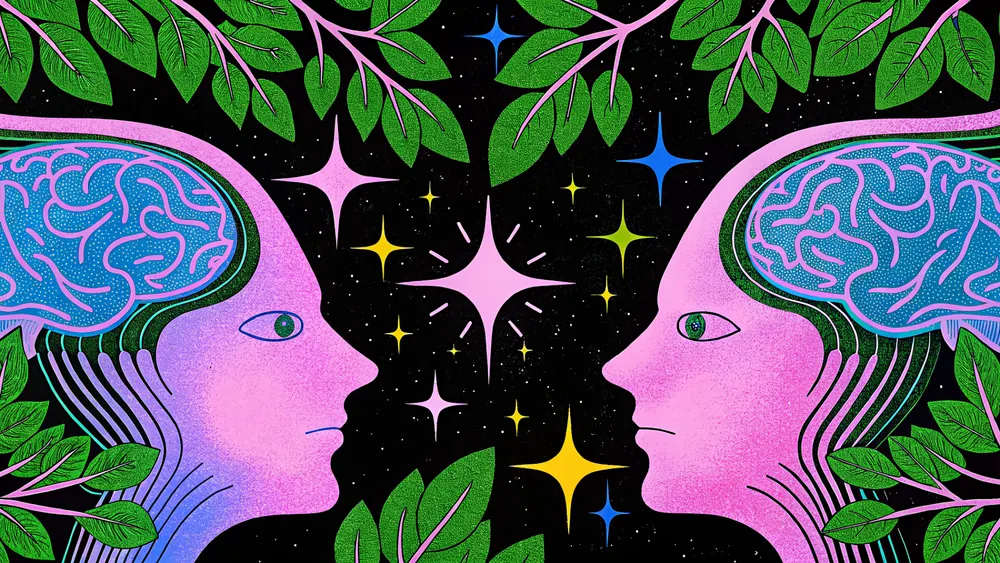
At the center of my ironic faith, my blasphemy, is the image of the cyborg.
Donna Haraway.
The image comes to us from an essentially symbolic creation, that is, from a machine, the most modern of machines, far more dangerous for man than the atomic bomb: the calculating machine.
Jacques Lacan.
The artificial intelligence of our twenties presents itself the way last century's cybernetics did: chasing the fantasy of transparent communication and seeking to predict the events of the world in order to achieve total governance of the human. Echoing Tiqqun's cybernetic hypothesis, the enthusiastic advances of this discipline with pretensions to being a universal science have, as a historical constant, the aim of calming the waters and renewing hope in the face of the impossibility of certainty that Einstein, Heisenberg and Gödel stamped onto the already dislocated orders of macrocosm and microcosm.
Because it's true that every era looks for its determinations, but in ours they're harder to find. We come across few constructions of meaning stable enough to shield us from the unwelcome effect of encountering a reality that reveals itself as plainly contingent, uncertain and at times faltering. And once again threatened by the annihilation of man by man at the hands of science, a specter haunting the world ever since we glimpsed where the vast progress of scientific discourse could lead us: the atomic bomb.
The artificial intelligence of our twenties presents itself the way last century's cybernetics did: chasing the fantasy of transparent communication.
In the picture of our era, where does the unconscious fit in?
We could paint it as a mysterious, ineffable entity, beyond the reach of technology and subversive of science. From the romantic point of view, the psychoanalyst would be a being capable of understanding suffering because, unlike the machine, they possess the power of a body and the wisdom to dive into the depths of the mind in search of some hidden Oedipal truth. The intellectual and political problem with this position is that it rests on epistemological obscurantism and a substantialist ontology in order to guarantee everything in advance: we have the unconscious and the psychoanalyst ad aeternum, go in peace, thanks be to Mr. Freud.
If, instead, we return to the discipline founded by Sigmund Freud through the formalization developed by Jacques Lacan, the border separating the unconscious from technology becomes blurry, somewhat opaque. That's why this essay seeks to recover the thesis that emerged in the fifties with Lacan and cybernetic theory: the unconscious is structured like a language and works like a symbolic machine.
A warning to the reader: if you got here hoping to find an answer to your burning question about whether your trusty chatbot can think, have an unconscious or do analysis, stop reading now, because you won't find anything to satisfy you. What you'll run into here is epistemic gaps, a lot of "Lacan said," and what contemporary popular parlance tends to call Lacanian mumbo jumbo.
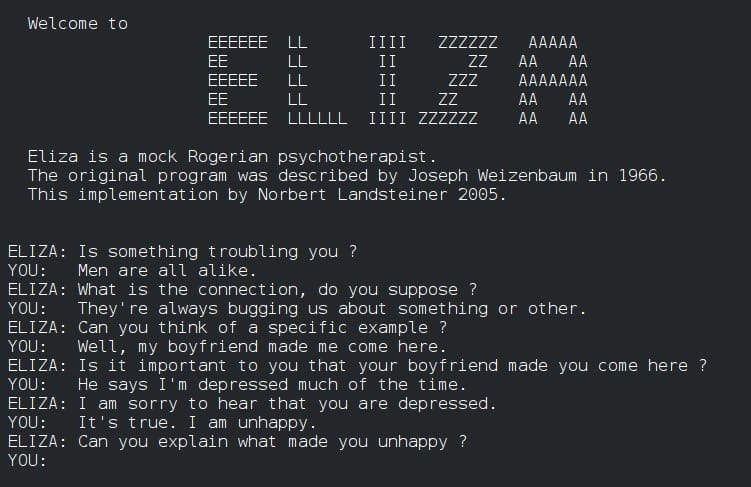
Before going any further, and in case some readers don't know him, Jacques Lacan was a psychoanalyst who lived through the heyday of structuralism with a big reputation as an enfant terrible, because the guy argued a lot, with everybody, all the time. In the honorable tradition of polemic (of which today we only see the parody), he'd climb into the ring of ideas and patiently unfold the elegance of a technical knockout in a fur coat with a cigar in hand. Althusser said he was strategic and used the methods of intellectual terrorism to force his contemporaries to admit they didn't understand a thing about what they read and said. He described him as a beast with a Gongoresque, baroque style, possessed of "an absolutely extraordinary aggressiveness, a splendid malice" with which he confronted colleagues left a bit dizzy from dancing the dance of intelligence. What a pal, Althusser.
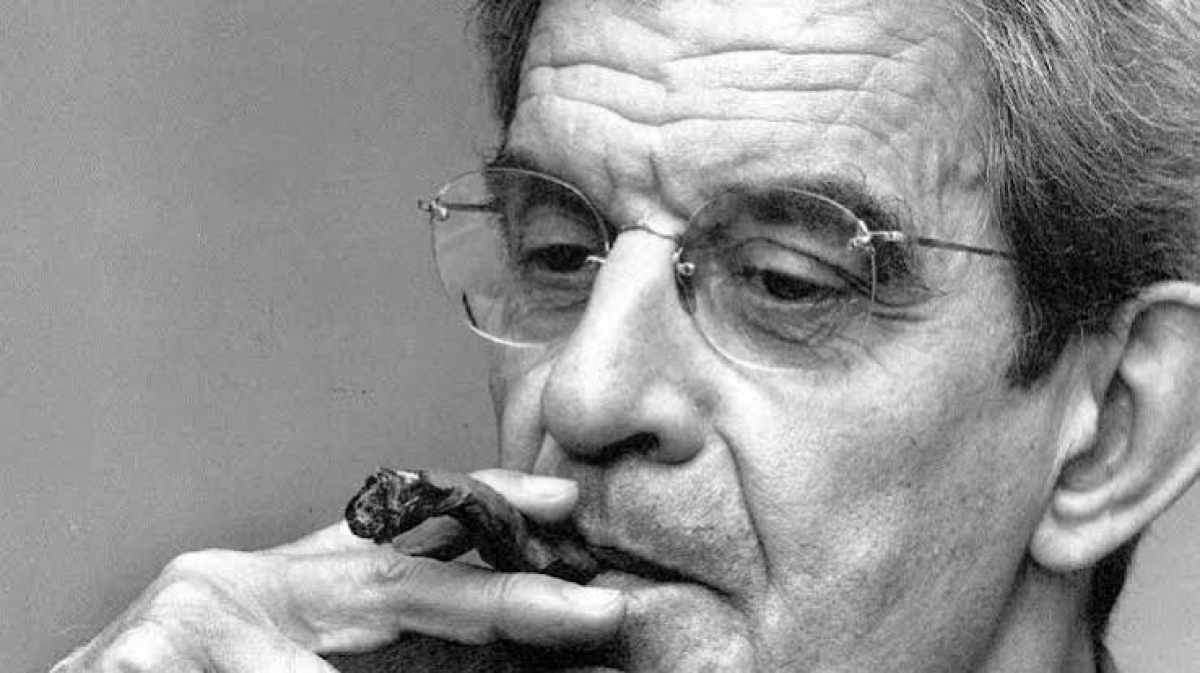
During the fifties, the psychoanalyst had earned a place among the Parisian intelligentsia and hung out with Benveniste, Jakobson, Lévi-Strauss and the mathematician Guilbaud to discuss the relations between mathematics and the human sciences. We're talking about the postwar context, where the Marshall Plan was spreading capital through the little streets of Paris; but also John Von Neumann's game theory, Claude Shannon's information theory and Norbert Wiener's cybernetics. An influence Lacan incorporated into the lectures of his second seminar, devoted to The Ego in Freud's Theory and in the Technique of Psychoanalysis (1954-1955), where he asked: "in what way are we, as men, actually related to the machine?":
"For the first time I am trying to impress upon my listeners that the machine is not what ordinary people think. The meaning of the machine is changing completely, for all of you, whether or not you have ever opened a book on cybernetics. You are behind the times, it's always the same."
My hunch is that when he says "the machine" he means thought, because what was in the air back then was the arrival of symbolic logic in a variety of fields of human life and the gradual abandonment of the mechanistic approach. Consider that Claude Shannon was carrying out the propositional calculus of formal logic with his electrical circuits and binary language. Meanwhile, Norbert Wiener was taking on the old mechanistic and vitalist traditions that had straitjacketed philosophical thought, proposing a model centered on information (which Yuk Hui defines as organicist). And over on the shores of the human sciences, the structuralist boom, with Lévi-Strauss leading the charge, defending the symbolic as the degree zero and organizing function of all human experience. Symbols everywhere.
But since the eye has a weakness for shiny things, we tend to confuse the machine with the mechanism. The machine Lacan is referring to is the symbolic logic that performs calculations following a law, regardless of the physical medium in which they're carried out.
What does the machine calculate? The uncertain. At the start of our century, the collective Tiqqun told us that cybernetics brought together a set of heterogeneous discourses to jointly tackle the practical problem of mastering uncertainty. Similarly, half a century earlier, Lacan suggested that cybernetics was the name given in his time to the discourse that had, over the ages, pursued the meaning of chance. That premise was the French psychoanalyst's starting point for disputing Wiener's supposed paternity and declaring that the creature's legitimate father was Blaise Pascal. And the birth: the invention of probability calculus (1654).
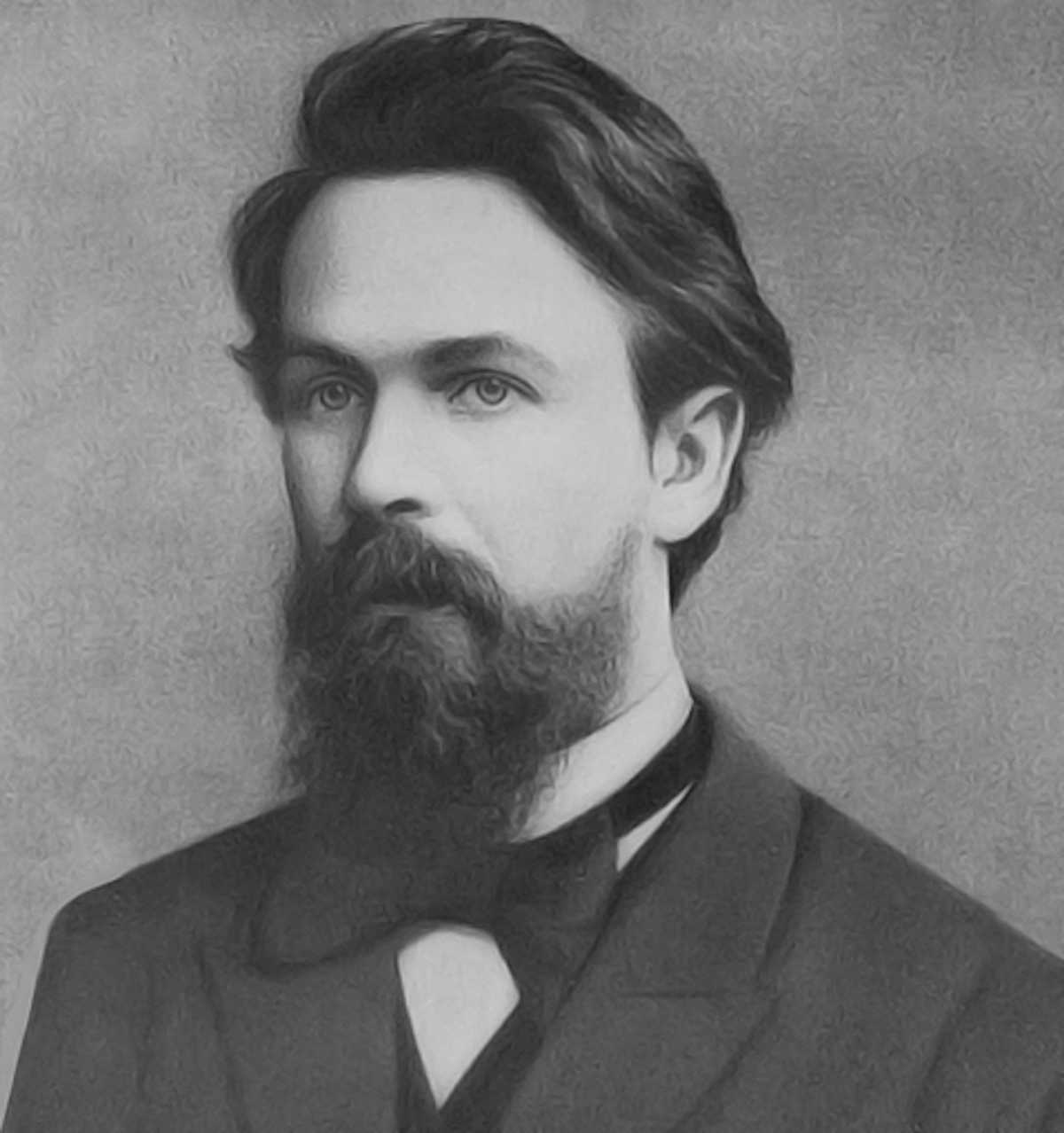
The 54-55 seminar also contains implicit references to the work of Andrey Markov, a Russian mathematician known for his anti-Tsarist activism who in 1906 designed a model to describe and predict events involving chance and uncertainty: Markov chains. His design represented a sequence of possible states in which the probability of each occurring depended only on the previous state reached, showing that it worked as well for predicting the outcomes of a game of chance as for the sequences of letters and words used in language. To do this, Markov spent hours calculating with pencil and paper the probabilistic order followed by the letters at the beginning of Aleksandr Pushkin's Eugene Onegin. The story goes that when the Tsarist regime called for celebrations of three hundred years of Romanov rule, the mathematician organized his own counter-summit: a symposium celebrating the anniversary of Bernoulli's Law of Large Numbers. Apparently, the man who calculated chance was pretty determined.
The path opened by Pascal (continued by Leibniz and plenty of others all the way to cybernetics and today's artificial intelligence) is none other than the path of thought skirting the edges of uncertainty, perhaps a continuation of the ancient Aristotelian journey around cause as tyche and automaton.
Why is Lacan interested in cybernetics in a seminar devoted to the ego in psychoanalytic theory? Certainly not out of humanism; he was never interested in the position that sees man as the foundation and measure of all things, but rather in language and its effects. And what was new about the machines of the fifties and sixties was the dawn of a reasoning subject that could do without human embodiment. They arrived showing "human language working almost by itself and seeming to get the better of us," the same way ChatGPT did a couple of years ago. Maybe that's why Lacan seems to find in cybernetics the perfect ally for his project of dethroning the ego from the place contemporary psychology had granted it. Because it seemed those little gadgets were doing something resembling thought:
"Implicitly, modern man thinks that everything that has happened in the universe since its origin is destined to converge on this thinking thing, this creation of life, this precious, unique being, summit of all creatures, which is himself, and in which there exists a privileged point called consciousness. This view leads to an anthropomorphism so delirious that one must first break free of its spell in order to notice the illusion one is falling victim to."
The underlying epistemological question remains bogged down to this day, and it is none other than the dualist position left by the Freudian and Cartesian legacies: the tendency to identify reasoning with consciousness and consciousness with the ego, leaving as an opposed and ill-defined construct whatever would belong to the unconscious dimension: irrationality, desires, drives, instincts, etc.
Since Freud's invention, the tendency within the analytic field has been to locate trauma as the origin of suffering. In the sense that an experience is repressed because it is lived with excessive intensity (of pleasure or unpleasure), and repression leaves in the individual psychic apparatus the imprint of memory traces that later give rise to neurosis. This theorization created an analytic practice geared toward searching unconscious formations for the traces of that past experience in order to make it accessible to consciousness. An operation that presupposes resolving neurosis by way of the ego, which, as I see it, forecloses the act.
What was new about the machines of the fifties and sixties was the dawn of a reasoning subject that could do without human embodiment.
Lacan returns to the Freudian spirit of The Psychopathology of Everyday Life, but with a reading guided by logical formalism that does away with trauma and its linear causality. In this paradigm, the unconscious is structured like a language. A definition that pairs nicely with the structuralism of the time and with cybernetics, but also with our present and Large Language Models. Because the conceptual apparatus he built envisions a symbolic order operating autonomously and following a law, while at the same time assuming the necessity of contingency.
What we usually call the unconscious comes to be conceptualized as a fact of discourse, a combination of signifying chains in which the elements are logically articulated according to laws of inclusion and exclusion that establish a series of possibilities and impossibilities regarding what gets said. The unconscious is a little symbolic machine that captures us and turns us, more or less, into stochastic parrots.
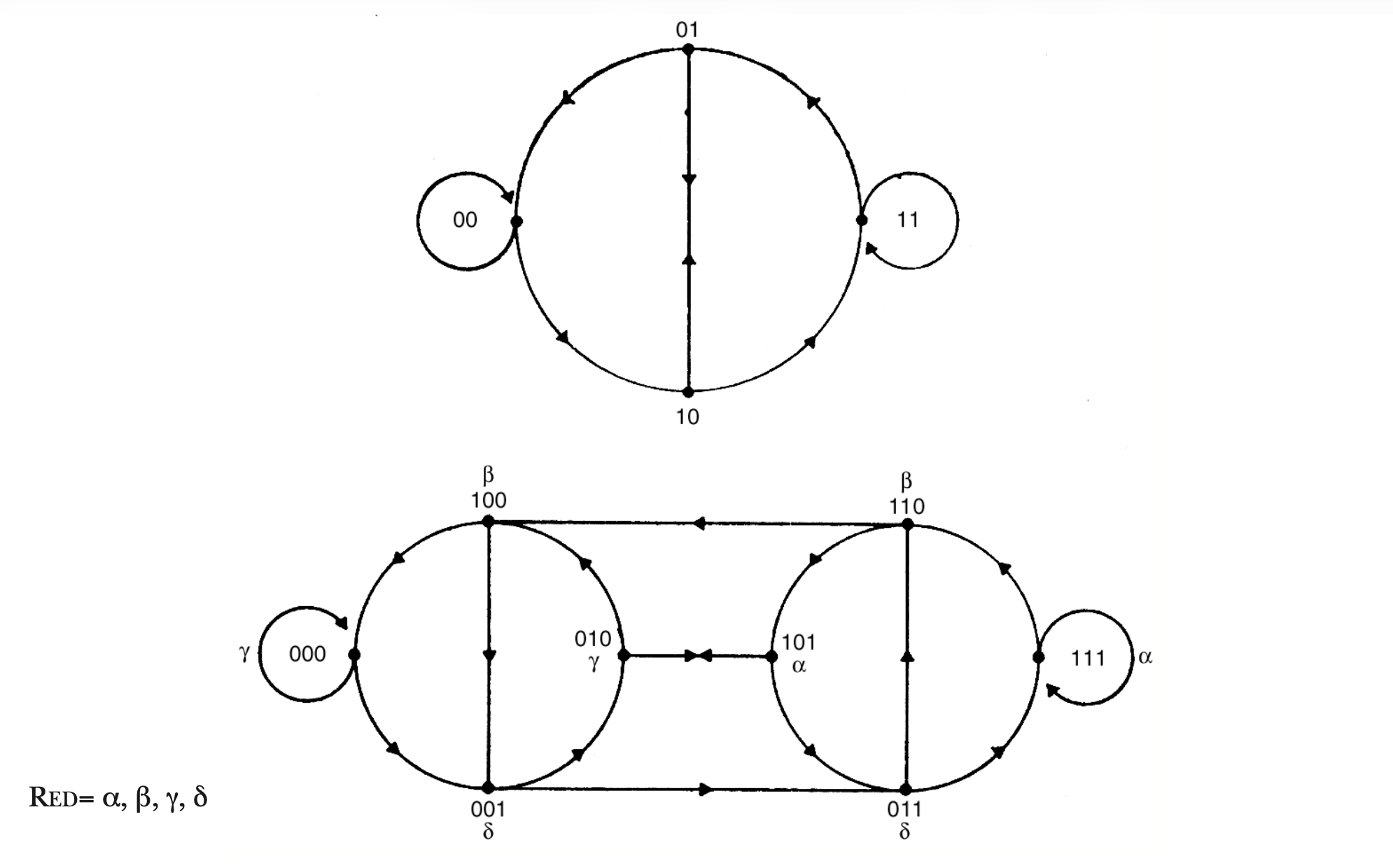
On this machine, Alfredo Eidelsztein takes up the idea that, when it comes to the suffering that analytic practice works on, we are governed by something that lies beyond life and has nothing to do with the natural. That beyond, which Freud called the death drive, constitutes the zero point of desire: an essential conjunction between two symbols that inscribe difference (like the first zero and one of computer language that make it possible to build the most complex code), working as the basic pair of a symbolic machine that inaugurates and establishes the subject's relation.
From this perspective, the analytic method gives up the search for trauma as an experience that actually happened and sets out instead to perform a logical analysis of the discourse generated by the symbolic machine and uttered by the analysand. It is an operation of reading the material that aims to identify regularities and find the signifying combination that captures desire and produces suffering: the repetition automatism. Let's put it this way: tripping over the same stone again and again has a code.
The subject of the unconscious thus becomes logically calculable, and analysis consists of noting down the signifying combinations, the regularities, the repetitions. It means rationalizing the analysand's discourse by laying logical postulates over the text, and doing so through mathematical formalization, since it makes it possible to establish:
“a set of conventions from which a whole series of consequences can be developed, theorems that link together and establish certain structural relations within a set—a law, to be precise.”
To justify his choice of method, Lacan calls on Andrei Markov and Edgar A. Poe in a paper on the story The Purloined Letter, which would be impossible to unpack here given how complex it is, but whose main idea we can share: the logic of the unconscious's signifying chains can be modeled on the logic of Markov chains.
Lacan illustrates this with Poe's story, taking as his reference the moment when detective Dupin recalls a boy whose repeated wins at the game of even and odd amazed everyone. While the detective explains the kid's success as a process of specular identification (whoever can identify with the other's intelligence to anticipate their moves wins), for Lacan success in any game of chance rests on noting down the possible outcomes under a logical model like Markov's. Because it lets us see how a series of events that looks random, once we write it down under combinatorial rules, starts to show regularities and sequences.
It doesn't seem wrong: these are designs that have long been used not only in games of chance but also to describe and predict climatic, genetic, economic, political and social events, among plenty of other fields. But as Lacan rightly said, we're always running late.
The notion of the unconscious as a symbolic machine carries with it the idea that dreams, jokes, slips and symptoms have the structure of a language. They answer to a grammar, and just as they are put together, they can be taken apart the same way: through speech. But the formalist view can lead us to attribute to the unconscious symbolic order a transparency it actually lacks; because although it is a complex, law-governed system, it has its limitations.
First, there are limitations that stem from the model's internal principles: signifiers combine and shift according to the laws of metaphor and metonymy (laws Lacan takes from Jakobson but, of course, disfigures and adapts in his own way), so they're never where we go looking for them.
Second, there are limitations that stem from an external principle: language cannot close in on itself and ground itself. It's a principle psychoanalysis borrows from Gödel's incompleteness theorem, which states that a consistent formal system contains statements that cannot be proven by the system itself. The theorem is incorporated into the model under the phrase there is no Other of the Other, which basically means that in the symbolic system there is no metalanguage that can guarantee a full meaning (like Russell's problem of the catalog of all catalogs that don't contain themselves).
The clinical consequence is that we can interpret unconscious material by putting forward a conjecture (a statement born from the reading that we hold as the most plausible interpretation) without claiming it is exact. The analytic intervention that preserves the openness inherent in all conjectural elaboration is what allows it to produce a truth effect. Elaborations that aim for exactness, on the other hand, seek to close off meaning—and besides, they would only be possible if we were working with a complete, closed and total system.
All of this leads to a third limit: the problem of the code. Something that goes unnoticed in cybernetics and artificial intelligence, since they assume a communication scheme between sender and receiver in which the code is shared and known by both parties. What the analytic setting shows is that you can know what you said but not what the other person heard. Basically because, when we speak, the code turns out to be ungraspable:
“They are structured like a language, these things that are above all symptoms, but the code, in this thing that nonetheless operates like a language, the code—we are unable to lay a hand on it.”
We're not saying communication is impossible in some postmodern sense; of course we speak with a common material in which we can more or less understand each other. That the code is ungraspable means it can't be appropriated (it can't be captured and locked up), because coding rests on the tongue.
What the analytic setting shows is that you can know what you said but not what the other person heard.
Not the tongue of the human sciences, or of the dimension where we usually place the local uses of language. Lacan refers to this tongue with the neologism lalangue, a kind of mother tongue that gestates the subject, the reservoir of the murmurs and babblings of the voices that house us. What's peculiar about lalangue is that it sustains the impossibility of saying. It overflows language in its movements because it upends the relation of signifier to signified through a metaphorical kind of operation that produces new significations with a meaning effect. We're not talking about metaphor as we usually understand it; it's a particular kind of substitution that expands the possibilities of discourse, insofar as it introduces a discontinuity by associating elements that have no existing relation. Perhaps the one who showed this best, in a field not far from analysis, was Borges in The Metaphor, a lecture he gave in 1978 to a group of psychoanalysts:
"We would thus have poetry reduced to a handful of essential metaphors, and the difference would lie in the way they are said. But then we find metaphors that are utterly astonishing, metaphors that seem to correspond to an immediate intuition of things. I believe these, even if they are not eternal, even if they work only once, are no less precious than the others (...) We would also have this curious metaphor from Shakespeare: The milk of human kindness. Who would have thought of associating the idea of kindness with that of milk? And yet Shakespeare does it, and it works for him; it works only once, but it works for him forever."
Can LLMs produce metaphor? Sure, but both what gets substituted and what substitutes it emerge from a linguistic framework determined a priori and based on the statistical distances between terms. Cybernetics and artificial intelligence are, for now, disciplines that handle language but slip past the purring of lalangue. They still dwell in the fantasy of a mythical time before Babel.
We'll stop here.
Y a cada colaborador se le paga por su trabajo. Las dos cosas dependen de los suscriptores.