The Science Behind Immortality: Machine-Body and Digital Mind
Pig hearts, rejuvenated cells and brains in the cloud: how far are we from becoming immortal? And, above all, who's going to be able to pay for it?

Pig hearts, rejuvenated cells and brains in the cloud: how far are we from becoming immortal? And, above all, who's going to be able to pay for it?

In September 2025, Beijing was celebrating the 80th anniversary of what I'm going to oversimplify as the end of World War II. A hot mic caught a snippet of a conversation between Xi Jinping and Vladimir Putin in which they discussed how young they felt and how medical advances were letting people live longer, up to 150 years. If we believe Putin's interpreter, immortality was also floated. A few hours later, a journalist asked Putin about what had been overheard and, although he could have said he'd figured out a way to survive the collapse of capitalism, he simply remarked that they had been discussing the possibilities of modern medicine.
In principle, I don't find it strange that two men over 70 talk about this kind of thing. Nor do I think the conversation confirms an authoritarian, eternalist drift any more than it confirms the unrepresentable fear of one's own death. On one point, though, they were pretty much right: there are scientific advances that seem intent on de-fictionalizing science fiction. For example, in 2022 the New England Medical Journal reported the successful xenotransplant of a pig heart into a patient with end-stage heart failure. The patient lived 60 days with the graft before dying.
While immortality as such isn't part of any scientific project, there are bodies of research that come close. Broadly speaking, today there are advances in biology that help us understand what aging means at the cellular level and that try to "cure" it. On the other hand, still in its relative infancy, there's a digital path exploring how to unmoor being from weak flesh.
For all its mistakes, science does get things right. As I said above, a guy walked around for two months with a pig's heart, systole after systole, diastole after diastole, 60 days of pure life drive. Organ transplants, besides being on Putin's mind, are floated as a way of extending life that's pretty faithful to the body-as-machine metaphor. If a part is old or breaks, you swap it out.
Today there are advances in biology that help us understand what aging means at the cellular level and that try to "cure" it.
But swapping out these parts isn't so simple. Transplants deal with problems of two different kinds: one is "supply," meaning the availability of organs; the other is getting the body to accept a part it doesn't recognize as its own.
A transplant is also logistically complicated. A heart, for example, under standard cold storage conditions has about 4 to 6 hours to be transplanted before the damage increases. Perfusion methods, which circulate fluid through the organ and control its temperature, are expanding and improve preservation. Other organs have a bit more leeway: a kidney can stay viable for around a day or a little longer. But a hospital fridge stocked with spares is definitely not on the near horizon.
This is where xenotransplants come in, still experimental but with results that are increasingly hard to ignore. By the early 2000s, genetically modified pigs were already being bred to improve their compatibility with humans, but CRISPR made it possible to multiply and speed up those modifications. Some remove pig molecules that are especially problematic for our immune system, and others add human genes to better regulate processes like coagulation or the immune response. In 2025, a patient lived 271 days without dialysis thanks to a genetically modified pig kidney before the graft finally failed.
The bet is to find combinations that reduce incompatibilities enough to raise these animals in controlled environments and turn them into a relatively stable source of organs. That would tackle the supply problem head-on. On the immunological side, gene editing also aims to make the organ less foreign to the body, although current xenotransplants still require significant immunosuppression.
Another possibility would be to skip the pig altogether and "manufacture" organs using human cells, ideally the patient's own. In principle that would reduce some compatibility problems, but manufacturing the part brings new difficulties. The architecture of an organ and, above all, its vascularization are extremely complex. We can produce organoids, three-dimensional structures that reproduce some features and functions of organs on a small scale, but scaling that up to a complete, transplantable organ is another problem entirely. 3D bioprinting runs into similar limitations.
In general, current transplants are designed to keep a person from dying of organ failure, not to intervene in aging itself. The following strategies change the goal: they try to act on some of the biological processes that make us age.
A fairly influential framework for organizing these processes is Hallmarks of Aging, originally published in 2013 and updated in 2023. The paper proposes a set of mechanisms that appear with age, are interrelated, and can be experimentally intervened on to accelerate, delay or even reverse aspects of aging. Among them are metabolic alterations, cellular damage and senescence. Rather than a list of things that kill us, it's useful to think of them as a map of possible interventions.
One of these interventions is based on the way cells sense the availability of nutrients and energy. That's where mTORC1 and AMPK come in, two protein complexes that help regulate the balance between cell growth and maintenance.
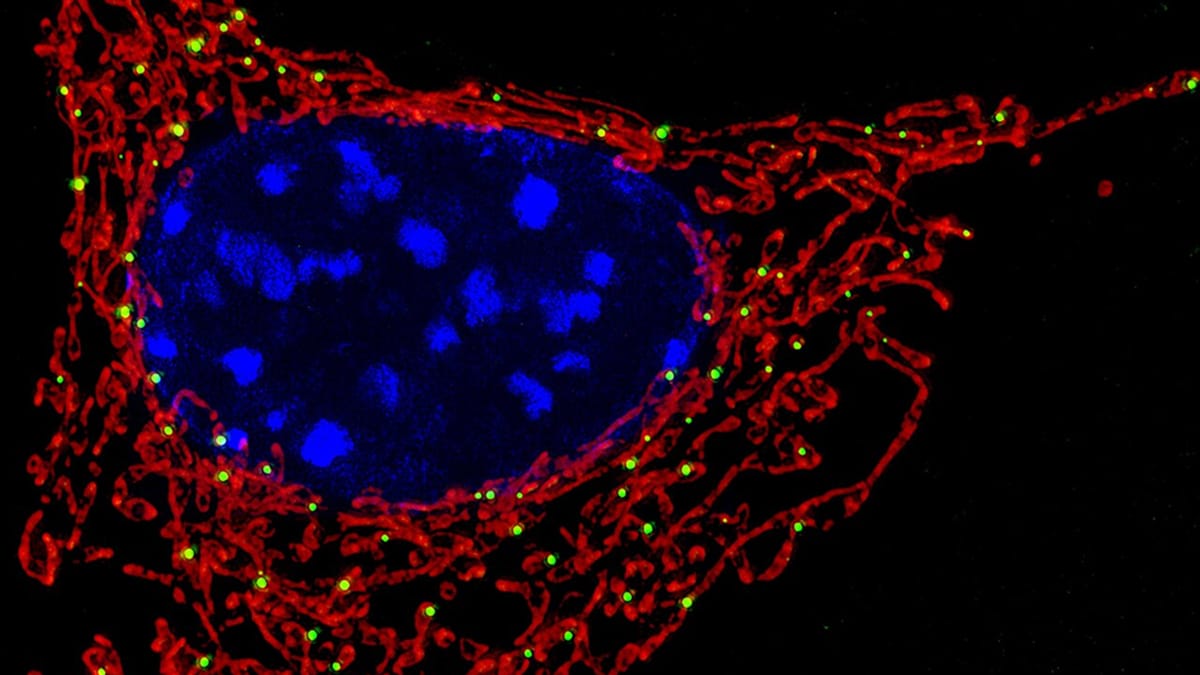
Generally, a cell with plenty of nutrients tends to devote resources to growing and producing new components. mTORC1 is involved in this process, promoting protein synthesis and cell growth while inhibiting autophagy, the mechanism by which the cell breaks down damaged components and reuses their parts. When energy is scarce, on the other hand, processes devoted to maintenance and recycling gain weight. That's where AMPK steps in: it can inhibit mTORC1, promotes energy production and autophagy and, oversimplifying quite a bit, helps the cell enter a kind of "maintenance" mode.
That balance can break down when signaling tilts too heavily toward growth. This can cause damage to build up faster than cellular mechanisms can repair it. In turn, that deterioration can make the cell less efficient at maintaining the balance. So some interventions aim to tip the scales toward maintenance, giving more room to cellular repair and recycling processes.
One way to tip those scales is with diet and exercise. I know, it's awful, but among its many effects, caloric restriction can reduce mTORC1 activity, while the energy stress associated with physical activity activates AMPK. What's being researched to spare us the terrible scourge of a healthy life is the possibility of a pharmacological intervention. The most studied candidate for this is rapamycin, which can inhibit mTORC1. In fact, TOR stands for Target of Rapamycin. The complex got its name because it was discovered while studying which proteins rapamycin acts on. In 2009, a study by the National Institute on Aging showed it could extend the lifespan of mice even when treatment began at relatively advanced ages, and since then it has become one of the central molecules in aging research.
But this logic mostly serves to try to slow down the rate at which deterioration appears. It doesn't necessarily solve what to do with cells that have already entered problematic states. Enter senescent cells.
In the sixties, Leonard Hayflick and Paul Moorhead observed that normal human cells grown in the lab couldn't divide indefinitely. After a certain number of divisions they stopped proliferating, although they remained metabolically active. This is the famous "Hayflick limit," which might ring a bell for Evangelion fans. Over time it was discovered that a cell can also enter senescence in response to DNA damage, stress and other stimuli. It's not necessarily a bad thing: stopping a damaged cell from continuing to divide can be useful, and senescence also plays a role in processes like tissue repair.
When this situation stops being temporary, many senescent cells develop what's known as SASP, senescence-associated secretory phenotype, a change in the signals they release into their surroundings. With age, these cells can accumulate in various tissues, and some keep producing those signals for long periods. What originally served to coordinate a response to damage can end up disrupting neighboring cells, promoting inflammation and hindering normal tissue repair.
What happens if we get rid of them? In 2011, an experiment with a premature-aging mouse model showed that removing cells positive for a senescence marker could delay the onset of some age-related disorders and, if they were eliminated later, partially slow the progression of already established deterioration. That result helped turn the selective elimination of senescent cells into a concrete line of research.
A premature-aging mouse model showed that removing cells positive for a senescence marker could delay the onset of some age-related disorders.
This idea gave rise to senolytics, drugs that seek to selectively eliminate these cells. Senescent cells depend on certain survival pathways that let them resist programmed cell death, or apoptosis, and these drugs aim to block them. One of the first major examples was the combination of dasatinib and quercetin, or D+Q. In 2015, researchers showed that both substances acted on different types of senescent cells and that, combined, they could reduce their presence in mice. Since then D+Q has also moved on to human studies. In 2019, a small trial with nine patients with diabetic kidney disease found a reduction in various senescence markers after treatment. It's an interesting sign, but we're still far from a drug capable of broadly clearing the body of senescent cells. The difficulty is that senescence doesn't produce a single, homogeneous type of cell, so a drug that works in one tissue or cell type may not work in another.
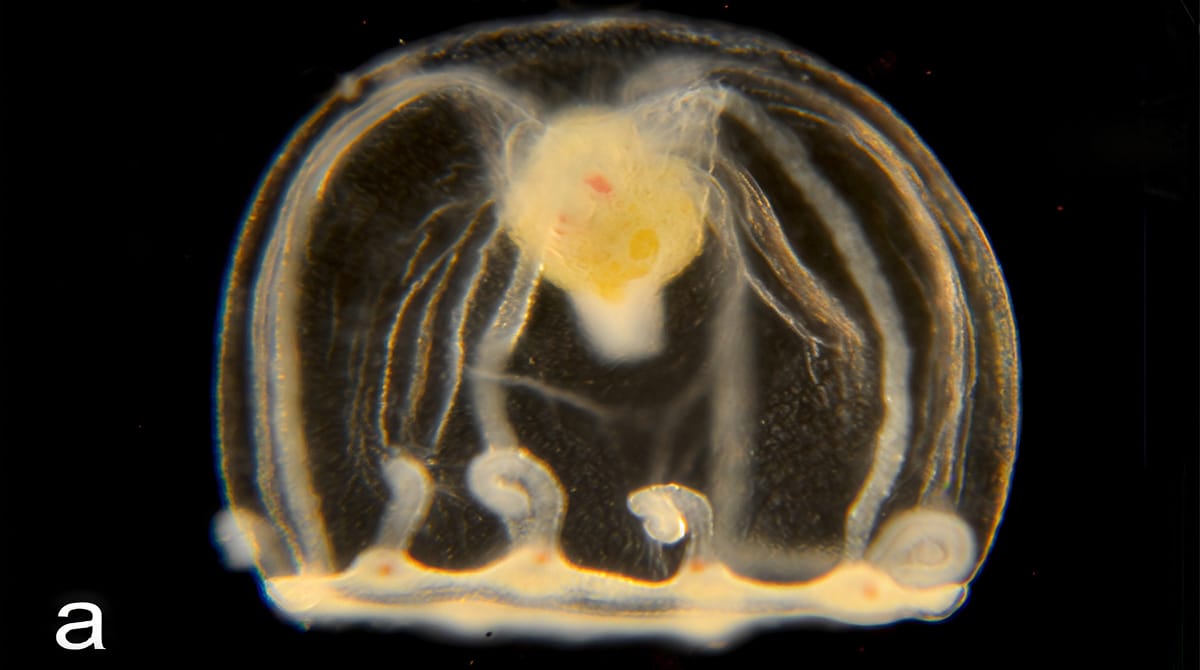
So far, this whole not-aging thing is pretty underwhelming. Few clinical trials in humans and none showing we can live much longer than expected. But here's where something more interesting shows up. In 2006, Kazutoshi Takahashi and Shinya Yamanaka found a combination of four transcription factors, proteins that regulate which genes are expressed, capable of taking adult mouse fibroblasts back to a pluripotent state, similar to that of embryonic cells. Those four factors are now known as the Yamanaka Factors, or OSKM: OCT4, SOX2, KLF4 and c-MYC.
The problem was figuring out when to stop the process. Going full reverse erased the cell's identity and could have the annoying side effect of producing tumors. So the question became how far back you could go without reaching pluripotency.
In 2016, Ocampo et al. showed that cyclic activation of OSKM could extend the lifespan of mice with a premature-aging model and improve the regenerative capacity of normal aged mice. The animals were genetically modified so that when they received doxycycline they started producing OSKM, and when they stopped receiving it, production shut off. Which means that ten years ago we were already building mammals with biological on/off switches wired to reprogramming genes. Problem is, having to install the switch at the factory isn't very practical. In 2020, Lu et al. went a step further, using a virus to deliver three of the factors, OSK, plus the system to control their expression, into retinal ganglion cells in mice. After optic nerve injury, they got some axons to grow back, and in animals with age-related vision loss, they partially restored visual function. The mouse no longer had to be born ready for the experiment.
The thing had momentum, and reprogramming kept racking up milestones. In 2022, Browder et al. applied partial reprogramming over extended periods in normally aging mice and saw changes consistent with rejuvenation in some tissues. That same year, experiments in human cells showed up. Gill et al. managed to reverse various age-associated molecular markers without pushing the cells all the way to pluripotency, letting them hold on to their identity as fibroblasts. The next step was a foregone conclusion.
In June 2026, a first participant received ER-100, an experimental therapy from Life Biosciences that uses AAV2 viral vectors to deliver OSK into retinal cells and doxycycline to control their activation. The phase 1 trial first aims to determine whether the treatment is safe and tolerable in patients with glaucoma and NAION. While we're still a long way from being forever young, let alone immortal, this is the first time a therapy based on partial epigenetic reprogramming has made it to a clinical trial in humans.
Life Biosciences isn't alone in this bet. Altos Labs launched with US$3 billion to research cellular rejuvenation, while companies like NewLimit and Retro Biosciences are also working on cellular reprogramming and on bringing these kinds of interventions to different tissues and diseases.
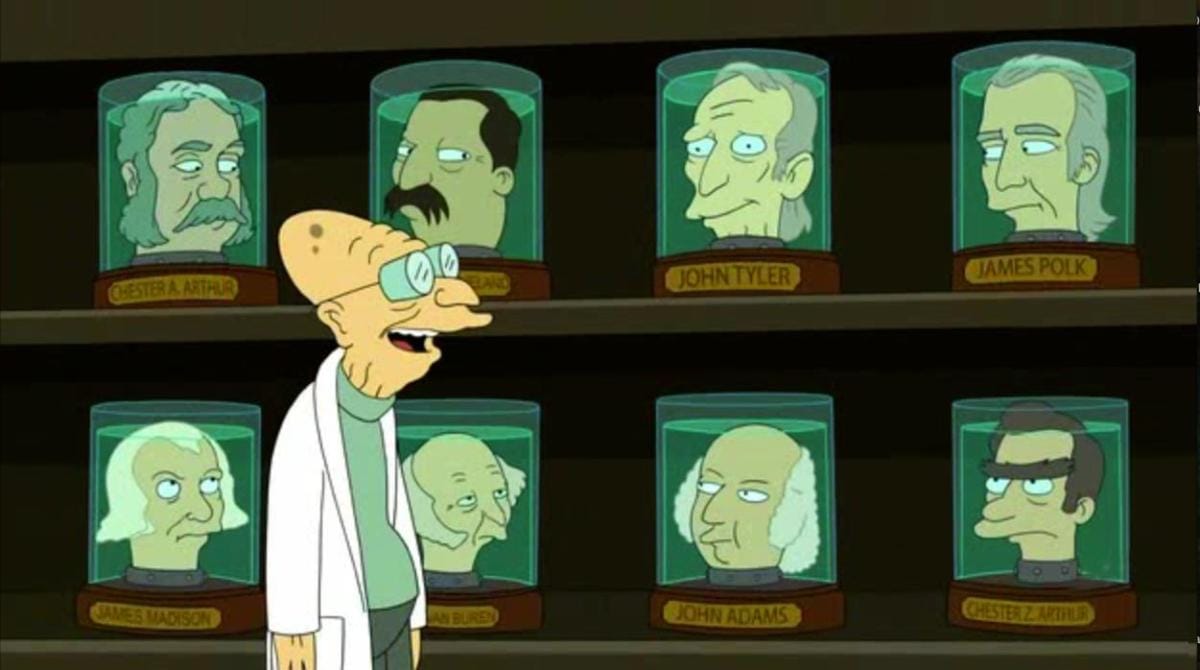
The irony of a piece about the possibility of beating time being riddled with references to having to wait isn't lost on me. A good chunk of this research promises interesting things, but almost always later. Some people have placed their bets on that and are looking for ways to make it to that "later."
Enter cryonics. Famous because of Walt Disney (who isn't frozen, but got stuck as its poster boy anyway), it takes cryopreservation techniques currently used and studied for preserving cells and tissues and pushes them a whole lot further. Some companies offer to preserve people on the assumption that a way to "bring them back" might be found down the line. As soon as you're legally dead, these organizations try to take charge of the body as fast as possible. Depending on the service, they preserve the whole body or just the head and brain, replace the blood and perfuse the tissues with a cryoprotectant solution, and gradually cool the body down to −196 °C, where it's stored in tanks of liquid nitrogen.
Attentive readers will have noticed the part where you have to die first, but I think the bet is that you can go a little past it and still be good.
Here we're getting into much more purely speculative territory, because as of today the best we've got is pretty bad. The idea would be to somehow transfer our being between formats. Uploading our consciousness to the cloud might let us survive the destruction of our bodies, but would we survive a blackout? What do we do about the whole copies thing? Does deleting a copy mean killing someone? How many files have you deleted from your PC? We quickly see the coordinates shift, and the debate seems tied more to identity, or to being, than to technical possibilities.
We quickly see the coordinates shift, and the debate seems tied more to identity, or to being, than to technical possibilities.
To bring it down to earth, in this field we have three possibilities that range from what's currently doable to full-on science fiction. The first is the digital copy, which means gathering up your entire digital footprint, emails, photos, posts, everything you've got on a person, and generating a chatbot that reproduces some of their patterns. You can add images and even videos. MindBank AI is one of those companies that lets you create your own "digital twin" this way, and there are others offering to do it with a deceased relative.
Go a bit further and a refined version of this shows up. Neuroscience gave us connectomics, which tries to map the connections of the nervous system. In 2024, researchers managed to digitally reconstruct one cubic millimeter of human cerebral cortex, with some 57,000 cells and around 150 million synapses. That's impressive, but it's still an extremely detailed map of a fragment of brain, not that fragment actually working. Getting from there to emulating a complete brain, and then getting that emulation to reproduce a specific person, is an enormous leap.
The third possibility is to upload ourselves outright. Not building a copy that thinks like us, but finding some way to move our consciousness to another medium. Even further off is the possibility of setting up some kind of system to "receive" someone, whatever that means. Ghost in the Shell will stay relevant for a good long while.
Would any of this be immortality? Debatable. The idea that someone becomes immortal through the legacy they leave behind moves the living, though I doubt the deceased is feeling all that immortal.
I remember that a few years ago my old man told me, laughing, about a phone call with a friend of his. The friend called to share a concern: after a paper came out in Nature (no idea which one), his estimates suggested there was a good chance one of them would go down in history as "the last schmuck to die."
The first thing I'll say is that some ten years later, it's not such a sure thing. Science pulls off incredible stuff, but rejuvenating a cell and transplanting a pig kidney are, for now, a far cry from giving us much peace of mind in the face of the great equalizer. Putin and Xi were roughly the age my old man and his friend were when they had that exchange. Same fears, same hope in scientific progress, same age.
The second is that we live in a world where everything suggests that if a cure for aging shows up, its distribution will more likely be limited to those who might make up a new biological elite (curiously propped up by the economic elites). In Hegel in a Wired Brain, Slavoj Žižek picks up an idea from Yuval Noah Harari in which the inequality between the economic elite and "the last schmucks to die" would become inscribed in biology. Eventually, humanity could end up stratified into biological castes.
If a cure for aging shows up, its distribution will more likely be limited to those who might make up a new biological elite.
But no need to go that far. I didn't stress it enough earlier, but if you want some advice for living as well and as long as possible: sleep well, eat healthy, and exercise. It's not foolproof, but it almost always beats not doing it. Of course, if you can't make ends meet, or you're stressed out by your circumstances, none of this is easy. There's something to that South Park joke where the cure for AIDS was "just" having a ton of money.
You know Bryan Johnson? He spent millions on Project Blueprint, a lot of it so he could be closely monitored as he changed habits, tried therapies, and made adjustments. In 2023 he said he was doing something like 100 interventions a day and taking around 60 pills. When you look at the protocol he so meticulously put together to be long-lived and healthy, you see what it prioritizes: sleep well, eat healthy, exercise. The part it doesn't tell you is that he gets to sleep soundly because, with all the money he has, he's not sweating his health insurance bill.
At the end of the day, I don't know how important it is not to die. The eternally more interesting question is what we're alive for.
Y a cada colaborador se le paga por su trabajo. Las dos cosas dependen de los suscriptores.