Argentine Video Games: Pungo Reinvent the Atari Classic with Cute Kittens
What would happen if we took the classic Atari Pong and added cats to it? Pungo tries to answer this age-old question in a very cute way.

What would happen if we took the classic Atari Pong and added cats to it? Pungo tries to answer this age-old question in a very cute way.
After buses that exist outside our reality, oppressive card games that don’t forgive a misstep, and a strange and somewhat disturbing journey to the old neighborhood video stores, it’s nice to experience something a bit more adorable. If you’ve been reading me since the start of this column, you already know I have a preference for the horror genre and works that leave me recalculating. However, how can you say no to Pungo and its beautiful kittens?
Launched in December 2025, Pungo is the creation of White Eyes Studio, formed by Vale ZumZum and Fede Nessi. The question they asked themselves was simple: what if we added kittens to the legendary Pong (Atari, 1972)? Instead of classic paddles or barriers, we control animated cats in two dimensions. These felines are always floating, as if they were standing on two legs, which instantly gives a much cuter image than it could have been.
I usually have a preference for the horror genre and works that leave me recalculating. However, how can you say no to Pungo and its beautiful kittens?
Let’s pause for a moment. While the average reader of 421 probably knows what Pong is and may have even played it, it’s worth dedicating a few lines to it. The creation of Atari is often mistakenly considered the first video game, although that title belongs more to Tennis for Two (Higginbotham, 1958), OXO (Douglas, 1952), or the Tennis from the Magnavox Odyssey, released just two months before Pong. What can be said about the Atari giant is that it is considered the first commercially successful video game and, for many experts in this art and entertainment, the great kickoff of our history.
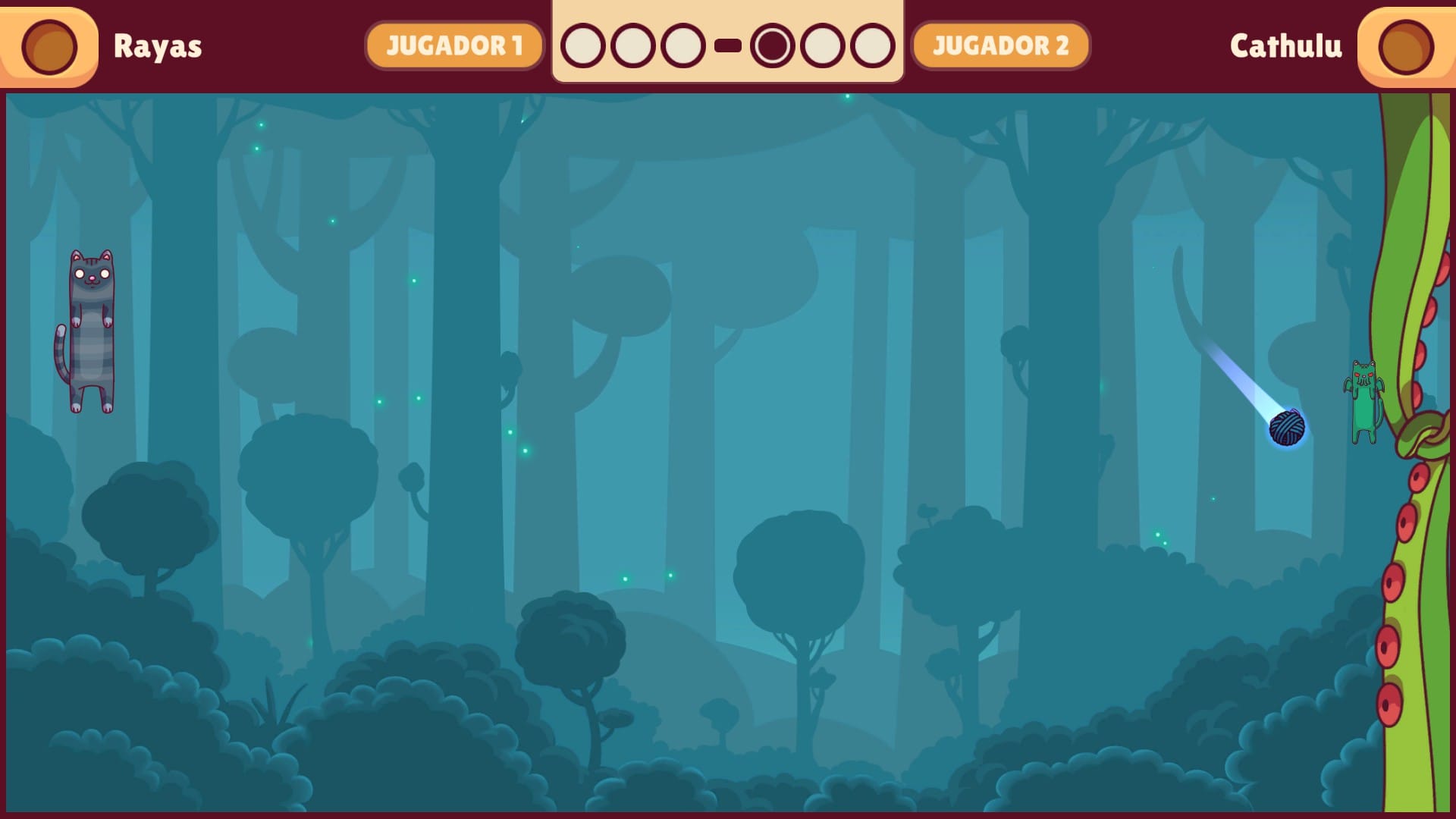
Pong is a recreation of table tennis or ping-pong (technically they are two different sports, but essentially the same), where we control a vertical line moving up and down, located on one side of the screen. We bounce a small ball just by touching it, and we have to make sure our opponent, located on the opposite side, can’t return it. It’s a true battle of skill, reflexes, and calculations. Originally, the game was played until someone reached eleven points, although there were also configurations that set the goal at fifteen.
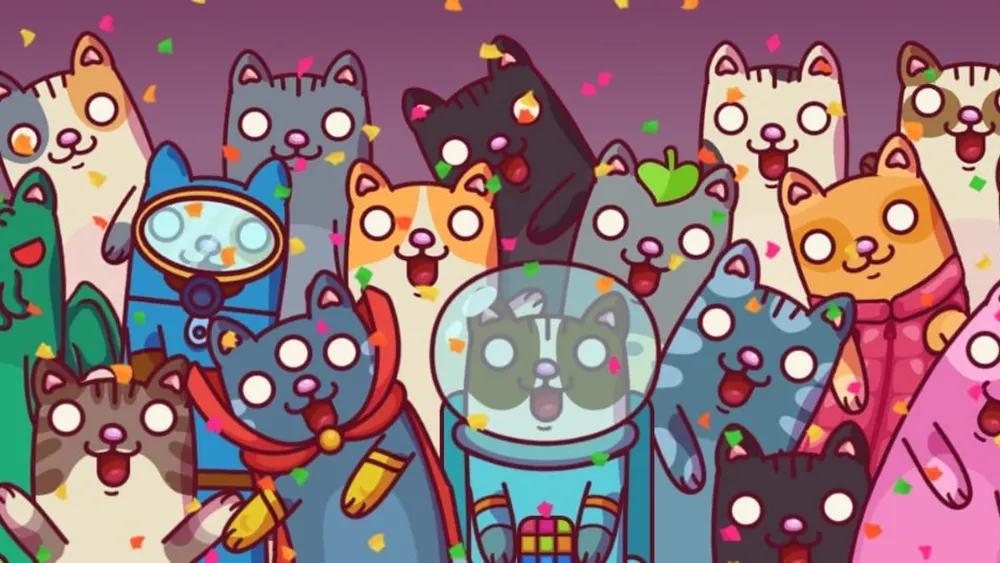
Decades of relaunches and transformations of this cultural myth have led us to what we’re discussing today: a Pong with kittens. The objective remains the same (to get the ball past our opponent), but the modes and forms vary. Each cat has its unique design, ranging from kitties we can associate with our own to more spectacular ones, like Gatonauta and Cathulu, with their obvious literary references. It’s not just the aesthetics that change; we’ll find kittens that move faster or slower, vary slightly in size, or have an extra benefit they start with (a barrier, an extra projectile, etc.).
In Pungo, we not only move the felines vertically, but we can also hit the ball with parts of their bodies, whether it’s their head, belly, or feet (each with its respective button). If we do this just before the ball touches the ground, it will be launched with more force, making it harder for our opponent to return it. There are also some power-ups, like the initial ones for each character, or others we can grab when they appear on screen by hitting them, such as making our kitty bigger or shrinking the opponent.
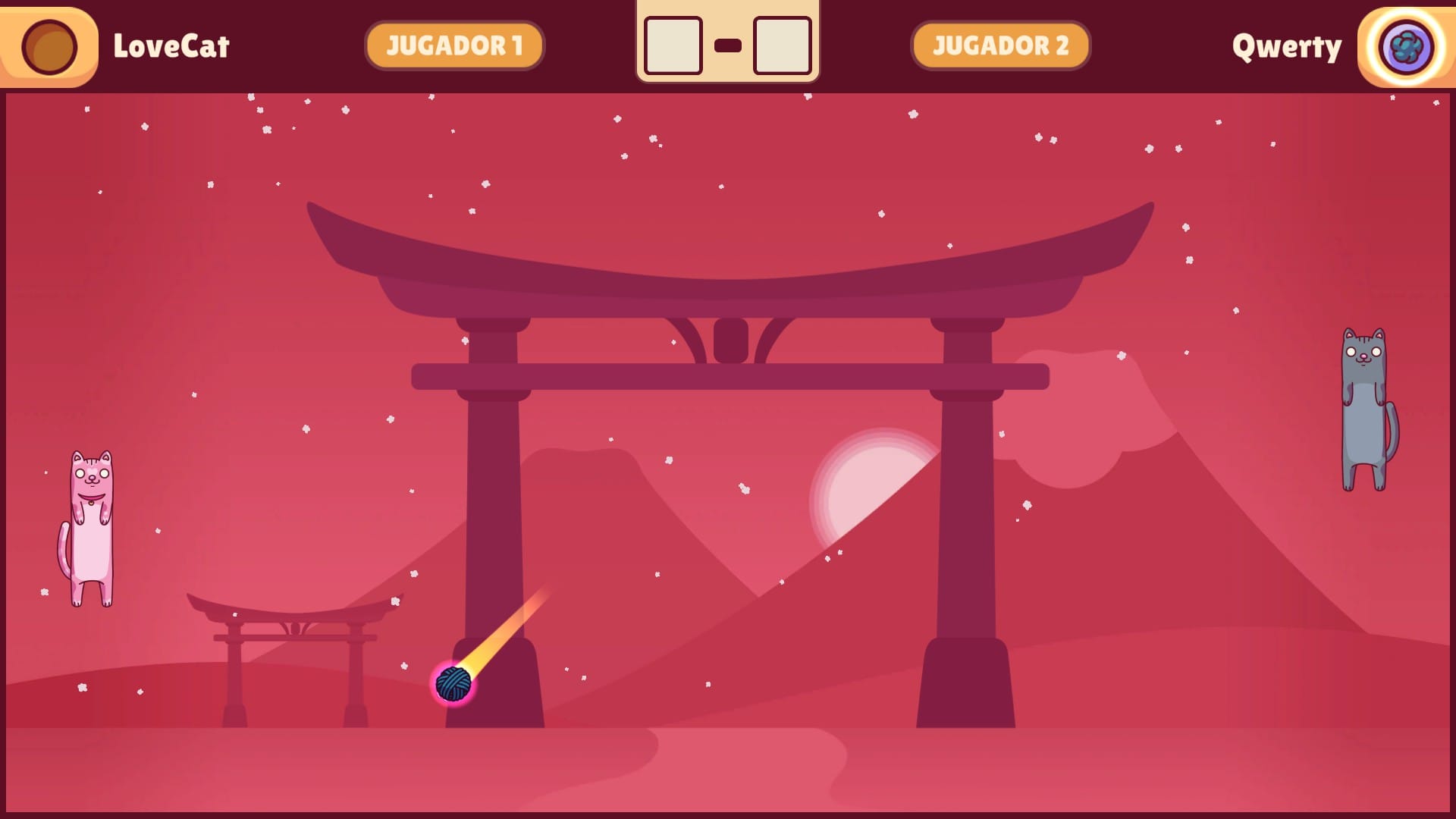
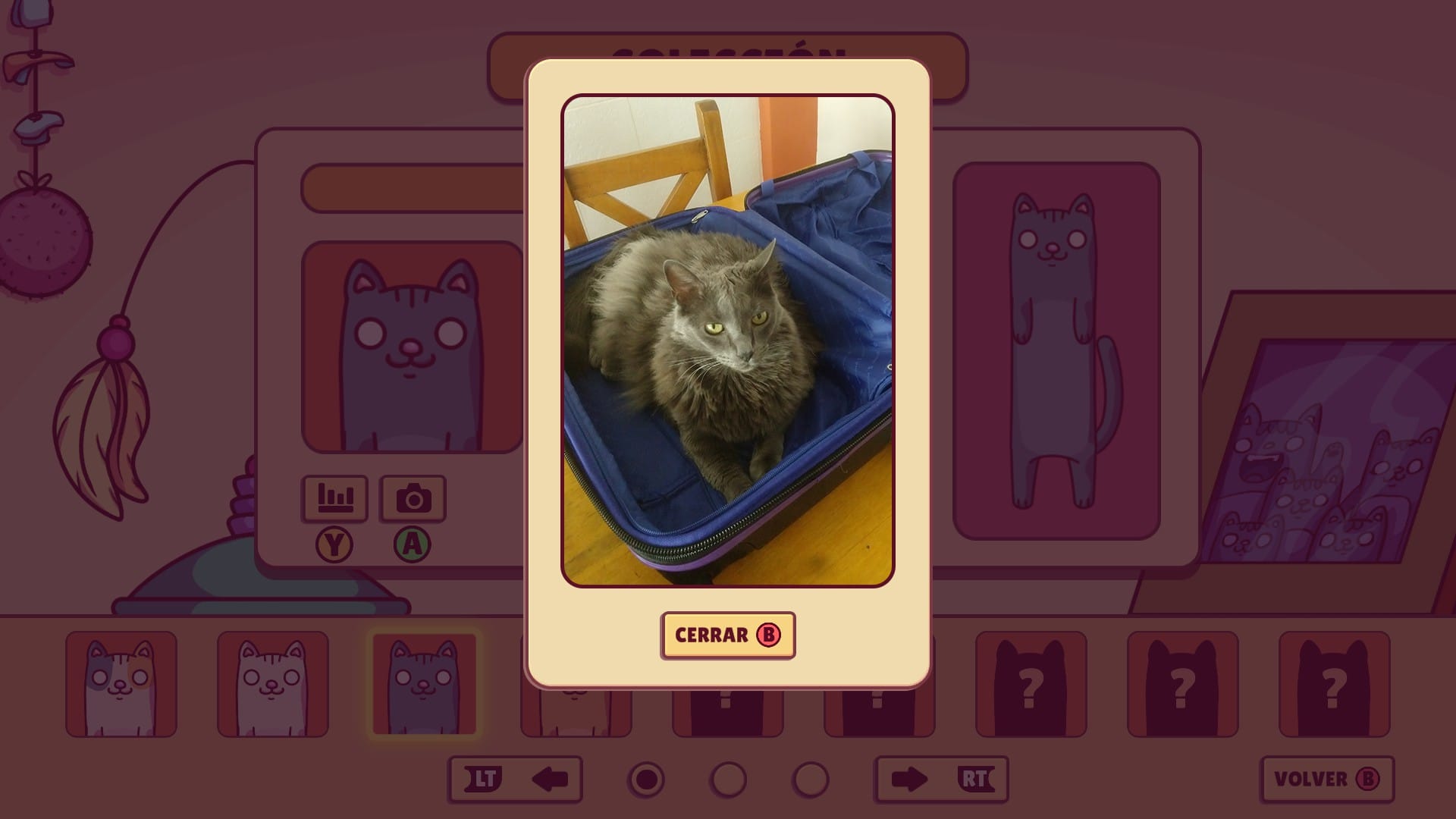
The simplicity, clarity, and immediate satisfaction of Pong made it what it was, and these are maxims of any arcade classic. It’s logical that Pungo adds cuteness and spice to the formula without breaking it too much. I had fun playing against my partner on the same PC, calculating each bounce, practicing each focused hit until they felt natural, and thinking about when to throw a hairball that would incapacitate their kitty at just the right moment. I also had smiles while competing solo against the AI, even though it had inconsistent difficulty (sometimes it caught everything, other times it just stood still while the ball passed by, as if it had stopped working). There are 25 kittens to unlock, each with their colors and distinctive markings, and also with a cute biography, sometimes accompanied by a photo (and our joy) of the real cat they are based on.
Each cat has its unique design, ranging from kitties we can associate with our own to more spectacular ones, like Gatonauta and Cathulu.
At the same time, I feel there was room to delve a bit deeper into the proposal. Many kittens feel identical to others, some don’t even have an initial upgrade compared to others, which makes you wonder why someone would choose them, beyond their design (though I’d completely understand having an aesthetic preference, plus the stripped-down felines feel "more hardcore"). The handful of power-ups is also lacking.
Perhaps what left me recalculating the most is the length of the matches. In both single-player and two-player modes, there are only two types of matches: Match Point and three-point games. In the first, you need to achieve a two-point difference, so if you start by scoring two balls in a row, you’ve already won. In the second, as the name suggests, the first to outsmart the opponent three times wins, regardless of the difference. I’m surprised there isn’t an option like the original Pong to play until eleven points or similar variations. I suppose this was tested and resulted in matches being too lengthy, when the intention is to offer a brief and concise experience. However, I feel it’s too brief. At most, I’d think about having more options available (even being able to set the limit freely) and letting the match last as long as it needs to.
Nonetheless, Pungo remains a charming experiment with an accessible entry point in terms of skills and money (it costs less than a two-liter Coke in Argentina). While it doesn’t support online play natively, you can use Steam’s Remote Play Together option to simulate it. It’s always good to revisit classic games, remember where we came from, think about whether we need everything that today’s offerings provide, and take an interest in how our current developers are trying to pay homage to our history.
You can find Pungo on its Steam page and follow Vale ZumZum and Fede Nessi on their social media.
If you have a video game made in Argentina and want us to write about it, go ahead and fill out this form.