Long before the internet was flooded with global reptilian conspiracy theories, a Super Nintendo JRPG had already imagined it. In 1995, Chrono Trigger introduced the Reptites: a civilization that ruled Earth millions of years before humanity.
In the early nineties, David Icke, a mediocre former English footballer turned sports journalist, began appearing on British television convinced that he was the "Son of God," because a medium he consulted had assured him that he came to this world with a transcendent spiritual mission. Icke, a notorious Holocaust-denying neo-Nazi, filled hours of screen time and wrote over thirty books promoting various conspiracy theories, the most striking (and delusional) being that a race of reptilian aliens from the Alpha Draconis galaxy migrated to our planet millions of years ago to manipulate evolution, found civilizations, and govern the world from the shadows. According to Icke, these beings feed on our inequities, walk among us taking on human form, and make up an elite group of shape-shifters that includes everyone from bankers and presidents to pop stars.
This theory fueled hundreds of blogs and YouTube channels. We’ve all spent some boring hours of our lives watching videos from Mundo Desconocido, Dross rankings, or those videos with the Gregorian chant Dies Irae playing in the background that show how Barack Obama's bodyguard has a lizard head or how Katy Perry's pupils change in front of the camera.
In 2016, according to a Public Policy Polling survey, about 12 million Americans were convinced that reptilians were ruling their country.
It seemed like material meant solely to serve as a conversation starter among stoned friends and fade away by the next morning. Or it should have been. In 2016, according to a Public Policy Polling survey, about 12 million Americans were convinced that reptilians were ruling humanity. It shouldn't be surprising in a country where men with buffalo heads stormed the United States Capitol or entire families live in bunkers out of fear of a nuclear war. In 2020, Anthony Quinn Warner blew up a vehicle in Nashville convinced that he was "hunting reptilians." Subsequent investigations revealed that he believed political figures like Bill Clinton and Barack Obama were aliens in disguise. Icke's theory was already capable of shaping reality perception.
The conspiracies of the Templars, women being witches, the man never landing on the moon, or Kiss songs having satanic messages if you listen to them backward. Conspiracy theories have existed almost since humans began to communicate. From political to religious conspiracies. Today, many of these ideas have left the conspiracy niche to slowly seep into everyday discourse.
"Conspiracy theories provide psychological relief: they channel our anxiety toward a clear and external enemy. We no longer feel overwhelmed by a vague discomfort; instead, we have an epic mission: to unmask the bad guys."
Therein lies much of their appeal. Conspiracies simplify chaos. Polarizing between "good" and "bad" helps us to take a firm stance. If the world becomes too complex, then there must be someone controlling it.
Political scientist Joseph E. Uscinski, author of American Conspiracy Theories, explained that:
"Conspiracies are for losers because those who are out of power use conspiracy theories to strategically alert their side about danger, to close ranks, and to heal their wounds."
It's the same logic that leads football fans to imagine a "black hand" behind every defeat or certain political leaders to denounce fraud when election results don't favor them.
Many of these paranoid theories align with alternative therapies, pseudosciences, and New Age discourses because they all share a common core: distrust of institutions. As biologist Diego Golombek explained:
"In a capitalist society, suspicions and mistrust are generated. And why should I believe in science? They must be the same ones who lie to me about everything else."
In this same vein, communicator and science popularizer Agostina Mileo wrote:
"In modernity, the sciences were presented as the rational and definitive replacement for mystical-spiritual-esoteric beliefs. 150 years later, the world is increasingly unequal, and the sciences, being institutionalized, have an inextricable relationship with this inequality."
The rise of "outsider" figures in politics, the disdain for culture, and the systematic attack on education and science are part of the same ecosystem that rewards ignorance and empowers fools at the expense of communal knowledge.
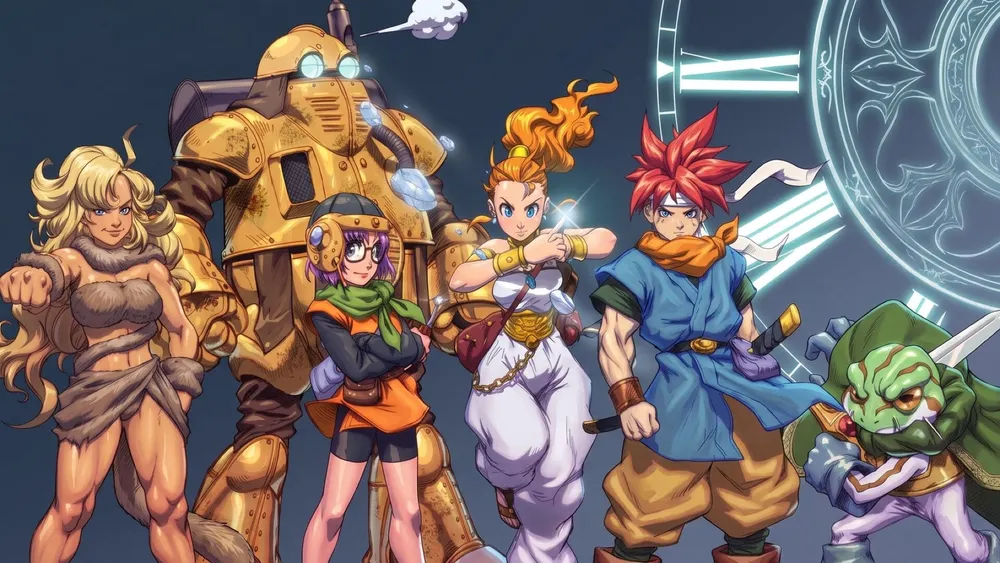
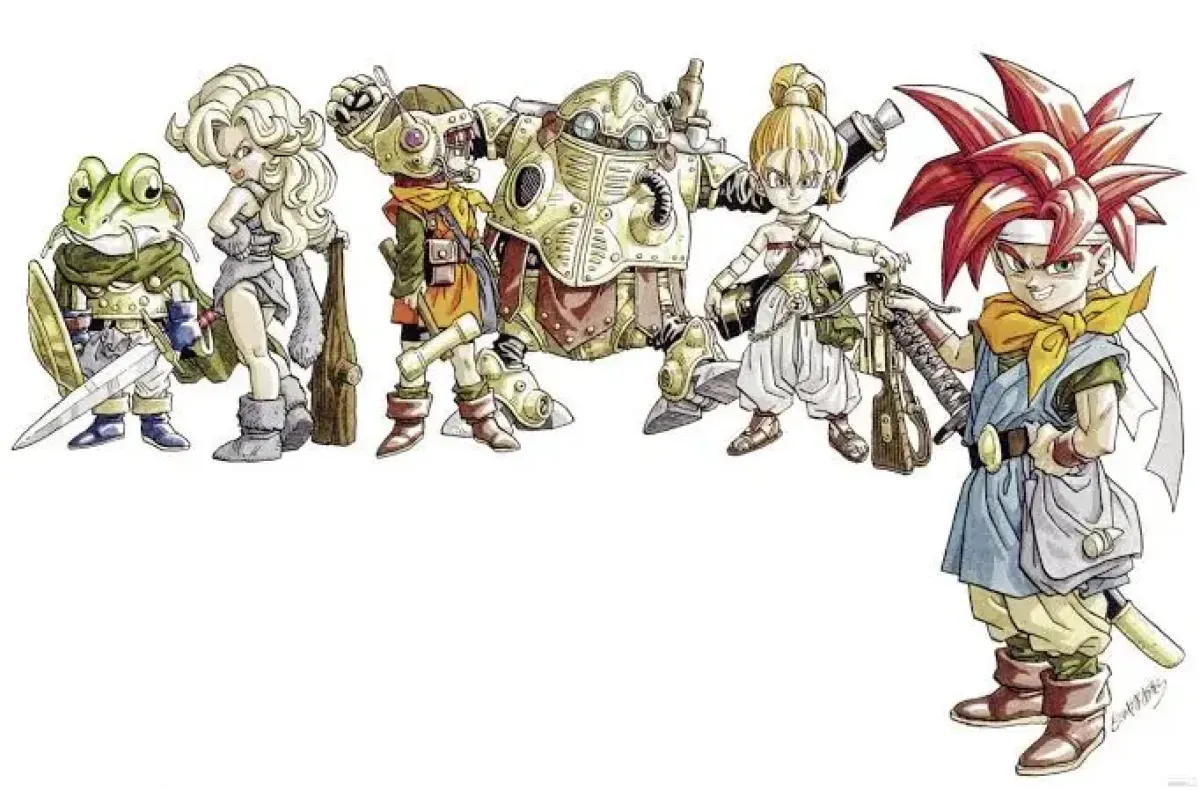
Surely Icke didn't play Chrono Trigger, or if he did, he didn't understand it. The SquareSoft game, created by the Japanese dream team composed of Hironobu Sakaguchi (Final Fantasy), Yuji Horii (Dragon Quest), Akira Toriyama (Dragon Ball), and Nobuo Uematsu, presents a version of the reptilian myth that is much more philosophical and less terrifying.
Crono and our group of time-traveling protagonists find themselves in the year 65,000,000 B.C., where they encounter reptilian beings that attack them until they are rescued by Ayla, a human from the Laruba village. She tells us that these beings are the Reptites and they are at war with her people.
Source: Medium.
The Reptites and their leader Azala are not born from contemporary conspiracy theories, but from a much older imagination: dinosaur, mythical snakes, lost civilizations, and the possibility of an older, more advanced species than humanity (they built a massive stone castle in an era when humans had barely discovered fire). They are a civilization that existed before and, had it not been for Lavos falling to Earth, would still be here (one of the alternate endings shows this).
Their tribal war between Laruba and the Reptites is for survival and resources. When they realize that catastrophe is inevitable and the “red star” (Lavos) will collide with Earth, they do not abandon that will to live and continue fighting because, although one cannot escape death, they cannot refuse to live. When defeated, Azala's last words to Ayla were: “Take care of the Earth.” It's hard not to think of the ending of Dinosaurs, aired that same year in 1995, where Earl Sinclair realizes too late that his actions led to an irreversible glaciation. Both in Dinosaurs and Chrono Trigger, the myth of an ancient race of reptiles serves as a melancholic fable about how fleeting and fragile our existence is, and it conveys a message that is not only ecological but also, despite involving giant lizards, very humanistic and communal.
The myth of an ancient race of reptiles serves as a melancholic fable about how fleeting and fragile our existence is.
Before these examples, in pop culture, there were the Silurians, a race with similar characteristics that appeared in an episode of the eternal series Doctor Who and that, in 2018, gave rise to the “Silurian Hypothesis,” proposed by Gavin Schmidt, director of the Goddard Institute for Space Studies, and astrophysicist Adam Frank from the University of Rochester. Both published their silurian hypothesis, which posits the possibility that a civilization of reptilian beings inhabited Earth 56 million years ago and caused a climate change that marked the end of the Paleocene and the beginning of the Eocene.
“While we have serious doubts that any industrial civilization existed before ours, posing the question in a formal way that explicitly articulates how evidence of such a civilization might be found raises its own useful questions related to both astrobiology and studies of the Anthropocene.”
David Icke takes all these myths and legends and reformulates them with a heavy dose of contemporary paranoia. His theory offers a simple narrative: hidden enemies behind visible elites. In this way, complex anxieties (economic crises, geopolitical tensions, or social transformations that are hard to comprehend) are reduced to a concrete, intelligible, and almost invincible adversary, combined with the fallacy of possessing knowledge that few have, that you “know” a secret that governments and elites hide, but that you discovered after watching a few reels.
But Chrono Trigger is not just about reptiles; it’s also about the end of the world, and for that, we must go back (or forward, depending on the timeline from which you’re reading this) to the year 1999.
1999: The year of Lavos and Y2K
After millions of years feeding deep within the Earth's surface, Lavos emerges in 1999, causing a cataclysm that wipes out much of the population and saves us from the rise of Nu Metal. Well, not really. Crono and his friends alter the timeline, manage to defeat Lavos, saving the planet, but having to endure that the teenagers of the new millennium wear baggy pants, caps, and listen to Limp Bizkit (the cataclysm was preferable).
Today, Y2K is often remembered with a certain retrofuturistic fondness, but those of us who lived through that 1999 remember quite well the atmosphere of technological paranoia surrounding the turn of the millennium. There was a genuine fear that computer systems would collapse, planes would fall from the sky, and global infrastructure would crumble because computers wouldn’t know how to interpret the transition from 99 to 00. At ten years old, I even sat in front of the family computer on December 31st to manually advance the Windows date and see if the Apocalypsewould begin before midnight.
Source: Old Game Hermit.
Meanwhile, Nostradamus's name constantly appeared on television. His famous quatrains were interpreted as warnings about an imminent end of the world, and the year 1999 had already taken on a cursed connotation in popular imagination. We will never know if the team at SquareSoft actually read Nostradamus or simply understood that there was no better setting for the end of human history than the very edge of the new millennium. No one had lived through a millennium change, and that little gap of uncertainty unleashed the imagination (and paranoia). During that time, movies like Independence Day or Armageddon also came out, exploiting the fear that something or someone from outer space would come to end the planet, albeit with the characteristic Hollywood spectacularity.
In Chrono Trigger, the end of times is not religious. It is not The Rapture or Ragnarok. Our sins did not provoke the wrath of the gods and we pay for it. Lavos is a cosmic parasitic organism lovecraftian (something akin to Stephen King's IT) that arrived millions of years ago, civilizations do not know it exists, and nothing can be done to prevent it from emerging. Another interesting aspect is that the protagonist group does not act out of personal interests. Crono, Marle, and Lucca live in the year 1000, the Day of Lavos will occur almost a millennium after their lives. They are not saving their children, their grandchildren, or their own civilization. Unlike Sarah Connor in Terminator, who fights to ensure the survival of her son and future humanity, the protagonists of Chrono Trigger act because they have seen the consequences of the cataclysm and understand that they cannot remain indifferent. They save a future they will never inhabit, for people they will never know. In that sense, Chrono Trigger maintains its communal logic: the common good is not limited to caring for our own, but also includes those who live far from us, in other places and even in other times.
Chrono Trigger between legend and truth
Chrono Triggertakes myths, tropes, and legends from all timelines and, just as it does with the reptoids, molds them to its message, characters, and story. Time travel is often fertile ground for plot holes, impossible paradoxes, or magical resolutions. Chrono Trigger simplifies the problem. The game never obsessively tries to explain whether parallel timelines exist or what happens if someone steps on a mosquito in prehistory. What matters is not the exact mechanics of time travel, but the idea that even in the face of an apparently inevitable destiny, it is still worth acting.
Chrono Trigger insists on something much harder to accept: that no one really controls the world and that the future is built from small, accidental, and deeply imperfect human decisions.
In Chrono Trigger, classic medieval fantasy coexists with a post-apocalyptic future where humanity lives enclosed in domes, isolated from a planet it fears. Here, the robots do not seek to destroy the human race as in Terminator, but are just as abandoned and broken as humans, serving as melancholic remnants of a lost future. Marle is the damsel in distress. However, instead of spending the entire game traversing castles and defeating villains to rescue her, we “save” her during the first hour of the adventure. Similarly, the Kingdom of Zeal functions as a kind of magical Atlantis: an advanced, powerful, and legendary civilization that vanished without a trace. Some of the most important events of the plot occur there, but its existence never becomes the great secret that explains the history of the world. In the future, Zeal is little more than a forgotten legend, and humanity continues to advance without interest in its ruins or the vestiges of its former greatness.
The best example of this deconstruction of myths might be Frog. He seems to be constructed from all the elements of a legendary hero: a cursed warrior, a sacred sword, a fallen mentor, and a quest for redemption. He wields the Hero Medal, brandishes the legendary Masamune sword, and even receives a kiss from a princess. But the spell never breaks. Frog does not magically regain his humanity nor does he become a legendary hero. He is just a secondary character.
Not even Crono, the silent protagonist onto whom players project their identity, escapes this logic. He dies facing Lavos, and the game allows you to continue without ever reviving him. In any other 90s JRPG, that would have been impossible. Chrono Trigger understands that no one is indispensable. While in El Eternauta the hero is collective, in SquareSoft's game, the hero is contingent. He doesn't arise from sacred prophecies or marked destinies but from the choices we make: whether to forgive Magus, to revive Crono or not, or to decide when to face Lavos. It's about how we react and navigate those moments, even if the ending is inevitable.
While conspiracies require absolute enemies and hidden powers, Chrono Trigger insists on something much harder to accept: that no one truly controls the world and that the future is built from small, human, accidental, and deeply imperfect decisions.
✦ Suscribite
Las notas de 421 no tienen paywall
Y a cada colaborador se le paga por su trabajo. Las dos cosas dependen de los suscriptores.
Escribo sobre deporte y música como territorios culturales, atravesados por lo social, lo político y la identidad. Coautor de “Nunca caminarás solo: La revolución de Klopp en Liverpool” y “El día que nos cortaron las piernas”.