Warhammer, The Old World: Miniature Battles
Here's what a Warhammer: The Old World tournament in Buenos Aires was like. A growing community.
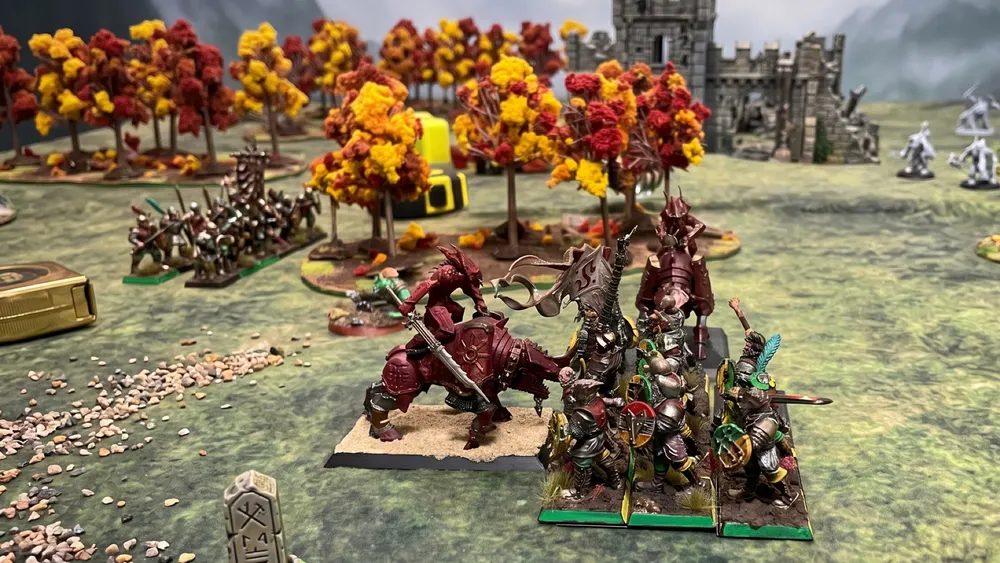
To enter Torre Dorada, you need to know where to knock: the blinds are down, and from the outside, it looks like there’s no one in the gaming store. It’s just another winter Sunday, it’s cold, and the sun, hidden behind the clouds, barely warms anything. In other words, it’s an ideal day for playing wargames. Ramiro, one of the staff members, is the one who opens the door for me. Once inside, the atmosphere changes: there are several players and spectators, and the four tables decorated by seasons (one autumnal, another wintry, and so on) serve as the backdrop for the battles.
Torre Dorada, located in Congreso, is one of the many venues for Warhammer: The Old World, a medieval fantasy wargame. The circuit is always changing: venues rotate, and new spaces open up. Torre Dorada is a fixed point, as is El Imaginario (a club in the galleries of Belgrano), La Última Frontera (LUF) in Munro, Valhal in the West Zone, and the Centro Cultural Adrogué in the South Zone (which, by the way, has a beautiful library). There’s also Ludus in Colegiales and Hero Factory in Palermo. Every weekend, there are games of Warhammer: The Old World, and the last tournament in July drew twenty armies. The community is growing.
This time, it’s competition at Torre Dorada. The tournament is a test of the Battle March format, a streamlined version of The Old World designed for 750-point games and shorter sessions (whereas the norm is between 1500 and 2000), aimed at continuing to attract new players. Patrick Glickmann, the organizer, explains to me that this is precisely why they decided to play with smaller armies, in a faster event with more battles. In one day, each competitor has to face off against four opponents.
Every month, there are Warhammer activities, and the last tournament in July drew twenty armies. The community is growing.
The variety of armies on the tables at Torre Dorada reflects the universe of The Old World. There are two armies from the Empire (the main human kingdom, Renaissance-style but with steam tanks and other steampunk wonders, as if Da Vinci had brought all his wild ideas to life in a parallel world), one from Vampire Counts (evil necromancers, zombies, and reanimated skeletons), Chaos Warriors (the main antagonists in the Warhammer world, men enhanced by evil gods emerging from the abyss), Skaven (rat-men living in a pestilential underworld), Beastmen (also evil, mutated beings that dwell in forests and hunt humans), and finally, a Dwarf army (noble smiths and engineers who create war machines).
 Juan von Zeschau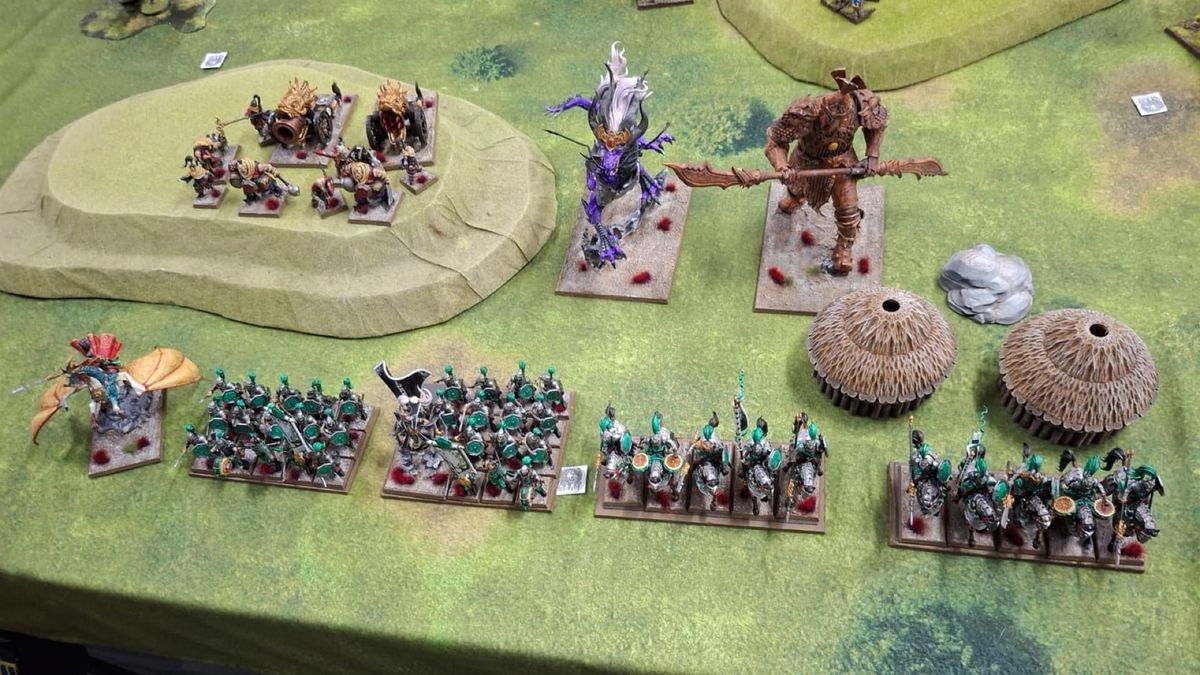
The return of Warhammer: from a Reddit post to eighty players
Warhammer is a medieval fantasy game created by the British publisher Games Workshop in 1983. It’s known in the wargaming community as Warhammer Fantasy, because the system is based on medieval warfare, but in addition to fantastical elements, it also incorporates steampunk: wizards and dragons alongside primitive steam machines.
It arrived in Argentina in the nineties and had its brief boom in the wargaming scene. However, over the years, the franchise gradually lost followers here and, especially, worldwide. In 2014, due to declining sales and players, the executives at Games Workshop debated whether to abandon their fantasy line and focus solely on Warhammer 40,000, a cyberpunk strategy game with thousands of fans around the world, including some prominent figures like actor Henry Cavill. They decided to go ahead with it: in 2015, after three decades of existence, the game was discontinued. It was the end of an era.
But Warhammer Fantasy made a strong comeback in 2024, nearly a decade later. The revival was due to the success of the computer game Total War: Warhammer, which renewed interest in the franchise. The company Games Workshop changed its executives, saw a business opportunity, and relaunched the fantasy game under the title Warhammer: Old World.
It was at that moment that many players returned, myself included. New players also joined, leading to the establishment of a fairly large Argentine community for Warhammer: The Old World. In just a year and a half, this community was born in the simplest way: someone asking if there was anyone to play with. Glickmann sums it up well: "A small group of people with this common interest connected through Reddit. I asked if anyone practiced this in Buenos Aires because I didn’t see any established community. There were a few stores selling some items, but when I asked them, they didn’t know of any such community either." Glickmann was interested in finding players: he had lived in Denmark for several years, had just arrived in Argentina, and wanted to indulge in the hobby. "That’s when I found a few guys, and initially, there were five or seven of us; then we became ten, twelve, and now we’re eighty in the WhatsApp group. It grew quite a bit in a year. The next goal, he tells me, is to connect the smaller groups that have emerged over the past year, which are more dispersed across the AMBA: "There are quite a few people who like this, but they don’t know each other well yet. That’s the next mission: to bring the community together."
The company Games Workshop changed its executives, saw a business opportunity, and relaunched the fantasy game under the title Warhammer: Old World.
Lautaro, a player from the Empire (who came as a spectator to Torre Dorada), tells me how he joined that first group, coming from a very different place than traditional wargaming: "I joined a year and a half ago through Reddit. As a kid, I loved miniatures, but I had never played, and at 38, I decided to start. I don’t come from Fantasy like most people: I always played role-playing games on the computer and Magic, but miniatures and wargames, never. I did enjoy painting planes, ships, and tanks as a kid. I returned during the pandemic, and a few years later, I combined my love for painting with miniatures." The initial contact was as anonymous as it was effective: "Through Reddit, I got in touch with Pato Glickmann and many others completely anonymously, because they had posted looking for people to play here. There were three or four people in the same situation, all scattered, playing with people they knew. That’s when we came together and created the first WhatsApp group. Before starting to play, I had a small army printed on a 3D printer, and that’s how I got started."
More than winning: painting, lore, and community
There are different ways to enter the world of Warhammer: The Old World (I share mine here, so let’s move on). The first, and I think the most important, is through the game’s lore: a mythology that, as I said, makes a collage of medieval fantasy (elves, dwarves, orcs, the usual; let’s stop borrowing from Tolkien for two years, old man), but with touches of gothic horror (Vampires, Tomb Kings), steampunk Renaissance (Empire, Chaos Dwarfs, etc.), and also a fascinating Lovecraftian cosmic horror (the Chaos Gods come from the depths of the universe through interdimensional portals and feed on human weaknesses). Each army manual delves into the history of the factions, and there are also novels that narrate the wars between the Ancients and Chaos, or between elves and dwarves.
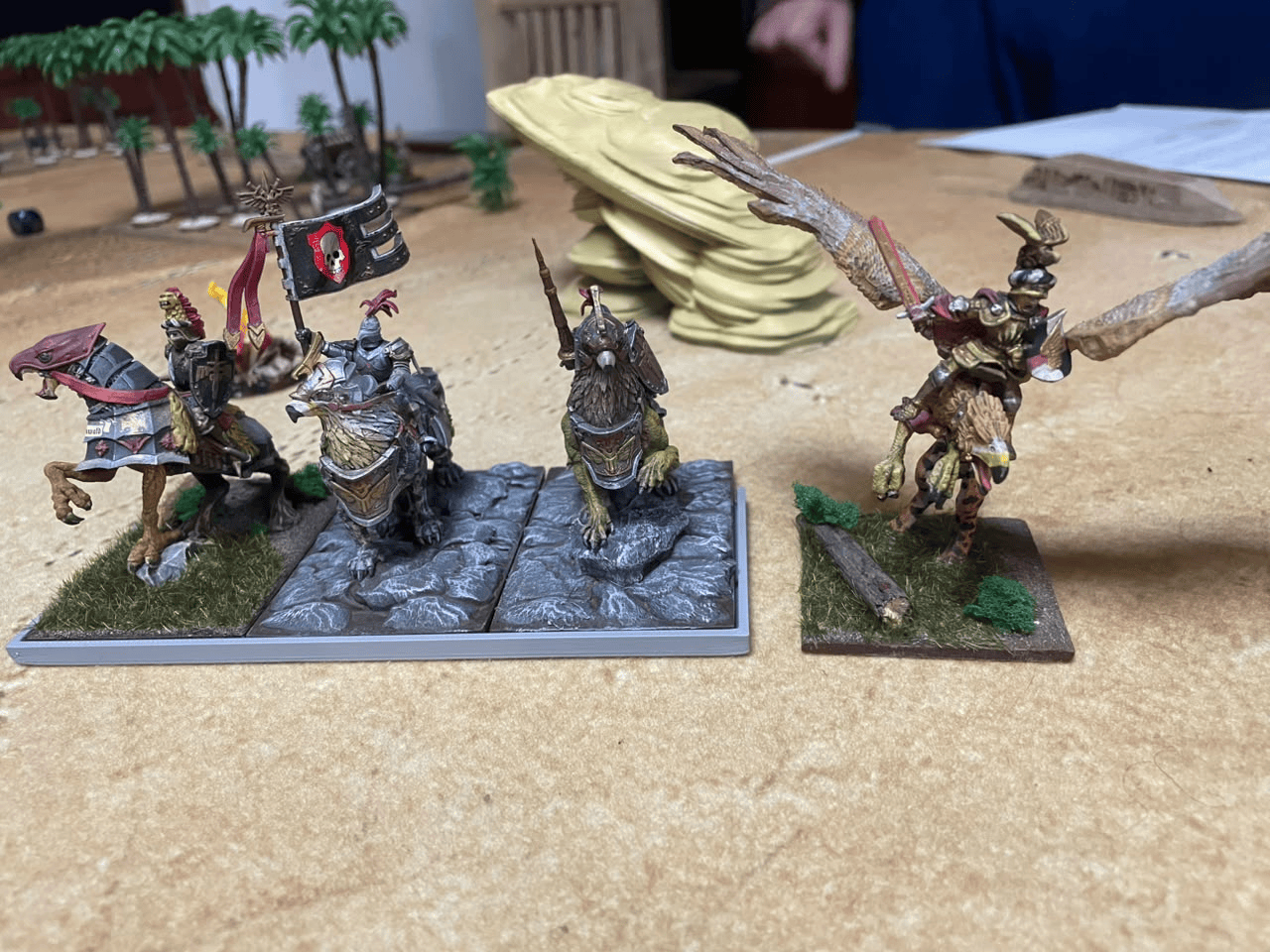
But new players also join for two other reasons: strategy and art. Many are drawn exclusively to the competitive aspect: planning tactics, moving units, rolling dice, and winning. Others, the artists, are hooked by the hobby aspect: painting minis (below, in the photo galleries, you can see the wonders they create with a brush).
Patrick Glickmann, the organizer, shares this multifaceted vision of Warhammer. For him, the tournament is just one of the entry points, alongside painting, the lore, and the game rules: "The hobby appeals to your ability to imagine that you're in another world and to be carried away by a visual aspect (which also has to be a big part of what draws you in), rather than playing common board games like chess or backgammon, which have a high strategic level but lack such a rich visual component. There are people who are more interested in painting than playing, and in that case, the way you paint can almost become an art form. And then there's the lore, because many people who love science fiction or fantasy find here a vast universe, built over many years, that is very enticing."
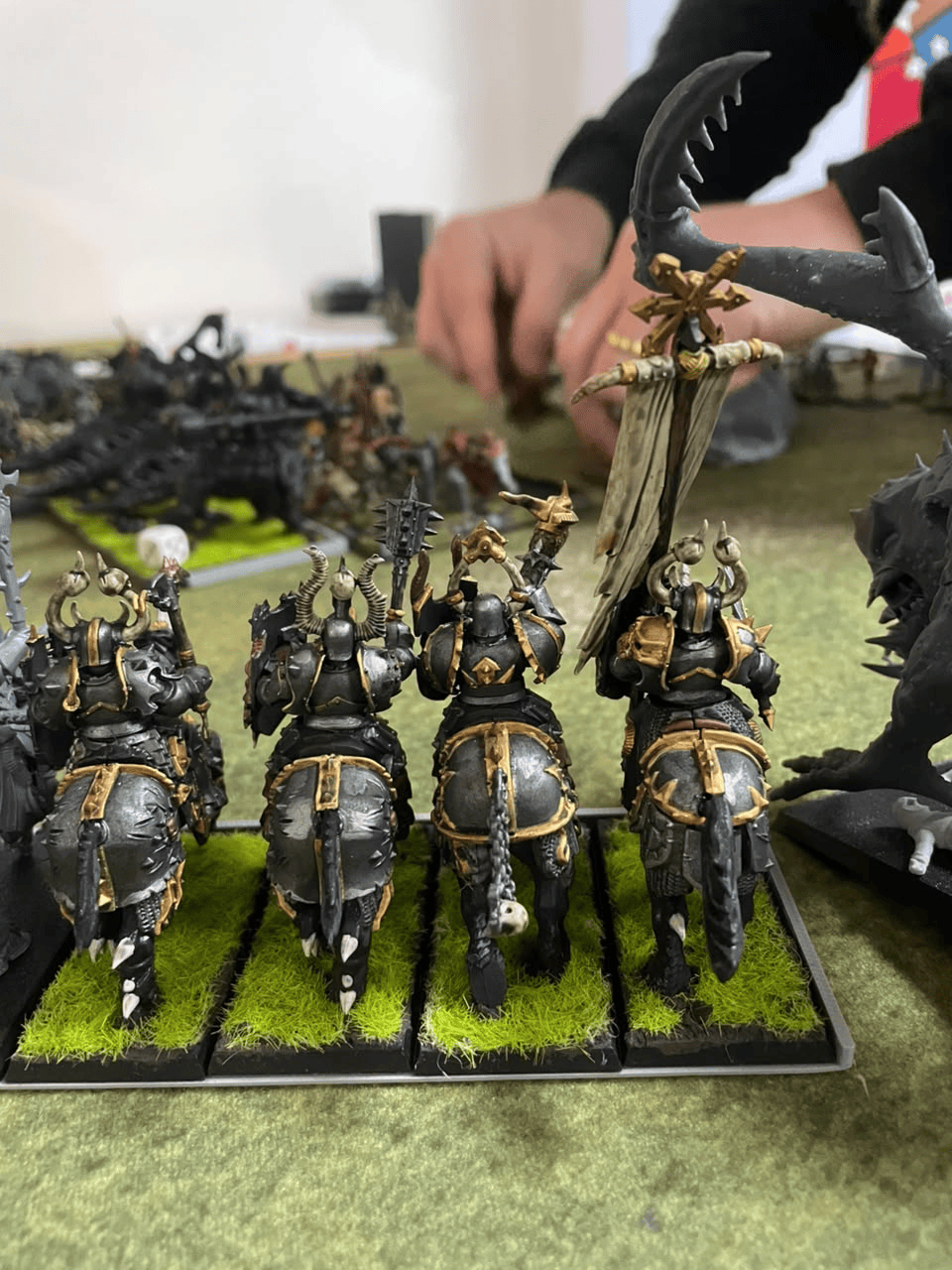
Certainly, if one thing became clear in the conversations at the tables, it's that the choice of army rarely comes down to a single reason. Sometimes, it also relates to a biographical experience, almost trivial. For Ariel, for example, who plays with Warriors of Chaos, the story began when he was twelve: "I walked past a store and saw a Lord of Change [Tzeentch, one of the Great Daemons of Chaos, a humanoid figure with a vulture's head and wings]. I didn't know what it was, I bought it, and I fell in love with Chaos forever." But the play style of this army also seduced him, as visceral and ruthless as its origins in the abyss: "I love the way they play, which is to charge forward and fight in close combat, that's what I enjoy most about Rank and File [units in blocks]." The battle day at Tower of Gold revealed some weaknesses in his army: "Armies with shooting and a lot of mobility are my weak point. I set up a harassment character to charge in all directions, and even then, I didn't catch anything." Apologies for the literal transcription of the tactic (only for the initiated), let me elaborate: in summary, the Warriors of Chaos play with solid blocks of soldiers; they are nearly unbeatable, but they struggle against more dynamic units and harassment tactics.
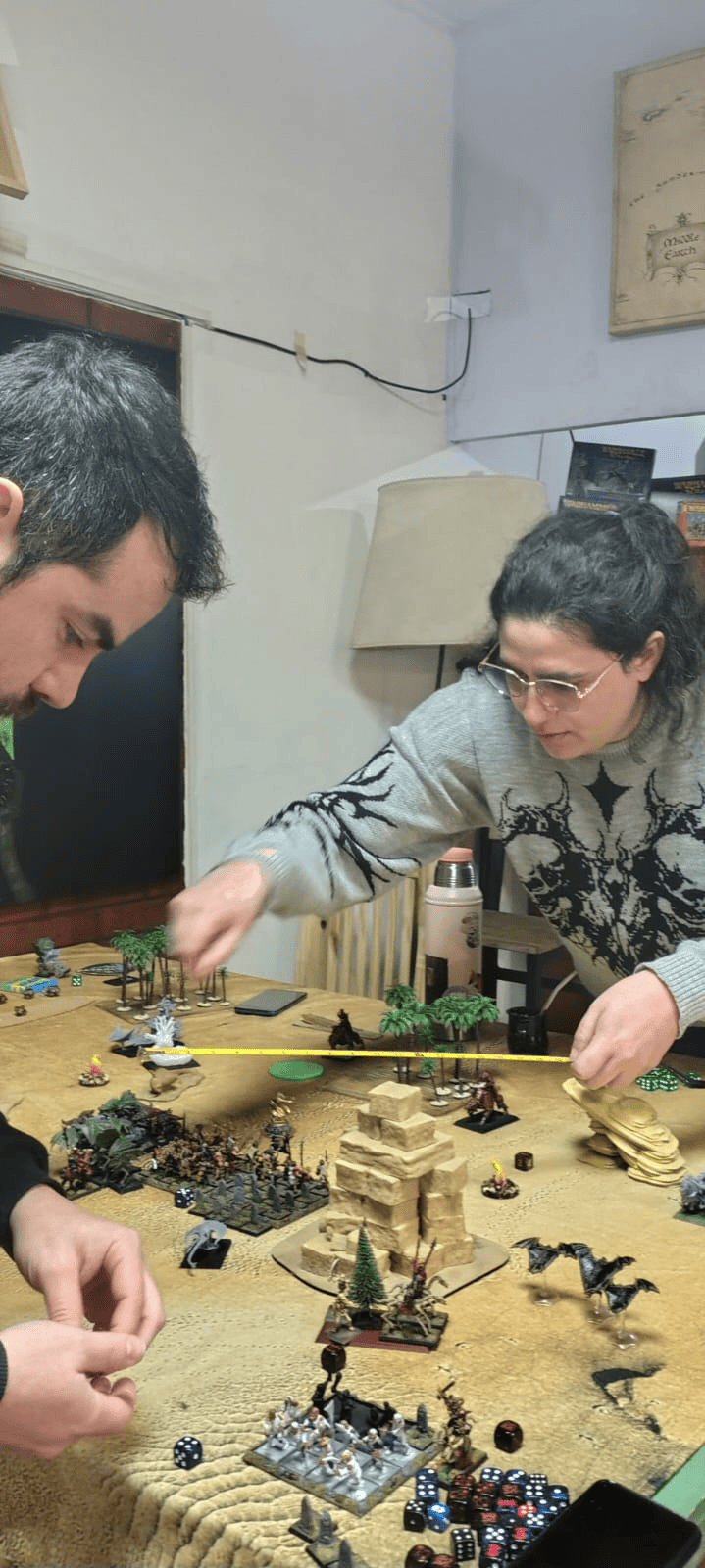
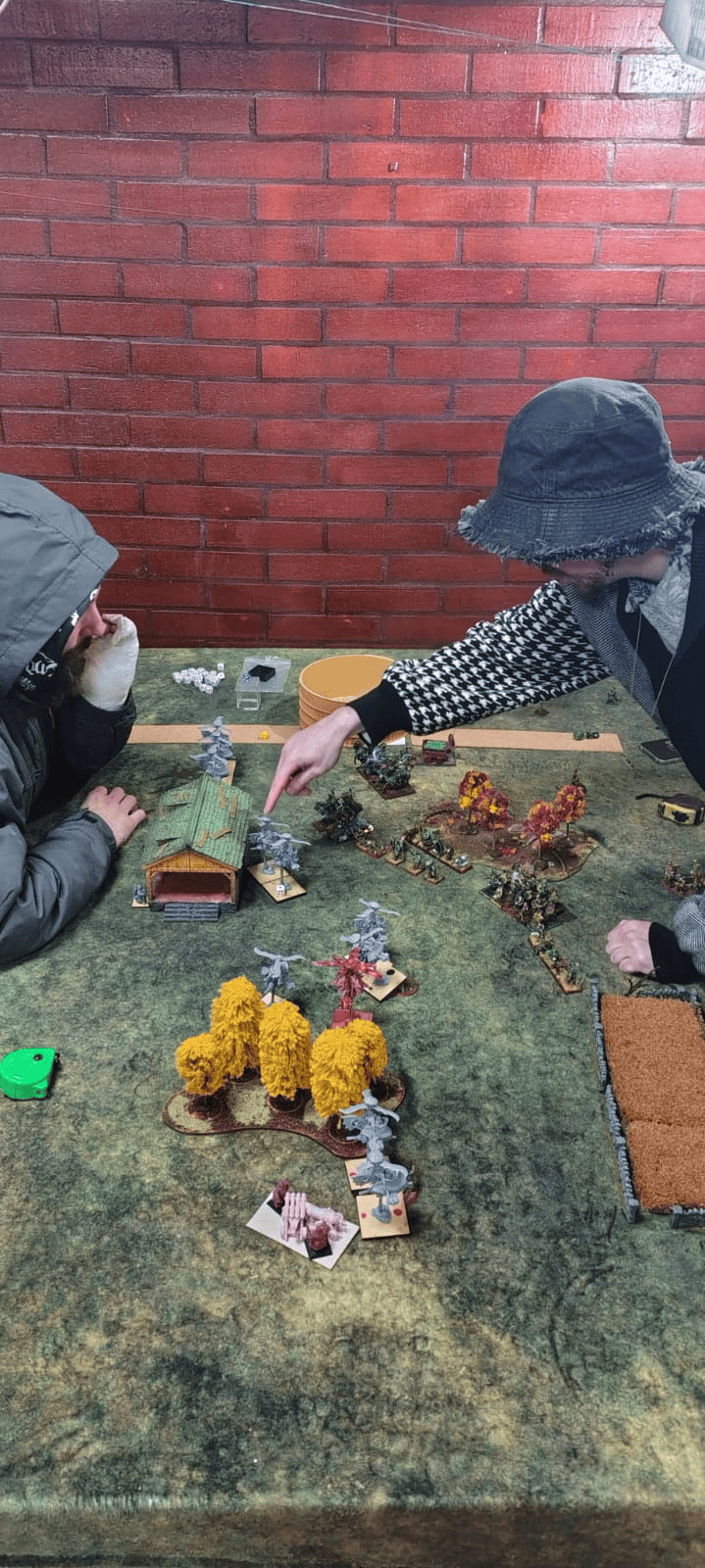
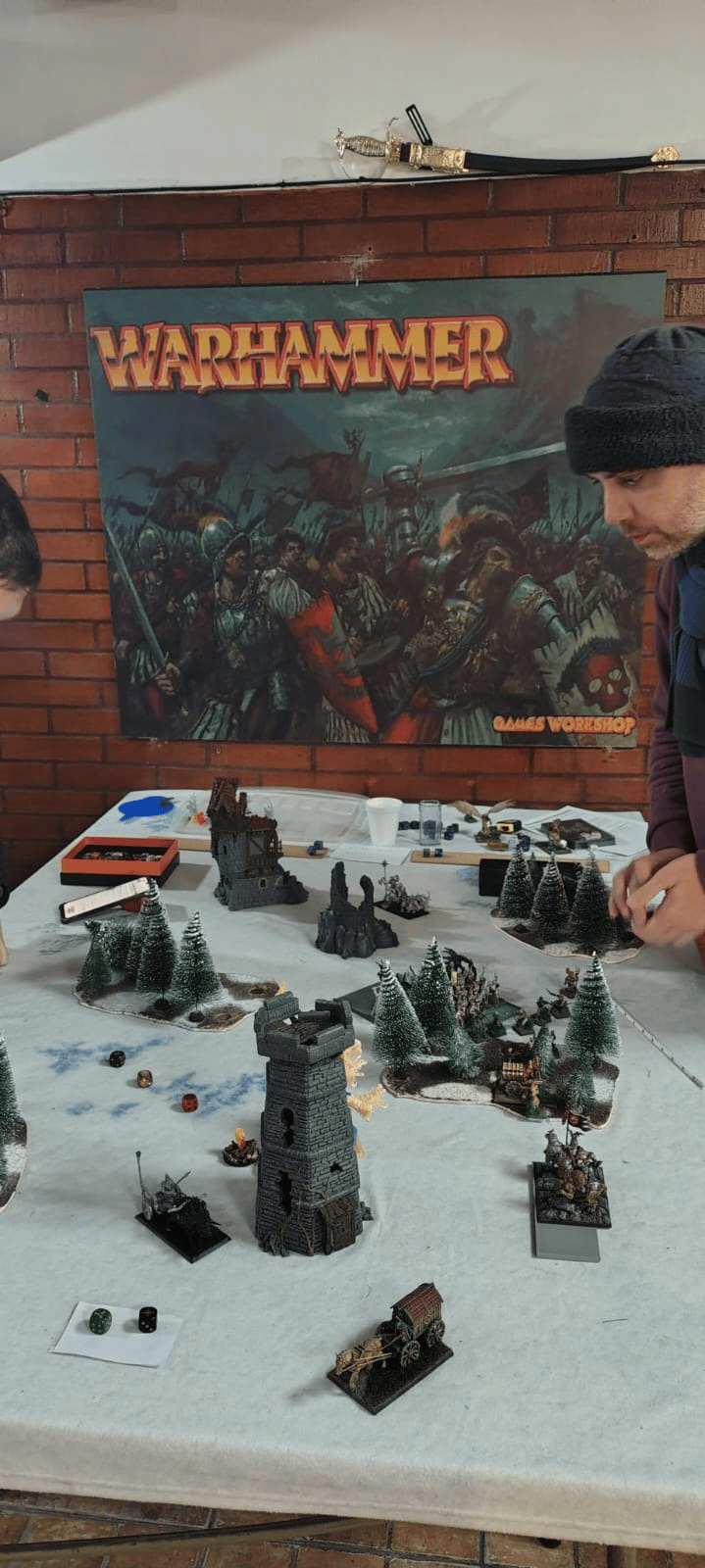
On the other side of the board, Rodrigo chose Skaven for the lore rather than the rules. "The lore is very intriguing. This game is inspired by Celtic mythology, and the Skaven are a unique invention of the franchise: ratmen don’t exist, for example, in The Lord of the Rings. I think they represent the worst of capitalism, at their core. They don’t believe in the past or the future; they only know the present, and even though they are grouped with Chaos, they are not part of Chaos: they are just themselves and nothing more," he describes. Although he acknowledges that, in terms of rules, the current edition isn’t entirely favorable to them, he enjoys the playstyle: "Historically, they play in a pretty unique way, and it’s very fun for the opponent to play against Skaven." I can attest to that: I’ve faced them several times, and their entire army depends, for better or worse, on luck with the dice rolls. Almost anything can happen—pure chance.
Lautaro, for his part, chose the Empire for purely visual reasons, even before understanding the rules: "I started trying to learn about each faction by looking at images on Google and checking the gameplay on ChatGPT. There were some models that I loved aesthetically: the War Wagon [a cart with sharpshooting musketeers and other delights], the Steam Tank [a steam tank], the imperial troops. It was an aesthetic choice; I didn’t know anything about the mechanics."
Many people enjoy exclusively the competitive aspect: planning tactics, moving units, rolling dice, and winning. Others, the artists, are drawn to the hobby precisely for the hobby part: painting minis.
Seba, another competitor, is drawn to the Vampire Counts for their history and game mechanics: "I like the idea of reviving the dead all the time. It's something eternal. And it's really annoying; I enjoy getting under my opponent's skin," he shares. He also owns a wargames store and takes the aesthetics of his troops seriously: "As a store owner and offering a painting service, the least I can do is have my minis painted. I try to make sure that everything on the table is generally painted." Seba is, as I call them, one of the artists of Warhammer.
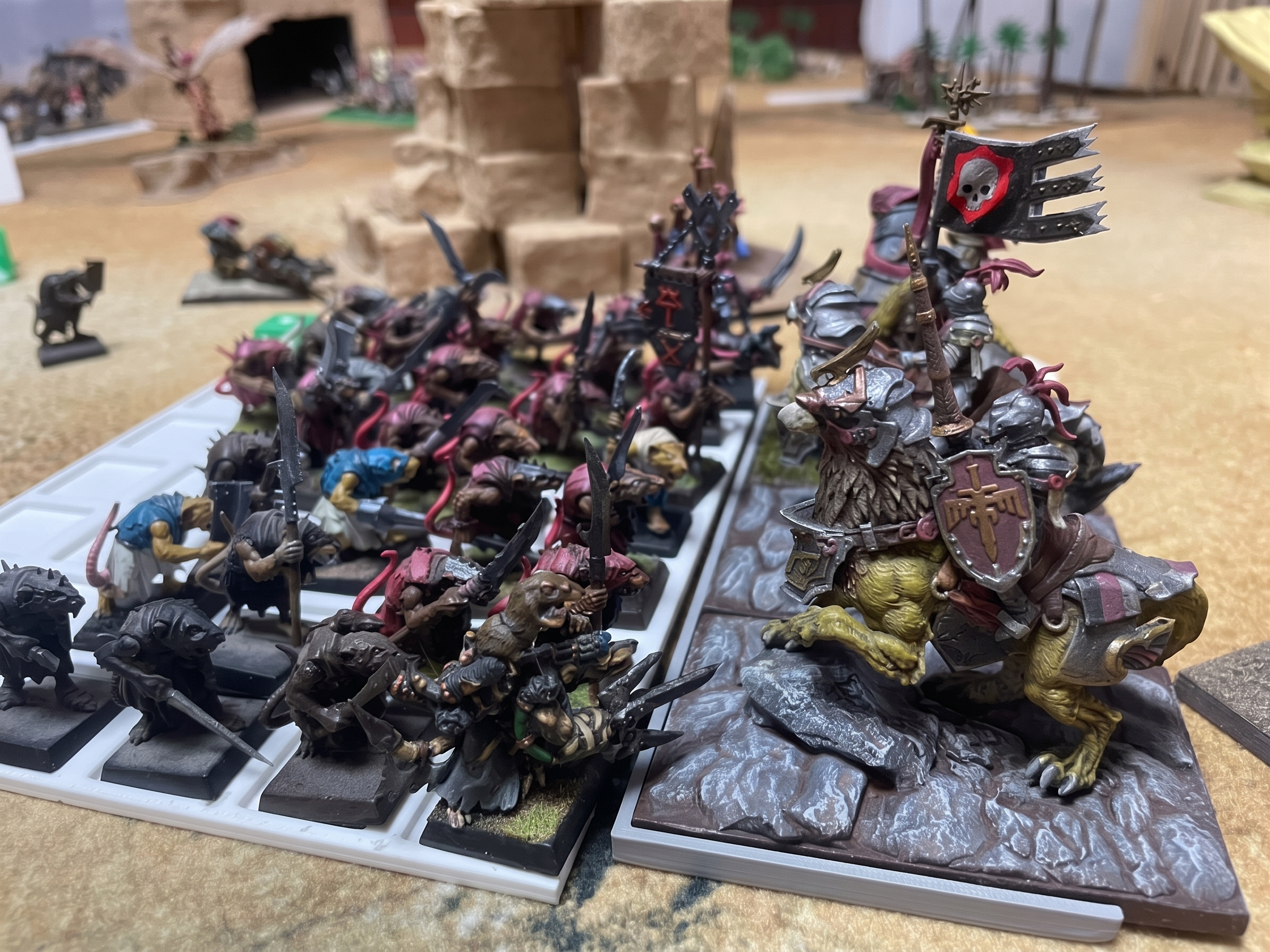
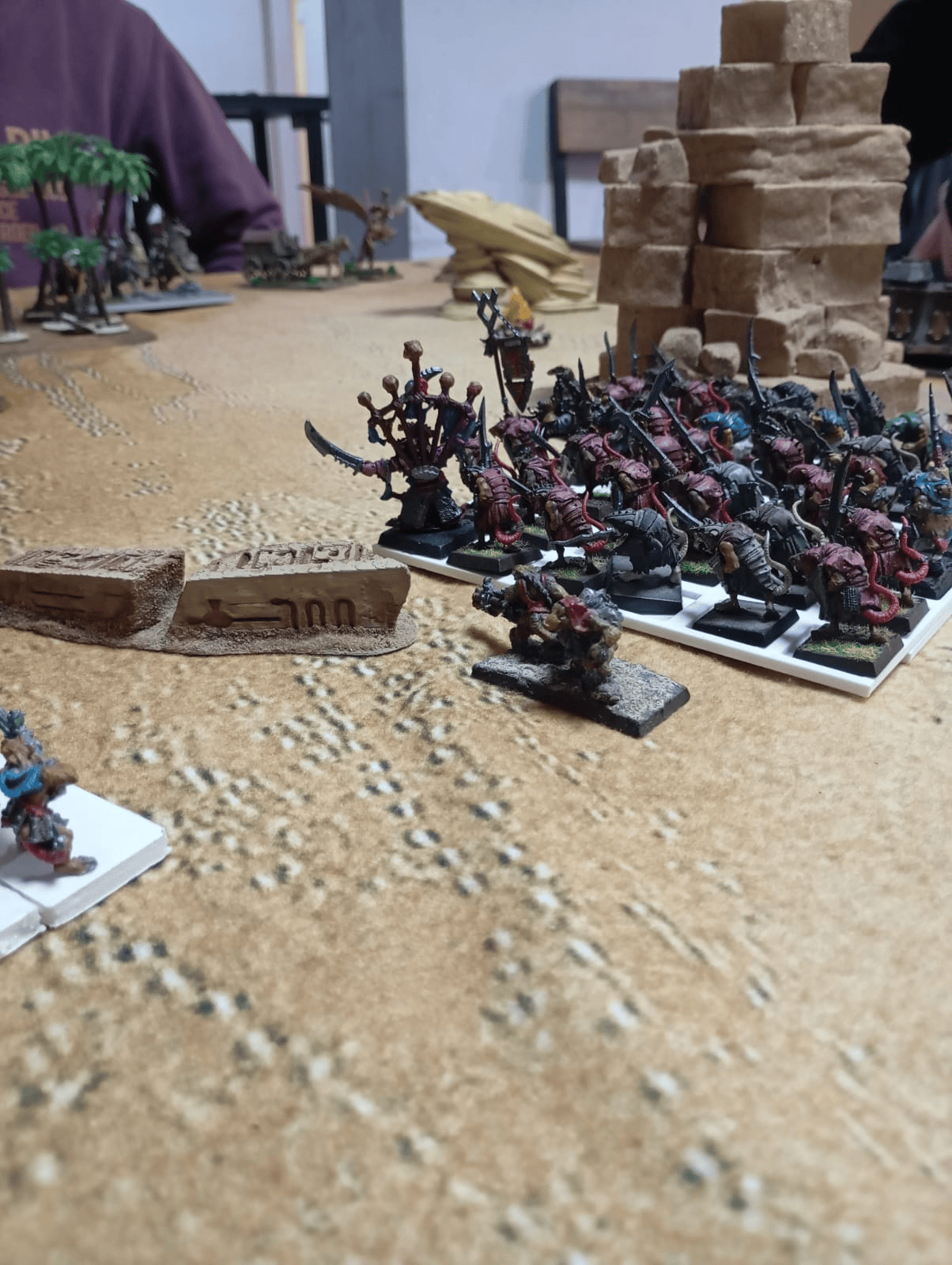
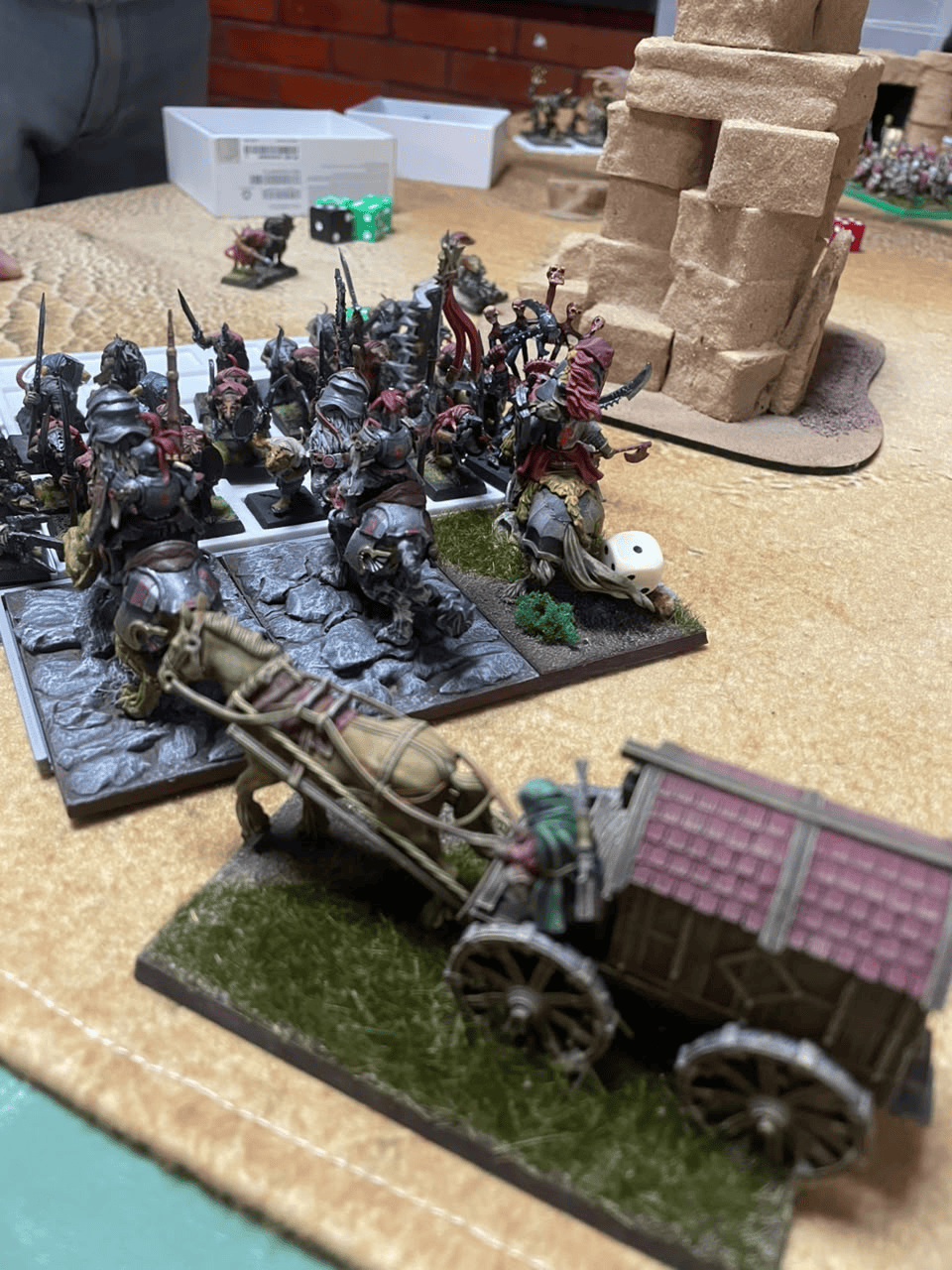
For Julia, who played with Chaos Demons, the choice was almost by elimination: "I’m not really into high fantasy, so I’m not a fan of humans, elves, or orcs. I have an army that fits what isn’t that, let’s say. Plus, they’re the bad guys, and I like playing with the bad guys." Her competitive present as a Warhammer player is unbeatable: she just won the previous edition and arrived undefeated to the last round of this tournament: "I’ve won all three games, yes… it could be that a back-to-back championship is close," she laughs, although she prefers not to get too confident before her upcoming match against Ariel (who also uses Chaos Warriors). Regarding the third battle, which she is playing against Vampire Counts just as I interview her, she analyzes: "It’s pretty even, he has a unit that hits hard [a skeletal cavalry] that I’m trying to avoid, and he has a wizard that I charged to try to kill but didn’t succeed." While she tells me this, I see a handwritten sheet where she plans her troops' movements and tallies the points she has earned. What can I say, a true professional.
Gustavo, like Julia, is one of the players who joined the community for the lore, but above all, for the competitive aspect. This time, he’s playing with Dwarfs and presented one of the most unique army lists of the tournament: an entirely aerial force, something rare for a people like the Dwarfs, who prefer to keep their feet on the ground. "It’s the air force of the Zhufbar Engineers Guild: ten gyrocopter scouts and one anti-infantry gyrobomber [all steam-powered helicopters]. I really like mobility and shooting, so I feel good with the dwarfs, especially with the gyrocopters," explains Gustavo, who also became the champion in a previous tournament in May with another army: "I won a tournament with Wood Elves, which has been my army for fourteen years. But in Battle March, it loses some abilities that I can take advantage of at 2000 points. The dwarfs offer me a bit of what the wood elves do at that scale: a lot of movement and pure shooting." A stickler for rules and tactics, Gustavo leaves almost nothing to chance.
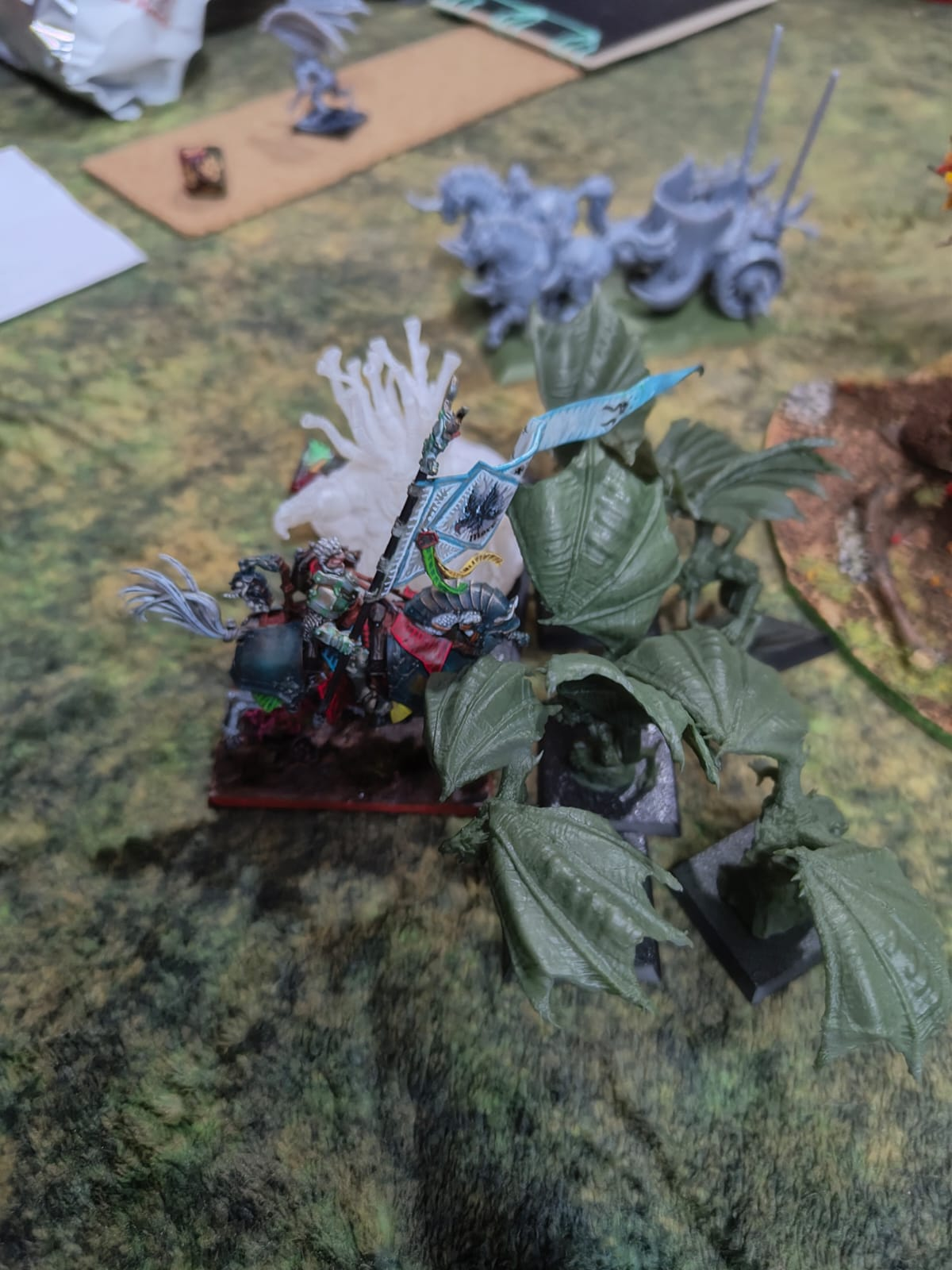
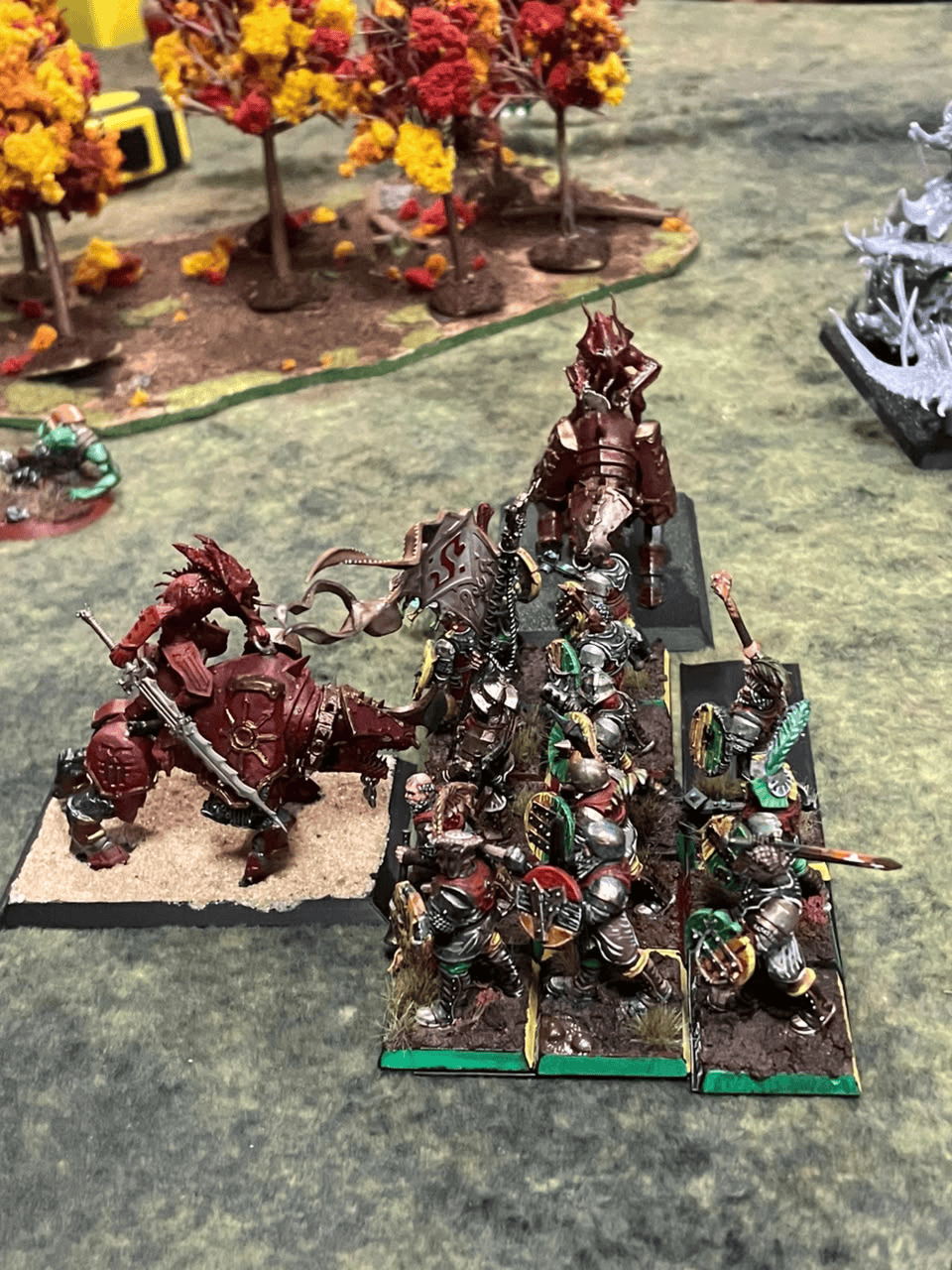
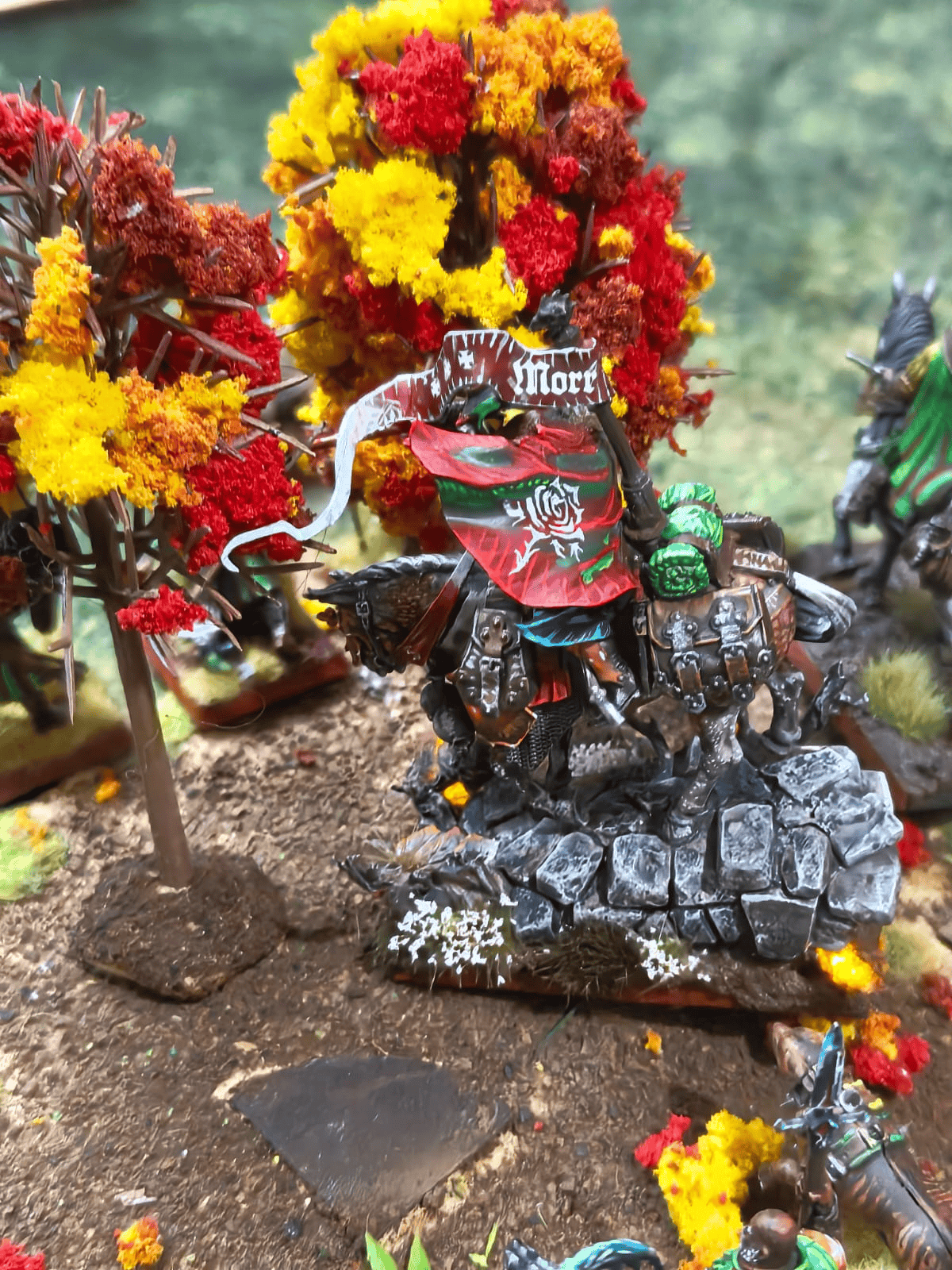
There was also room for a themed army from the Empire: the Stirland Deserters led by Fede, a very narrative faction: "They are basically an autonomous anarchist region within Stirland, commanded by a witch hunter, Priscilla, who claims that Chaos actually stems from the greed and avarice of men. They hunt witches, but not just any witches: they target landowners and set them on fire," he describes. It’s a faction that, unlike others from the Empire, has very little long-range shooting, almost no gunpowder or magic, but plenty of religious fanatics. Fede is one of the best artists and often wins the painting competition, one of the things that has also been awarded in recent tournaments. He emphasizes the work behind each miniature: "The army has a lot of work with LEDs, with circuits to create fire in the things that are lit. It looks amazing. I love playing it, painting it, everything." For those who couldn’t see it live, many of Fede’s miniatures have campfires or torches illuminated with tiny artificial lights. He takes the hobby to another level.
The army has a lot of work with LEDs, with circuits to create fire in the things that are lit. It looks amazing. I love playing it, painting it, everything.
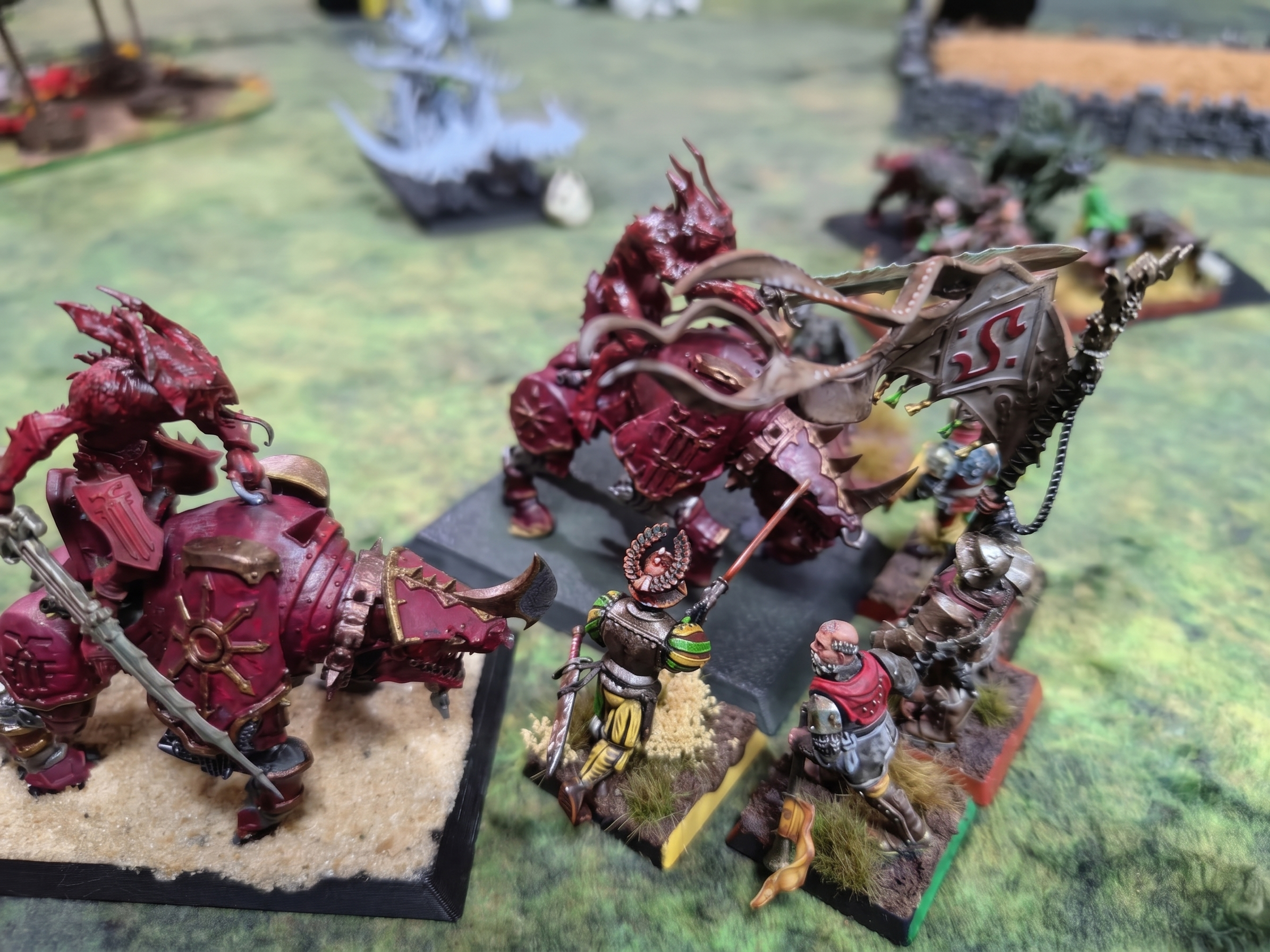
With Beastmen (Chaos), Ramiro’s day had it all: "I drew one, lost the other by a hair, and now, against the Empire, we’re halfway through. The Beasts have performed quite well, they’ve dealt a lot of damage, I killed the general in the first turn." Just as I’m chatting with him, towards the end of the afternoon, his table suddenly concentrates the tension of the entire room. His opponent, the Empire, led by Juanma, is trying to take down a Chaos Spawn with his Hellblaster volley gun (a Gatling gun capable of firing up to thirty shots per turn) before it wipes out the artillery. Juanma conveys the drama of the moment to me: "If I can take out that miniature, I have a chance; if not, I’m done for. This is where the battle ends, and I won’t have a chance to turn it around," he sums up before the decisive roll. When the dice fall in his favor, the reaction is immediate: "I’m very happy, this is a glorious day, a fantastic one for the Empire. I still have chances. A lot just happened, it’s a turning point. This could change the course of history" (Spoiler: despite that miraculous roll, Juanma lost to the Beastmen and came in last in the tournament).
The World Cup and what’s coming up
The growth of the community over the past year and a half has led to an idea that, until recently, seemed crazy: participating in the Warhammer: The Old World World Cup that will take place in Talavera, Spain, in September. Something unthinkable last year, it started taking shape during the first half of 2026. "We’ve been looking for sponsors, and it was a bit difficult to assemble a team due to logistical and economic circumstances, so mainly people from Argentina living in Europe will go, with exceptions for those of us who can travel from here. But we already have eight players ready to go," says Glickmann, who, as the team captain, leads that preparation. "Now we’re practicing. And we’ve already secured a sponsor for the dice we’ll use: they’ll have Argentine logos, to make it more patriotic."
But it’s not all about the World Cup. Patrick is also looking towards the activities in October in Buenos Aires: the reduced format of Battle March, he confesses, worked very well in its trial at Torre Dorada, so a broader edition can be made that continues to attract new players.
Beyond the future plans Patrick details to me, the tournament continues at Torre Dorada. With the fourth round closing a nearly seven-hour gaming day, Julia, from Chaos Warriors, is the one who lifts the cup for the second consecutive time. Among the tables themed by season and the hand-painted miniatures, the Torre Dorada tournament leaves a clear postcard: in Warhammer: The Old World, winning the game is just one of the reasons people keep coming back, event after event. There’s also the painting, the mystique of the lore, but above all, the fact of getting together to play with others.
Las notas de 421 no tienen paywall
Y a cada colaborador se le paga por su trabajo. Las dos cosas dependen de los suscriptores.