Magic: Why You Should Play Draft Forever
Magic's draft format brings out the best in the game (and counteracts the worst). More intuition, more accessibility and more bluffing.

Magic's draft format brings out the best in the game (and counteracts the worst). More intuition, more accessibility and more bluffing.

At 30, keeping up the same hobbies you've had your whole life gets tricky. Keeping your old friends is even harder. Like a lot of millennials, I discovered Magic in grade school and got hooked even harder in high school. My first gig was reselling decks from Parque Rivadavia to my classmates; later I was the one blowing a good chunk of change in the apartment of some nerd-goods dealer to jury-rig a Dimir mill deck fatto in casa that I had a blast losing with, especially against my best friend's elf beatdown.
I was (and still am) pretty bad, but that didn't dampen my interest in the game, the identity it offered, its colorful lore and its esoteric-bureaucratic mechanics like the stack, the second main phase or cumulative upkeep. I didn't get it at the time, but I was experiencing for the first time the creative spark of a sophisticated rule system. I was feeding (and spoiling rotten) the instinct I design with today.
At some point after graduating I stopped playing, distracted by other twentysomething interests, and when I tried to get back into it, building a deck from scratch felt like a Herculean task. Maybe the story would've been different if I'd gone to a game store or joined a Facebook group. But I just wanted to play with my high school friends, whom I didn't see that much anymore, and they didn't have cards either, or the ones we had left were from editions so old they couldn't compete on equal footing. That's how a ritual that's now a decade old was born: getting together to draft Magic.
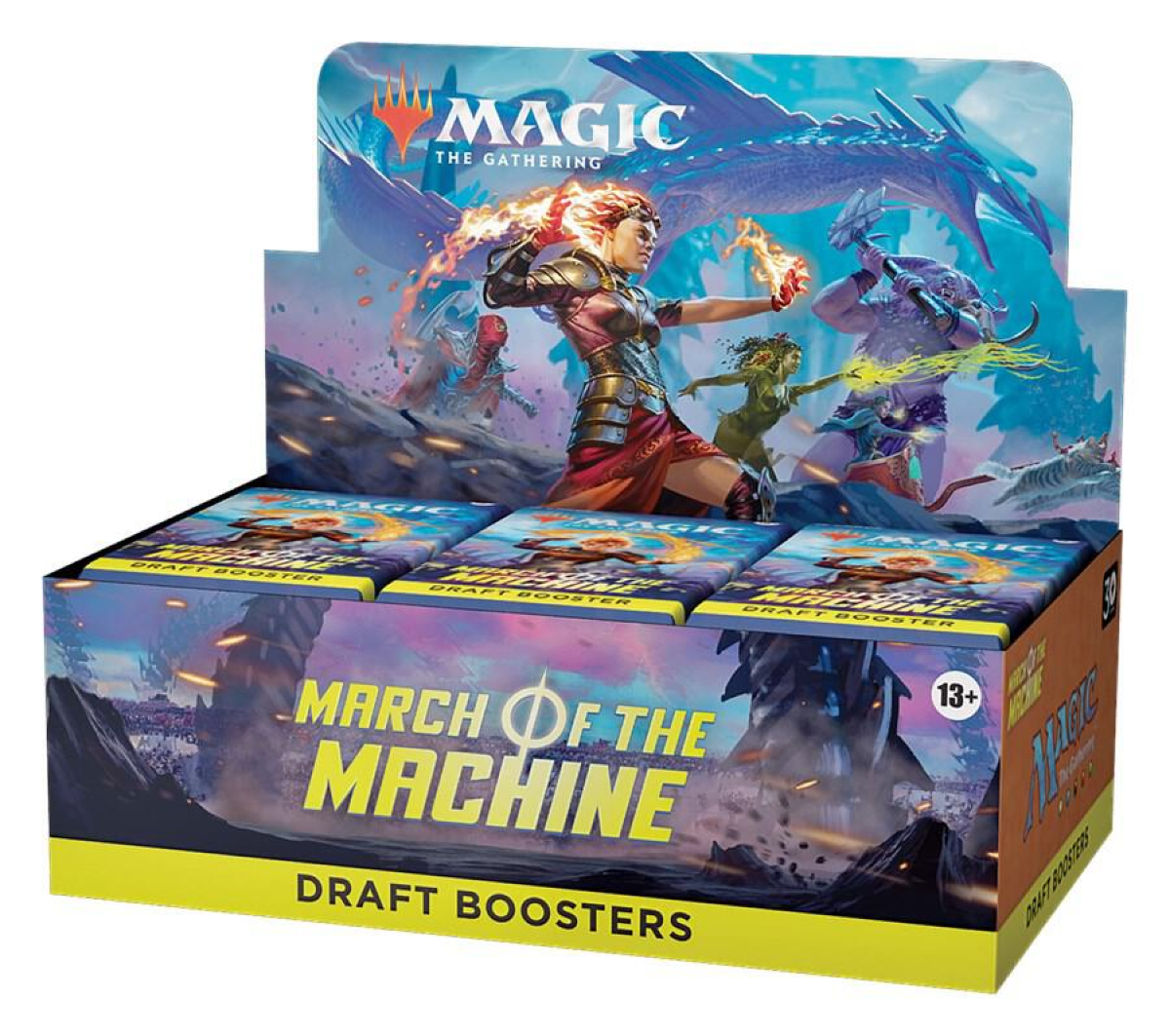
What's that? If you've never heard of this format, here's the quick version: imagine you're going to play a small tournament but, instead of bringing a pre-built deck, you're going to build it right before playing, from cards picked out of several packs. How does it work? Super simple: everyone grabs a booster, we all open them at the same time, snoop through the cards, pick one and pass the rest to the right. Then we pick another from what we got and pass again, and so on until all the packs are gone. We repeat the whole process with two more packs each (alternating which way they go around). By the end of the fun, everyone's walked away with 42 cards, and with those (plus as many lands as you want to add) you have to build a deck of at least 40 cards (whatever you don't use is your sideboard) to play the much-anticipated tournament. Sounds good? That's because drafting brings out the best in Magic. And counteracts the worst.
The draft format has been with Magic since the very beginning, which isn't surprising given that one of the two games Richard Garfield cites as influences is Strat-O-Matic's baseball collectible cards, which sought to simulate the sport. And it's from that world (baseball, basketball, football) that the idea comes: all the athletes form a single pool and the teams, in a set order, pick them for their rosters until everyone's been distributed. In game design that's known as an open draft, and it was the first kind used in Magic as early as late 1993 under the colloquial name Rochester Draft, since it debuted at an event in that New York State city. Basically, a pack was opened in the middle of the table and players took turns picking cards from that same pack. Three years later, in Los Angeles, the second Pro Tour switched to the Booster Draft format —the multiple-pack one— which ended up winning out for the simple reason that it let all the players pick cards simultaneously and, therefore, sped up the process.
Imagine you're going to play a small tournament but, instead of bringing a pre-built deck, you're going to build it right before playing, from cards picked out of several packs.
So Magic didn't invent drafting, but it did import it into the world of Trading Card Games. It wasn't until 2004 that it would become the core mechanic of a modern board game with the Japanese design Fairy Tale, and it took off from 2010 onward with the smash hit 7 Wonders, followed by other notable titles like Sushi Go, Blood Rage, Azul and Bunny Kingdom, the last one also by Richard Garfield. Today, drafting (in all its variants) is ubiquitous in the design world, as a core or secondary dynamic. The reason is obvious: it's a way of allocating resources interactively and quickly, distilling the randomness of an initial card distribution through a string of decisions that are simple and agonizing at the same time. When you draft you have to figure out which card is worth more, not just compared to the other options, but in combination with what you've already gathered. You're putting into play information management, risk management and the sharpness to spot synergies, or the creativity to invent them.
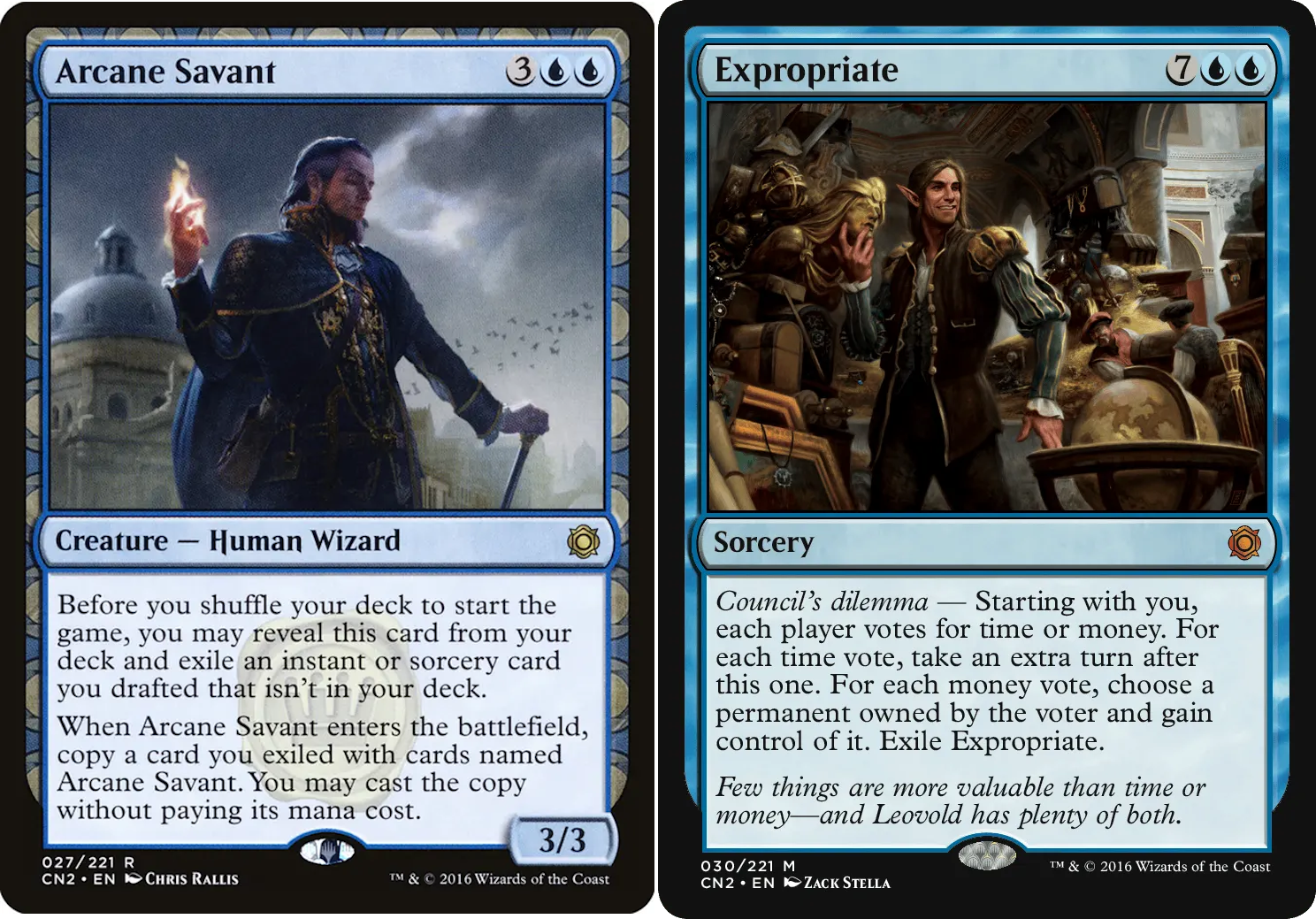
In Magic it's more popular than ever. Every set comes with its drafting guide and is designed with the limited environment in mind. Although thanks to some greedy Hasbro VP boxes now come with 30 packs, for decades they came with 36, which was just enough for two 6-person drafts or one 8-person draft with prizes. They've even designed expansions with mechanics that affect the draft itself. I had the pleasure of trying one of them, Conspiracy: Take the Crown, which on top of that was designed for more than two players. I'll never forget the eight-player game I won thanks to the glorious Arcane Savant + Expropriate combo and my opponents deciding to gift me six extra turns. Democracy simply doesn't work.
Does drafting really feel that different from playing constructed? It's not just a different beast: I firmly believe it's the best version of this game. And that's as much down to the merits of the format as to the vices of competing in Standard.
If I had to place myself in the holy trinity Rosewater coined, I'm at the intersection of Timmy and Johnny (a Tony?), very far from the Spike corner. I already said I'm bad and, while I like winning, it's not what motivates me to play. I'm much more interested in seeing the infinite possibilities of interaction between cards, enjoying the flavorful design of some wacky creature, living through a tense battle with plot twists and historic comebacks. I know my preferences bias me toward the most creative format, the one that produces the wildest results. But just as I admire and enjoy a lot of Magic the Gathering's design elements, both for their historical significance and for the potential they still have, playing competitive constructed Standard (that is, building a deck from all the cards released in the last three years) strikes me as just plain crap.
First of all, it's pay-to-win. No doubt about it. From its roots, Magic put game design at the service of the product and the revenue. The rarity system, the randomized card distribution and the existence of a secondary market all contribute to making a competitive deck cost a lot, a lot of money, and to any significantly cheaper alternative losing 9 out of 10 games. It's kind of cute to read that Richard wasn't worried about this problem in Magic's early days because of ante: you had to wager a card to play. And the logic went that a deck made only of expensive cards would create more incentive to beat it, balancing out the whole underlying issue. But no player liked losing their cards, and Wizards of the Coast wasn't thrilled about seeing its hit regulated by anti-gambling laws, which is why ante lasted a fleeting 2 years before it stopped being considered official. Money wins.
 Iván Ojeda
Second, the number of cards you have to keep track of, plus the constant updating due to the frenzied output of expansions, isn't viable for a normal adult. It requires (by design) that Magic be your number 1 hobby. And even so, nobody can defend to me the diabolical invention of a card you got no longer being legally playable. Not even Steve Jobs came up with obsolescence this planned.
But let's say you've got the money and the time to study every legal card of the moment. The whole point of Magic is supposed to be building your own deck, right? Being the craftsman of your own victory, winning with a machine that also expresses who you are. The thing is, the vast and appealing combinatorics of the Magic universe die on the fact that, since certain cards are (sometimes way) better than others, the vast majority of those potential decks have nothing to stand up to the crème de la crème, the archetypes at the top of the food chain. I'm sure the percentage of people who play their homemade blend can't be more than 1%, out of sheer laziness. Most players turn to netdecking, that is, copying some pro's decklist. And it's understandable, because if you're in that 1%, odds are your Rocky IV deck loses to whatever Drago is on top this time.
The real sin is that every Magic archetype pushed to the nth degree spawns the same kind of monster: an automatic race, blinders on, toward non-fun.
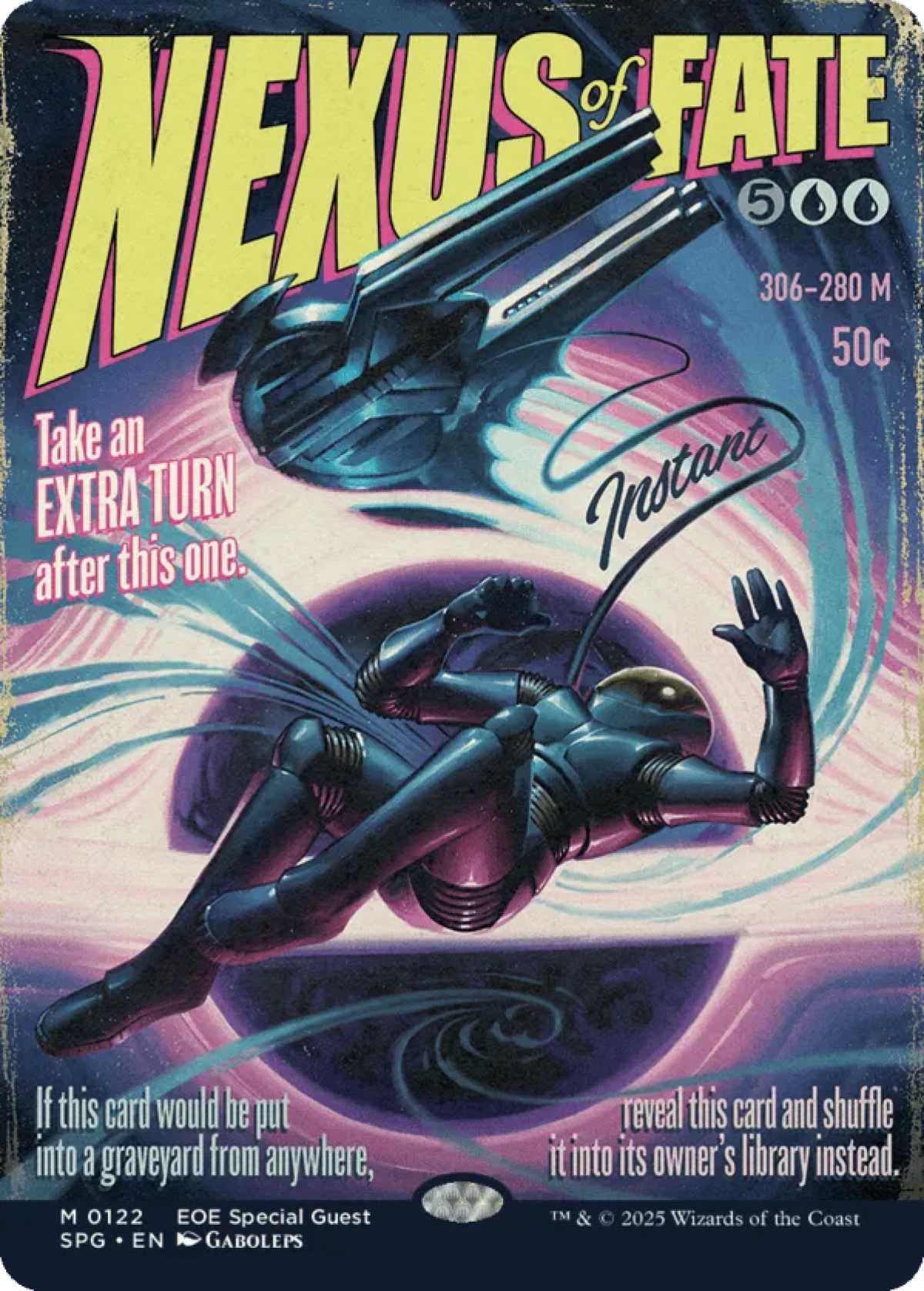
And up to this point, honestly, I wouldn't have a problem. Long live collective intelligence, and for the first problem there are paper proxies or dailies in digital. If playing with the elite decks each Standard has to offer were a spicy, expressive and epic experience, fine, whatever. The real sin is that every Magic archetype pushed to the nth degree spawns the same kind of monster: an automatic race, blinders on, toward non-fun. A parallel play session of tyrannical, psychopathic children. A suicide pact where the poison is anhedonia. Turn-3 burn, infinite extra-turn loops with Nexus of Fate, or whatever it was Dimir Rogues did are some of the torments I remember from my time on Arena. I wouldn't be surprised if on Judgment Day all the Magic neckbeards got together to gleefully discuss who lived through the most cancerous meta. Don't wait up for me at that one. I don't see the appeal.
By now it might seem like I hate Magic. Nothing could be further from the truth. What's happened is that I've tasted the forbidden fruit and there's no going back…
…because the draft format solves all these problems. For starters, it works with a much smaller card pool and, if you draft a single set, it's confined to an experience with a certain balance and design identity. A set's mechanics, themes, signposts and archetypes help you a lot in understanding the speed, aggression and power level to expect, to the point that glancing at a couple of cards or reading a 5-minute intro guide is enough to evaluate a pack, and you won't lose just because you drafted blind either. In game design, less is almost always more.
Even better: because of the random nature of boosters, we're not even really playing with the whole expansion, but with a subset of cards, about which we all gather divergent information since nobody can know every card that got opened. That bomb everyone fears and craves at the same time might not show up at all, or there might be five copies floating around. Drafting is navigating the multiverse of set design. This injects an extra shot of across-the-board luck that gives everyone a chance. And it also creates its own microclimate, with a very pleasurable sense of discovery that starts when you open the first pack and culminates when you play the tournament, when you realize the rumors were true and your friend really does have Sunfall AND Elesh Norn.
But opening a Bombita Rodríguez never settles the question, because making a card work in draft is no walk in the park. You're going to need other cards to back it up. Maybe you won't find the other pieces of the combo, or you won't end up with a decent curve. Maybe you won't even get enough cards in that color. A core part of drafting skill lies in reading the signals your tablemates send about which colors they're taking. Two textbook examples of signaling: if good red cards never reach you, don't count on there being enough for you to jump into that color too. At the other extreme, if the pack you opened (the only one where you know every card) comes back around and still has that bomb that costs three mountains, the color is obviously open. A lot of the time it's worth yanking the wheel hard, ditching everything you've drafted so far and jumping to another color because you've picked up on this info or because a card came your way that you just can't pass up.
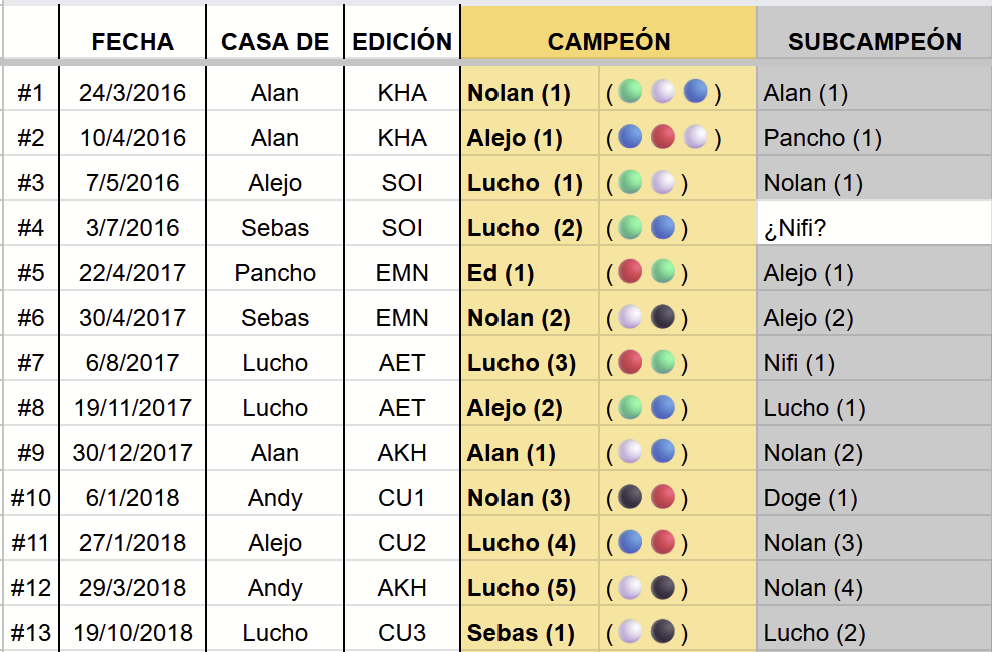
I'm not gonna lie to you, drafting isn't for the weak or the stubborn. You're unlikely to do well if you show up with a preconceived idea of what you want to play or marry your first pick. I learned that the hard way forcing Izzet in Bloomburrow (I ended up with half a bomb and in fifth place). There's a lot of suffering in drafting. My group has a whole litany of stock phrases we repeat while the packs go around. Most of them are variations on "what a piece of crap I'm building." Some get said to complain and share the misery. Others with the sneakier goal of flying under the radar as a threat. These days, after ten years of hearing them, they're part of the ritual. The one you always hear, usually at pick 2 or 3 for maximum laughs, is "okay, who's up for three-color?" The joke is that the vast majority of sets are designed for drafting two-color decks. Going three colors is something that shouldn't work and that you only do when you didn't manage to put the archetype together, or because you ended up with some bombs you absolutely have to splash, or… because you feel like it. And it can work out. In fact, an eighth of the drafts we have on record from two-color sets were won by three-color decks. And how could we forget the time we drafted Khans of Tarkir, one of the few sets specifically designed for three-color play… and an Orzhov deck almost won.
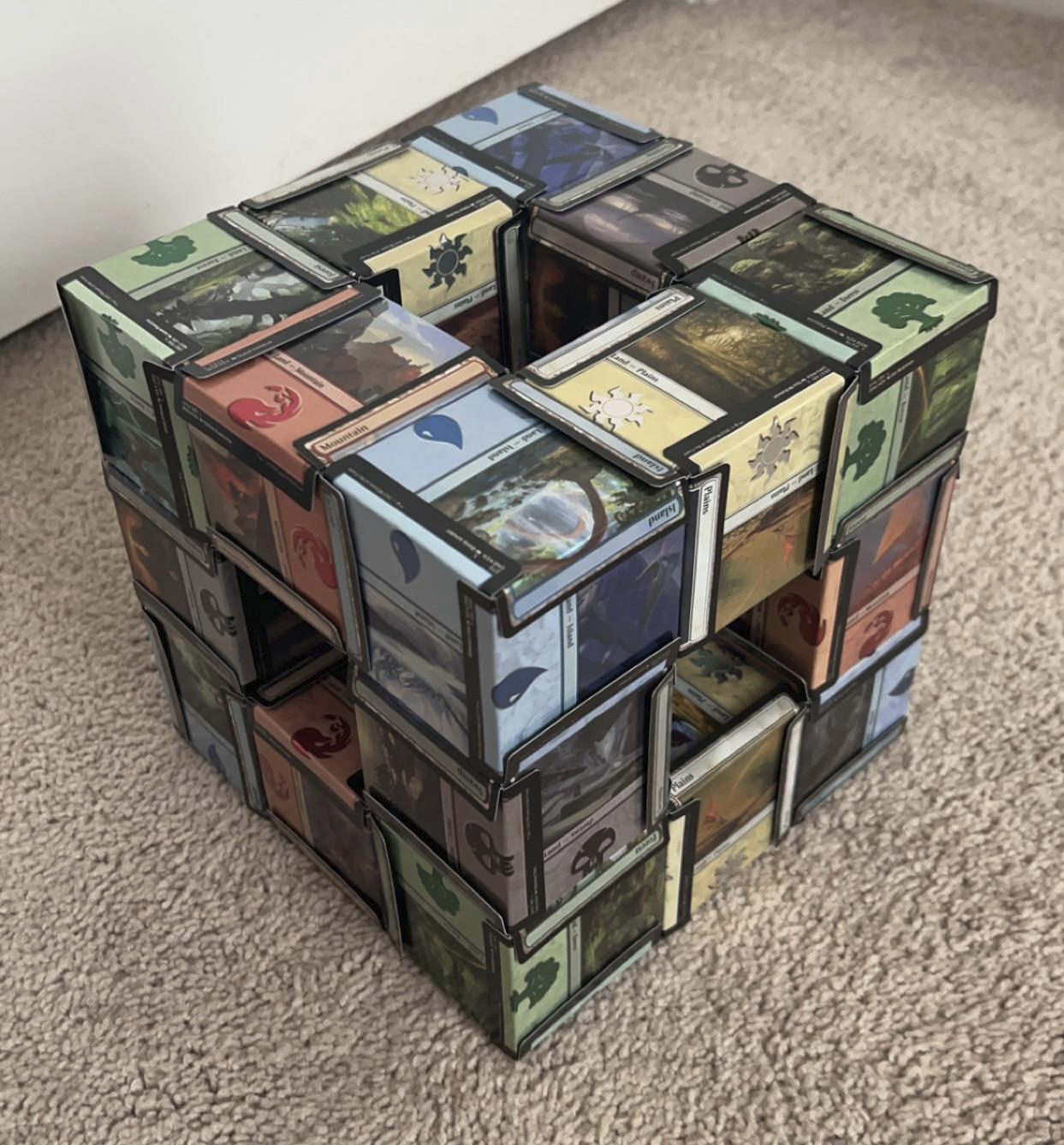
Because Magic draft is carnival. Archetypes blur together and for a while anything can happen. And it's also the sandlot. Everyone rolls out their rag ball, made with more heart than brains. No deck is consistent; nobody knows how to pilot the cosmic kite they just built. You're not even sure what colors your opponent is playing until they've dropped all their lands. Threat assessment? No clue, pal, around here a Grizzly can be a bomb.
Because Magic draft is carnival. Archetypes blur together and for a while anything can happen.
And that's when the best part of Magic shines, the playful heart of this marvel Richard gifted us: bluffing. Because nothing compares to deterring an enemy attack just by glancing at their graveyard a few times before saying pass. Nothing tests your poker face like the umpteenth land you draw on turn twenty and the nasty bomb you topdeck right after. And nothing makes you as nervous as attacking into a stalled board and unleashing a massacre of trades or, maybe worse, finding your opponent lets everything through with a smile. In a draft, beatdown stumbles; tempo is syncopated; control is nearsighted; and late-game glory can go to the jankiest card you prayed nobody had opened, or a common with more flavor text than abilities that gets crowned king on an empty board.
Keep your judges, your ELO and your winrates. Leave me at this party. Because anything can happen here, in Magic's draft. And for a while I just want to be a kid on a little dirt field, opening a pack, picking a bomb, dreaming of playing it in this tournament and winning it all.
PS: In this video Richard Garfield says his favorite way to play Magic is the "back draft" format, which works like a regular draft except whatever you draft is what your opponent will play. So your goal is to pass them garbage and make the garbage they passed you work. Gotta suck it up.
Y a cada colaborador se le paga por su trabajo. Las dos cosas dependen de los suscriptores.