The Power of the Fragment: From Magic to Dark Souls
The narrative of the incomplete. When video games and literature force us to imagine.

Dark Souls is one of the most significant games in the history of gaming. This is due to multiple reasons. One of them is that in a world where gaming has managed to establish itself solely as a passive entertainment industry, Dark Souls offers an incredibly steep learning curve that tends to drive away the vast majority of players.
Another reason, and the one that is relevant for this brief contribution, is that it radically perverted the way a story, a world, a universe unfolds (is presented, is revealed).
This radical way of 'showing' the imaginary world encompasses not only the soundtrack (whose uniqueness can be perceived in this incredible video by Jaime Altozano) but also the very narrative procedures. The narrative style offered by the Dark Souls saga (and its predecessor, Demon’s Souls, along with its offshoots like Bloodborne or Sekiro: Shadows Die Twice) relates to a formative experience of its writer, Hidetaka Miyazaki.
The question raised by this narrative mechanism is the following: how is it possible to create a whole from fragments?
It is said that Hidetaka Miyazaki, as a child, feverishly consumed fantasy literature (dungeons, dragons, wizards, etc.). However, there was a problem: the literature he consumed was (in its worldbuilding, in its 'magic system', in its political and metaphysical nuances) complex enough to be fully understood by someone his age. Miyazaki, then, according to various interviews, did not truly understand what he was reading; he only grasped the sense of the epics 'in parts', as if the magical worlds he tried to lose himself in were nothing more than a haze, a strange murmur.
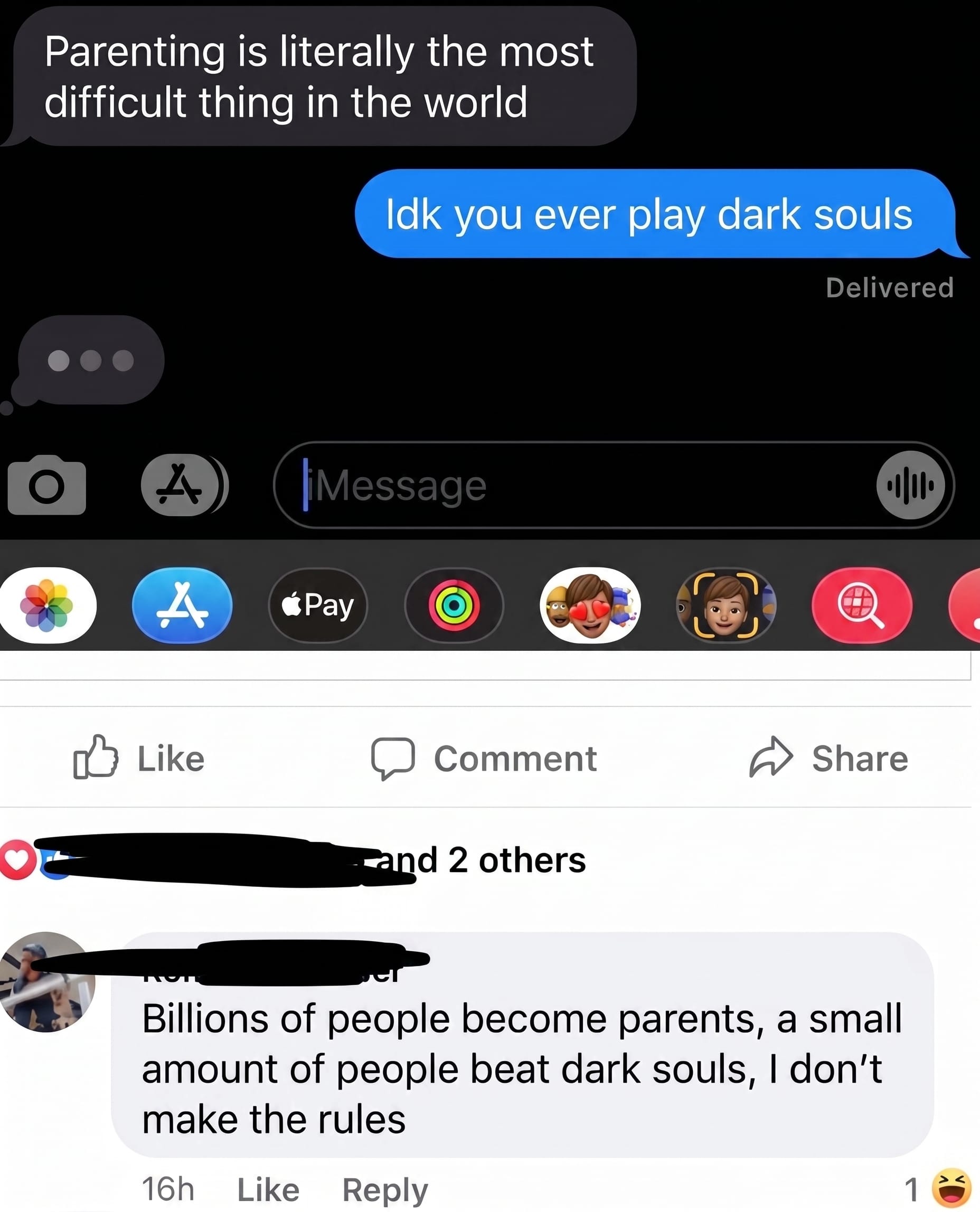
Miyazaki was left with only one option: to take charge of the fragments he encountered, and then intellectually reassemble them, creating units of meaning that could be far removed from those proposed by the books.
The absent competition (whether linguistic, gnoseological, or literary) ultimately became an asset and a creative resource for Miyazaki.
In a 2012 interview regarding the release of Dark Souls: Prepare to die, a journalist asks:
Does the scarcity of dialogue add extra pressure to the localization process [of items], given that each line must carry more weight in conveying the story and gameplay direction?
And Hidetaka Miyazaki responds:
One of the goals of the concept behind Demon’s Souls was to convey more with less; hence, the scarcity of dialogue is of great importance. We strive to the utmost in localization. I’m not sure I’ve perfected this narrative method; there are probably aspects that weren’t made sufficiently clear or could have been addressed more effectively. When I was young and read fantasy novels (at a time when I perhaps only understood half of what I was reading), I was drawn to not knowing exactly what was happening. This led to the idea that it might be possible to recreate that same feeling in a video game. My narrative approach stems from that inspiration: from the shadowy aspects of a story or legend that are not clearly discernible.
The poetics developed by Miyazaki does not necessarily seek to direct the viewer towards an exegesis and infinite interpretation practice where, at the end of the journey, something like a 'meaning' emerges. On the contrary, everything indicates that Miyazaki prefers to reconstruct the childhood experience of confronting a world that is already opaque, diffuse, where the constant gaps in information force the imagination of the viewer, reader, or player to intervene actively.
The question raised by this narrative mechanism is the following: how is it possible to create a whole from fragments?
Romanticism
Let’s take a brief historical detour.
Romanticism, for instance, found in the fragment an interesting space for operation. In a book titled The Literary Absolute, Theory of Literature of German Romanticism, Philippe Lacoue-Labarthe and Jean-Luc Nancy assert that early romanticism (also known as Jena romanticism) did not see the fragment as a residual remnant of an unfinished work, a mere disaggregated part of a whole, but rather as an aesthetic project that embraced incompleteness as an essential gesture.
Unlike Montaigne and Pascal, for example, where the fragment was always the mark of a ruin, of a forgotten quotient with no operational value, romanticism found in the fragment a 'seed'. Novalis, following the same idea, understood the fragment as 'grains of pollen'; that is: not simple isolated fractions, not compulsive and sterile dissemination but the dispersion of a whole capable of generating future harvests.
Friedrich Schlegel, one of the movement's proponents, articulated this very clearly in the famous fragment 206 of the magazine Athenaeum:
Like a small work of art, a fragment must be isolated from the surrounding world and be, in itself, complete and perfect like a hedgehog.
Schlegel understood the fragment as a tool or device capable of taking charge of the absolute without the need to construct it, redundantly, systematically. The fragment, for the Jena romantics, and within the same movement, both created and dismantled the system, coagulated and liquefied the project. In this dialectical and infinite play between completion and dispersion, disorganization itself emerged as a work of art.
In fragment 22 of the magazine Atheneum, Schlegel continues:
Having a sense for projects, which could be described as fragments of the future, is distinguished from the sense for fragments of the past only by direction—progressive in the former and regressive in the latter. The essence lies in the ability to idealize immediately while also realizing the objects, completing them, and partially bringing them to fruition. And since what is transcendent in the present is precisely that which relates to the union and separation of the ideal and the real, it could be said that the sense for fragments and for projects constitutes the transcendent component of the historical spirit.
German Expressionism
With the necessary precautions, it is possible to say that something of the ethics of the fragment persists in multiple pictorial traditions. Unlike classicism, where the work was the perfect execution of a preconceived idea and form, always contained within itself, expressionism, for example, sought to address the inherited problems.
It would no longer be satisfied with merely representing the fragment but would think and create work through it. In that act, it would reveal the limits of objective representation, and with that, the ideological and cognitive impossibility of so-called classical harmony.
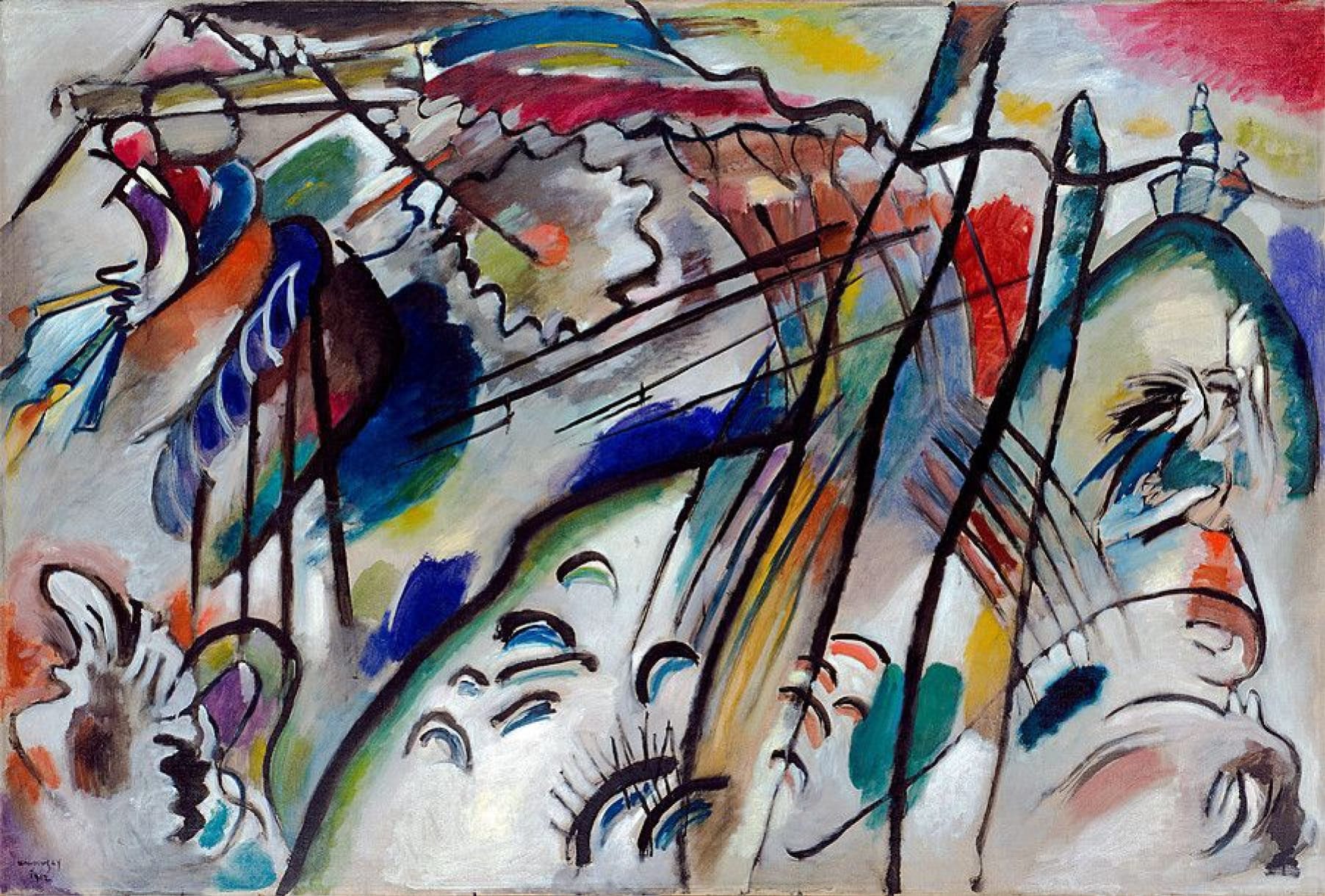
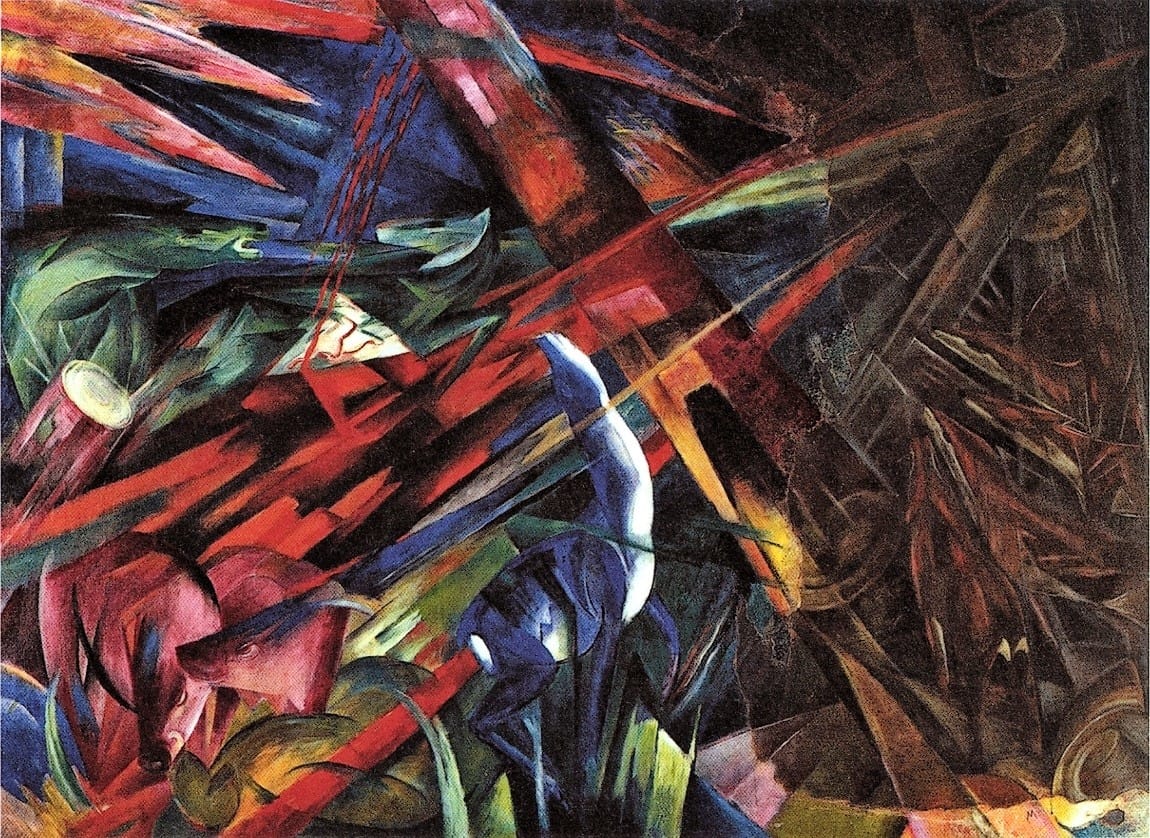
Two paintings are more than eloquent in demonstrating this point.
The first is Improvisation 28 (1912) by Kandinsky, where no stable compositional center is identifiable and where the escapes compete with each other in a maddening way, where the figures (fields?, faces?, castles?, boats?) barely survive the stroke.
The second could be The Fate of the Animals (1913) by Franz Marc, co-founder along with Kandinsky of the group Der Blaue Reiter. This painting bears the inscription on its reverse, 'And all being is flaming suffering' ("Und alles Sein ist flammend Leid") and is often interpreted as an apocalyptic and prophetic vision of World War I. It is composed entirely of diagonal lines that subvert stable perspective. Not only is there no center or harmonious composition, but it becomes practically impossible to understand at first glance what is happening: we can only distinguish parts of wolves, impalas, deer being pierced by, again, spears?, swords?
The Fragment in Contemporary Popular Culture
Let’s return to geek culture.
In Hidetaka Miyazaki and the entire Souls saga, the ethics of the fragment does not at all undermine the task of understanding; rather, the ethics of the fragment draws the viewer into a practice of constant and active attention. Now, we cannot say that Miyazaki is the only one who narrates this way in contemporary times, nor that he was the pioneer of this narrative style.
Many artists and philosophers have found in the fragment a way to produce work. Walter Benjamin did so in The Arcades Project, Camilo José Cela in The Dark Labyrinth 5, Samuel Beckett in Stories and Texts for Nothing; Jonas Mekas did it in As I Was Moving Ahead Occasionally I Saw Brief Glimpses of Beauty, and Roland Barthes in Fragments of a Lover's Discourse. More recently, Mark Z. Danielewski has done it in House of Leaves and, in the national field, Juan Mattio in The Nation of Daydreams.
The gaming industry has not lagged behind. Games like Outer Wilds, Kentucky Route Zero, Disco Elysium, The Stanley Parable, work from this perspective.
The ethics of the fragment does not at all undermine the task of understanding; rather, the ethics of the fragment draws the viewer into a practice of constant and active attention.
But there is something curious about fragmentary writing, something that, at a certain point, all of us who have entered these fictional worlds sense: that despite any claims of authorial closure (which means, individual), fragmentary writing is always essentially plural. Now, not only is the fragment plural, but the agents responsible for recomposing it are also plural, each in their own way, the whole. Thus, the whole is not obtained by adding the parts as in a mathematical operation, but we already find it co-present in each fragment.
The fragment operates, according to Schlegel, as a 'colorful heap of occurrences' whose unity is not imposed from outside but arises from the 'free and equal coexistence' of its organic elements.
This thesis is not madness if we see that, indeed, and at least in the case of Dark Souls, there are multiple pages, forums, and videos (like those of Hawkshaw and VaatiVidya) where, in a task of collective interpretation, attempts are made to recombine the lore of the universe. Not to mention the works of George R. R. Martin, Patrick Rothfuss, Brandon Sanderson, and many others in the fantasy universe, which to this day (finished or not) remain alive in the discussion maintained by the reading public, as well as the famous and more than succinct Three Laws of Robotics by Isaac Asimov, which not only produce conventions of freaks debating their applicability but have also made their way into the world of philosophy and computational and information ethics alongside authors like James H. Moor.
Pearl Death, by B. R. Yaeger
In July 2026, an ambitious project landed in Argentina via Walden Editora. Its name is Pearl Death, and its author is B. R. Yaeger, an American writer.
Pearl Death is not specifically a novel. It is more of an experimental work presented as a deck of one hundred illustrated cards. Each card represents an object (weapons, relics, medical instruments, garments, ritual artifacts) accompanied by a brief text. The collection reconstructs, always in an unfinished, circular manner, the history of a civilization devastated by a plague called Pearl.
B. R. Yaeger seems to take charge of the tradition to which the experiment belongs. Pearl Death plunges into a strange, undoubtedly medieval world that draws elements from what's known as dark fantasy, where various political, religious, and medical factions grapple with war, faith, and science in the face of a devastating epidemic. The proper names that appear (Fabian, Gergo, the Church of the Surgeon, the Witchlands), which could offer us some interpretive coordinates, emerge only as a whisper, the passive murmur of a decaying world.
Pearl Death thus offers multiple openings. On one hand, the letters do not saturate the overall meaning of the narrated universe. As a monumentalized fragment, Pearl Death enables the reader (or perhaps the player?) to actively and participatively fill in all those dark and empty spaces. On the other hand, unlike some of the cited works, Pearl Death does not concern itself with protecting a linear or causal narrative. While in As I Was Moving Ahead Occasionally I Saw Brief Glimpses of Beauty the viewer is bound to the filmic, that is, to the progression of editing previously decided by Jonas Mekas, in Pearl Death it becomes possible to shuffle the reading experience.
The opening even extends to a parodic, metadiegetic gesture, where Pearl Death even offers us an exit from the device itself.
Magic: The Gathering
B. R. Yaeger’s experiment is not very different from what we’ve come to expect from Magic: The Gathering.
For those who are unaware, MTG is a collectible card game created by mathematician Richard Garfield and published in 1993 by Wizards of the Coast. Since its release, MTG has become one of the most influential strategy games on the market, with thousands of cards published across different editions and millions of players around the world.
The rules of the game, at least for this note, are not of interest.
What matters here is how MTG has managed, over the years, to become an astonishing narrative experiment. The commercial success of the game forced its creators (just as it happened with Pokémon, Digimon, Yu-Gi-Oh, etc.) to constantly expand the fictional universe in which MTG unfolds.
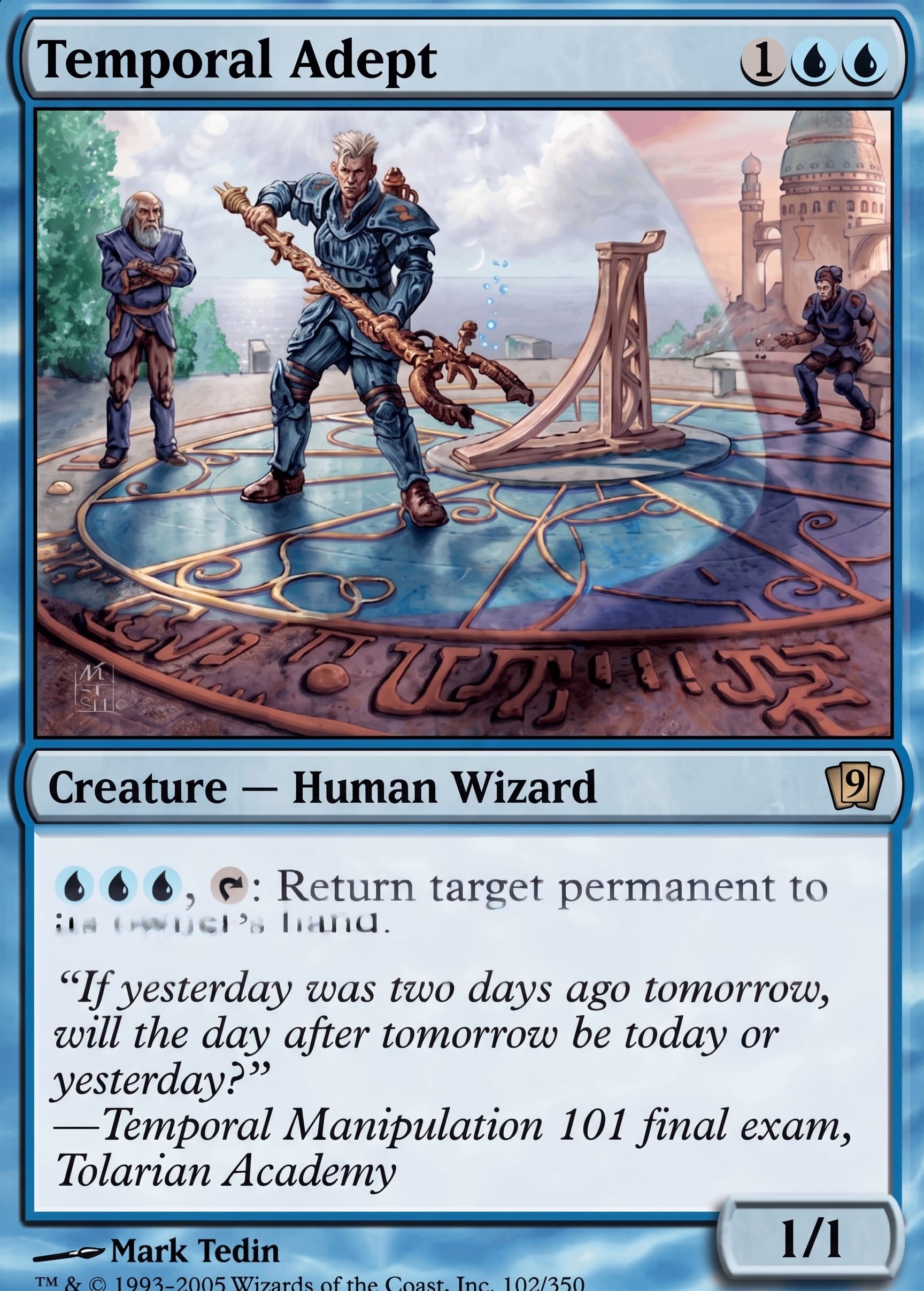
In this way, MTG has constructed multiple “planes,” each responding to a particular aesthetic, a specific narrative tradition, and with more than appealing lore. The MTG Multiverse includes, just to name a few, the plane of Ravnica (an Ecumenopolis, a fantastic city-planet), the plane of Innistrad (gothic horror), the plane of Dominaria (classic fantasy), the plane of Phyrexia (close to biohorror, mechanical horror, and body horror), among others.
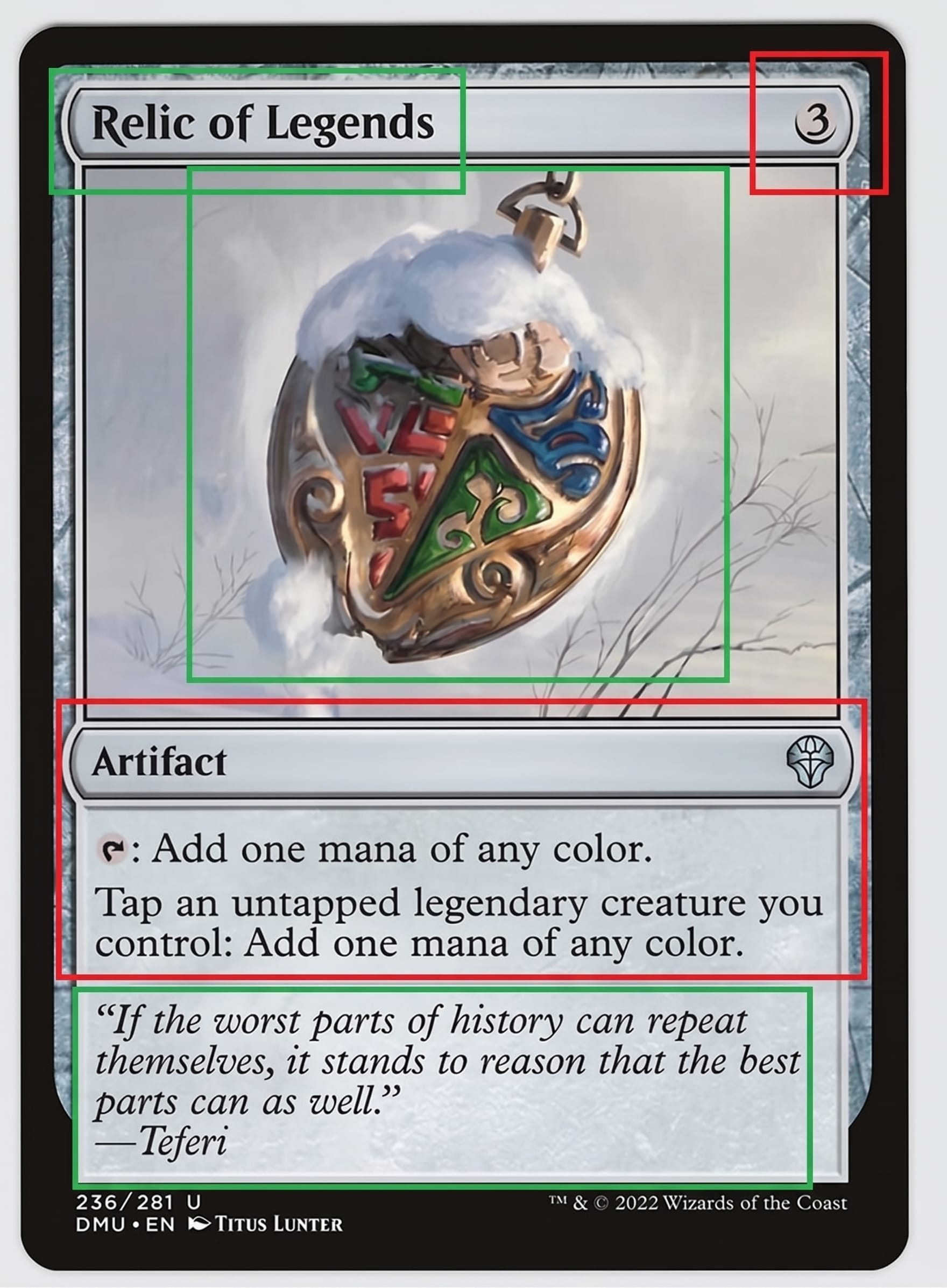
Each card in MTG is composed of two "discourse devices." The first is strictly utilitarian, aimed at the information each card carries for use in the game (in the next image, in red). The second element, which we could call the “paratext,” is composed of an image and a brief caption (in the image, in green). This second paratextual element allows us, whenever we step away from the game, to delve into a fragmentarily narrated story, composed of brotherhoods of heroes and wizards, rogues and bards, marvelous objects and creatures, endless battles, promises, and enchantments.
Final Words
Fragmentary projects often confront us with a culturally "unacceptable" behavior in these times; namely: the inability to grasp the entirety of a gesture in a single moment, the inability to instantly reproduce a message. In short, the behavior, the ethics of not understanding.
In a world that insists on forming totalities where none exist (the idea of nation, the idea of the cloud, the internet), in a world that narrates itself as a ghostly totality; in a world where mathematization, algorithmization, and taxonomization (that is, classification and prediction) seem to be the only interpretive devices from which we approach the world, perhaps the ethics of the fragment operates as a breath of fresh air.
It may be a noble task to attempt not to understand: not to understand the true composition of the cosmos, not to understand our place in the universe, not to understand the moral norm we are supposed to follow, not to understand the message of science, politics, and, of course, literature and art.
In her latest book, No entender. Memorias de una intelectual, Beatriz Sarlo states:
Not understanding was my first and definitive experience. I began not understanding and, almost immediately, I accepted that this was the passage point to everything worthwhile. (…) Not understanding is the initial chapter of a journey. Accepting that I do not understand also implies accepting that there is something there, in the text or in the object, that eludes my skills. I lack something to understand what I do not understand.
In a world that violently seeks radical homogenization of culture, the aesthetics of the fragment brings forth its multiple meanings only through accumulation and constant attention. If metaphor is possible, the ethics of the fragment is one of the few aesthetic traditions that today enable interpretive archaeologies. These “ruins” of narrative determine, to a certain extent, a particular disposition of contemplation and reading, which obliges itself to focus attention, setting aside, at least for a brief moment, the distractions of daily life.
In a world that violently seeks radical homogenization of culture, the aesthetics of the fragment brings forth its multiple meanings.
Perhaps today, not understanding, and against all standardized culture, can lead us to a new form of enjoyment. Not understanding, that is, the impossibility of closing off a meaning, can open up space for another realm: mystery. And not the mystery that some theologians have proposed: that of the so-called “God of the gaps,” which insisted that everything science could not explain was lateral proof of divine existence. But rather the one that points to the almost irremediably endless nature of any interpretive endeavor.
In a world like ours, where everything is already "served up," it might be smarter, more fun, to accept ourselves as non-understanders, and pick up a chisel, a brush, and get back to work.
In a world like ours, maybe it's time to call on all the archaeologists out there.
There’s still so much left to uncover.
Las notas de 421 no tienen paywall
Y a cada colaborador se le paga por su trabajo. Las dos cosas dependen de los suscriptores.