Vampire: The Masquerade: The Game That Changed Roleplaying in the Nineties
With a tragic narrative and a simple system, Vampire changed role-playing games forever. Here's why it hit so hard in Buenos Aires.

Until the early nineties, tabletop roleplaying ran on a pretty fixed grammar. A party walks into a dangerous place, kills whatever it finds, walks out with gold and levels up. Dungeons & Dragons established that sequence in 1974, and fifteen years of game designers turned it into common sense. The monster was always on the other side, written down on the notes of the game master, DM or GM.
In 1991 White Wolf published Vampire: The Masquerade (Vampiro: la Mascarada, as we knew it down here) and flipped the roles. The players became the monsters. So much so that the character sheet, besides keeping track of the damage we've taken and our abilities (supernatural Disciplines included), has one unique tracker: Humanity, the score that ties us to our past and keeps us from the Cainite mindset, and that is always on the verge of slipping away, pushed by the instincts of the Beast that has ruled us ever since we were turned into Kindred, condemned to live off the night and blood.
In 1991 White Wolf published Vampire: The Masquerade and flipped the roles. The players became the monsters.
The publisher called it “personal horror.” It's not about the scare of something chasing you down a hallway, but about the intimate, psychological problem of waking up every night hungry for life and having to decide whose body you're going to drain of blood so you can exist a little longer in a world of apathetic immortality and political wheeling and dealing.
You are the monster
Vampire uses the Storyteller System, which works with "pools" of ten-sided dice: you add attribute and ability, roll against a difficulty, count successes. Next to the bookkeeping of the eighties versions of D&D it was almost provocatively simple, and that simplicity was no doubt programmatic and a reason for the game's success. In Vampire the table doesn't spend four hours resolving an ambush in an alley. It spends them at a soirée where you have to use charm, small talk and backroom maneuvering to get permission to feed in a neighborhood that belongs to another group of vampires. It's a game of bureaucracy, politics, intrigue, occultism and seduction. Everything Requiem, the legendary basement at Avenida de Mayo 948, would have loved to be, minus the tons of dice needed to do anything at all.
The setting is our world, with the same cities and the same geography, but with every imaginable supernatural conspiracy made real, all of them. The conspiracy iceberg meme turned into lore. Vampires descend from Cain (in a beautiful biblical reinterpretation), have been in hiding since the Inquisition and are organized into clans: the Ventrue lead, the Toreador collect artists, the Nosferatu are deformed, live in the sewers and know everything, the Malkavians are insane in a way the game treats as a form of knowledge, and so on. Above the clans are the sects. The Camarilla upholds the Masquerade, that is, the rule that humanity must never find out vampires exist; the Sabbat considers that rule a humiliation; and the Anarchs want to throw them all out, a very era-specific spirit that in Argentina we'd see clearly in 2001.
Vampires also have something called Generation. The closer you are to Cain in the chain of Embraces (“Embrace”: the turning of a human into a vampire by another vampire), the more powerful the vampire. A third-generation vampire is a sleeping god. A freshly turned thirteenth-generation fledgling (your typical PC) is an errand boy.
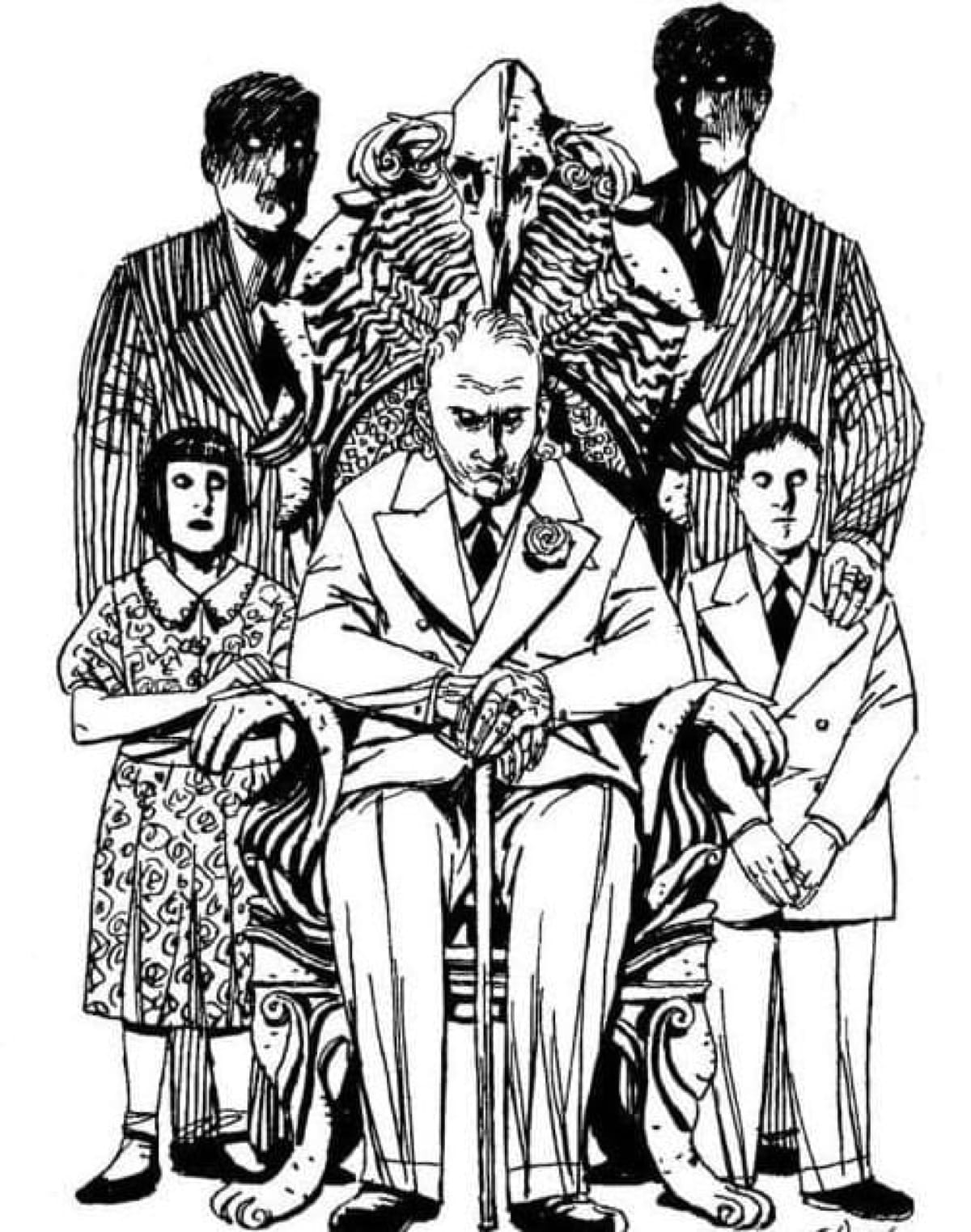
That, I think, is a big part of the explanation for why the game hit so hard back then and why it still draws fans, both to its older editions and its newest ones, with their changes in systems and aesthetics. Vampire turned immortality into a form of property. The city is already carved up into hunting grounds someone claimed two hundred years ago, favors are logged as debts, offices never turn over because nobody retires and nobody dies. A gerontocratic world. The player character arrives late to a world where everything already has an owner. And the player steps into that same logic, with endless lore built by writers, historians and literature specialists, in endless books that rebuild world history with a vampiric key.
Atlanta, 1991
White Wolf came out of a merger. On one side was White Wolf Magazine, run by brothers Steve and Stewart Wieck. On the other, Lion Rampant, Mark Rein·Hagen's company, which had just published Ars Magica, a game about medieval wizards with odd, good (and pretty convoluted) ideas that hadn't yet caught on with a mass audience. The two came together in Atlanta, and out of the mix came White Wolf Game Studio.
Vampire came out in 1991 and the following year won the Origins Award for best rules. The first edition worked, but the one etched into everyone's memory is the second, from 1992: the one that set the look of the books, the one that got translated, the one that got photocopied (how could we forget the spiral-bound supplements you could find at Mordor Toys or Parque Rivadavia), the one that sustained the growth for six years until the 1998 revised edition (which many call the third edition, though technically it isn't).
The city is carved up into hunting grounds someone claimed two hundred years ago, favors are logged as debts, offices never turn over because nobody retires and nobody dies. A gerontocratic world.
Then the publisher did something that wasn't common in the business. Besides piling up supplements and extra sourcebooks, it built a shared universe. The same logic Marvel would later pick up. Werewolf: The Apocalypse in 1992, Mage: The Ascension in 1993, Wraith: The Oblivion in 1994, Changeling: The Dreaming in 1995, among others. They all take place in the same cities with the same cosmology, so the werewolf that shows up as a threat in a vampire chronicle has its own rulebook, its own internal politics and its own reasons. The whole thing was called the World of Darkness.
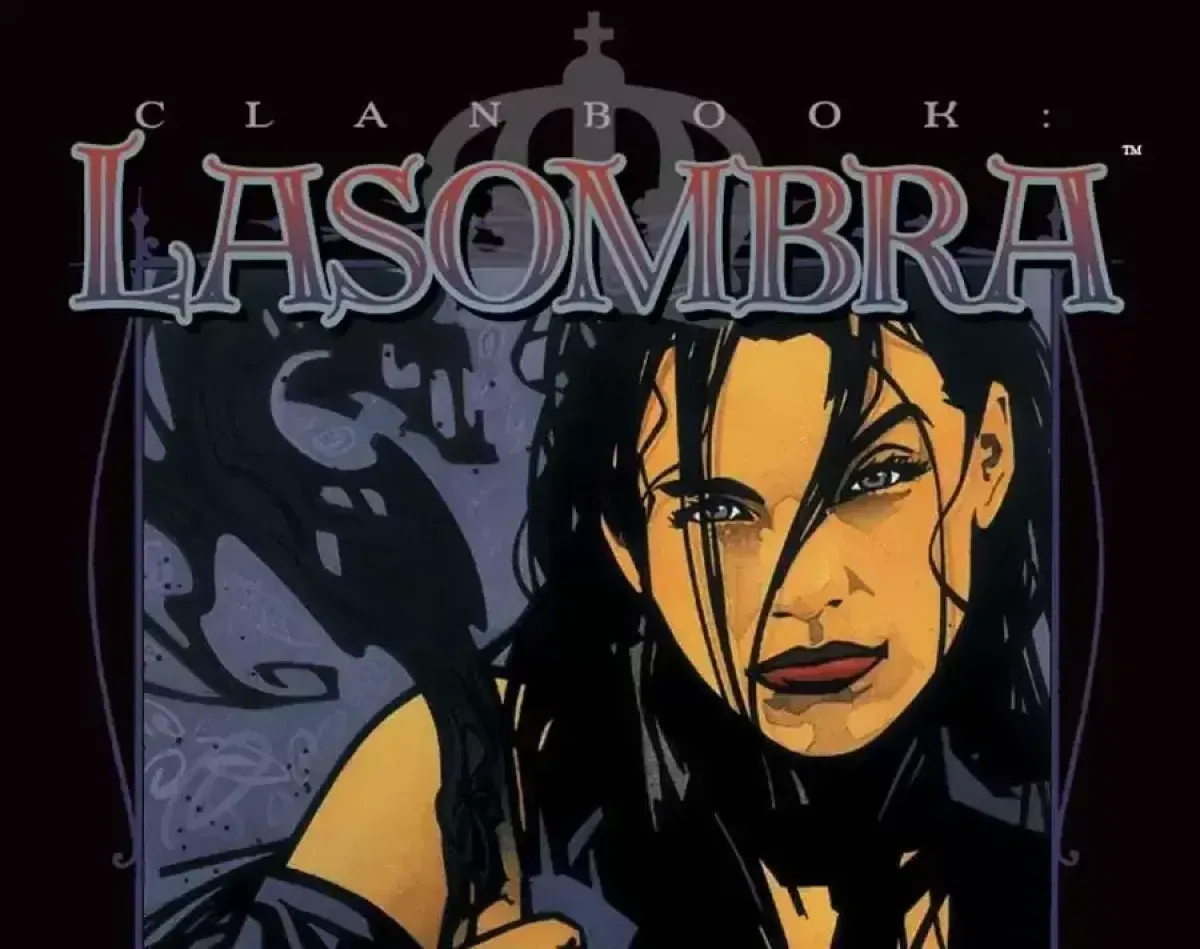
The other bet was the metaplot. The supplements weren't neutral: they told an ongoing story, with characters who died and wars that broke out between one book and the next. Buying Chicago by Night wasn't buying a setting, it was buying a chapter of a novel your table was going to inhabit. That generated subscription-style loyalty and, over the years, dead weight: to get into the game in 1999 you had to catch up on eight years of internal history. Ah, Lucita of Aragon, Lasombra, I met you late, in the first decade of the 2000s, and you were a teenage crush.
Two more pieces are needed to grasp the scale of the phenomenon. The first is Mind's Eye Theatre, the live-action version, which took the game to bars, plazas and conventions and brought in people who came from neither wargaming nor comics: theater people, people from the goth scene and a far higher proportion of women than the hobby had ever had, something Shannon Appelcline highlights in his history of roleplaying. This was a genuine oddity: suddenly a school in Palermo became, on Sundays, the court of a Camarilla Prince, and there were girls with fangs and combat boots LARPing a Toreador surrounded by chubby RPG nerds. Vampire probably staved off the incel horde for several years through sheer socializing and dice. A second piece of the story, perhaps less known and certainly less successful, is Jyhad, the card game Richard Garfield designed in 1994 for Wizards of the Coast, barely a year after Magic, later renamed Vampire: The Eternal Struggle.
What gothic-punk means
The label came from the publisher itself. It describes a precise move in how to understand the world Vampire was designed in. The gothic brings the architecture, mourning as an aesthetic (Recoleta Cemetery), aristocracy, melodrama and the idea that the past is still in charge. The punk brings the street, the omnipresent urban garbage, the services that don't work and the suspicion that institutions are a painted screen hiding a raw, visceral reality. Put the two together and you get a city where a neo-Gothic cathedral sits next to a corporate tower, a squatted building and a patrol car bought so the cops can pin a robbery on someone. Buenos Aires was right there in the nineties, in the 2000s and, without a doubt, today too.
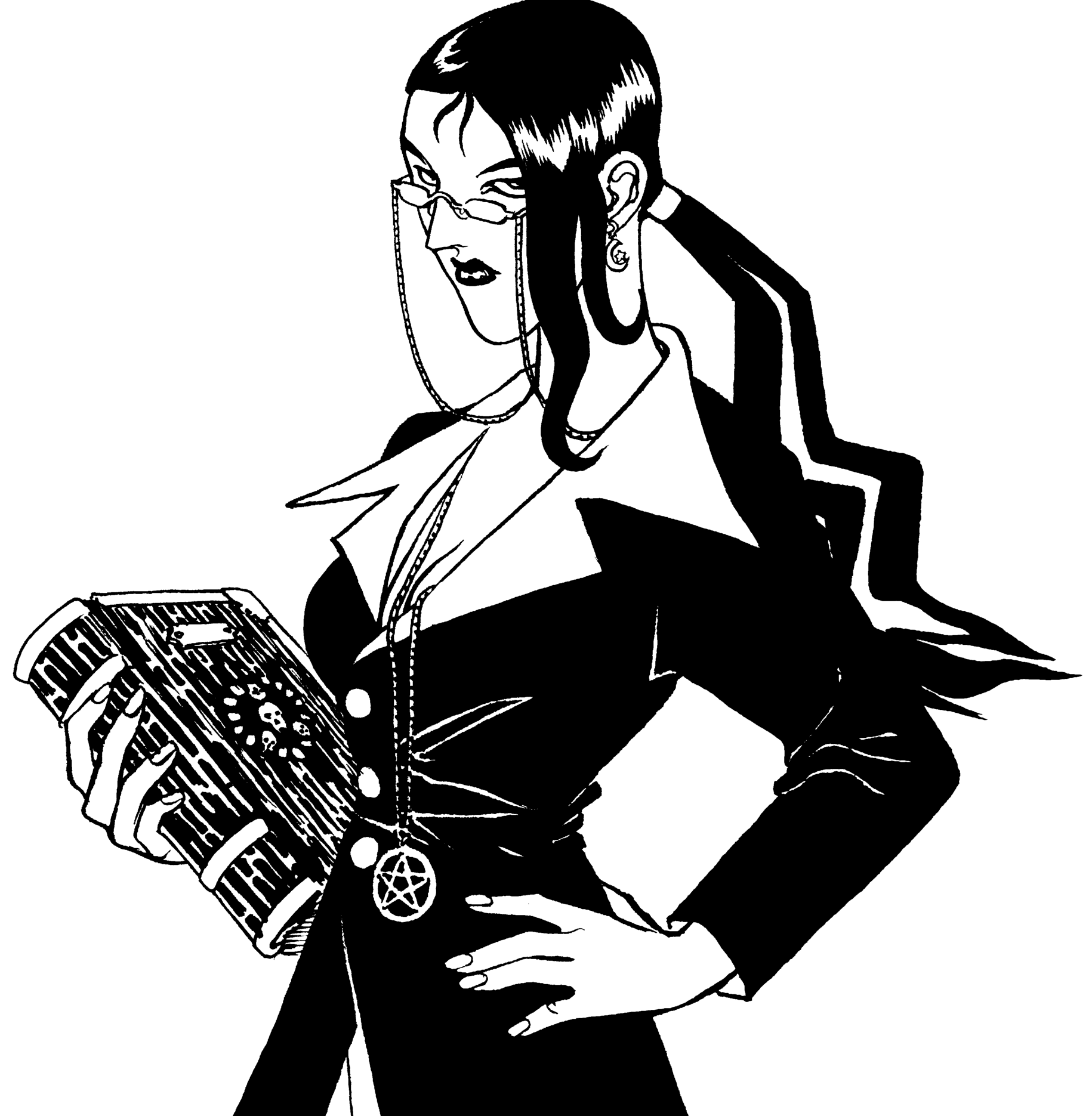
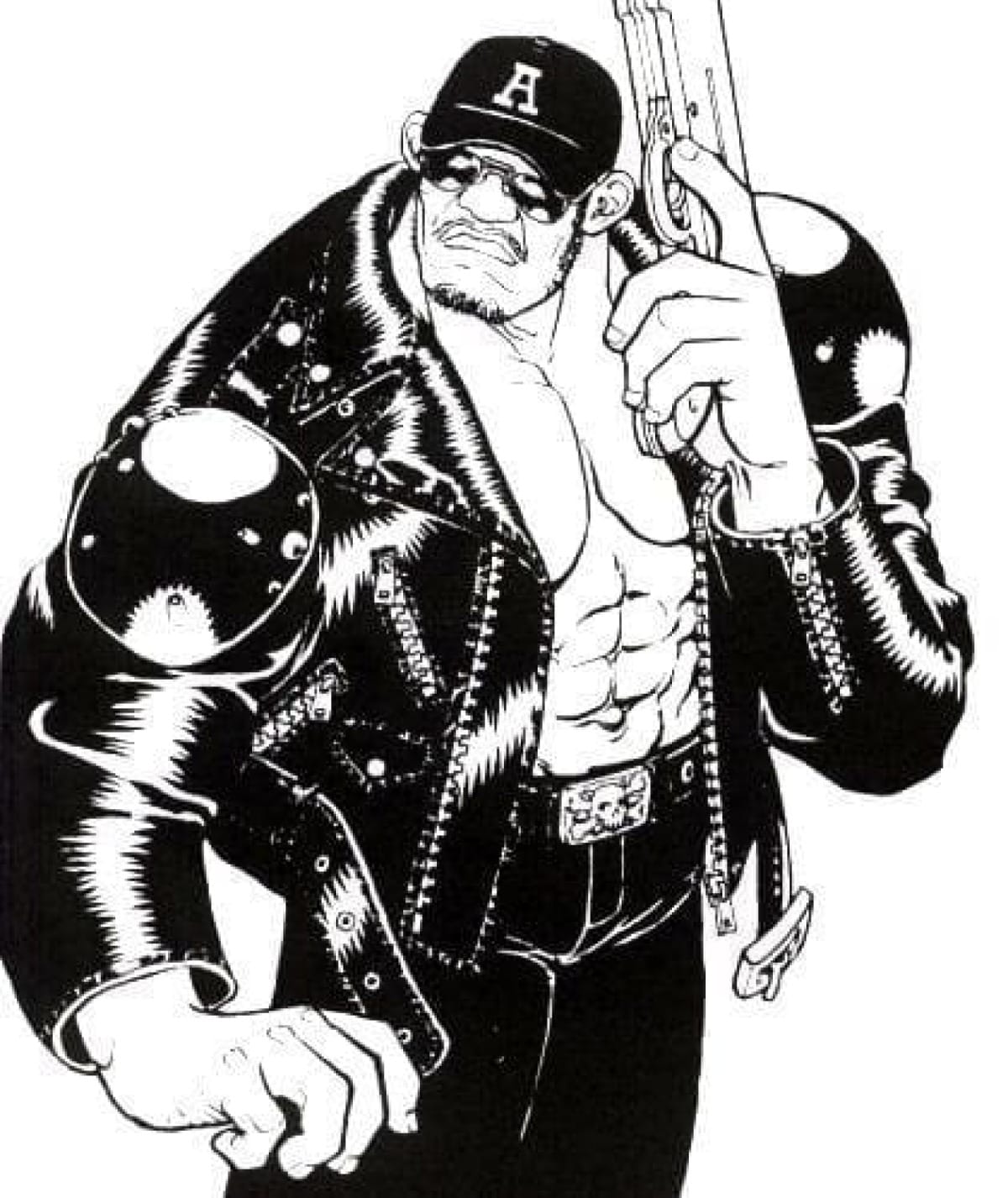
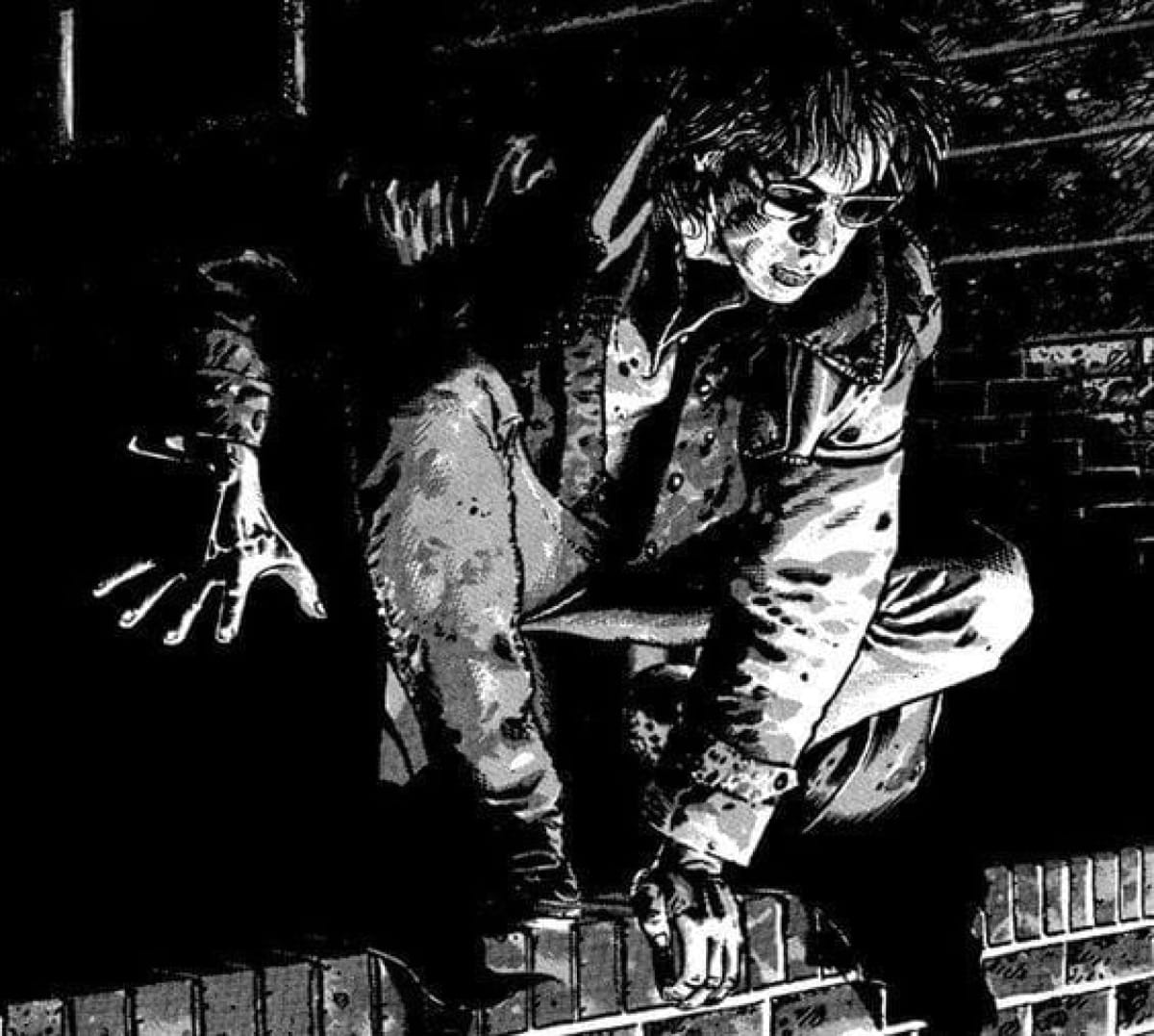
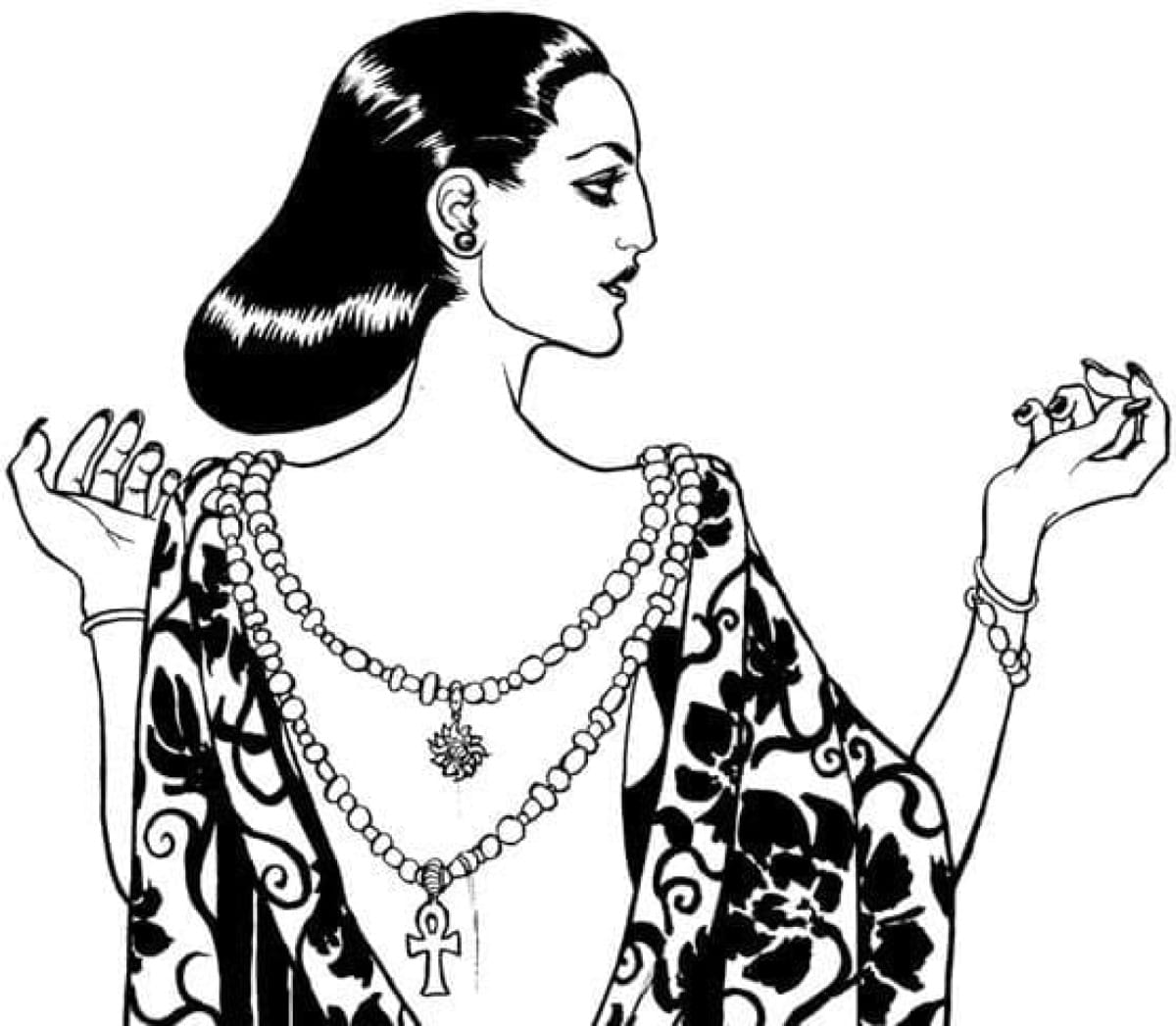
The look of the books was mostly Tim Bradstreet's doing; he made a series of almost photographic black-and-white portraits for the game, working with models who posed: leather jacket, cigarette, a sullen sidelong glare, not a fang in sight. How lovely the Tremere was with her grimoire, her pentagram and her hot-intellectual-secretary prêt-à-porter. Bradstreet has said that Near Dark, Kathryn Bigelow's 1987 film, was a decisive influence on that work. Ten years later he was doing concept design for Guillermo del Toro's Blade II and drawing covers for Blade and The Punisher for Marvel. The road between the game and the movies ran both ways from the very beginning.
The rulebooks also came with suggested music lists: a kind of hyperlink before fast internet. Everything you'd expect showed up there: Bauhaus, Sisters of Mercy, Nine Inch Nails, Type O Negative. The long black coat we later saw on The Crow in 1994 and on the characters of The Matrix in 1999 was already drawn in those books. There's been plenty of speculation about the influence of Vampire on the aesthetic the Wachowskis used.
The interesting thing is that this aesthetic wasn't set dressing, as aesthetics never are. It was a way of making the decade and its movements legible. San Francisco wasn't yet overrun with fentanyl addicts, and Vampire is a door to understanding how today's decay was brewing. At a moment when Fukuyama was announcing the end of history and the industrial cities of the North were emptying out, Vampire proposed a world where power isn't conquered but inherited, where the important decisions were made by someone centuries ago and where being young means managing an elegant precarity. For a teenager in that decade, the description didn't sound exotic at all. It doesn't today either.
Coppola, Rice, Blade and a lawsuit
The same year the game's second edition came out, Francis Ford Coppola's Dracula hit theaters. With Eiko Ishioka's costumes and the decision to shoot everything with traditional optical effects, the film fixed the vampire as an aristocrat with a wardrobe, a romantic obsession and texture: clearly a Tzimisce.
Two years later came Interview with the Vampire, directed by Neil Jordan from the novel Anne Rice had published in 1976. Rice is the one who established the vampire who narrates in the first person, who has regrets, who argues theology with his maker and who suffers his eternity like a class sentence. Rein·Hagen maintained he didn't read Rice until well into the game's development, though he acknowledged she had probably influenced the movies that did inspire him. Things were in the air.
Blade, from 1998, closes the triangle from the opposite side. Its opening scene, the rave with sprinklers spraying blood over the dancers, is the translation into action-movie language of something the game had been saying since the first rulebook: vampires aren't castle ghosts, they're organized crime with archives, elders, nightclubs, lawyers and an internal bureaucracy you have to learn to read. That same year, incidentally, television had already tried the idea and botched it: Kindred: The Embraced, the 1996 series based directly on the game, didn't even finish its first season.
Vampires aren't castle ghosts, they're organized crime with archives, elders, nightclubs, lawyers and an internal bureaucracy you have to learn to read.
This whole circuit ends in a lawsuit. In September 2003, White Wolf and writer Nancy A. Collins sued Sony, Screen Gems and Lakeshore over Underworld, with seventeen counts of infringement and a list of more than sixty points of overlap with the World of Darkness. The movie opened anyway on the 19th of that month, and the case was settled privately a few days later. As a legal fight, it lasted three days. As a symptom, it says plenty: the aesthetic of Vampire: The Masquerade had become so widespread that the company that had codified it best tried to claim it as property and couldn't. I want to be very explicit, even at the cost of being imprecise: everything we intuitively understand about vampires beyond the older tradition of garlic and crosses was hardcoded into us by White Wolf and Vampire: The Masquerade, whether anyone admits it or not.
2004: the burial and the masterpiece
The year things got weirdest was 2004. Three things happened back to back. The World of Darkness took hits from every direction.
In January White Wolf published Gehenna, and in March Time of Judgment: the books that brought the classic World of Darkness to an end, with several possible outcomes so each table could choose how to finish its story. They sold very well, on par with the line's best years. They were literary endings, but also settings for wrapping up campaigns and stories that had kept both players and the broader goth scene company for over a decade, well beyond their contact with roleplaying.
In August the new World of Darkness kicked off with Vampire: The Requiem, which is flat-out a different game: a unified system for every line, no metaplot, local mystery instead of universal history, and the label shifted from gothic-punk to modern gothic. The punk became optional. People are still arguing about the merits of that change, and it deserves its own piece. Spoiler: I'm not a fan.
And in November came Vampire: The Masquerade – Bloodlines, developed by Troika Games, the studio of Jason Anderson and Leonard Boyarsky, folks who came from Fallout and were behind Arcanum. It ran on Valve's Source engine, launched on November 16 up against Half-Life 2, Halo 2 and Metal Gear Solid 3, and sold fewer than eighty thousand copies. Troika shut down a few months later. The game shipped extremely broken, seriously buggy: quests that couldn't be completed, corrupted saves, enemies staring at walls, a frankly grueling experience gameplay-wise.
But that disaster came with an incredible script, one players still quote. Brian Mitsoda's work is out of this world. The Ocean House hotel level, which you get through entirely without combat, and playing as a Malkavian (the clan of madmen and visionaries), where street signs talk to you, built a community that spent twenty years maintaining unofficial patches to keep the game running.
Buenos Aires by night
The game got here the way everything did: first in English, in the suitcase of someone who'd traveled abroad, and then in Spain's Spanish. Diseños Orbitales translated the first edition in January 1993, and La Factoría de Ideas published the second in October 1994, with the revised edition in 1999. A whole generation of Argentine players learned World of Darkness lingo in a Peninsular Spanish nobody used away from the gaming table, which, oddly enough, added a layer of distance and solemnity to the whole thing. We roleplayers have this habit: we often address each other with the formal "usted," which is weird in real life, all thanks to the Spanish publishing industry.
During the convertibility years, Librerías Santa Fe imported Spanish-language rulebooks and the photocopier did the rest. Vampire also had a decisive competitive advantage in a poor country. It didn't need miniatures, a board, terrain or paints. A rulebook (a spiral-bound photocopy) and a handful of ten-sided dice. Compared to what it cost to build a Warhammer army, it was practically free. And the setting was the city you were already in: no need to buy maps of a made-up continent.
Vampire also had a decisive competitive advantage in a poor country. It didn't need miniatures, a board, terrain or paints.
That partly explains why live-action roleplay caught on so hard. A live game of Vampire can be played in a bar, in a park or at someone's place, in whatever clothes you're wearing if those clothes are already black, and in a city like Buenos Aires, where at two in the morning the night is just getting started. The Buenos Aires dark scene and the roleplaying scene crossed paths right there, with a crowd pretty different from the one that had been sitting down to roll dice until then.
Vampire even has its own crime-beat and media moments. In April 1994, in Madrid, there was the murder the Spanish press dubbed "the roleplaying crime," and the shockwave arrived fast. Mauro Viale devoted two entire shows to the subject, with roleplayers in the studio whom he treated like psychopaths in the making. Anyone who was a teenager in the nineties or two-thousands knows that back then families gave roleplaying games the side-eye (and Vampire in particular).
The arc closes with the economy, as it usually does. The 1999 FantaBaires, with its roleplaying section and admission you could get by showing a Magic deck, was the last big moment of that era. Many of us never got to see that golden age, or if we remember it, it's through the previous generation that enjoyed it. With the 2001 devaluation imports were cut off, the hobby retreated into forums and scanned PDFs, and the chronicles that survived moved to chat, forums or eMule. By then White Wolf was already preparing the end of the world it had invented. But for those of us who showed up late, which is largely what Argentine Vampire players were, that dispersion was the key to mass access and also to a wide-ranging social life, spread out among friends, roleplaying clubs, specialty shops and electronic music parties.
There's one question that interests me more than the chronology: why a setting designed in Atlanta worked so well here. The cheapest answer is that there wasn't much to translate. Failing services, bought-off cops, an obscene contrast between shiny new towers (the rise of Puerto Madero!) and blacked-out neighborhoods, institutions that say one thing and do another, and a class of eternal landlords nobody chose and who never leave. Without anyone noticing, in Buenos Aires the World of Darkness demanded a lot less imagination than its publisher assumed.
Las notas de 421 no tienen paywall
Y a cada colaborador se le paga por su trabajo. Las dos cosas dependen de los suscriptores.