
Metroid's 40th Anniversary: How to Shape Gaming Without Ever Being a Hit
Forty years after its debut, Metroid celebrates its legacy as the pioneer that defined a genre and transformed game design.
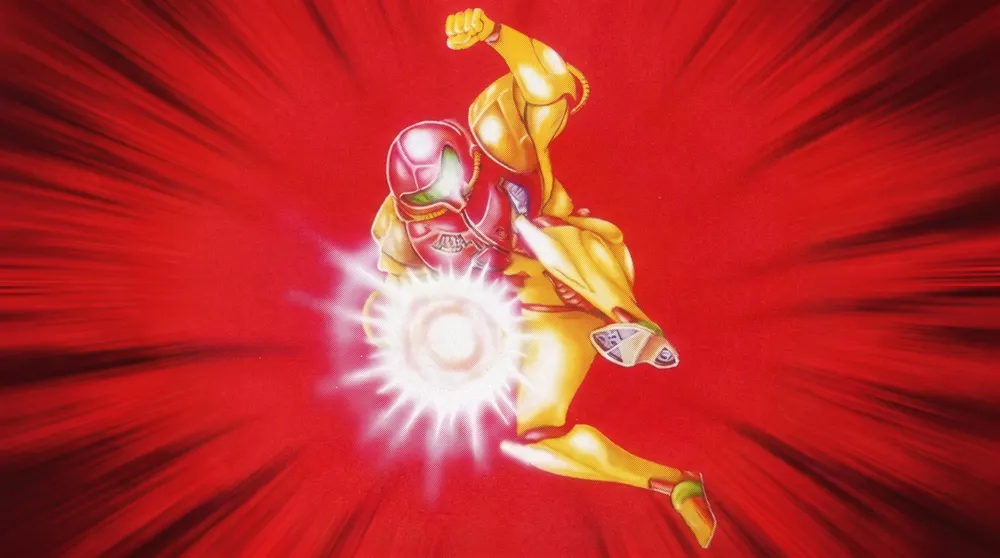
The stage is two-dimensional. Your character is tiny in a vast world, with platforms to jump on and enemies to hunt down. The different areas are interconnected, and it's not clear whether your goal is to the left, right, up or down. You feel lost. You start exploring and run into obstacles it seems you'll never get past, or a boss that seems impossible to beat. Suddenly, you hit a wall that looks a little off, and on the other side there's a room that isn't on the map, with an upgrade that'll let you take down that boss. And when you finally beat it, another upgrade. Now you can get past that impassable obstacle.
There are hundreds of video games that fit this description. In the independent scene, or "indie" scene, of the late 2010s, this genre became all the rage. It's known as "metroidvania," since its origins can be traced back to two iconic franchises. Sorry, Castlevania (whose "Symphony of The Night" for PlayStation was key), but we're here to talk about Metroid's 40th anniversary.
This Nintendo game series poses an interesting dichotomy. The most successful metroidvania is Hollow Knight, with over 15 million copies sold as of 2025. Metroid Dread (2021), the franchise's most successful release, sold 3 million units. Even among Nintendo titles alone, no Metroid makes the top 100 best-sellers (where the cutoff sits at 5.79 million units).
In an industry so driven by the pursuit of short-term hits, nobody questions Metroid's importance.
And yet, in an industry so driven by the pursuit of short-term hits, nobody questions Metroid's importance. Over four decades, the story of Samus Aran has been a model of excellence in video game design (along with a few flops) and of how an icon can endure over time even without recognition from mass audiences.
The antithesis of success as a game development policy
Metroid's story goes back to the eighties in Kyoto, Japan. Of the people working at Nintendo back then, there's a lot of talk about Shigeru Miyamoto but very little about his mentor: Gunpei Yokoi. An employee since 1965, he was crucial in the company's shift from making Hanafuda cards to designing toys and later video games.
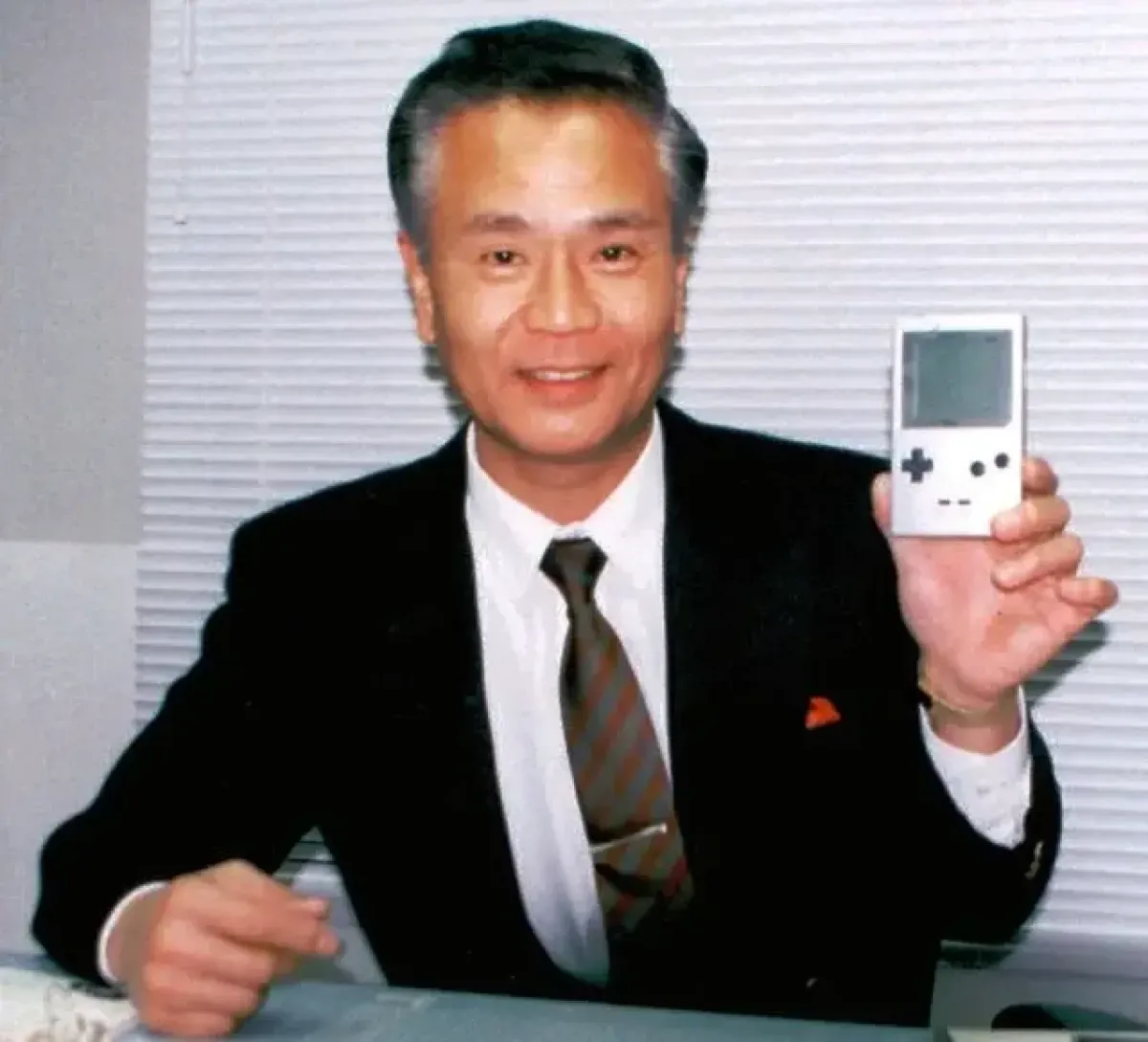
Together with his Research and Development team (R&D1), he created major devices, like the undisputed queen of handheld consoles herself, the Game Boy, and famous peripherals like the NES Zapper ("the little NES gun"). They also developed games like Duck Hunt, but none more important than Metroid.
In late 1985, R&D1 had to spend three months rescuing a game for the Famicom's floppy disk add-on. The two designers in charge over the previous seven months only had a space-themed stage and character actions with highly refined physics that ate up too much of the 8-bit console's memory. Yoshio Sakamoto as director and Yokoi as producer adapted what they already had to the time and hardware constraints.
The project aimed to blend Nintendo's two hits at the time while also being their antithesis. It was a platformer like Mario, but one where the player had to go find the enemies instead of waiting for them, and a Zelda with nonlinear exploration, but where you were isolated, with no one to give you hints, depending solely on your willingness to explore the map.
The labyrinthine design, secret doors, and upgrades and abilities that opened up new sections of the map were the first elements that made Metroid groundbreaking. "We couldn't increase the memory and we weren't allowed to make many changes to the engine, but we had total freedom in terms of structure. In a way, we were stuck between high walls and had to find a way out. We put that feeling into the game. Maybe you can shoot a hole in the wall? That might reveal another room or corridor," Sakamoto explained to IGN in an interview.
Gameplay from the first Metroid for the Nintendo Entertainment System (NES).
Choosing a space theme led to a game that placed a lot of value on building a tense, gripping atmosphere. For anyone who plays Metroid, the influence of Alien is inescapable, as Sakamoto himself told Retro Gamer: "The whole team was affected by H.R. Giger's design, and I think we were aware that those designs would fit well with the Metroid world we were building." Kenji Yamamoto's music, another iconic element of the franchise, had the same effect.
Nor can you ignore Ripley's influence: the protagonist was a woman. Although the developers claim it came from wanting a surprise reward for those who finished the game fastest, years later they admitted the reference. The influence this decision would have on video games is beyond doubt. Even though the notion that Samus was a woman took years to hit popular culture, her role in encouraging games with female protagonists could be felt from the nineties onward.
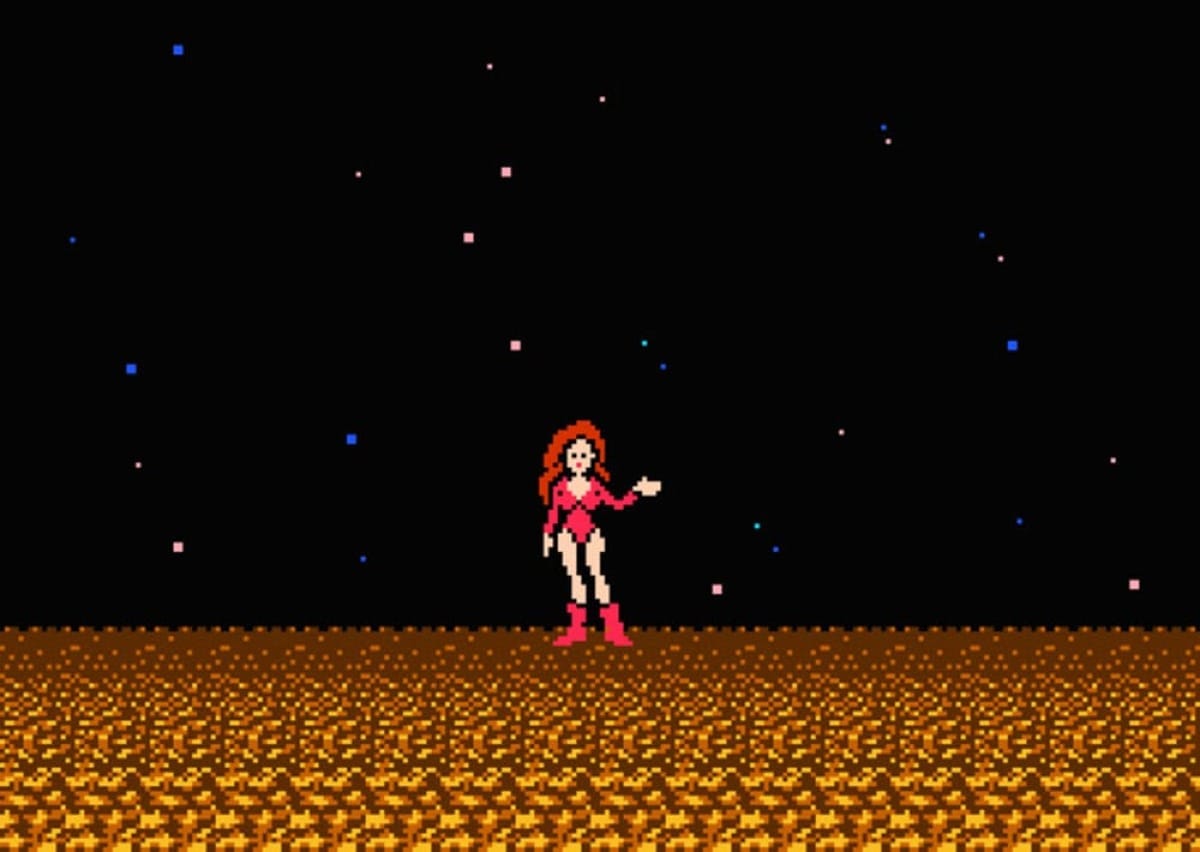
The weirdest part is the connection between the bounty hunter's name and none other than Pelé. "Samus Aran" came from the legendary Brazilian soccer player, who was mistakenly thought to be named "Samus Arantes do Nascimento" instead of "Edson Arantes do Nascimento."
On August 6, 1986, Metroid launched for the Famicom in Japan. As the manual tells it, the game drops you into the year 20X5, in a universe where space exploration has been developed and run by the Galactic Federation. You are Samus Aran, bounty hunter, and the Federation has hired you to stop the Space Pirates who stole a dangerous experimental life form: the Metroids. Now hidden on planet Zebes, Samus must explore the depths of the underground base to put an end to this imminent threat.
Right from the start, Metroid wasn't a sales smash like Mario or Zelda. It ranks 18th among the best-selling Famicom / Nintendo Entertainment System (NES) games, with 2.7 million copies. Even so, it captured American audiences in particular more than Japanese ones. As a viable but not indispensable brand, the franchise's next game wouldn't arrive until 1991, when Yokoi's Game Boy needed strong titles.
Metroid II: Return of Samus came out first in the U.S., on August 26, 1991, and in Japan five months later. This time Yoshio Sakamoto wasn't involved in development; it was the work of a small team trying to adapt the concept to the limitations of the handheld console. The game introduces new mechanics and designs that would become iconic, but its gameplay is much more combat-focused. The map is less cohesive, and the upgrades matter less for reaching the next area.
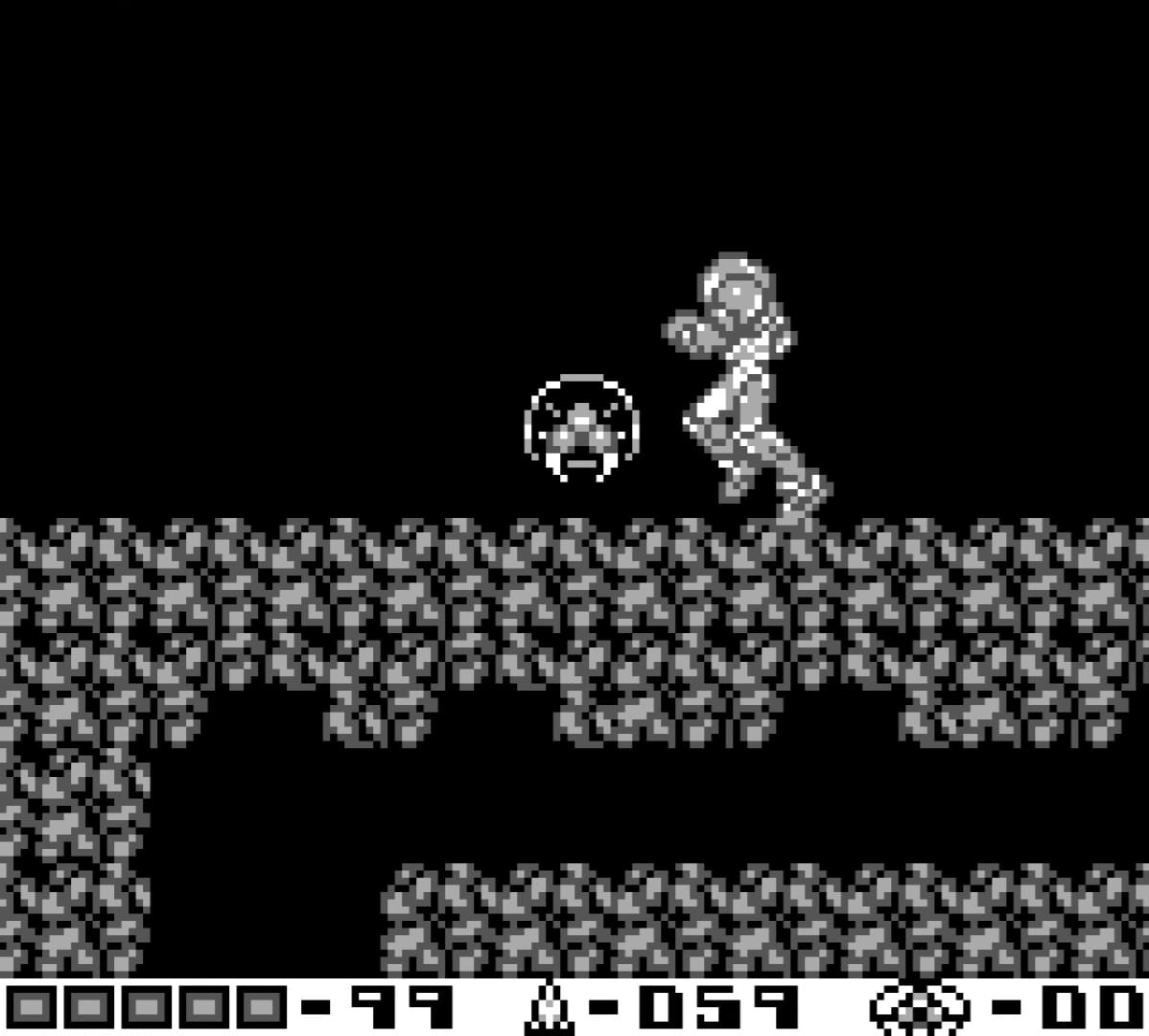
Despite being one of the least relevant games in the franchise, one narrative element is the reason Metroid had a future. In Metroid II, Samus is sent to SR388, the home planet of the dangerous aliens, to carry out a galactic genocide and wipe them out for good. Successful in her mission, the bounty hunter finds an egg from which the last Metroid hatches, and it imprints on her as its mother. In an act of compassion, Samus spares its life and takes it with her.
Right from the start, Metroid wasn't a sales smash like Mario or Zelda. It ranks 18th among the best-selling Famicom / Nintendo Entertainment System (NES) games, with 2.7 million copies.
This narrative moment (which, by the way, has no text at all, just audiovisual communication on a 160 x 144 pixel black-and-white screen) struck Sakamoto deeply. During a business trip to the United States, a colleague insisted on showing him how much recognition Metroid had in that country, and then pushed him to develop a new title for the brand-new Super Nintendo Entertainment System (SNES). More open to the idea and inspired by the power of Metroid II's ending, Yoshio Sakamoto started thinking about Metroid 3, better known as Super Metroid.
This game's development is famously chaotic. It was three years marked by the pressure to make something with a quality standard and scale far beyond anything that existed at the time. The team, about 15 people, had to learn to program for 16 bits during development, and everyone did a bit of everything (causing compatibility problems between the different parts). They spent entire days and nights at Nintendo, napping in a tiny room that other employees later complained smelled awful. The company, which had doubts about the idea given the modest sales of the previous titles, cut their budget several times, and the game was at risk of being canceled.
Released in 1994, Super Metroid is a stealth remake of the first game and, at the same time, a step forward that refines and deepens the original's innovations. It's an experience that transports you, through its art and music, into a singular atmosphere, while serving up challenging and addictive gameplay ideas. A map as iconic and gigantic as anything ever seen before, detailed exploration and combat mechanics, a reward system that keeps opening up increasingly complex areas, and the conveying of emotion and story through the gameplay itself changed gaming forever.
1994 American ad for Super Metroid for the SNES.
The team's commitment to going further and ending up with the best possible version of the game turned Metroid into a milestone. It's rare to find a list of "the greatest games of all time" that doesn't put it in the top 10. Yokoi, who spent a long time frustrated with the development, used it as a constant example of what a video game should be. But despite all this, it was the climax of Metroid's creation and not the beginning of a successful era.
Metroid enters its dark age
Super Metroid was, in a way, the close of the first era of 2D gaming. Two years later, in 1996, Nintendo released the Nintendo 64 and Super Mario 64, charting the course for the future of 3D games. Alongside this transition, Yokoi left Nintendo after the Virtual Boy fiasco and died a year later in a car accident. R&D1 split into two teams: one that developed the future Game Boy Color and Game Boy Advance, and another that made games for those consoles.
Sakamoto was part of the latter and admitted that, although he thought about making a Metroid for the Nintendo 64, he could never picture how Samus could make the leap to 3D. Nintendo pitched it to other studios, but at first none of them wanted to take on the burden of being compared to Super Metroid. That same feeling kept Sakamoto away from making another 2D Metroid until the Game Boy Advance prototypes showed up, enabling a technological leap for handheld consoles.
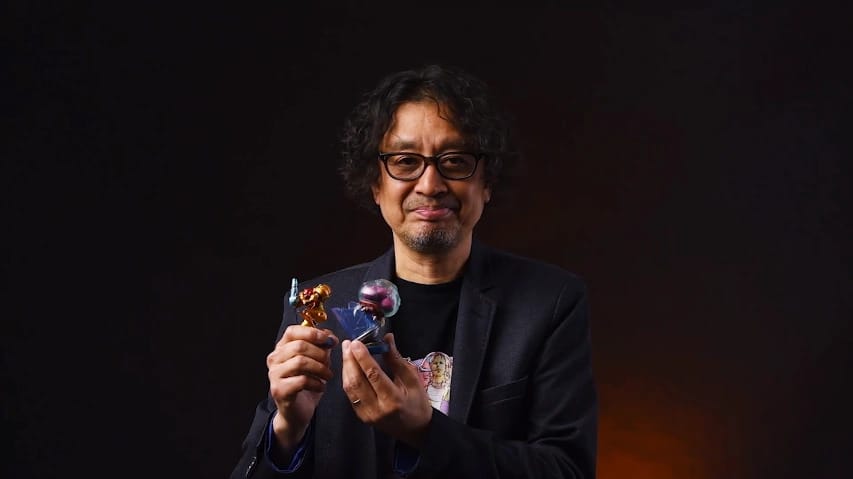
Wanting to turn Samus into an action heroine, constrained by the fact that most of the Super Metroid team no longer worked with him, and inspired by a new audience that had discovered the franchise through Super Smash Bros., the director proposed a completely different approach.
In an effort to dodge comparisons, Sakamoto decided to corrupt the formula: focus on combat, relegate nonlinear exploration to contained sections of the game, and expand the written narrative to dig into the protagonist's psychology. In the three previous titles, Samus starts with few tools and picks up more as she makes her way through the world. In Metroid Fusion, the bounty hunter loses what she has, and her progress is held back by the very chains of her surroundings and her superiors.
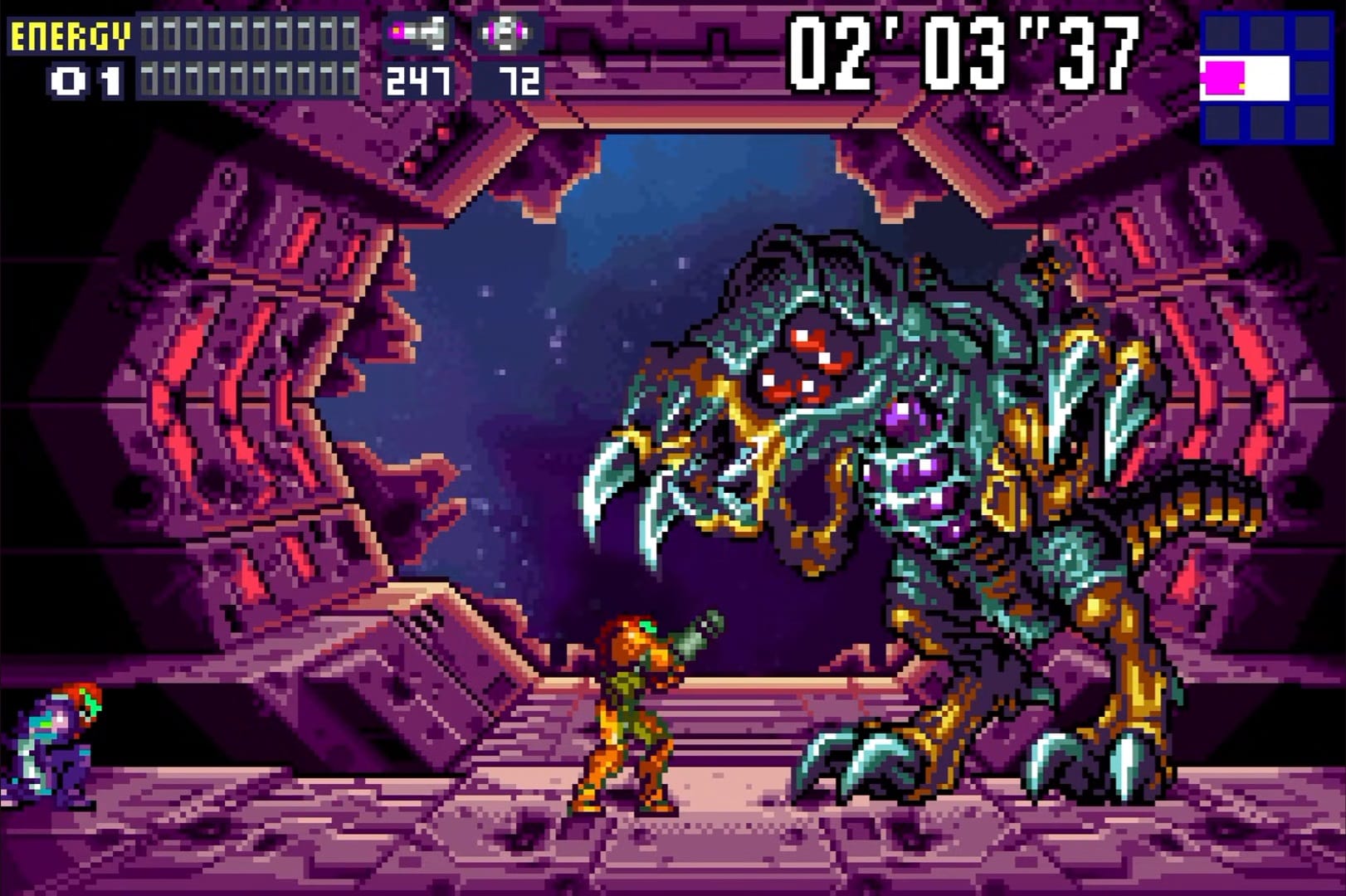
Fusion came out in November 2002, the same day as Metroid Prime, the franchise's first 3D game. Developed by Retro Studios in the United States (with Miyamoto supervising and Sakamoto barely involved), the “spin-off” became the star of the Nintendo GameCube. Adapting the original formula to a 3D environment and building an excellent first-person shooting system made their own splash in the industry. So the 2D game got overshadowed by its new sibling, even though it managed to sell 100,000 more copies than Super Metroid.
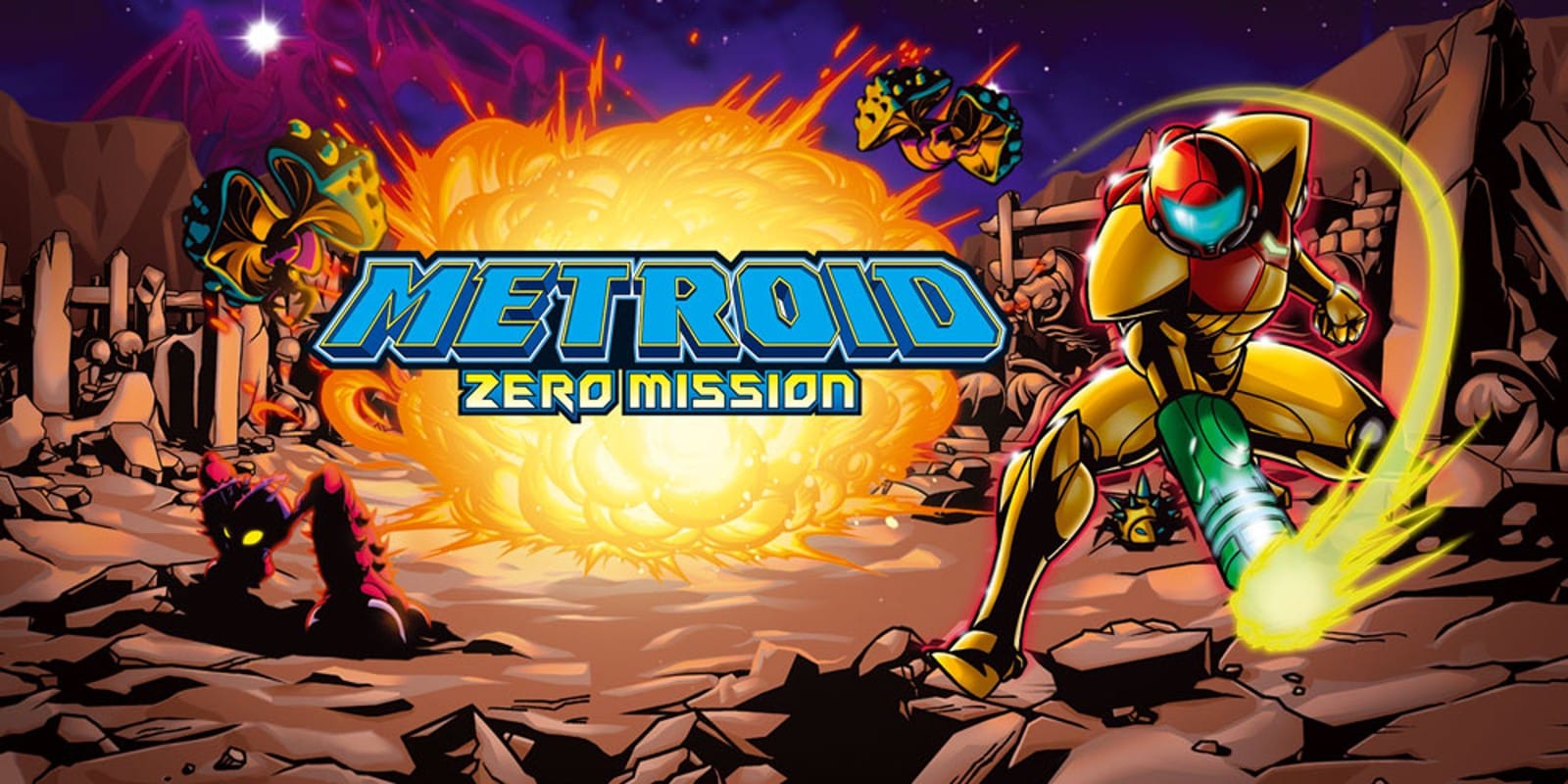
Although plenty of fans (and some future metroidvania developers) rejected the direction Metroid Fusion took, the game has won back appreciation over the years. The hardware lets it age beautifully (even better than Super). The GBA's possibilities didn't go unnoticed by Sakamoto either, who seized the chance to remake the original Metroid and apply everything he'd learned up to that point. Metroid Zero Mission came out in 2004 and it's everything a remake should be. A game that doesn't just replace the original: it expands it with more areas and new mechanics.
Metroid Zero Mission came out in 2004 and it's everything a remake should be. A game that doesn't just replace the original: it expands it with more areas and new mechanics.
This marked the end of another era for Metroid. After Zero Mission's release, Nintendo went through a major company restructuring. While Metroid Prime got two sequels (neither one living up to the original), no new 2D game would hit shelves for 13 years.
After two unfinished in-house attempts between 2005 and 2009, Sakamoto decided to team up with Team Ninja (the makers of Ninja Gaiden) to develop his own 3D Metroid game for the Nintendo Wii. His goal was to expand on Fusion's narrative concepts and, in particular, on the psychology and personality he believed Samus should have.
Released in 2010, Metroid: Other M is considered by many to be the worst game in the franchise. Its portrayal of Samus is out of character with the version of her established in previous games, and it's delivered through long, melodramatic cutscenes. The gameplay is solid, but nowhere near enough to offset the narrative's flaws. To top it all off, Other M sold far less than expected, to the point that Nintendo put out a survey to get feedback on the flop.
And so we entered the dark ages. For the next six years there would be no Metroid games (not even Metroid Prime). In 2016, fans would have preferred no games at all. Federation Force was a multiplayer spin-off for the Nintendo 3DS that many are still trying to forget. The one glimmer of light that year was a fan game: Another Metroid 2 Remake (AM2R). This reimagining of Metroid II: Return of Samus as a Game Boy Advance game was developed by Argentine Milton Guasti, aka DoctorM64, but Nintendo had it taken down a day after its release: Metroid's 30th anniversary.
The metroidvania era and the return of the king?
Between 2004 and 2017, not a single 2D Metroid came out. During that decade, Castlevania, which was already releasing games on the GBA, carried on to the Nintendo DS with well-received titles, though none reached the popularity or impact peaks of Symphony of the Night. But the relevance of both franchises was starting to sprout.
Jeremy Parish is a video game journalist and historian who's usually credited with coining the term “metroidvania,” a Mandela Effect he never gets tired of debunking (though he did just put out a book with the word in the title). Until the early 2000s, Metroid games were simply classified as “search action,” derived from 探索型アクション (tansaku-gata akushon), which means “exploration-based action.” It was the very emergence of other games in the genre that paved the way for a term of its own.
Back then, Castlevania building on what it had introduced on the PlayStation, plus the first titles inspired by these two franchises, especially the 2004 indies Cave Story and Eternal Daughter, sparked conversations on gaming forums where people used “metroidvania.” Scott Sharkey, who ran one of those forums, ended up writing at 1UP alongside Parish, who admits he picked up the word from his colleague. Two years later, the historian would start a series of articles called “Metroidvania Chronicles,” where he laid out the first definition of the term.
The dominance of 3D games kept metroidvanias from proliferating for several more years. Toward the end of the decade, Shadow Complex (2009) was one of the first to be called a metroidvania by its own creator and to bring the genre back to home consoles. It also floated the idea that the genre was perfect for independent studios, since it lets them craft complex narratives and gameplay in settings better suited to their budgets. That became clear with the release of Guacamelee in 2014 and, above all, Ori and the Blind Forest in 2015.
Around this time there's another side of Metroid's influence on the video game industry that often gets left out of the conversation. Soulslikes, another of the most popular and influential genres in gaming today, owe a huge debt to metroidvanias. Even beyond specific elements like nonlinear, labyrinthine level design. Demon's Souls and Dark Souls follow the Metroid school of difficulty as a form of progression and sparse narrative elements as a form of storytelling.
This metroidvania genesis in soulslikes led to a synergy between the two genres. While the Metroid Prime experience let other titles venture into adapting this style to 3D, from Batman: Arkham Asylum (2009) to Control (2019), others, like Star Wars Jedi: Fallen Order (2019), dared to mix the metroidvania with the soulslike to excellent results.
But no other game showcases this symbiosis of genres like Hollow Knight. The alchemy the Australians at Team Cherry managed to pull off is something you rarely see in the industry. Released in 2017, Hollow Knight capitalized on the renewed interest in this kind of game alongside the growing popularity of Nintendo's new console: the Nintendo Switch. Not only does the game represent the synthesis of metroidvania elements, it also embodies the Nintendo philosophy of design excellence.
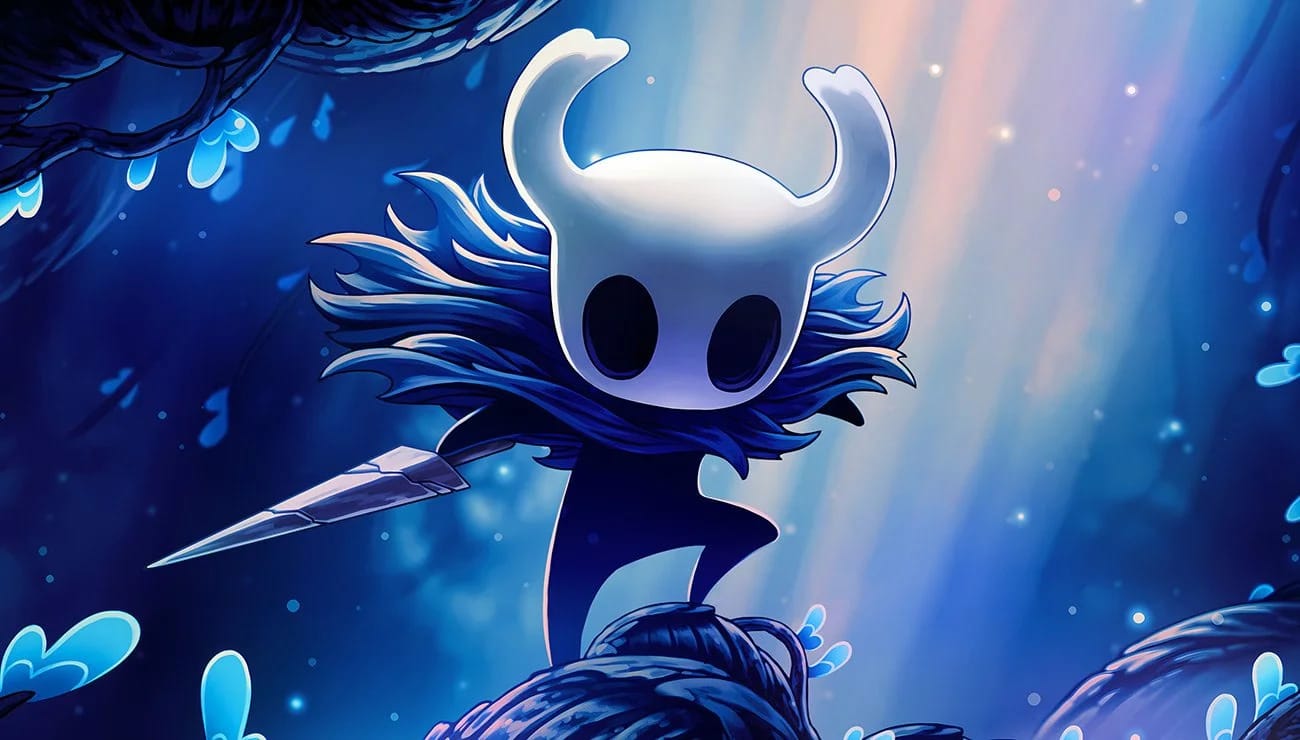
Hollow Knight's success kicked off the golden age of metroidvanias, with games like Dead Cells in 2018, Blasphemous and Bloodstained (Symphony of the Night's spiritual successor) in 2019, and the sequel Ori and the Will of the Wisps in 2020 (which Milton Guasti worked on thanks to the notoriety he gained from AM2R). The genre's solid foundation means that in 2024 we get examples as different as the solo-developer game Animal Well and Ubisoft's massive Prince of Persia: The Lost Crown.
But where does Metroid fit on this map? Why is Hollow Knight the face of the current movement and not Samus?
Funnily enough, that same year, 2017, is when Metroid's resurrection began. In a single day, Nintendo announced that Metroid Prime 4 was in development (we wouldn't see it for nine years) and that in three months it would release Metroid: Samus Returns, its own remake of Metroid II: Return of Samus for the Nintendo 3DS. For the first time, development would be handled by an outside studio: MercurySteam. The Spaniards had made a name for themselves with, of all things, Castlevania: Lords of Shadow. How much more metroidvania can you get? The studio pitched Nintendo a remake of Metroid Fusion, but Sakamoto preferred to use the opportunity to update the only game he hadn't worked on.
Where does Metroid fit on this map? Why is Hollow Knight the face of the current movement and not Samus?
Even though this remake wasn't a sales hit either (launching it in the twilight of the 3DS did it no favors), it was the push needed to make Sakamoto's dream come true and develop Metroid 5. Back in Zero Mission, the director had started toying with the idea of building suspense by having Samus hide from and escape her enemies. Stealth games adapted to Metroid. In the pre-Other M years, rumors of a game called “Metroid Dread” for the Game Boy Advance and later the Nintendo DS spread like wildfire through magazines and forums.
It wasn't until 2021, 19 years after the last 2D Metroid that wasn't a remake, that Nintendo officially announced Metroid Dread. The fact that a game could get the chance to exist almost two decades later says a lot about Nintendo's commitment to the brand. And the bet paid off. Metroid came back with perhaps its best entry yet and one of the best games on the Nintendo Switch. A title that applies everything good from every previous entry while introducing its own ideas and wrapping up the narrative of every game so far. Fitting that it's the best-selling game in the franchise.
Reaction to the announcement of Metroid Dread (2021), 15 years after its existence first became known.
But Metroid is a series whose value doesn't lie in sales. Timing is everything, and this saga has missed it time and again. It made the best 2D game just as 2D was on its way out, got overshadowed by games from its own franchise, fell out of step with technology, and came back late for the revival. Even so, each game is more popular than the last. Every year Metroid wins new fans, and Nintendo recognizes the worth of one of its most recognizable brands.
Metroid is a series whose value doesn't lie in sales. Timing is everything, and this saga has missed it time and again.
Metroid's true value lies in what it gives players and the developers of the future. Throughout history, it has been a champion of design excellence. Even in the face of its creators' wildest ideas or the industry's most turbulent development cycles. Who could object to Metroid Fusion's combat? Or the technological achievement of Metroid Prime 4?
Samus Aran and her deadly enemies have left their mark on video games, and there will be no space or time in the cosmos where anyone can say video games would be what they are without Metroid.
Las notas de 421 no tienen paywall
Y a cada colaborador se le paga por su trabajo. Las dos cosas dependen de los suscriptores.


