The story of Melville Bagley, the immigrant who invented Hesperidina—Argentina’s first registered trademark and an advertising revolution. The icon that symbolized the transition from a product-based economy to a brand-based economy.
Far from being a rigid concept, the idea of the “American Dream” has evolved to adapt to different historical moments. At its core, it is based on the belief that, regardless of their background, anyone can achieve prosperity through clear goals and hard work. While the concept is often linked to individualism and capital accumulation, the emphasis of the assertion was initially in another area: ensuring a society with equal opportunities.
This perhaps naive and definitely romantic interpretation fits perfectly with the story of Melville Sewell Bagley. Just another face in the crowd of immigrants arriving in Argentina in the 19th century, he crafted an idea that would not only bring him professional success but also plant the seed of a cultural change in Argentina.
Born in Maine, USA, the Civil War pushed him out of his country in 1862, landing him behind the counter of a pharmacy and, more crucially, connecting him with the world of tonics and proprietary formulas that at the time made up the entire medical universe.
With Hesperidina, Bagley established the idea that branding was as valuable as the content it embraced, marking the beginning of Argentina's transition from a product economy to a brand economy.
The second element of his inspiration came from the courtyard of the estate in Bernal where he settled, home to several bitter orange trees. Lush providers of shade, resilient and requiring very little care, they are perhaps one of the most recognizable elements of the Argentine urban landscape and would become, thanks to Bagley, the heart of another symbolic capital: Hesperidina.
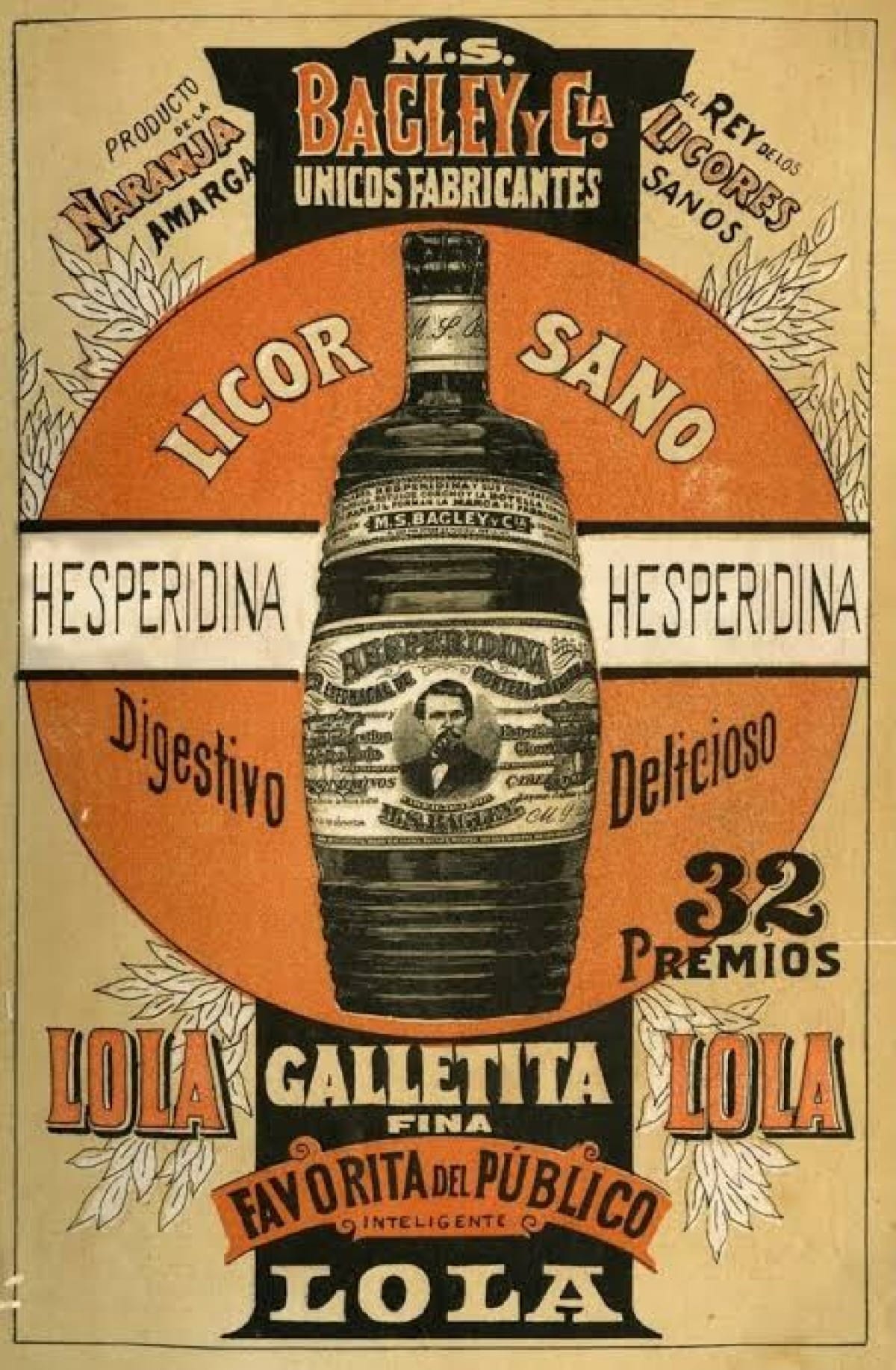
There was nothing original about the formula of the drink the American invented, a mix of bitter orange peel and aromatic herbs directly inspired by Curaçao and triple-sec liqueurs like Grand Marnier. What was revolutionary was everything he built around it: a teaser campaign, a solid visual identity, and even a legal system designed to protect it. With Hesperidina, Bagley established the idea that branding was as valuable as the content it embraced, marking the beginning of Argentina's transition from a product economy to a brand economy.
From recommendation to advertising
Even before launching his new creation, the buzz was already building. Bagley had posters installed in Buenos Aires in 1864 with a simple phrase: “Hesperidina is coming.” The strategy lasted for two months, during which (according to historian Fernando Rocchi) it was the first advertising campaign in Argentine history. The mystery was solved in the newspaper La Tribuna, which described Hesperidina as “a fuel that is said to be as good as kerosene and more economical,” in an article revealing the reason for “public curiosity.”
At the same time, Bagley became one of the pioneers of a phenomenon that began to spread through Argentina's major cities only a quarter of a century later, at the end of the 19th century, when the mass consumption brought changes in the marketing sphere that required expert and specialized knowledge.
“Until that moment, sales were made on a small scale as the circle of their relationships grew slowly and gradually due to the intrinsic value of their products,” exemplifies historian Fernando Rocchi in relation to another iconic Argentine product, Noel candies, which decided to follow the advertising path in 1882, joining the Continental Exhibition. Bagley thus anticipated the generation that created nothing less than a national mass market.
The first brand
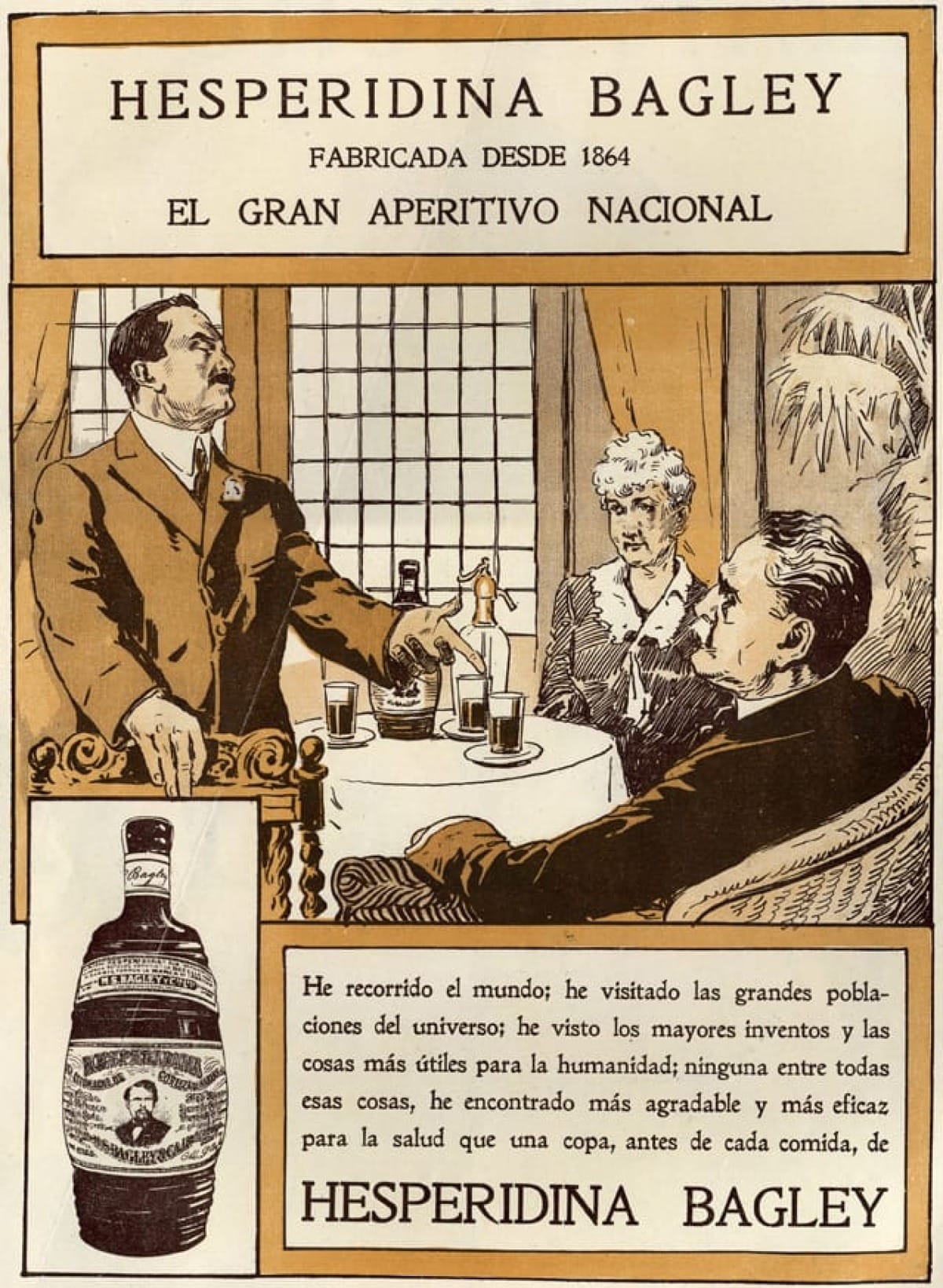
As hinted by that moniker of “fuel” in the article from La Tribuna, and like many alcoholic creations throughout history, at the time of its launch, Hesperidina was promoted and praised as a medicinal tonic. Although its origin was tied to a pharmacy's laboratory, if we want to be lenient with the idea, we must admit that the flavonoids present in orange peels are real and effective antioxidants.
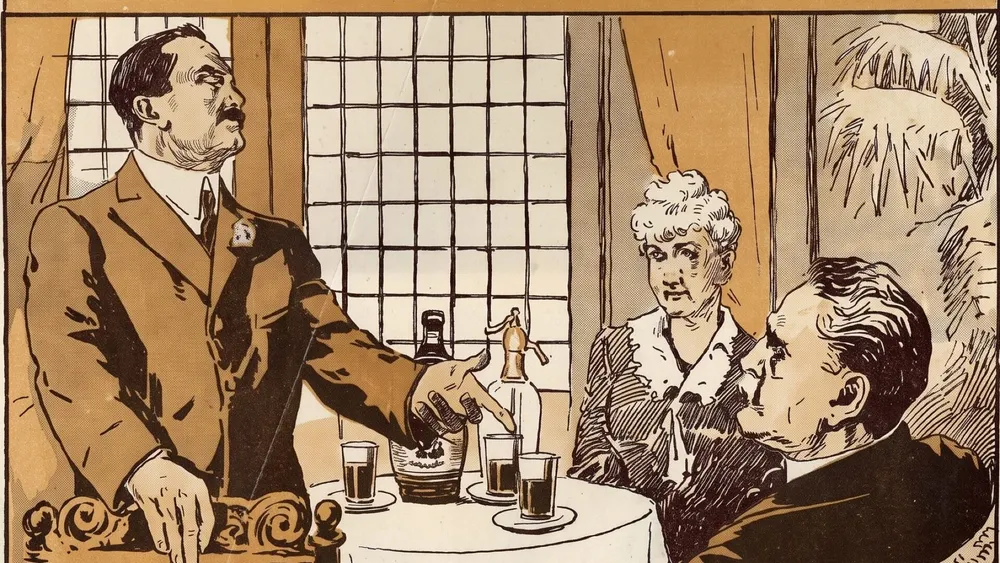
This kind of “whitening” of Hesperidina consumption had a second, perhaps more unexpected, leg. With an alcohol content hovering around 26 degrees, it was much less harsh than the gin and cane that dominated the bars of the time. And so, women (for whom drinking alcohol was a guarantee of suspicions of mental illness, prostitution, or both) began to feel encouraged to drink it in public.
The Hesperidina bottle also echoed a certain medicinal severity, but at the same time had the air of an elegant luxury item. However, its unique profile did not prevent imitators of the successful tonic from appearing, which Bagley tried to curb by commissioning the production of the bottle labels from the very Bank Note Company of New York, the firm that printed the dollars. The next step was bolder: he requested an audience with President Nicolás Avellaneda to suggest the creation of an Argentine trademark and patent office. The idea not only came to fruition but also became an essential tool in the face of the expanding demand at the end of the 19th century and the beginning of the 20th in Buenos Aires. In this context, brands and patents built consumer sovereignty, while national entrepreneurs not only used them to avoid counterfeiting but also to begin weaving loyalties and customer retention.
Popular culture
After filling soldiers' flasks during the War of the Triple Alliance, lifting the spirits of explorer Francisco Pascacio Moreno, soothing Roberto "Polaco" Goyeneche's throat with sand at the bar La Sirena in Saavedra, and appearing in stories by Julio Cortázar, Juan Carlos Casas, and Haroldo Conti, Hesperidina fell into relative obscurity for most of the 20th century.
Few manage to pull off the hat trick of establishing a product, attaching a new way of selling it, and watching a market be born.
The next century rescued it as part of a wave to reclaim Argentine ingredients in cocktails. So much so that Cepas Argentinas, the current distributor and producer of the drink, promotes it as part of its business unit Aperitivos Argentinos, alongside other illustrious names like Gancia, Pineral, and Amargo Obrero. All have resurfaced as part of niche cocktail culture, aided by a friendly price and a stock easier to manage than imported supplies.
Melville Sewell Bagley's journey was not long. He died in 1880, and it was his widow who continued to run the family business. Before he left, however, he still had time to add another milestone to his resume: the Lola cookies, considered the first Argentine industrial brand in the sector and the origin of a company that, after multiple transformations and changes of hands, still occupies space in kiosks. Oh yes, and by the way, the seed of the popular saying “doesn't want Lola.”
It's hard to guess whether behind it was the mastermind of a visionary or that mix of boldness, cunning, luck, and survival instinct that is often an essential part of immigrant life. What is certain is that few manage to pull off the hat trick of establishing a product, attaching a new way of selling it, and watching a market be born.
✦ Suscribite
Las notas de 421 no tienen paywall
Y a cada colaborador se le paga por su trabajo. Las dos cosas dependen de los suscriptores.