Carlos Trillo: Humor, Taboo and Legendary Comics
The genius who created "Las puertitas del señor López" and "Cybersix." His indelible mark on Argentine and European comics.

We'd just finished giving a talk together at the Children's Book Fair and decided to grab a drink at the fancy café next to the Museo Nacional de Bellas Artes. As we crossed Figueroa Alcorta, he hit me with it point-blank, offhandedly, like it was nothing, brief and cryptic, 100% Trillo style: “So, Agrimbau, what are you gonna do? This thing is ending.”
I knew perfectly well what he meant. The figure of the professional comics writer, even back then, in 2010, looked more and more like a fossil of the industrial era, a lingering echo in a slow but inexorable fade out. The graphic novel had already been crowned the king of formats, and alongside it, its quintessential creator: the auteur who writes and draws everything. These days the role of the comics writer keeps fading away along its natural course, holed up in the few industrial markets that remain: France, the United States, Japan and not much else, the markets where periodicals, series and sagas still exist, where sales are still counted in the hundreds of thousands. That afternoon was one of the last times I saw Trillo in person. A year later he would leave this world while on vacation in London, without ceremony or epic flourish, without heartfelt goodbyes or revealing messages to the world. 100% Trillo.
Stage one: early consecration
Better than the vast majority of his peers, Trillo was a leading player in comics during the last heyday of the industrial era; he was an unavoidable figure in Argentine and European comics from the second half of the seventies well into the two-thousands. His body of work is oceanic, impossible to take in all at once, but today we'll try to tour some of his major works and the occasional overshadowed gem. We'll also attempt, surely without success, a bit of critical revisionism.
He was an unavoidable figure in Argentine and European comics from the second half of the seventies well into the two-thousands. His body of work is oceanic, impossible to take in all at once.
Fifteen years after his death, luckily, his work keeps getting reissued and every now and then some book previously unpublished in Argentina shows up. Of course, it's very hard to do justice to a body of work so huge that not even Trillo himself could remember everything he'd done. In 2012, a year after his death, a group of friends and I tried our hand at something like an index, an attempt at order, a bibliographic record, as a tribute to Carlos, who was to all of us colleague, collaborator, accomplice, godfather, idol and friend all at once. The result was the blog Soretes Azules ("Blue Turds"), an evocative name that only true connoisseurs of Trillo's work, especially what he published in Fierro magazine, will be able to decode. It's not that hard; an old-school Google search will do it.
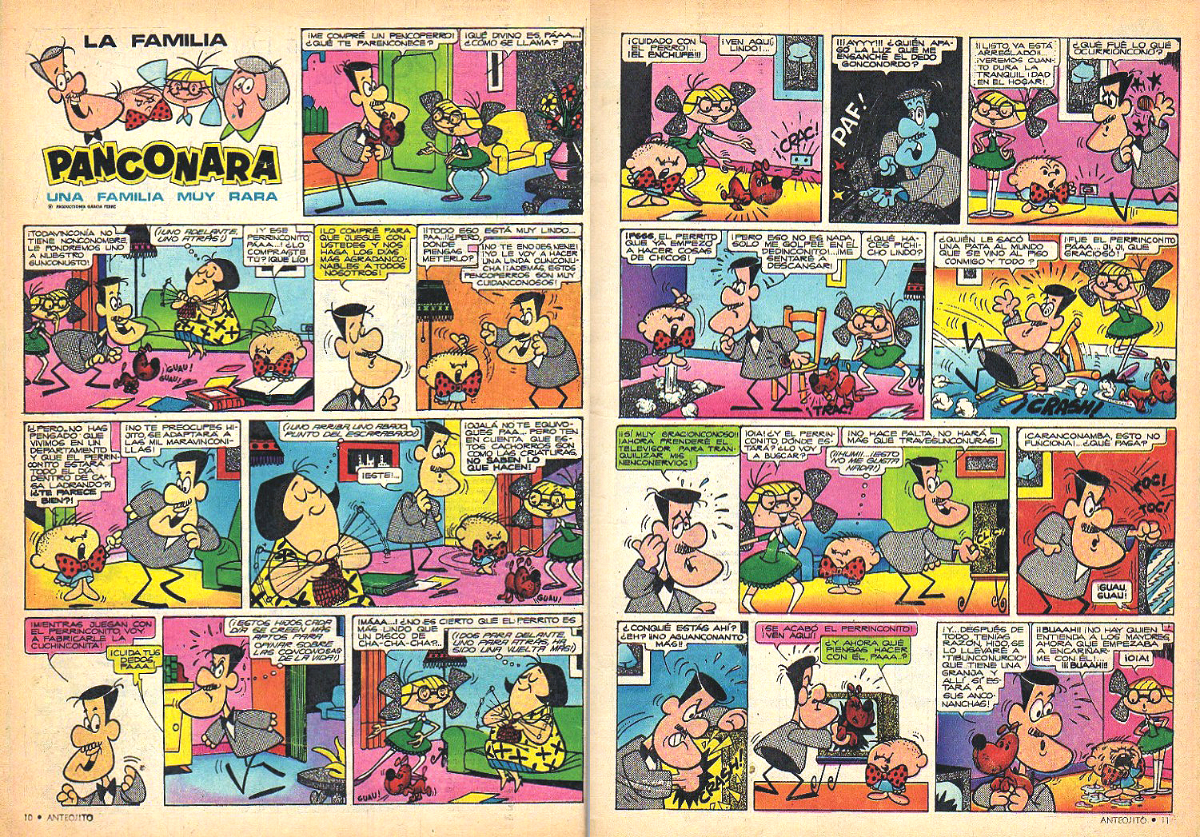
Carlos Trillo started his career at Manuel García Ferré's magazines, writing texts and scripts for kids' comics like La Familia Panconara, una familia muy rara, already offering, from the very start, a glimpse of his fascination with everything strange, monstrous, taboo. Shortly after, he joined one of my favorite editorial staffs in history: that of Satiricón magazine, run by Oscar Blotta. There, the writers and humorists formed creative pairs, something very common at the ad agencies of the time, where this crowd also tended to work. They paid much better and were way more stable than journalism. Trillo got paired up with none other than Alejandro “El Negro” Dolina, with whom he co-signed the pieces they wrote four-handed for Satiricón. Another pair that would become very important later, in the eighties, was Jorge Guinzburg and Carlos Abrevaya, creators of legendary radio and TV shows like La Noticia Rebelde.
It was in that same newsroom that the chance arose to form a duo that would change the course of Trillo's career and of the history of Argentine comics, when he met Horacio Altuna. The Clarín newspaper of those years, hard as it may be to believe today, had a newsroom dominated overwhelmingly by left-wing Peronists, and that's how in 1973 they began nationalizing all the foreign strips bought from the American syndicates, so that, as the years went by, they could make room for local creators like Fontanarrosa, Viuti, Caloi, Dobal, Aldo Rivero, Ian, and two duos straight out of Satiricón: Abrevaya and Guinzburg, together with Uruguayan artist Tabaré, took on Diógenes y el Linyera, while Trillo and Altuna began serializing, in 1975, El Loco Chávez, the comic that made both authors known to the mass Argentine public of the late seventies and early eighties.
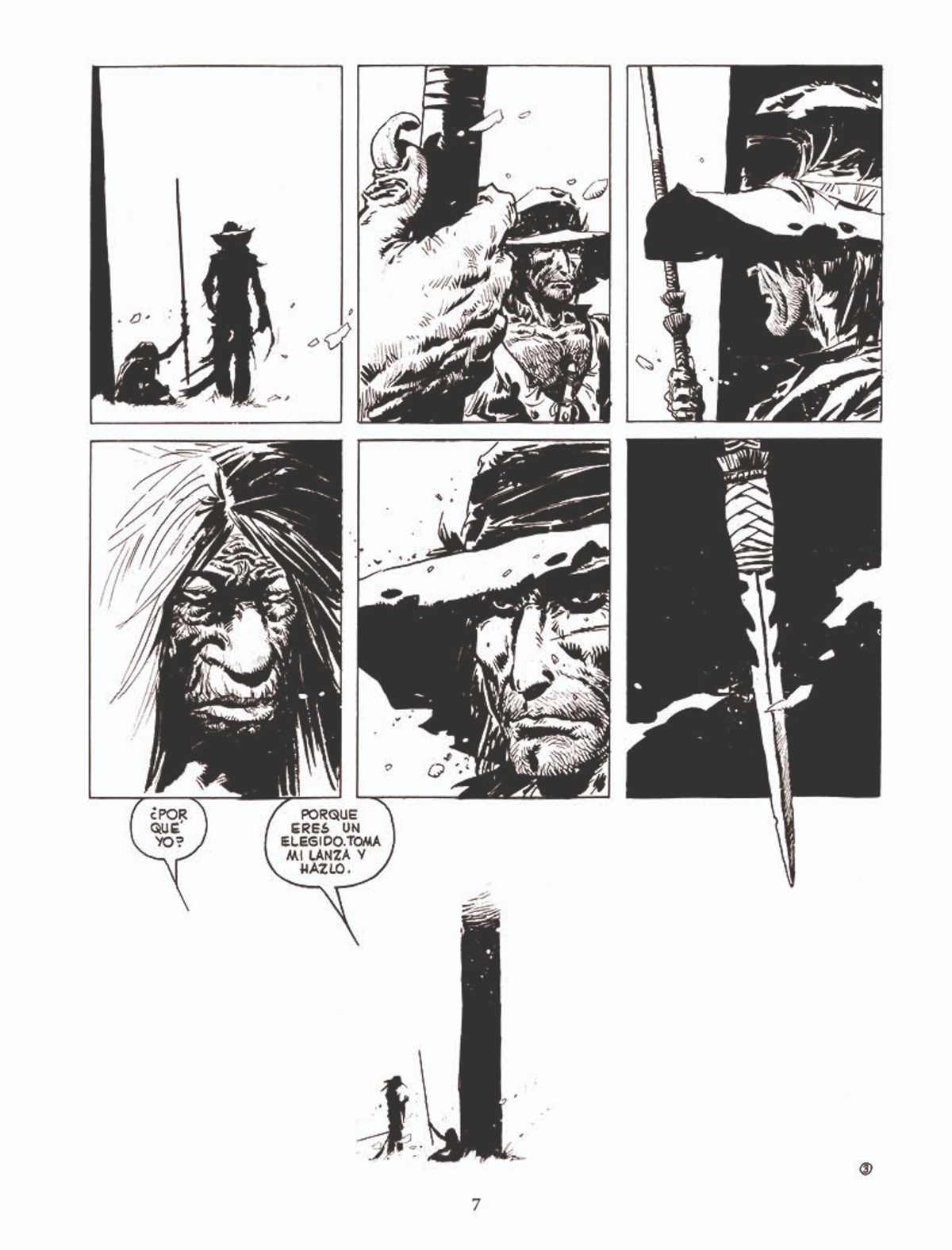
At the same time, Trillo began contributing to Skorpio magazine from Editorial Récord, which also worked as a talent agency feeding the magazines of the voracious Italian publisher Eura Editoriale. It was in these pages that Trillo got the chance to work with one of the most acclaimed artists both locally and internationally: Alberto Breccia. Together they did several one-shots and series like Nadie and El viajero de gris. Around the same time came other now-legendary series like Un tal Daneri, published in Mengano magazine, and Buscavidas, created for La Urraca's Superhumor.
Without ceremony or epic flourish, Trillo wrapped up his first stage as an author, internationally consecrated before he'd even turned forty.
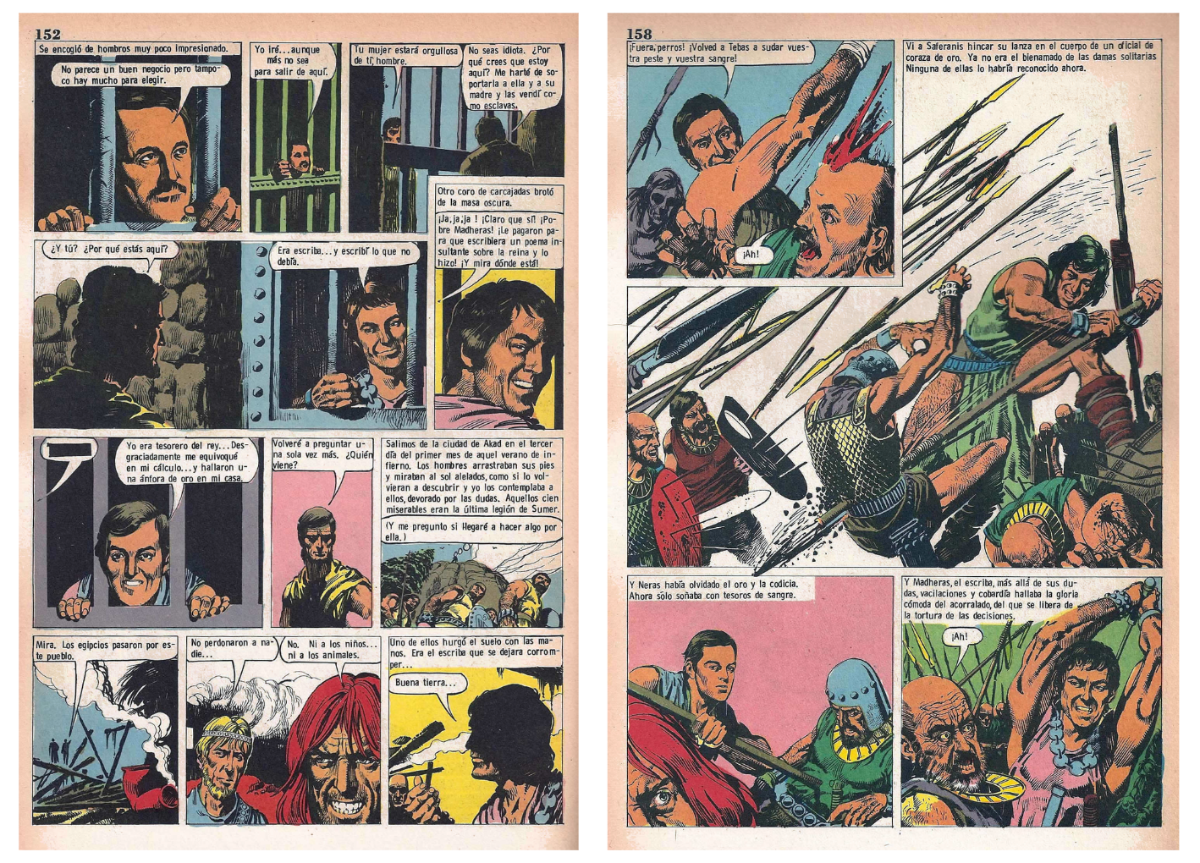
From this same period comes one of the series that would earn him the greatest international recognition up to that point: Alvar Mayor, with Enrique Breccia, Alberto's son. It was thanks to Alvar Mayor that Trillo definitively made his name in the European market by winning the industry's biggest award back then: the Yellow Kid, handed out at the Lucca Comics Salon in Italy in 1978. Of course, he'd only find out six months later, via a telegram from a friend. The organizers gave him the prize but didn't bother to tell him. And so, without ceremony or epic flourish, Trillo wrapped up his first stage as an author, internationally consecrated before he'd even turned forty.
Stage two: consolidation
Trillo hit the eighties in top professional shape and clearly determined to take artistic risks, influenced by his literary reading, by film and above all by the European comics he was starting to rub shoulders with thanks to travel, awards and work for foreign magazines. In this fertile, stimulating breeding ground, the industrial era was entering a phase of diversification and growing complexity in its genres. European magazines like Britain's 2000AD, France's Metal Hurlant, Fluide Glacial or Charlie Mensuel, Italy's Linus and Spain's 1984 were charting a new course that hadn't yet landed in Argentina with a publication of its own, but where expat authors like Copi, Juan Giménez, Horacio Altuna, Muñoz and Sampayo, or Trillo himself, kept racking up published pages. That's how SuperHumor came about, put out by La Urraca and openly advertised as leaving the past behind—that is, classic adventure comics. The target wasn't so much Editorial Record's magazines, where many of these authors were publishing at the same time, but above all those of Editorial Columba: D’Artagnan, El Tony, Nippur, and specifically the ones scripted by Robin Wood, the leading figure of the little-dove-logo publisher. Without mincing words, an ad for SuperHumor in its big sister, Humor magazine, declared war on Columba in a style extremely similar to Trillo's, especially in his rabble-rousing ad-copywriter mode:
Do you like being called an idiot? No. You don't. That's why you never read comic books. At least not in public. Yep. That's how it is. Reading comics is a shameful activity. And so whoever does it (and there are lots of us; look) does it on the sly. That's why—because we wanted a comics magazine we could talk about with our friends, one we wouldn't be embarrassed to pull out on the train, one you could buy without having to hide it inside the newspaper—for all those reasons, we invented SuperHum(r). A shameless comics magazine. It's called SuperHum(r), like we just told you. It comes out—more or less—once a month. Issue 8 hit the stands a couple of days ago. And it doesn't have a single cowboy comic, or a single one with mythical warriors from way back when, or one about pirates in the Caribbean, or a love story with a happy ending. Here's what's in this issue:
There's a comic set in Bosquivia, a country ruled by the gorilla, but nobody can stand him.
There's a detective named Gómez who looks nothing like Paul Newman and gets the crap beaten out of him outside Karim.
There's a magician whose tricks never work.
There's a cop who falls in love—oh, the contradiction!—with a journalist who defends human rights.
There's a little old retiree who dreams of the days when he ate almost every day.
There's a big, lavish adaptation of Triste, Solitario y Final, Osvaldo Soriano's novel.
There's an aging rocker who's headed for a flop at Estadio Obras.
There's a short story, also by Osvaldo Soriano, the remarkable Argentine writer we Argentines aren't allowed to read. Not one Green Beret, not one Confederate soldier, not one Roman gladiator, not one big brawny hunk. The magazine is written by Juan Sasturain, Guillermo Saccomanno, Carlos Trillo, César Bruto. The magazine is drawn by Horacio Altuna, Cacho Mandrafina, Tabaré, Sanyú, Grondona White, Alberto Dose, Gustavo Trigo, Enrique Breccia, Patricia Breccia, Fati, Fortín. A real luxury. Well, now that we've lost our shame, you lose yours too. Go to the newsstand, ask for SuperHum(r) and carry it in your hand with the cover facing out.
Some time later, Robin Wood and his partners in crime, the artists of Estudio Nippur Cuatro, struck back in their own way, depicting both sides in an epic battle.
The appeal to literature, politics, film and rock wasn't accidental; modern comics demanded a seat in the conversation of mainstream culture, the culture that mattered and got argued over at intellectual gatherings amid books, records and movie or theater tickets. They no longer aspired to remain apolitical, anachronistic escapist entertainment, cut off from the debates of the first world's intelligentsias.
But there's one comic from this second stage that would leave a mark on Trillo's bibliography: Las puertitas del señor López, made in collaboration with Horacio Altuna. In its pages, López came across as a mediocre office drone—cowardly, stuck in a rut, out of shape, uncommitted and amoral—the exact opposite of an epic, noble warrior like Nippur. The exact opposite by design, on purpose, almost as a manifesto. Fantasy and adventure came to López every time he opened the door to a stall in a public bathroom, at the bar or at the office. Purely by genre convention, without bothering to explain a thing, when he stepped through the little door López traveled to fantastic worlds, Napoleonic battles, movie scenes, his own past, or wherever Trillo and Altuna's imagination dictated.
López came across as a mediocre office drone—cowardly, stuck in a rut, out of shape, uncommitted and amoral—the exact opposite of an epic, noble warrior like Nippur.
I remember one of its episodes as unbeatable, a cornerstone of my own aesthetic education. From memory: López was fleeing a conversation about art in a bar, among coffeehouse pseudo-intellectuals, stepped through one of his little doors in the bathroom and walked into a meadow where he came across an artist painting a tree on a wall. Several others showed up to stone the poor misunderstood artist, who only wanted to finish his mural. López defended him, throwing the rocks back at the request of the desperate artist, who was rushing to paint the last strokes. The bad guys left, defeated by López. The painter managed to finish the picture and thanked López. They said goodbye, and as López headed back to his little door, he turned around one last time to look at the artist, who was now hanging himself from the branch of the tree he himself had painted. He immolated himself in his own work. López went back to the bar where the argument was still going. And when they asked him what he thought about it, to the disappointment of everyone at the table, López only said "Well…" Nothing more. THE END.
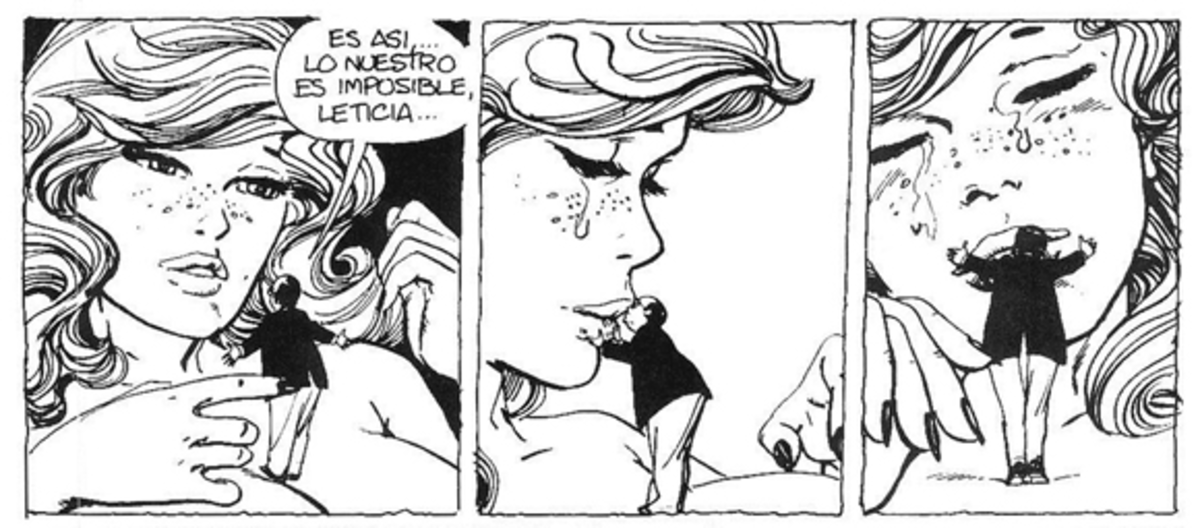
For years I had that famous poster of López walking across Leticia's giant naked body. It was a page taken from another standalone story that, I later discovered, was pretty heavily inspired by one of the segments of Boccaccio '70 by Federico Fellini, in which a man falls for the giant woman (Anita Ekberg) on a billboard, who starts chasing him through the streets of Rome.
With Horacio Altuna he formed one of his most memorable partnerships. Reading something signed Trillo-Altuna was a guarantee not just of quality but of modernity, of a story that would be shot through with art, film, and the cultural and political agenda of its time. More works piled up that way, prowling through several genres: the Woody Allen-esque crime story in Merdichesky, dystopian science fiction in El último recreo, the formal experimentation of stories within stories in Tragaperras. Until, in the mid-eighties, they stopped working together and each went off to pursue his own career.
Now split from Altuna, Trillo stayed at Clarín with El Nene Montanaro alongside García Seijas, and expanded the reach of his comics into the French and Spanish markets. Along with the new markets came partnerships with new artists. Many of them would become steady collaborators for a long time. One of these artists was the Catalan Jordi Bernet, known in the eighties as the one who carried on Torpedo, the series originally drawn by Alex Toth. With Trillo, Bernet made one of the duo's most ahead-of-its-time books: Custer. A book that brings together two of Trillo's favorite genres: noir and science fiction, just as Terry Gilliam's Blade Runner had done a while earlier. This is what Trillo wrote in 1985:
Custer is a woman who discovers that her entire life is the most successful reality show on television and that all her personal tragedies have been coldly orchestrated by the network to keep the ratings up. When she finds out about this manipulation, she sets off on a violent race against the clock to escape the public eye and take revenge on the executives who turned her into a product, before they decide to kill her live on air for one last ratings record.
Although, strictly speaking, the concept of the real-life reality show had already appeared in Bertrand Tavernier's film Death Watch, Trillo beat The Truman Show by a whole decade.
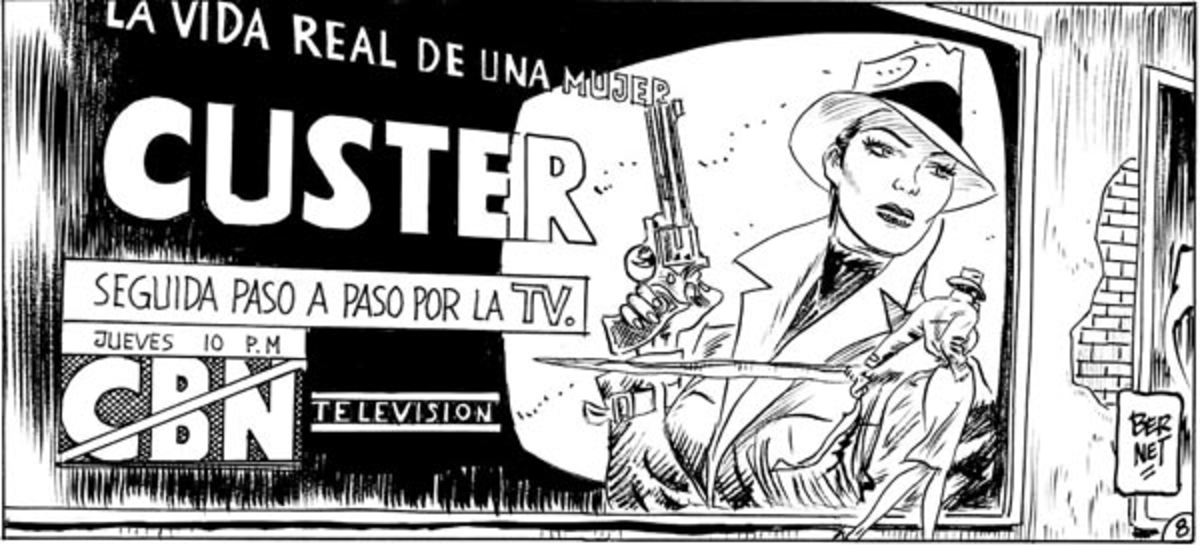
By this point Trillo had turned into a machine gun of high concepts, each one better than the last. If streaming executives weren't so fixated on their spreadsheets, their shareholders and Blake Snyder's wretched little book, they'd find a gold mine in the brilliant premises of Trillo's work.
Around the same time he also began working with Eduardo Risso on Fulú, this time for the French publisher Glénat, for which they did five volumes thanks to strong sales and good reviews. Another of the defining traits of Trillo's work was taking shape: female leads. Fulú, Custer, and soon two more would join them and define his new phase in the nineties: Clara de Noche and Cybersix.
Phase three: the end of the industrial era
The turn of the decade brought with it the beginning of the end of an era that had lasted the entire second half of the twentieth century. Anthology magazines were dying, one by one, in every market. Zona 84, El Cairo and Tótem in Spain, Metal Hurlant in France, Fierro and Skorpio in Argentina. Little by little, comics in the West would begin their slow but inexorable transformation from a periodical, disposable product in stapled-magazine format into something closer to literature: books with spines, meant to be collected and to sit on bookshelves indefinitely.
Like every cartoonist, Trillo had to ride out the shake-up, which for Argentines came with an extra complication: the one-to-one peso-dollar peg imposed by the Convertibility Law. In just a few years Argentina had become one of the most expensive countries in the world. Earning in dollars was no longer a great deal; quite the opposite. And it was in this particular set of circumstances that Trillo put on a suit he never really liked: that of publisher. The math was simple, if wrong: if anthology magazines were disappearing, then you had to invent new publications where the creators called the shots. So through El Globo Editor, Trillo took on publishing the magazine Puertitas, then Puertitas Supersexy and others.
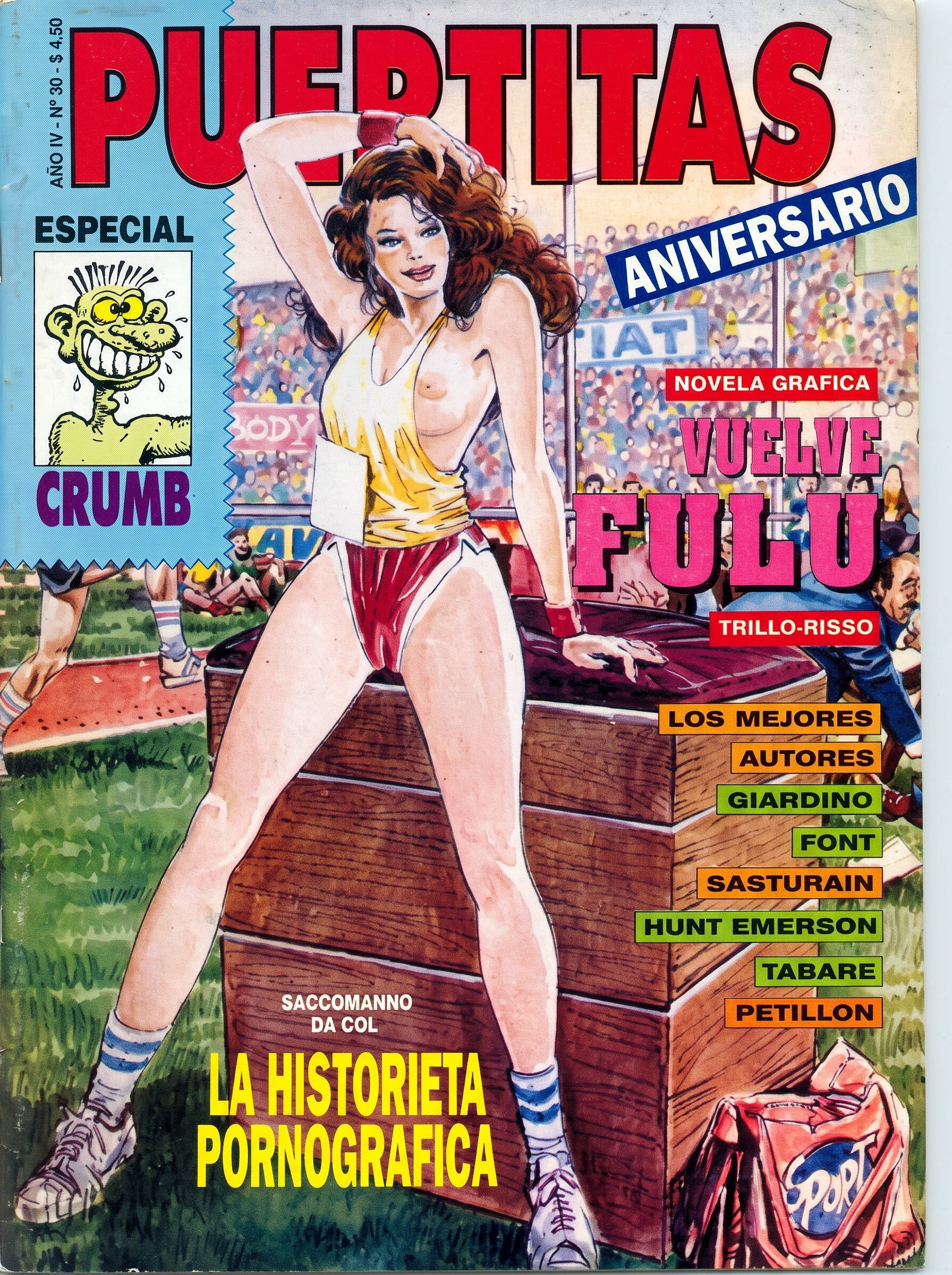
None of them lasted very long. As soon as he could, he shed the publisher's suit and went back to his natural role as a writer, thanks in large part to the success of some of his series in the Italian market. The biggest, without a doubt, was Cybersix, a work of more than 2,000 pages drawn by Carlos Meglia that was serialized in Italy to great success and even got its own magazine. Trillo loved detectives, and he always crossed them with something else to mix up the genetics a little so they wouldn't come out too by-the-book: Merdichesky, Chicanos, Bolita, Inspector Potam, Custer, etc. But in the early nineties, what was in vogue, thanks to Anne Rice's mega-successful books, was vampires. And Trillo loved to surf the waves of trends his own way, with his own tricks. That's why Andrés Accorsi and I told him more than once that he was like the David Bowie of Argentine comics, always chasing the new, sniffing out where trends were heading to see how he could hop on. And so Trillo began his vampire phase, seasoned with the occasional demon along the same lines: Ivan Piire, Boy Vampiro, Live Evil, El libro de Gabriel, etc. Along with these new interests and times came a renewed Trillo, more nineties and darker, influenced by Tim Burton, The Sandman and the whole Grim and Gritty Anglo-American school. Case in point, the logline for Video Noir (published here as Video Inferno), drawn by Eduardo Risso:
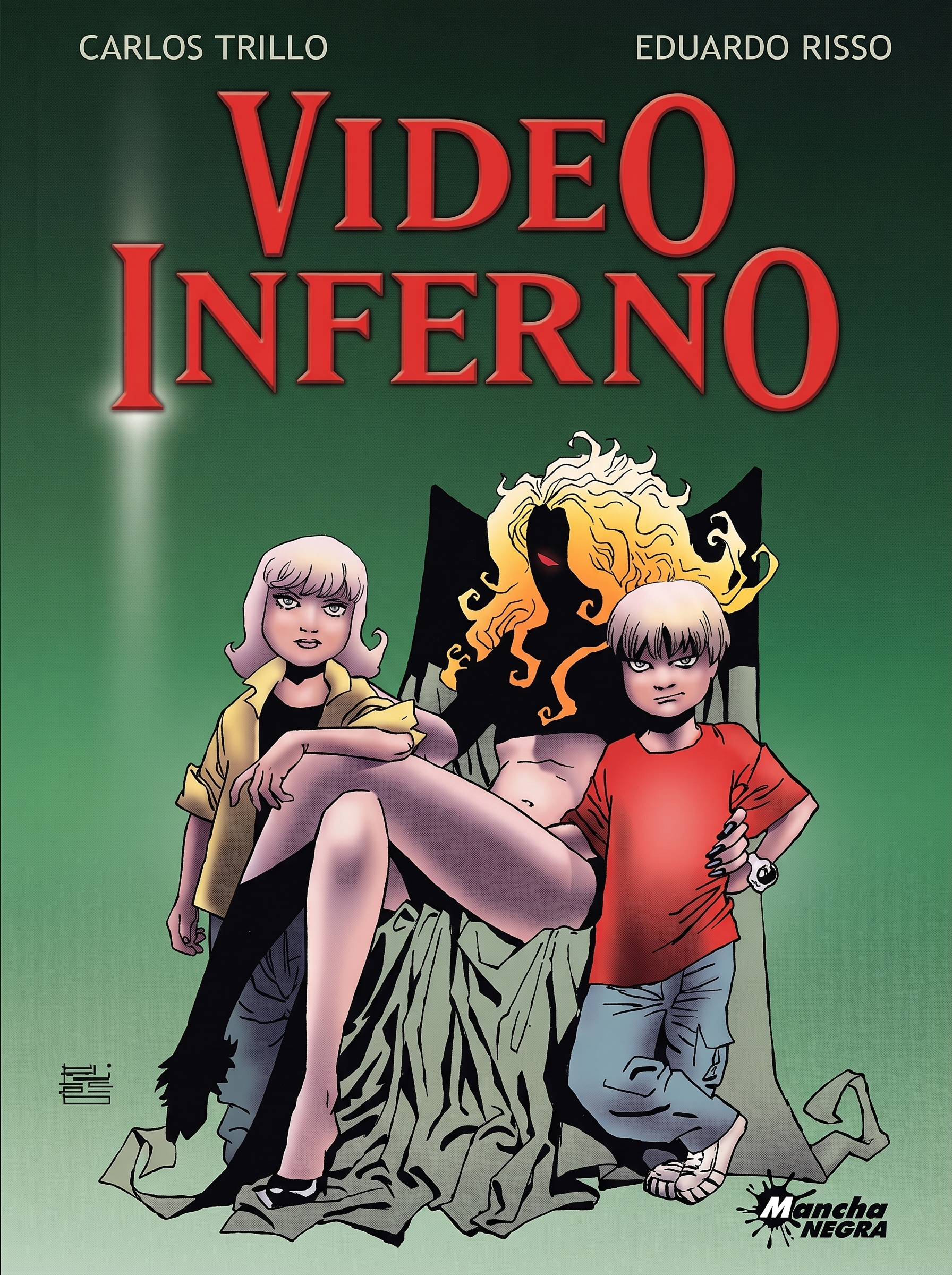
The forces of Good and Evil wage a covert battle on Earth, where the Devil himself takes the form of the most famous and successful host of a children's TV show (a clear and macabre satire of the Xuxa phenomenon), who hides her demonic nature (goat hoof included) beneath her angelic image and leads a satanic cult. To stop the brutal murders she orchestrates, the side of Good recruits the most unlikely heroes: a washed-up private eye and a prostitute.
What the logline Gemini spat out for me doesn't mention is that it also featured sadomasochistic children, among other gruesome and morbid touches that would be completely unthinkable today but that fascinated Trillo. All of us who knew and read Trillo knew that behind the innocence that often showed up in his scripts and in his everyday manner, his morbid interest in the full spectrum of human filth was always lurking. Trillo could blend his varied influences with mastery and insolence; anyone who knew how to find them would discover Little Lulu and Donald Duck waiting right alongside Oesterheld, François Truffaut and Pier Paolo Pasolini. But where he'd find the most room to develop these new interests would be in Cybersix, his most famous vampire.
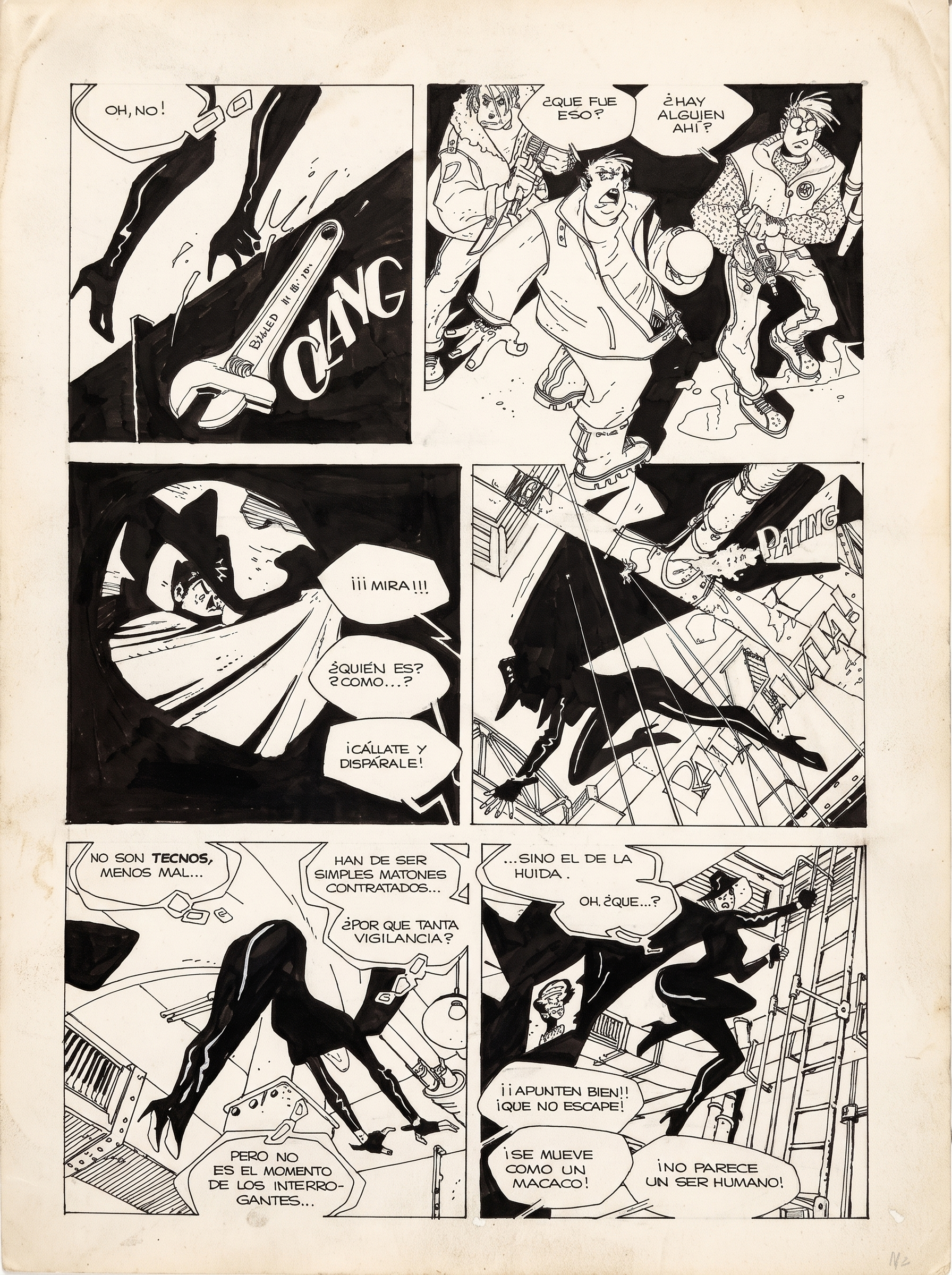
A few years ago I came across an analysis by an American critic who couldn't understand how such an "edgy" comic could have been made without succumbing to some kind of censorship or cancellation. Throughout his analysis the poor guy can't get over his astonishment at seeing that the chapters of Cybersix mix a trans protagonist with perverse Nazis in children's bodies, rape, vampires, addiction and every kind of illustrated scatology.
Cybersix, trans Antifa soldier. Nailed it.
And even when he was up to his elbows in those themes, Trillo never dropped his innocent, casual tone. Something that always amazed me was Trillo's favorite turns of phrase in dialogue. For any mediocre writer, which Trillo always associated with Columba, the proper way to express surprise boiled down to something like: "Blast! Damn it! Good heavens!" Trillo, on the other hand, preferred a simple, innocent "Whoa!" Likewise, when frustrated, his characters didn't repeat the usual bland clichés like "Dammit" or "Curses"; a simple "Ugh" did the trick. That's how he set his trap. The heroine finds herself in a dark alley with a transsexual vampire golem with giant tits? Done: a brief "Whoa!" was the appropriate reaction.
All of us who knew and read Trillo knew that behind the innocence that often showed up in his scripts and in his everyday manner, his morbid interest in the full spectrum of human filth was always lurking.
Cybersix eventually became one of his greatest works, rivaling El Loco Chávez and El Nene Montanaro. It even got an animated adaptation, something we already covered in the piece on Argentine Animation.
But perhaps the work where he best showed off his knack for interweaving innocence and sleaze was Clara de Noche, the comic serialized from 1992 to 2015 in the NO supplement of Página/12, co-written with Eduardo Maicas and drawn by Jordi Bernet. Trillo used to say that someone in Spain asked him for a comic that was "de puta madre" — fucking awesome, literally "of a whore mother" — so he did just that: a comic about a whore who's a mother. He used to tell, amused, how Clara de Noche had become a topic of debate among Spanish feminists, who couldn't quite decide whether it was a comic to celebrate or to cancel. The truth is that Clara de Noche is, above all, very human and funny. Stripped of all solemnity and any kind of activist agenda, its real protagonist is Pablito, the son.
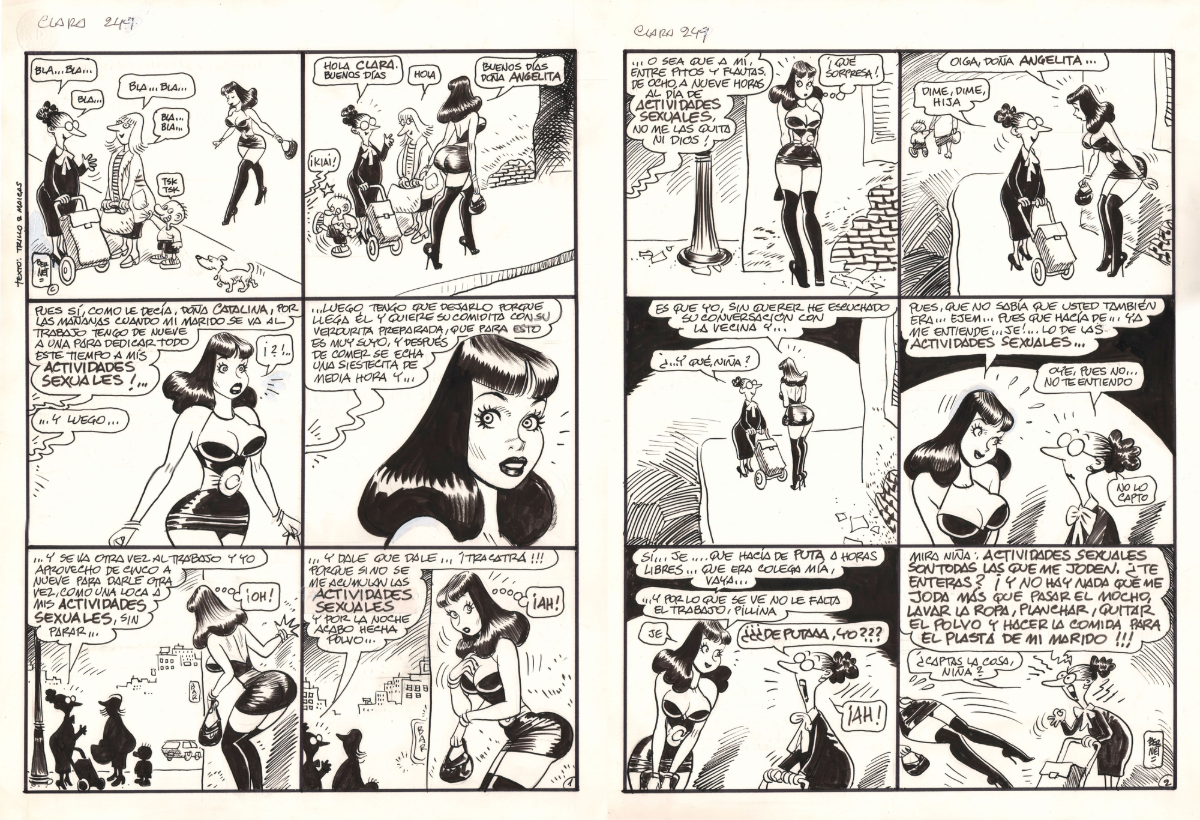
Much of the strip's humor and tenderness lies in the contrast between the sordid situations Clara goes through with her clients at night and her daily life dealing with child-rearing, school and her son's innocence. I don't think it's Trillo's best comic, but it's surely the one where his outlook, always seeking to combine the morbid and the innocent, is most finely distilled.
Toward the mid-to-late nineties, freed from his role as editor and devoted entirely to the European market, Trillo saw a string of new honors come his way. He won the Yellow Kid again at the 1996 Lucca Comics show, and some time later he was fully crowned in France when he won the Alpha-Art award, presented at the Angoulême Festival, for the script of Cosecha Verde (also known as La gran patraña) with Cacho Mandrafina. So ended, triumphantly, another stage of his work, and the ground was laid for what would be his final stage, in the two-thousands, devoted almost entirely to the French market and with a new legion of young artists.
Final stage: meet your idols
It was 1997 and I was trying not to go under while putting out a comics magazine that was sold at newsstands. As I was telling my father about my misfortunes as a self-publisher at the Cervecería Munich in Flores, a very friendly bald man at the next table overheard me and introduced himself as Enio Leguizamón, comic book artist. And right then and there he gave me the phone number of his friend “Carlitos.” I called him and he immediately invited me to drop by his studio. I couldn't believe I was going to meet one of my idols in person. And no, he didn't let me down. Not at all. Quite the opposite.
When I got to the two-bedroom apartment at Talcahuano and Santa Fe, I couldn't get in. The living room floor was covered in Cybersix originals. From the other side of the room, Carlos Meglia was looking at me, inviting me to share my thoughts on the pages laid out there. What was I going to tell him? They were brilliant. Meglia spread them out on the floor like that to check their consistency, to assess them all together. Peni was in another room. And in the third room, Trillo was waiting for me in his office. I scanned the shelves full of books, toys, drawings and awards. And I instantly knew that this was what I wanted to do for the rest of my life. It would still be eight years before, with Trillo's help, I managed to publish a book in France, and even longer before Trillo delivered that devastating remark on our way out of the Children's Book Fair: “This is coming to an end, Agrimbau.”
The following decade was filled with French books, published mainly by Albin Michel, alongside artists from the new generation. Juan Bobillo was one of his most frequent collaborators, with whom he made the three volumes of Sick Bird, Martin Holmes, Chocolate con Fritas, among others. He also stepped up the pace of his books with Horacio Domínguez, whom he'd been working with since the days of Puertitas. Without ever ceasing to supply scripts to Mandrafina, Meglia or Risso, he brought several more on board. In 2005 he published Sarna with Juan Sáenz Valiente, now better known as Juanungo, who would go on to have a prolific career alongside Pablo De Santis and on his own as a full-fledged author. Then came Pablo Túnica (with Jusepe en América and La Francesa) and finally Lucas Varela, the artist with whom he formed what was perhaps his last great duo. In just a few years they piled up an enormous number of pages for works like the children's book Ele, El cuerno escarlata, Sasha despierta and the best known and most reprinted: El síndrome Guastavino.
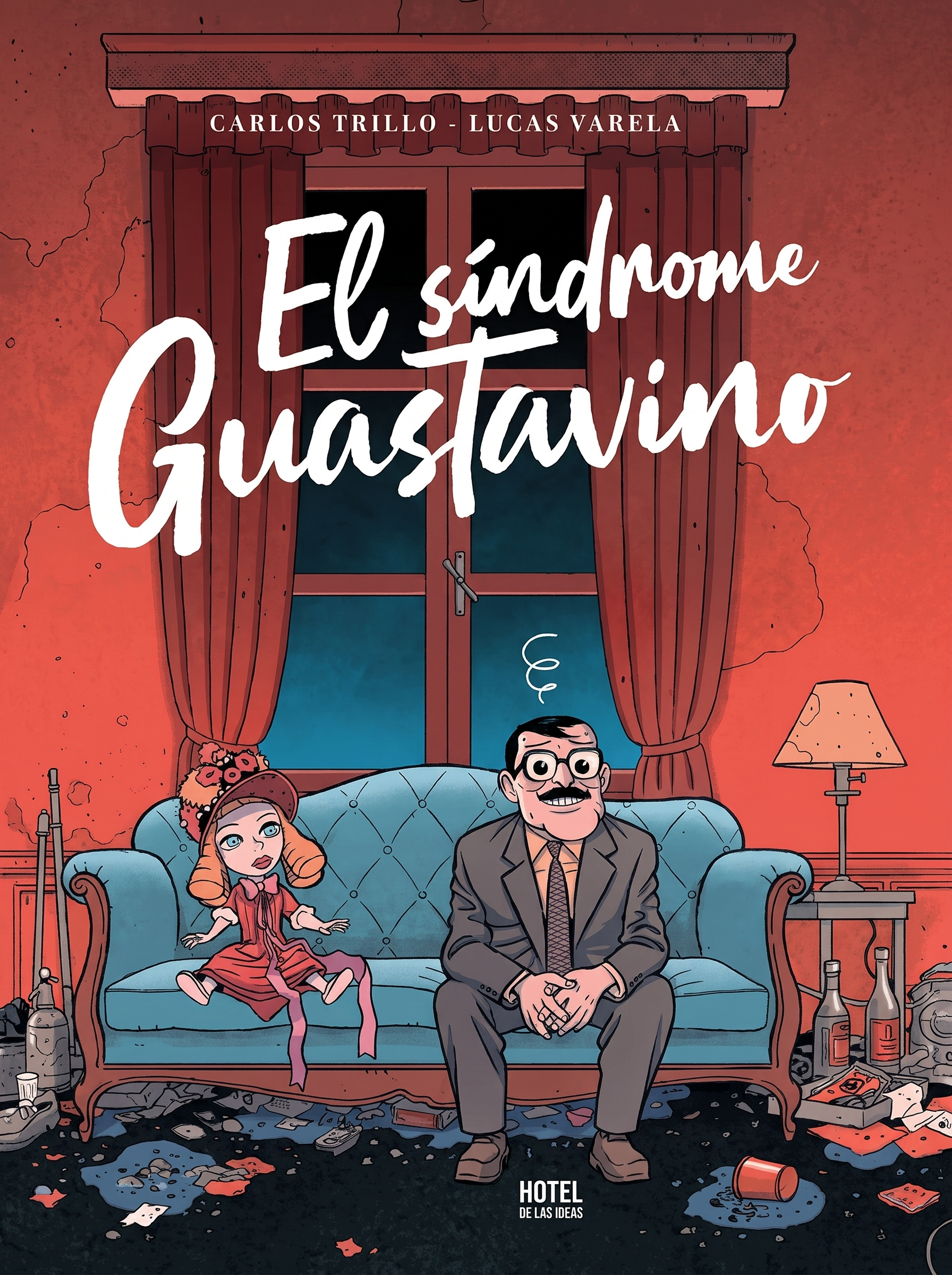
In this work, Trillo digs into many of his lifelong preoccupations—drab office workers like López, the morbid torturers of the dictatorship like Sarna, the sadomasochistic kinks of Cybersix—with an artist who could perfectly capture that wide spectrum running from tender innocence to perverted sordidness from one panel to the next.
To prove the point, here's another logline:
Behind the facade of a drab office worker, Mr. Guastavino secretly lives with the ghost of his father, a shadowy enforcer of the dictatorship. While he struggles to keep up an ordinary routine out in the world, he unleashes his entire sadistic and sexual inheritance in the privacy of his home through a disturbing fixation on a doll.
El Síndrome Guastavino has had several editions around the world, but it originally ran in Fierro magazine, which had returned to newsstands in 2006. Trillo was as involved in the new iteration of Fierro as he had been in its first eighties run, if not more, back when he got to publish these and other series with his friend Oscar Grillo (Grillo y Trillo) and other regular collaborators like Mandrafina (La Guerra de los Magos) or Risso (Bolita). In this period Trillo also pioneered something that was a rarity among authors of his generation: collaborating with women artists. With the Italian Laura Scarpa he made the book Como la vida, and in his final years he even published a few chapters of Pizza China with Gato Fernández for Animals magazine.
The graphic novel as the star format may have allowed for a huge expansion in themes and aesthetics, but it also brought with it a marked deterioration in cartoonists' working conditions.
Although he was never short of projects and always published several books a year, by 2010 Trillo already felt that the changes were coming faster and faster. Contracts were becoming more and more favorable to publishers—broader, more convoluted. Advances were shrinking. European publishers kept getting richer and authors kept getting poorer. Trends that only intensified as time went on. The graphic novel as the star format may have allowed for a huge expansion in themes and aesthetics, but it also brought with it a marked deterioration in cartoonists' working conditions. And in a kingdom of full-fledged author-artists devoted mostly to nonfiction, pure fiction writers like Trillo were increasingly seen as an old legend from another time, a living reminder of an era that no longer existed.
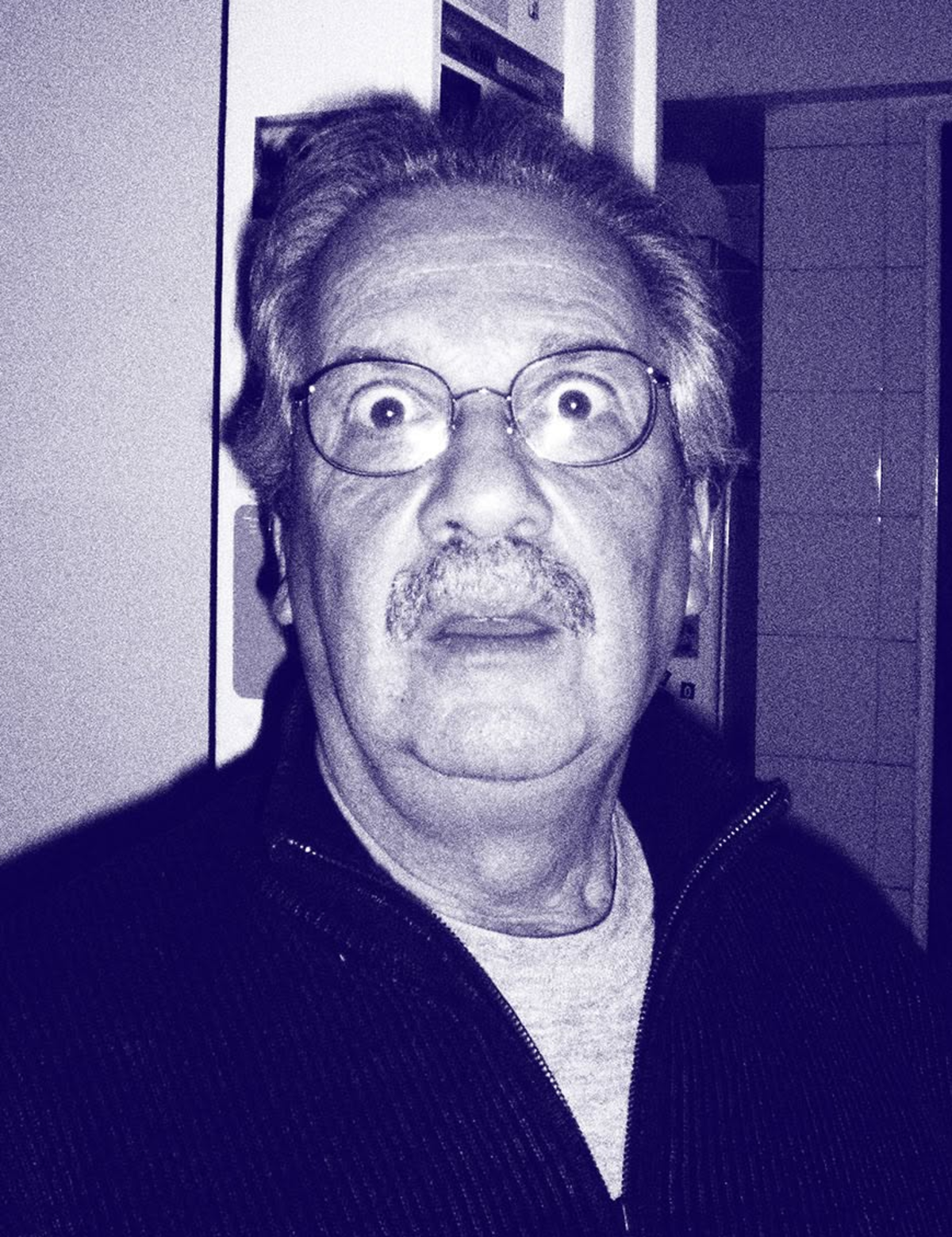
Trillo died on May 8, 2011, a week after his 68th birthday, just as he was starting a vacation in London with his wife, the writer Ema Wolf. The cartoonist Miguel Rep, in a special for Página/12, described perfectly what Trillo's reaction might have been on arriving in the great beyond: “Whoops, I died. Well, shit.” I pictured the same thing. It could easily be his epitaph. Since he'd never thought about retiring, he left several scripts half-written, books waiting to be published, conversations yet to be had. Much of my generation lost a childhood idol, a professional godfather, a collaborator and, above all, a friend. And I no longer had my main partner for cruelly trashing artists, swapping scripts and ideas over email, trading gossip about publishers and books, or just talking about life, eating ravioli by the river, watching the clouds over Vicente López. And on top of that, we never got to co-write that script, something we were always planning and never did.
Bummer.
But that wasn't the end of it; comics and their writers are still going strong. In the end, it was just a matter of adapting, tempering expectations and fine-tuning strategies so that the books, after all, keep coming out. These days solemn threats are all the rage: the end of work, of art, of mathematics. But if there's one thing Trillo left me, it's that nothing, not even death, is dramatic enough to deserve much more than a “well, shit” before you go back to writing in your own ocean.
Trillo 101:
Ten hand-picked recommendations of Trillo books you can find at the cool comic shops (La Fábrica, Punk, Hotel Tienda, Rey Esteban, etc.):
Alvar Mayor (art by Enrique Breccia, 1977): Loco Rabia and 2D Ediciones, 2020-2022
Buscavidas (art by Alberto Breccia, 1981): Sector Editorial and Doeyo Editor, 2024
El último recreo (art by Horacio Altuna, 1982): Astiberri Ediciones, 2017
Custer (art by Jordi Bernet, 1985): Historieteca Editorial, 2017
Cosecha verde + El iguana (art by Domingo Mandrafina, 1989): Loco Rabia, 2022
Fulú (art by Eduardo Risso, 1989): Loco Rabia, 2026
Cybersix (art by Carlos Meglia, 1991): Napoleones Sin Batallas, Deux and Entelequia, 2012
Sarna (art by Juan Sáenz Valiente, 2004): Utopía, 2021
El síndrome Guastavino (art by Lucas Varela, 2006): Hotel de las Ideas, 2022
Jusepe en América (art by Pablo Túnica, 2007): La Editorial Común, 2014
Las notas de 421 no tienen paywall
Y a cada colaborador se le paga por su trabajo. Las dos cosas dependen de los suscriptores.