Analog horror: the VHS era as an instrument of trauma
A rundown of the most bone-chilling works of analog horror: VHS tapes, creepypastas and internet myths.
It finally happened. Time caught up with us, and it did it exactly the way we always feared. Aching bones, joints that start to glitch, white hairs sprouting as a reminder that, as Nick Cave said, “All things move towards their end”. But worst of all, it turned us into creatures who, no matter how many times we deny it (more times than Peter denied Jesus), have become melancholic, nostalgic, anchored to a greater or lesser degree to an idealized past.
But this isn't exclusive to us eighties-born mastodons slowly shuffling single file toward the internist's office. Waves of nostalgia constantly wash over the media we consume. You know the drill: the aesthetic, the tone, the feeling of a lost world that might be the eighties, the nineties, and, as we near the end of the decade, the revelation that Avril Lavigne can be vintage. The horror, the absolute horror.
And speaking of horror, there's a phenomenon that's been taking shape online for a long time (back when there was such a thing as a living internet, constantly mutating) through forums and tiny YouTube channels. It's analog horror, a genre that imitates and draws on the forms and aesthetics of documentaries, corporate and public-service videos, radio and TV broadcasts, and handheld camera footage to evoke an atmosphere that feels lost in time and utterly unrecoverable. There's something about the analog that runs completely counter to our society of urgency, of short attention spans and hyper-condensed formats tailored to viewers who like to turn their backs on the TV. In other words, analog horror tries to conjure something that feels even more distant than the dinosaurs. That's the unbridgeable chasm separating the world of video rental stores from the world of streaming.
There's something about the analog that runs completely counter to our society of urgency, of short attention spans and hyper-condensed formats tailored to viewers who like to turn their backs on the TV.
So maybe that's what makes this kind of horror so appealing. Just ask kids what scares them and you'll run into endless nineties offices or ten-foot-tall faceless men showing up in black-and-white photos. It's the evocation of a very private, personal experience of facing the impossible without algorithms or consumption metrics. Just you versus the supernatural, mediated through a photo, a camera, a set of slides poorly designed by an underpaid government employee.
In this article we'll try to introduce the concept of analog horror to those who've never experienced it, while also offering some fresh angles for those already well-versed in the art of emulating the VHS era as an instrument of trauma. Far from being a definitive guide, it's a quick overview of the most accessible works (almost all have Spanish subtitles) and the ones that serve as a gateway to more complex forms of the genre.
But let's start with the origin of it all, an era when the VCR reigned supreme in a corner of our homes.
That gum you like (is going to come back in style)
Thanks to the passage of time, but also to the appreciation and analysis of the horror genre, we can point to early examples (predating the very idea of analog horror) such as foundational pieces like The Blair Witch Project (1998, Eduardo Sánchez and Daniel Myrick), a crucial element for understanding horror seen in first person through analog (or prehistorically digital) devices. A film whose driving force was disorientation, paranoia, and a tension that seemed to seep into a set of cameras and microphones that could just as easily have been tampered with, part of a hoax, a sick joke, or a conduit for forces not of this earth.
But perhaps the most significant thing about Sánchez and Myrick's film was its marketing campaign, something that could only have existed at the turn of the century and that had a real impact in countries where the internet hadn't gone mainstream yet, like ours. The idea that the film was REALLY a piece of footage lost under tragic circumstances sent a whole generation of us to the theater thinking that, just like the generation before us with “Faces Of Death” (1978, John Alan Schwartz), we were watching the final moments of real people. Like I said, an innocence harder to replicate than dinosaur DNA. So maybe you suspected it wasn't real, but you could never be 100% sure. There was always that doubt: maybe this part isn't, but that other part is, and so on.
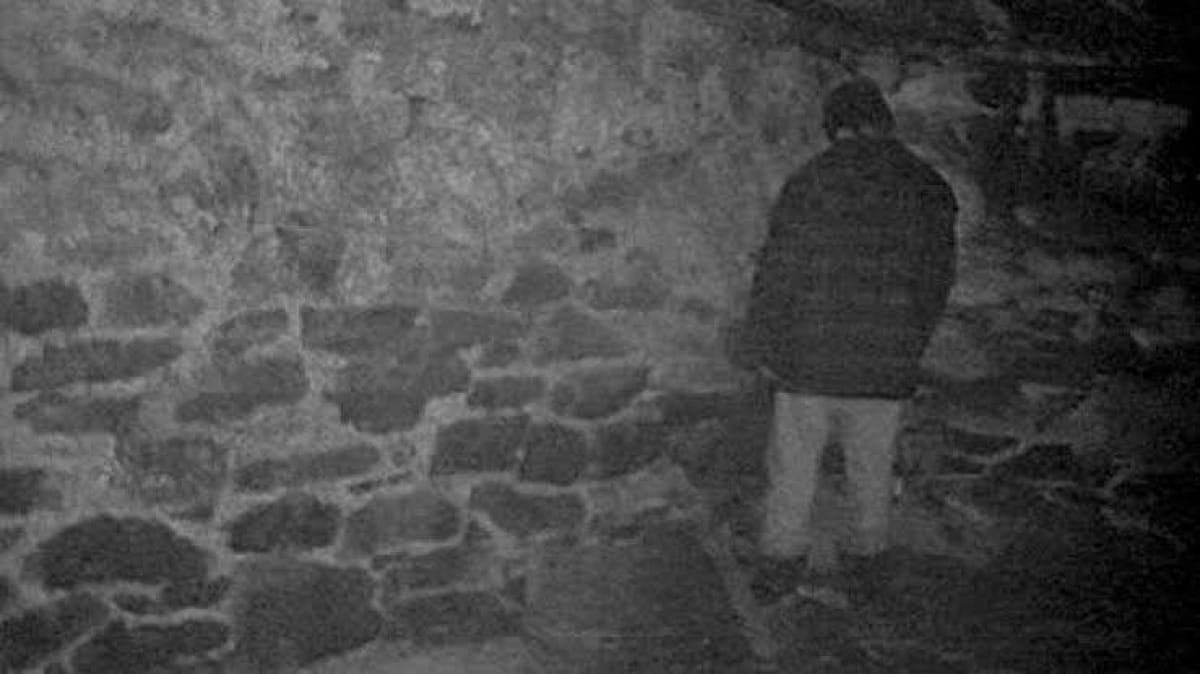
Analog horror has enormous power, especially in the found footage format, through a kind of lethal voyeurism: the belief that we're witnessing something nobody else should see. That's why that ending, now a cornerstone of the genre, hits so hard: Heather reaches the basement of Rustin Parr's ruined house to find Josh staring at the wall. And, seconds later, a dull thud, the camera falls, fade to black, and credits. “I'm afraid to close my eyes, I'm afraid to open them.”
And years later, the unsuspecting teenager would stumble upon a late-night cable movie that dragged him right back to that trauma, but in a story that moved away from witchcraft and demonic shadows to bring something terrible from beyond the stars. Because plenty of people caught Alien Abduction: Incident In Lake County (1998, Dean Alioto) thinking they were watching something forbidden. And although it came out before the Blair tape, since it was a made-for-TV movie, shot like a home video with an impressive economy of resources, you couldn't figure out what was going on. Especially because supposed interviewees showed up vouching for the footage's authenticity.
But of course it was fiction; it was actually a remake of a 1989 film by the same director, “The McPherson Tape,” which told the story of a family on Thanksgiving who witness the landing of an alien spacecraft and the experiments the creatures perform on livestock, and then have to survive a siege with an ending almost as traumatic as the one in Rustin Parr's basement. If you've seen it, you know. Absolutely terrifying. And it didn't help that it was based on a supposedly “real” case, that of the Kelly Hopkins family, who in 1955 started shooting at a series of creatures trying to get into their home, ranging from your typical grey aliens to some acrobatic leprechauns.
And we could keep going, like a roller coaster in reverse, hurtling fast and hard into the past, with cases like Ghostwatch (1992, Lesley Manning), a fake live broadcast featuring serious journalists staging the case of a haunted house and a ghost living in the pipes. The ruse was so effective that terrified viewers called the BBC. Toward the end, the broadcast broke the fourth wall, with the ghost using the transmission itself to reach viewers' homes. Imagine the horror for those Brits: people were traumatized, kids couldn't sleep. A million calls and a ban on rebroadcasting the special for ten years. Something similar to Orson Welles's famous “The War Of The Worlds” broadcast on the Mercury Theatre in 1938, when he convinced people that Martians had invaded Earth.
Marble Hornets: The Tall Man Made Me Do It
So far we've reviewed works that could fit into what we call “analog horror.” But it was only with the arrival of the mass internet era that forums started filling up with creative material ripe for exploitation decades later. And it was on the “Something Awful” site that a contest was held to post Photoshopped paranormal images. That's where user Viktor Surge (Eric Knudsen) uploaded a photo showing a group of teenagers running with a mysterious figure behind them. The caption read: “We didn't want to go, we didn't want to kill them, but its persistent silence and outstretched arms horrified and comforted us at the same time.” Then a date, 1983, and “Photographer unknown, presumed dead.” The figure in the background, a tall, long-armed being with a completely blank, featureless face, would be named Slenderman and would soon become a legend.
The power of creepypastas, those anonymous or community-built internet stories, lies in their ability to be a message found in a bottle. They're usually written in first person, they try to pass as real, the case of an ordinary person coming face to face with the mind-bending, and they lack all the trappings of traditional literature. They're not trying to sell or go mainstream through advertising, nor to put the author on a pedestal. It's just the story, and the power of folk legends and urban myths that get woven around whatever isn't entirely clear or lacks a classic fictional motive.
The power of creepypastas, those anonymous or community-built internet stories, lies in their ability to be a message found in a bottle.
In Slenderman's case, as a mysterious entity with a fairly obvious purpose (driving children or teens insane, hurting, abducting, or killing them) and little context around it, it let viewers fill in the blanks in such a way that they often ended up placing themselves there. The best example can be found in the documentary “Beware The Slenderman” (2016, Irene Brodsky), which recounts how two girls ambushed a third and stabbed her, fortunately without killing her. When asked about their motive, they answered: “Slenderman made us do it.” Which gives the myth Knudsen created the far-from-enviable distinction of having jumped from the screen into true crime.
But getting back to much healthier fiction, there are several adaptations and related works, like Sylvain White's 2018 film of the same name, or the video games "Slenderman: The Lost Pages" and "Slenderman: The Arrival." But few works have mattered as much as “Marble Hornets” (2009, Troy Wagner & Joseph DeLage), a serialized pseudo-documentary whose first episode was posted just 10 days after the original post. It tells the story of a filmmaker who abandons the project that gives the series its name and mysteriously disappears, leaving behind a set of videos that the protagonist uploads online while investigating his old friend's whereabouts. That's when he starts noticing a series of anomalies and the presence of an entity that seems to be stalking the director and slowly driving him mad, always lurking in the shadows.
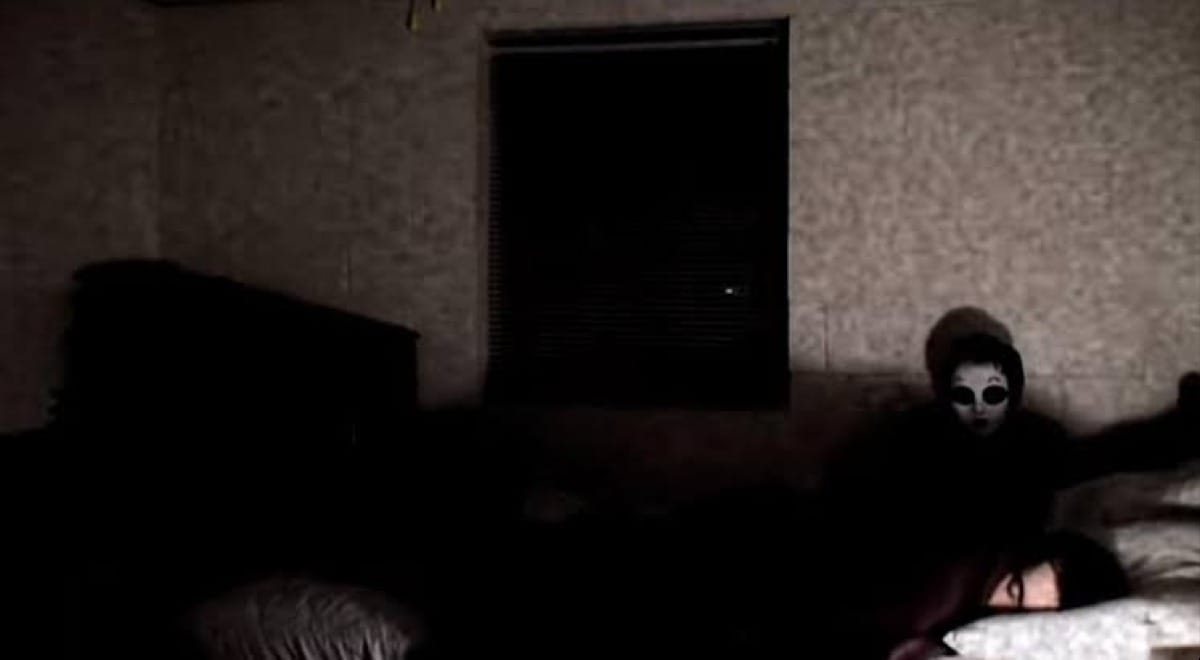
The series is divided into entries in which the protagonist analyzes the videos he received from the film's director and gradually unravels a mystery that could end up making him another potential victim. There are 87 episodes in total, and it has the peculiarity of a companion series (To The Ark), which often responds to the uploaded videos as an antagonist channel hiding some of the answers. This, together with the community that grew around it over time, gives it the quality of an ARG (Augmented Reality Game), where viewers feel like part of the effort to crack the enigma.
Local 58: End of Broadcast
If Eric Knudsen is one of the fathers of creepypasta, Kris Straub isn't far behind: “Candle Cove” is one of those forum stories about a children's show broadcast years ago with no record of it whatsoever, except in the memories of the kids who watched it. Obviously, it's a cursed show that soon begins creeping into the lives of those exposed to its signal. So it's no surprise that “Local 58” (2015) uses the idea of a local station at midnight where strange things start happening and something slips into its broadcast as a herald of strange forces.
Straub's work follows a set structure: first there's a broadcast with the channel name and the programming schedule, then comes a segment that might be a kids' show, the weather report, a government announcement or a program about astronomy. They're all made with stock footage and photos, royalty-free effects and bits of public-domain movies or songs, though there are some original pieces created entirely for Local 58. But basically everything sticks to the same principle: how you can alter, blend and fuse existing concepts and shape them into an existential nightmare, internal and cosmic at the same time.
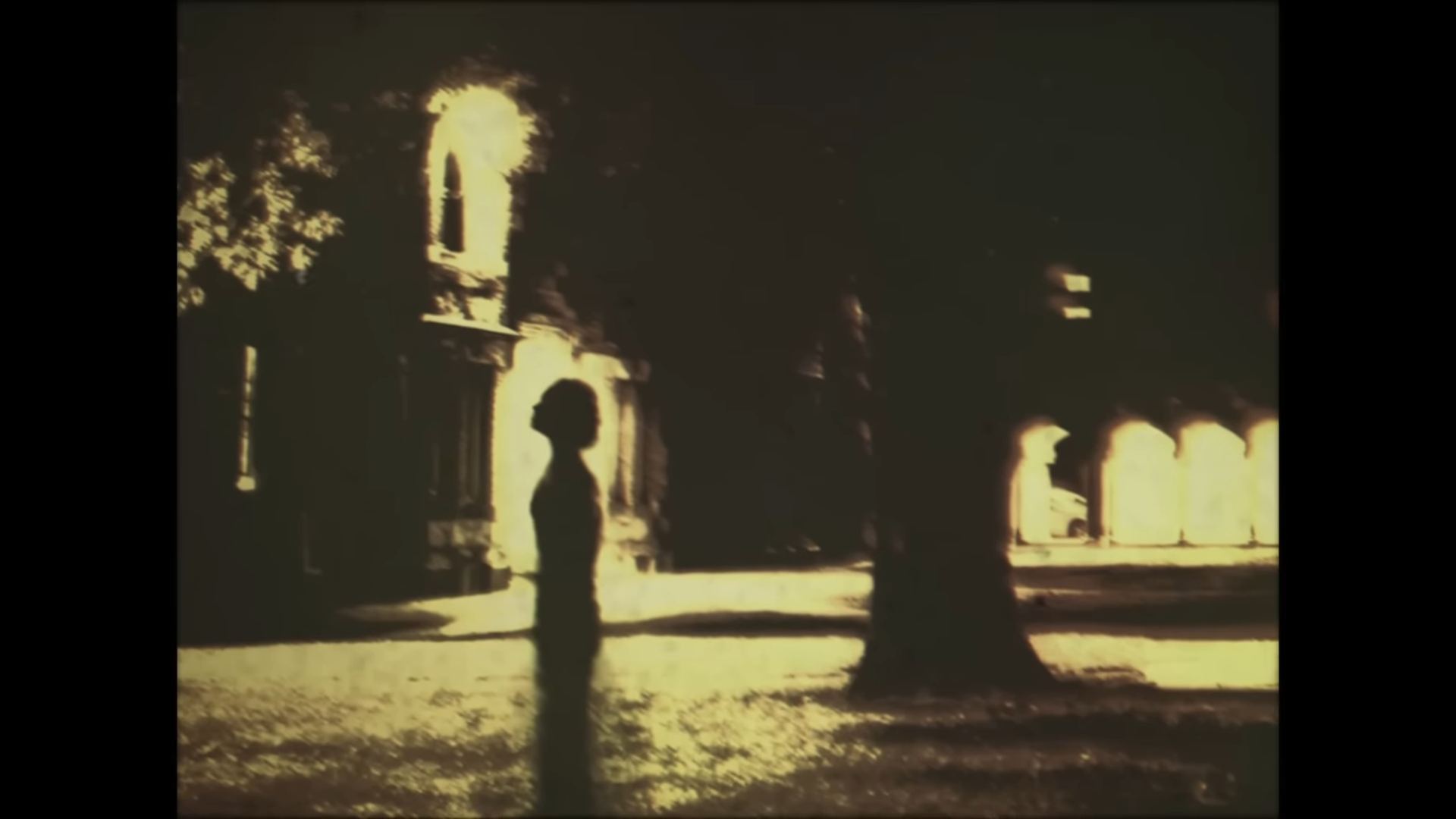
There's a literary component that overrides everything else. The power of the word is present quite literally, because the fear builds through what you read on screen. “Containment” is one of the best-executed examples: a government PSA that leaks into the middle of the programming. In the event of a “total defeat of the United States,” citizens are urged to kill their loved ones and themselves in order to “triumph spiritually even after being conquered.” Here, the coldness of the message, its horrific consequences and the strangeness of the scenario that hidden forces are preparing for are the elements that build the tension and the horror.
Despite being an anthology, there's a common thread behind the stories Local 58 TV tells, and they culminate in the hardest segment to watch (Close), which shows in real time the last 30 minutes of a landing mission on a comet orbiting the Earth. It's exhausting, it has moments of extreme monotony, but it keeps ramping up the dose of fear until it reaches a conclusion that will be deeply satisfying for anyone who's into weird horror and hallucinatory science fiction.
Gemini Home Entertainment: Materials for a Nightmare
If there's something that's both indebted to and a twist on Straub's work in Local 58 TV, it has to be the series of educational videos called “Gemini Home Entertainment” (2019), which to this day keeps filling the shelves of some world doomed to total destruction. Created by Remy Abode, this collection of documentaries and infomercials tells, across its different segments, the story of a planet Earth that is slowly succumbing to the interference of some kind of space virus, a cosmic organic entity that's swallowing the galaxy.
Gemini builds its tension with text. All it needs to weave an atmosphere of fear is information. In the first episode, “World’s Weirdest Animals,” a completely harmless documentary starts out talking about some peculiar kinds of chickens and owls, and ends with the “Woodcrawlers,” creatures like Lovecraftian ticks that get into your house to build their nests and end up stealing your voice. Then, in one of the series' few found-footage moments, we're shown the “Fake People,” possibly infected by the creatures, who clumsily try to imitate a human being and end up chasing the poor bastard filming them.
Gemini builds its tension with text. All it needs to weave an atmosphere of fear is information.
There's no denying you can spot Local 58 TV's influence a mile away, especially in segments like “Storm Safety Tips” or “Our Solar System,” but far from being a rip-off, I think they work as good complementary pieces for Gemini's mythology and an interesting alternative to those of the "original" series. They're similar formats serving their respective purposes, like the idea of a tech firm tied to storm detection (Harbinge) or the space virus infecting the farthest planets of the solar system on a direct collision course with Earth.
The universe Abode created is tightly interconnected across the different videos, each of which features a concept seen before or further develops the existing mythology. Like many of these series, it's obsessed with two very recognizable elements: nostalgia and cosmic horror. Everything has an existential edge, which in this case is a primordial entity existing on the fringes of our solar system, whose advance is inexorable and abysmal.
And all of this told with graphics and slides. Although Gemini Home Entertainment has moments where it pulls out all the stops, with imaginary video games, supposedly found videos or archival footage, it almost always rests on static elements and fixed text: the viewer imagines the rest. A massive mythology that ranges from the cosmic to a kind of folk horror, cursed summer camp included, visits from strange men in suits and lights that can take you somewhere much worse than death.
The Oldest View: Beyond the Fluorescent Tubes
As with Eric Knudsen and his Slenderman, the whole “a picture is worth a thousand words” thing also happened with the cult behind the Backrooms. The image of some yellowish offices devoid of any human presence was posted in 2019 to a 4chan board along with a text about a place you'd fall into if you no-clipped (slipped through reality). Miles and miles of empty offices randomly generated by who knows who. And the idea that if you hear something, it's because that something already heard you and you're going to die. Scary as hell. But it was ultimately Kane Parsons who shot to fame with a video called “Backrooms: Found Footage,” uploaded to YouTube on January 7, 2022.
The story of Parsons and the Backrooms is well known. It's no accident that the A24 adaptation directed by Parsons himself was one of the highest-grossing films of 2026. But the talent of this kid, who started the project at just 16, is clearly on display in his next work: “The Oldest View,” a six-episode series in which a YouTuber (played by the director himself) discovers a tunnel in the middle of a field that descends several miles underground and ends at… an abandoned mall. Yes, sure, it might sound a little too indebted to the liminal concept, but Parsons pulls off something very hard: showing a horror that's also sad and melancholic, tied to a real place (the Valley View Center in Dallas), finally demolished in 2023, which Parsons and his friends rebuilt using Blender.
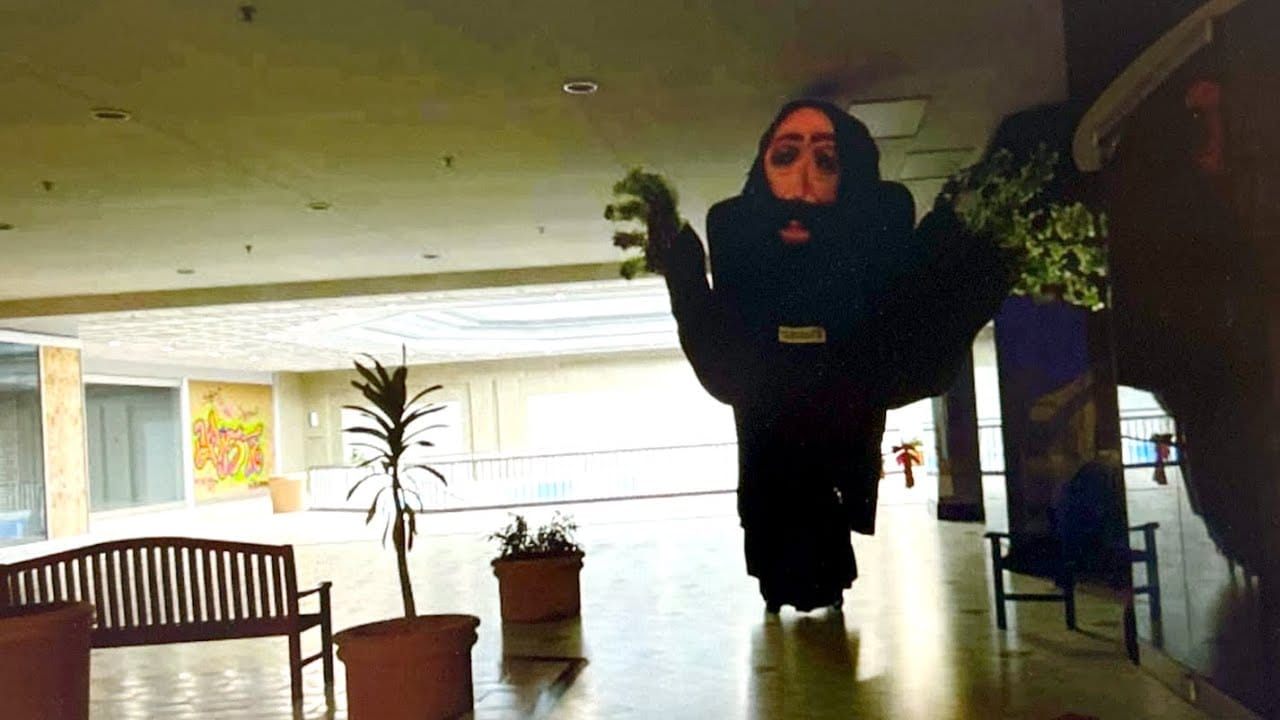
Here the concept of “analog horror” may get blurry. But, as in the magic of creepypastas, Parsons is after yesterday, the resurrection of what's gone, in this case not through a style (although found footage is one), but through something physical, real, a place like a mall where lots of people poured part of their lives and which now exists only in a world buried underground, where no one can see it.
It's not the horror of monsters or liminality, but simply of the passage of time and the feeling that everything is marching inexorably toward its end and there's nothing we can do to stop it.
Parsons evokes the sensibility of analog horror and, speaking personally, it amazes me that it comes from someone so young. It's almost a full circle: an adult obsessed with an era he never lived through, but who somehow recognizes it, tunes into it and emulates that nostalgia perfectly. The feeling generated by the fragments of “Life Of A Giant” or Parsons' own walk through the demolished site of the Vallew View Plaza is incredibly powerful. It's not the horror of monsters or liminality, but simply of the passage of time and the feeling that everything is marching inexorably toward its end and there's nothing we can do to stop it.
The Mandela Catalogue: Death Will Come and It Will Look Like an Infomercial
A constant beep that cuts out and gives way to a monotone, mechanical voice delivering a series of warnings to the general public. VHS filter, faces that shatter the uncanny valley, broadcast cuts to blast the viewer with some ghastly flash, distorting voices, friendly, upbeat messages that completely break the atmosphere. Those are some of the ingredients that made “The Mandela Catalogue” (2021, Alex Kister) not only an internet phenomenon across every social network, but also the founder of a type of horror (later copied ad nauseam, but still very effective).
It all starts with a grim parody of the Annunciation, in which a monstrous version of the angel Gabriel appears to some shepherds with an ominous message. The same happens when some mourners visit Jesus' tomb and encounter an utterly ghastly vision of the Messiah. This is a turning point in human history: the arrival of entities called “Alternates” that, like any good Doppelgänger, don't just replace the originals but drive them to their deaths through traps and mind games designed to destroy them psychologically.
Obviously, a good chunk of Kister's work is found footage, but most of the atmosphere is achieved through static images, whether depictions of phone calls, public announcements, evidence collection or other kinds of records. The information is very limited and we're never told how it reaches us, which preserves a mystery that reveals only just enough. For example, one of the things that most sets "The Mandela Catalogue" apart from the other works mentioned is its use of Catholic children's films to tell us the mythology of this world where, since shortly after creation, there seems to have been the threat of entities infiltrating us to destroy and replace us.
On top of that, there's a constant manipulation of the viewer, which may be partly due to the Alternates' ability to corrupt any kind of system, be it a TV, a radio or a GPS, or because the powers that be have flat-out decided to let things run their course (with official videos advising not to respond to a call for help). Over the eight episodes that make up the series, we see an utterly minimalist use of images and sounds that never once falters in shocking us with scenes like a mother hanging herself when she sees her missing child gone from the crib, or a guy blowing his brains out in front of an Alternate that won't stop pounding on his bedroom door. All done with very little and achieving a lot. Intelligence in the service of imagination and trauma.
In Short
As we said at the start, this is by no means a definitive guide. It's an introduction to a genre that has caught Hollywood's eye, and until it ends up corrupting it, we'll be able to experience it in its original form: pure, untouched. Some other examples include “Fake Documentary Q” (2021, Daichi Minaguchi), a set of Japanese horror segments that, as the name suggests, mimic a documentary, ranging from a woman's impossible disappearance to a cursed tape lost on the shelves of a video store that kills whoever watches it. You can also find things like “Samosbor,” Soviet horror set in a “Gigakhrushchyovka” (an infinite building) with strong creepypasta influences, like those of the SCP Foundation.
And even though Hollywood's monstrous, aberrant eye is fixed on the genre after the success of Kane Parsons' Backrooms movie, you can still dive calmly into these dark waters, for a long time, finding more and more hidden gems. They'll be passed by word of mouth, communities will be built and they'll spread, like viruses from beyond space. All it takes is a little imagination and a little madness. The seeds lie deep in the internet. As long as something human remains, things as wonderful as they are terrible will bloom.
Las notas de 421 no tienen paywall
Y a cada colaborador se le paga por su trabajo. Las dos cosas dependen de los suscriptores.