Who's Lila?: The metanarrative video game where we are the monster
Metanarrative to the limit: a video game where we are the evil that breaks the boundary between fiction and reality.

Metanarrative to the limit: a video game where we are the evil that breaks the boundary between fiction and reality.

One of the topics that has caught my attention lately is metafiction. These works that, almost like a game, transgress their own formal structure and create a unique interaction with their audience. In literature, there are many examples, from Don Quixote reflecting on the role of the author, to "House of Leaves” by Mark Z. Danielewski, which captures the horrific architecture that its story narrates on its pages.
However, some time ago I had the chance to play Inscryption, and I began to think that perhaps video games are the perfect medium for metafiction to achieve its ultimate goal: total interaction between author-work-audience. Unlike what happens in other arts, while we could talk about the active role of the reader as proposed by Umberto Eco in “Open Work,” in the realm of video games, players take on a role that goes beyond that of a mere spectator within their own story.
Metafictional narratives play with revealing their own nature as aesthetic objects. In this sense, the definition of metafiction proposed by Gonzalo Sobejano takes on an important nuance. The theorist states that a metafiction, in literature, is “a novel that refers not only to a represented world but, to a large extent, to itself, flaunting its condition as an artifice.” Now, the brilliance of these stories lies not only in their application of metafiction for mere formal adornment but when that distortion of structure is intimately connected to the theme or content it addresses.
Perhaps video games are the perfect medium for metafiction to achieve its ultimate goal: total interaction between author-work-audience.
I believe that the video game Who’s Lila? is a perfect example of this thematic metanarrative coherence. I must admit, however, that I stumbled upon it by chance; point-and-click is not a genre that interests me in itself, but what first caught my attention about this work was its retro aesthetic and unique color palette. Until I started playing and was captivated by its main premise.
In this game, we control (no pun intended) William, an orphaned teenager who has a particular condition: he cannot express emotions through his facial gestures. This causes people to distance themselves from him and leads to discrimination. Quickly, the game shows us, through a tutorial in front of a bathroom mirror, what our main role will be. Instead of the typical dialogue options, we will have to manage William's facial gestures to successfully carry on conversations with different characters. In this way, depending on whether we use surprise, anger, sadness, joy, disgust, or fear, we will progress in one direction within a narrative that presents multiple endings, as is common in the genre.
However, despite the uniqueness of its mechanics, from the initial menu of the game, we realize that we are not facing a conventional adventure. There, we have, on one side, William's face asleep on one side of the screen, and on the other, the typical basic menu of any video game. But there is one element that quickly catches our attention: the game introduces us to its world through the option “wake up”; not start or begin, as is usually the case. When we click, William tells us about his condition, and we also understand that, at times, the main difficulty will be keeping his facial emotions “controlled” in moments when they overwhelm him.
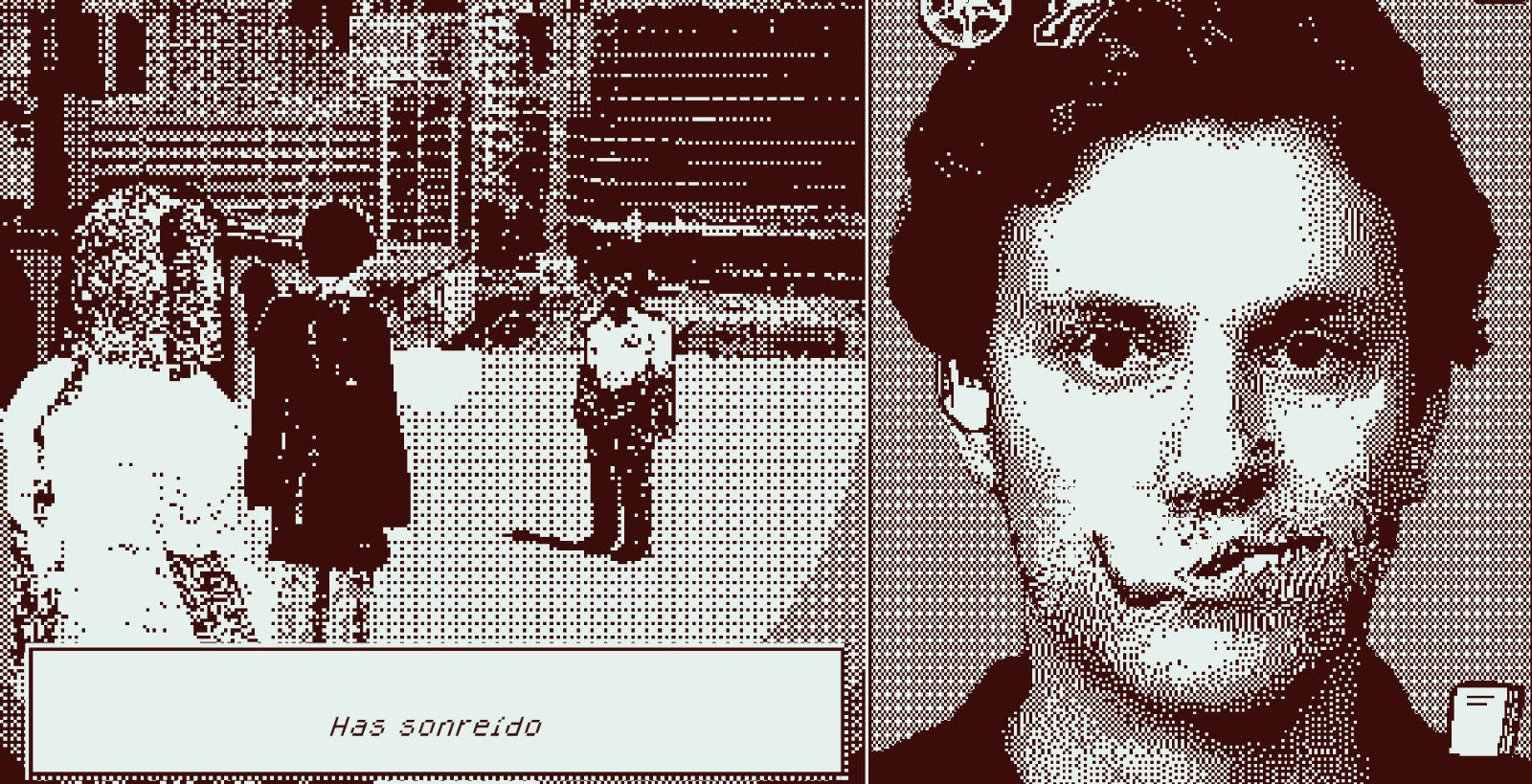
As those first minutes pass, we realize that William's condition is not the only unusual aspect of this story. First, we receive a call from a broken cellphone, the music sounds eerie, and the caller says: “Lila, please, let me come back.” That brief call opens up a thousand questions and starts to give us clues that are fed by the title of the game.
Subsequently, we move to William's kitchen and notice that there is a garbage bag placed on his table, next to a chainsaw that, when we interact with it, our protagonist says: “It's a farming tool.” A strange interaction considering we are not in a rural setting. After that, the game gives us our first task: take out the garbage bag and go to school. The first thing we see when we leave the apartment is a poster with the face of a teenager named Tanya Kennedy and the phrase “Wanted.” The coincidences keep piling up, but the game gives us the final clues when we manage to throw away the garbage bag and, after seeing a bunch of crows hovering over the dumpster, Will says, “I know why they are here.” Then, at school, we realize that Tanya disappeared a long time ago, the police are looking for her, and suspicions grow about whether Will had anything to do with it.
I don't want to delve too much into the game's plot because, on one hand, I believe its story is not as interesting as the way it employs to tell it, and on the other, I want to avoid giving too many spoilers. Let's just say that after a series of events, we discover that Will actually killed Tanya, and because of this, he ends up arrested. Depending on the actions we take, we will get one of the several possible endings.
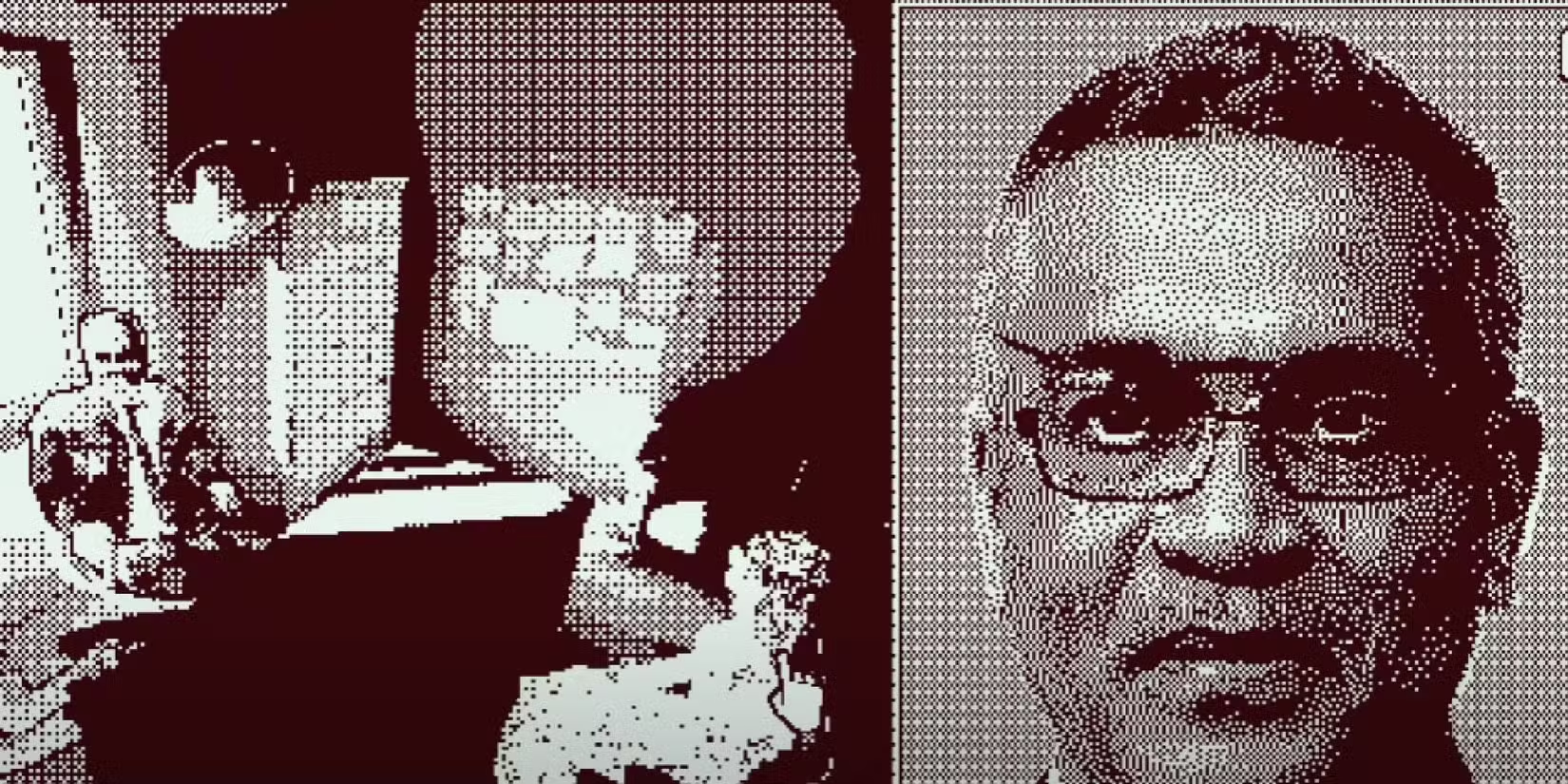
The important thing is that, upon finishing our first run, we have an interaction with Detective Yu, who starts to peel back the narrative veil of the game and paves the way for metafiction. After a brief interrogation, Yu tells us: “I’ll see you at the place you use to save.”
After this, we return to the initial menu and notice that more options have opened up than we had at first. In one tab, for example, we can check the tarot cards related to the endings we achieve. After that, in the save options, a strange symbol appears with the label “Yu's Office,” where we can go back to chat with this peculiar detective.
In this game, we control (no pun intended) William, an orphaned teenager who has a particular condition: he cannot express emotions through his facial gestures.
He will explain to us, while also investigating, one by one the true endings of the game. But he also tells us something important within the logic of the video game itself: Will is possessed by an entity named Lila, so he addresses him directly by that name.
However, the story proposes a journey through a symbolic labyrinth that is too intricate to truly understand what happens in its plot without external help. Who could, then, help us unravel the most dark secrets of this universe? When we return to the start menu, we see that a new tab has appeared: “Invoke on the desktop.” When we click, it seems like nothing happens, but when we go to our computer's desktop, we find a new icon called “Daemon,” which the game describes as “a friendly server.” It is a technologically supernatural companion.
The Daemon has a key functionality in Who’s Lila, as it is the mechanism that reveals how the game flaunts “its own condition as an artifice,” following Sobejano. In other words, it becomes the ideal tool to reveal the deepest implications of the metanarrative.
At this point, I consider it important to revisit what Espen J. Aarseth proposes regarding what he calls “ergodic narratives.” According to the author, ergodic literature relates to those narratives in which, for their own construction or constitution, the non-trivial effort of their readers is required. In other words, narrative progress depends on the active participation of the reader.
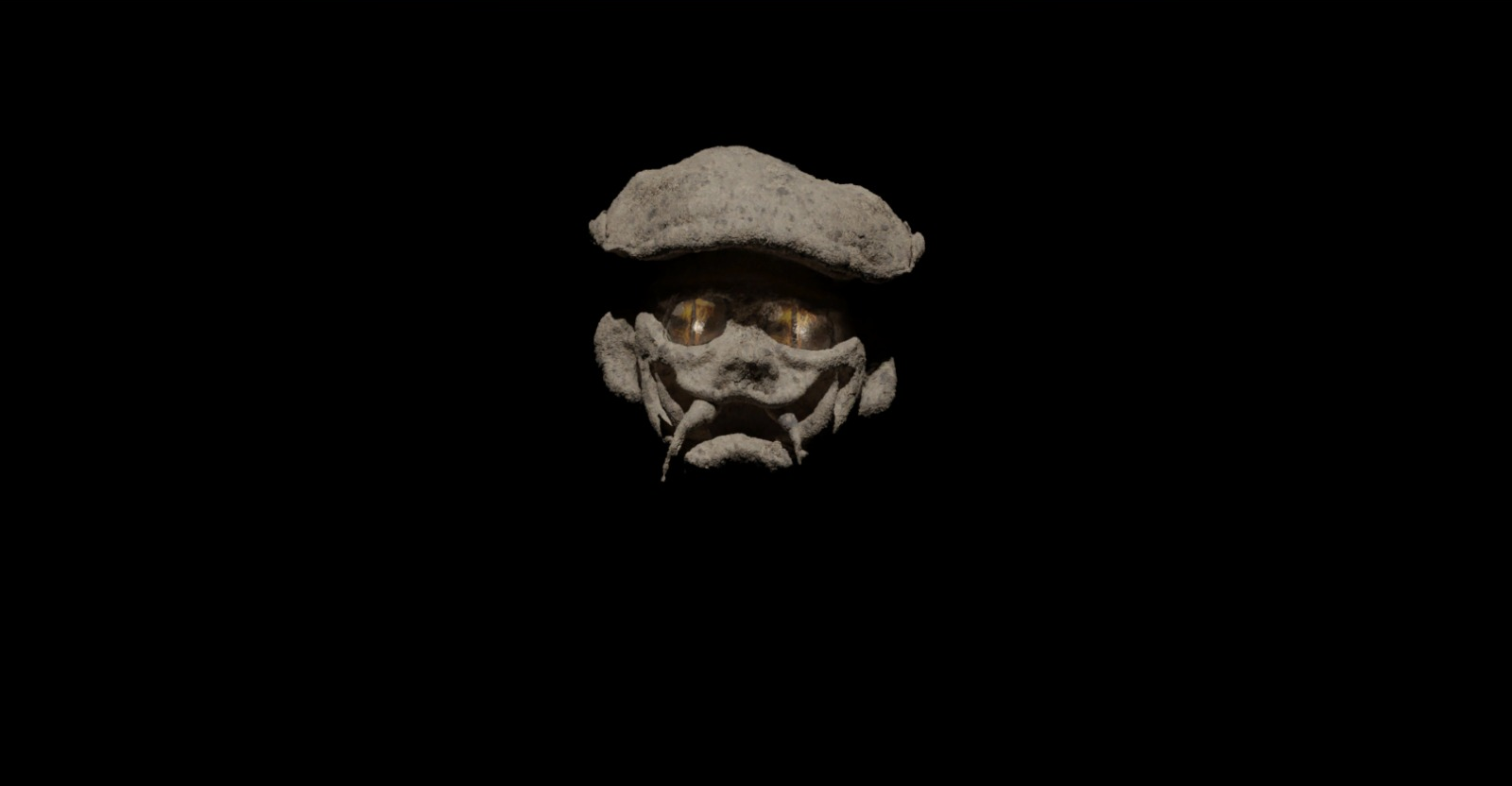
From my perspective, at this inflection point both in terms of plot and mechanics, “Who’s Lila” tensions the idea of ergodicity through metanarrative. Not only is our participation as players necessary to understand this story, but we also have to go further and navigate through the very internal programming architecture of the software (and even external) to unravel its mysteries.
This, however, is not something this video game invented. It has already happened with works of different kinds, such as Doki Doki Literature Club. However, I dare to say that only here is this condition taken to the extreme.
The first moment we engage in this kind of digital archaeology occurs when the Daemon gives us the key to open Tanya's school locker. There, the game provides us with clues to access her Twitter profile and obtain her phone password. At first, I thought the game would show the typical navigation tab within its own world, but instead, we actually get a link to open a real profile on this social network. It pulls us out of its own world, blending with ours; yet it still shouts its nature as an artifice, as a video game.
In this seemingly empty space, the game embraces the logic of ARGs (Alternate Reality Games). By blurring the line between the executable program and our real world, Who’s Lila? stops existing solely in a virtual realm. The game's space expands and engulfs our own reality.
By blurring the line between the executable program and our real world, Who’s Lila? stops existing solely in a virtual realm. The game's space expands and engulfs our own reality.
Continuing with this idea, another fundamental moment occurs when we investigate the abandoned hideout of Father Lawrence's cult (to which Will belonged). There, with the help of the Daemon, we can establish an esoteric communication with the deceased leader of the sect, who reveals that whatever Lila is, she is out of control and we need to set limits. For this reason, he gives us access to his computer and asks us to look into the files of scientist I. Ryibkin, who holds the key to confronting that entity. As you can imagine, delving into those files leads us to a real website where the scientist unveils the esoteric plot hidden within the game.
In general terms, Ryibkin proposes the idea that consciousness does not originate in the human brain, but is an independent external entity or phenomenon (referred to as "The Prince"). Therefore, human brains are described as "meat machines" that imitate this consciousness to trick it into inhabiting them.
This esoteric definition intertwines with the philosophical concept of qualia (those subjective and intransferable experiences of individual perception, like the unique sensation of experiencing a color or feeling pain) to argue how consciousness can isolate itself from purely biological structure.
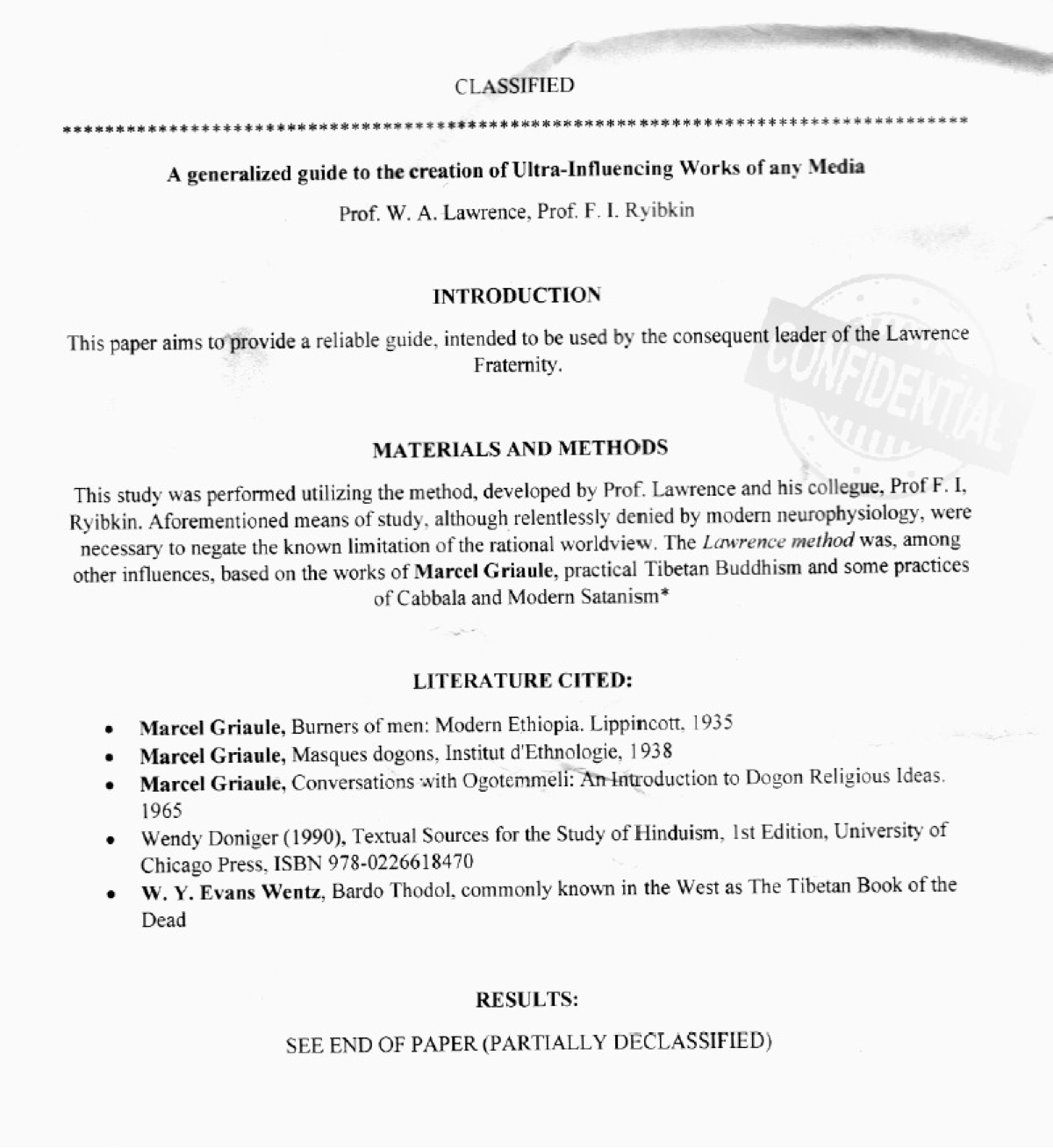
Later, by deciphering a series of puzzles, we gain access to classified documents from Father Lawrence about a project to artificially create these entities and control mass thought: the so-called ultra-influential works (UIW-AM, for its acronym in English). Thus, Lila was born. The text discusses how memes or works of art, due to their mass and viral nature, can become entities capable of achieving autonomy, a form of their own. In fact, the game uses the fictional meme “Dada Dog” (a clear reference to Pepe the Frog), a drawing that, within the game's logic, was adopted as an extremist symbol involved in hate crimes.
The cult's plan was to study the possibility of creating these entities to influence society. Now, what does this have to do with the metanarrative, beyond its unique way of being revealed?
At this point, the title of the game begins to take on a depth greater than what we could initially assign it. It is no longer an empty question, but the very meaning of the work. A revealing answer appears in a dialogue with Detective Yu, who tells us: “I’ve been watching you since William woke up in his apartment until the end.”
At first, we might interpret that Yu is communicating with Lila within the fiction itself. However, later the detective reveals what he considers the true nature of this being: “You are a mist composed of the intersectionality of many human minds.”
This sounds more like a collective construction than a fictional character. Therefore, we interpret that Yu refers to Lila as the articulated reflection of the decisions of all the present players.
If we move the pieces in the video game, what entity pulls the strings behind our decisions?
Here, the meaning of the work takes on a radically different value. We are no longer facing a video game that simply plays with metanarrative by breaking the fourth wall. On the contrary, through our effort in this ergodic labyrinth, we understand that we ourselves are the esoteric entity that threatens, and even assaults, the characters embedded in that virtual world. Their story shows us how the game's own universe tries to figure out why we, in our role as players, have influence in that world.
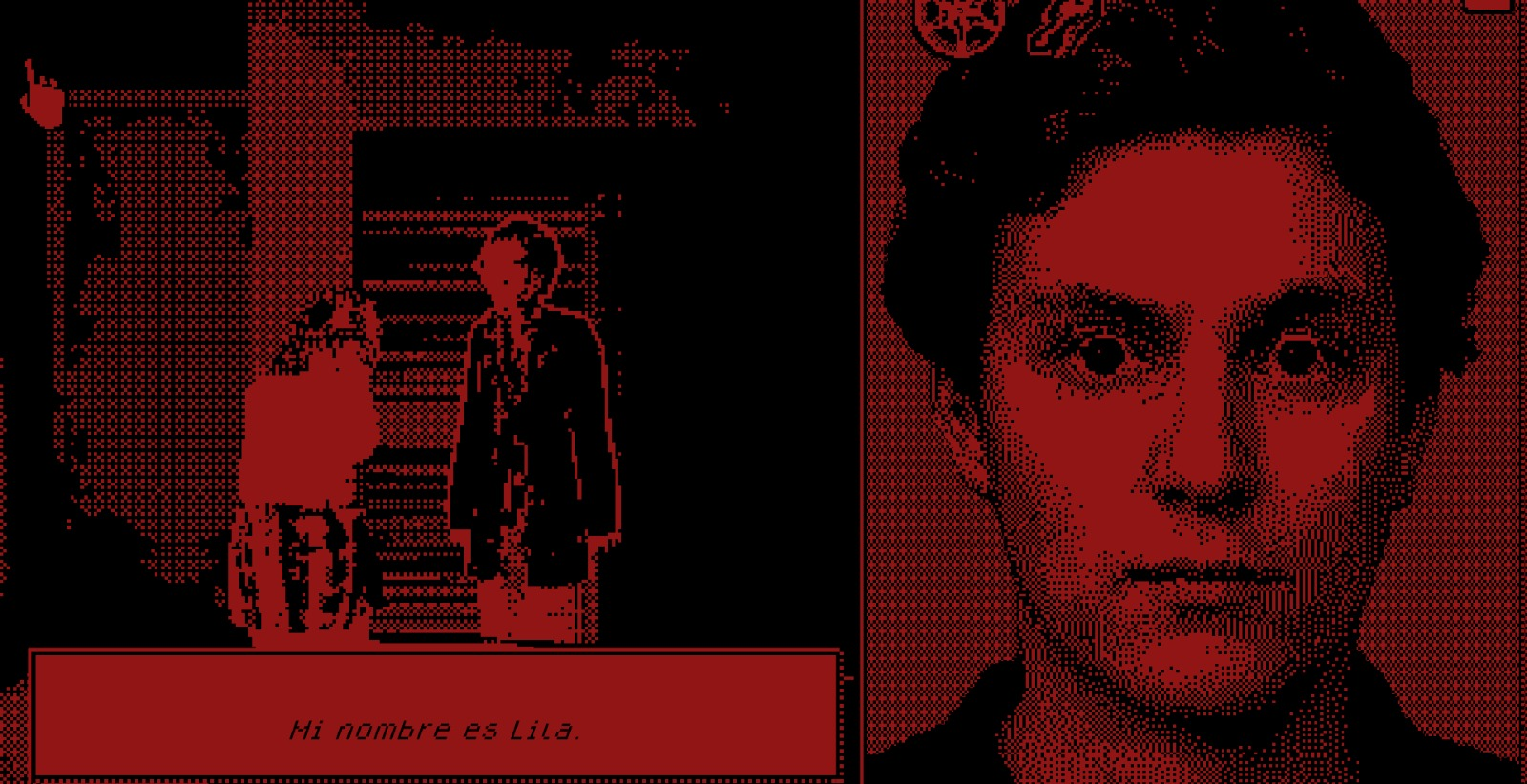
In light of this revelation, some of the actions taken throughout the story acquire substantial weight. For example, many of the game's endings depend on Will carrying out the murder of Marta Jennings, Tanya's friend, who rightly suspects that this character was the one who killed her. Yu makes it clear in one of his dialogues, implying that we turn Will into a double femicide: “William is not a murderer, and you know it, Lila.”
We then understand that the cryptic call we received at the beginning of the game was nothing more than William himself pleading for us to let him return; to turn off the game so he can regain his autonomy. This tension reaches its peak in an ending where Yu doubts whether it is really possible to combat us. In a desperate act, the detective takes the gun and shoots Will. At that moment, the game abruptly closes. Conversations with the detective are blocked, and we can no longer speak with him. The game's universe has expelled us to halt our influence.
This opens up a multitude of reflections on an idea as complex as free will. The very Borges made a memorable reflection on this topic in his poem “Chess,” one of whose most famous verses states:
God moves the player, and he, the piece.
What God behind God begins the plot?
of dust and time and dreams and agony?
Who’s Lila? takes that very idea to the limit. It reveals the bitter side of the interactivity that video games propose. It shows us that we are the demiurge weaving the atrocious acts that unfold within it. And, when we turn off the computer, it leaves us with the same question about free will: if we move the pieces in the game, what entity pulls the strings behind our decisions?
Y a cada colaborador se le paga por su trabajo. Las dos cosas dependen de los suscriptores.