Interview with Christina Ward, Director of Feral House: The Publisher of Conspiracy Theories and the Unabomber Manifesto
Feral House was founded back when the internet wasn’t yet dominant and information was passed from one geek to another. For nearly forty years, it has published everything from the most paranoid conspiracy theories to the Unabomber’s manifesto. An interview with its director.
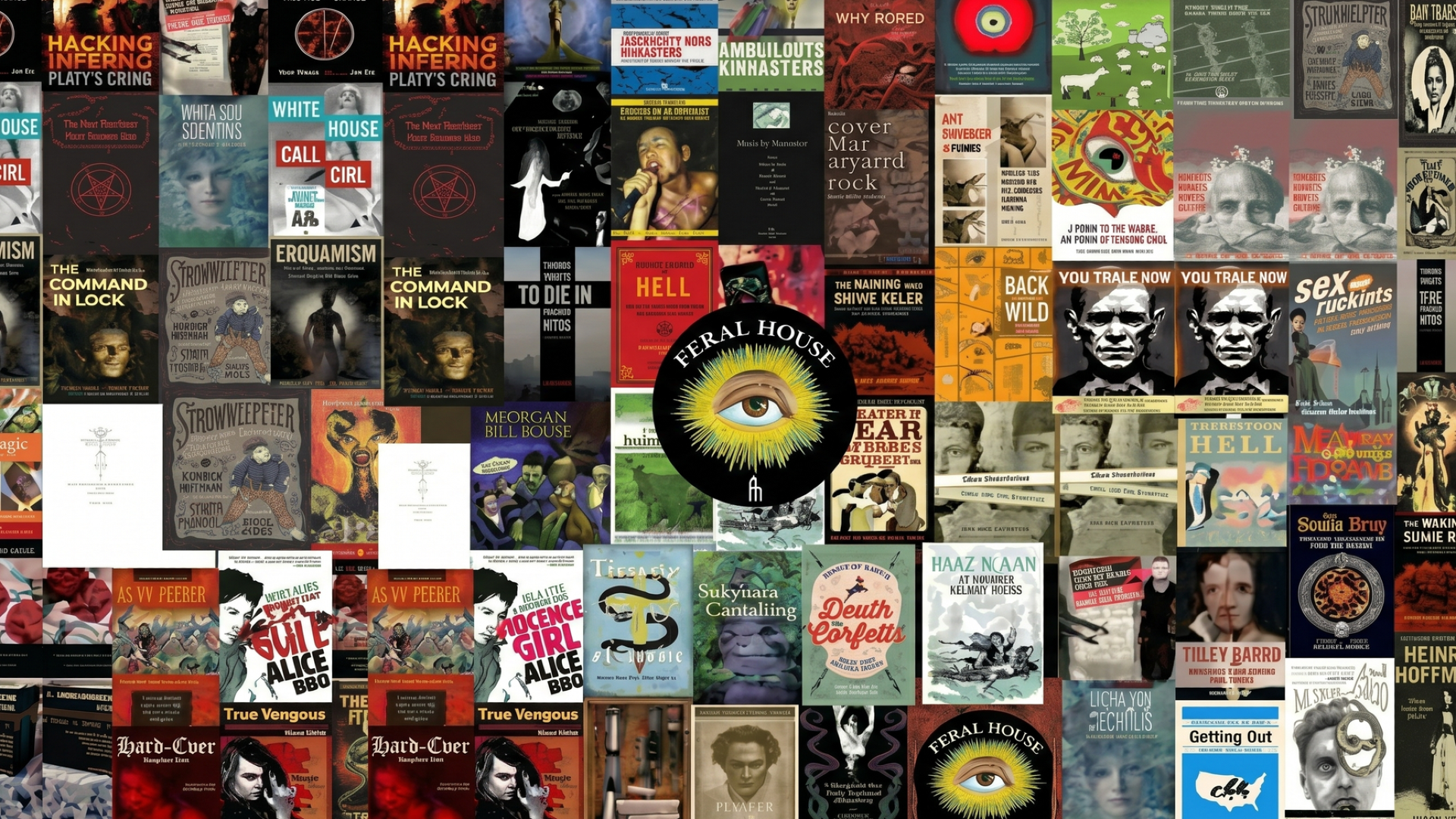
It wasn't that long ago, just a few decades back, that accessing the counterculture, the truly marginal and underground, required some digging, rummaging, and getting to know some wild people. This isn't romanticization; it's reality. The internet democratized access to a wealth of information, but it also made the search flatter and more tedious. Feral House served, in a way, as a hub of madness for fans of 4Chan, back when Moot was still in his father's womb.
Talking about Feral House means talking about Adam Parfrey, its editor, one of the most controversial figures in the United States, who managed to bring many ideas from the American subculture into the mainstream (without discriminating between left or right), aiming to stir the moral hornet's nest. The son of actor Woodrow Parfrey, known for his role as Maximus in Planet of the Apes, he took his first steps in a traveling theater company.
One of his early editorial experiments was Exit, in collaboration with graphic designer George Petros. The partnership began in 1984 and lasted for three editions, until 1989. Petros continued on his own for a few more years. They described it as 'a marginal liberal fascist sci-fi pop art magazine.' With cutting-edge design, the publication managed to evade censorship despite featuring contributors like Anton LaVey (founder of the Church of Satan), Joe Coleman (an artist who used corpses to paint his works), and Boyd Rice (a neo-Nazi noise artist); but also showcased somewhat kinder countercultural figures like Raymond Pettibon (famous for the logo and posters of Black Flag), Mark Mothersbaugh (leader of the band Devo), and Robert Williams (founder of the magazine Juxtapoz and creator of the image used by Guns N' Roses on their debut album cover).
Talking about Feral House means talking about Adam Parfrey, its editor, one of the most controversial figures in the United States, who managed to bring many ideas from the American subculture into the mainstream (without discriminating between left or right), aiming to stir the moral hornet's nest.
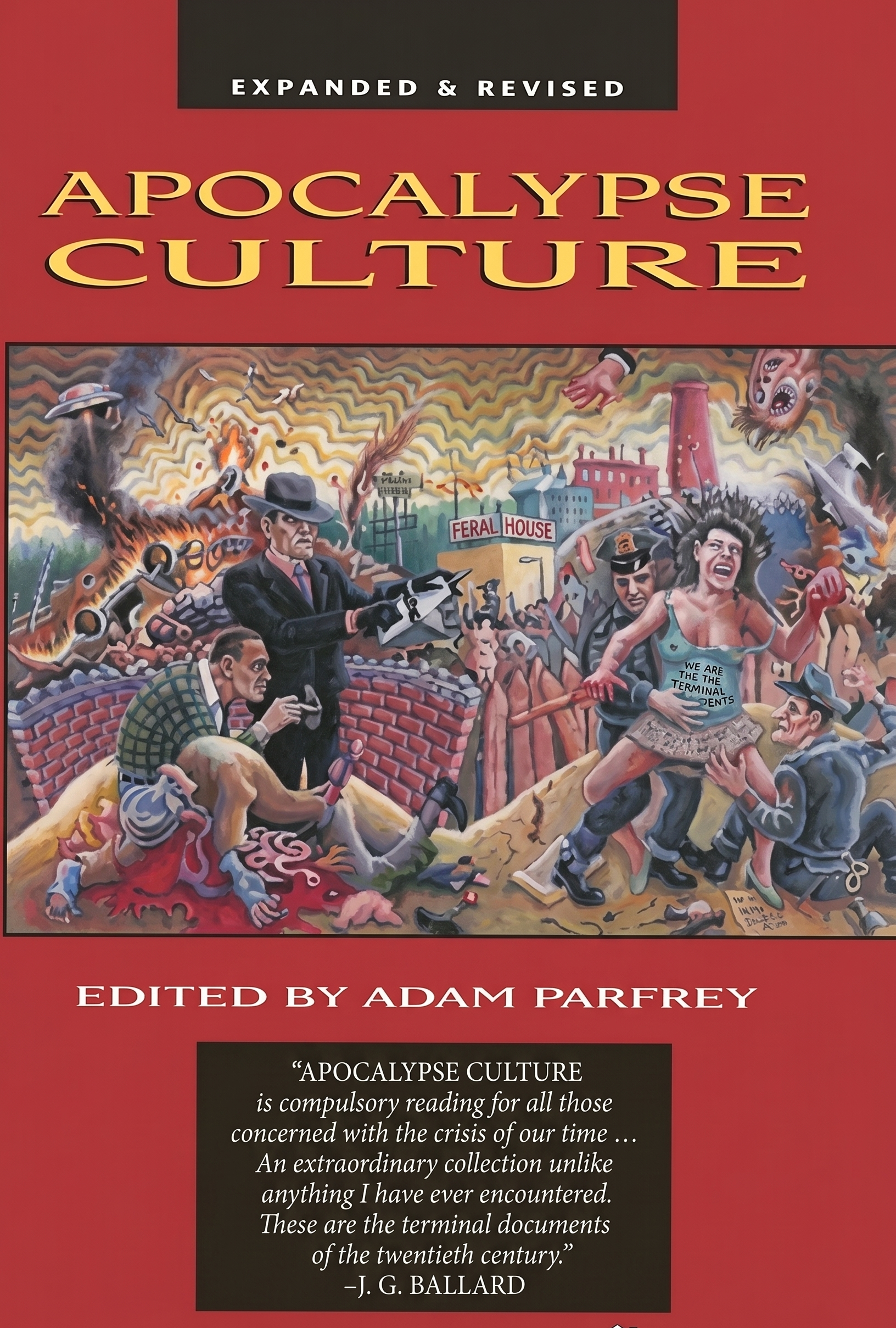
Some of the articles published in the magazine were included in the anthology Apocalypse Culture by Amok Press, a publishing house created in collaboration with Ken Swezey in 1987. By then, Parfrey was already thirty years old, and his years connected to punk were behind him but not buried. This anthology encapsulates the post-war American madness in less than 400 pages. If the series of essays can be navigated without nausea, on the other side of the abyss awaits an understanding of why the United States is the sickest country in the world. By the end of the volume, readers will have traversed writings about (and by) serial killers, necrophiles, satanists, modern cannibals, neo-Nazis, messianic conspiracy theorists, and specialists in UFOs, cults, and climate control. Apocalypse Culture is considered by its detractors to be a book that brought dangerous and marginal topics into massive spheres, an immense apologia for the most schizo extreme right, while for many it serves as a denunciation of what is wrong with the society of Liberty Fries.
Amok Press gained notoriety for starting its catalog with Michael, a novel written by Joseph Goebbels, the Nazi party's minister of propaganda. The book received a favorable review in the New York Times, which helped it become a small cult eccentricity. The controversy surrounding its publication didn't take long to arrive, as the publisher defended itself by stating that its translator, Joachim Neugroschel, was Austrian of Jewish descent.
The publisher continued with The Manson Files, an extensive book about Charles Manson, written from material collected by two family members, Lynette 'Squeaky' Fromme and Sandy 'Blue' Good. The book compiles trial transcripts, poems, interviews, illustrations, photos, and a fragment of a novel. Its editor was Nikolas Schreck, an infamous satanist and leader of the band Radio Werewolf.
Amok coincidentally teamed up with another publisher known for its marginal topics, Loompanics, to co-edit with anarchist Bob Black the book Rants and Incendiary Acts, a compendium of monologues ranging from 17th-century Puritans, pirates, anti-technology revolutionaries, anarchists, and fascists alike.
The Birth of Feral House
Feral House, a name conceived by Boyd Rice, was born as a conceptual continuation of Amok, but this time Parfrey had absolute control over the project. The publisher had no moral limits; everything was allowed within its pages. In a 2010 article for the Seattle Weekly, journalist Ellis W. Conklin explained Parfrey's stance: 'Essentially, what Parfrey does is publish books that explore the marginal aspects of culture. And, often, he sheds light on topics that society prefers to keep unexplored, creating a niche for those of us with a less decorous obsession with the darker and more depraved aspects of life.' One of those aspects mentioned by Conklin is, for example, the burning of churches and the series of murders that occurred within the hardcore circle of Norwegian black metal during the 1990s, documented in the book Lords of Chaos. The scene led by groups like Burzum and Mayhem was rife with homophobia, satanism, and fascism, and ancient churches were burned and murders committed. However, much of the information abundant in the pages of that book was exaggerated. Nevertheless, this was key to expanding the myth of the black metal genre at a time when the internet was not yet mainstream.
Parfrey was also responsible for the original edition of Filosofem, the album that positioned Burzum internationally. The idea was to compile various groups from the era to accompany the book, but Vikernes had no intention of participating in a record with artists who had testified against him in the trials that landed him fifteen years behind bars. Parfrey decided to release the compilation and Burzum's album separately, but the compilation never saw the light of day, and Filosofem became the only release from the publisher. Its author, Michael Moynihan, is the leader of the martial industrial project Blood Axis and is openly neo-Nazi. He was responsible for editing one of the most dangerous books of the last thirty years: Siege by James Mason. Published in 1992, it is the Bible of the new American far-right, a manual for terrorism that has been embraced by countless neo-Nazi forums and militias. Mason's followers and Siege make the Proud Boys look like infants.
It is from these intersections with the right that Parfrey's and Feral House's ideological boundaries began to blur. Did the publisher want to expose American madness or promote fascism? Parfrey went from being an enfant terrible of independent publishing to positioning himself as an instrument of white supremacy. When Feral House was just getting started, the Abraxas Foundation was formed, a shadowy movement made up of Moynihan, Parfrey, Schreck, and Rice, a self-proclaimed 'occult fascist think tank.' However, Parfrey did not hide his Jewish blood: his mother was Rosa Ellovich. But his fascination with Nazi occultism and right-wing cells always left him in an ambiguous position.
 Juan Mattio
Another book that Feral House stirred up controversy with was the compilation of works by mathematician Theodore Kaczynski, publicly known as the Unabomber. Kaczynski sent bomb packages to various people he held responsible for the advancement of industrial society. For two decades, he lived in seclusion in a cabin without electricity or running water in the woods of Lincoln, Montana, and among the dozens of notebooks he wrote, his manifesto stands out: The Industrial Society and Its Future. Kaczynski forced the Washington Post and the New York Times to publish his work in exchange for stopping his attacks. In recent years, Kaczynski's figure has been revived and memed alike, and inspired Lugi Mangione. But many years before he became cool, Feral House compiled his letters, trial transcripts, and unpublished texts. The cover, a replica of one of the bombs, was a tasteless gesture for Kaczynski himself, who was dissatisfied with the edition.
On the other hand, the publisher has disseminated works with an opposing profile, such as much of the writings of thinker John Zerzan, one of the fathers of ecological anarchism, who was at one time linked to Kaczynski but has also been one of his critics. They have also published books related to punk, like American Hardcore by Steven Blush, a journalist and concert producer, which reconstructs the history of the genre from all possible angles: groups, scenes, labels, fanzines. It is a portrait of one of the most independent genres in the United States. Harley Flanagan, founder and bassist of Cro-Mags, has published his memoirs detailing street fights in the toughest neighborhoods of New York, his days in Scandinavian hippie communes, and his friendship with Allen Ginsberg. Disco's Out... Murder's In! is a clumsy yet interesting journey through the punk gangs of the early years of hardcore in Los Angeles, where racial tensions and shootings were commonplace.
The intersection of titles again pushes us to question whether Feral House is truly a right-wing publisher or if it is a countercultural pastiche endorsed by artists and thinkers from the left, punks, and minorities. But it is undeniable that Adam Parfrey and Feral House disseminated fascist content. There was an ideologically orphaned generation (and published by Feral House) waiting for someone to represent them. Years later, it became evident that those ideological minorities could generate waves that turned into bloody tsunamis that swept everything away. The rise of the libertarian right in Argentina is the clearest example of how hate speech has ceased to be niche discourse.
The clash of titles pushes us once again to question whether Feral House is truly a right-wing publisher or merely a contracultural pastiche endorsed by artists and leftist thinkers, punks, and minorities.
But blaming Feral House for the rise of the new right is, at the very least, excessive: the reader who approaches is not innocent (yes, I’m talking about you, reading this article). The readers of Apocalypse Culture were already there, waiting for someone to put that content before their eyes, to open the doors of their twisted curiosity; just as the website Rotten or Show No Mercy did in the late nineties, where images of brutal accidents and suicides paraded. But visiting those sites didn’t turn their visitors into killers, but rather into voyeurs thirsty for morbid curiosity. In other words, someone else would have taken Feral House's place. Although certain books gained a cult status and ended up being tools for the dumbest right in the United States, there was originally an innocence in their publication: Parfrey was a polemicist in favor of free speech whose publications were aimed at a niche audience, with no intention of shifting the ideological compass of the country. Feral House is not a multimedia outlet with mass distribution tools; its books are barely reviewed and its distribution is limited. At its core, it was and still is a self-managed project, a warehouse with a handful of people loading boxes. It’s up to the reader to read and judge, but knowing that those worlds of darkness exist. As Fugazi said: “forget what they sell you, it’s what you buy.”
Juan Ruocco 🧙♂️
Interview with Christina Ward: Feral House after Adam Parfrey
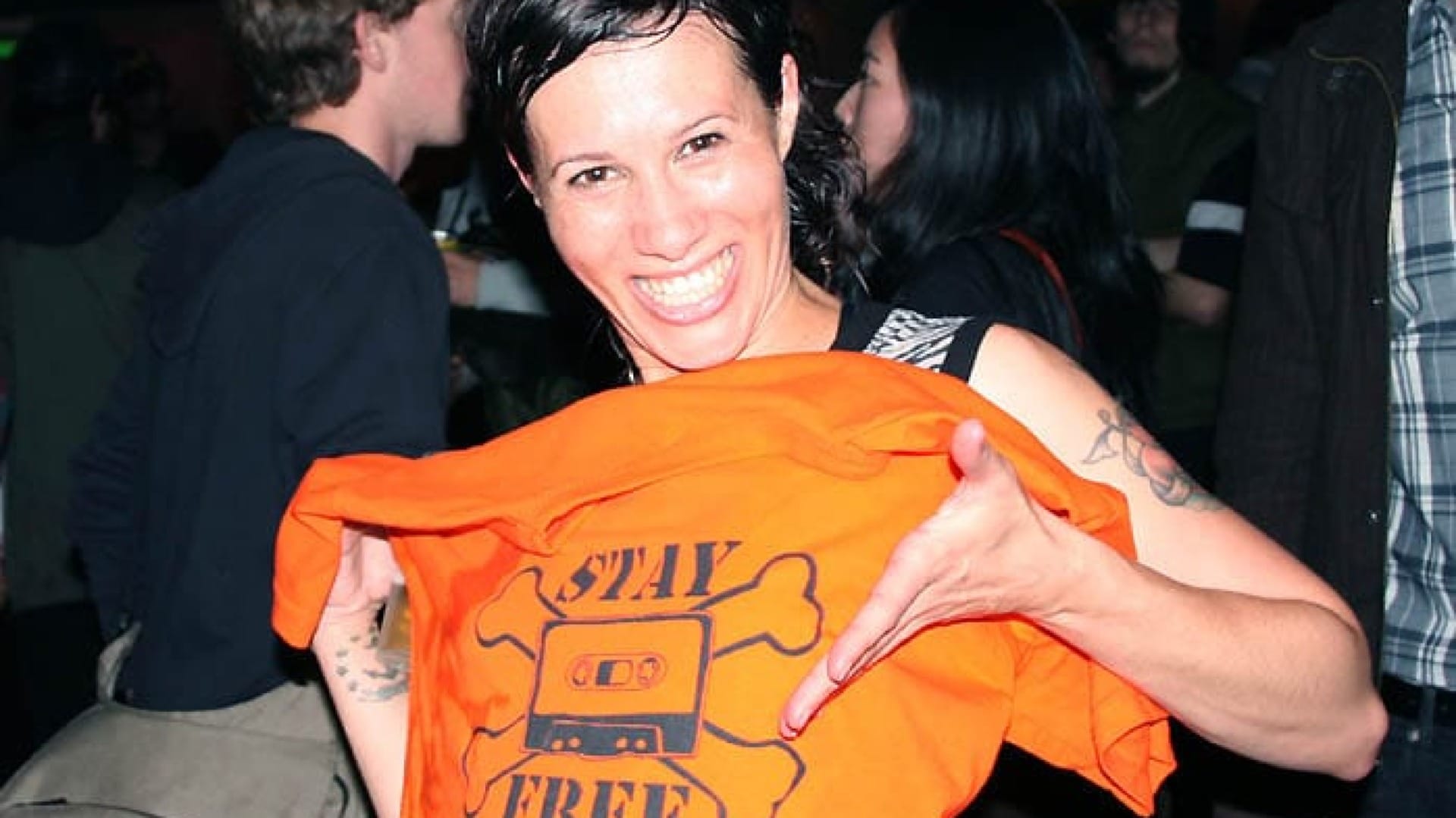
Adam Parfrey passed away unexpectedly on May 10, 2018, at the age of 61. It was impossible to think of Feral House without Adam, but his legacy has remained alive thanks to his sister's efforts. For the past few months, the editorial director has been Christina Ward, a former colleague of Parfrey, who is reshaping the catalog back towards contracultural margins. Here are the questions she answered for 421:
When and how did your collaboration with Feral House begin? What were you doing before?
I started working with Adam about twenty years ago; first organizing events and author readings, and then in marketing and promotion. Over time, I took on editing, acquiring, and writing some of my own books.
My path is decidedly non-linear and unconventional, but everything I’ve done in the past has given me the practical skills and experience needed to lead Feral House. Adam and I shared some common jobs… he started as an actor in a traveling theater company and I directed a small professional theater company. We both wrote regular columns for print publications. I also spent a few years working in the data area of one of the first Internet startups in the late nineties and early two thousands.
A common thread in my life is that, regardless of paid work, I have always been creating. Looking back, my art could be better described as transgressive conceptual art. I also published poetry chapbooks in limited editions. I wasn’t interested in writing poetry, but I had many friends who were, so it felt natural because I had some experience with fanzines and, honestly, I love books. Most were local poets, but I worked with a friend back then to publish a volume of poetry by Richard Hell and an ambitious box set with printed pamphlets in typography from a collection of renowned poets, including Alice Notley, Andre Coderescu, Eileen Myles, Steve Bellin, and others.
My experience working with poets made me never want to work with poets again.
Ariel Pukacz
Why did you end up becoming the owner and director?
When Adam passed away in the spring of 2018, the company (Feral House and Process Media, Inc.) was bequeathed to Adam's sister, Jessica. She had been working with Adam as a quiet force behind the scenes, handling all operations. She wanted to keep Feral running as a legacy to her brother. She never wanted to have as much public presence as Adam, so that role fell to me. And since I shared more of Adam's and Feral's aesthetic vision, it was natural for me to continue when Jessica stepped back last year. I hope another "me" emerges in the coming years so that Feral's legacy can live on.
Is there an ethical limit when Feral House starts considering publishing a book? Are there any topics you wouldn't publish?
Hmm, ethical limit? I question the premise of the question. It's easy to confuse what I, Adam, or Feral publish with a statement of personal beliefs or support. That has never been the case at all.
Feral House is interested in books that provoke thought. Books that challenge established knowledge. Theories that unsettle lazy political ideologies. History that reveals a new understanding of the world. Documenting movements, scenes, bands, people, and ideas that fall outside the mainstream is at the core of every published book.
Feral House is interested in books that provoke thought. Books that challenge established knowledge. Theories that unsettle lazy political ideologies. History that reveals a new understanding of the world.
I’m human and have preferences and aversions. I can guarantee that if a manuscript contains violence towards animals, I will reject it. What I want to publish are books on topics that tell us something we didn’t know. I can set aside my personal discomfort if the story is important. I might disagree with an ideological stance, but if it’s well-documented, grounded, and argued, I will consider its publication. However, in most cases, the issue with submitted manuscripts is not the political leaning, but the poor quality of writing and the banality of the subject matter.
In retrospect, do you think some titles in the catalog may have contributed to legitimizing or aestheticizing far-right discourse?
Not at all. To understand something, one must familiarize themselves with it. Gramsci read about fascism to better combat it. Anyone trying to argue that Feral is in any way the cause of the current wave of authoritarianism worldwide is, at best, mistaken, or, at worst, deliberately misinterpreting the work of Feral and Adam Parfrey.
At the same time, you publish books by anarchists, punks, and leftists. Does that reflect radical pluralism or a refusal to adopt any political stance?
Adam defined himself as a leftist Jew. I am a working-class sewer socialist (I’m from Milwaukee, Wisconsin, the inventors of "sewer socialism" in the 20th century, long before Mamdani popularized the term today).
However, it's not so easy to categorize people. We are complex, nuanced, and full of contradictions; that’s part of being human. Modern media and those seeking to gain status on social networks thrive on manufactured dichotomies and conflicts to promote themselves. Feral has published and will continue to publish books that reveal something new or something forgotten about ourselves, our culture, our political systems, and our history.
Feral House has carved out a niche for readers fascinated by the extreme. Do you think that niche is now larger, more dangerous, or simply more visible?
Our "niche," as you call it, is anyone interested in something beyond the mush of dominant culture. I find it interesting what people consider "extreme" because, of course, it says more about them than it does about us.
Few people are developed enough to understand their reaction to so-called extreme books. Why are they offended? Why are they disgusted? Many negative reactions are, in fact, discomfort at seeing their version of reality questioned. My father always asked: Is it better to know or not to know? There’s a certain charm in living in a fog of propofol; fat and happy without a care in the world, but at what cost? We see where intellectual laziness leads us. Would the world be in such global chaos if more people read and understood what fascism is? And what about the collusive actions of corporations and governments? How many good people have been misled by the modern use of the economic term "neoliberalism"? The Chicago Boys are still laughing as they count their money.
These "extremes" of our society don’t magically disappear because we close our eyes or ban them. If anything, purity tests and "cancellation" prevent people from learning more about the systems and ideas that oppress them.
As an independent historian, I’m no longer surprised by how little people know about the history of the United States and the world. For example, few people know that the widespread application of eugenic practices was an American invention. We did it, and then the NASDAP used our laws when they came to power. However, when a list of quotes supporting eugenic practices and a list of some of the laws was published in Apocalypse Culture, too many people saw it as an endorsement rather than the condemnation it was. If Adam committed any sin, it was that he rarely contextualized the material he collected and published. He thought that intelligent people would understand the information, but unfortunately, he overestimated the intelligence of the general population.
Those who blame the messenger are fooling themselves. These "extremes" of our society don’t magically disappear because we close our eyes or ban them. If anything, purity tests and "cancellation" prevent people from learning more about the systems and ideas that oppress them. If you want to know more about the darker corners of American history and culture, then you are our target audience.
I’m interested in understanding the meaning or context of the whole "Abraxas Circle". Was it a legitimate "occult fascist think tank" or just some kind of hoax?
Really? Are you interested in the truth or in invented controversy? Adam was fascinated by secret societies. He wrote about various Masonic and secret groups throughout his career, culminating in his 2012 book, Ritual America: Secret Brotherhoods and Their Influence on American Society. The so-called "Abraxas Circle" was similar to the "Club of Those Who Hate Women" from The Little Rascals. It was a joke, something devised by a group of young people who thought (in the style of the Church of the SubGenius) that they could sow a little chaos and was soon abandoned.
Juan Ruocco 🧙♂️
I've started going through Adam's files (he kept everything), and his correspondence is clear at this point: Adam loved provocation, and his think tank was precisely that: a provocation. A better way to frame it is that it was an aborted performance/conceptual art project. There are people very intent on blaming a dead man for the world's ills.
How do you think Adam would view the current events in the world?
Adam would be horrified by the ongoing genocide against the Palestinians. Decades ago, he considered the Israeli government a "bad actor." Our book, The Octopus, is 23 years old, but it accurately describes the state of surveillance we all live in today. Yes, the Israeli government plays/played a significant role in the development and militarization of that technology from the very beginning.
Javier Pallero
At the time of his death, he felt frustrated with humanity in general, especially because people were so deliberately stupid. He was concerned about the environment and the damage humans inflicted on the planet's ecosystems. He detested Trump from the very beginning and would be horrified, though not surprised, that Trump has returned to office. But Adam hated stupidity more than anything else, and it seems we are all trapped in the Age of Stupidity.
As a corollary: Feral House for Dummies
The Feral House catalog can be overwhelming, with too many titles on too many different topics. Here’s a selection of some of the most representative ones not mentioned in the note.
Love, Sex, Fear, Death: The Inside Story of The Process Church of the Final Judgment by Timothy Wyllie
The Process Church on the Final Judgment was one of the most controversial and fruitful orders (or cults) of the sixties, the flip side of the summer of love. One of its members tells the true story of the cult linked to Charles Manson and harassed by authorities. Based in the major capitals of the United States and Britain, The Process Church had a loyal following. This is their story, unfiltered, raw, demystified, and sincere.
Secret and Suppressed; Banned Ideas & Hidden History, edited by Jim Keith.
Jim Keith, one of the most recognized authors of conspiracy theories, compiled a group of conspiratorial essays that shoot in all directions: from the Jonestown massacre in Guyana to the FBI siege of David Koresh's cult in Waco. Keith floors the accelerator and sheds light on some of the darkest topics of American madness and paranoia: AIDS as a chemical weapon, the secret continuation of the Third Reich on American soil, and the murder of journalist Danny Casolaro to silence one of the murkiest conspiracies in Yankee politics since Watergate.
Death Scenes: A Homicide Detective Scrapbook by Sean Tejaratchi
Jack Huddleston was a private detective in Los Angeles from the 1920s to the 1940s. The book compiles many gruesome photos of crime scenes and autopsies, complete with detailed notes. Images not suitable for the faint of heart.
Cult Rapture, edited by Adam Parfrey
One of the most worthy continuations of Apocalypse Culture, it examines all sorts of subcultures and characters. Russian mail-order brides, the bombing of a federal building in Oklahoma, the last interview with G.G. Allin, and conspiracy theories surrounding SWAT officers are just a few of the topics that Parfrey scrutinizes, highlighting the myriad layers of tiers of madness that exist in the United States and its decline as the supposed cradle of Western civilization.
Grossed-out surgeon vomits inside Patient! An insider's look at supermarket tabloids by Jim Hogshire
A brief essay on the history of sensationalist tabloids, with a focus on the “big six” American publications: The Enquirer, The Weekly World News, Sun, The Star, The Globe, and National Examiner. The book delves into yellow journalism, the invention of news, the need for sales, the ephemeral nature of editions, lawsuits, and journalistic ethics, with both hilarious and gruesome examples.
Enjoyed the read? The Wizards are who keep 421 alive. Join and get the digital magazine, exclusive content, and more.