Does creating characters bring us closer to God or to our own wounds? Following his friend’s suicide, Roberto Chuit Roganovich explores grief, literature, and mental health. Writing is not about bringing back those who have passed away, but about having the courage to live for them.
Creating characters in narrative arts is a strange process. It’s strange, especially, because of its proximity to those activities we understand to be solely relegated to God. The fever of character creation is, most of the time, divine and metaphysical: what power lies in this act of mine that allows a finger, mine, made of clay, to push formless clay into life? What is this tongue that transforms that clay into a clear face and a pair of strong, heroic legs? What magic is in the silent breath that makes what was once nothing suddenly have a voice, a set of desires and concerns, a wallet, a rifle, a straw hat, a canoe?
In the creative writing workshops I lead, I often provide bibliographies on the subject. It’s always about other fingers, other tongues, other magics that have tried in the past to tackle the same problem. We review, in our classes, and just to name a few examples, how astrology can help us craft a character; what the MBTI (in Spanish, Myers-Briggs Type Indicator) can contribute to the invention of a creature; which chapter of The Art of Character Creation (2018) by David Corbett best suits our narrative needs, among other things.
The fever of character creation is, most of the time, divine and metaphysical: what power lies in this act of mine that allows a finger, mine, made of clay, to push formless clay into life?
The truth, however, is that there are no recipes. And there are no recipes because there are no secrets. Literature, art, the creation of a “true” character, happens or it doesn’t. That’s it.
This has led renowned authors to resort to the most ridiculous practices we can record. From Dostoevsky, traveling to Siberian prisons to find the essence of humanity, to Phillip K. Dick who, out of laziness or madness (which sometimes overlap), used the I-Ching to determine what each of his characters in The Man in the High Castle, from 1962, would do next based on the hexagrams.
Perhaps because there are no recipes, my workshop participants have, quite rightly, no interest in literary theory: neither in narratology, nor in stylistics, nor in what was once thought to be the foundations of a literary work (from Aristotle’s Poetics to Nicolas Boileau’s Ars Poetica; from Algirdas Julius Greimas’s actantial models to the semiological status of the character in Philippe Hamon).
They want, on the contrary, without much fuss, to read and practice it. They don’t want the “manual” of tactics and strategies of war; they want, instead, to inhabit the battlefield.
That’s why, some time ago, regarding this issue, I usually limit the reference material to two specific books. The first is The Hero with a Thousand Faces (1949) by Joseph Campbell, a book that, from the perspective of comparative mythology, attempts to reconstruct the “mythological structure” of the “archetypal hero’s journey,” found recurrently in the myths of various cultures around the world.
The second, and on which I would like to elaborate, is the fifth edition of the Diagnostic and Statistical Manual of Mental Disorders(2013) by the American Psychiatric Association, better known as DSM-5. The DSM-5 is, at least for me, a kind of strange Bible. It is the total compendium, at least in the medical field, of escape; the codex, the inventory of all unexpected, unpredictable behaviors, non-productive, not assimilable by the logic of the barracks, the school, the church, and capital; in short, the logic that allows capitalism to remain, day after day, capitalism. It is the index of what, at least actantially, operates against any form of total suturing and lasting encounter. It is, if you will allow me, the denial of all the endings of pre-modern literature, which we are told in childhood over and over again like a mantra, and which states, as we know, thus: “and they lived happily ever after.”
There is, however, a problem.
The DSM-5 is, besides being a fascinating book, a painful one.
One can find oneself there: all your life experiences, all your symptoms, right there, under a number, a nomenclature.
I myself, as a psychiatric patient for over ten years, went through the experience of finding my diagnosis in the DSM-5. Seeing myself printed. The revelation is somewhat sad: you are not special, nothing about you is a mark of distinction, nothing about you is worthy of wonders; you just carry a brain, a heart, a spirit that is perhaps a little more broken than most of the gentle souls around you; you see only yellow, sometimes just gray, in the same object where someone emotionally stable sees an infinite palette of colors.
Creating characters doesn’t bring me closer to God, to any form of God, but rather, I believe, brings me closer to myself, and thus, to all forms of humanity. And, particularly, and by extension, it brings me closer to my friends.
So, perhaps not. Creating characters doesn’t bring me closer to God, to any form of God, but rather, I believe, brings me closer to myself, and thus, to all forms of humanity. And, particularly, and by extension, it brings me closer to my friends, at least to my neurodivergent friends: their pains and symptoms, the things that are invisible to them, the veil with which they see wonder, the impossibility that the world sometimes presents to them.
§
Mateo, a friend, decided to take his own life at the end of last March.
His sudden departure reminded me of what I always knew: I am always in love with the people I care about. Their gestures seem precise to me, the way they lift their cups, the lines that form on their mouths and foreheads; the sounds they make while breathing, the way they call my name, the clothes they choose to cover their nakedness.
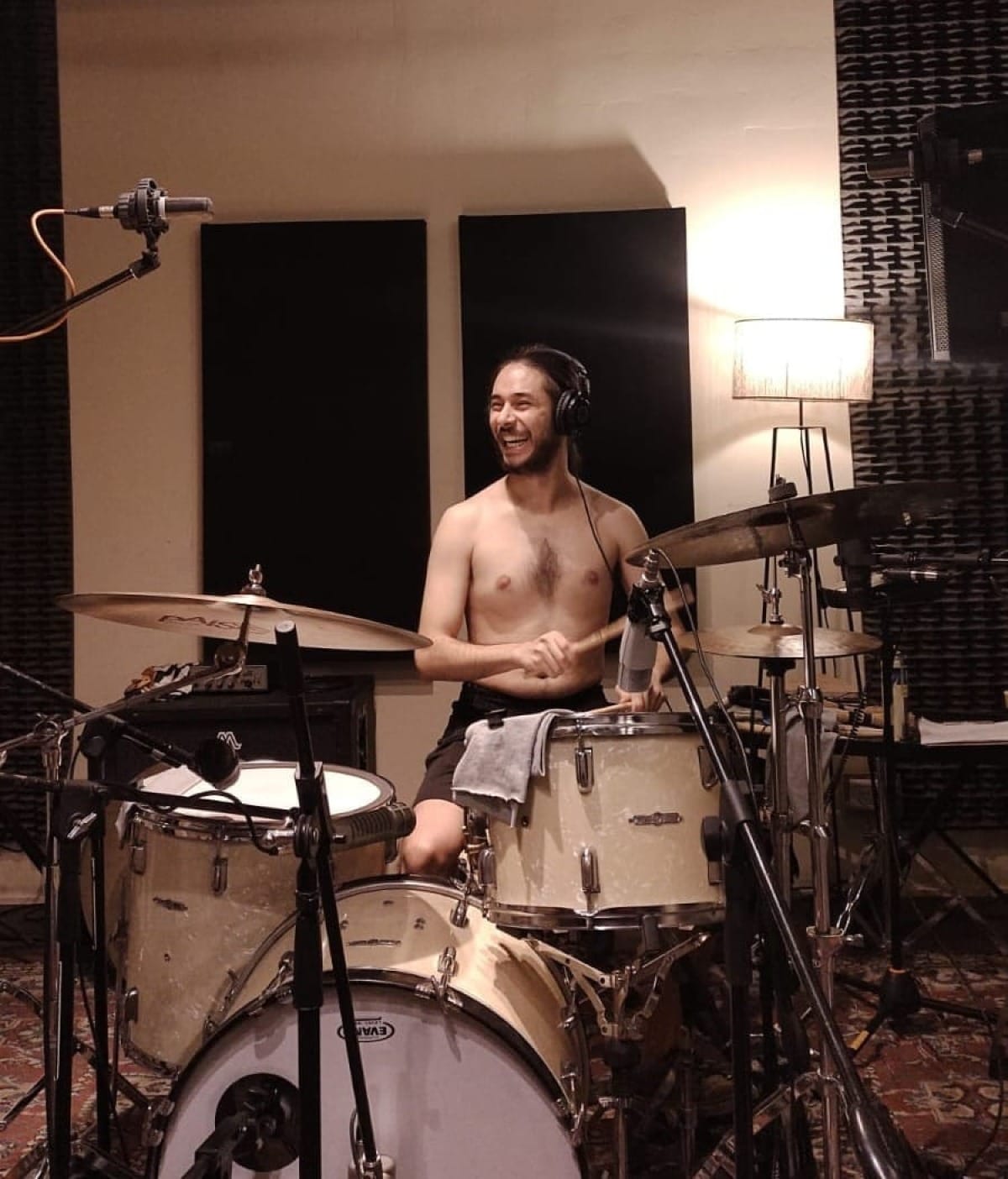
Now I look for Mateo, like any lover, everywhere: on a skateboard, in the drumsticks of a drum set, in a punk song, in a skinny guy with long, straight hair I unexpectedly cross paths with on the street and decide to follow for a couple of blocks, at a safe distance, as if I were a hunter.
Since then, I can’t escape a particular scene from Three Billboards Outside Ebbing, Missouri, by Martin McDonagh. It sneaks in from the depths of my dark side, and emerges like a stone on the water.
I couldn't see her again. I couldn't, at least not these days, these months: for as long as the mourning lasts, which has the ominous particularity, as Barthes said, of being discontinuous.
In the scene, probably the most pivotal in the entire film, Woody Harrelson stars as Bill Willoughby. The camera shows, in my memory, Bill's cabin, far from the city center, a shed, the huge, sacred horses, his daughters, and finally, Anne, his wife, barely drunk, dozing on the couch. In this camera journey, Bill Willoughby's voice, walking through the woods, comes in off. He says:
My dear Anne. There's a longer letter in the drawer of the dresser that I've been writing for the last week and a half, which talks about us, and my memories of us, and how much I've always loved you. This one only covers tonight and, above all, today. Tonight I've gone out to where the horses are, to finish it. I can't apologize for the act itself, even though I know that for a short time you will be angry with me, or even hate me for it. Please, don't do that. This isn't a case of 'I came into this world alone and I'm leaving it alone,' or anything silly like that. I didn't come into the world alone; my mom was there. And I'm not leaving alone, because you were there, drunk on the couch. No, this is a case, in some sense, of courage. Not the courage to face a bullet: your coming months of pain are going to be much harder than that little flash. No, it's the courage to weigh the coming months still being with you, playing with the girls... it's the courage against the coming months of seeing in your eyes how much my pain is killing you. How my weakened body, as it fades away and you care for it, will be your last memories of me. I couldn't bear it. My memories of you will be about us on the riverbank, and that childhood fishing game where I think you cheated... and me inside you and you on top of me... and just a fleeting thought, of the darkness about to arrive. It was the best, Anne. A whole day without thinking about this. I lived this day, darling, because it was the best day of my life. Kiss the girls for me, and know that I always loved you... and maybe I'll see you again if there's another place; and if not... well, it was heaven to know you. Your boy, Bill.
When Manuel, Mateo's older brother, called me to tell me the news, the first thing that came out of my mouth, the only thing I could say, as if I had already said it a thousand times, was this: it was heaven to know him, please don't hate him, don't be angry.
Please, don't do that.
§
I then wonder if I could turn Mateo into a character, incorporate him into some story, novel, or poem, replicate him in words to have him close again, to breathe some form of existence into him; to create a world of ink to make the afternoons we spent together, he and my friends, immortal.
Because writing is also about dealing with trauma.
Rodolfo Fogwill and Carlos Gamerro did it in Los pichiciegos (1983) and Las islas (1998), respectively, to navigate the pain of Malvinas. Luciano Lamberti did it in Para hechizar un cazador (2024) and Eugenia Almeida in El colectivo (2007) to revisit the void of the military juntas.
I then wonder if I could turn Mateo into a character, incorporate him into some story, novel, or poem, replicate him in words to have him close again (...). Because writing is also about dealing with trauma.
But others have done it too, not to take on the weight of a community, a region, a culture (from indigenism and neo-indigenism to what is called 'protest art'), but to traverse the minuscule, the small, the deeply intimate.
Delphine de Vigan did it in Nada se opone a la noche (2011) to revisit her mother, her uncles, her siblings; Joan Didion did it in The Year of Magical Thinking (2005) to surround the loss of a partner, a daughter; Agustina Comedi did it in El silencio es un cuerpo que cae (2017) and Albertina Carri in Los rubios (2003), to understand the name of the father.
§
But saying 'pain' doesn't hurt.
Saying 'pain' is just 'saying' a word, just as the concept of triangle is not triangular; the triangle is triangular, not the word that names it. In the same vein, the circle is circular, not its idea, just as what barks is the dog, not its concept.
So: a caress doesn't fit into a book.
So, what?
What spell or perfect symmetry, what stone or alchemy, to bring someone back.
§
If saying 'pain' doesn't hurt, what invention, what vast magic could bring him back? What good would it do, for me and mine, to turn it into a word, if his true face, his warmth, his notebooks, the lines of his hands won't be there; what good would it do, if these months in which we did nothing but care for his weakened body as it faded away, underneath, far beneath, are already stone, and eternally stone.
Why would I want to drag him back from the tranquility he now inhabits, from the absolute calm he crafted with his own hands? Why should I be so selfish as to pull him from the eternal night he chose to travel to? Who am I in this creation, what noble blood, what madness, to bring back the things that willingly journey into silence?
So, maybe I did lie to Manuel during that call when the day was just starting. Please, don’t do it. And Mateo's decision is indeed my hidden anger, and a guilt.
§
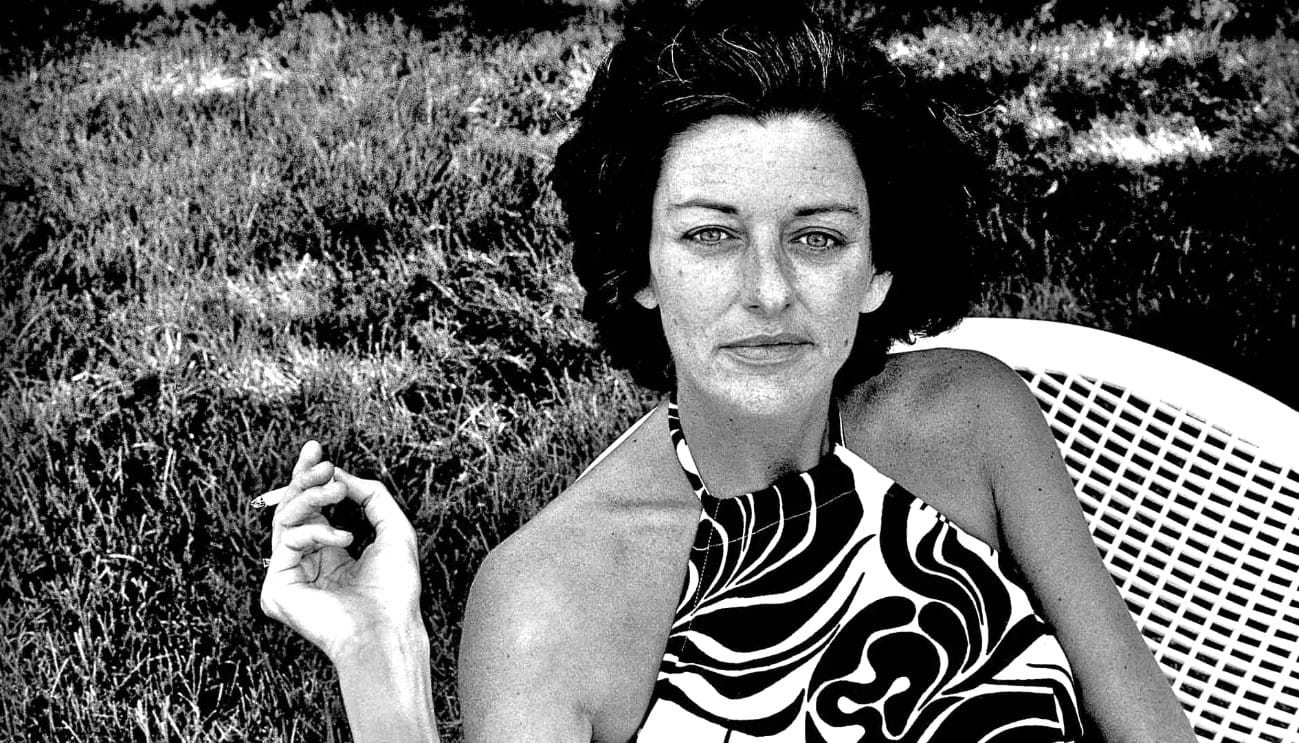
Anne Sexton began writing poetry after meeting Dr. Martin Orne, her caretaker at the hospital where the poet partially navigated and overcame her second of many manic episodes. In her first poetry collection, To Bedlam and Part Way Back (1960), there is a text that briefly refers to her mother. It says:
Almost back from the asylum / I went to my mother’s house in Gloucesters, / Massachusetts. And this is how I wanted / to approach her; and this is how I lost her. / I cannot forgive your suicide, my mother said. / […] / There was a church where I was raised / with its white cupboards where we were locked up, / row by row, like Puritans or sailors / Singing to the tune. My father passed the collection plate. / It’s too late for you to be forgiven, the witches said.
Anne Sexton continued writing until 1974, the year she decided, after lunch, to pour herself a glass of vodka, take off her rings, put on the fur coat that had belonged to her mother, and enter her garage to start the car and die from carbon monoxide poisoning.
Anne Sexton.
A few years earlier, John Kennedy Toole, author of A Confederacy of Dunces (1980), had done the same; a few years later, Arthur Koestler would repeat the act alongside his wife.
§
Then it happens as if other voices, from a distant past, were telling me: don’t be angry, please, it’s neither your fault nor mine, it’s just a gray cloud in the center of this beautiful, lovely day.
And all I do is repeat the message, not quite understanding, at least for now, what it means.
There are also other places in narrative arts, more linked to 'genre', that work with the trope of the returned, the revenant, the revived, the living dead, always in a dysphoric and tragic key.
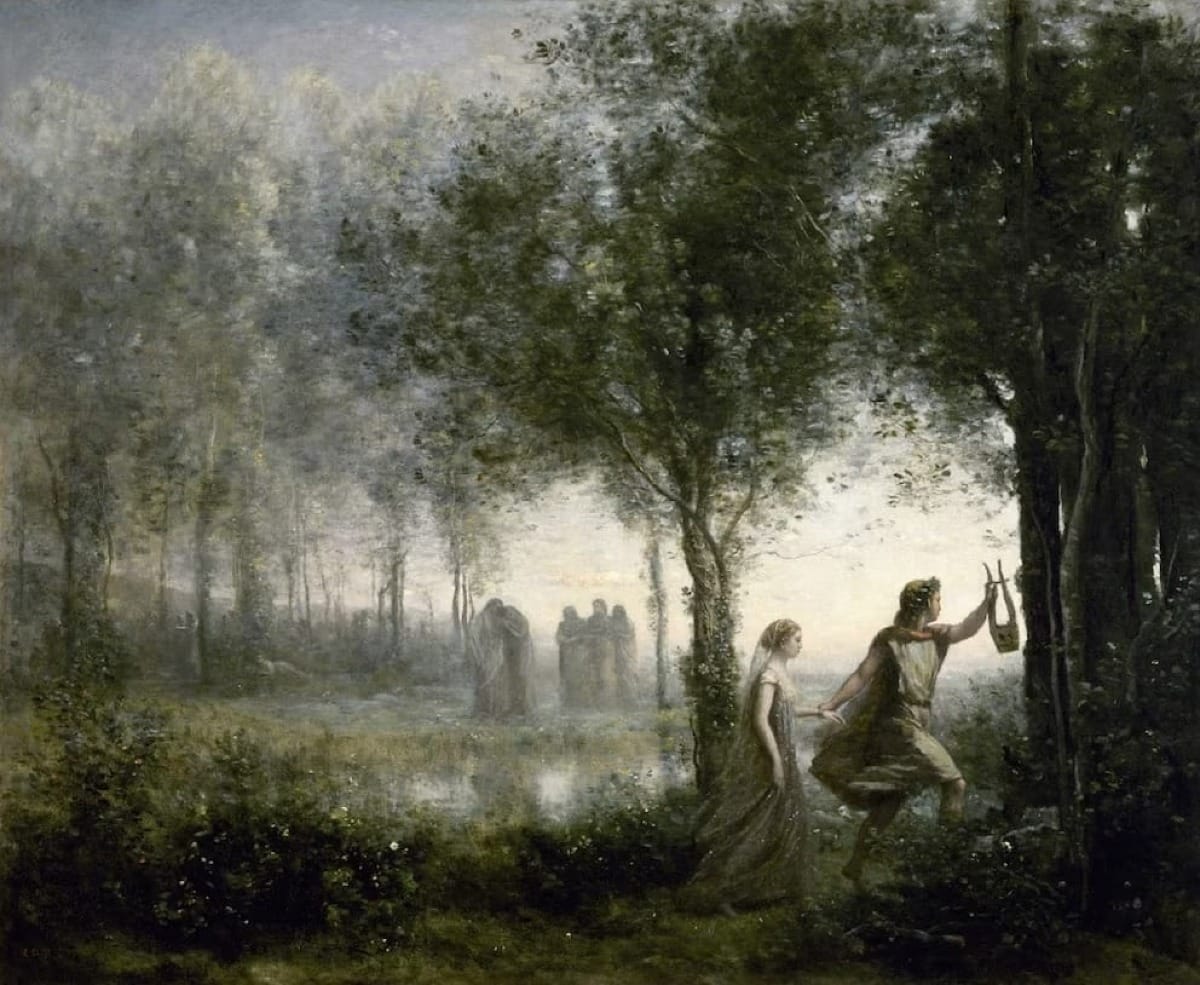
Probably, the first time this motif appears is in Ovid’s work, The Metamorphoses (8 AD), where the myth of Orpheus and Eurydice is narrated. Orpheus, a great musician, loses his beloved Eurydice to a snake bite just before their wedding. In his desire to recover her, Orpheus descends to the underworld to persuade Hades to return Eurydice to life. Hades agrees, but with one condition: that on the ascent to the world of men, he must not look back. But just before reaching, just before entering the realm of the living, Orpheus turns, looks back, breaking the promise and losing Eurydice forever.
Orpheus Bringing Eurydice Back from the Underworld (Orpheus Leading Eurydice Out of Hell) - Camille Corot.
They repeat the tragedy, in random order and without any hierarchy, with different narrative schemes, but with equally disheartening endings, Frankenstein (1818) by Mary Shelley, the story “Ligeia” (1838) by Edgar Allan Poe, The Invention of Morel (1940) by Adolfo Bioy Casares, Pedro Páramo (1955) by Juan Rulfo, Pet Sematary (1983) by Stephen King, among others.
Thus, back again, it happens as if other voices, from also distant pasts, were saying: don’t do it, don’t seek the reborn, their return is the return of something else, that house no longer exists anywhere on Earth, and everything in your search, everything in your success will be nothing but a gray cloud in the center of this beautiful, lovely day.
§
Then, It strikes me, like a sudden revelation.
I could try it: to exercise courage. The kind Bill showed in Three Billboards Outside Ebbing, Missouri, and the kind that Orpheus, Dr. Frankenstein, and the Creed family lacked.
Not to bring you back, nor to drag the word against your will, but to weather the grief, sordid and sweet at the same time.
To your health, dead one.
The true peace you found before any of us.
My courage: to see the morning light now invisible to you and play as if my eyes were yours; to tell you how the autumn sun feels on the skin today. How it prickles beneath everything.
And on the journey, to leave the car by the roadside to step into the fields and walk until the sound of wheels on the pavement fades away, to reach a stony valley where there exists a single flower, a lone green shoot in the vastness of the desert, and name it after you.
That you feel, as I do now, the raw magic; that you can, if you wish to see what happens on this side, only when the rain clears, the storm subsides, and there’s nothing but the clear, wide sky, celebrate the order.
✦ Suscribite
Las notas de 421 no tienen paywall
Y a cada colaborador se le paga por su trabajo. Las dos cosas dependen de los suscriptores.
Nací en 1992 en Córdoba. Soy Doctor en Letras. Escribí "El archipiélago. Nuestra retirada del mundo y notas para un regreso", y las novelas "Si sintieras bajo los pies las estructuras mayores" y "Quiebra el álamo". Toco en Ox en Mayo Alto.