The Optimization Trap: From the Gym to Craftsmanship
Between algorithms and hyperdiagnostics, we seek productivity at the gym or in video games. The value of craftsmanship.
The awareness of the personalization of my algorithm makes me doubt my own perception and choices. At times, I see a lot of critical theory being used to explain what's happening, but is that really what's going on, or am I just seeing it that way? Back then, we had television, and we all watched the same thing.
In the customized flow of content, I’m inundated with an abundance of diagnoses (Am I really going to give a diagnosis about the number of diagnoses?). It seems that today everything has a cause, a category, an explanation. There’s a name for every symptom, every disorder, every weakness. I sense that this compulsion to diagnose may be linked to the adoption of AI. Language models have an answer for everything, and with them, the possibility of not knowing disappears, as if not understanding something were a flaw to correct or a void to fill. Language becomes a landfill, clogging every vacant space. It’s created out of nothing and proliferates in torrents, unlike the water consumed with every silly question we ask ChatGPT. There’s too much language. I know it’s contradictory for me to say this, writing this: a kind of anti-meta commentary. In that proliferation, interpretive frameworks multiply, and a total expectation of intelligibility becomes generalized.
It seems that today everything has a cause, a category, an explanation. There’s a name for every symptom, every disorder, every weakness.
First of all, I would suspect (at this point, suspicion has become a sport) our objectivity in saying anything about the world. How could we give a diagnosis of discomfort while being so immersed, so involved? Identifying a problem and naming it seems to be a way of planting a flag on the issue, as if patenting it. Holding the power to have named something implies a certain dominion over the pointed thing. If I define it, I limit it and, therefore, intervene in it; as if naming were already a form of conquest. Behind that gesture lies a fantasy of control: believing that understanding something brings us closer to the possibility of mastering or modifying it.
Train to deserve
Believing that we control gives us peace of mind, even though that peace rests on a fantasy: unexpected things will always happen, variables will emerge that don’t depend on us. In that randomness lies, just like in death, the mystery of life; that we have mortal bodies, bodies that get hurt, age, and die. I have no proof but also no doubts that a more everyday awareness or a closer relationship with the idea of our own finitude could significantly reduce drama, or at least reorder our priorities, redirect them. Hashtag memento mori. Perhaps precisely because we struggle to accept the unpredictable is why we seek refuge in what we can control, and one of the places where that intention can be inscribed is in our own bodies.

In that quest to tame the variables, I started training, motivated also by the unavoidable signs of aging that my body began to show from the second half of my thirties and encouraged by a personal inclination toward the challenge of will and discipline, which I know seduces me in a particular way. In my case, I admit that I have quite a bit of willpower to persist in the things I set out to do, and with some goals, I get pretty serious. As I write this, I remember that recently I’ve come across the association between training, discipline, and fascism several times (perhaps another example of our compulsion to diagnose everything, or maybe, again, my algorithm). I enjoy pushing myself to then deserve the reward for effort. While training, I can see a pretty clear correspondence between effort and reward: if I lift weights, repeat, and do progressive overload, I gain muscle mass; if I eat protein, I grow the muscle even more, and if I create a caloric deficit, I lower my body fat percentage, and the muscles become visible. Short and sweet.
Now, willpower becomes essential to carry out any of these tasks consistently: you have to be constant, restrict or be measured, be able to organize yourself, have the patience to wait for results, etc. And that’s where the paradox arises for me: when I perceive that what I feel as my own and autonomous desire coincides too well with what the world values, rewards, and thus promotes. And it leads me to question how far I train because I enjoy it and how far for the positive social return it brings along with it, because effort carries, in addition to a positive valuation, a moral valuation. This reward for effort is related to the meritocratic logic in which effort is rewarded, the reward is proportional to the sacrifice, and those who don’t receive it seem not to have tried hard enough. When I observe the heart of the cruelty that operates with merit, I start to distrust my own motivations.
Pick and shovel
Next, there could be a genealogy, but I’ll leave it at intuitions. There’s a whole succession of imaginaries that have shaped our relationship with effort and merit throughout history. The first ones that come to mind, very local: the epic of the European migrant who arrived in the country with nothing and forged a livelihood through sacrifice and resilience, and the maxim (Peronist?) that work dignifies. Both traditions contributed to consolidating a culture of effort that deeply marked the generation of our grandparents and parents. These ideas return work to being desirable, something to aspire to, and make it difficult for us to think of it otherwise. Later, neoliberalism and its precarious impulse introduced individual responsibility: everything you want is achievable with effort, introducing meritocracy as an axiom and dogma.
What’s attractive, and at the same time problematic, about effort is that it promises a reward. It’s that illusion that sustains our attachment. An attachment that, even when optimistic and motivating, doesn’t always result in our own benefit. Moreover, effort gives a certain aura to the things it achieves, that it makes appear: we tend to value more what we struggled to obtain. Feeling that we progress, that we achieve things, that we unlock something, that something that didn’t work before now works, produces a particular satisfaction. I think there might also be a connection with the idea of progress, so fundamental to the modern Western narrative, linked to the image we have of time: something that goes from left to right, like reading and writing, occupying, conquering a territory. As humans, we always see ourselves advancing, achieving things, like unlocking levels in a game, accessing more possibilities, even though today we’re questioning whether to keep progressing we need to stop being human.
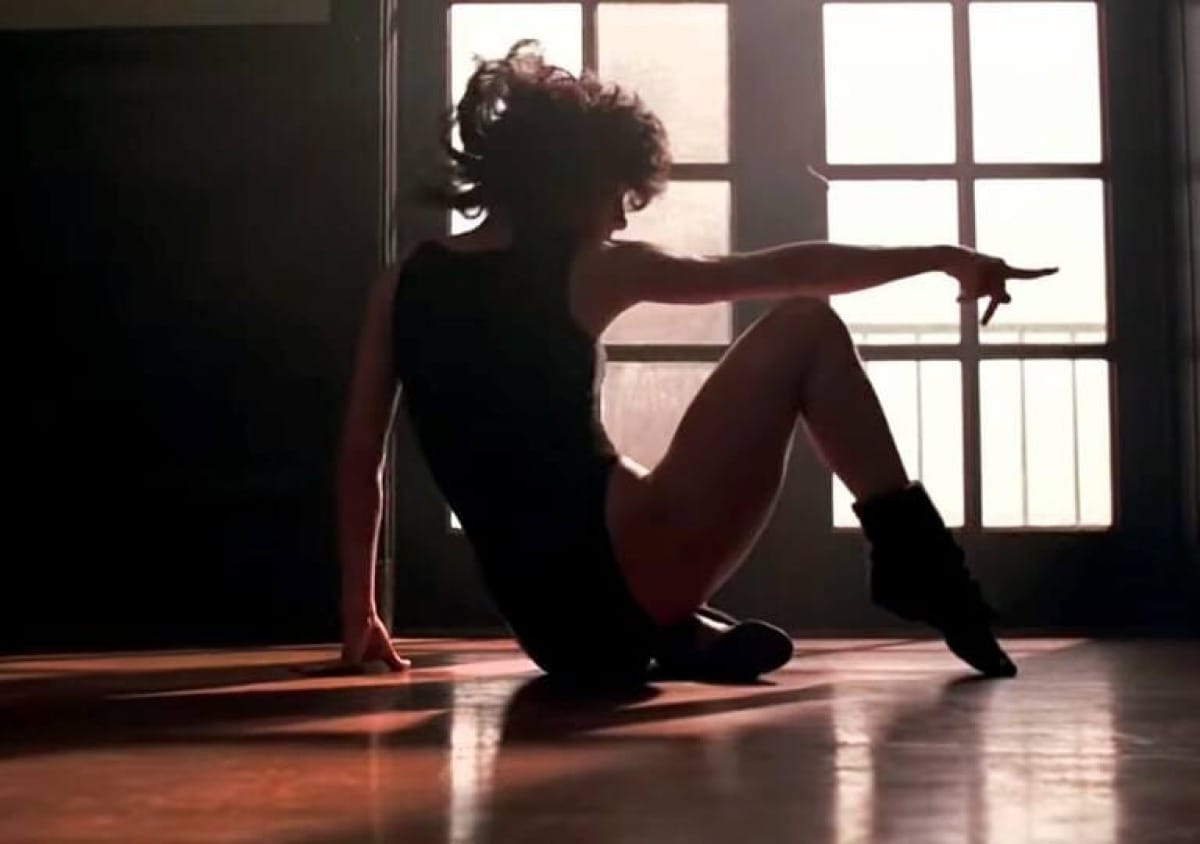
One could say that the gym artificially reproduces a type of effort that for thousands of years was linked to survival. Lifting weights, running, pushing, carrying: movements that once served to obtain food, build shelter, or escape a predator, and that sedentarism and automation have made unnecessary.
In some video games, something similar happens, although no longer with the body but with the logic of action: the relationship between doing something and receiving what’s due in return is artificially reproduced. For the gaming universe, grinding (from grind: to polish, sand, grind) means repeating an action to accumulate resources, experience, skills, or upgrades, and the player does it because they know there’s a clear reward at the end. Grinding is sustained by a promise: if you invest time, you’ll get something, and the reward will be proportional to the effort.
Grinding is sustained by a promise: if you invest time, you’ll get something, and the reward will be proportional to the effort.
Training also has something of a grind: you repeat exercises, progressively increase the load, maintain a routine, and there’s a relatively visible reward. But while the game fulfills the pact, real life often breaks that equation. Example: you train and don’t get a job because you don’t have contacts, you work harder and don’t necessarily live better. Today, the results of effort are promised but not guaranteed, and wage labor has ceased to be the privileged place where that pact is realized. There’s no fair reciprocity between effort and reward in work or professional life. The video game is precisely a world where that equation still works: I do x, I get y. Both video games and the gym offer the feeling that our actions have proportional consequences, and perhaps that’s why they are so seductive for many people. But if we look more closely at this apparent reciprocity, other questions arise: who defines what it means to do things right, and who decides what counts as a reward?
They forget the artisanal
There’s a whole other universe of doing that I know much better than that of video games, where the relationship between effort and reward takes on a much more difficult form to capture: craftsmanship. Making a somewhat arbitrary conceptualization (another license I’m going to allow myself), craftsmanship can be making a bread, playing an instrument, working with ceramics, repairing a chair, tending a garden, or any practice that involves learning a technique, developing a skill, and sustained dedication over time. Craft work requires a close connection between doing and thinking: it establishes a form of dialogue where the mind and hand collaborate to solve material problems, which implies a particular disposition of the body and special attention to form.

Just like in training, there’s something very well calibrated in the relationship between action and consequence in craftsmanship: the idea of transformation. Craftsmanship also offers us a reward, and in this case, it rewards the well-done work. Richard Sennett, in his book “The Craftsman” (2008), defines well-done work as a basic and enduring human impulse: the desire to perform a task with excellence for the simple sake of doing it well. Regardless of the field in which it develops or the specific technique it uses (whether carpenter, musician, or artist), what characterizes the craftsman is their stubbornness to improve and their commitment to the task. The craftsman’s reward is the feeling of satisfaction from having done the work well, the pleasure of feeling that they are advancing in something, the pride in the result achieved.
I insist on this question: who determines what is well done? For some, it will be perfecting technically, for others disconnecting, learning a new skill, creating something beautiful, or simply spending time doing something they enjoy. And therein lies the power of this type of doing: not in being outside of effort or discipline, but in retaining the possibility of defining their own ends. Unlike other activities where success criteria are given in advance, in the craft practice, each person can understand something different by doing a task well, and that kind of indeterminacy is perhaps one of the most concrete forms of autonomy we still have.
Who determines what is well done? For some, it will be perfecting technically, for others disconnecting, learning a new skill, creating something beautiful, or simply spending time doing something they enjoy.
Craftsmanship is not free from the risk of capture and optimization. But what would we optimize? Speed, beauty, expressiveness, comfort, experimentation, enjoyment, patience? This lack of a common parameter makes the very idea of performance absurd, because there is not even an agreement on what the criteria for improvement would be. What constitutes progress for one person could be a loss for another. In any case, the compulsion for optimization doesn’t need to know exactly what it’s improving to start operating. It’s enough to introduce the suspicion that there’s always more that could be done, better or more efficiently. When the logic of economic performance seeps into all practices and approaches to things, enjoyment seems insufficient, and it becomes increasingly difficult to do something without asking what else could be done with it: if you make ceramic mugs, you can sell them; if you cook, you could start a meal prep business; if you enjoy reading, you could have an account to recommend books. Why keep an idle asset when you can invest it to generate income, out of nothing? The deceptive promise of optimization is that you can gain something without doing anything, when we all know that learning to buy stocks takes time (at the very least, opening an account with a broker, watching a thousand videos to understand how markets work and how to read charts), and editing a one-minute video can take hours.
Craftsmanship implies anything that involves a technique, a repeated action, which doesn’t always have to be glamorous. It can have an aesthetic purpose; in fact, it usually does. The problem is that we confuse aesthetic value with the need to showcase it, to submit it to the judgment of likes, to the game of others' approvals. In response to this, we could try exercising the silent aesthetic: doing something we enjoy for ourselves and letting that be enough. Perhaps the value of these practices lies not only in what they produce but in the space they open to maintain a more sovereign relationship with time, attention, and desire.
Perhaps the value of these practices lies not only in what they produce but in the space they open to maintain a more sovereign relationship with time, attention, and desire.
Practicing a craft, playing an instrument, or making an object or a dish requires attention, repetition, and a willingness to take your time. There’s something profoundly satisfying about being able to dedicate hours to a task without any external urgency dictating how long you should take, how much you should produce, or what result you should achieve. In craftsmanship, you can often spend three hours searching for a sound, a texture, a finish, or a shape, without anyone being able to objectively say whether you’ve made significant progress or not. Because if no one defines for you what it means to win, then no one defines how long it should take to get there.
Perhaps that’s why the pursuit of well-crafted work can still function as a small anti-productive manifesto against acceleration, multitasking, and the obsession with efficiency. Not because craftsmanship exists outside of capitalism or because it is immune to capture, but because it preserves the possibility of deciding what is worth desiring. Sovereignty wouldn’t mean escaping all influence, but rather maintaining some margin to decide what meaning we give to the things we do and which things truly deserve a reward.
Las notas de 421 no tienen paywall
Y a cada colaborador se le paga por su trabajo. Las dos cosas dependen de los suscriptores.