Hideo Kojima: The Genius Who Merged Cinema and Video Games
Creator of Metal Gear, Hideo Kojima is the visionary who redefined video games by fusing narrative and gameplay.

Creator of Metal Gear, Hideo Kojima is the visionary who redefined video games by fusing narrative and gameplay.
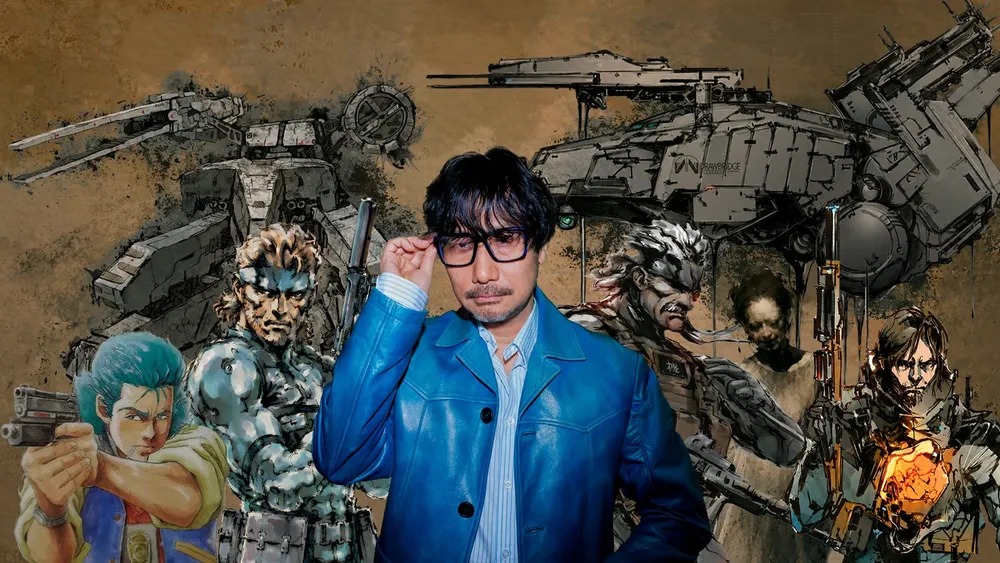
Hideo Kojima's bio on all his social media has always stayed the same: "Creator of video games: 70% of my body is made of movies." His only book explores this idea and gathers essays and reviews of the books and films that shaped him. Works that meant something so important in his life that part of that experience stayed in his DNA and shows up in his creations. Because, as Picasso already said, "good artists copy, great artists steal."
But a lot of people fixate on the part of his bio that talks about movies, overlooking the other bit, the more important one. Because it's hard to play something he made and not think he's a frustrated film director, what with the overdose of cutscenes and references to American culture. He himself revealed that this was his teenage dream, but that he couldn't keep it up because of a lack of support from his friends and zero opportunities.
It's hard to play something he made and not think he's a frustrated film director, what with the overdose of cutscenes and references to American culture.
But Hideo Kojima is a video game creator. That's what he chose in 1986, when he started working as an assistant director at Konami on titles that have little to do with his signature style, like Penguin Adventure. Still making peace with not being a filmmaker, he bought himself a Famicom, the Japanese version of the NES, and discovered two titles that changed his brain chemistry.
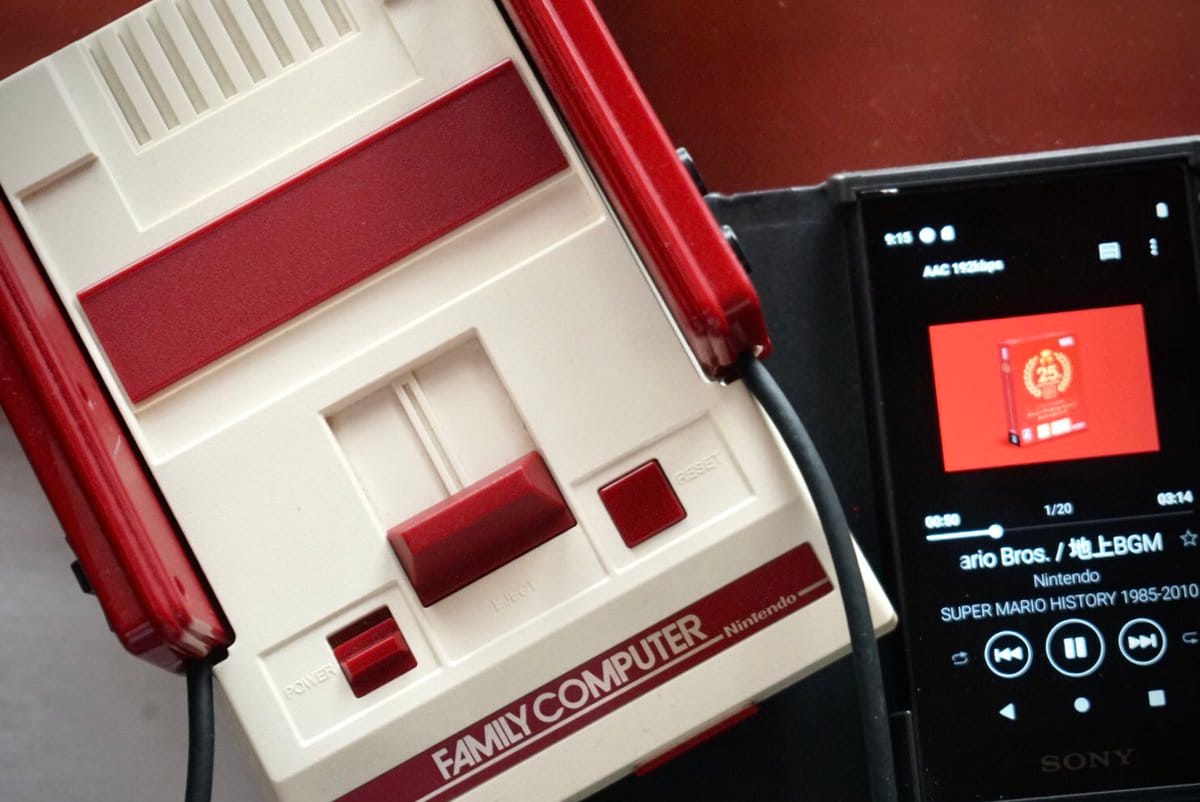
The first was Portopia Serial Murder Case, a graphic adventure with a lot of freedom of action and an "open world" in which players can choose their own path, with the narrative front and center. The second was the game that changed millions of lives: "When I saw Super Mario Bros., even though it was pixel art with no story, I felt like I was living an adventure. I felt that this medium would someday surpass cinema. That conviction led me into the video game industry," Kojima revealed in a recent interview with WIRED.
Although he was determined to tell interactive stories, his first project in the gaming industry didn't give him much of a chance. "There wasn't even a Japanese word for the job," Kojima told The Guardian, "the industry was full of people who had dropped out of school, people who felt video games offered them a second chance." And what a chance it was to make Metal Gear.
A boss handed him a project already underway so he could figure it out. The idea was to follow the trend of the time and make Konami's big shooter. The problem was that the MSX2's hardware was very limited and didn't lend itself to the kind of action they were after, the kind seen on the NES and in arcades. Kojima was a designer and had no control over the final product, but he managed to save the project with a powerful weapon: the narrative.
Inspired by films like The Great Escape (1963), The Guns of Navarone (1961) and Dawn of the Dead (1978), he proposed cutting back on the action and making everything revolve around escaping undetected through tight spaces. He started from the hardware's limitations to shape the gameplay and added radio dialogue to tell the story. From then on, "the fusion of cinematic techniques with video games became his trademark," as Kay Itoi put it in 2001.
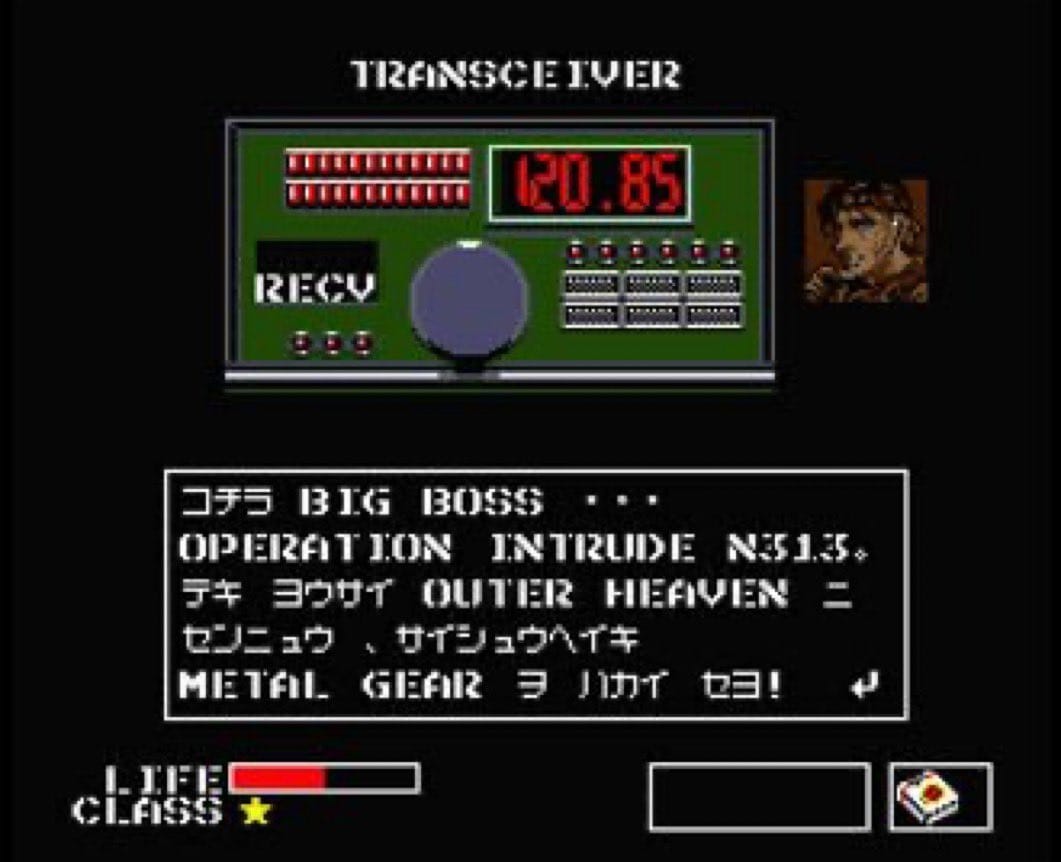
Metal Gear also got an NES version that didn't look much like the original and a sequel, Snake's Revenge, which didn't have much to do with Kojima either. That's when he realized how important control over the work is, something that would become another hallmark of his creative process. He got to make the real sequel, Metal Gear 2: Solid Snake, and didn't hesitate to build a new game engine that fit the kind of experiences he wanted to create.
"That's when I developed Snatcher and Policenauts. It was a way of taking back the creative control that had been stripped from programmers," he explained to The Guardian. These titles once again put narrative front and center, now with cutscenes that frame the action but are integrated into the gameplay so the pacing never drops.
This stage of his career also cemented another concept that's fundamental to understanding his work. As players, we have a lot of freedom when we step into a video game's world. Setting rules and marking out paths is an essential task for any developer, but breaking those rules and anticipating experimentation is just as important.
In 1997, Kojima and his team, with artist Yoji Shinkawa leading the way from then on, had to face a brand-new challenge: the PS1 and 3D. The team tested what was and wasn't possible in order to pull off boss battles like Psycho Mantis and unique mechanics, like smoking cigarettes to reveal lasers with the smoke.
The author uses the Metal Gear saga to share his concerns about society and the future. Much like the Man with No Name from Sergio Leone's Dollars trilogy, Solid Snake has almost no voice or personality, so that players can put themselves in his shoes in an immersive way.
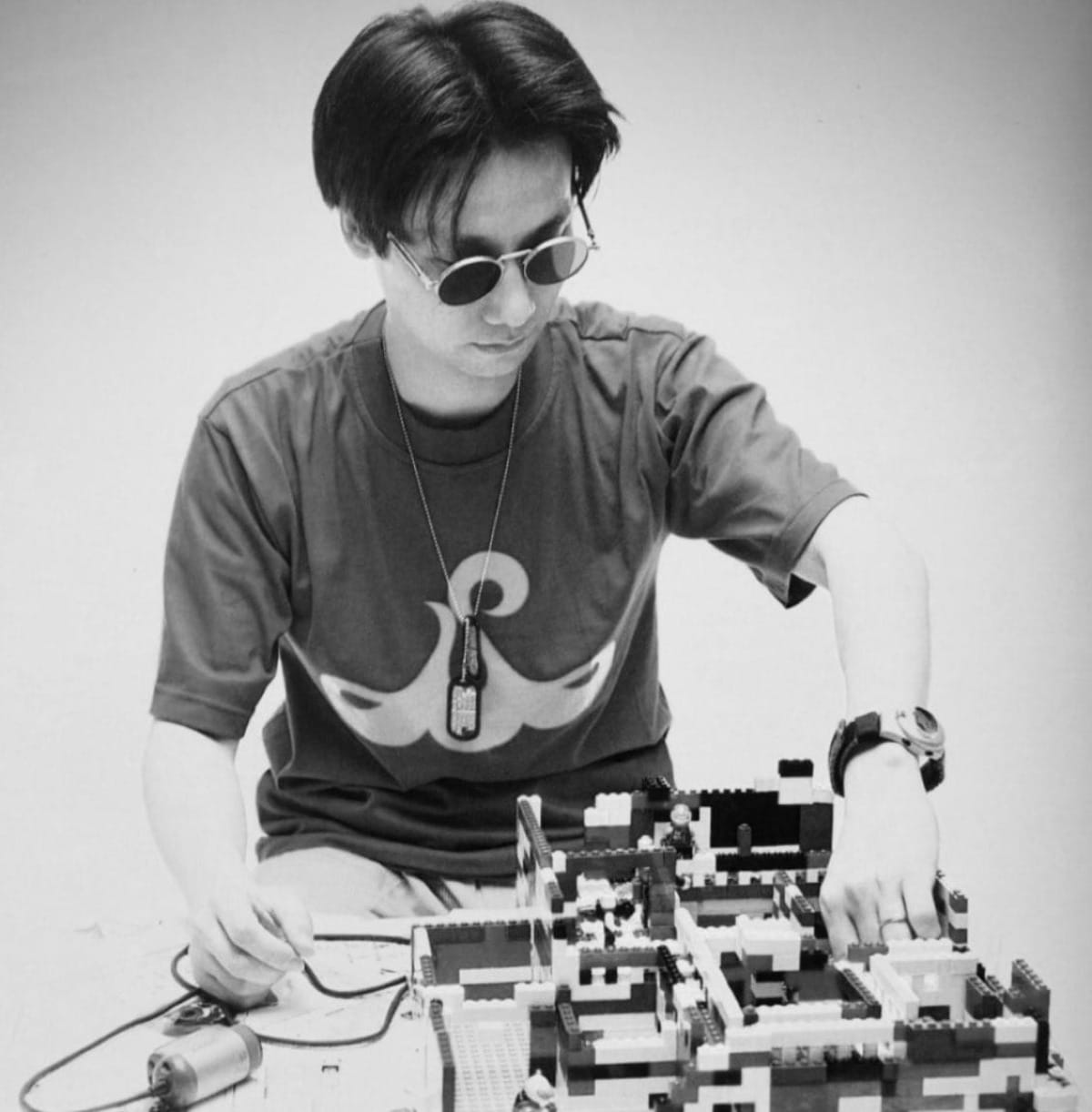
Without knowing how it would turn out, Hideo Kojima took advantage of his role as producer to do what he really wanted, and by the time Metal Gear Solid 2 launched he was already an industry celebrity. Once again, he completely disregarded what everyone else was doing, ignored the trends of a still-young industry and set out to create an action franchise loaded with story, a rarity at the time.
With MGS 2 he also betrayed his audience's expectations with what he himself calls a "rug pull": the saga's iconic protagonist is replaced by a new character. The priority was always to innovate and keep pushing toward something different instead of settling for a formula he already knew worked. Here's another aspect that would become fundamental to his art.
There are memes explaining that everything we're living through already happened in Metal Gear Solid 2, and they're all right. Kojima confessed that "it wasn't a prediction, but rather a future I didn't want, though sadly we're heading there." The game's scale also exposed one of the author's vices: sometimes he goes overboard with his own imagination and piles extra ingredients onto already complex plots with no restraint. That's where the weird characters and the scripts that get heavy-handed come from. Still, the gameplay is always the compass that brings his experiences safely into port.
The priority was always to innovate and keep pushing toward something different instead of settling for a formula he already knew worked.
While his fans wanted to find out the consequences of MGS2, Kojima did whatever he wanted once again and developed a prequel. Set during the Cold War, MGS 3 takes the essence of James Bond stories, opening song included, and moves the action to a jungle where camouflage plays a crucial role, along with medicine and rest. All made possible, of course, by technology that never stopped evolving and pushing limits by leaps and bounds with each new console generation.
Only 10 years went by between the first Metal Gear Solid (1998) and the fourth installment of the saga (2008), and the difference in graphics and gameplay from one end to the other is hard to believe.
By this point, every new Metal Gear seemed like Kojima's last, because he himself announced it that way. "It's like when Hayao Miyazaki says he's not going to make anything else and, in the end, he always ends up doing it. There always comes a moment when I have to come back," he explained in a 2008 interview around the release of Metal Gear Solid 4. "I wanted to show that everything in the industry evolves: the games, the platforms and even the users who used to play my games have gotten older, and I wanted to express that in Old Snake."
From an early age, Kojima understood that art conveys deeply valuable emotions and ideas. He often talks about movie nights with his family, where going to bed before the film ended was forbidden. Those sessions included all kinds of cinema and afterward sparked conversations about the work, the author's intentions and the topics it tackled. The anti-war sentiment present in nearly all his games comes from the lessons of films that showed him humanity's worst horrors at a young age.
That's why his works always try to leave a mark on the audience, whether by planting topics for discussion rarely addressed in video games or lessons he wants to pass on to his fans through fresh means. "Since it's a game, the main priority was to provide fun, but I also wanted to reflect on the current state of the world and have users understand it better through the game," Hideo Kojima explained to Kikizo in 2008. "However, I only wanted MGS4 to be a window onto this; the next step, where you open the window and look at the real world, is up to the users!"
In between Metal Gears, he also produced mecha science fiction with Zone of the Enders, supervised rhythm games and created a cult Game Boy Advance series, Boktai. Centered on a vampire hunter, the game's cartridge included sensors to charge the protagonist's weapon with sunlight. Once again, Kojima didn't think about how to adapt his idea to the available technology, but rather looked for a way to expand its possibilities with something that had never been done before or since.
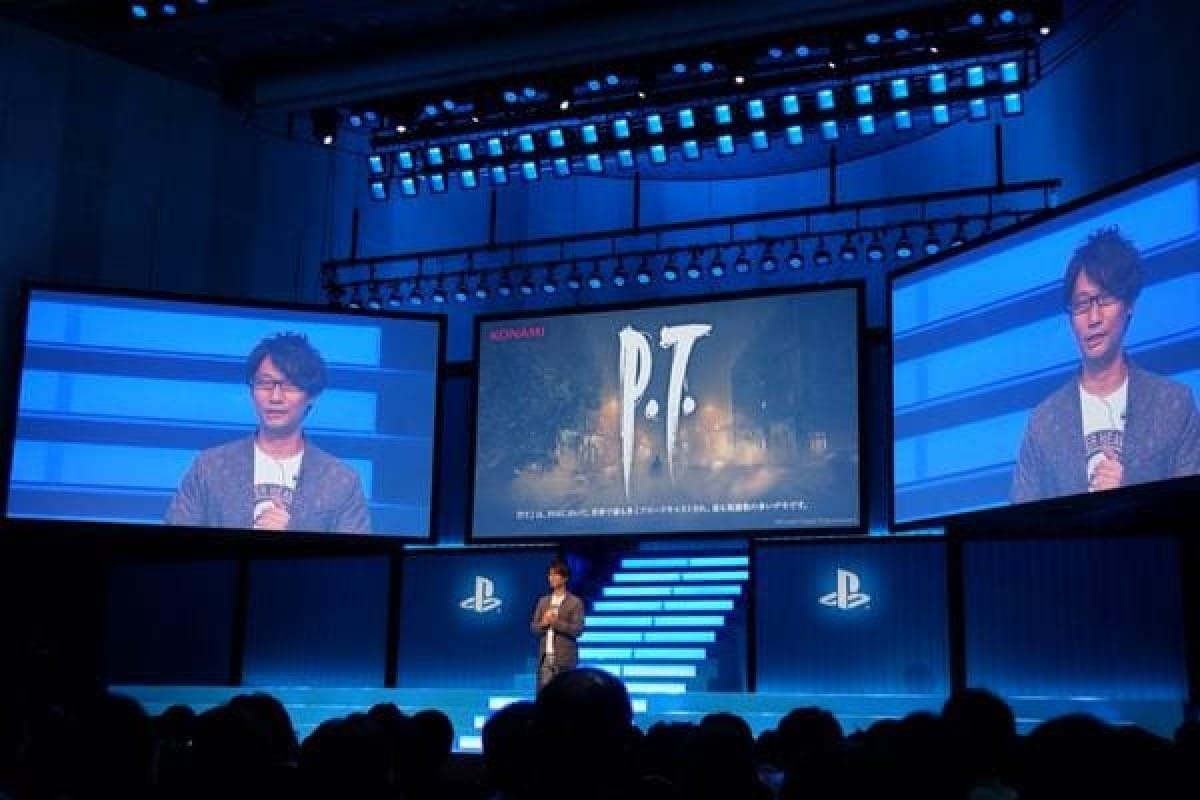
Another milestone outside Metal Gear came in 2014 with the release of P.T. (Playable Teaser, to strip it of all its magic). Out of nowhere, Konami decided to announce a new Silent Hill titled Silent Hills. Helmed by Hideo Kojima. Starring Norman Reedus at the peak of The Walking Dead wave.
P.T. explores new ways of doing horror in tight spaces. It has rules you discover by exploring the same setting over and over, interacting in different ways with the same walls and the same objects. It's a demo that shook the foundations of horror games and opened the door to enormous experimentation by developers and players alike, with results and influences that are still visible today.
Although he never chased a trend, he did manage to set the industry's direction on several occasions. Because of things like Metal Gear Solid 2, people talk about his ability to "predict" the future, or at least to read the present and understand the patterns that rule it. And the future, for Kojima, is collaborative. Hence Death Stranding.
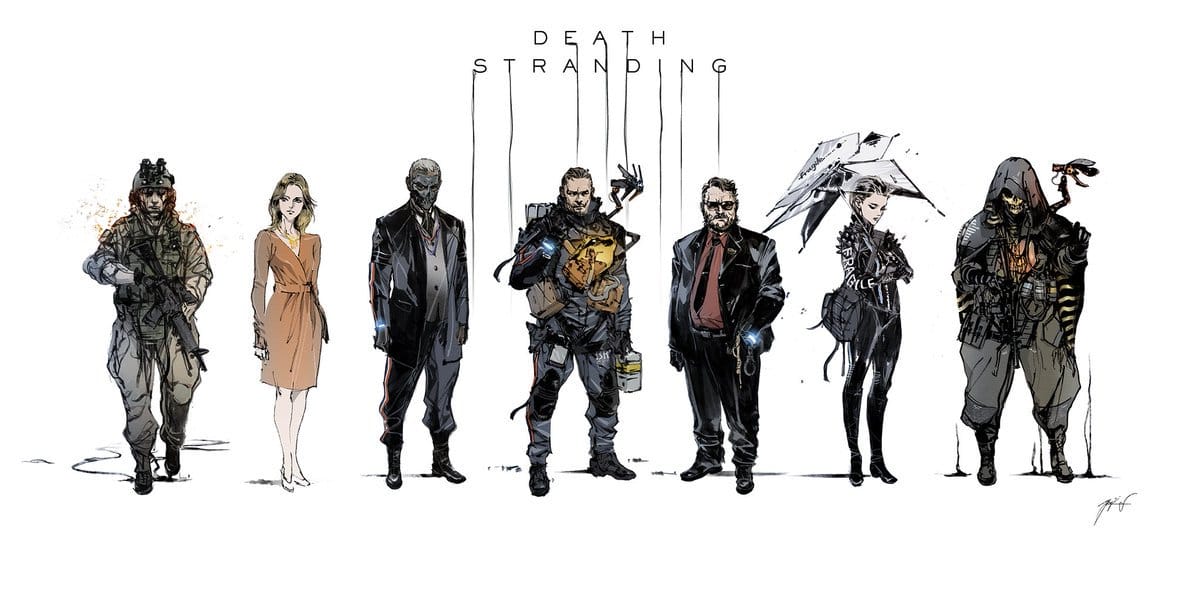
Death Stranding's gameplay shines when you lean on other players. When a community forms that helps each other, leaves tips, offers encouragement and shares resources. Death Stranding gets better the more people play it, and that in itself is a groundbreaking mechanic. It's surely a hard concept to sell to shareholders, which is why it was Hideo Kojima's first video game as an independent developer.
As a Konami vice president, he had a turbulent launch with Metal Gear Solid V in 2015 and his name stopped being part of the franchise, right alongside a finale to the saga that left a bitter taste and the cancellation of Silent Hills. MGSV won awards, but Kojima couldn't even go accept them. He kept his studio, Kojima Productions, and went independent, though the scale of his games only kept growing.
"The world is connected through the Internet. We're connected 24/7. In theory, we should be happy," Kojima told GQ in 2025. "In Death Stranding, you can only connect positively. When the user stops playing, I hope they can carry what they felt during the game over into real life."
He was already talking about all this back in 2007, when at GO3, an Australian games convention that no longer exists, he said: “Now we have to collaborate with the experts in each field (like a musician). Over time, video games will collaborate fully with other industries, giving rise to a coherent form of digital entertainment”. Playing Death Stranding puts you in touch with playlists by artists you might not know and with tons of personalities who were scanned at the Kojima Productions offices, from idols to filmmakers, so you can learn a bit more about his artistic DNA.
That scale also forces him to connect everything that makes Death Stranding what it is to a story that isn't always understandable, interesting or told in the best possible way. But, once again, Kojima's strength lies neither in the narrative nor in the gameplay as isolated elements, but in the synergy all those components can produce to create something never seen before.
Although a large percentage of game reviews separate aspects like story, graphics and gameplay in order to rate a title, Kojima understood very early on that everything is interconnected. A video game isn't just an interactive story or an experience with sporadic narrative. It's a whole that is much more than the sum of its parts.
A video game isn't just an interactive story or an experience with sporadic narrative. It's a whole that is much more than the sum of its parts.
As journalist Justin Charity put it, “Shigeru Miyamoto, the genius behind Nintendo, is beloved, but Kojima is a rock star”. He doesn't always go down well, and it may be for the very same reasons he's loved: he likes having total control, he doesn't do what the audience expects, and gameplay, narrative and thesis are intertwined in ways you don't see in other experiences.
Saying Kojima should just make movies is odd when he's spent years trying, unsuccessfully, to adapt Metal Gear Solid. There are fundamental elements that can't be translated into the passive "consumption" of film. His strength lies in creating new ways of interacting with art so he can keep leaving his mark and passing on his passions. And if something he's doing is too well received, he knows that's not the way. At the end of the day, his main goal is “to raise the level of video games and of their creators.”
Y a cada colaborador se le paga por su trabajo. Las dos cosas dependen de los suscriptores.