Nintendo Wii: How to Return to the Console That Got Us Playing With Our Bodies
Twenty years after its launch, the Wii had us playing with our bodies and put Nintendo in the spotlight. Its game library and how to get back into the console today.

Twenty years after its launch, the Wii had us playing with our bodies and put Nintendo in the spotlight. Its game library and how to get back into the console today.
The three major companies in video game hardware and software have fascinating stories. With their various successes, failures, betrayals, tricks, and surprises, Sony, Microsoft, and Nintendo have managed to survive over the decades with different strategies. However, Nintendo has always sailed its own course, while the other two have competed (and continue to compete) more directly. Nowadays, Nintendo is in a pretty comfortable position, with the combination of both Switch consoles, a ridiculous number of units sold, and an extensive catalog of interesting games that you can't play on other consoles.
But Nintendo didn't always lead the market. Or at least, it depends on which one we're talking about. They are the ones who revolutionized and broke all molds with handhelds, with the unmatched Game Boy and all its versions, which our dear Julián Carrizo talked about here. And what can we say about the Nintendo DS, considered by many to be the ultimate handheld for its design and its excellent and endless catalog?
In the home console arena, one must be more cautious. Almost all of their consoles are labeled as legendary, and rightly so. Trying to debate the merits of the NES and the SNES should be punishable. On the other hand, it's true that both the Nintendo 64 and the GameCube, incredible platforms with great games, were not launched with the best ideas and struggled commercially against the titan that was rising: PlayStation.
Sony, Microsoft, and Nintendo have managed to survive over the decades with different strategies. However, Nintendo has always sailed its own course.
Everything started to change on a day in 2004. A certain Satoru Iwata, the newly appointed president of Nintendo, appeared on stage at the popular E3 conference. He pulled a device from his jacket and showcased the DS, the successor to the Game Boy Advance. He then spoke about how presenting new technologies and more graphical power is fine, but it's not enough. You need to bring new ways to play; that's what launching a new console should mean. The then shamelessly named Nintendo Revolution was going to do just that. He joked that he could discuss the technical information, but that it “didn't matter.” A year later, at the same conference, he would unveil the first prototype of the Wii to the public. Obviously, pulling it out of his jacket.
The essential idea behind this “revolution” was to create a console that not only appealed to Nintendo fans or gamers in general but to anyone who didn’t yet know they liked this universe. How? With a console whose main attraction, at least at first glance, was to play with controllers that captured our movements.
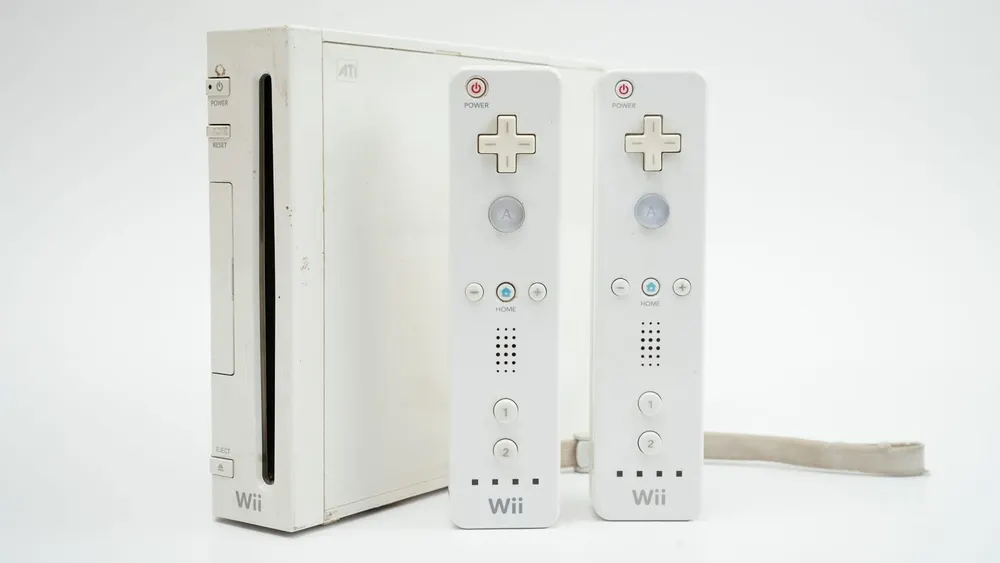
The Wii's joystick was called the Wii Remote or Wiimote, and it looked like a TV remote. Something recognizable in any household with this appliance. This controller was connected to another device with a joystick and a couple of buttons, called the Nunchuk. While the Nunchuk allowed for more traditional movement with its joystick, the magic lay in the Wiimote: it had a motion sensor (a three-axis accelerometer) to measure how we moved and tilted it, along with an infrared bar that we placed above the television to calculate its position and function as a pointer.
In layman's terms, think of a TV remote that works like a mouse and also registers certain movements you make with it. For example, the gesture of hitting a ball with an imaginary racket in a tennis game. Or throwing a punch with a boxing glove, bowling a ball, and any other basic movement in a sport.
I didn't choose those examples randomly: the Wii typically came bundled with the title Wii Sports, a collection of simple sports games that allowed you to play in your living room or bedroom mimicking the sport. While the controller wasn't perfect since it didn't measure speeds, forces, and exact angles (this would be resolved in a few years with the Wii Motion Plus and its gyroscope), the trick had already been achieved. Thanks to its novelty, the focus of its global marketing campaign, always showing the whole family playing, and being Nintendo, the console became a resounding success (selling over a hundred million units). Three times more than the Nintendo 64, five times more than the GameCube.
The advantages of the controller were not always well received, and they depended heavily on the developer and the game in question. In some, like the aforementioned Wii Sports or WarioWare: Smooth Moves, the Wiimote was essential: these are games that are what they are because of the controller. In many others, there was a hybrid between a conventional controller (the Wiimote still had buttons) and functions or attacks that were indeed performed with movement. In the rest, the implementations were poor, either reduced to a bland gimmick or simply nonexistent.
Moreover, agreeing with Iwata in the cited speech, the Wii was far behind its counterparts, the PlayStation 3 and Xbox 360, in technical capabilities. While Sony and Microsoft opened the door to the world of HD, Nintendo's games were still running at 480p. To put it bluntly, it was a bit better than the PlayStation 2, but not that much better. This meant that many multiplatform games looked very inferior technically compared to the competition (not to mention a decent PC), which often led to popular games not being released on the Wii or having reduced versions.
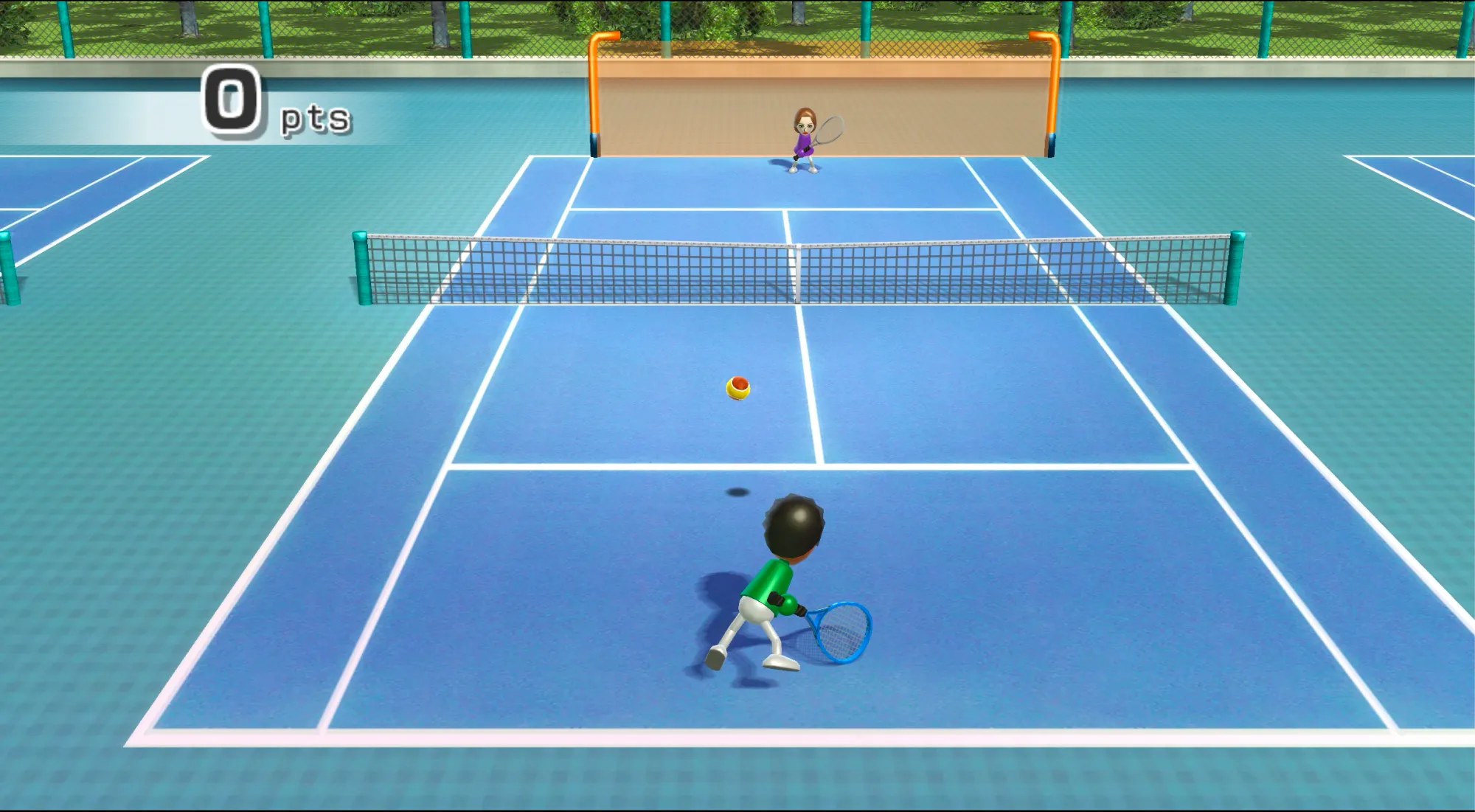
While this split the waters and many players decided to jump ship (whose owners would later attempt similar peripherals), those of us who chose the Wii knowing a bit about what we were getting into were amazed. It was the first generation that didn't buy a PlayStation at launch because it was too expensive (and, until then, you could only play with original games). I remember perfectly my first day with the console, trying out Wii Sports and spending hours with the tennis game, thrilled with what I was experiencing for the first time. The same goes for the aforementioned WarioWare: a conglomerate of mini-games in series, lasting just a few seconds, each presenting a surreal and bizarre scenario that you solved by placing the controller in a strange yet intuitive position. Hours of fun between the two. And a bit of sweating too.
A hobby, a passion, whatever you want to call it, often associated with being sedentary, now included a physical component that was almost nonexistent before (although there were already games like Pump It and others). Beyond the fact that at 421 we believe that playing is not wasting time, but rather the opposite, there was another qualitative level added to the activity. The act of playing, which requires concentration and connecting with something a bit more than usual and avoiding all the distractions that invade us today, now demanded physical engagement. How could it not hook millions of people of all ages?
I remember perfectly my first day with the console, trying out Wii Sports and spending hours with the tennis game, thrilled with what I was experiencing.
The package was rounded off by the presentation of the Wii, with its home screen based on TV channels, its beautiful background music, the charming Miis avatars you could create with countless configurations and then transfer to games or interact with others. I remember inviting friends from school to try Wii Sports and them asking me, “Wouldn't it be better to do a real sport?” To which I replied yes (and I actually was), but that was missing the bigger picture. The forest promised to transport that to fantastical and magical scenarios impossible in the real world.
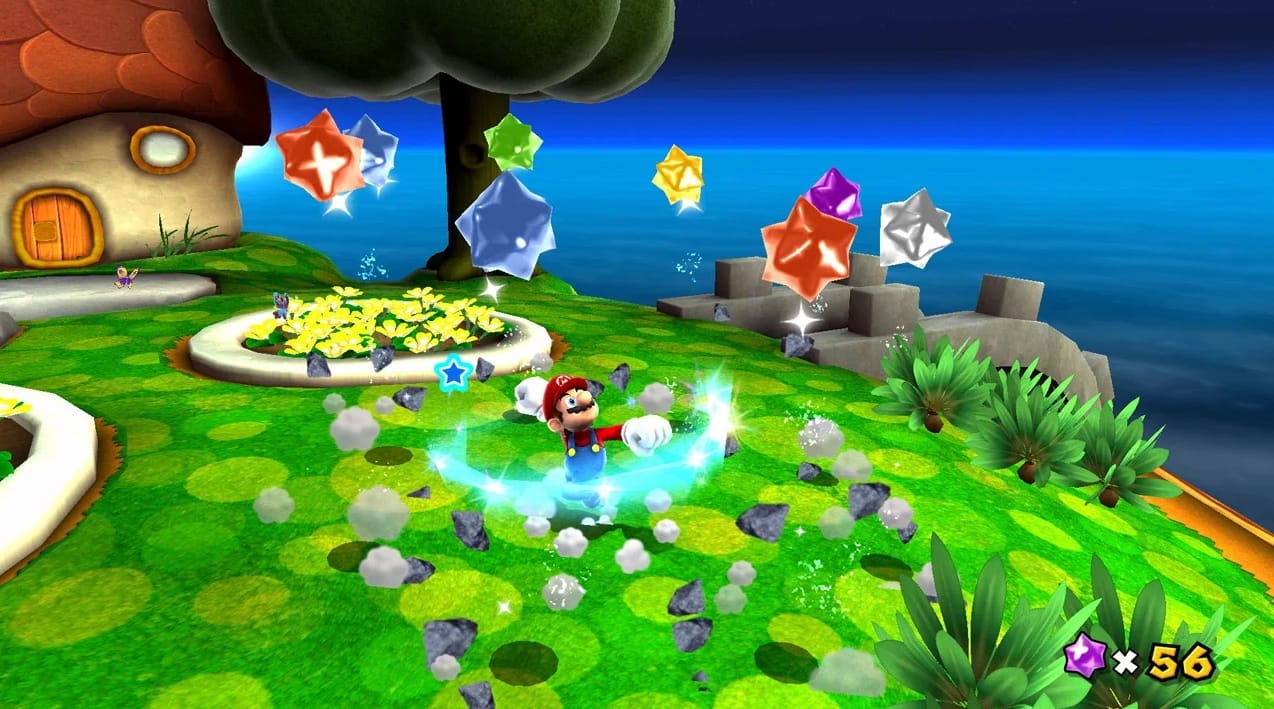
The originality and uniqueness of the Nintendo Wii would have gone unnoticed without a catalog to accompany it. Fortunately, there is much to dig into among its main six years of life.
As expected, the great gems of the catalog and the most memorable works correspond to the big names of the brand. Super Mario Galaxy (2007) is considered, to this day, the best 3D Mario that exists. Taking the most iconic plumber to space, playing with gravity for his jumps, and mixing large explorable planets with smaller ones that we traverse in a couple of steps was one of the best ideas ever realized in the franchise. As if that weren't enough, three years later it had a sequel that didn't innovate much in its proposal but gifted us a new and extensive collection of levels of the same caliber. That was more than enough, making it easy for either of the two to be someone's favorite installment.
Another of the most iconic sagas, The Legend of Zelda, had not one but two 3D installments with The Twilight Princess (2007) and Skyward Sword (2010). The first was very beloved for its slightly darker tone both in aesthetics and narrative, while the second returned to a more classic style. Both utilized motion controls to a greater or lesser extent, shaking the remote to attack with Link's sword, aiming with the pointer to launch projectiles, and other details. This was deepened in Skyward Sword through the use of the Wii Motion Plus, which allowed for much more precise movements to use our protagonist's arsenal, generating an even more interesting level of immersion.
For shooting game fans, especially FPS enthusiasts, the Wii was a special console because it allowed you to play them in a unique way, almost like the classic shooter on rails (Time Crisis, House of the Dead) where you spent credits at Sacoa and other forgotten chains. Titles like Medal of Honor: Heroes 2 (EA, 2007), which turned our Wiimote into the weapon of choice, paved the way for Metroid Prime 3: Corruption (2007) to run. Continuing Samus's first-person legacy and diving into the exploration of these alien landscapes has never been so satisfying with the controls as it was in this installment, regardless of whether it's the best in the trilogy or not.
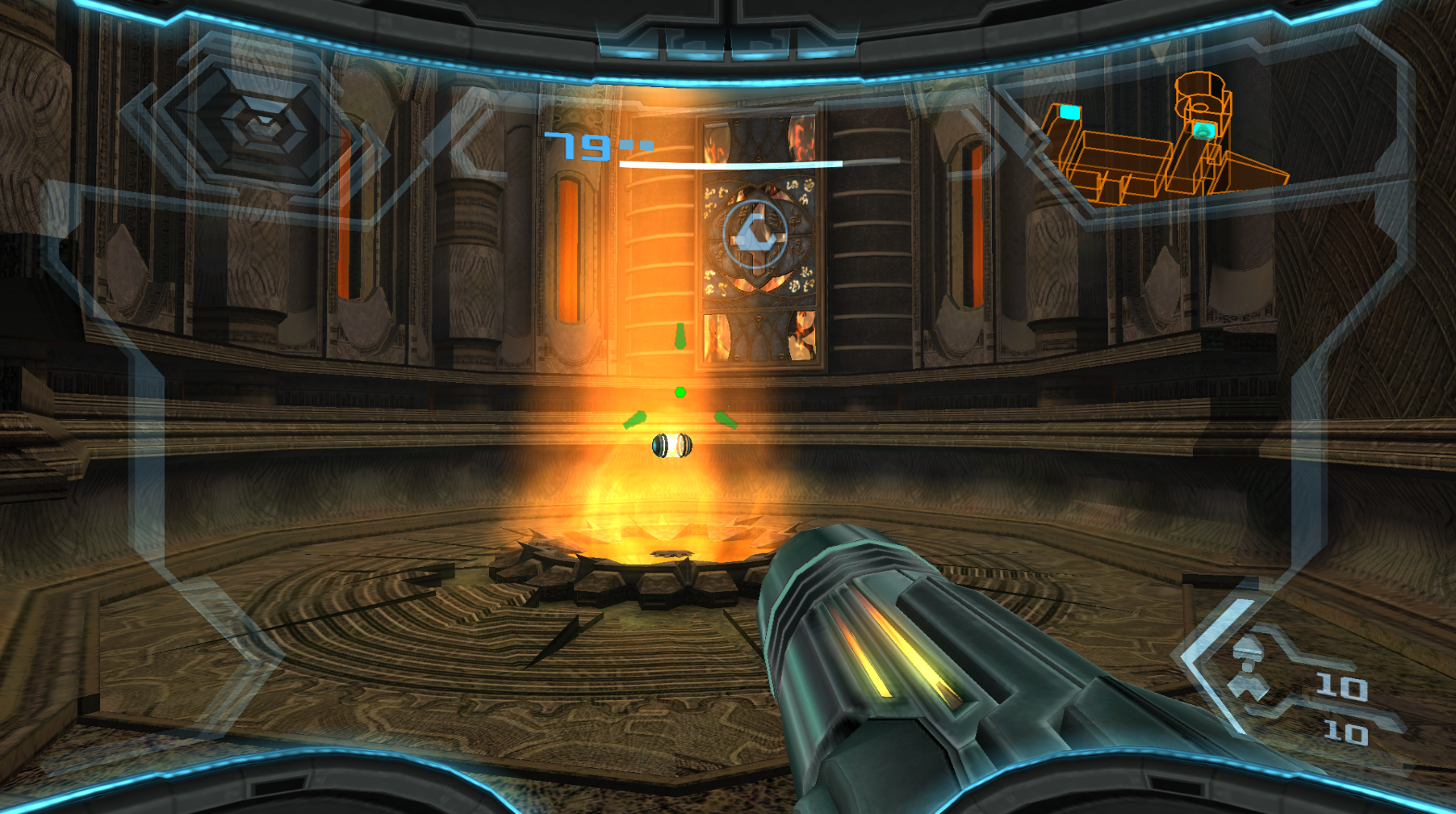
I mentioned rail shooters, and it would be a shame not to point out that the Wii managed to simulate those plastic guns that many of us used to spend so much on. The transition of that experience to home was so well done that over the years they released the Zapper, a cute peripheral that was a plastic gadget where you could place the Wiimote and Nunchuk together for added comfort. The Resident Evil Chronicles (Umbrella and Darkside, released by Capcom in 2007 and 2009) may not have been spectacular works in themselves, but revisiting various iconic moments from the saga in this format and with this control was wonderful. Not to mention an excellent title like The House of the Dead: Overkill (Headstrong Games, 2009) and the cult classic sequel Sin and Punishment 2: Star Successor (2009). Even adaptations of other great action and horror titles, like Resident Evil 4 (Capcom, 2007), presented, in my opinion, the definitive way to play them thanks to the depth of interaction (which lasted for years until the virtual reality edition of this title).
Racing titles like Excite Truck (Monster Games, 2006) had us hold the controller horizontally to tilt it gently from side to side, mimicking a steering wheel. This obviously exploded with Mario Kart Wii (2008), which let us play this legendary series with the same gesture. Naturally, the game was sold alongside another simple peripheral that completed the steering wheel shape of the controller.
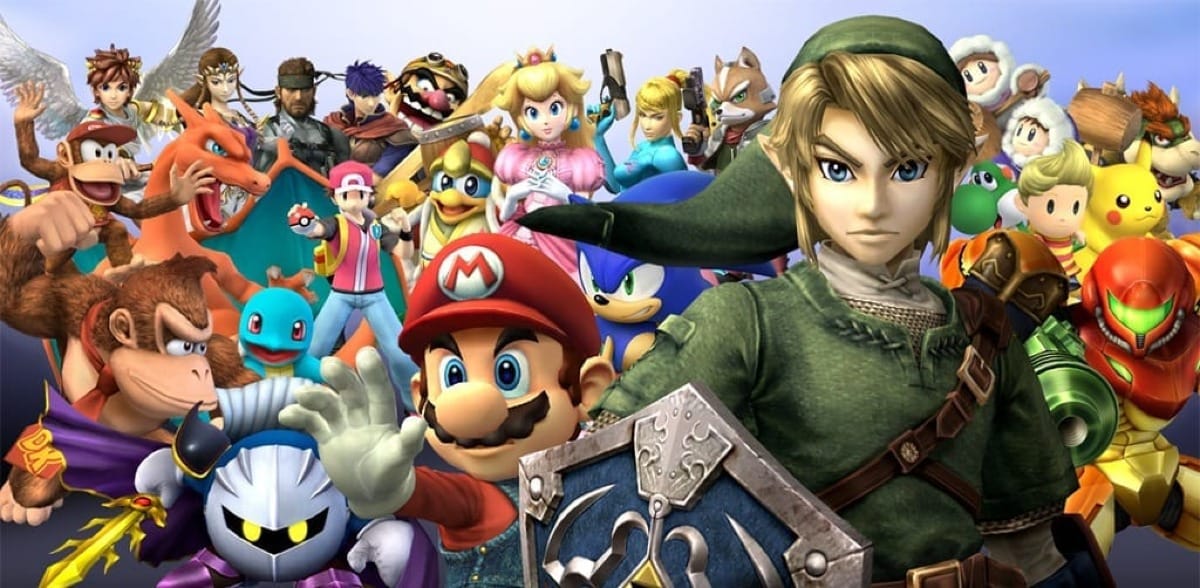
There were more exclusives featuring classic characters from the big N, but none that I remember quite like Smash Bros. Brawl (2008). It wasn't and isn't one of the most beloved entries in the series, often considered one of the “slower” ones in terms of combat speed (especially compared to its direct predecessor). However, it remained solid, with a ridiculous amount of content and a special single-player campaign. I will never forget the excitement of waiting for each character announcement on its official site. Moreover, it was Brawl that began to break boundaries in the IP, allowing high-profile crossovers, like Snake from Metal Gear Solid and Sonic.
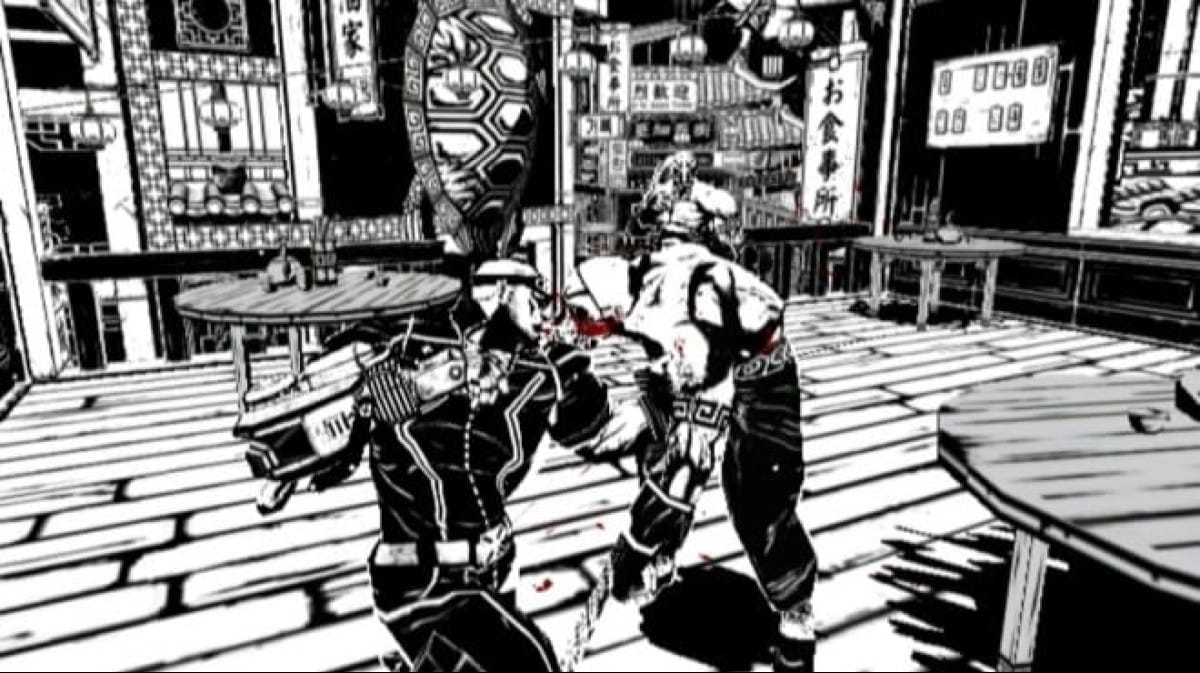
Many times, specialized sites and publications labeled the Wii as "a kids' console," due to the family focus I mentioned at the beginning, much of its catalog, and how the more “violent” titles from PlayStation 3 and Xbox 360 didn't make it to the console. However, as I've hinted at, there was a list of titles that entered that conversation. It's impossible not to recall a bit of Madworld, the first video game from PlatinumGames (the stars of action games). In 2009, they painted the screens in black and white, with splashes of red blood every time we dismembered characters in a comic style. It had a simple yet effective use of motion controls to finish each execution.
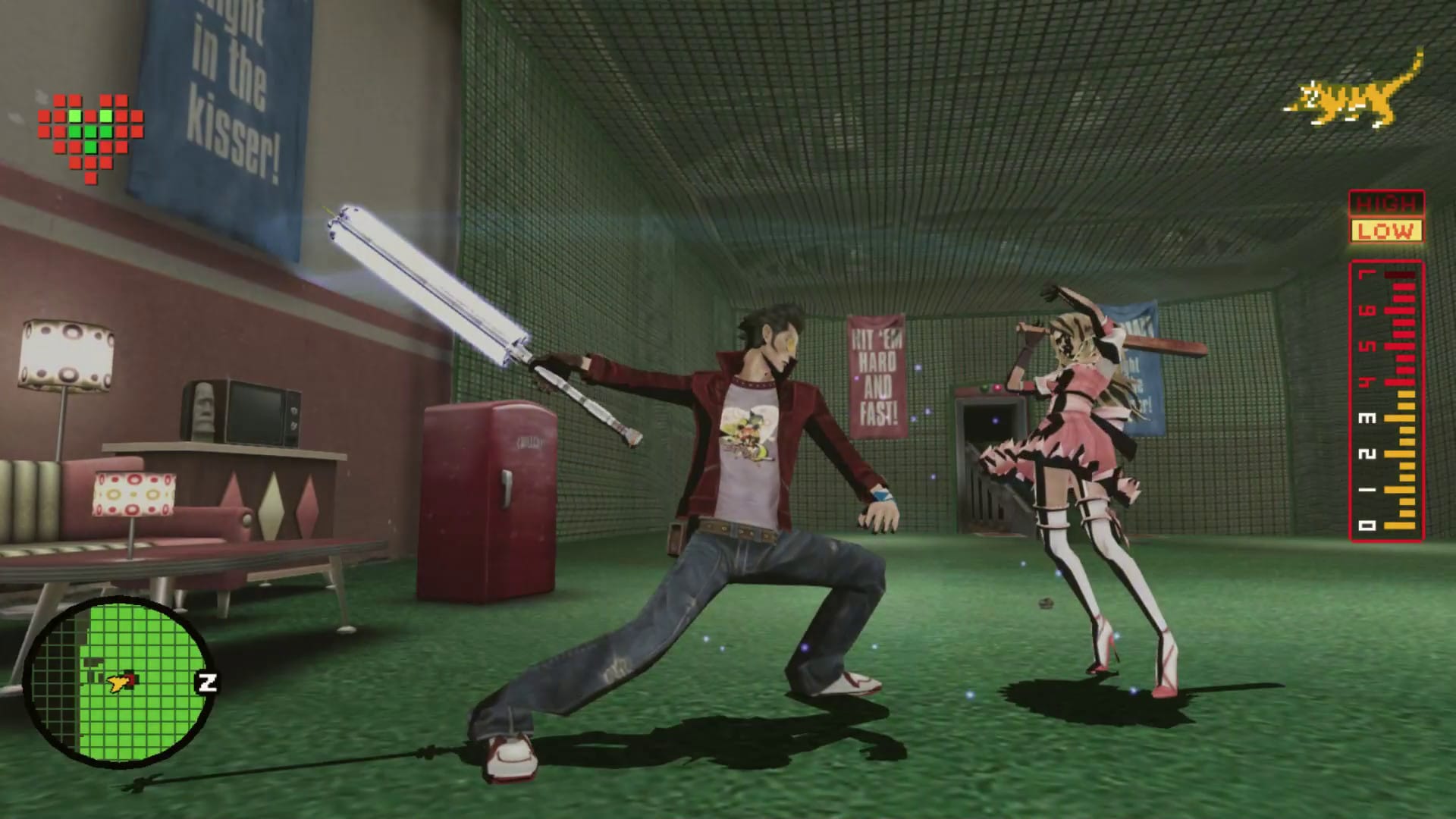
Something similar had happened a bit earlier, in 2008, when director Suda51 and the studio Grasshopper Manufacture, one of the most unique and interesting groups in the industry, shot us with No More Heroes. The outcast Travis Touchdown, ranked 11th among the world's best assassins, wants to reach the top. To do so, we have to take on odd jobs, save every penny, swing the Wiimote like a sword to cut people, watch liters and liters of blood fly, fantasize about our beautiful agent, and shake the controller as if it were a masturbation act, since our sword requires that movement to recharge.
There are dozens and dozens of titles more to explore. On this console, Xenoblade Chronicles (Monolith Soft, 2011) was born, an award-winning RPG series that is more alive than ever on Nintendo. We had The Last Story (Mistwalker & AQ Interactive, 2011), directed by the father of Final Fantasy, Hironobu Sakaguchi. A gem of a fighting game like Tatsunoko vs. Capcom (Eighting, 2008) featured a bizarre roster but quickly won the hearts of those who fell into its grasp. As if that weren't enough, the Wii had WiiWare, a channel for exclusive downloadable games, and the Virtual Console, a digital service that allowed you to purchase games from previous consoles (and some outside of Nintendo, like the Sega Genesis) and emulate them on your Wii. It was an impressive pillar of backward compatibility for the time, with over 400 titles to choose from. Today, the Nintendo Online service for Switch 1 & 2 is still far behind.
The goal of this article isn't just to provide a mere anecdotal review of what this console was. If anything I wrote piqued your interest, or if you lived through the Wii era and want to return, the best thing you can do is take the plunge and take action. But what's the best way?
Starting with the ideal, and even though almost 20 years have passed since its launch, it's still quite possible to find a used Nintendo Wii in very good condition. The same goes for many original second-hand games, although local options (based on Mercado Libre and some specialized stores) are scarce. It will be more preferable if there's a chance to travel and bring back a bag of games, or to turn to importers and sites that do shipping.
If anything I wrote piqued your interest, or if you lived through the Wii era and want to return, the best thing you can do is take the plunge and take action.
Next step: just like with the PlayStation 3 and the PlayStation 2, today it's possible to acquire Nintendo Wiis that come refurbished with everything you need to enjoy them without worrying about the games. USB drives, homebrew, ROMs, and that's it. You make the initial investment and then forget about it: a whole catalog waiting.
And we arrive at the last step, emulation. Dolphin is an emulator that has existed since 2003 because it was created to emulate Nintendo GameCube games. Over the years and with the launch of the Wii, it also integrated the catalog of the latter (or almost all of it), and today it is very user-friendly software that offers many configuration options. With a disc reader on your PC, you can even run original games (and if you don't have one, you know), and if you get a Wiimote and a Nunchuk, it's easy to set them up to work faithfully. If you have controllers from other current consoles, like the DualSense or Xbox Series, you can also use them without issues and map movements to specific buttons or your mouse.
In any case, and again, only if your budget allows, I will always advocate for getting in touch with the original hardware in the most authentic way possible. Sitting down, getting ready, touching and feeling the controls, exploring the unique menus, searching for games, and experiencing them from start to finish without any other screens or distractions other than your TV or monitor. The time of the Nintendo Wii may have passed, but its legacy will always remain. Ideal for stepping away, even just a little, from current trends, from FOMO, and reconnecting with this beautiful art from a different perspective.
Y a cada colaborador se le paga por su trabajo. Las dos cosas dependen de los suscriptores.