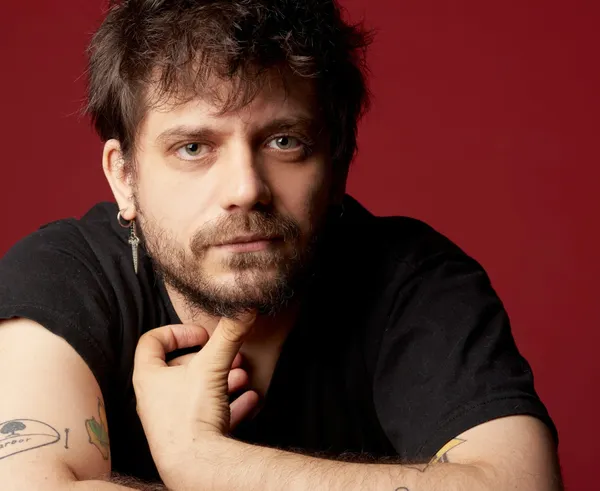
Interviews with Writers for People Who Want to Start Writing - Episode VII: Mariana Enriquez
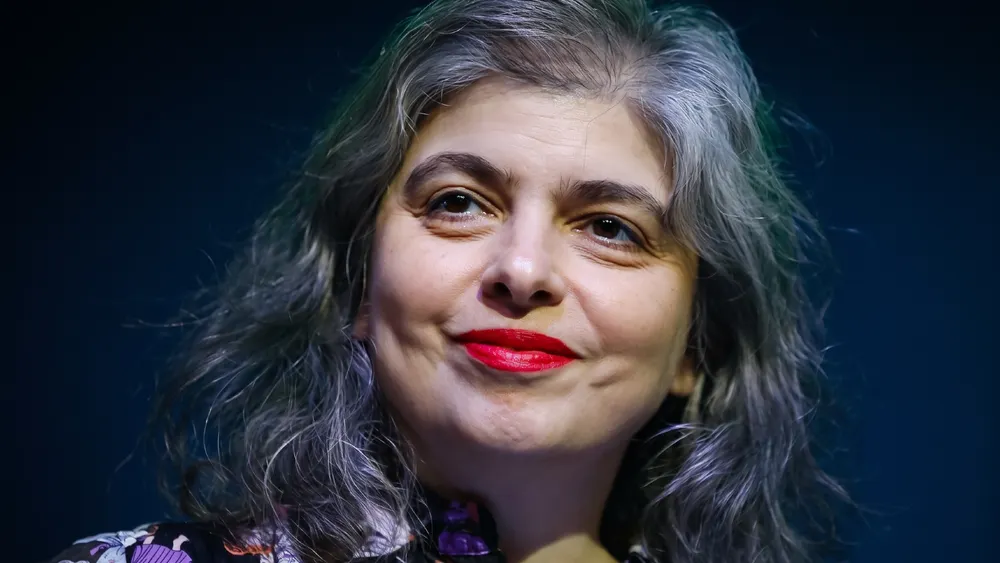
Mariana Enriquez: Childhood scares, the journalist's craft, and literature as obsession.
In my brief experience with literature, you never want to write. You either write or you don't. That's it. It works like an annoying weight, an unbearable ghost hanging off your ears that forces you to sit down, open a Word doc and start typing. But generalizing from what I feel would be irresponsible, a dumbass leap to conclusions I'd rather avoid. So I suspect there are, in fact, people who could use a little nudge.
That's why I decided to start working on this series of interviews with writers for people who want to start writing. I called people I respect and whose writing, one way or another, I find inspiring. Maybe in their answers, their advice and their work methods you'll find whatever you were missing to finally start putting one word after another. The saga continues with Mariana Enríquez.
Samanta Schweblin said she discovered there was something powerful in literature when, as a little girl, she'd make up stories for her mom before bed. Luciano Lamberti said he also found that power as a kid, through a distant aunt who told stories about a supposed "curse" that had hung over the Lamberti family since colonial times. They both point to childhood. When did you discover you were capable of telling a story? When did you become somehow aware of that "power"?
I think it was the moment I understood I could lie and other people would believe it, or at least get really unsettled by the lie. I lied a lot as a girl. All kids lie a lot. But I do have one memory that's really powerful. It's almost embarrassing to tell. In my house there was a mini underground cupboard, a big one, that had been used back in the day to store food and stuff like that. I don't know, strange ideas of my grandfather's, who was Paraguayan and a merchant ship captain. I never met him, but he had a very particular way of seeing things. He wanted to protect things down there, in that cupboard in the floor, no idea. So I started telling my friends (and I had very few as a kid, because I wasn't very sociable) that this grandfather of mine, already dead, was buried down there. And I told a couple of kids and they got really scared and totally freaked out. And I took enormous pleasure in it.
It wasn't the only lie. There were many more. Some not so pleasant to have told, and I don't feel like getting into them. But that's the thing: the fact that over time they slowly veered toward something more complex and more pathological is what made me realize there was power in making up stories. What I mean is: telling a story wasn't something bright or pleasant back then, it was contaminated. There was no "wonder" in telling stories, it had a pretty disturbing side.
Telling a story wasn't something bright or pleasant back then, it was contaminated. There was no "wonder" in telling stories, it had a pretty disturbing side.
I agree with the others (Samanta and Luciano) about the adult who's a "good storyteller." In my case it was my grandmother. She wasn't religious at all. Zero. Both my grandmothers. This one, who I lived with, was superstitious, though, and she told her superstitions as if they were real: family ghosts, family tragedies, always with tremendous frankness. She was really good at it. She'd leave you stunned. Terrible stories about her little sister who had died and been buried out in the countryside, and who she'd hear crying at night; about her other sister, who had killed herself. Terrible things. And she told them all as if they bordered on the fantastic tale. She didn't tell them, at least not that I remember, with complaints or drama, but almost as curiosities. That was the moment, I think.
You never went to a writing workshop. You started writing your first novel while you were still in high school. Some time later came journalism, with its breakneck pace and unbearable deadlines. You could say you learned to write, basically, by writing. Still, is there any advice you got from an editor that you've never forgotten? Is there any advice that seemed stupid at the time but that now, as an adult, you recognize was spot on?
I learned a lot from Juan Forn. It was striking, because when I ended up bringing him my first novel I really had no notion whatsoever of the publishing process. I had no idea what a writer or an editor did. I came from another world. Plus, I was in my first year of journalism school, so we hadn't even started "really writing." I didn't have writer friends or go to workshops. Nothing, nothing, nothing.
He said something that really bothered me at the time. He said something like: "in what you've brought me, your generation wants to show more than it can do." That offended me a lot, but not because I came with some "my generation" baggage, but because I felt he hadn't understood me in the slightest. I wasn't thinking about any generation, any rupture or anything like that. I think he had the whole scene of that era stuck in his head: Biblioteca del Sur, the Babélicos. An internal feud I knew nothing about.
And I got offended, but I stayed. I didn't tell him to go fuck himself or anything. The first few days were total miscommunication. Until it "clicked" for him and he sort of realized where I was coming from, and then we got to work in a much more brute-force way, like a mechanic's shop.
That's when the advice came, very close to that first thing he told me. The advice was not to try to do things I couldn't do just because the idea was good. Don't fall in love with the idea.
Especially in that case, when it came to form. Bajar es lo peor, in its first version, had all of Narval's sections in first person, in italics and with a very hallucinatory tone. The idea was to reproduce texts I'd seen written that way. And I liked that this narrator was in a space sort of "outside" the novel. The idea was good, but it came out horrendous, like a bad translation of Jim Morrison, of William Blake. Horrrible. Juan told me "switch it all to third person." I couldn't see it. I thought it would all go flat, and that it wouldn't be the crazy book I had in my head. But he was right.
Don't fall in love with the book you want to write; write the book you can write. Which is a lot. I mean, writing the book you can write. Because you can write really badass books. Maybe the book you want to write could end up being really frustrating. It's important not to get frustrated.
Is there any creative writing book you found revealing in some way?
I've never read a creative writing book. I read some exercises back when I taught workshops, but very basic ones. Gardner's, for example (she's referring to The Art of Fiction: Notes on Craft for Young Writers). But I never read the book. I read the exercises at the end to work with, and some of them are really great to do, I guess. I think they're useful and fun. But honestly, I've never read one. I don't even know the titles. I only read that one and the one with Hebe Uhart's classes, but I read that one because it's Hebe, just to hear her voice.
Romanticized ideas about literature assume the writer writes driven by their own imagination and without crutches of any kind. On the contrary, all your books have an enormous research background. In your case, does the research end once you've designed the narrative structure, or does it accompany the whole writing process? Has it ever happened that researching too much "de-eroticized" the subject for you and you left a project half-finished?
The research accompanies the writing process, and I'd say right up to the last moment, the last round of edits, I keep reading about what I'm writing. Sometimes something shows up at the last minute and I go "ah, this." The research goes hand in hand with the writing. I tune in. It's not that I just try to gather all the bibliography that exists (in a broad sense: movies, books, oral accounts), it's that it's usually something I was already interested in. If I'm working on something to do with the occult, I'm truly in it: watching movies, having those conversations, I'm vibing there, obsessing, carrying my Tarot deck around everywhere. After the writing, obviously I still like those worlds, but it stays there and I move on to the next subject. They run in parallel in the sense that they're obsessions that take over my life and also take over what I'm writing.
Don't fall in love with the book you want to write; write the book you can write.
Later I learned the filter was kind of like the journalistic one: you have to know a ton, and out of that ton you have to find the shards that work for what you're doing. That makes research a lot of fun on one level and really dry on another. Sometimes in a whole book you find a single thing, three paragraphs. But you have to slog through the whole book to find those paragraphs.
You're with your story, relating to those other texts, and at some point it clicks. In my case the click is very subtle. And that's how it works for me.
As for de-eroticization, it never happened to me to the point of not being able to write. It did happen with my second "real" novel, which I didn't publish, I tore it up. What happened then was that the research didn't help. It kind of ended up being a super flimsy plot with very dense worldbuilding that didn't work as a novel.
I feel like the de-eroticization thing is about something else. It has to do with what I was telling you about journalism.
You have to know a ton and what trickles through is very little. It's exhausting. But it's my process, and I don't expect a creative process to always be pleasant and fun. It's work. It's laborious. I don't like saying it's work. It's not work. It's laborious. So it has to have that part that's kind of a drag.
How do you organize the information you gather? Handwritten notes? Some software like Obsidian, Notion, Miro? Or more like endless folders with endless Word docs?
My way of organizing information is a pain in the ass, honestly. I mean, generally, I have all my books underlined. And then I copy those underlined bits into notes. Now I can dictate, but for many years it was notebooks and an enormous Word doc with one thing after another, nah, a mess. Generally that's it: a notebook and a Word doc.
I love visually having all the books, opening them. I love that "old-school" idea of the office with books everywhere, all marked up. I look at it and go "this is beautiful," but then things happen that have to do with age, like "I can't read my own handwriting" (laughs). So that whole "aesthetic" ends up turning into chaos that I can still untangle today, but that frankly I need to rethink.
I still trust a lot in what I'll be able to remember, which isn't good. I'm going to have to start changing because I'm old now and I forget things. Basically my head doesn't work the same way. But yeah, it's super analog, old-fashioned.
I don't take random notes. It's super rare for something to occur to me and for me to record a "voice memo." The times I did, they just sat there. And I never listened to them or looked at them again. It's not my method. I have to stick with this one and add some kind of order to it that helps me deal with the fact that my memory's worse (laughs).
There's a widespread idea that literature is a solitary art. Nothing could be further from the truth. There are always third, fourth, fifth parties helping you out. Do you show your progress? To whom? If you do, at what point in the writing process do you usually do it?
You know, for me the process is pretty solitary? I don't know if it's because I started that way and that first habit ends up kind of switched on. But during the writing process I show very little. I show it when it's already very put together. And I don't have many readers. I have a couple of readers who are very close friends of mine, who aren't writers.
I show it, in quotes, very professionally. My ideal would be to always work with an editor, and right now I work with my agent, María Lynch (of the Spanish literary agency Casanovas & Lynch). When I finish the first draft and need to "do the curation," María. And then Silvia (Sesé), the editor at Anagrama, reads it. And not many more people, honestly. During? Nothing. Nothing, nothing, nothing.
During the writing process I show very little. I show it when it's already very put together. And I don't have many readers.
At the end, yes. And that can mean the text goes through big changes. Maybe María reads it, or one of my friends tells me "what the fuck is all this" or "why are you starting the novel here when it actually needs to start with this last chapter?" Sometimes those interventions lead to a huge change, or a rethink, or brutal cuts or brutal expansions, it depends.
Up to a point, I have to go it alone. And the stretch I go alone is a pretty long one.
How open are you to other people's reworkings and revisions? Is feedback useful to you?
A lot. But that's because if I ask for feedback, it means I'm already standing on boards that aren't necessarily solid, but are "done." They've been sanded, they've got the first coat of paint, and so on. I mean, there's still a ton left to do, but there's something there. When I show it, the structure is already there, and what I want, and the color. So at that point I'm very open to feedback. That's when I can let another person in, because I'm already at peace on a maybe more personal level. I don't know. Maybe it has to do with self-esteem. Not feeling like a fraud, or like someone whose text is being put together by other people, or someone who's getting too much help.
I ask for feedback once I've gotten past a stage where I had a lot of agency. I don't know if I could handle relating to what I'm writing if there were very early interventions, because I'd feel like it wasn't my idea anymore and I'd get hit with something like an insecurity attack.
You once said that when you write, a strange trance-like space opens up, that your friends and your partner have to understand you're "locked in," and that it's hard to pull you out of that state. Nothing more and nothing less than that: many, many, many hours of working in silence, not answering messages, maybe not being all that charismatic, "out of joint." Is there anything you've sacrificed for writing that you regret today?
I'm very flexible about being "locked in." Say I write all day, and if I have a dinner that night, I go eat and it's no big deal. Maybe that has a lot to do with journalism, which teaches you to "let go." Not just in the sense that some pieces have to be turned in by a deadline, but also because it forces you to quit screwing around with the idea of the ultra-importance of the text, and the idea that something is happening at that exact moment and not another, that there's something abstract you have to grasp, and that if it's not then, it'll never be captured.
Journalism sometimes tells you that even if something is ephemeral and finite, it's no problem to lose it, because you can always get it back tomorrow. That's a lie. You won't get it back tomorrow. It has more to do with discipline than with inspiration.
Sacrifices. Look… Ugh. But not just for writing. Journalism and intellectual work in general. (Long silence). There are a lot of physical things I really regret. Like, I can't swim (laughs). Nobody taught me to swim. There are lots of things I would have liked to do. (Long silence). Swimming, playing tennis, but seriously, okay, not as a weekend distraction. Having a life that's more like that. Driving, going on road trips. I don't think it was only writing. (Long silence). Being a journalist means lots of hours reading, talking to someone, watching the movie, thinking about the review, and I feel like I would have liked to do a ton of things that weren't on that wavelength at all. Watch more soccer games, I don't know. Stuff. (Long silence) Yeah. That's about it.
Diego Capusotto, responding to a question about the show Cha Cha Cha (1992-1997), once said: "In TV there's a myth about improvisation. People think we show up at the studio, pop a couple of pills and do whatever. But that's not true. Well, the pills, yes, but the improvising, no. If anything, we take the pills afterward." From another angle, Herzog used to say that what he had planned often ended up mutating, not only in the editing but during the shoot itself. How much of what you write actually ends up in what we see as the final product? How meticulous are you about revision?
Not much. If I had to put a percentage on it, I'd say 50 percent.
I usually have three or four canonical scenes that I write first and that tend to stay, which is kind of a fetishistic problem, because later, if I have to cut or remove them for whatever reason, it's hard for me, and they're among the last to go. Those tend to be load-bearing in the building, because either they stay until the end, or they're scenes I write around and might eventually take out, but that had to be there for some reason.
I cut a lot, yeah. I take out a lot. I'm very… long-winded. I need to write a huge amount of information and a huge amount of development in order to understand it. If you look at my first drafts, it's all there: lots of digression, lots of detail, description. Very baroque texts, I'd say. And then I start cutting. I need to pull everything out of the drawers: the seven spoons, the five knives, everything I'm going to need. And tell it and list it and take inventory in the first draft, and then start cutting.
I'm not meticulous about revision. I'm pretty brutal at the start. First it's clearing, clearing, and even then they stay pretty dense, and I like dense texts. I like Donoso, I like Mujica Lainez, the Southern Gothic writers.
A first draft with an "iceberg," for example, is something I just can't understand (she laughs, referring to Ernest Hemingway's "Iceberg Theory").
Let's say we split the creative process into three parts: research, writing, revision. Which do you like most and which least, and why?
It keeps changing. Right now the one I like most is revision. You sit down and say, "Okay, let's see clearly, let's see what works and what doesn't." I'm not afraid of the thing not working. Not in the arrogant sense of thinking it will work, but if it doesn't, I have more mental space to let it go, change it, get my hands in it, try to make it work. It depresses me less if it doesn't work. It discourages me less if it doesn't work.
Writing, right now, today, second. Although it comes together with research. Writing is more adventurous, but it's also more exhausting. Honestly, I like all three a lot.
The thing is, revision has the libido of arrival. That's it. It's a different moment.
There's a bogeyman among young writers, and not-so-young ones. The sudden lack of "inspiration," and the blank page. I think there's very little anyone could ask you about it. Basically because you never stop writing. What could you tell a young writer going through that rough patch?
The "blank page" doesn't happen to me. Not from lack of inspiration or not having anything to say, but more from being tired or wanting to do something else, or because I need to take time to reconnect with the fun and the pleasure of writing.
If I have to give some kind of advice, in very big scare quotes, I can share what happens to me, how "getting unstuck" works for me. Getting unstuck always has less to do with engaging with life and more to do with reading and music, trying to find the key to that blankness. Finding the enthusiasm again, the voice, but in other people's voices. That's why I like poetry.
What helps me most is that strange way of asking for help.
Does the brutal global exposure you're being subjected to intimidate you a bit, make you feel like you might never hit the mark again, or does it instead recharge you to keep producing work?
You think it's brutal? I don't really feel it that way. It feels different from the inside than from the outside. Honestly, I'm not sure what happened. You feel more watched. "Oh, they're going to say more about the book when it comes out." The weird thing is how little it hurts, or how low-intensity it is. I don't know how to explain it: it's there, but I don't feel it as something heavy, more like something very light. Very present, but very light.
Getting unstuck always has less to do with engaging with life and more to do with reading and music, trying to find the key to that blankness.
When A Sunny Place for Shady People came out, there was a moment when people (people, whatever, I don't even know who "people" are, quote-unquote, blah) were going "so let's see what she comes back with now?" That book got pretty beaten up. I don't read much of it, but people tell me. They said it wasn't at the same level anymore; lots of other people said I was writing "for outsiders," because the text clarified that some street was "in Once" (laughs). All very hysterical.
And then the whole "overrated" thing started and all that. Which I kind of agree with, because it also seems to me that what I do gets a lot of exposure, and I notice how eager some people are to talk to me, or the coverage, or the fact that there are a couple of film adaptations. I'd be a little sick to death of me too, if I weren't me (laughs). When it happens with an artist, it happens to me too: "they're everywhere, I can't stand their face anymore." It's not that I can't understand it. That doesn't mean it doesn't bother you, or that you don't feel a little bad because it bruises your ego when people say you're overrated and "I can't stand her, she's everywhere." I don't know. They're right, I'd feel the same.
I don't feel that, for now, and in what I'm working on, these circumstances mess things up too much. But you know why I think that? Because I'm older. The exposure really took off after the pandemic. Already a weird moment to blow up, because I was paranoid, kind of out of it, with the world gone crazy. And then when it really takes off, in 2022, say (with the fan art, the movie, Larraín reaching out to me, the whatever award), I was almost 50 already. And I'd say that by the time Things We Lost in the Fire was published in 2016, the first one published by Anagrama, a publisher with a different reach, I was already 42. I was an adult. And before being that adult I'd spent my time working with zero glamour. That changes your perspective a ton, and not just because it doesn't go to your head, since it can go to your head at any age, but because it wasn't your way of life for a long time. So it's going to be a long while before I adjust to it.
All of us who try to write steal. Where do you steal from? Why is stealing important?
I steal mostly from music, from lyrics. Yeah, that: the music universe, lyrics, history. That's the first space. And then I steal a lot from books I like. At this point I think I steal from myself too.
It's important to steal, but it's important to cite: not to think that what you have is entirely your own, or that it has no influences, or that it's more interesting than everyone else's. You're in dialogue with everything. It's inevitable. So if that isn't clear in what you do, it's weird.
I steal mostly from music, from lyrics. Yeah, that: the music universe, lyrics, history. That's the first space.
The obsession with originality is truly insane. If you have some kind of talent, even if it's not a huge talent, just a talent, period, and you have some kind of personality, that's going to come out, and it won't look like anything else because you don't look like anybody else. I think I'm already talking nonsense (laughs).
(She pauses for a few minutes. She sends me some photos from her home in Australia)
Three movies. Three albums.
Mulholland Drive, by David Lynch. Velvet Goldmine, by Todd Haynes. And... let's go with a classic: My Own Private Idaho, by Gus Van Sant.
Three albums is horribly cruel, but let's see. Live Seeds, by Nick Cave and the Bad Seeds. The banana album, by The Velvet Underground and Nico. A third one. So hard. Impossible. Let's go with another classic: Exile on Main St., by the Stones.
What should I do if I want to start writing? Why should I dare to?
What a strange question, why should I dare to, because that assumes there's some kind of risk. I'm trying to think about why I started. I didn't know how to do anything when I started. Nothing: I couldn't cook, I couldn't drive, I couldn't paint. I'd tried playing guitar, but I couldn't get it. And I guess there must be people who can go through life without anything they feel they're good at, or anywhere they feel like dumping all those things you think and feel (She pauses for a long time). But, no.
I'm looking out the window at someone right now. They're in the yard next door tending the plants. And I think: well, that person, first of all, is doing something I don't know how to do and that takes a ton of time, and I guess that's where they put everything that's inexpressible, everything to do with the constant conversation you have with yourself, or with whatever it is you're talking to.
I needed to put it into writing.
Las notas de 421 no tienen paywall
Y a cada colaborador se le paga por su trabajo. Las dos cosas dependen de los suscriptores.