Simon Reynolds and Mark Fisher: Decoding Capitalist Realism Through Music
How Reynolds and Fisher used pop, electronic music and post-punk to build the keys to understanding the present.

How Reynolds and Fisher used pop, electronic music and post-punk to build the keys to understanding the present.
Simon Reynolds and Mark Fisher have become two of the most quoted thinkers in Argentina, and their way of looking at pop culture has shaped an entire generation of music critics. What is their intellectual lineage? What concepts do they use? How are they connected, and how do they talk to each other?
The first thing to keep in mind is that Reynolds and Fisher didn't just fall out of the sky. Both thinkers, critics and essayists come out of a robust British tradition interested in popular culture and mass culture. At the risk of caricature, you could say that while the German tradition of cultural analysis saw, from the twentieth century on, a growing threat in mass culture, expressed in the uniformity of its products and the one-way nature of its messages (which produces uniformity in subjects, formatted into sameness to become raw material for fascist movements), the British, starting after the war, became interested in the creative dimension of popular expression, and set about reconstructing a popular culture that was intimately bound up with the working classes.
Reynolds and Fisher didn't just fall out of the sky. Both come out of a robust British tradition interested in popular culture and mass culture.
Along that path, there are two names I think are vital to point out: Raymond Williams and Stuart Hall. Raymond Williams was part of the group that came to be known as "the British Marxist historians," which also included luminaries like Eric Hobsbawm and E.P. Thompson. This group of historians advocated a Marxist interpretation of history and culture that would nonetheless be more complex than the rigid two-step structuralism promulgated by the Soviet Union, and they were members of the Communist Party of Great Britain, though most of them left after the Soviet invasion of Hungary in 1956.
Within that group, Williams focused mainly on literature, and his major work, Culture and Society, is a reconstruction of the history of English literature in search of a proletarian tradition that would express the conditions of the British working class. In this work, Williams also championed a broad conception of culture, one rooted in "everything human beings create" and not just in "the great works," and that included folklore, oral traditions and the associational culture of the working classes. This complex view of the relationship between culture and politics also comes through in Marxism and Literature, his theorization of literary studies, which remains essential and gave us concepts that are now more or less common knowledge, like the idea of the dominant, the residual and the emergent in culture. Williams also matters because he was one of the first theorists to take television seriously. His most important concept on that front is flow: the idea that television is a continuous stream of diverse content, and that the viewer's relationship with it is defined by that supply and variety, with the potential to be infinite. As you can see, something very similar to the endless scrolling driven by algorithms and the technocratic oligarchy.
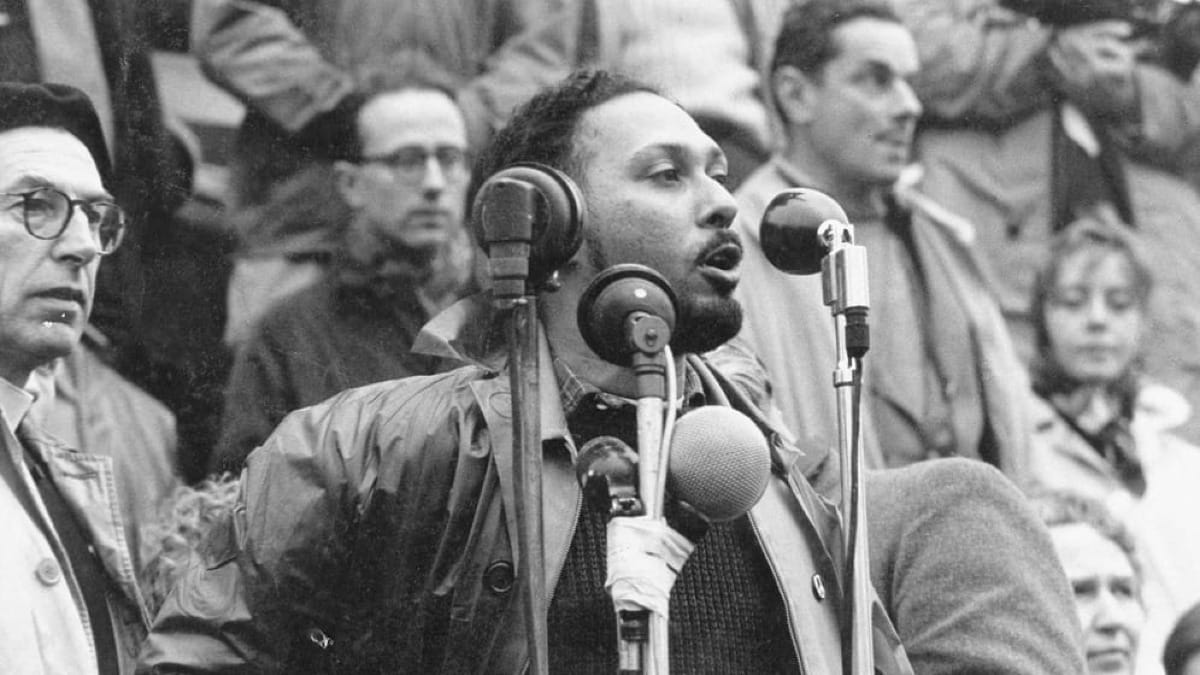
Stuart Hall, for his part, was the founder of the Birmingham school of cultural studies. Hall, who was born in Jamaica and was Black, was a champion of plasticity in the interpretation of culture and identity. For him, we are all at once consumers and producers of culture, and there is no "top-down" model of the spread—and above all, of the meaning—of culture. On the contrary, he developed the "encoding/decoding" model, in which any encoded cultural message can be read from a hegemonic/dominant position, which accepts the message's parameters as they were encoded; from a negotiated position, which accepts some elements and rejects others; and from an oppositional position, in which a message can be decoded against the grain—something that has fueled the practice of "queer reading" so common in LGBTQ+ readings of mass culture.
Hall was a follower of Gramsci, and had a deep interest in the construction and meanings of hegemony, which, just like Gramsci, he nonetheless didn't conceive of in absolute terms. That's why he developed a concept of conjuncture that blended the political, the economic and the cultural, and which he understood as a contingent "space of struggle" in which enormous energy was spent propping up the status quo against a whirlwind of forces that, given the right combination, could bring it down.
Finally, much of Hall's work deals with identity, and particularly with Caribbean racial and diasporic identity, shaped by the simultaneous presence of the Americas, Africa and Europe. In these writings he often engages in a kind of auto-ethnography and self-theorization that led him to develop a concept of dual identity: at once permanent, identified with a collective core understood as "the true self," and shifting, constantly reshaped by the pull of history. His concept of identity evolved from an essentialist idea to one of positioning shaped by conjuncture.
These two theorists, with their blend of analysis and political action, and their way of putting the cultural on equal footing with the political and the economic, would have an enormous influence on both Reynolds and Fisher, who were born in 1963 and 1968 respectively, and grew up during the years when Williams and Hall (born in 1921 and 1932) were developing their theoretical work.
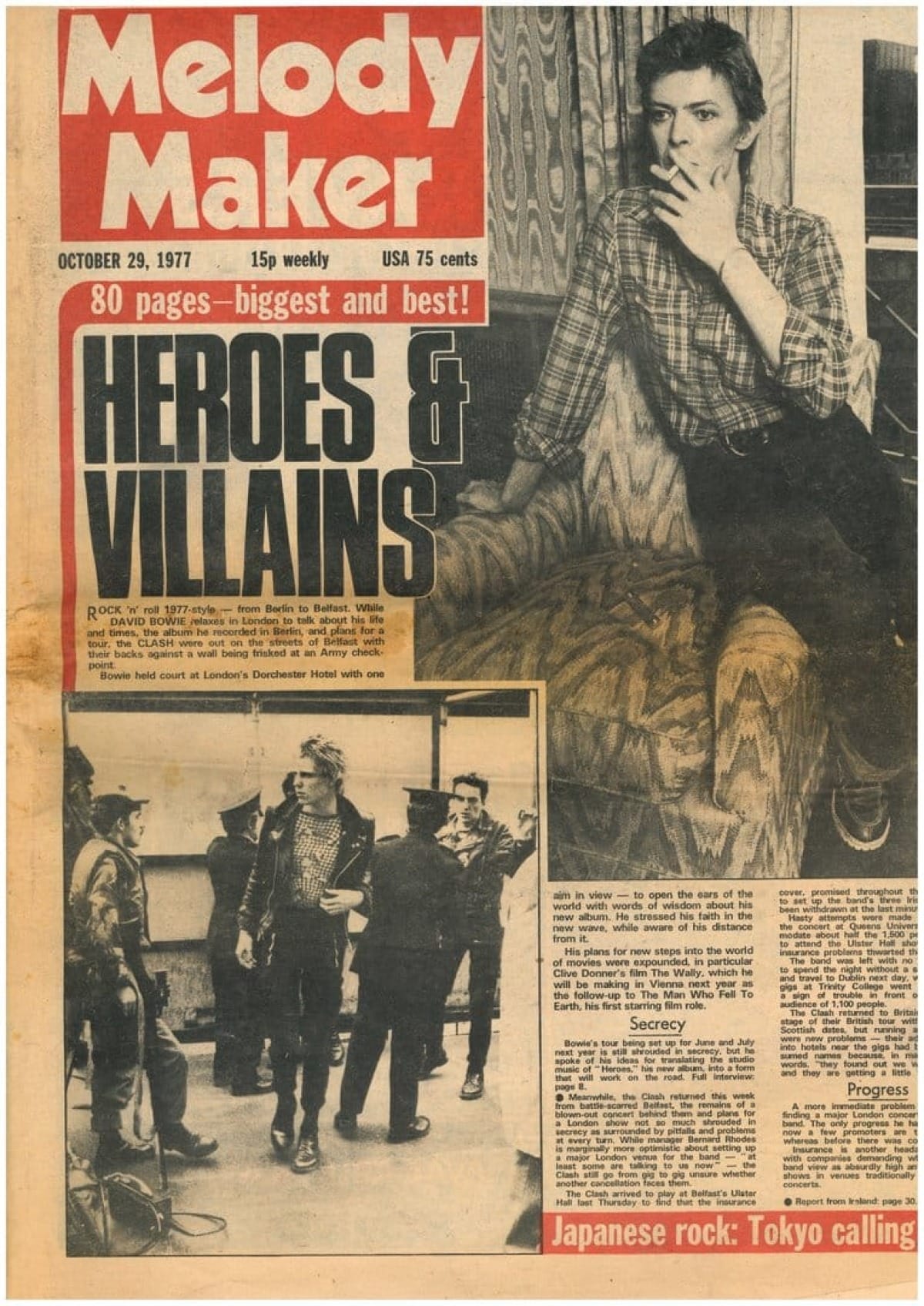
We have to start with Reynolds, since he was the first to step into the public arena, through a profession that was once vital in England and is now an endangered species: the music critic. Reynolds was lucky enough to be the right age to get hooked on punk in the late seventies, a crucial moment he would later return to in his writing. In the eighties he started working as a writer at Melody Maker, one of Britain's most prestigious music magazines and a rival of the New Musical Express. In his early columns he championed hip hop and a generally avant-garde idea of what could be done in pop culture, a concept that would structure his entire body of work.
In the nineties he got hooked on rave culture and the new electronic scene, and started writing columns that would later become his first history-slash-encyclopedia: Energy Flash: A Journey Through Rave Music and Dance Culture. There he develops one of his first concepts: the idea of the "hardcore continuum," that is, a continuity between the various dance music scenes in the UK and the US, in which each new sound that emerged pushed the boundaries of what you could dance to toward more experimental, avant-garde places.[1] This book also patented the style of his long-form work: Reynolds is a researcher who dives into a scene omnivorously, consuming as many sounds and as much data as possible, and then compartmentalizing it by era or regional scene. That's why his books are histories and handbooks at the same time, combining a deep knack for making connections and placing artists in a broader context with an astonishing tendency toward name-dropping, so that after reading them you walk away with a huge list of artists you've never heard and that he's managed to sell you on.
Reynolds is a researcher who dives into a scene omnivorously, consuming as many sounds and as much data as possible.
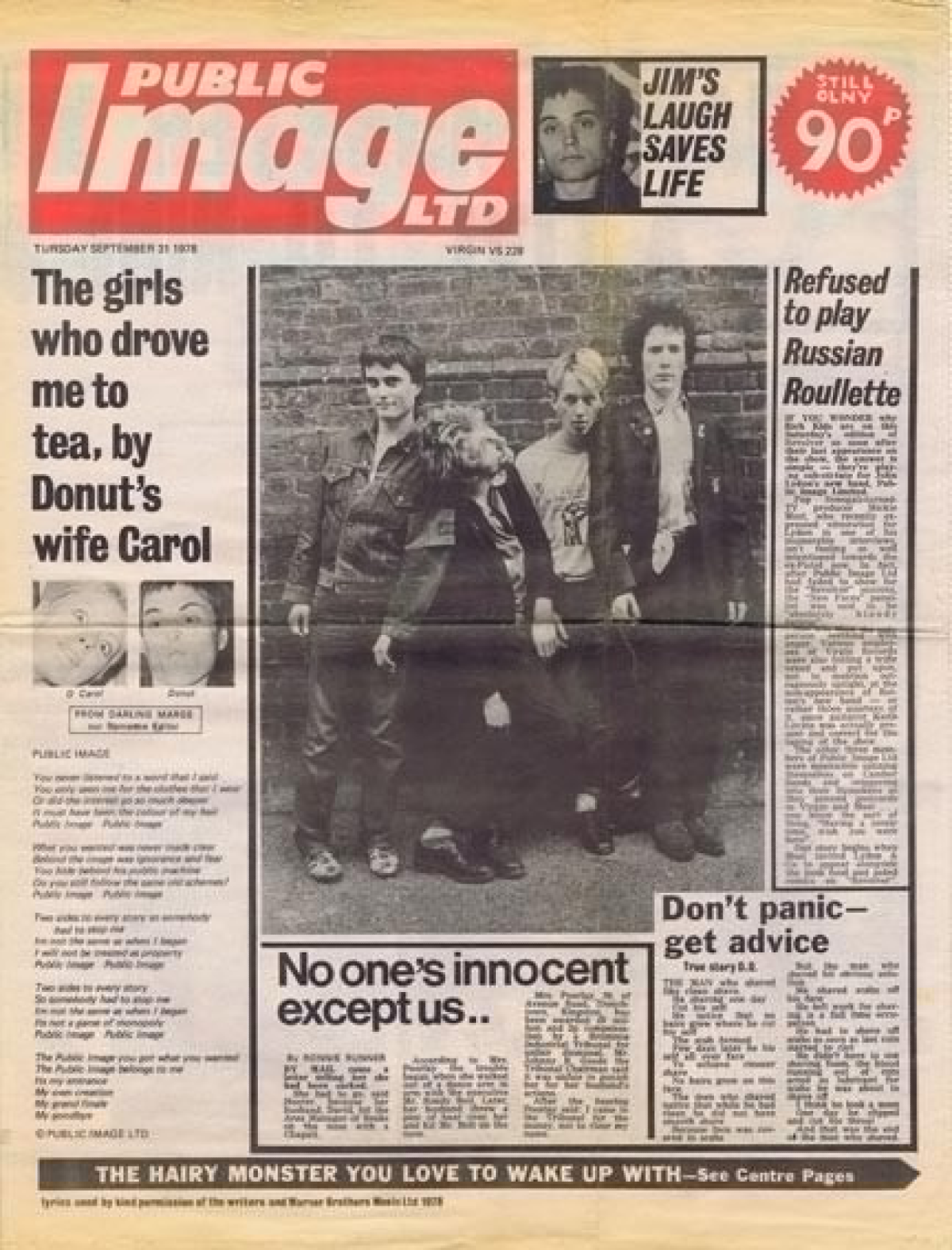
The next milestone in his career was the book many of us started reading him with: Rip It Up And Start Again: Postpunk 1978-1984, first published in 2005, a panoramic tour of the years of English and American post-punk that leaves no stone unturned and no scene unexplored. Reynolds's main thesis is simple: punk's promise of a new world, of being year zero for musical creation, of sweeping away the past and opening the door to a new, more diverse and experimental creativity, wasn't fulfilled in those few years of fury, but in what came immediately after. That's why the book's main, exemplary case study is PIL (Public Image Ltd.), the band John Lydon founded with Jah Wobble and Keith Levene, adding spectral dub, abrasive noise and tribal percussion to the sardonic rage Lydon had unleashed in the Sex Pistols.
And this seems like a good moment to bring in Fisher, who started to become known when he launched his blog k-punk, his magnum opus, in 2003. That doesn't mean he was a beginner: during the nineties he did his doctoral thesis and was a founding member of the Cybernetic Culture Research Unit, the place that spawned many of the ideas of accelerationism, the Dark Enlightenment and the numinous in capitalism that are common currency today, expressed above all by Nick Land, the new dark star of the new right. During that period he also became friends with Kode9, one of the pioneers of dubstep, a scene that would carry special weight and affection for him.
It's also important to bring in Fisher at this point because many of the ideas Reynolds expresses in his books about music—his desire for music that's always new, his affection for the future, his love for a pop culture that collapses the barriers between high and low, that is as sophisticated as elite culture—are summed up in a key Fisher concept: "popular modernism." For Fisher, the political and economic conditions of postwar England, and the triumph of the welfare state, allowed the working classes to get involved in cultural creation from a position that combined their popular origins with their exposure to modernism, to the avant-garde currents in film, theater, literature and contemporary music. The UK's network of decentralized art schools, which dated back to the nineteenth century but whose central role in fostering culture belongs to the postwar era, along with free university education, allowed broad swaths of the population who previously had no option but proletarianization to come into contact with avant-garde culture and mix it with their own lived experience. Out of this came movements like the angry young men, a group of working-class novelists and playwrights, rock and roll in all its infinite British variants, and the British Invasion of comic book writers. Artists who combined a taste for formal games with a proletarian edge, and who gave birth to much of the best British culture. At the same time, this popular modernism also found expression, for example, in the audiovisual and sonic experiments carried out by the BBC, such as Doctor Who.
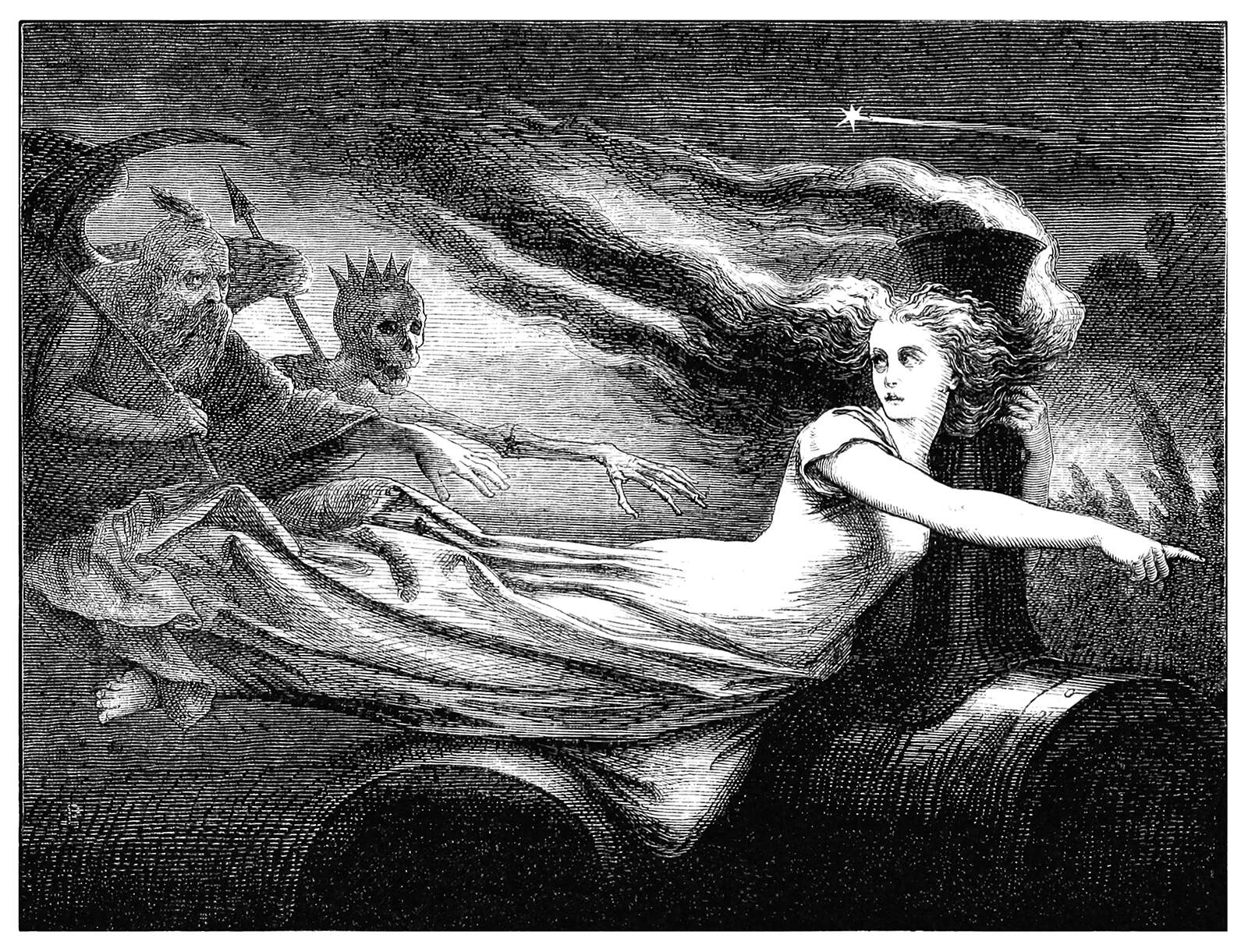
Fisher, though a contemporary of Reynolds, can be read as a second act, because he entered public life later. This is also tied to the great specter of his life: depression, which, as he himself wrote in Ghosts of My Life, made him feel like a good-for-nothing for a very long time. So Reynolds stands as a representative of the last gasp of music and cultural journalism as an institution capable of shaping taste in the UK, while Fisher appears as an avatar of the blog era, of the fragmentation of taste that makes any monoculture impossible but also allows for highly personal, iconoclastic voices interested in digging around in the margins. Those of us who discovered Fisher through early readings of k-punk were struck by his pulp-modernist interpretation of The Fall, or by his reading of Basic Instinct, informed by Marxism and French poststructuralism.
From this point on, you can talk about a Reynolds-Fisher dialogue. In 2011 Reynolds published one of his most popular books, the one with the heaviest theoretical load, and maybe also one of the most debatable: Retromania. The book's diagnosis is simple: pop culture has become addicted to its own past and has stopped producing new things, switching instead to generating iterations, remixes and revivals of that past. On the one hand, the book put its finger on the pulse of a phenomenon so recognizable and so ubiquitous that many of its ideas have become common sense, popularizing concepts like the 20-year gap (every culture and every style will become popular again 20 years after it first appeared). On the other, its diagnosis has a dimension of bitterness and nostalgia that is depressing, leaves you uneasy, and makes you want to argue with it.
It's a diagnosis Fisher also reached around the same time, in a post titled “Is Pop Undead?”[2] in which he said, correctly, that nothing ever fully dies in culture. All cultural scenes, all living and fertile expressions, at some point “reach dead ends, stop renewing themselves, ossify into tradition. They don't disappear, they remain undead.”[3] For him, the pop culture of the 2000s had lost “the capacity for nihilation, for producing new potentials through the negation of what already exists.”[4] Here Fisher writes like an Adornian for whom what matters most is negative dialectics, the moment of irresolvable conflict between the universal and the particular, for which the work of art is fully fertile ground. Fisher hated the invitation to pure hedonism hidden in poptimism, and saw it as the Trojan horse of cultural neoliberalism. For him, resentment and negativity were key emotions in cultural development.
Fisher hated the invitation to pure hedonism hidden in poptimism, and saw it as the Trojan horse of cultural neoliberalism.
Because here there's also a central common ground between the two, a strange nostalgia never fully processed or owned up to: for both, the key moment of culture, culture-as-future, unfolds between the seventies and the nineties, and is tied to specific scenes and expressions: post-punk and electronic music for Reynolds; the protest culture of the seventies, popular modernism and, yes, post-punk for Fisher. A conjuncture in which politics, economics and pop culture clicked to crack open the door to new possible worlds.

For Fisher, moreover, it's not just pop culture that's in a zombie state but neoliberalism itself, which triumphed so thoroughly post-Thatcher in England, post civic-military dictatorship in Argentina, and post collapse of the Soviet bloc worldwide. Out of this diagnosis and the 2008 Financial Crisis, Fisher wrote his big hit, his book diagnosing the present: Capitalist Realism, published in 2009. The book argues that capitalism has instilled the feeling that there is no outside to it, that there is no alternative, and that any kind of struggle against the system is quickly absorbed by it. Capitalism is the only possible reality. The book's diagnosis is precise, and it breaks down into several levels: the sense that the future and utopia have been canceled, the demobilization of protest movements, the mental health crisis, the replacement of work with endless bureaucratic procedures, the lack of a capitalist headquarters to direct one's fury at. Like authors such as Fredric Jameson and Luc Boltanski, Fisher finds that neoliberal capitalism's great trick was to swap postwar job security, which the generation of '68 saw as stifling, for an increasingly degraded promise of freedom. The idea that, in theory, we can be whatever we want, while in practice our options keep shrinking and the only thing that progresses is precarity.[5]
At the same time, Fisher and Reynolds converge in their use of a notion borrowed from the post-structuralist thinker Jacques Derrida: hauntology. This concept, a blend of the words “haunt” and ontology (the branch of philosophy that studies the nature of existence and reality), first appears in Derrida's 1993 book Specters of Marx. There, the Frenchman uses it to conceptualize the way Marxism always appears as modernity's great negated other, to show how it haunts Western civilization even beyond death, even when actually existing socialism has collapsed for good, through its promise, its never-realized potential.

Fisher, deeply interested in weird fiction and horror that stages the unrepresentable, would take up the concept to illustrate how the triumph of capitalist realism entails the cancellation of the future and the spectral appearance of “lost futures” promised by the avant-gardes and countercultures of the 20th century: the return to nature, communitarianism, popular modernism, liberty, equality, fraternity. As he writes: “Everything that exists is possible only on the basis of a series of absences, which precede it, surround it, and allow it to possess intelligibility.”[6]
Reynolds, for his part, particularly interested in the texture of music, uses the concept in a way tied to a certain kind of materiality associated with recording: the marks that bygone musics leave on the music of the present. A specter that has more to do with the crackle of the needle on vinyl, with the appearance of field recordings or library music in contemporary songs, with sampling, with a superimposed sonic ghost. As he writes in Retromania: “Recording has always had a spectral undercurrent. As audio-technology scholar Jonathan Sterne points out, recording separated the human voice from the living body for the first time (…) Phonographs held out the prospect of a kind of immortality: the possibility that our voices might one day be heard by the ‘not yet born.’”[7] But at the same time, Reynolds also finds hauntology in sampling, on the face of it one of music's most modern operations. Once again, from Retromania: “Made up of looped moments that are themselves portals to remote times, the sample collage creates a musical event that never happened; a strange blend of time travel and séance.”[8]
What's interesting is that, although Reynolds rejects the mash up and indiscriminate sampling as zero-calorie recombinations of the predictable, he finds in the traces of other musics in the work of intellectual pranksters like The KLF, and of spectral crate diggers like the musicians on the Ghost Box label, a way out of the repetition of the same in music culture… even if they use fragments of the past. Unlike Fisher's, his chapters on musical hauntology are among the most optimistic in Retromania.
Now, back to Fisher: the last book he published in his lifetime was Ghosts of My Life, where he developed his thinking on the hauntological at length. But there he also began raising some questions that formed the flip side of the diagnosis he'd made in Capitalist Realism: how do we get out of the mess neoliberalism had gotten us into? How do we take back our lives, our time? In Ghosts… he mounts a defense of resentment as a Marxist affect. Fisher's position is that the anhedonia and depression of contemporary societies is an affect carefully manufactured to rule out from the get-go any gesture toward liberation, but that “the difference between resenting the ruling class and envying it is that jealousy implies a desire to become the ruling class, while resentment suggests a fury at its possession of resources and privilege. (…) Resentment of privilege and injustice is in many cases the first step toward confronting internalized, taken-for-granted feelings of inferiority.”[9]
Back in 2013, he had also published one of his most cited and prescient texts, Exiting The Vampire’s Castle, in which he was already taking aim at the left's “cancel culture,” noting that it was driven by “a priest's desire to excommunicate and condemn, an academic-pedant's desire to be the first to be seen to spot a mistake, and a hipster's desire to be one of the in-crowd.”[10] His call was to build class solidarity ahead of identity differences. Loved and hated in equal measure, the text still burns as a diagnosis of how problematic the dynamics of fragmentation and exclusion within part of the left are.
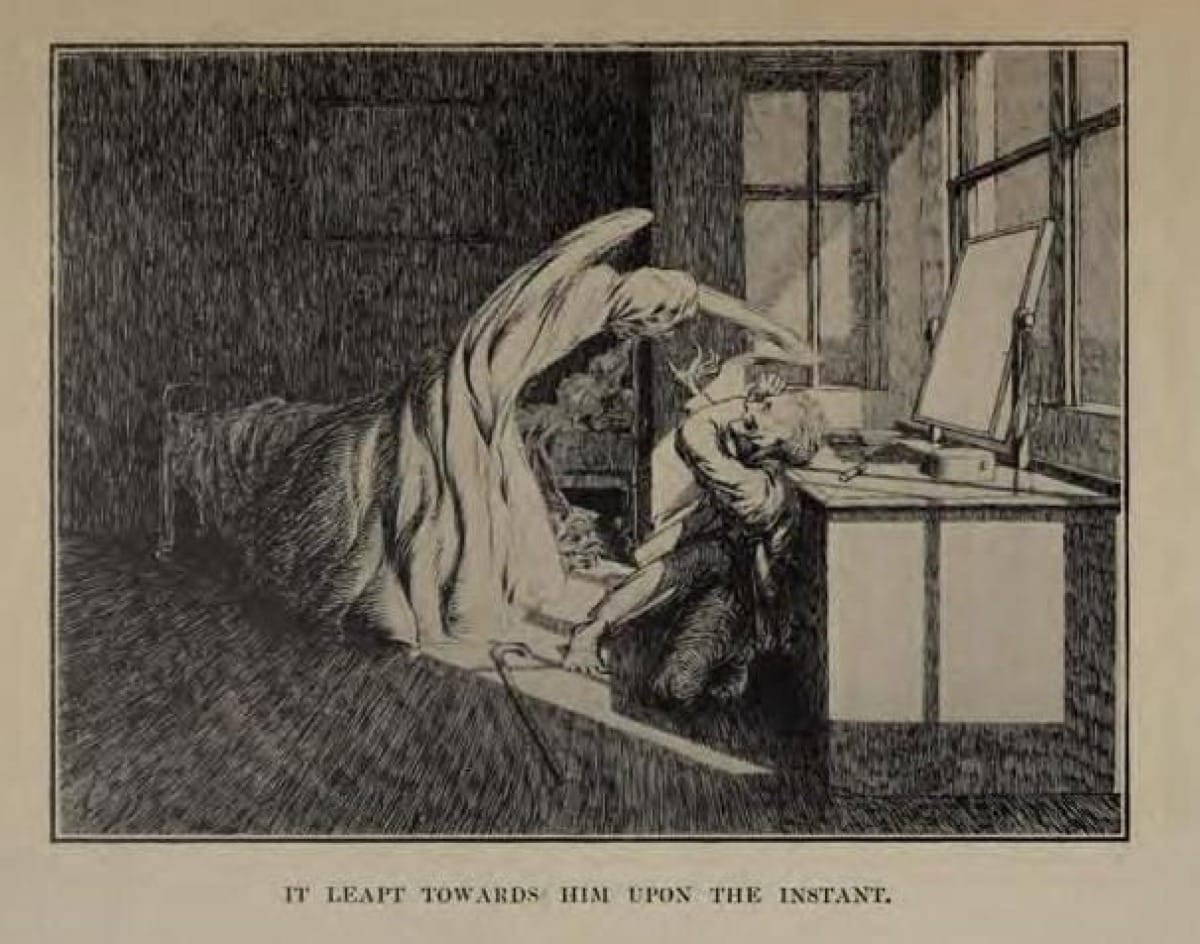
In January 2017 Fisher took his own life, overwhelmed by depression. At the time, he was working on a book/manifesto titled Acid Communism in which he was going to propose a program for reclaiming the future. What remains of that project is a long introduction in which Fisher goes back to the sixties and the counterculture to recover the disruptive potential of psychedelia, of the abolition of linear time offered by LSD and transcendental trips, something to pull us out of neoliberalism's pretending-to-be-productive-while-dying-inside. A return to a hinge moment when the world seemed full of possibilities. Though it's only a sketch, one of its most interesting ideas is the suggestion that capitalism, far from being a system that produces abundance, is designed to prevent it, to make us live in a constant state of artificial scarcity that blocks sharing and communitarianism. It's a bitter irony that Fisher left the stage just as he was trying to rebuild the future.
Capitalism, far from being a system that produces abundance, is designed to prevent it, to make us live in a constant state of artificial scarcity.
Meanwhile, Reynolds's latest works seem bent on filling the cultural holes in his autobiography, beyond his years in electronic music and post-punk, as if he were writing an In Search of Lost Time of music criticism. So Shock and Awe, his X-ray of the glam scene, reads as a return to his pre-teen formative years, which were also the years when England let itself dream in sequins and makeup, escape the island's rainy gray and feed its fantasies. It's also a way of saying goodbye to Bowie, the great English artist of the 20th century, the one who best embodied pop music's capacity to always be different. Adopting a style more biographical than analytical, the book seems aimed at a reader who values journalism more than theoretical musings. Although at times it stretches the definition of glam so far that it ends up taking in all of seventies pre-punk rock, within Reynolds's long-haul body of work it's a book that completes the puzzle. Then came Futuromania, his attempt to argue with himself and provide the antidote to the melancholy and frustration of Retromania. And yet it's also bitterly ironic that this book is made up mostly of previously published articles.
His most recent work, published this year, is titled Still In A Dream: Shoegaze, Slackers and the Reinvention of Rock (1984-1994). It reads like a simultaneous settling of scores with his past self and with the demands of the present. On the one hand, because it picks up the thread right where Rip It Up leaves off; on the other, because back in the eighties Reynolds held a critical stance pretty much opposed to what he saw as indie's conservatism. It's a book in which a mature writer returns to the prejudices of his youth and finds something valuable in what he once saw as retrograde. But at the same time, it's a book born of young people's recent obsession with shoegaze, with the desire to sink beneath anesthetic layers of sound, something that takes us back to the world of sensations evoked by the title of Reynolds's first book: Blissed Out, meaning something like "in a state of absolute happiness," which only prolonged immersion in atmospheric music can deliver us to.
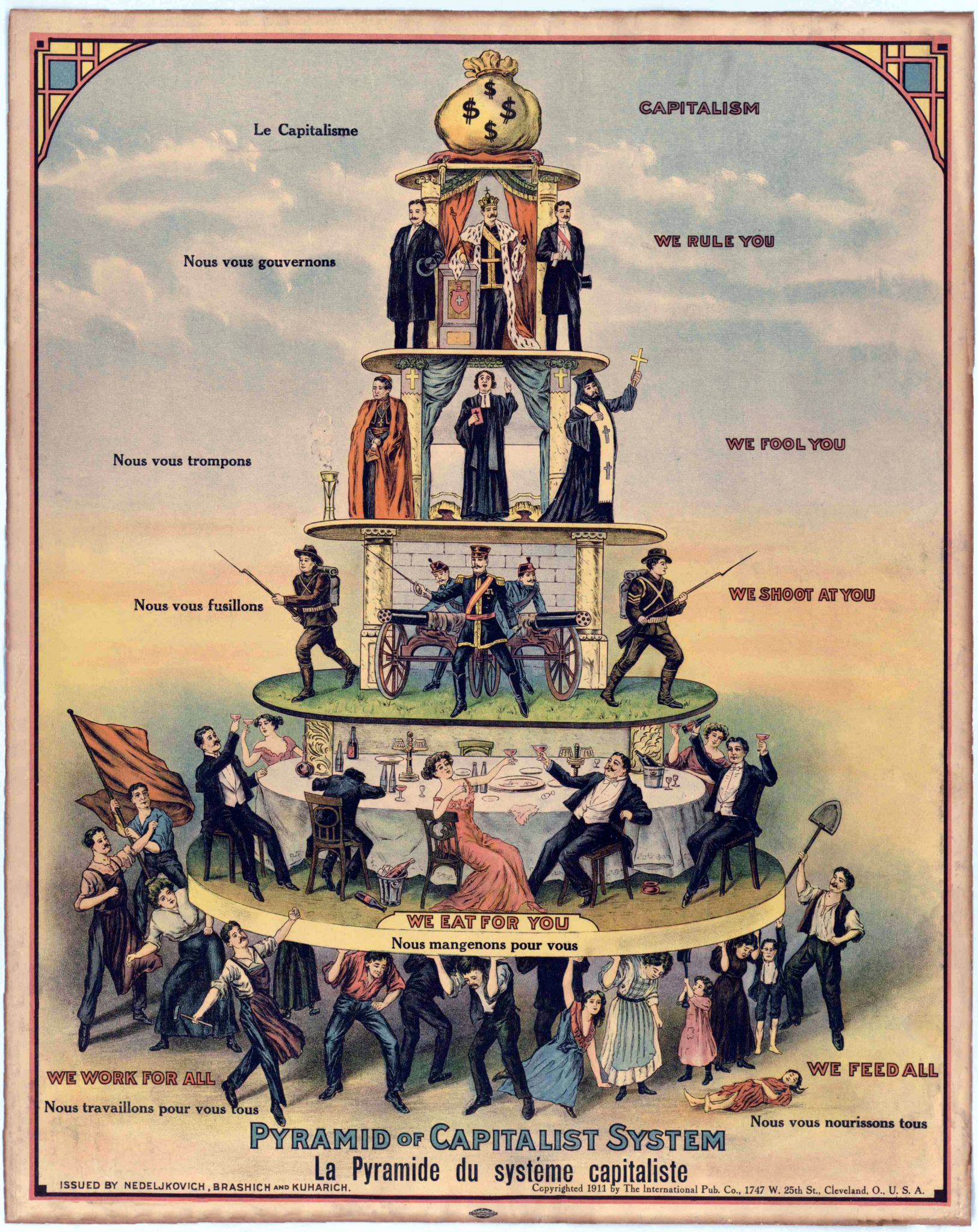
Many of the diagnoses put forward by these two theorists and critics remain open: how do you build an alternative to capitalist realism? How do we get out of the eternal repetition of the same in pop culture? What concrete organizational forms will let us become politically effective again? How do we rebuild a conjuncture in which politics and culture work together to bring a new world into being? These are pressing questions for which the left still has no concrete, more-or-less agreed-upon program of action. We coexist with ghosts, we gesture in the dark, we follow in the footsteps of the disappeared, in search of a political and cultural emancipation and illumination that, if we listen to Fisher and Reynolds, are one and the same.
[1] It was also during this period that Reynolds coined the term "post-rock" to describe a number of bands, such as Slint, Tortoise, Stereolab and Gastr del Sol, that used rock instruments for purposes closer to jazz improvisation, with an emphasis on textures and moods.
[2] Included in K-Punk Volumen 2. Escritos reunidos inéditos (Música y política), Caja Negra, 2022.
[3] Fisher, K-Punk Volumen 2, p. 108.
[4] Fisher, K-Punk Volumen 2, p. 111.
[5] Today, people even talk not about the "proletariat" but about the "precariat," particularly in the creative professions and those tied to the social sciences and the humanities.
[6] Fisher, Ghosts of My Life, pp. 43-44.
[7] Reynolds, Retromania, p. 332.
[8] Reynolds, Retromania, p. 333.
[9] Ghosts, 274.
[10] Fisher, Exiting The Vampire’s Castle, https://web.archive.org/web/20131129003704/https://thenorthstar.info/?p=11299.
Y a cada colaborador se le paga por su trabajo. Las dos cosas dependen de los suscriptores.