Can a house be bigger on the inside than on the outside? Discover The House of Leaves, the novel that inspired the horror of the movie Backrooms, among other productions. A disturbing journey into impossible spaces, obsessions, and the abyss of our own souls.
One thing I'm sure of: it doesn't happen right away. They'll finish reading and forget, until a moment comes, maybe in a month, maybe a year, maybe even several years. They'll be sick or troubled or deeply in love or filled with silent uncertainty or even satisfied for the first time in their lives. It won't matter. Without warning, without being able to pinpoint the cause, they'll suddenly realize that things aren't as they perceived them.
Mark Z. Danielewski, The House of Leaves.
The House of Leaves, by Mark Z. Danielewski, is a book and yet many things at once: a horror novel, a love story, a family saga, a satire on academic criticism, and an essay on literature, physics, philosophy, and the nature of fear, among other topics.
Danielewski published The House of Leaves in 2000, after a decade spent writing it. Since then, it has become a cult book. Even before it hit the shelves, it was being read outside the traditional circuit: fragments of the novel had been uploaded to the internet, and it was said that printed copies circulated hand to hand in nightclubs and tattoo parlors, not unlike the ones frequented by Johnny Truant, one of its narrators. Twenty-five years later, the novel continues to move in the same way: from reader to reader.
I first heard about the book early last year. It had been recommended to me, but it was hard to find. It's long, printed in color, and much of its pages have footnotes, diagrams, and pages intervened in strange formats that make it very uncomfortable to read digitally. With little expectation, I mentioned on social media that I wanted to read it. Almost instantly, a copy materialized. An acquaintance who had read it felt it was his responsibility to get it to me, and less than a week later, I was receiving it at my door, as if I had summoned it.
It's long, printed in color, and much of its pages have footnotes, diagrams, and pages intervened in strange formats that make it very uncomfortable to read digitally.
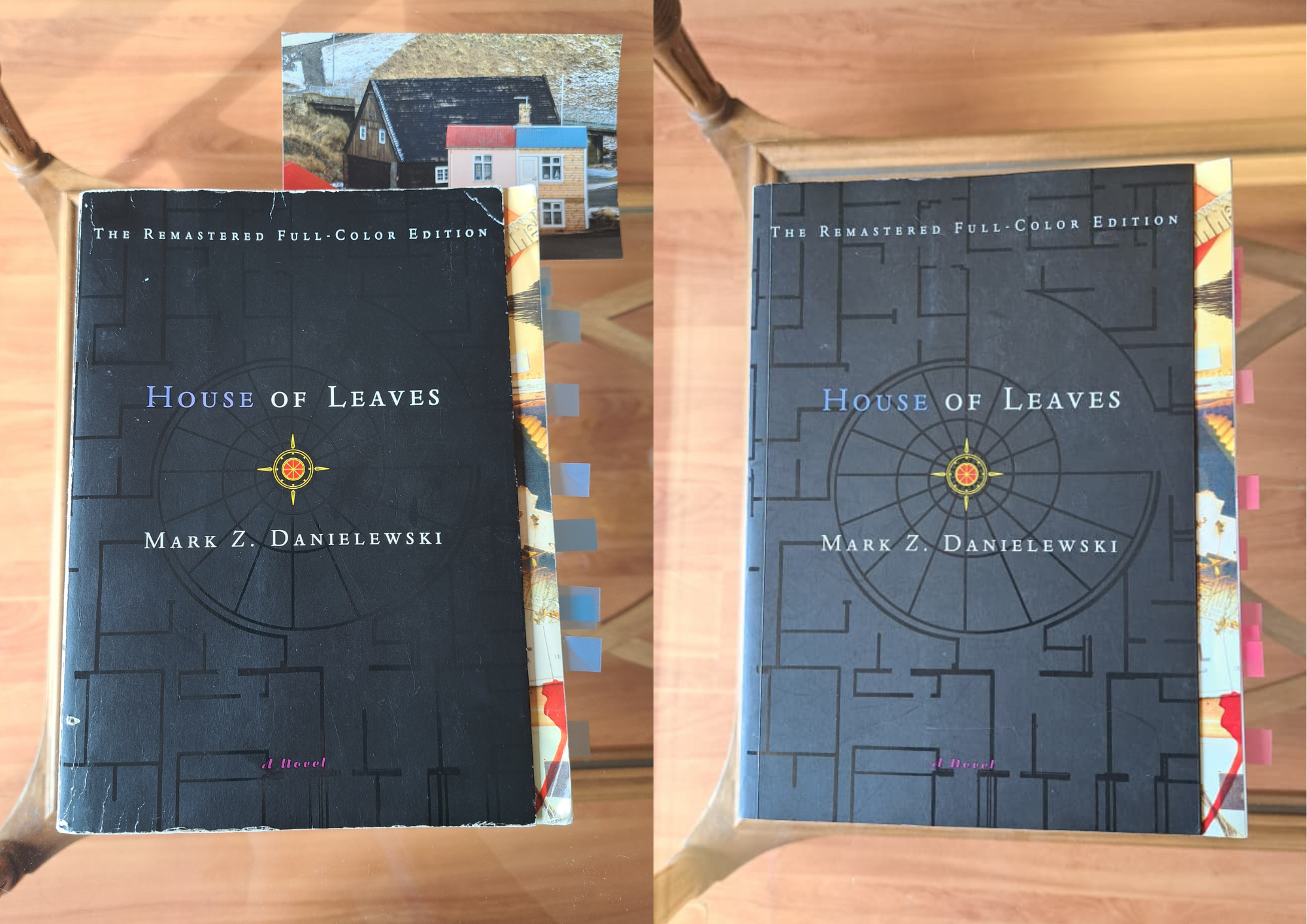
I spent the next month completely immersed in the novel. Due to its size, it was hard to take it out of the house, so I read it every night before sleeping. Every time I closed the book, I lay awake thinking about what I had read. Before I reached the halfway point, I realized I didn't want to return it: I wanted it to stay at home, to be able to annotate it and fold the pages without guilt. I ended up ordering my own copy, and while I waited for it to arrive, I marked passages with post-its that I could peel off and transfer to the new book. So, when I finally returned the loan, I did so with the assurance that I already had an identical copy in my library.
This book circulates like this, by contagion. This note is my attempt (and responsibility) to keep it going.
Old copy, new copy.
Notes for a labyrinth
If the labyrinth is a house, who lives inside?
Mark Z. Danielewski, The House of Leaves.
At first glance, The House of Leaves tells a simple story that refers to other works of horror. Will Navidson is a photojournalist who decides to retreat and move to a house in the countryside to spend more time with his family and mend his marriage. He wants to document this new chapter of his life, so he starts filming the first days in his new home. But he soon captures an impossible anomaly: when measuring the house, he discovers that it is a few centimeters larger on the inside than on the outside.
What starts as a possible measurement error soon becomes something more unsettling: doors appear that didn't exist before, opening into tunnels of infinite darkness. Navidson organizes an expedition into that unknown space of his own house. But it's very easy to get lost in that black expanse, which has at its center an endless staircase. As he descends, he begins to hear noises. There is something, or someone, in that labyrinth.
That story is just the first layer and comes to us through a manuscript by an old blind man, Zampanò, who analyzes The Navidson Record, a supposed documentary in the style of found footage about the Navidson family's experience. In its pages, Zampanò includes several quotes from famous figures discussing the film, such as Stephen King, Stanley Kubrick, Anne Rice, and Jacques Derrida, among others. The problem is that this film does not exist. Or so claims Johnny Truant, a young tattoo artist who finds the manuscript after Zampanò's death and becomes obsessed with it. As he reads on, Truant begins to document his own paranoid experiences and childhood memories as reading notes. There is a parallel between him, Zampanò, and Navidson in their self-destructive fascination with the house. And the monstrous presence that Navidson encounters seems to linger outside those hallways as well.
On top of those three main voices, other appendices overlap: editor's notes, poems, letters, word indexes, apocryphal bibliographies, nonexistent interviews, and contradictory testimonies. The footnotes progressively devour the “original manuscript” and turn the book's very structure into a labyrinth. The novel presents itself as an investigation, but each new document makes it harder to determine which part of the story is the “true” one and which was invented by someone else.
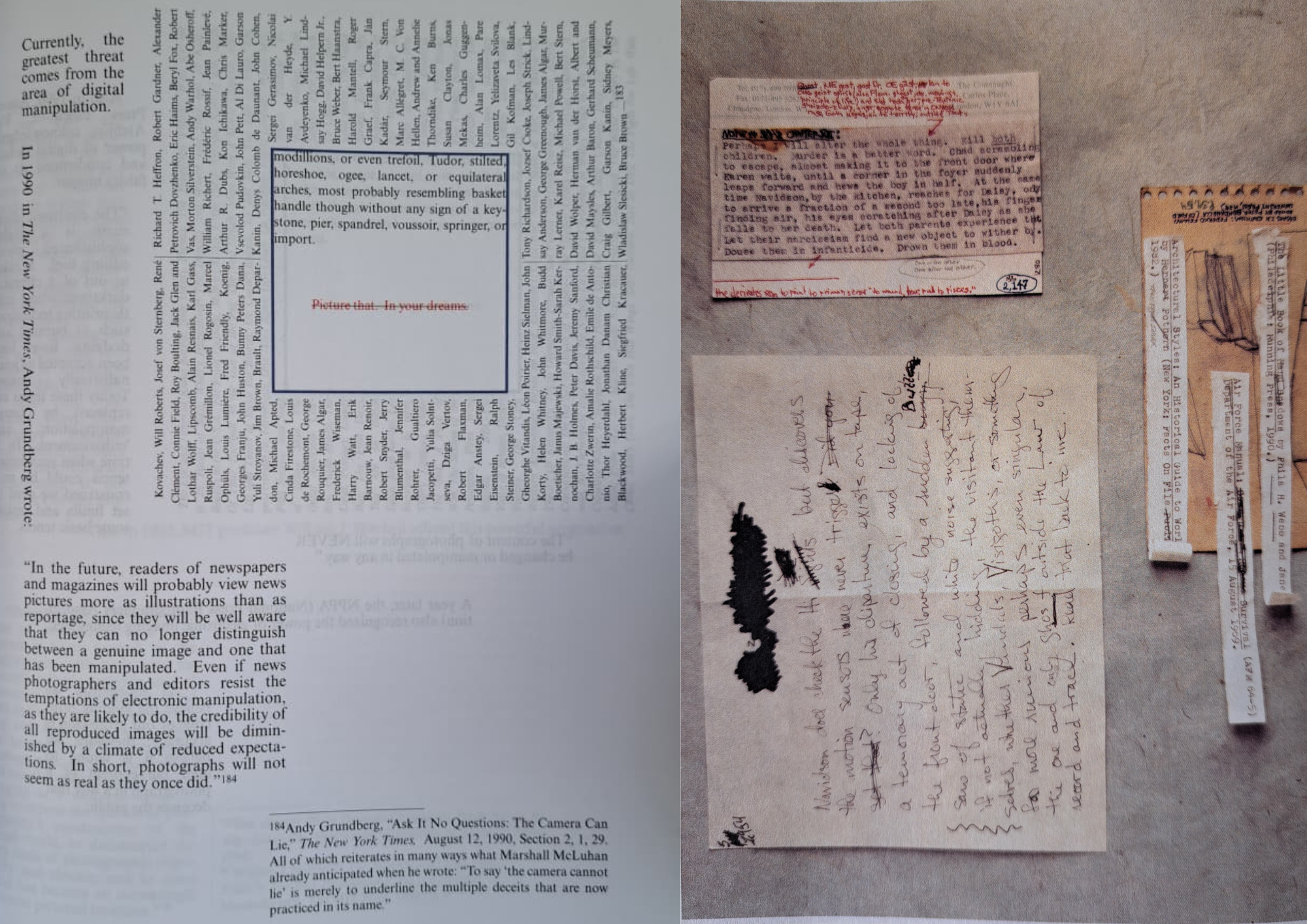
The first image illustrates the chaotic use of footnotes in Zampanò’s manuscript. The second is taken from “Appendix 1: Zampanò,” which compiles diary entries, poems, and even a letter to the editor.
At the beginning of the book, Zampanò writes: with the technology we have today and our editing capabilities, how can we know what is real? In parallel, Johnny Truant wonders: could he and Zampanò be characters in someone else's story?
Living spaces: a house with a name
Perhaps I created the stars and the Sun and the enormous house, but I no longer remember.
Jorge Luis Borges, “The House of Asterion.”
When asked in an interview if House of Leaves is based on his childhood home, Danielewski responds:
Absolutely. There were many rooms we knew were off-limits and passages that were too frightening to enter alone. Moreover, the spatial nature and dimensions of that house changed constantly. At one moment it felt warm and inviting, and our father would say: “They’re wonderful! They’re the best! They’re going to be great artists, and we must make sure they go to great universities.” Then, without warning, everything would turn cold and dark, and the promise of the future would crumble.
It’s no surprise that Mark K. Danielewski seamlessly blends the figure of the house with that of his father. He mentioned him many times as an influence, for better or worse, on his work. His dad, Tad Danielewski, was a well-known film director in the industry who, like Will Navidson, also filmed a movie that went missing. It was a documentary, Spain: Open Door, that was confiscated by the Francoist government (though there is a myth about a supposed hidden copy).
Another anecdote Mark shares about his father is from 1990, when, while Tad was hospitalized, he gifted him a story he had written on the way to visit him. The story was called “Redwood” and was something between a novella and a script that articulated the conflicting emotions he felt towards his father. Tad didn’t like it. He criticized Mark for writing about him, told him it was worthless, and that he should pursue something else. Mark ended up tearing up that manuscript, but his sister Anne rescued it from the trash, pieced it back together, and returned it to him. When asked what part of that story ended up in House of Leaves, Mark replies:
It wouldn’t be entirely accurate to say that the novel ‘originated’ in Redwood, in the sense that Redwood directly anticipated what I later did in the novel. Rather, Redwood had a certain spectral presence as I began my formal quest for the novel.
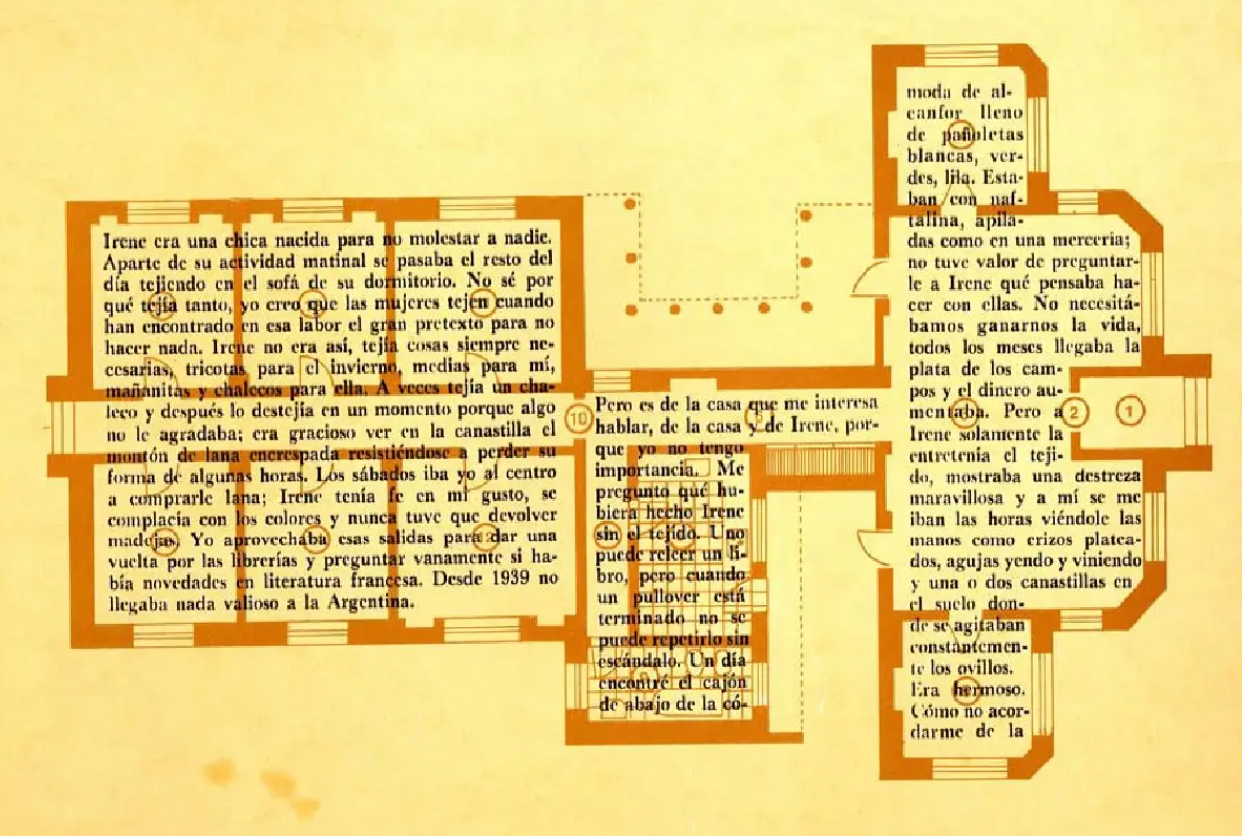
The edition of Squatted House (Julio Cortázar) illustrated by Juan Fresán (1969), in which the page is “taken over” by the text, seems to foreshadow the enveloping movement of the footnotes in The House of Leaves.
When Tad passed away, his children discovered through his will (written before Mark’s story) that he wanted his ashes scattered in a redwood forest. It was on the way back from fulfilling that last wish that Mark Danielewski had his first vision of a house larger on the inside than on the outside. Years later, he would realize that this was the place where the ideas and characters he had been living with for the past few months resided:
My unconscious had shown me how all the threads of meaning I had been exploring (all those variations and ideas about memory, death, art and life, youth and old age, the nature of fear, and so many other things), as well as all the plots I had become entangled in, could be condensed into a single icon.
The liminal horror
The house that Danielewski imagines after his father’s funeral, with its doors leading nowhere and its infinite stairs and hallways, can be understood as a “liminal space.” Liminal spaces are places of transition, thresholds from one state or place to another. One doesn’t go to these places to stay; they are zones of passage. But what happens when these spaces lead nowhere?
Source: subreddit r/LiminalSpace.
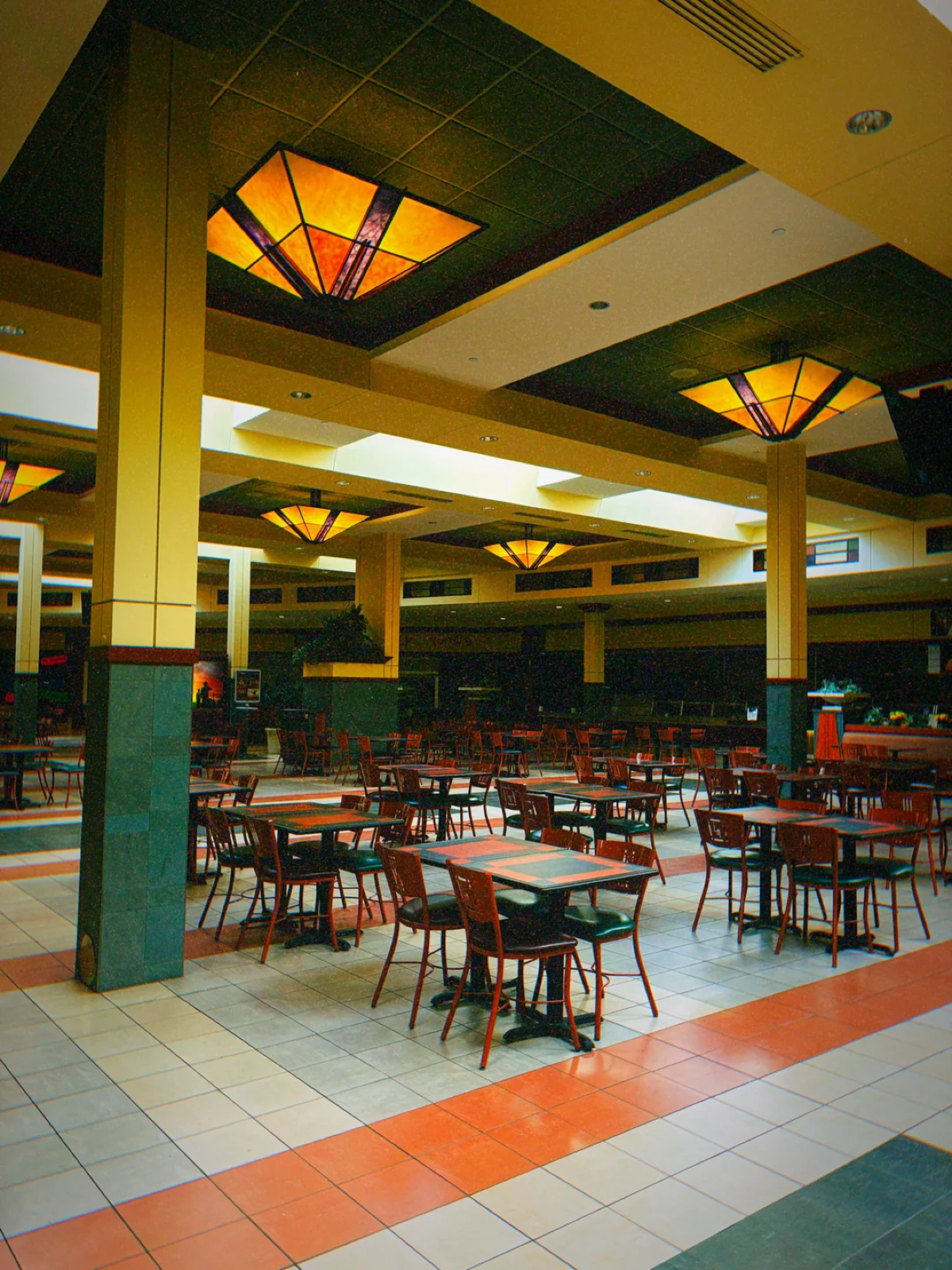
In the aesthetics of the Internet, there is a fixation on empty or abandoned liminal spaces, lacking a clear purpose: like an office without people, computers, or furniture; or a shopping mall at night, with closed stores and empty food courts. They are environments stripped of any human aspect. They create discomfort, giving the impression that they shouldn’t exist or that we shouldn’t be there at that moment. They can also evoke nostalgia, as they are places we recognize and that evoke memories. It feels like we’ve been in that pool, garage, or waiting room before. We can remember its smell, texture, sound, even if we’ve never actually been in that place.
Liminal horror appears when those places break with the expected. If the ominous arises from the distortion of the familiar, in this case, it occurs because we encounter a type of space we’ve seen thousands of times before but suddenly feels “wrongly drawn.” A hallway that extends indefinitely, a door that leads nowhere, a room where the geometry makes no sense. Something is off, but we can’t explain it, and that produces a sense of uncanny valley, because it is both familiar and strange. It raises the question of who built that nonsensical, inhuman architecture, and for what purpose.
The hallways that Navidson explores within his house also follow no apparent logic. They serve no purpose and contain nothing inside. They are miles and miles of empty tunnels and caves, whose dimensions change randomly. It's hard to convey their immeasurable nature, the feeling of infinite emptiness. Perhaps that's why House of Leaves is considered impossible to adapt to film with the same results as the book.
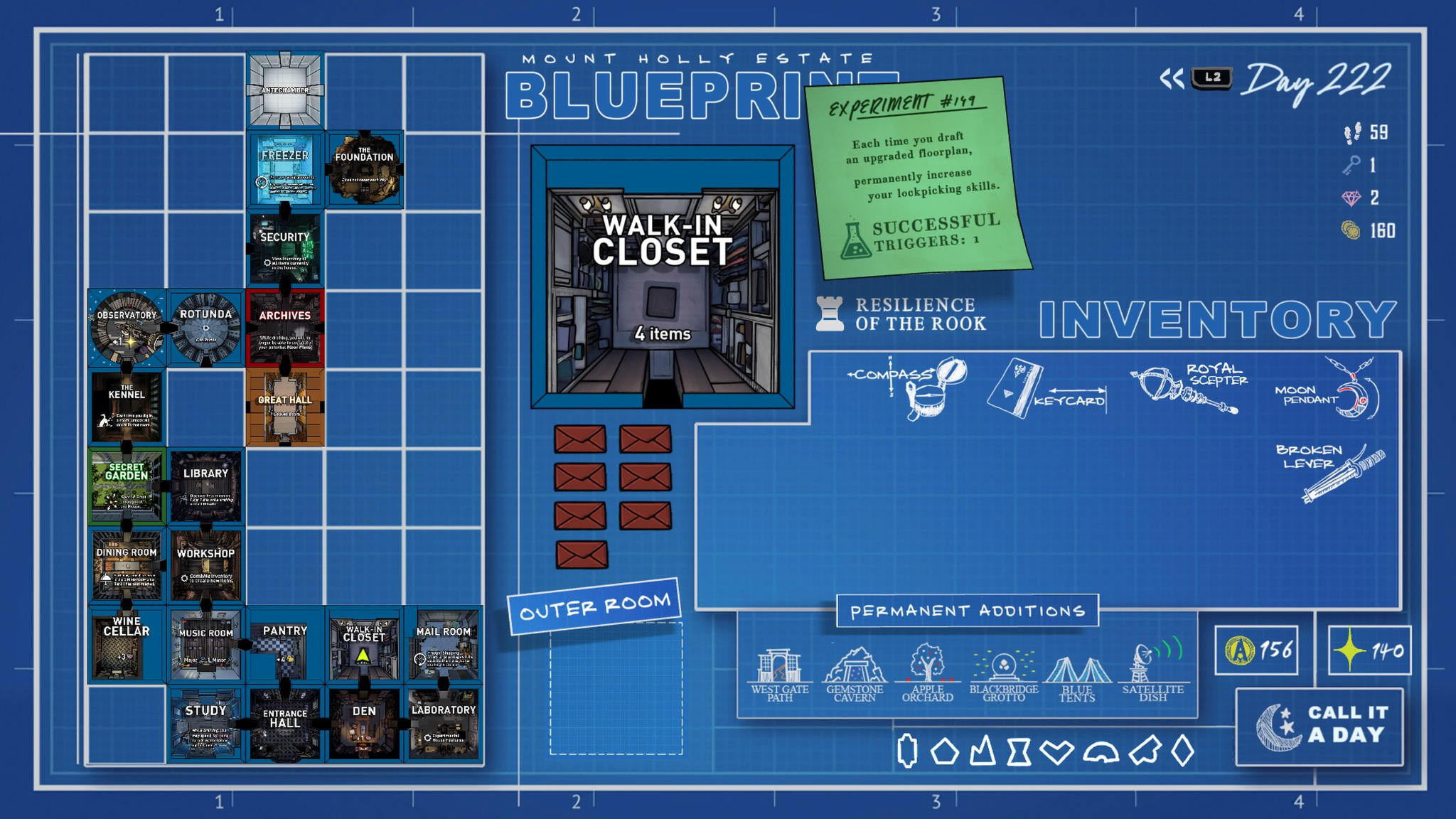
Although there isn't a movie of the novel, there are other works inspired by the book, especially games. There is a mod for Doom II released in 2023, called MyHouse.wad, which cites Danielewski's novel as a reference: the game centers on a house that constantly changes in unsettling ways, creating “impossible” spaces. Other games, such as The Stanley Parable (2013) or Beginner’s Guide (2015), created by Davey Wreden, replicate the feeling of being trapped in liminal spaces outside of time, incomplete or broken simulations from which there is no escape, or desolate worlds. In another example, Blue Prince (2025), a character inherits a mansion and must find room number 46 to keep his inheritance, with the obstacle that the house reconfigures itself every night; to progress, the player must sketch the layout (blueprint) of rooms over and over again. The creator of Blue Prince cites a different book than House of Leaves as an influence but with the same labyrinthine logic, Laberinto: Resuelve el rompecabezas más desafiante del mundo (1985), where each page represents a room or hypothetical space in a house, which can lead to other rooms or dead ends.
The Blue Prince map, which shows the rooms you sketch as you progress.
Some of that interactive game logic is present in Danielewski's novel, which has a non-linear reading experience through interconnected “hypertexts.” In the late nineties, at a time when digital was becoming increasingly important, Danielewski became interested in branched reading methods, where a user could choose their path. It’s no coincidence that every mention of the house within the novel is in blue, just like a hyperlink (or a blueprint).
In all the mentioned games, architecture is presented as something unstable. It’s a living entity that grows and mutates, a projection of whoever traverses it. But perhaps the closest adaptation of House of Leaves is one that was collectively written on the Internet: the Backrooms, a digital folklore phenomenon that began as an anonymous post online and evolved into the film of the same name released this year.
The Backrooms: going "behind" reality
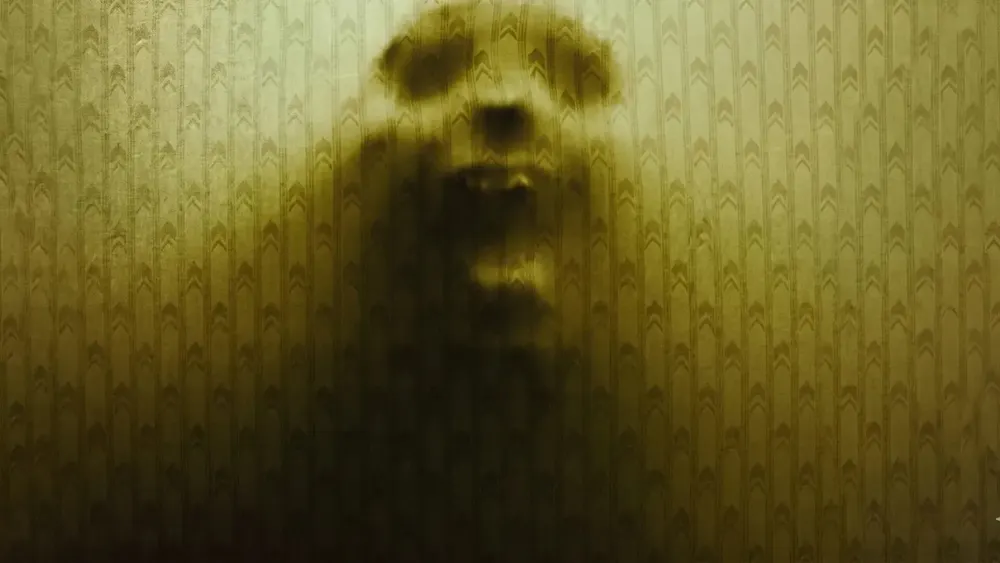
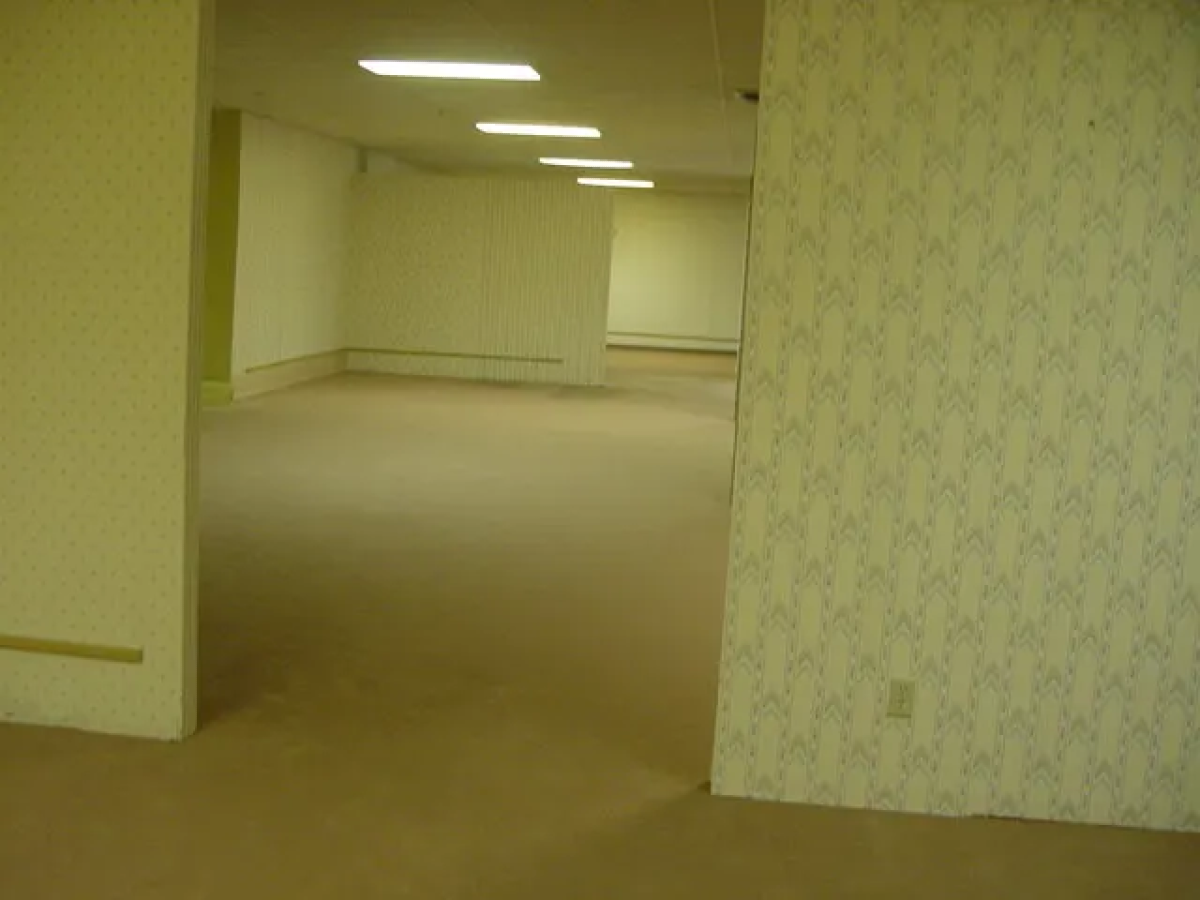
The Backrooms originated on the Internet from an anonymous image posted on 4chan in 2018: an empty office, illuminated by fluorescent tubes, strangely familiar yet unsettling. In 2019, another user added text to that photo that would end up defining the myth.
"If you're not careful and use noclip outside of reality in the wrong place, you'll end up in the Backrooms, where there's nothing but the musty smell of an old carpet, the madness of monochromatic yellow, the incessant hum of fluorescent tubes at full blast, and some six hundred million square miles of empty rooms, randomly segmented, in which to get trapped. May God help you if you hear something lurking nearby, because you can be sure that it has already heard you" (Anonymous).
The idea of noclip comes from video games and designates the ability to pass through walls, but also to exit the physical limits of a given scenario and explore discarded maps. In the mythology of the Backrooms, this action implies accidentally crossing the boundaries of reality.
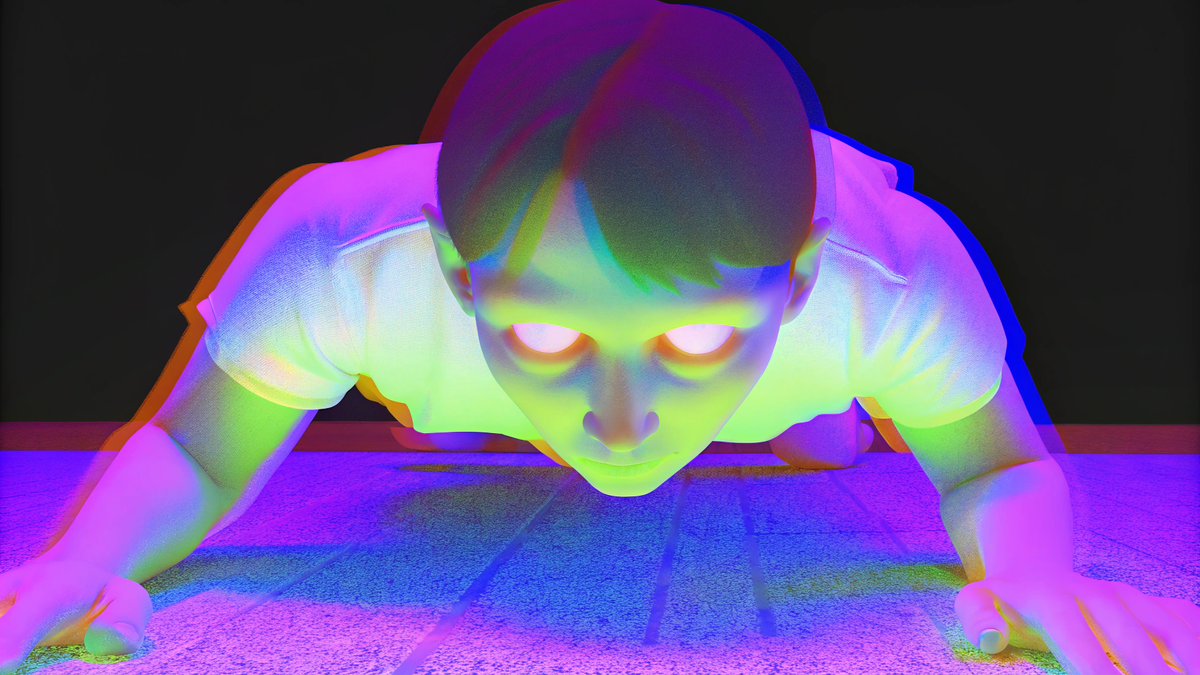
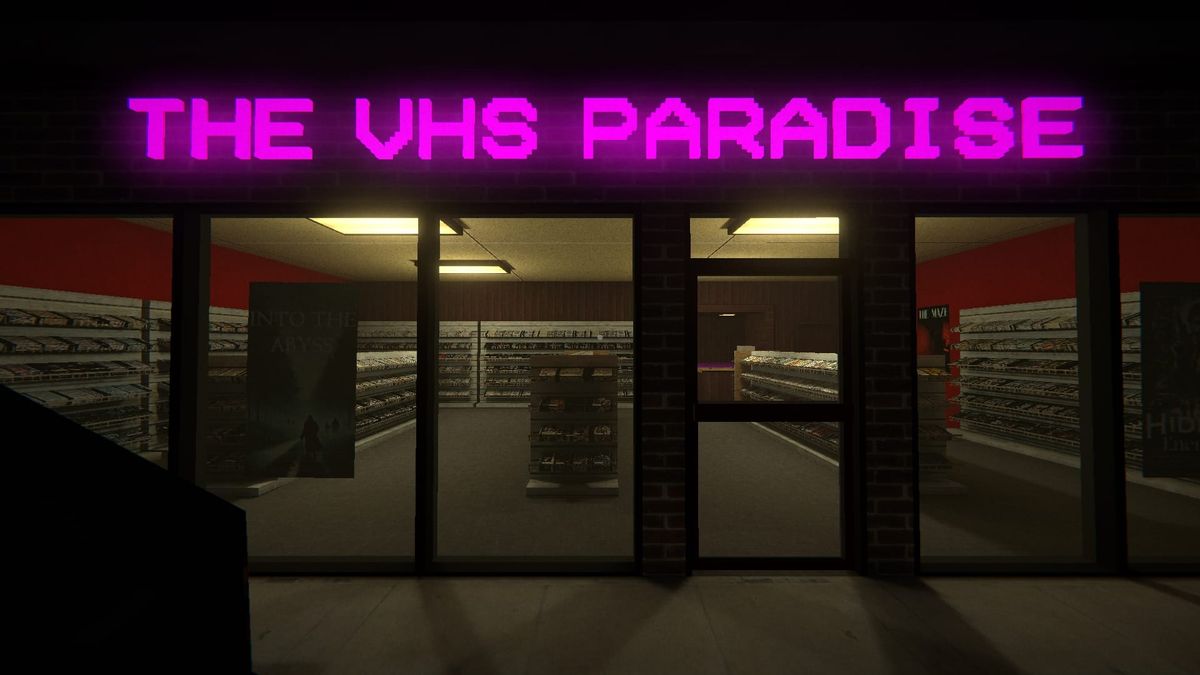
The popularity of the Backrooms exploded during the pandemic. Empty airports, abandoned offices, and deserted public spaces made the aesthetic of the Backrooms feel strangely close. During that time, Kane Parsons' series of videos (aka Kane Pixels) helped to solidify them and brought them to a massive audience.
If we set aside the later addition of non-human entities, levels, and rules, the Backrooms are above all a liminal space. The ominousness lies in the very functioning of the environment. Just as the classic labyrinth represents an inner journey or an initiatory trial, exploring the Backrooms means sinking into the dark corners of memory and our conception of the real. The true horror does not come from being chased by a monster, but from being eternally trapped in that no-place and confronting unknown or repressed aspects of oneself.
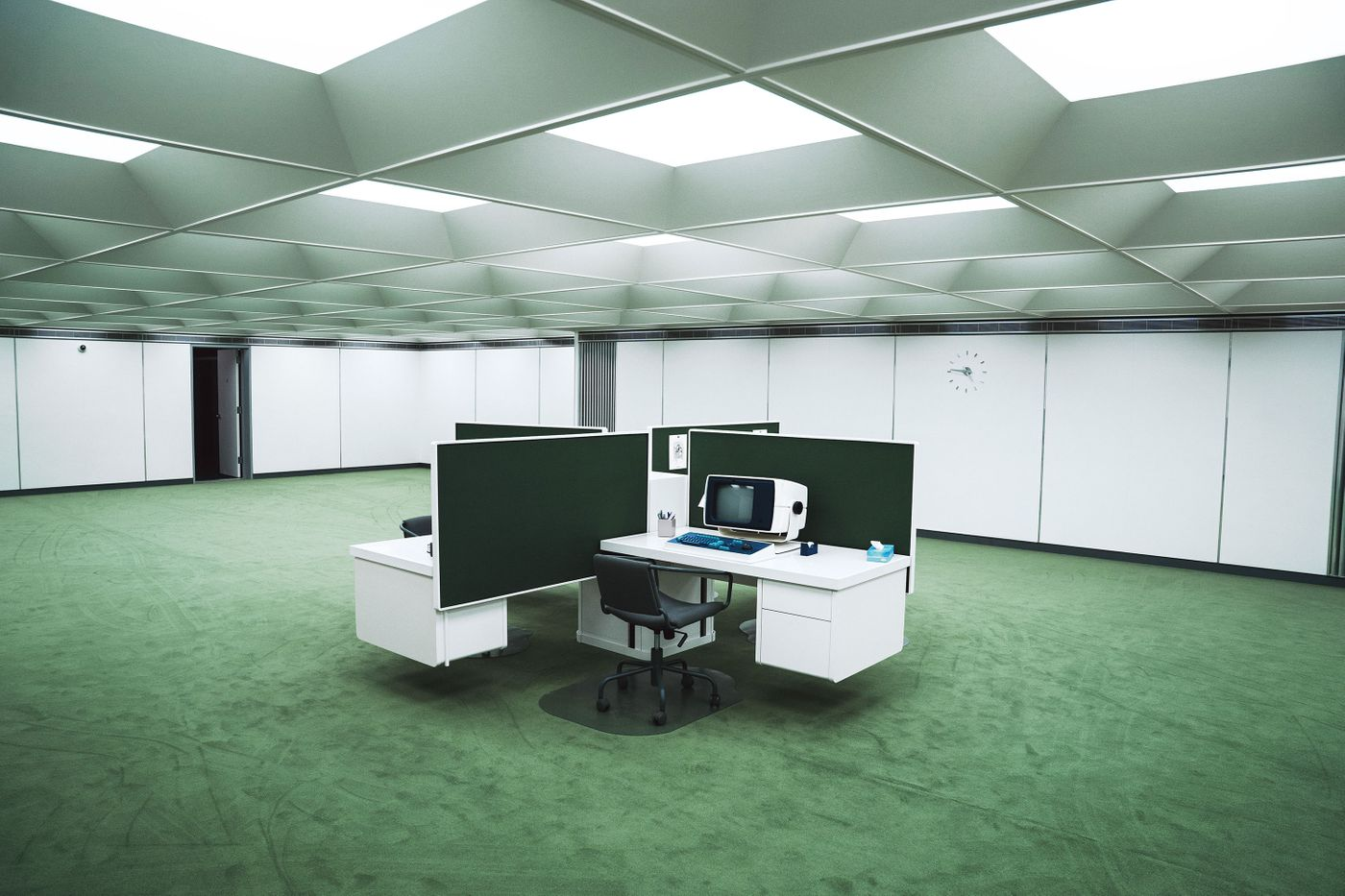
Dan Erickson, creator of the series *Severance* (2022), cited *The Backrooms* as one of his influences.
The color of the Backrooms is as integral as the blue in Danielewski's house. The original image, with its sickly yellow floors and walls, recalls Charlotte Perkins Gilman's story The Yellow Wallpaper (1899) or The King in Yellow by Robert W. Chambers, two works where the color is associated with a progressive descent into madness.
But if we look at the photo (which was traced back to a furniture store in Wisconsin, USA, that no longer exists), there is nothing that makes it stand out among the thousands of photos we can find on the subreddit r/LiminalSpace. What sets it apart is that anonymous text that founded its story.
The true horror does not come from being chased by a monster, but from being eternally trapped in that no-place and confronting unknown or repressed aspects of oneself.
Although there is no way to verify it, there is a user, Black August, who has claimed authorship of the original post since 2019. In an interview (see below), this user acknowledges that his original goal was to see how to take a term from video games, no-clipping, and explore it as a concept of horror: that of immersing yourself in a secondary place you shouldn’t access. Black August read Danielewski and recognizes the influence of his novel in the conception of the Backrooms: the impossible house, the infinite spaces, the idea of accessing the “behind” of a reality.
Whether or not we believe he is the true creator of the concept, the Backrooms do not belong to anyone; rather, they are a choral phenomenon, just like House of Leaves. In both cases, there are multiple narrators who reappropriate a mysterious and elusive “original.” In Danielewski's novel, a film leads to a book, which expands into appendices and reading notes. In the case of the Backrooms, in a similar but inverse path, an image and a loose note lead to a digital lore and eventually to a film. In both, the question of authenticity arises: what is the original source, if there is one.
On the cover of House of Leaves, Zampanò is listed as its author, with “introduction and notes by Johnny Truant.” But the accumulation of layers and voices makes it impossible to define who is really narrating that story and for what purpose. Danielewski explains in an interview:
We can say that there is no sacred text. The notion of authenticity or originality is constantly refuted. The novel does not allow the reader to say, ‘Ah, now I understand: this is the authentic one, the original text, exactly as it was, what it was always meant to say.’
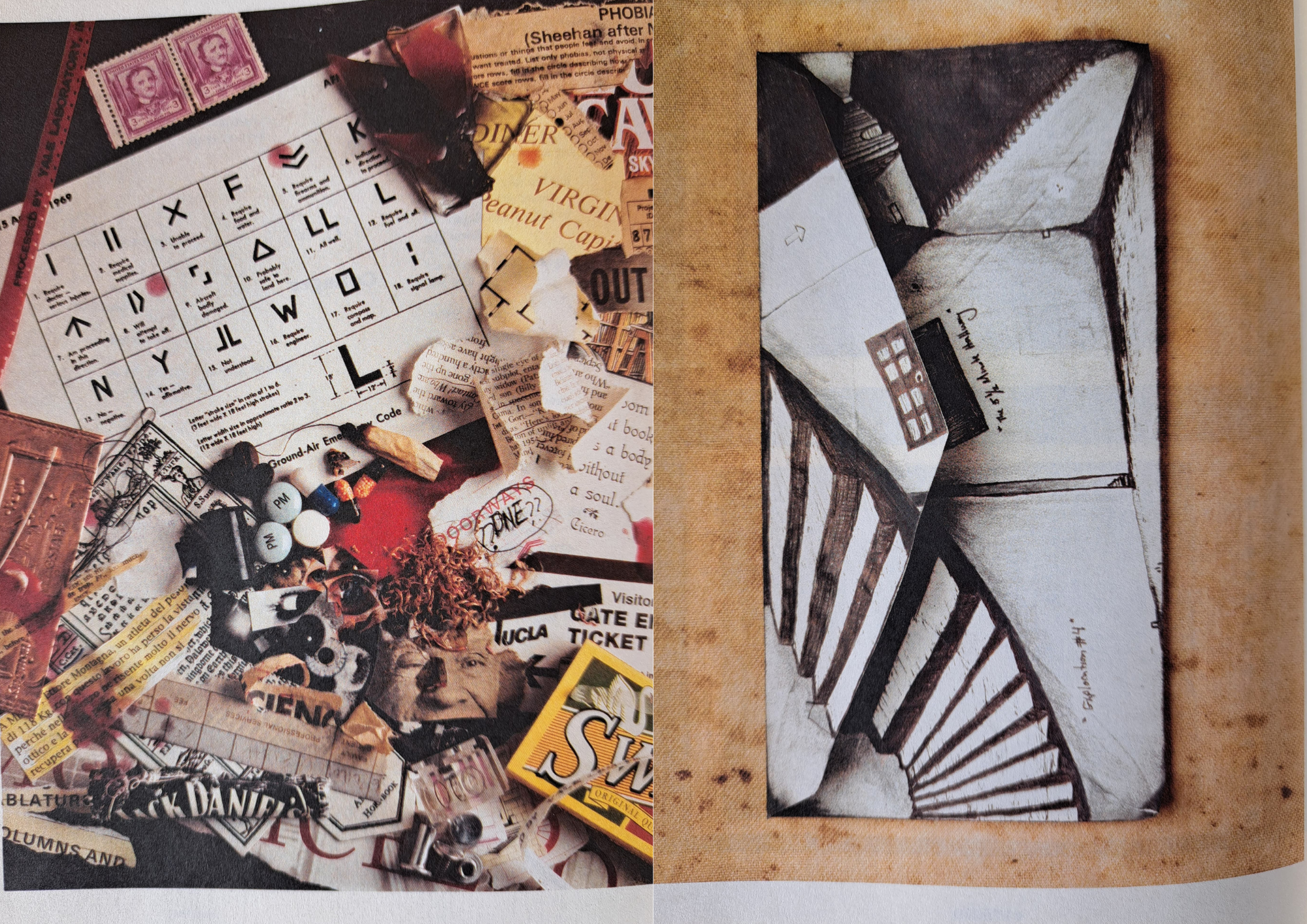
In the first image, Borges peeks out from a collage; in the second, the Navidson house is drawn on a paper envelope (both taken from “Appendix 2: Johnny Truant”).
The appeal to an “authentic” original as proof of veracity is also present in the use of found footage. Kane Parsons' Backrooms videos borrow from a tradition of horror films, such as Blair Witch Project, which use the pseudo-documentary technique to generate a sense of realism. Similarly, the literary trope of the “found manuscript” operates. We can see both cases in House of Leaves, in the transcription of the videos filmed by Navidson when he ventures into the tunnels and in the manuscript by Zampanò that Johnny Truant finds (and even in his own notes, presented by the editor).
The use of found footage obeys that human instinct to stop and look even in the most dangerous moments: the more incredible, the greater the need to know what it is and document it. It’s the same impulse that drives us to plunge into darkness to decipher it.
Delving into the dark
In Fear of Depths, YouTuber Jacob Geller analyzes our fascination with emptiness. To do this, he focuses on exploring the world’s most extensive caves.
Caves are living organisms that breathe, grow, and have systems for circulation, digestion, and excretion; they can get sick, get hurt, and heal. Entering one of these organisms is like diving into a dark place where no light penetrates. Once inside, you are surrounded by pure blackness, where not a single ray of light slips through. Your eyes never adjust to that darkness, where everything feels strange and foreign, yet it’s not silent. Caves resonate with moisture, the echo of droplets sliding down the rock. At the same time, they swallow voices and any human sound. "It seems that everything in a cave is designed to alter the way we normally perceive the world," explains Jacob Geller. And the strangest part, he adds, is that there’s always a way to move forward, a passage tailored to you that beckons you deeper and deeper with a seductive and self-destructive insistence.
When Navidson plunges into the dark hallway with his camera, it opens up into spaces described as caves. Enormous chambers where the boundaries fade from view, a dark mouth that opens infinitely to swallow you whole. Yet, he cannot help but press on.
At the beginning of the book, Johnny Truant warns the reader: I hope you’re not like me, I hope you can forget the book and stop lingering in the darkness, searching. Because in that infinite void lies the most terrifying thing: "the creature that you really are, the creature that we all are, buried in that anonymous blackness that is a name." But you probably won’t be able to let it go, or stop thinking about it. And lost in that labyrinth, all that’s left is to call out to others.
✦ Suscribite
Las notas de 421 no tienen paywall
Y a cada colaborador se le paga por su trabajo. Las dos cosas dependen de los suscriptores.
Lic. en Letras (UBA) y maestranda en Escritura Creativa (UNTREF). Opina por acá sobre cultura de internet, literatura y otros yuyos. Comparte los libros que le gustaron en @lecturasalmargen. Publicó Insomnes, su primera novela, en 2026.