Sirât, Techno, and the Conflict in Western Sahara
Between techno and colonial tragedy, Sirât, a film (and also an Islamic concept), exposes the historic conflict of Western Sahara.

Between techno and colonial tragedy, Sirât, a film (and also an Islamic concept), exposes the historic conflict of Western Sahara.
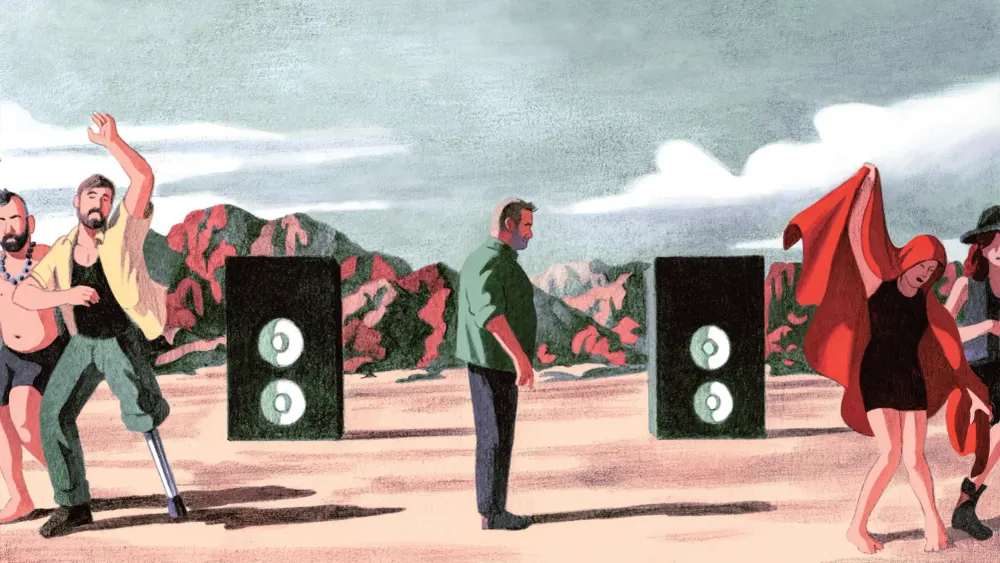
Microwaving your brain with monotonous bullshit while the world ends all around you. Everyone says to go outside and touch grass, but that’s all burned up too.
Sirât is an Arabic word that means path, trail, or way. According to Islamic theology, the Sirât crosses the hell; it is impossibly thin and dangerous, with some souls crossing it easily while others fall. It is the bridge that souls must cross on Judgment Day to reach paradise. Also, it is a film directed by Oliver Laxe, produced by the Almodóvars, which won the Jury Prize at Cannes and was nominated for Best International Feature and Best Sound at the Oscars.
The premise is simple and serves as an anxiety-inducer that persists throughout its duration. A father (Sergi López), his son (Bruno Núñez Arjona), and their dog find themselves at a rave in the desert, searching for Marina, their eldest daughter and sister, who has been missing for months. People dance to the thumping of finely produced techno music (Kangding Ray) made for the film, presenting a post-apocalyptic aesthetic reminiscent of Mad Max. The cinematography is excellent, and the imagery has its movement: a place where collective euphoria and intimate pain contrast and balance. Life, death, and everything in between.
According to Islamic theology, the Sirât crosses hell; it is impossibly thin and dangerous, with some souls crossing it easily while others fall.
The party is interrupted by a vaguely defined global conflict, deliberately, which forces them to evacuate the area. Amid the state of emergency, the characters decide to follow a group of friends who know there’s another rave nearby where their daughter might be. Half meditation and half psychedelic odyssey, the search continues to a point of no return.
The only spatial indication throughout the film is the phrase "Southward, near Mauritania". The implicit elements are unsettling.
It reproduces what is not innocent to assert: Morocco shares a border with Mauritania. We don’t know if it’s the director himself who asserts that geopolitical situation, or if it’s the ravers themselves, unaware of the territory they are exposing themselves to. It turns out that this line of contact between two countries is the product of one of the longest colonial occupations in contemporary history.
Morocco reaches Mauritania because the Western Sahara stretches between them, a territory that was a Spanish colony, later abandoned in 1975 without a self-determination process, and has since remained militarily occupied by the Alaouite kingdom. Without that occupation, there would be no border. The Western Sahara was part of the Spanish State since 1884 when Spain settled in Villa Cisneros during the colonial scramble for Africa. For decades, it was a marginal colony, valued for its strategic position in the South Atlantic and its fishing potential. The Sahrawis, a nomadic people of Arab and Berber origin organized into tribes, lived under Spanish administration as citizens at the bottom of the social hierarchy.
By 1975, Francisco Franco was ill, and Spain was paralyzed by the transition to democracy. On the other side of the continent, imperial Morocco had been claiming the Sahara for years, in the name of an extension that aimed to include territories from Mauritania and Spain. In October of that year, the International Court of Justice issued a ruling denying sovereignty to both Morocco and Mauritania over the Western Sahara, recognizing the Sahrawi people's right to self-determination.
However, Morocco ignored the ruling and organized the Green March: 350,000 Moroccan civilians, accompanied by regular troops, crossed the border carrying flags and Qurans in what, despite its peaceful appearance, was a planned invasion. In November 1975, Spain, Morocco, and Mauritania signed the Madrid Agreements. Spain committed to withdrawing, ceding administration to the two neighboring countries. The agreements were signed without going through the Spanish Cortes, without consulting the Sahrawi people, and in direct contradiction to previous UN resolutions. They therefore lack legal validity in international law.
The first problem is ontological: Spain was not the owner of what it ceded. Under the law governing decolonization, a colonial power does not own a non-autonomous territory and cannot transfer it to third parties. Colonial states have an express obligation to lead towards the self-determination of the people. The second problem is the absence of the main subject. The Polisario Front, the legitimate representative of the Sahrawi people, was not consulted. The third problem is the contradiction with the legal framework: the UN had reaffirmed the Sahrawi people's inalienable right to self-determination, and the Court had already denied legitimacy to the claims of Morocco and Mauritania. The Madrid Agreements violated these resolutions.
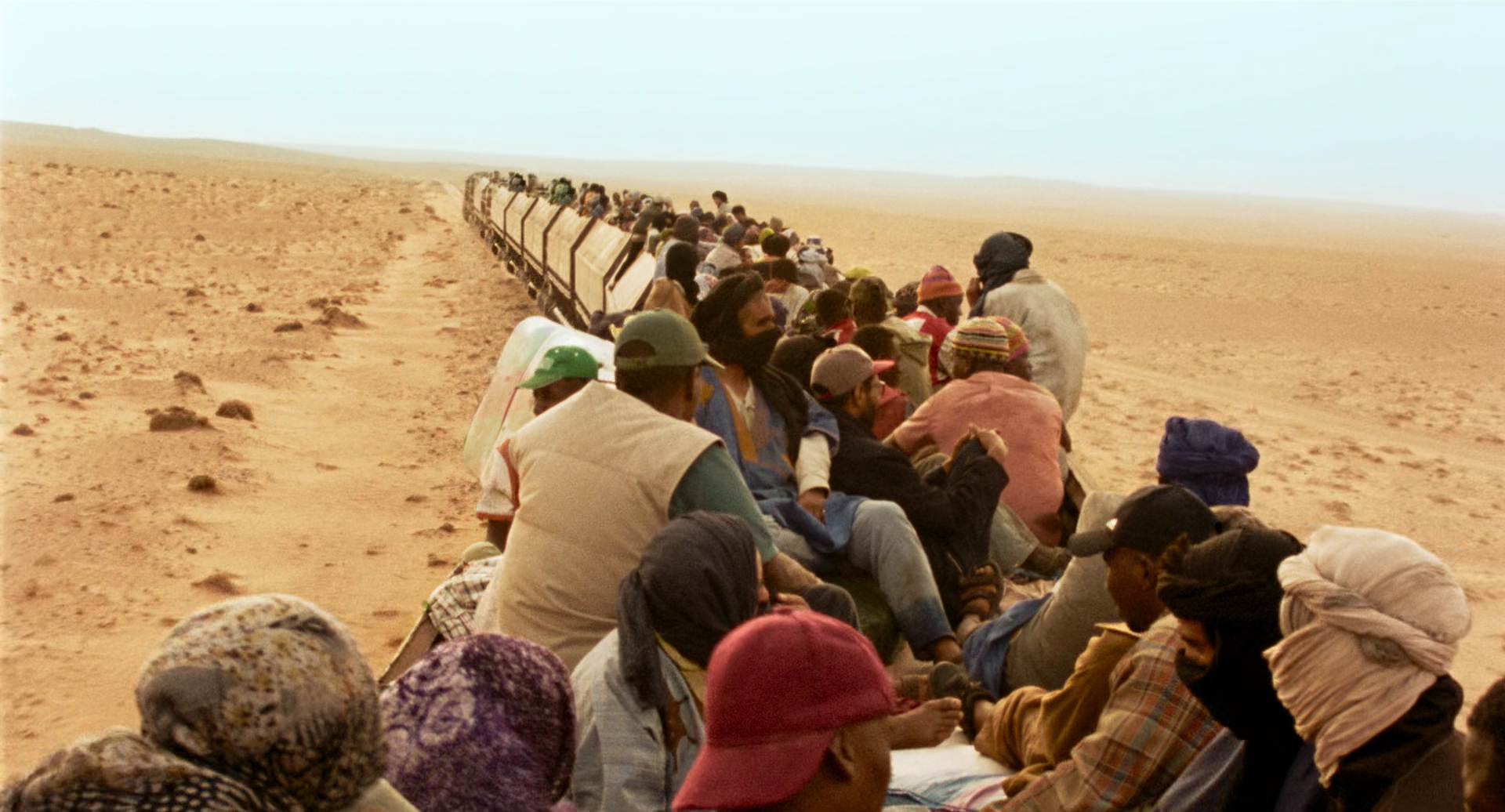
The Western Sahara remains today, in terms of international law, a non-autonomous territory pending decolonization, with Spain as the administering power even though it abandoned the territory de facto half a century ago. Spain is legally responsible for a territory it does not govern, control, or speak about.
Following the colonial withdrawal, Morocco and Mauritania divided the territory: the north for the Moroccans, the south for the Mauritanians (think Sudan and South Sudan; Ethiopia and Eritrea; Nigeria and the self-proclaimed Republic of Biafra; Rwanda and Burundi, the Democratic Republic of the Congo).
The liberation war is hardly mentioned by the Western academia. The Polisario Front, militarily and diplomatically supported by Algeria, began a guerrilla against the occupying powers. Morocco intensified the occupation: a campaign of terror was carried out. It is estimated that around 650 Sahrawis were killed just in the cities of El Aaiún, Esmara, and Villa Cisneros. However, the most brutal violence was located in the desert, against civilians fleeing to Algeria.
It is estimated that around 650 Sahrawis were killed just in the cities of El Aaiún, Esmara, and Villa Cisneros.
The refugee camps were bombed by Moroccan aviation acquired from France and the United States. Um-Draiga was the site that was attacked for 48 consecutive hours, using napalm and white phosphorus. Napalm is similar to gasoline but thick and sticky, like a gel, and became particularly known in the Vietnam and Korean wars. White phosphorus, on the other hand, is a substance that ignites rapidly upon contact with air; its use is known in the Vietnam, Iraq, Syria, and Ukraine wars and has been used in conflicts in Gaza. In Argentina, we know it from the Flores massacre.
The attack on the camps, which resulted in the deaths of approximately 3,000 Sahrawi civilians, was documented and verified by testimonies, but there was no international process. The genocide of Um-Draiga remains unrecognized by any organization, except by its people.
The survivors fled to Algeria, where the government, a historical defender of African liberation movements, ceded land in Tinduf, an uninhabited desert near the border with Western Sahara. There, the refugee camps were established, which remain in the same place today.
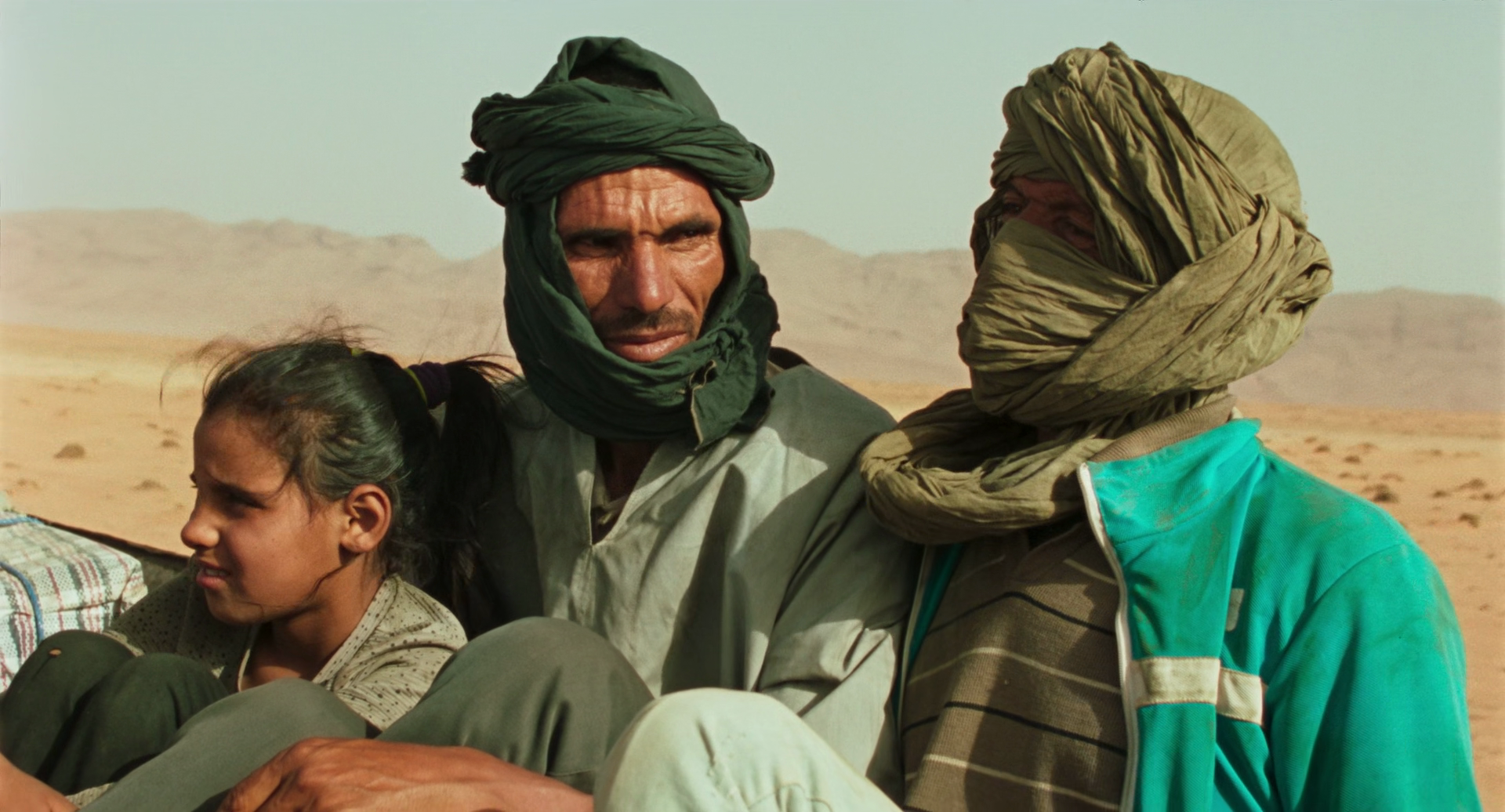
During the 1980s, the Cold War, the Iran-Iraq conflict, the Lebanese civil war, the Falklands War, the Salvadoran civil war, the dictatorships in Chile, Argentina, and Guatemala, the civil war in Angola, apartheid in South Africa, Namibia's independence war, the Soviet invasion of Afghanistan, the Tiananmen Square massacre, and the conflict in Sri Lanka were all unfolding, while at the same time, one of the most extensive military engineering projects of the 20th century was being constructed in the desert.
The Moroccan wall, or berm, is a structure between two and three meters high that stretches over 2,700 kilometers across the desert. Designed and built with Israeli technical assistance, the wall serves as the perimeter of a minefield. It is estimated that between the camps in Tindouf and the berm, there are between 7 and 10 million mines planted in the desert soil. This is the largest continuous minefield on the planet, still active decades after its installation, continuing to cause deaths and injuries among fighters, civilians, adults, and children.
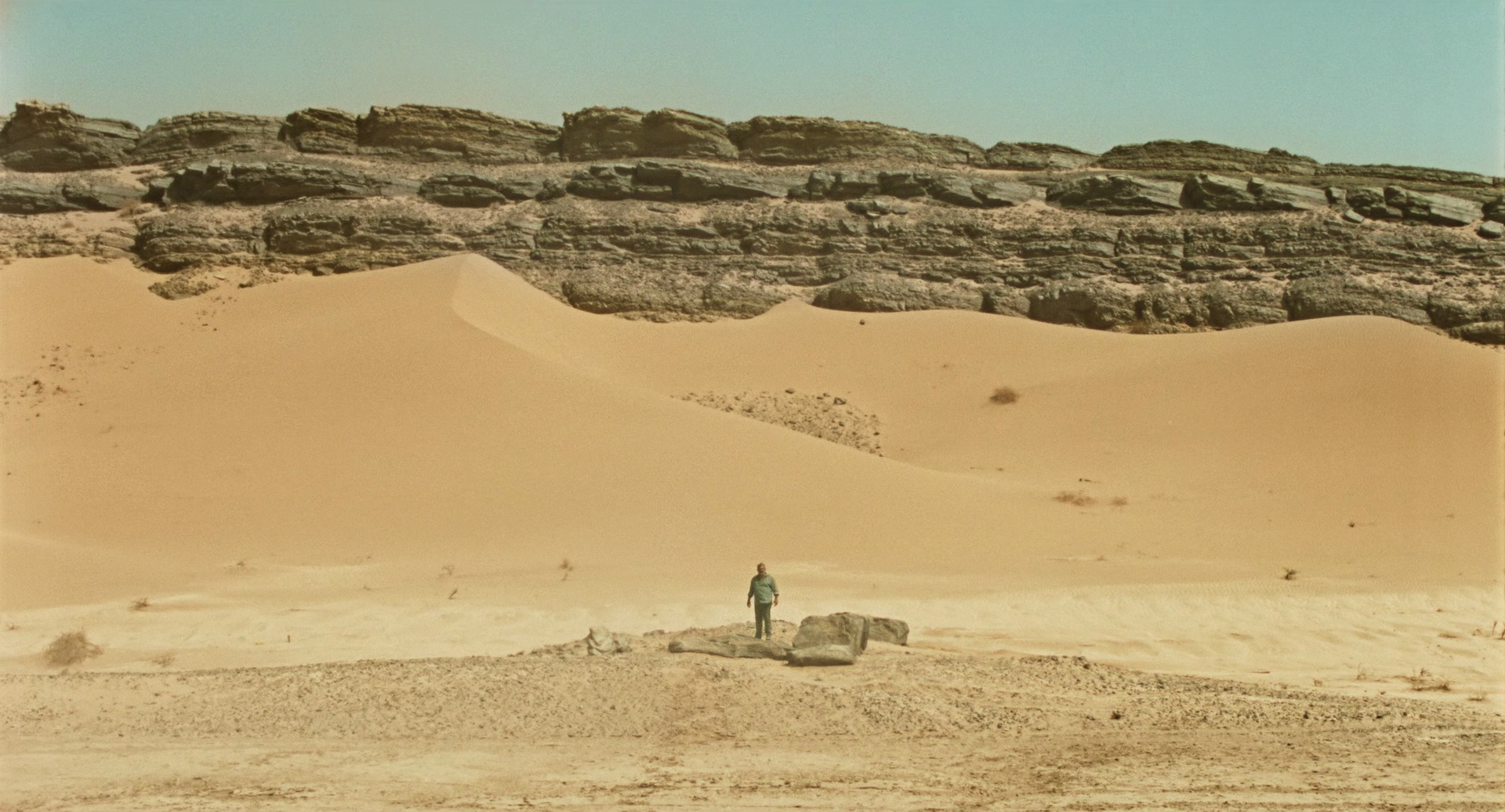
The berm, no matter how much material it is made of, also holds political symbolism. It was designed so that no Sahrawi could return to their homeland without submitting to the narrative that the Sahara is Moroccan territory, and at the same time, without assimilating as Moroccans.
In 1991, the UN established MINURSO (United Nations Mission for the Referendum in Western Sahara) to hold a self-determination referendum for the Sahrawi people to choose between independence or integration into Morocco. Thirty years later, that referendum has never taken place.
The berm, no matter how much material it is made of, also holds political symbolism. It was designed so that no Sahrawi could return to their homeland.
The strategy: since 1975, Morocco has demographically colonized Western Sahara by massively relocating its own settlers, resulting in their population now surpassing that of the Sahrawis, which would predetermine any referendum.
This tactic is replicated in various places. A territory is colonized, populated with its own citizens, and then democracy is invoked to legitimize the occupation (Israel and Palestine, China and Tibet, Italy and Trieste, the Falklands). In international law, this goes by different names: settlement colonialism or demographic engineering.
In November 2020, the Polisario Front broke the ceasefire following a Moroccan military intervention in the Guerguerat corridor, initiating a state of low-intensity armed conflict, almost without any media coverage. That same year, Trump recognized Moroccan sovereignty over the territory as part of the Abraham Accords, in exchange for the normalization of relations between Morocco and Israel. Today, the Sahrawi refugee camps in Tindouf are home to between 150,000 and 200,000 people.
The camps have names: Smara, El Aaiún, Ausserd, Dakhla, cities in Western Sahara that they cannot enter without the obligation to recognize themselves as Moroccan citizens.
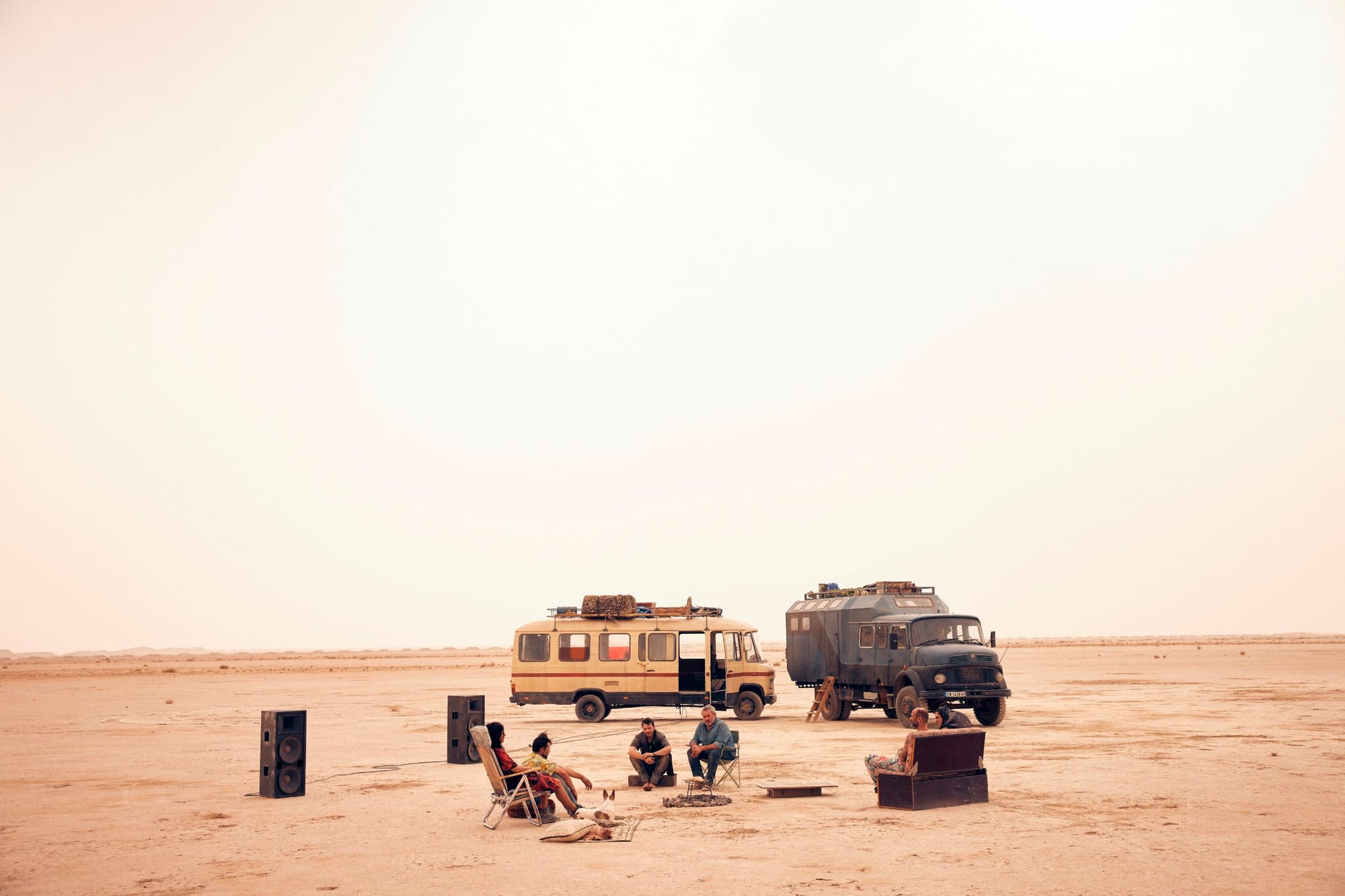
In general terms, the dichotomy appears among the neo-critics of cinema. The film, for the bulk of the audience (rather progressive), lacks a plot (both narrative and political), or has one, but it goes nowhere. For me, what seems to be a clash of opposites in discussions (as well as in the plot) reveals something greater than themselves. Recently, Scorsese affirmed what Seba De Caro had been criticized for: the plot doesn’t matter. In my case, I believe that mere tragedy is the argument. Death is the justification.
But cinema doesn’t have to justify itself. I wonder: is there really an intellectual and moralistic descent like that of Ruben Ostlund in, for example, Triangle of Sadness? Is it pornomiseria and shock value in the style of Gaspar Noé, Lars Von Trier, Haneke? Or are these films actually the successors of a format as ancient and classic as that of tragedy?
In this sense, and I am grateful, there is no political-ideological explanation served on a platter. If we are interested, we have to seek it ourselves. There are two paths: cognitive sovereignty or ignorance.
Unlike most of the audience (who argue that it is an apolitical and negligent film), I believe that the critique of modern neocolonialism exists and is strong. What at first seems dreamlike, nightmarish, and absurd is sufficiently concrete.
The metaphor of the Sirât condenses into a kind of divine judgment: while transcendence is pursued through music and earthly pleasures, the desert (history, territory) imposes itself. It is another character. Let those who have eyes see, and those who have ears hear.
Y a cada colaborador se le paga por su trabajo. Las dos cosas dependen de los suscriptores.