Ryan Gosling, the Ultimate Sigma Male
More than just a meme, the “sigma male” reflects the search for meaning in a fragmented culture. A return to love and work.

More than just a meme, the “sigma male” reflects the search for meaning in a fragmented culture. A return to love and work.
I'm going to do something I haven't done in a while. I'm going to talk about a meme. In this article, I'll review the brief evolution of the concept of sigma male and what it has left us in the already well-normalized internet culture. More precisely, what it reveals about the (not so) current state of that culture. A heads-up for the writers at 421: it makes no sense to write about the "subcultures" of the internet anymore. The internet is the culture.
Let's get back to it. First things first. The United States radiates its culture through the internet to the rest of the planet like the light of a dying supernova. We see it shining brightly even though it has been dead for a few years. In the case of the United States, we can say it’s a super silly one, whose stupidity reaches us with a delay of five, ten, or fifteen years. But it arrives. What we're going to analyze today is encoded in that delay. That span in which we see the glow of something that no longer exists. Which can even last millions of years.
It also doesn't make much sense to excessively bemoan the "degradation" that the culture of the Internet, the memification of culture, has brought. It's an irreversible process. It's part of the speed at which the planet evolves, the system of material production, and the systems of s symbolic production. As McLuhan would say, "it's the grammar of electricity." Electricity and information go hand in hand. They are almost, almost, the same phenomenon. The only significant difference between the introduction of the telegraph and the internet is the reduction of latency in the loop.
The United States radiates its culture through the internet to the rest of the planet like the light of a dying supernova. We see it shining brightly even though it has been dead for a few years.
The acceleration of memetics, as we explained here, responds to a positive feedback loop between the media of information transmission. Then that information shapes culture, reinserting itself into the flow as new information that in turn reshapes culture. And so on, and so on.
The archetype of the sigma male emerged as a counterpoint to two dominant poles of internet culture, which, as we mentioned earlier, is a continuation of American culture through other means. Anyone who has seen a movie about teenage social life in high school could find the different versions of men regarding their success in two fundamental areas of American teenage life: sports and women. Success or failure in one or the other determines membership in one of two cohorts: alphas (successful in both) and betas (failures in both).
Alphas are usually the attractive, athletic, and socially successful ones, while betas tend to be unattractive, non-athletic, and socially inept. The dialectic between alphas and betas developed on screens from around the 70s-80s and had its own evolution, building a path that can range from "Revenge of the nerds" to "Superbad." Although the genre may be considered minor, it is impossible to overlook its influence and the quality of some of its standout products. From the cultural impact of "The Breakfast Club" to small gems like "Dazed and Confused" directed by none other than Richard Linklater.
Starting from "Revenge of the Nerds," betas were allowed to gain a new position in this dialectical game. Intelligence appeared as a counterpoint to physical attributes (beauty and athleticism), allowing betas, under certain circumstances, to also win and thus participate in the American experience. Which, more than ever, in the Trump era, is synonymous with winning. From the revenge of the nerds, we moved to the crowning of the computing era mogul as the undisputed figure of cognitive capitalism: Bill Gates, Steve Jobs, Elon Musk, Peter Thiel.
Ultimately, both archetypes can be traced back to the ancient dichotomy between Athens (the polis of knowledge) and Sparta (the polis of the body). Language that was recoded in internet culture under new disguises. From there emerged the well-known “Virgin” and “Chad,” whose peak we can trace back to the pandemic era and which later led to the popularization of Wojak, Gigachad, and Chud, the last characters standing from that memetic wave.
But memetic culture had an original contribution to operate on that pre-existing dichotomy by adding a new category and, consequently, expanding the battlefield. The emergence of the sigma male represents a sort of third position between the two poles. In the heat of the meta and post-ironic language of the internet, the concept of sigma was written as an appropriation of certain archetypes of fictional characters, primarily cinematic, that represented the perfect typology of this new stereotype.
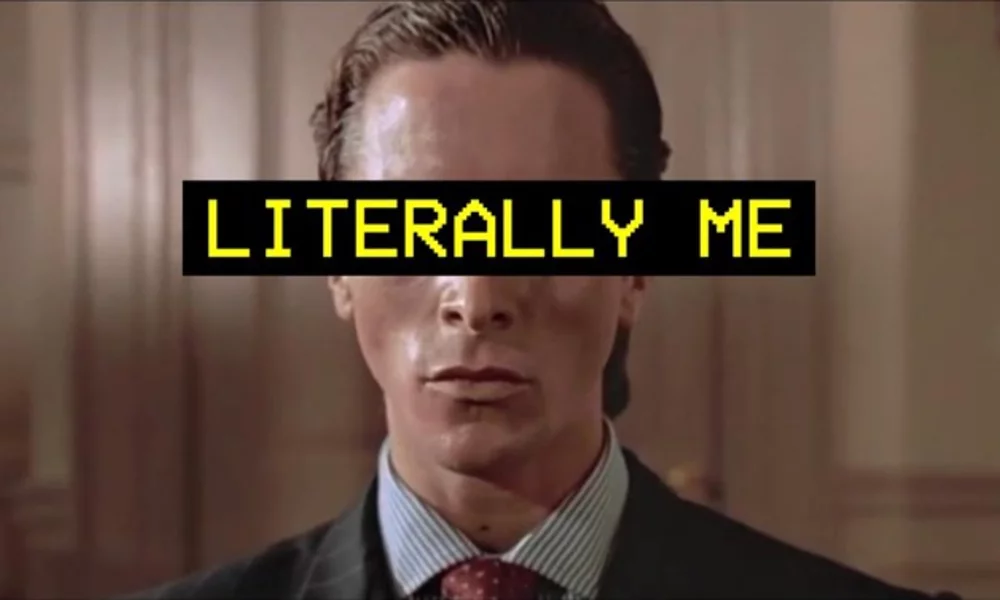
The first is Patrick Bateman, who, aside from the little issue of being a serial killer, what was salvaged from the character was his discipline, the meticulous care of his image, and particularly his indestructible attitude. The meme of Bateman looking at himself in the mirror/screen and saying, "I'm that guy," serves as a channeling of the ideology of those who watch Bateman and say, "I'm that guy." Or the other meme of the same character walking down the office hallway with headphones on, ignoring everything around him, with a clear attitude of being locked in. But additionally, the sigma male meme brought along one more concept, that of grindset.
Urban Dictionary says:
"Grindset" (a blend of "grind" and "mindset") refers to a hyper-focused, disciplined approach to life centered around continuous productivity, skill acquisition, and personal or financial growth. Popularized both as genuine self-improvement philosophy and as an internet meme (the "sigma grindset"), it emphasizes long-term goals over short-term comfort.
And it continues:
The sigma male grindset refers to the superior mindset possessed by the male at the top of the social hierarchy, also known as the sigma. This grindset is often mentioned when the sigma does something that may be considered based and redpilled. Society (run by betas) views the Sigma as a threat. He is thus often a victim of societal ostracism for his intrinsically based nature. He is the victim of a systematic societal hate crime.
What aims to be the canonical definition from Urban Dictionary, I believe, can only capture the surface problem and cannot grasp the meta-ironic considerations of the archetype. The same goes for this GQ article with its alarmist tone and determined by journalistic jargon surrounding internet cultures. For this reading, the sigma meme is just another in the already explored culture of online radicalization. Reducing the analysis to other well-worn concepts like Incel or manosphere (god, I hate it) deprives us of the most interesting symbolic dimension of the whole issue.
The very common senses surrounding this analysis again frame the emergence of these concepts within the already mentioned scenario of multiple crises that the planet seems to be undergoing: political representation crisis, climate crisis, geopolitical crisis, birth crisis, and a long etcetera.
In this case, the emergence of the sigma would be a response to the "crisis of masculinity" (another unbearable concept). The explanation then would be: since there is a "crisis" of masculinity models, men navigating the online world seek models in different symbolic concepts and memes circulating on the internet. But this could basically be said of any time since the 70s, during the full transition from modern to postmodern culture. Or, as we try to elucidate here, the transition from surveillance societies to control societies.
The surface proposal of the sigma meme seeks to acquire the capacity for discipline. Or a routine that allows one to rise above the problems of everyday and/or common life while breaking away from the previously imposed social "hierarchies" (Alphas and Betas). With the added note that, according to the canonical definition, it is the betas who currently run society (as a result of the information revolution). The search for a certain grindset is, ultimately, the internet culture's attempt to embrace the anthropotechnical problem. What’s significant is that the “models” of these characters are no longer real people but fictional archetypes.
More than a "crisis" of masculinity, we are in an era where not only have traditional models ceased to exist and will therefore be replaced by fictional categories, but also the spaces where men (and women) were trained, accustomed, or socialized in one way or another are no longer available. The places that used to provide this have lost their relevance (school, military, work) or have been replaced by gyms, courses, workshops, and similar things. In other words, largely, small units of training in lifestyle.
This absence of a far-reaching anthropotechnical project explains, in a way, the explosion of self-help over the past thirty years and various disciplinary systems that meet men's needs to create habits and have a social navigation system. More than a crisis, it is a model of disciplinary fragmentation where the loss of a common framework leads to many competing models according to both personal and market needs.
This absence of a far-reaching anthropotechnical project explains, in a way, the explosion of self-help over the past thirty years.
If we understand internet culture as a space whose gathering points are no longer physical places or institutional spaces but rather memetic complexes (memeplex), it makes total sense that its symbolic categories are determined by the digital folklore shared through a common memetic concept and that, ultimately, memes emerge capable of operating on a reality that precedes them. In this case, the anthropotechnical atomization. Just as there are men who look for a model in the books of Bernardo Stamateas, Gabriel Rolón, the local Crossfit gym, lifting weights, skateboarding, doing pottery, going to see Boca, or listening to Luquitas Rodríguez; there are also others who shape their personalities based on concepts circulating through the internet.
More than a crisis or even atomization, what we are witnessing is a great equalizer and leveler of hierarchies of masculine models. Everyone competes equally in the same attention market regardless of previous hierarchies (Army, Church, School, and Family).
The sigma archetype is quite clear: men who seem to have some degree of neurodivergence (in the folk sense, not the clinical one) or hyperfocus and disinterest in how the other two archetypes participate in romantic social life. It’s what a few years ago one would simply call someone "weird." The identification with the sigma man and his peculiar angle of attack is superficially related to self-discipline, but more deeply, it relates to a form of sacrifice.
Now is where things get much more interesting. Perhaps you are still wondering about that constitutive characteristic that completely defines the sigma archetype, and I regret to disappoint you. As some of you may know by now, I am not a proponent of essential definitions (a univocal foundation that gives meaning to the thing) but rather belong to another group. I don't believe in essential traits but in a set of characteristics that are also subject to change as the consensus defining the thing changes. Case in point: Pluto. When the definition of what a planet is changed according to scientific consensus, Pluto's status as a planet went down the drain (it still hurts).
The canon is also the story of the modification of the canon. In this sense, a clear definition of the sigma archetype, at least in the current state of affairs, refers to: a) some type of obsession that structures his personality (hyperfocus) b) operates under the logic of personal sacrifice, c) this gives him an aura of melancholy that accompanies him permanently.
To prove this, we are going to go to the zero point of the meme. The origin story. Who, I believe, managed to perform the definitive sigma throughout his filmography: Ryan Gosling.
Just as the classic western had John Wayne and the spaghetti western had Clint Eastwood, the crazy 2010s had Ryan Gosling. Inscribed in the most classic tradition of the desiring machine, each decade gifts us a leading man, a definitive man, a masculine archetype that defines what a movie hero is. By definition, they are hetero (allegedly), Caucasian, preferably blonde, and 6 feet tall or more. All American. The human Big Mac.
In that historical line, we could undoubtedly include Robert Redford, Clint Eastwood, Brad Pitt, and Leonardo DiCaprio. Hence the importance of “Once Upon a Time in Hollywood,” which manages to bring together two titans of the era. I think they contest Gosling's position as the all American guy with Christian Bale (Bateman, Batman, and Michael Burry). And, on the other hand, Matthew McConaughey. Who started as a shy heartthrob and became a star with Interstellar, The Wolf of Wall Street, Dallas Buyers Club, and, of course, True Detective. Perhaps with these other two, we already have enough to build a genealogy.
We could say that, in general terms, he is a weirdo, and that, instead of submitting to social rules, he chooses to follow his own, with the risk (and freedom) that this implies.
But of all those we mentioned, Ryan Gosling is the undisputed sigma hero. The sigma male has a strange angle of attack. We could say that, in general terms, he is a weirdo, and that, instead of submitting to social rules, he chooses to follow his own, with the risk (and freedom) that this implies. The emergence of the sigma allows for the reality to bring forth a creative fiction. We have already talked about the power of fiction to shape reality here. The sigma model first exists outside the "real world" before introducing itself into it. It has the potency of contagious, self-produced, hyperstitional ideas.
One of the most sigma characters of all time who is not on any of the lists or articles about it but who, nonetheless, for real sigmas is the undisputed archetype.
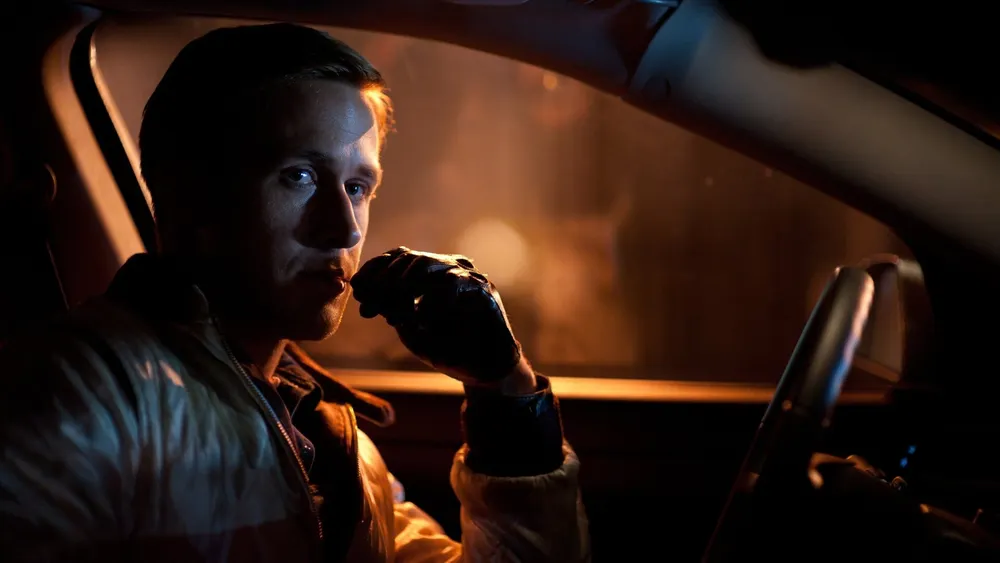
Drive is the most sigma movie ever created. Ryan Gosling has an obsession with driving. He’s a guy who drives; his life is driving. Period. He drives really well. He meets a girl with a son and a husband in prison. He falls in love. He takes care of them. He becomes the only father figure for that child. The girl’s boyfriend gets out of prison. He puts everyone in danger. Gosling makes a couple of decisions to save the girl and the kid. He sacrifices his love. He drives. Moreover, from this movie, Kavinsky (RIP) explodes with his iconic “Nightcall,” which had come out in 2010 but from here would mark an era and a couple of generations and give a boost to the synthesizer music that would become canonical in the following years. I think of artists like Perturbator, Carpenter Brut, in vaporwave, or in the billions of “synthwave” songs it inspired. Truly the sound of an era.
Drive is a period film, generational. It also establishes the aesthetic link between sigma and synthwave.
Ryan Gosling is a stunt motorcyclist in a circus. He’s also involved in robbery (basically, he’s a jerk, but a white one). He meets a girl who ends up pregnant. He risks everything to give his child a future. He gets killed. But he leaves something behind for the future. It’s a blockbuster. He robs banks on a motorcycle wearing a sleeveless Ride The Lightning shirt. Fifteen years later, his son crosses paths with the cop who killed his father. After a violent incident, he spares the cop's life and retrieves a baby photo of himself with his dad and mom. He rides away from town on his motorcycle. The cop, now turned politician, is left with his family shattered.
Gosling in total grace: stunt motorcyclist, Ride The Lightning shirt, tattooed face, and in the heart of white, post-industrial America, an interracial love story with a Latina, Eva Mendes, who would eventually become his real-life wife. Here, it’s the sacrifice for the child. Life for the big girl. A small, broken, sacred family, third-world and marginalized. Top-notch.

Full throttle. Extreme shyness and antisocial behavior, panic at physical contact. He buys an inflatable doll. He falls in love. He introduces her as his girlfriend. His family and the 'community' (the townspeople and the Church) go along with it. The sigma solution to an unresolved trauma: the inflatable doll as a girlfriend, not as a sexual object. It’s worth noting when we talk about 'strange angles of attack.' Thanks to the support of his family and the community, Lars evolves in understanding his trauma until eventually, the doll 'dies,' Lars mourns, and finally manages to ask out the girl from the Church. It’s a 2007 film, but it feels like it’s from another century altogether. The breakdown of community ties is key and explains the decline of a significant part of the United States this century.
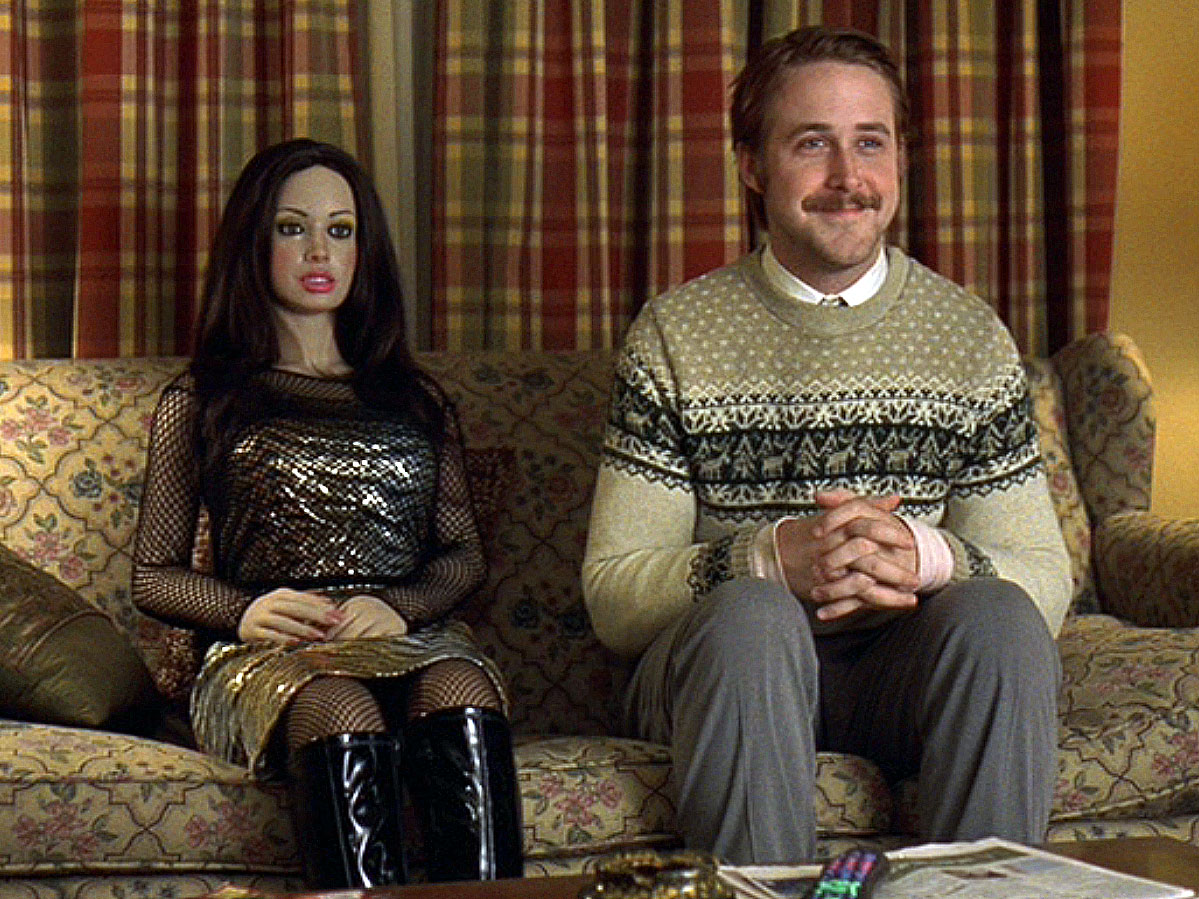
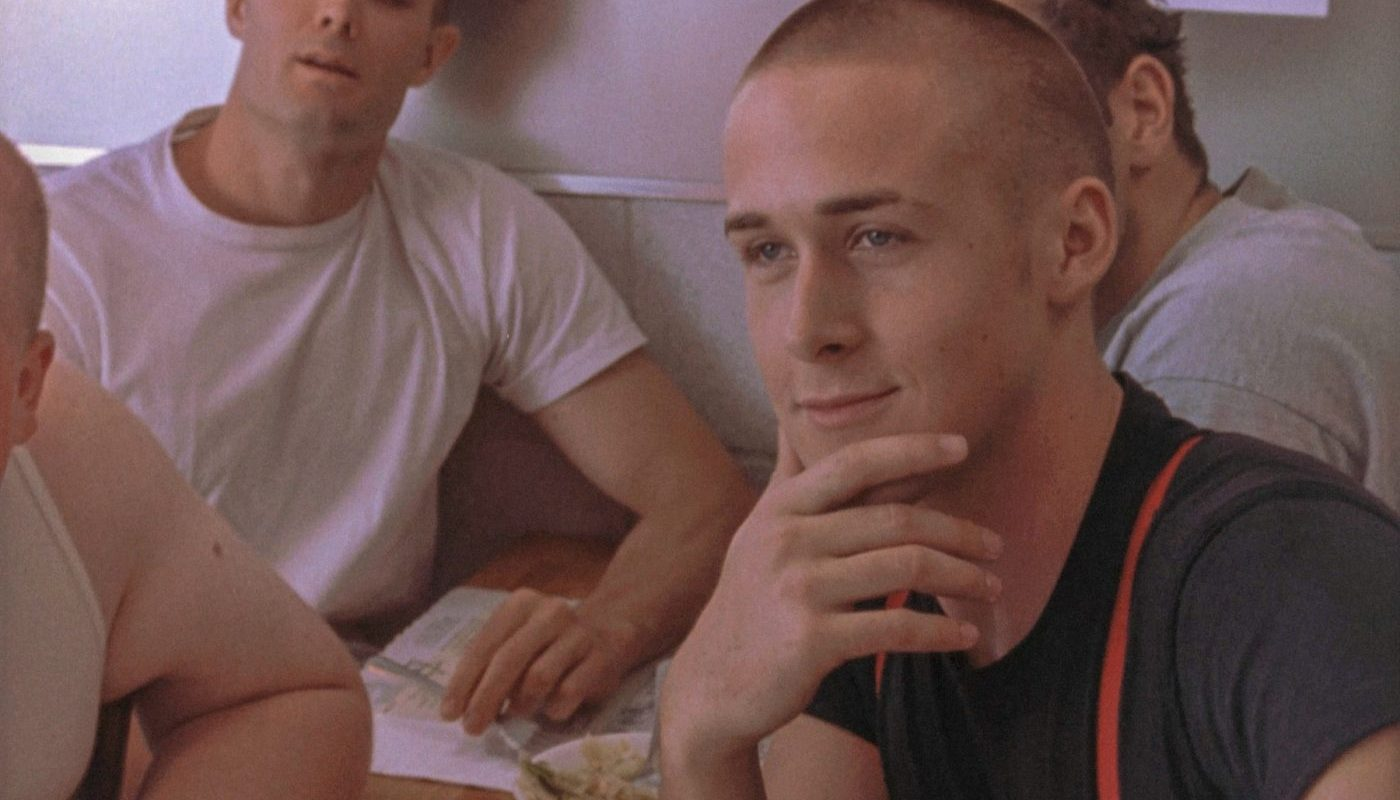
Ryan Gosling is a neo-Nazi. But he’s Jewish and increasingly obsessed with the Torah. Is this the epitome of sigma? He ends up planting a bomb in a synagogue. He commits suicide. Irresolvable contradictions. The impossibility of synthesis. Again, sacrificial logic. He’s the sigma archetype, but on his failed and erratic side. This is indeed the sigma from the GQ article.
Just like in Lars and the Real Girl, in this one, Ryan Gosling is in love with a hologram, although as a bonus, we can say that this hologram is Ana de Armas, which could happen to anyone. A period piece. Sigma as hell. In other words, let’s say, the futuristic version of a rubber girlfriend. It not only intertwines both films but also creates a thematic connection between the two characters. The scene where he sees his giant holographic girlfriend is nothing more than an advanced marketing piece will become iconic. Melancholic men in love with synthetic partners.
He’s Literally Me
From there, his awakening. A series of events leads him to end up defending Rick Deckard (and the replicant child) with his life. He dies in the snow after sacrificing himself for others and finally achieves his status as a human being.
To die for a just cause is the most human thing we can do.
Says the leader of the resistance. Loss. Existential loss.
Of all the movies I’ve seen with Ryan Gosling, this seems to be the most accurate list. In his other films, you can find traits of that phenotype, which he embodies, but in these films, it’s defined in a key way. Then, we could start to notice a pattern where directors begin to use Gosling within the framework of this archetype, as in the case of Barbie, where he’s a bit caricatured and obvious, or in Project Hail Mary where he returns to the original sigma flow. No one has been able to represent the archetype better than Gosling. No one. If anyone thinks there’s someone better, I’ll read it in the comments.
Unlike alarmist articles focused on the figure of Patrick Bateman, the reading of the sigma archetype through Ryan Gosling's fictional characters allows us to see more deeply what lies behind this fictional archetype and its memification: it is ultimately the search for meaning. What we’ve seen is that fundamentally, the sigma seeks to break the dichotomy of success-failure and establish meaningful human connections in the long term. Not seeing women as a measure of personal success or as a satisfaction of hedonistic impulses but as the possibility of bringing men back to the place they’ve always held in culture: that of being a father and finding an anchor for desire through work.
The sigma seeks to break the dichotomy of success-failure and establish meaningful human connections in the long term.
The foundations of the sigma archetype, then, are not far from what Sigmund Freud expressed in "Civilization and Its Discontents":
"Human coexistence had, therefore, a double foundation: the obligation of work, imposed by external needs (ananké), and the power of love (eros)."
He concludes that "Eros" and "Ananké" were the parents of human culture. It is significant that something we could point to as "hyper" postmodern (the creation of a memetic archetype through fictional characters) is nothing more than a contemporary way to reactualize what modernity (with all its problems) had managed to establish as the core of human culture: to love and to work. The sigma meme is, then, a postmodern return to modern concepts and, therefore, structuring, in an era lacking structure.
Here lies one of the keys to our time, or rather, the advent of the next one.
Y a cada colaborador se le paga por su trabajo. Las dos cosas dependen de los suscriptores.