Am I an Alien? Neurodiversity, Social Media, and Ufology
Am I an Alien? Neurodiversity, Social Media, and Ufology
We would rather be ruined than changed
We would rather die in our dread
Than climb the cross of the moment
And let our illusions die.
W.H. Auden, The Age of Anxiety (1947).
Xuxa, the Brazilian TV host who had her classic show on Argentine TV, saw it before anyone else. In 1991, a voluptuous flying saucer with hyaluronic lips landed in our homes. A blonde visitor from another world emerged from within, gifting us games, songs, and dances. She branded us with fiery calls for the planet, indigenous peoples, and the inclusion of the different. A declared fan of the book Ami, the Child of the Stars, Xuxa attempted to bring the story of the little extraterrestrial to the big screen. In her version, Ami would be portrayed by a boy with Down syndrome. However, the project was canceled when Enrique Barrios, the author, was accused of leading a saucer cult.
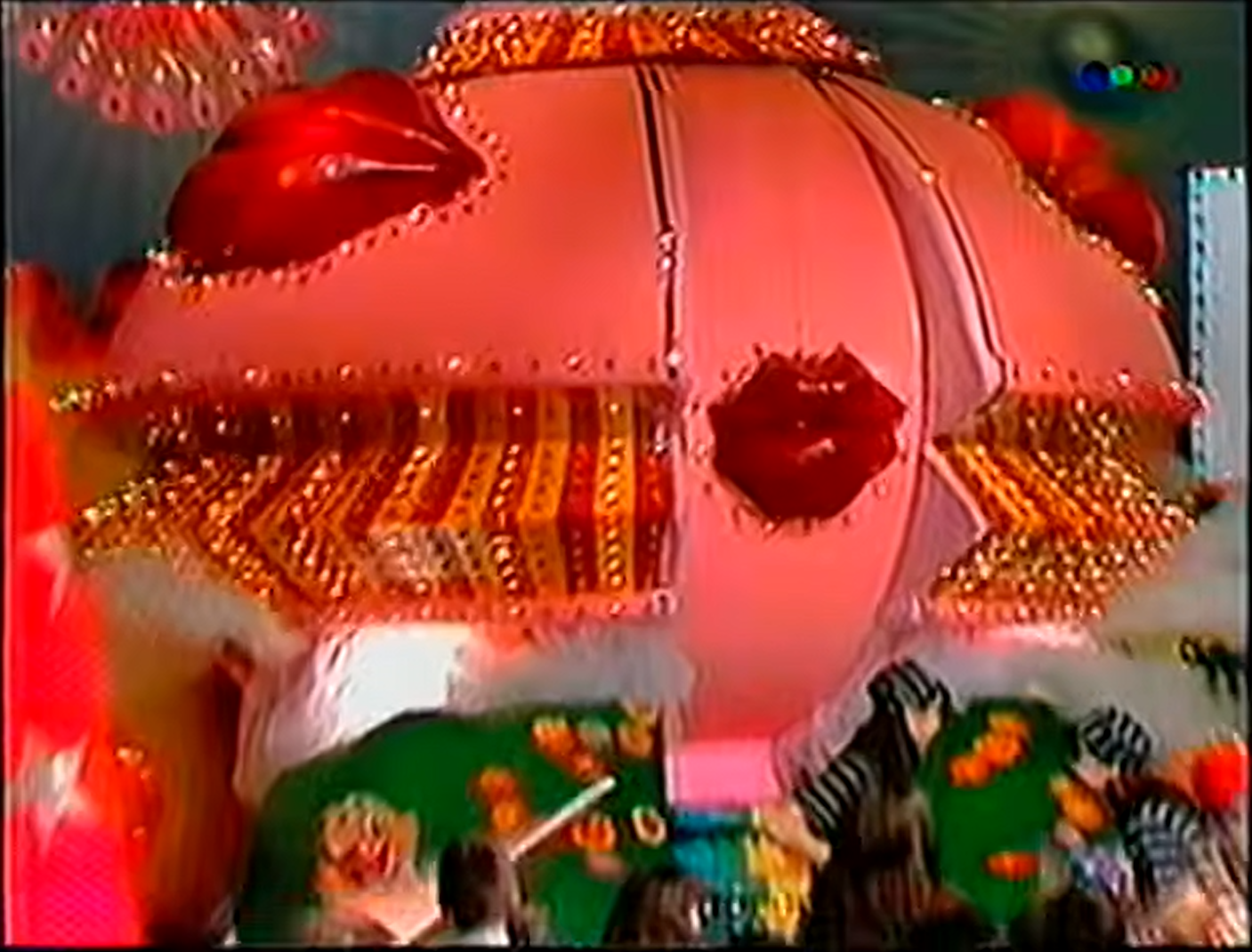
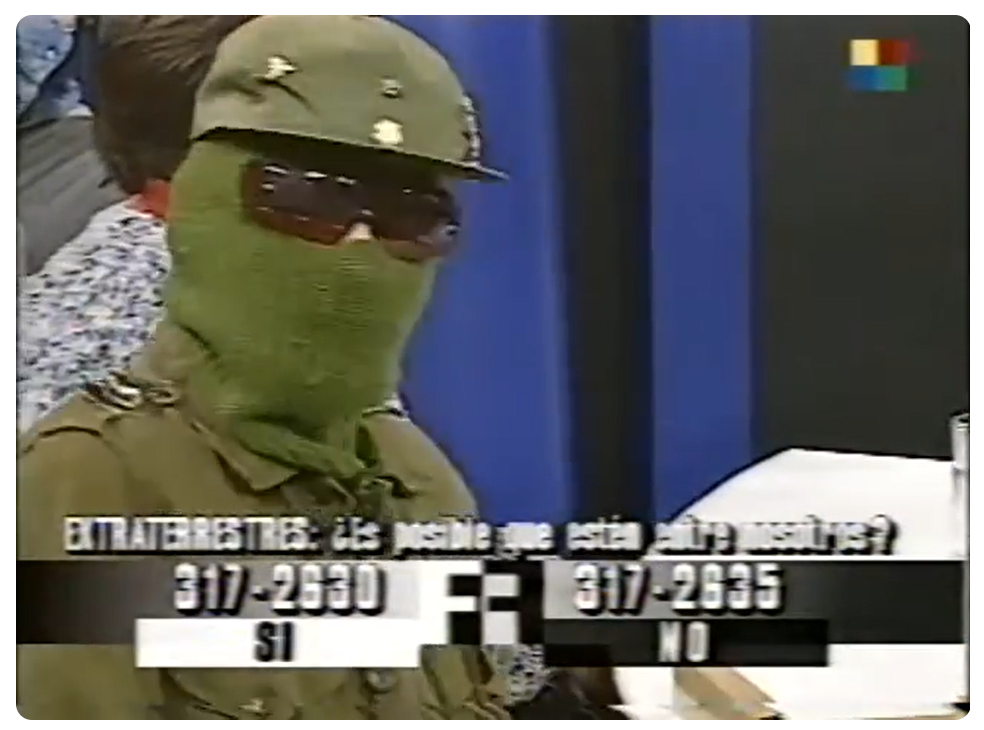
In 1992, Metete, aired on argentine public TV, broadcast a debate on UFOs. Alejandro Agostinelli, a legendary ex-ufologist turned skeptic, writer, and journalist of the paranormal in Argentina, faced off against leaders of what were then called saucer cults (years later, his perspective would shift to a more anthropological view of the phenomenon). In another broadcast, a woman claimed to have accidentally traveled to another dimension, where she bought a ring because she had gone out with little money. Indigo child Flavio Cabobianco published his bestseller I Come from the Sun. He was interviewed by star figures like Susana Giménez and Graciela Alfano. A few years later, the extraterrestrial commander CLOMRO roamed the TV channels hooded, claiming that they were already among us:
I am one of the many human beings who realized they were extraterrestrials, or that they could be from some other dimension. Maybe you have to be a kamikaze to go out in the open and say, 'I am an extraterrestrial,' and that’s it. Who did that? It was the boy Flavio Cabobianco, who, being a child, everyone believes him, because since the existence of Children’s Rights, children are listened to a bit more. Before, they would get hit when they said, 'Mom, I’m an extraterrestrial,' but this kid, back in '92, revealed that he remembered where he came from and what life is like in other places, triggering a chain reaction of kids and mothers and fathers of kids who called the channels where they appeared and said, 'I have the same case, my kid also says he comes from such and such place.'
Source: Face to Face, América, 1997.
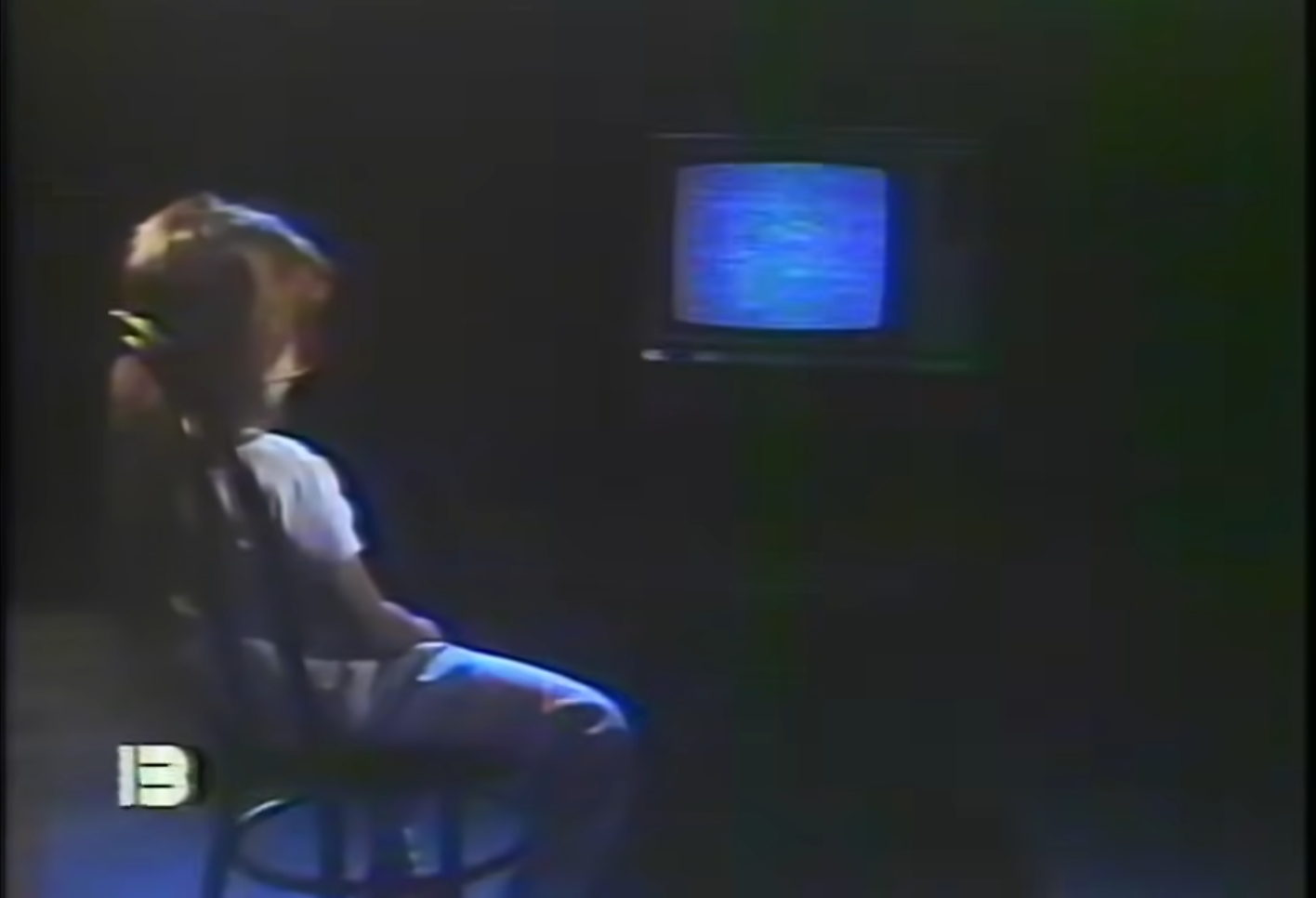
Santiago Slabý compiled it in Fear Pizza Myth Champagne, a docu-essay on the ufology of the nineties: we kids absorbed that paranormality like a sponge. This was also shown in the first opening of Juana and Her Sisters, which, to this day, is lost media. Until it reappears, I remember it like this: the camera made its way through a rather rustic model of a nighttime forest. A voiceover narrated the case of a girl (Juana) who was left alone in a cabin for days in front of the TV and ended up developing multiple personalities (her sisters). What follows is already on YouTube. The girl alone in front of the TV in the dark, illuminated by the static rain of the screen with no signal. At least she wasn’t the girl from Poltergeist, trapped directly inside the television.
The other world was normalized, it got into our heads and structured us. The TV was the portal. Pierre Bourdieu called it habitus. The way shared cultural practices guide our intuitions while becoming invisible to those of us who automate them. Only decades later does the distance reveal how strange it was that we lived in an era where the paranormal, extraterrestrial life, and esotericism were part of the everyday landscape. Rumors claimed that the same Xuxa who brought us peace and love in a flying saucer encoded satanic messages in her cassettes.
Television also brought us the archetype of the extraterrestrial who crashed on Earth and faces the absurdity of the human condition. Mork and Mindy laid the groundwork, later followed by Third Rock From the Sun. Mr. Bean was also an extraterrestrial. It wasn’t said out loud, but each episode began with a space probe dropping him on our planet.
Only decades later does the distance reveal how strange it was that we lived in an era where the paranormal, extraterrestrial life, and esotericism were part of the everyday landscape.
However, the popularity of extraterrestrials has been declining since the golden age of The X-Files, both in fiction and in conspiracy theories. Perhaps people have a limit and simply got tired. However, alien resistance hides in the networks. Since 2004, the online community Wrong Planet has provided asylum to neurodivergent individuals: primarily those with autism spectrum disorder (ASD) and attention deficit hyperactivity disorder (ADHD). The proposal is a safe space for alien souls stranded on Earth.
So how are we doing at home?
A specter haunts the world
In November 2024, the president of the Argentine Nation publicly admitted that one of his ministers is responsible for monitoring that no one becomes "divergent." The following year, he attacked the family of a twelve-year-old autistic influencer for being kukas. His loyal makeup artist, deputy Lilia Lemoine, joined in, accusing the mother of manipulating the boy and questioning the diagnosis. The boy's sister supported this accusation and claimed that the mother exploits and manipulates them. The Justice called Lemoine to testify about her statements, but she did not show up. Meanwhile, the former National Disability Agency (ANDIS) continues to be embroiled in bribery accusations, and people with disabilities and their families experience noncompliance with regulations, budget cuts, and attacks from the authorities.
Since 2013, the fifth edition of the Diagnostic and Statistical Manual of Mental Disorders (DSM-5) classifies ASD as a spectrum divided into levels. Level 1 is the most functional and corresponds to the old Asperger syndrome; level 2 is moderate, and level 3 is profound disability. Many functional autistics suspect their diagnosis before consulting. They even practice it unknowingly. For decades, the internet has offered self-evident psychometrics of dubious origin that only confirm the user's suspicions. It's not hard for the average earthling to recognize a variation of the same prompt in each question:
Are you autistic?
◯ Strongly agree
◯ Agree
◯ Neutral
◯ Disagree
◯ Strongly disagree
While some of these instruments are copies of clinical questionnaires, many others are not far from the personality tests of old gossip magazines. On the internet, they even coexisted with intuition and extrasensory perception tests (the most representative case is OkCupid, the grandparent of Tinder, where anyone could create their own test in the 2000s). The loneliness of the networks drives users to seek answers in clandestine questionnaires without medical supervision. In the jargon of the forums and reddits of the community, it’s common for someone to present themselves as self-diagnosed. To this day, there are more than one dating app for neurodivergent individuals.
It’s useful to ask ourselves if we came into this world with initiatory stigmas and if technology is ruining our minds. Cutting through the thick fog with conceptual machetes that classify our discomfort, the abilities that have been taken from us or that we never had, and the physical and mental transformation we aspire to. But it’s even more useful to give voice to those who cannot afford to turn off their cell phones, write by hand, and show up at a birthday party. Kids and adults with profound disabilities who have not been able to access language, or do so with marked deficits. They cannot express what hurts them or what has been done to them. Mothers who have to choose between imagining how to continue caring for their child after they are gone or preferring that their child's life be short because they cannot defend themselves in a world without mom. Insurance companies that eat up salaries on therapies that don’t seem to work. Dysregulation, disinhibition, impulsivity. Aggression and destruction of one’s own body, others, and the home. Misunderstanding and hatred. Fractured families. Schools that say, 'this is as far as we go.'
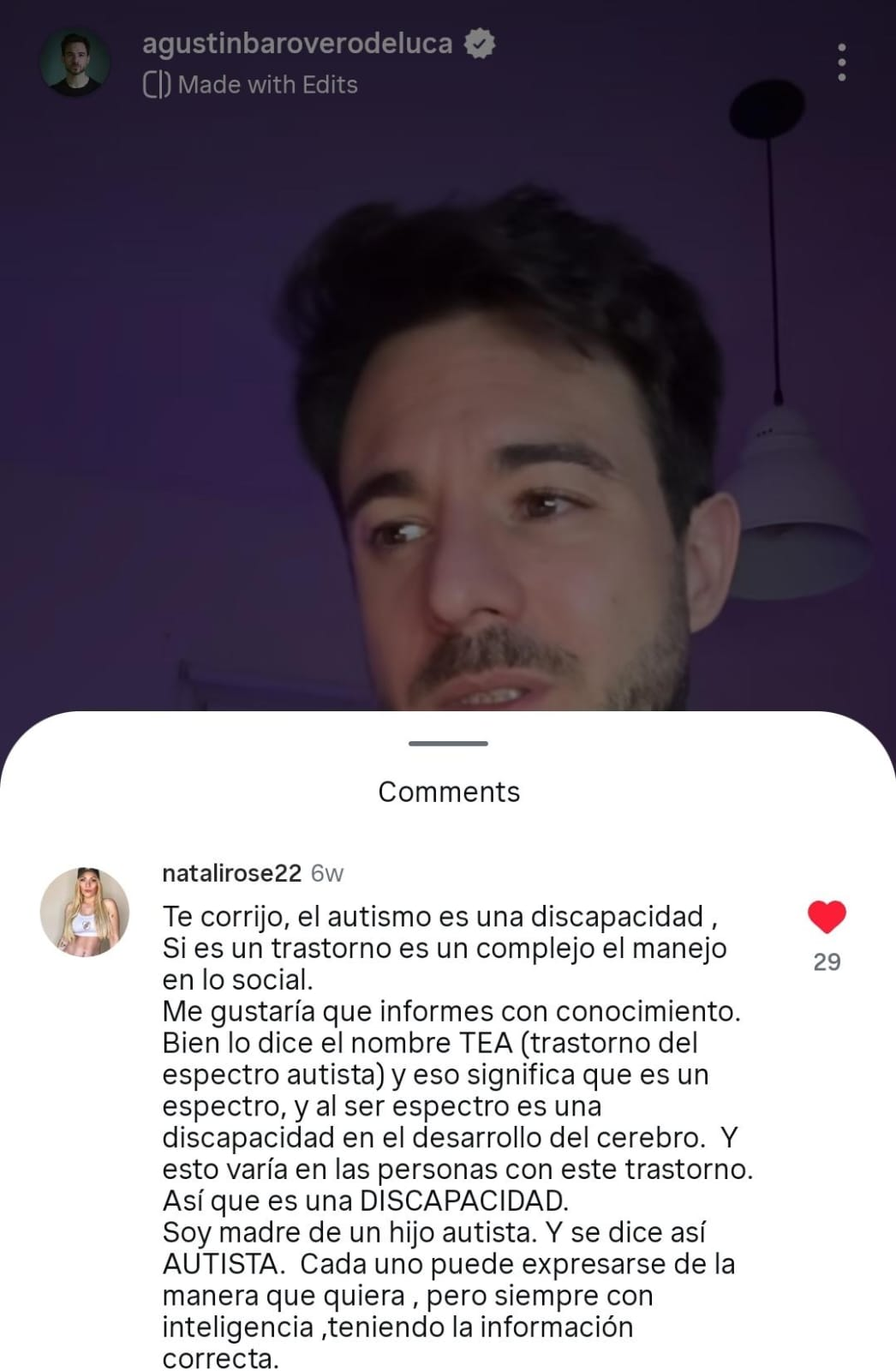
Today we sweep under the rug those who need us the most, and the algorithm forces them upon us: functional influencers, without linguistic deficits or visible eccentricities, in relationships, with jobs, and hundreds of thousands of followers. They are also writers, actors, and even models. They have charisma and camera presence. They take center stage and erase disability with a flick of the wrist, despite desperate pleas from mothers in the comments: 'Stop denying that it’s a disability!'
On the other side of the street, families YouTubers exploit their children without consent. Reality shows featuring neurodivergent dating romanticize autism in exchange for likes, money, or your data. They come in all flavors: Love on the Spectrum (love among autistic individuals) and Down for Love (love among people with Down syndrome) caricature the social awkwardness of neurodivergent pairings for the entertainment of normies. The German documentary Life With Autism shows the relationship of a thirty-something on the autism spectrum with a girl who has Down syndrome. She says he is her boyfriend, but he is questioning his gender and tells her they are sisters, that he wants to wear dresses and have sexual encounters with a boy with Down syndrome. The lineup of shows replicates the clichés of multiculturalism. Instead of discussing disability or disorders, they mention neurotypes. Ways of being in the world.
Health insurance plans that eat up salaries on therapies that don’t seem to work. Dysregulation, disinhibition, impulsivity. Aggressions and destruction of one’s own body, others’ bodies, and the home. Misunderstanding and hatred. Fractured families. Schools that say, "this is as far as we go."
It’s no surprise, then, that the neurodiversity paradigm faces a resistance similar to that which multiculturalism encountered: the repressive apparatus of normality. Recently, a little boy with profound autism was listening to music on the bus. The driver made him get off without hearing the mother’s pleas, in front of complicit passengers. The online community virtually lynched the boy: the same population that watches reels at full volume on public transport calls for blood when it comes to a child with a disability. They don’t want them on buses, nor in schools or food courts. Everything is fine until it’s time to share a space. "It’s a family problem."
When the president publicly acknowledged his divergence, social media had already diagnosed him. And his followers. Well-meaning individuals from the opposing political spectrum took more than one liberty to mock the "weirdos." Often, videos are compiled showing young libertarians who talk, move, and look different: "There’s not one normal".
There’s not one normal.pic.twitter.com/hRRgAO6X78
— Javier Smaldone (@mis2centavos) August 27, 2025
Keywords are tossed into the wind: risperidone, stereotypies, tics, meltdowns, burnout, sensory overload, and other terms in the interdiscursive realm of psychiatry and neurodiversity. Every time the president strays from normality, social media seizes the opportunity to discriminate against people with Down syndrome. Countless iterations of the same meme float in the noosphere: "we’ve had this conversation before."
I just got back from the gym, I open Twitter and the first thing I see is the President singing like a rockstar at Movistar Arena
— Lezka 🇦🇹 (@juanlezka) October 7, 2025
I don’t understand anything, folks, you carry on, this country has gone to hell. pic.twitter.com/su9OL4vTpx
Imaginary communities
But what does it mean to be neurodivergent? Essentially, it means you have a place in the rainbow of neurodiversity: something in your neurodevelopment was different. Reflexively, we think of autism and ADHD, along with other disorders that change depending on the website you’re reading, even those that wouldn’t be classified as neurodevelopmental per se like bipolar disorder and borderline personality disorder, while excluding psychopathy, whose neurodevelopmental component has empirical support. However, it would be a mistake, and it’s not my aim or competence to arrive at a taxonomy, but rather to analyze the discourses.
First of all, neurodiversity has an ambivalent relationship with psychiatry: it doesn’t focus so much on disorders, but on a cultural model of constructing disability: "You’re upside down," it replies to the establishment. Secondly, neurodiversity is not a medical category but a political movement of over thirty years, related to other diversities such as gender, sexual orientation, and race. It shares with these the concept of passing (blending in to avoid attacks), the authentic self (who one truly is when not pretending to be someone else), and affirmative care (access to treatments that support the person without denying their identity). And here’s the uncomfortable question: What happens when an authentic self spends the day screaming, destroying the house, hitting themselves and others? What is the threshold that marks where identity ends and pathology begins?
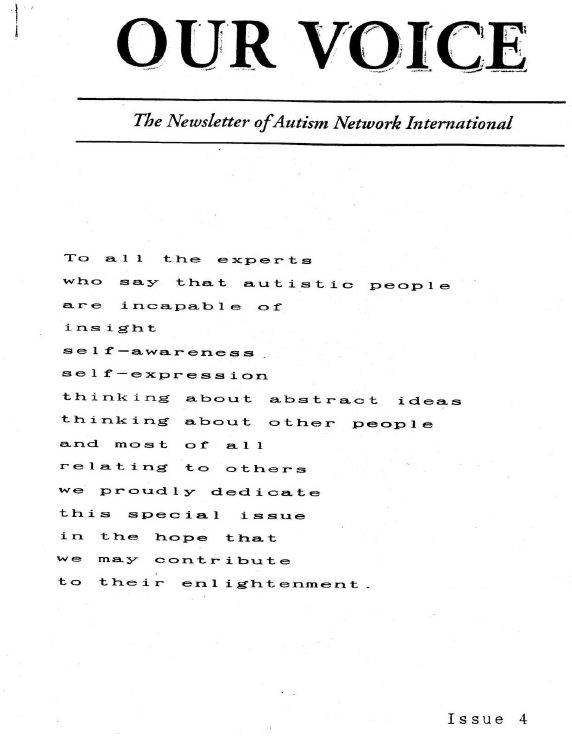
Since the early nineties, diagnosed and suspected autistics collectively and progressively coined the term "neurodiversity" through postal mail, at conventions, and publications, years before it appeared in the press in 1998. The Autistic Archive preserves scans of Our Voices, the newsletter of the Autism Network International (ANI), with letters and poems from the community, where narratives not too different from what we can find today on Reddit and TikTok were exchanged as early as 1992: feeling different, self-diagnosis, and long lists of confessed eccentricities among peers were added to the admonitions against a medical industry that didn’t understand or want to diagnose them.
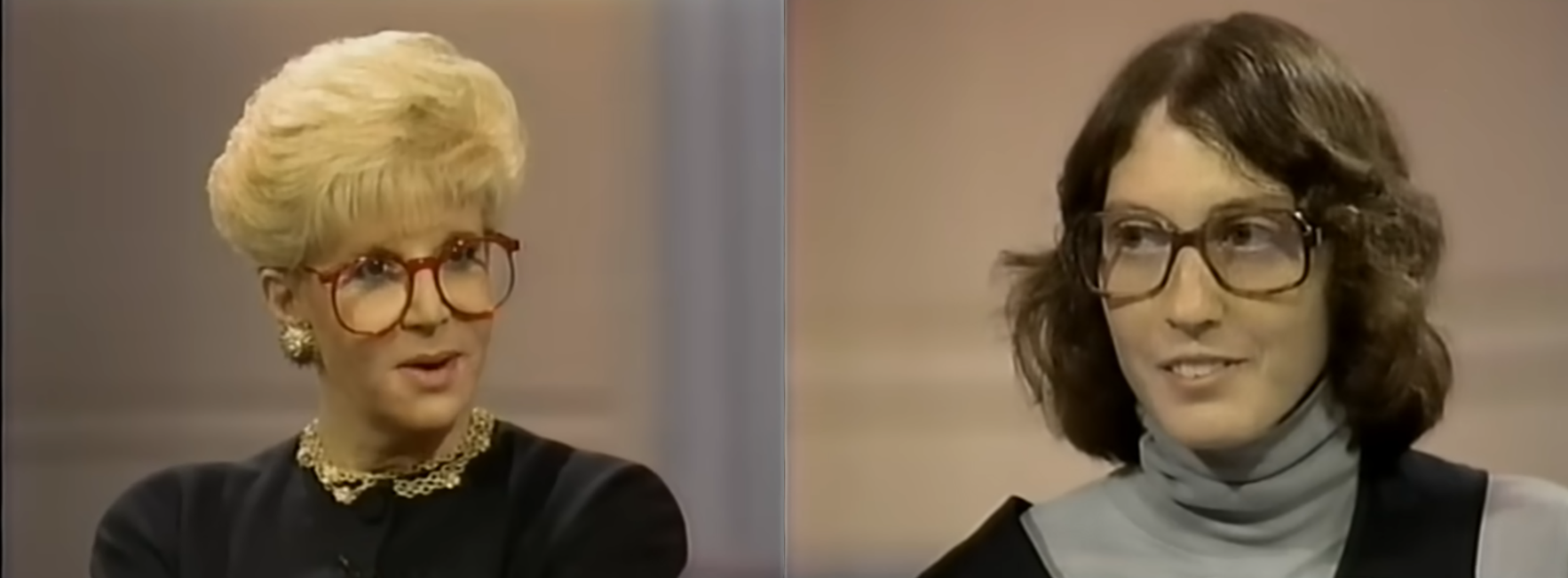
At the forefront of ANI was Jim Sinclair (1961), a staunch activist against all forms of pathologizing autism. In 1989, he appeared on TV under the nickname "Toby," explaining to the host what it meant to be a gender-nonconforming person (Jim/Toby uses the word neuter: "neutral" or "castrated"). Jim/Toby is peculiar, speaks in a monotone, but occasionally loosens up and cracks jokes that have the audience in stitches. A woman asked for the microphone to confess that she wanted to be his friend. The host, fascinated, took her time to listen. She discussed but empathized and finally conceded, not without first saying, "Toby, it’s almost like you came from Mars."
In Neurotribes, by Steve Silberman (2015), Jim recounts that from a young age he identified with people with disabilities, to the point of imitating a blind person he saw walking with a cane and making a wheelchair for a doll. His parents took him to specialists for his behavior, but he wasn’t diagnosed because he wasn’t autistic enough. It was the seventies, and the DSM-2 was in effect, which, in addition to pathologizing homosexuality, did not recognize autism as an independent category but included it within childhood schizophrenia. The interview does not recount when the diagnosis finally arrived, but there is a narrative of identification with autistics: Jim recognized them from a young age in television characters and later partially recognized himself in the description of autism he found in a brochure at the university: "I didn’t consider myself someone without empathy, without the ability to form emotional bonds, and without interest in relating to others."
Neurodiversity has an ambivalent relationship with psychiatry: it doesn’t focus so much on disorders, but on a cultural model of constructing disability: "You’re upside down," it replies to the establishment.
In 1993, Jim published Don’t Mourn for Us, a seminal pamphlet of neurodiversity, filled with disdain and condescension towards parents of autistics, telling them that if they suffer it’s because they’re fantasizing, that the kid is who he is and isn’t even their child, but an "alien child" (!) that fell from above, that they should go cry in the crying room and come back only when they can care for the child stranded on this planet, forever separated from his true extraterrestrial parents who could understand him. Tantalizing, self-centered, and lacking empathy, the text embodies a form of cruelty and contempt for families and caregivers without parallel. Still, it continues to spread, but now the voices of families are being heard:
[We don’t cry] for level one kids. We cry for children with profound autism who will never learn to speak, who smear feces on the walls, and who become so violent that they get kicked out of every therapy, group activity, and any type of special school.
We don’t cry because they struggle to make friends; we cry because they will have to live in a nursing home forever when we can no longer lift them to change their diaper at seventeen, or they become so violent that they make holes in the walls and hurt us.
However, these voices of resistance only began to be heard three decades later. And with the advent of the internet, they were silenced by the de-pathologizing activism, mainly in mailing lists like Independent Living and the website of the parodic Institute for the Study of Neurotypicals (ISNT). Its author, anarchist activist Laura Tisoncik, left traces of her fierce hatred against "experts" and "professionals" (in quotes by her), immortalized by the Internet Archive in January 1998.
From 1994 to 2013, autism was the name of the most dysfunctional phenotype, while the coveted Asperger syndrome belonged to the more functional ones. The seed of eccentric genius was already sown, which for decades would give us characters like Sheldon Cooper. However, as early as 1998, there was a rejection of the division between Asperger and autism. In the first version of the ISNT website, the author states: "I discovered I have Asperger syndrome." A few months later, she decides to change it to "I became aware that I am on the autistic spectrum." That the archive documents this replacement of "Asperger" with "autistic spectrum" in the same person fifteen years before the DSM-5 did so evidences the pressure of neurodiversity to influence categories outside the scientific community.
Today, neurodivergence hits us in our identity and fills us with doubts. Am I? Are they? Can I trust them? The tension has left the niche and runs through us. The question isn't about the meaning of "neurodivergence," but about who uses that word, how, for what purpose, within which communities, and above all, what bards are being armed.
In his Letter to a friend who decided to leave this world, Robi Chuit Roganovich faced the DSM-5 with a mix of terror and fascination: enter at your own risk because you will find (or rather: "abandon all hope, ye who enter here"). Like the author, I recognize myself and have been clinically recognized in some labels that explain me from head to toe, but I can't quite figure out whether it brings me peace or confuses me. Likewise, neurodiversity has a lifelong love-hate relationship with the manual: like a student union, it historically depends on the institution for legitimacy, but it declares itself in permanent rebellion.
Masquerade ball
Actor and teacher Agustín Barovero defends himself: "I don't seem autistic because I've spent my whole life imitating others." He is talking about masking, a hypothesis suggesting that high-functioning autistics mask their symptoms and experience cognitive overload from having to force themselves to emulate earthlings. The idea is that the entire universe of sociopragmatic communication that an autistic person executes when they "don't seem autistic" is a conscious simulation: jokes, smiles, gestures, glances, double meanings, prosody, etc. A performance to blend in among neurotypicals. When they get home, their brain is exhausted: burnout, dissociation, irritability, etc.
It's worth mentioning that the concept of masking emerged in the context of neurodiversity, but it only became the subject of empirical research after the publication of the DSM-5 in 2013. Previously, the prevailing idea was that autistics lack a good theory of mind. This idea, known as mental blindness, implies the inability or difficulty in attributing mental states, emotions, or beliefs to others, which predicts lower competence in representing how one is perceived. That's why masking is hard to reconcile with mental blindness. As a component of autism, the theory of mental blindness has been studied for decades, mainly by Simon Baron-Cohen and Uta Frith, among others. In recent years, Baron-Cohen has adjusted his position to accommodate masking. Over time, with the emergence of the neurodiversity movement, other concepts have been proposed, such as the double empathy problem coined by sociologist Damian Milton, which describes a mutual misunderstanding with neurotypicals.
Recently, Uta Frith published an essay stating that the criteria for diagnosing ASD are nonsensical because they apply to such a broad swath of the population that it becomes indistinguishable from other comorbidities, triggering a scandal that plunged neurodiversity into a deep crisis with virulent attacks on one of its leading theorists and researchers. They even accuse her of senility. However, Frith stands firm in her position: autistic masking lacks scientific grounding. Regarding merging Asperger's and autism into a single construct, her response has been emphatic: "we went too far." According to Frith, "extremely useful" personalities that resemble autism have been pathologized. The divergent vanguard jumped down her throat: "How dare you not call me autistic!?"
You need dopamine
My superpower was ADHD.
Paris Hilton.
Dopamine, get ready because you're entering. The misunderstood neurotransmitter. The molecule of more. Suffice it to say that I have an ADHD diagnosis and, to avoid entering a ritual of humiliation, I’ll keep the details of what that means in my biography to myself. If you're here, you already know a bit about it, but just to refresh: it's the cousin of autism, characterized by issues with attention, executive function, emotional regulation, time management, impulsivity, and other areas. Interviewed by Telefé, psychologist and ADHD diagnosed Juan Alberto González portrays it through the glitch:
It's a mind that never stops thinking about things, some related to what's happening and others that have absolutely nothing to do with anything, but it's a mind that never stops, never stops, never stops producing, producing, producing thought, thought, thought, thought, thought and never stops.
The most famous character with ADHD is Bart Simpson, canonically confirmed in the Focusyn episode. Throughout the series, they predict the worst futures: fat stripper, stoner, delinquent, immature, unemployed, and living in his parents' basement. And untreated ADHD individuals are more prone to academic and work problems, accidents, addictions, and even ending up in jail. It's estimated that the little problem in ADHD lies in the dopaminergic systems, although it's much more complex. Basically, you lack fuel for everyday life (not really, but you get the idea) and you're more tempted to seek it out in "fun" activities, like online gaming or writing a never-ending note about neurodivergence while the dishes pile up in the sink.
Untreated ADHD individuals are more prone to academic and work problems, accidents, addictions, and even ending up in jail.
Personally, the only thing I’ll say is that what helped me the most, beyond any therapy or medication, was simply knowing it. Learning to accept that I struggle with what I struggle with, but also valuing everything I do well. We are so much more than a diagnosis. We have plugins. For me, the most crucial thing was to avoid problematic consumption of reels and memes about ADHD and focus on psychoeducation with the help of professionals. A 2022 study on TikTok concluded that of the 100 most popular TikToks about ADHD, only 21% contained useful information. 52% was directly misleading. Another 2025 study had 490 participants watch TikToks about ADHD (informative, misleading, and a control group). As a result, those who viewed false information not only ended up knowing less than they already did about ADHD but came away believing they knew more.
In addition to having good sources of information, it's also useful to know that the name of the disorder is problematic, as it’s not a deficit of attention, but of regulation of attention, behavior, and emotion. All mediated by the blessed dopamine, among other inas, which they used to say we lacked, but today it seems more complex. This isn't a criticism (who am I, anyway), but rather that diagnoses, as the name of the manual indicates, are constructed based on the study of populations. While we are learning more about neurophysiological, anatomical, and genetic correlates, diagnoses are clinical and based on the constructs of the DSM-5. There is no type of brain study used to diagnose neurodivergent disorders (though they are used for cases of dementia or brain damage).
Information is online and free: both the DSM-5 and the international consensus statement from the World ADHD Federation. Additionally, Russell Barkley, perhaps the leading expert on ADHD, has books aimed at parents, patients, and people who want to learn about the topic. Outside of that, in the multiverse of recipes, methods, notebooks, apps, and other interventions that promise to resolve the life of the ADHD patient, one finds more smoke than substance. The answer, really, starts with treatment (medication and specific therapy for ADHD) and cognitive prosthetics: planners, alarms, post-its. It's a help, not a solution: planners get abandoned, alarms get turned off, and post-its become invisible. But you can always come back.
As for apps, no one who cares about you is going to suggest you use your phone more. The obscene offer of gamified habit-building apps like The Fabulous or Habitify may be fantastic for people without ADHD: people who can easily build habits without an app. The problem is that they harass people with ADHD and do us no favors. The Fabulous started as an innocent, minimalist app that made you drink a glass of water every morning for two weeks before adding another habit. Today, its Instagram bombards you with data about ADHD (ADHD, in English), trying to turn you into an obsessive who, instead of living, spends their time monitoring themselves.
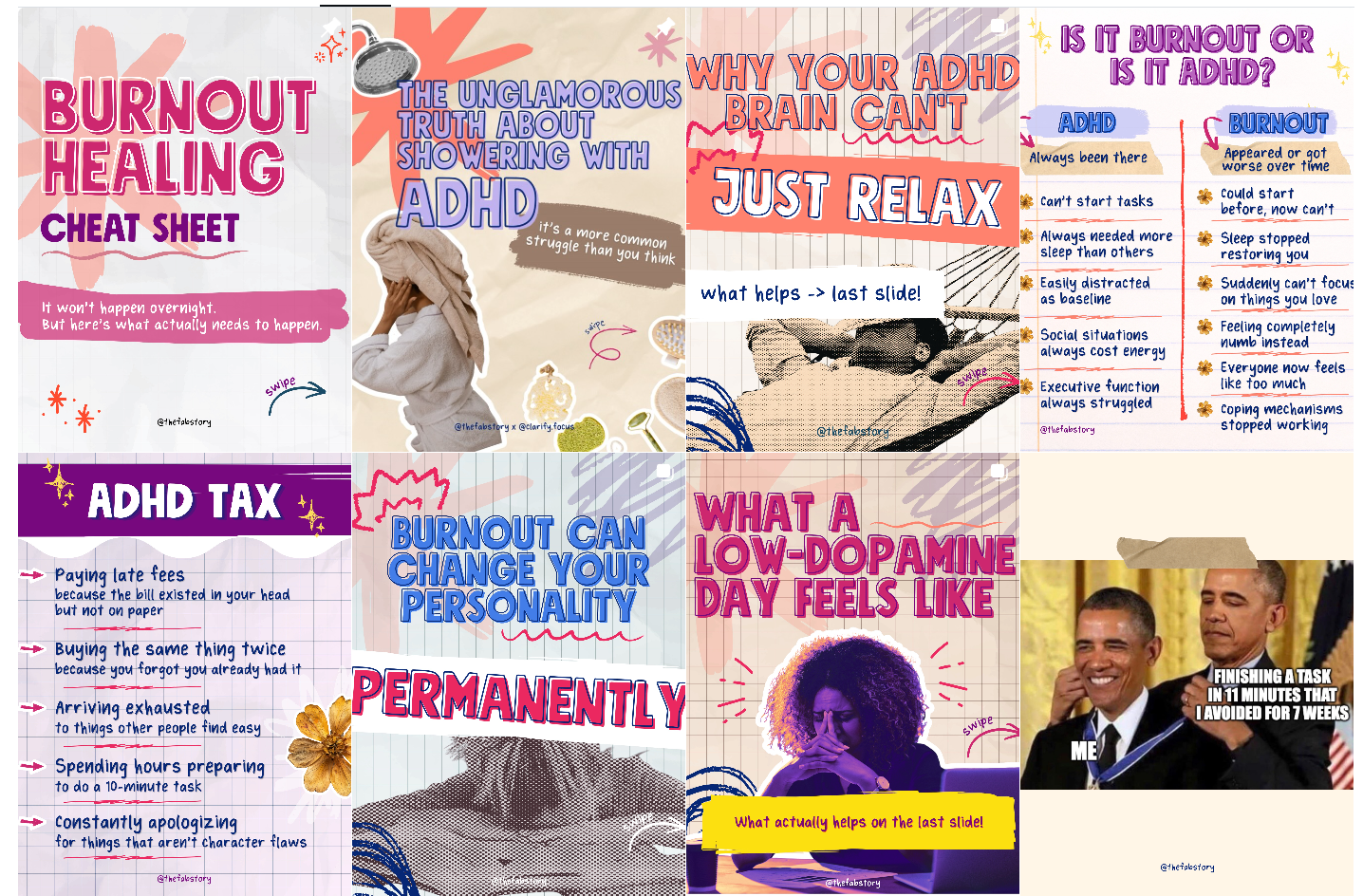
The junk posts on the internet constantly show us stereotypes pulled from God knows where to help us identify with ADHD, but there’s nothing observable on any given day that separates us from those without ADHD. They present it as quirky, funny, and even charming. Anyone having a bad day or lacking sleep will exhibit behaviors like those in the memes. Whether you’re clumsy, watching TV with subtitles, eating quickly, rocking in your chair, falling in love easily, reading backward, sitting this way, or talking that way.
Enough.
It doesn't help to live in this evolutionary aberration that are smartphones and social networks. Dr. Edward Hallowell (a specialist diagnosed with ADHD) discusses with his friend Barkley (who has a twin with ADHD who died in a ridiculous accident). Hallowell argues that, like in Paris Hilton's song, there are benefits to having ADHD. In his book ADHD 2.0 (2021), he outlines a new category: the variable attention stimulus trait (VAST) to claim that the global population, caught up in the frenzy of platforms, is acquiring traits of ADHD even if they are not candidates for diagnosis or medication (in the U.S., the first-line treatment for adults is amphetamines, which are banned in Argentina). Barkley responded in depth on his YouTube channel. According to Barkley:
- There is no evidence that ADHD brings with it gifts or benefits like high intelligence, creativity, lateral thinking, or entrepreneurship.
- No evidence has been found that the bombardment of information and stimuli has decreased attention and generated ADHD symptoms in the general population.
However, Barkley does not deny that specific talents outside of the disorder may interact in particular and complex ways with traits of the disorder, while emphasizing that it is simply immoral to lie to patients about supposed benefits to artificially boost their self-esteem. According to Barkley, the perspective of ADHD as a gift erodes acceptance and access to public and health services, which is particularly frustrating in Argentina due to the lack of specialized professionals in ADHD, especially in public hospitals. Private specialists often work at full capacity, charge exorbitant fees, and their contacts are traded cautiously in secret patient groups on WhatsApp.
It is important to highlight that, in his review, Barkley does not address the phenomenon of platforms designed for engagement and reaction, where the economy of attention has increasingly become an economy of hate that exploits users' insecurities. The more we are on social media, the worse we feel and the more we fear the ghost of brainrot. However, against our intuitions, these attacks do not seem to significantly and permanently affect cognitive dominance. The evidence does not support it. It does impact our emotional habits, attitudes, and identities. In any case, whether the internet is ruining our brains or not, it matters little when the algorithm infects us even when we are not using the internet. We focus so much on the brain that perhaps we are forgetting about culture. It is undeniable that notifications interrupt us during any activity, distract us, and make us react, and that is a problem even if it doesn't harm us cognitively. Especially for people with ADHD, who already come with a pre-existing condition, and internet use can become problematic. Practically speaking, what should concern us is the availability of stimuli and how invasive it is, when social life, romance, work, commerce, and even the State make us process our lives through the annoying device we have to carry everywhere. It is easier for us to imagine that our brains have been damaged than to accept that we live in an increasingly dystopian world. We would rather be ruined than changed.
One of the things a professional will look at when diagnosing ADHD is how insidious, lifelong, and invasive the problematic behavior is. Does it depend on the context? Has it been present throughout life since at least the age of seven? Did others notice it? What do school reports say? Family? Relationships? Does the person often lose things? Do they last only a short time in jobs? Is there documentation to support it? Once again, turn off your phone and consult your neuropsychologist.
Even the State makes us process our lives through the annoying device we have to carry everywhere. It is easier for us to imagine that our brains have been damaged than to accept that we live in an increasingly dystopian world.
In my experience, it is crucial to have another person: a therapist for weekly check-ins and sometimes something as simple as a friend to work alongside each doing their own tasks. They call it body doubling in the jargon. What doesn't work is waiting for a system to solve your life. "I can't be that Scandinavian!", sang Björk in 1997, after the Uruguayan Ricardo López sent her an acid bomb. And it's a bit like that: empowering oneself. Stopping the desire to organize freedom. It is common for people with ADHD to know perfectly well what needs to be done, and yet still not do it.
In the past decade, the bullet journal was promoted as a minimalist strategy for cognitive sovereignty to control and organize life on paper and pencil. Even for people with ADHD. Eureka! The problem is that the bullet journal comes with a bunch of rules and repetitive steps that consume valuable cognitive resources and basically tire your brain out to get you to perform meta-tasks instead of everything you need to do. A person with ADHD might buy the bullet journal, get excited for a while, soon get bored, and start doodling, sticking stickers, or just abandoning it altogether. In the end, you failed again and are good for nothing.
If you have ADHD or another disorder that affects your memory or executive function, you have probably tried many things. The only thing I can responsibly say is:
- What works for your friends probably won't work for you.
- Seek professional help.
- Be careful who you choose.
Indigo children
It will surprise few that, for decades, parents from all over the world have resisted the diagnosis of ADHD and medication for their children. Psycho-stimulants have an unjustly bad reputation and, as we mentioned, have even been parodied by The Simpsons. The new age movement of the seventies was the ideal breeding ground to invent the paranormal alternative to diagnosis. The psychic Nancy Ann Tappe detected a new generation of children with indigo auras, assigning them strong will, independence, intuition, a tendency to question authority, and difficulties within the educational system. Her ideas spread and were attached to more extreme interpretations, such as that these children had psychic powers or that they came to destroy the old systems to build a new world.
In this context, Flavio Cabobianco appears, the boy who came from the Sun:
New children are being born. They are different humans, even if they don't seem like it. I am just one of them, one of the first. Humanity is changing. The connection to the spiritual is more open. All children can now stay connected to their essence.
Flavio Cabobianco, I Come from the Sun, 1991.
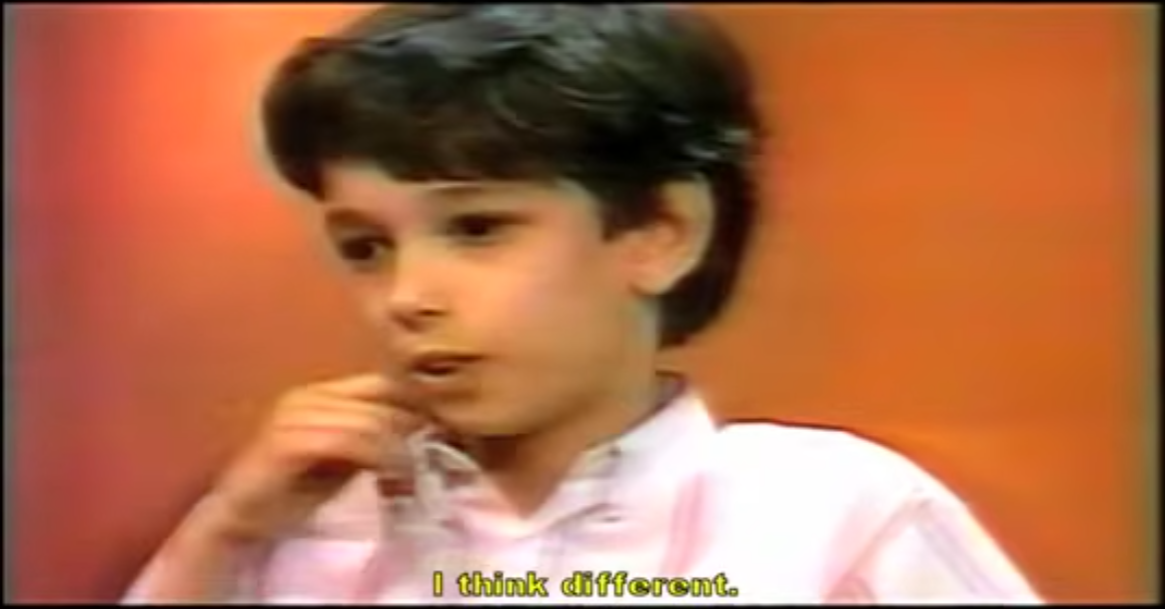
Flavio paraded through TV channels alongside his mother, transpersonal psychologist Alba Zuccoli, and his older brother Marcos Cabobianco. He claimed that we are all "little pieces of God," that there are interdimensional beings, and that in the early nineties the world was so dense that a process of sublimation was necessary. In interviews, Flavio appears somewhat awkward in interaction. When he is with Marcos, the contrast is striking: the older brother interacts more naturally among humans. As a teenager, on the Show of Cristina, Flavio admitted, "When I was little, I struggled with normal things. Now I am much more adapted." Marcos directly defined himself as Flavio's caretaker. What follows is a plot twist.
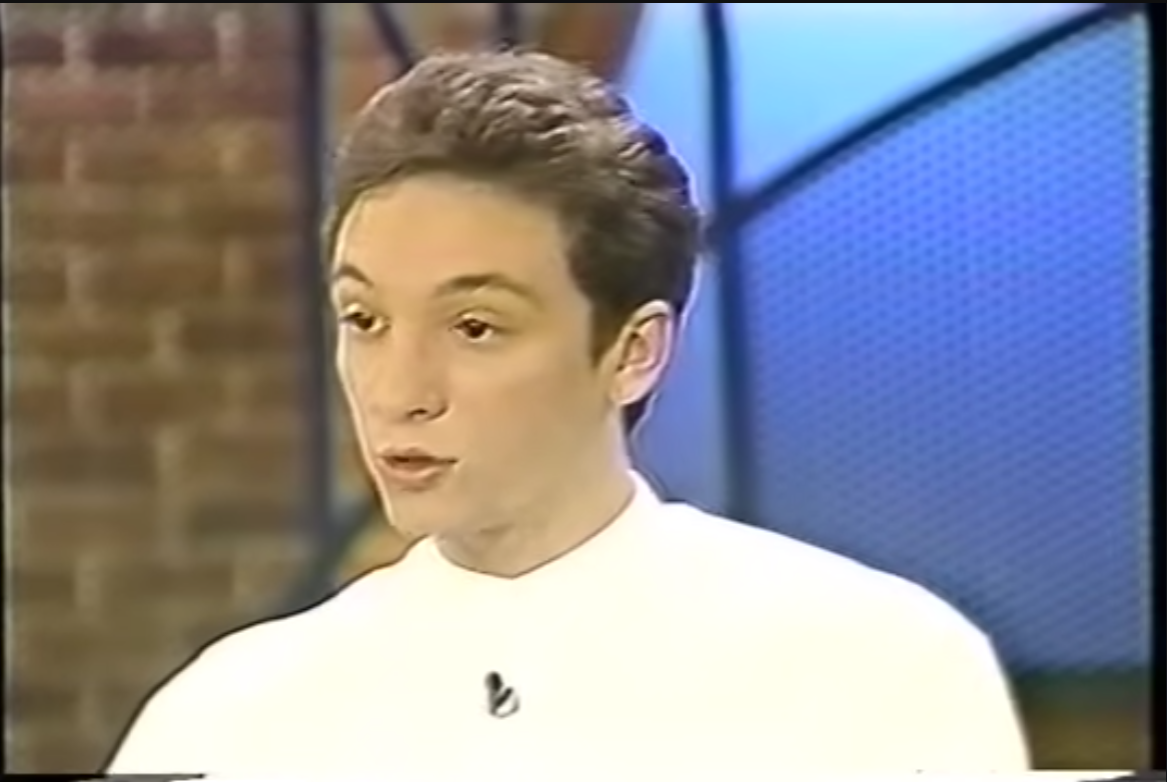
At one point in the interview on the Show de Cristina, the mother of the Cabobianco family comes on stage. She admits that, of the two, "Flavio is the theorist and Marcos is more the one who lives the experiences." She recounts over and over, under Marcos's uncomfortable gaze, how at three years old her eldest son was telepathic and capable of entering her mind. However, when they wanted to include him as a co-author of a book, Marcos took the little distance he could in that family system. I Come from the Sun was conceived as a compilation of maternal reports of everything both children said, aged eight and eleven at the time of publication. However, Marcos explicitly requested to be left out, even though many ideas and phrases were supposedly his. The revelation would come twenty-five years later, with the documentary Solar (Manuel Abrąmović, 2016).
Manuel is in the spotlight, against his will. He doesn't want to be there, especially not on camera. The desaturated image can't hide his Windows XP blue eyes, which stoically withstand Flavio's onslaught from behind the lens. The former indigo child is now a thirty-something who subjects the director to humiliations after hijacking the documentary he was supposed to be the subject of, breaking a camera, and formatting a hard drive with the footage. Manuel wraps it up as best as he can with the leftover material, YouTube clips, and, above all, with repressed anger. Towards the end, Flavio and his mother corner Marcos. They want to re-edit the childhood book and once again list Marcos as a co-author (by now a historian at CONICET, something the mother mentions with disdain). Marcos says no again. The mother retorts that he was a telepath at three years old. "I don't remember," he challenges. Mom explodes: "You don't have to remember, you have to believe what I'm telling you!" Flavio tries to mediate, fulfilling the role we never saw: a mere instrument in his mother's crusade to dominate Marcos, the true golden child. The volume rises. "It's emotional terrorism!" Marcos declares. He stands up and leaves.
Fortunately, the distant echoes of the new age world now seem ridiculous to us. Revisiting the appearances of indigo children on 90s TV and ending with the revelations of Solar leaves a bitter taste in our mouths, because now we do have a different way of perceiving things, but more importantly: a language to talk about abusive parenting. While we breathe a sigh of relief for living in a millennium with childhoods more protected from paranormal manipulations, we now see kids with ASD parading on TV and social media. Isn't it, in part, the cultural script of the indigo children of yore coming back for revenge? Why do we still need star children to show us the way? Who protects them from exposure? And from their families? Ian Moche, our influencer kid with autism, recently told Marcela Feudale that attacks from politicians, harassment, and threats on social media (which he shouldn't be reading as a minor) led him to suicidal thoughts. Like Flavio, who defined hatred as "disordered love," Ian says he overcomes hatred by transforming pain into love. But he shouldn't be exposed, to begin with.
Holograms
The technique is called facilitated communication, where a trained facilitator helps a person with a disability type on a computer. The problem is that when they tried to test it in a laboratory, it failed: the facilitators guide the patient's finger 100% of the time. It's not necessary for them to do it on purpose; the ideomotor effect comes into play, the same one that spells out messages from the dead in the cup game. In 2011, Anna Stubblefield, a philosophy professor, used the technique with a man with cerebral palsy and believed she found an intellectual peer. Soon after, she thought they were in love and ultimately believed they were having consensual sexual relations. None of that was happening outside her head. As a result, the modern Pygmalion was sentenced to twelve years in prison for rape, although in another trial, the charges were reduced, and she was released. There's a documentary on Netflix.
Ian Moche, our influencer kid with autism, recently told Marcela Feudale that attacks from politicians, harassment, and threats on social media led him to suicidal thoughts.
Carly Fleischmann appeared on TV in 2008. It was the miraculous story of a girl with profound, non-verbal autism who couldn't stop screaming, jumping, and hitting herself until a facilitator helped her come out and share the person who had always been inside. She is never seen typing more than random letters, but the iPad reads pre-written scripts in a robotic voice as if they were from "someone". She became the biggest superstar of profound autism. During the 2010s, she visited prime time shows and even conducted "interviews" with famous hotties on YouTube, making sexual proposals, despite the fact that it was already known that facilitated communication is a fraud and exposes autistics to all kinds of abuse. Nevertheless, millions of viewers chose to fantasize about a Carly obsessed with sex rather than see the disgusting exploitation and abuse of a person with severe disabilities who didn't understand what she was doing there.
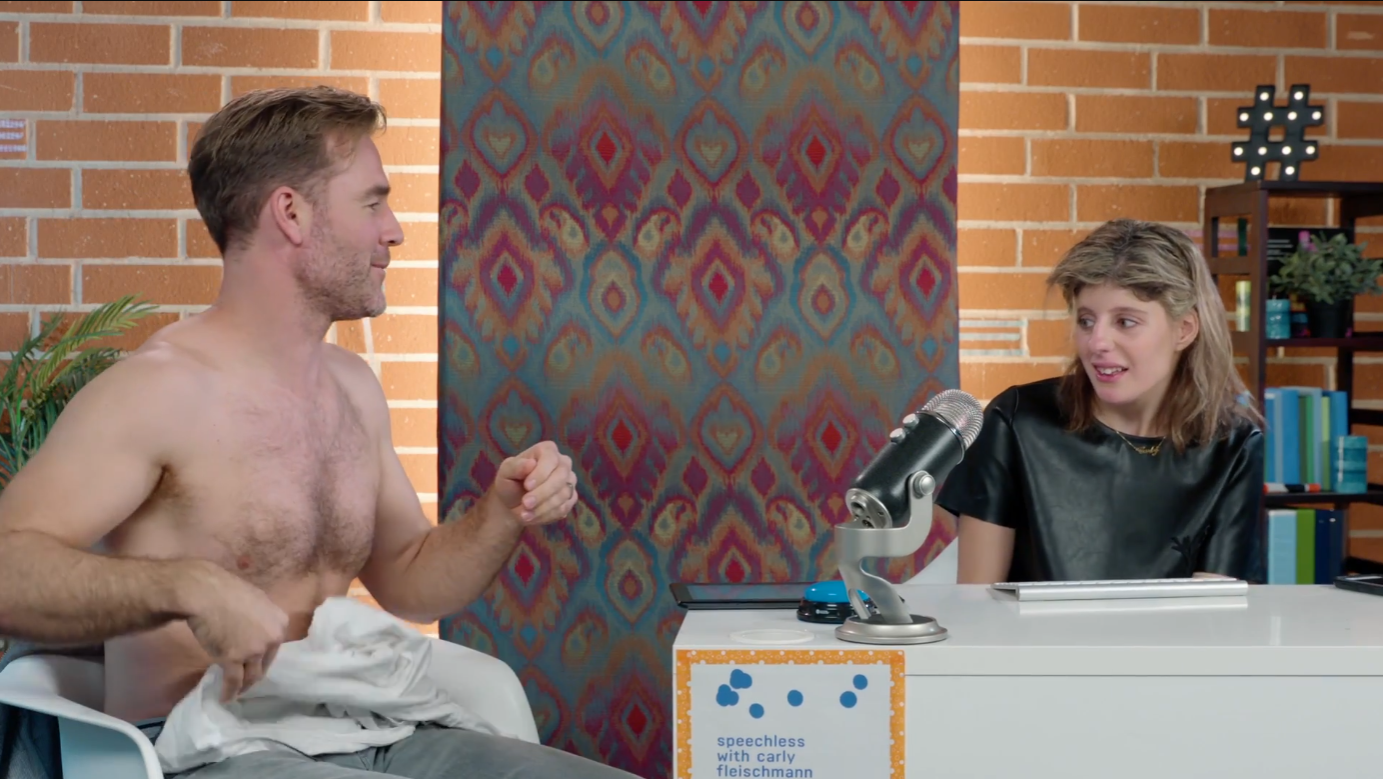
In 2017, Carly appeared on Too Many Stars on HBO, where she had to "interview" Stephen Colbert in front of hundreds of people, but they couldn't keep her seated and had to cut to a break after an incredibly awkward moment that overshadowed the talk show of Oso Rulo. In 2019, "Carly" posted on social media that her father's boyfriend had sexually abused her, and her father publicly responded that she misinterpreted a gesture of affection. Ultimately, they deleted the messages, blamed a rebellious former caregiver, and claimed they were hacked. Since then, nothing has been heard from Carly, and the media has not mentioned her again.
After her disappearance, Carly was dethroned by Abbie Maass, the star of the YouTube channel Fathering Autism. Like Carly, she has profound autism and is non-verbal. Like Carly, she is filmed in scenes scripted by those who should be caring for her, but they are merely holographic projections stripped of dignity and consent. We see them, but they aren't really there. Abbie's father, Asa Maass, has been posting videos of his daughter since she was a little girl, almost daily, with millions of views. On one occasion, he filmed her using the toilet.
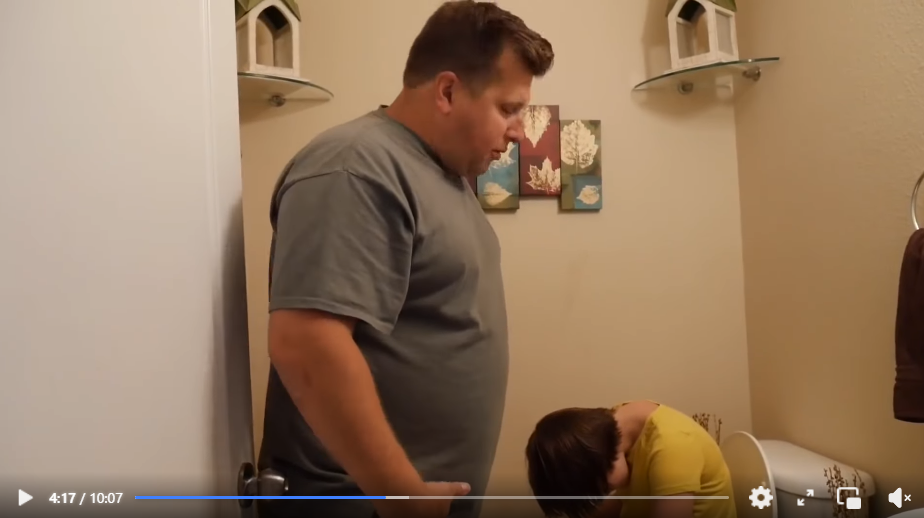
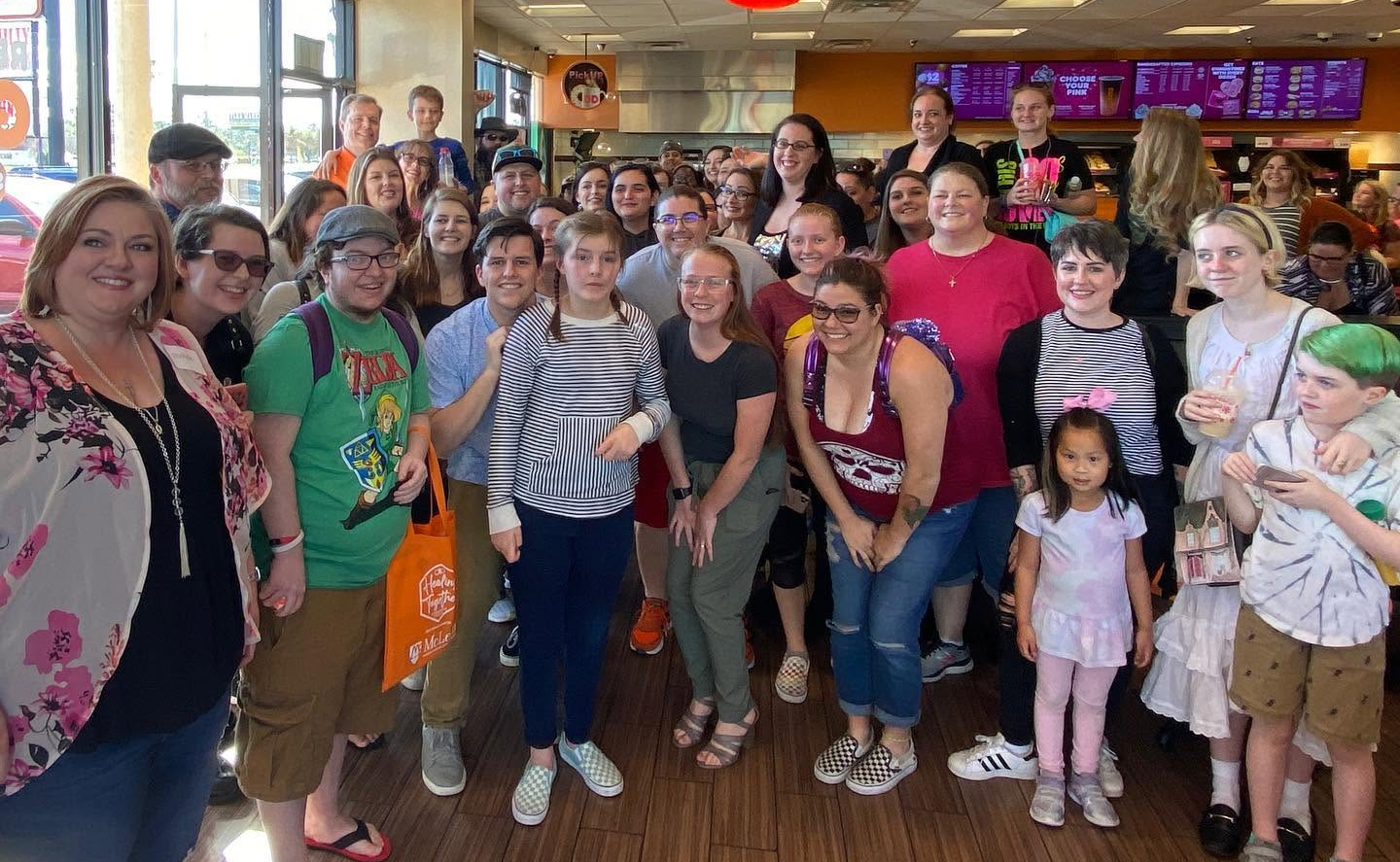
The exploitation of Abbie paid off, and Asa, a chronic unemployed, was able to buy a house with a huge pool thanks to the morbid curiosity of millions of people and families of autistics seeking community. Every so often, he organized gatherings with dozens of unknown Abbie fans who crowded to meet her.
What the family didn't know was that a person obsessed with Abbie had usurped Carly Fleischmann's identity and was leaving disturbing messages on the alien forum Wrong Planet. She warned that she was at her wits' end, that she didn't care about anything anymore, and was about to make a one-way trip to Jacksonville, home of Abbie, where she could finally have physical contact with her, even if it ended with her in prison.
The fixation of the user carlyfleischmann on the forums of Wrong Planet did not raise alarms in the community. Without a moral compass, she received empathetic comments reminding her that if she traveled to Jacksonville, she could end up in prison, but no one spoke up for the potential victim or reported the situation. In the archived posts, the false Carly claims to be a trans woman who can only find unconditional love in children. On another occasion, during a work trip, she expresses her withdrawal from Abbie, saying she's very hooked and can't wait to have the life-sized companion doll she ordered to satisfy her craving for contact with Abbie. She also shares that she is a hologram (which, in her words, means she has multiple personalities). As we dig deeper into the posts of the hologram lady, everything becomes more revolting and chaotic, if that's even possible. Not only because of what she confesses but particularly because of the community in which no one reported the messages or the user (not even questioned her), and they remain there, after years.
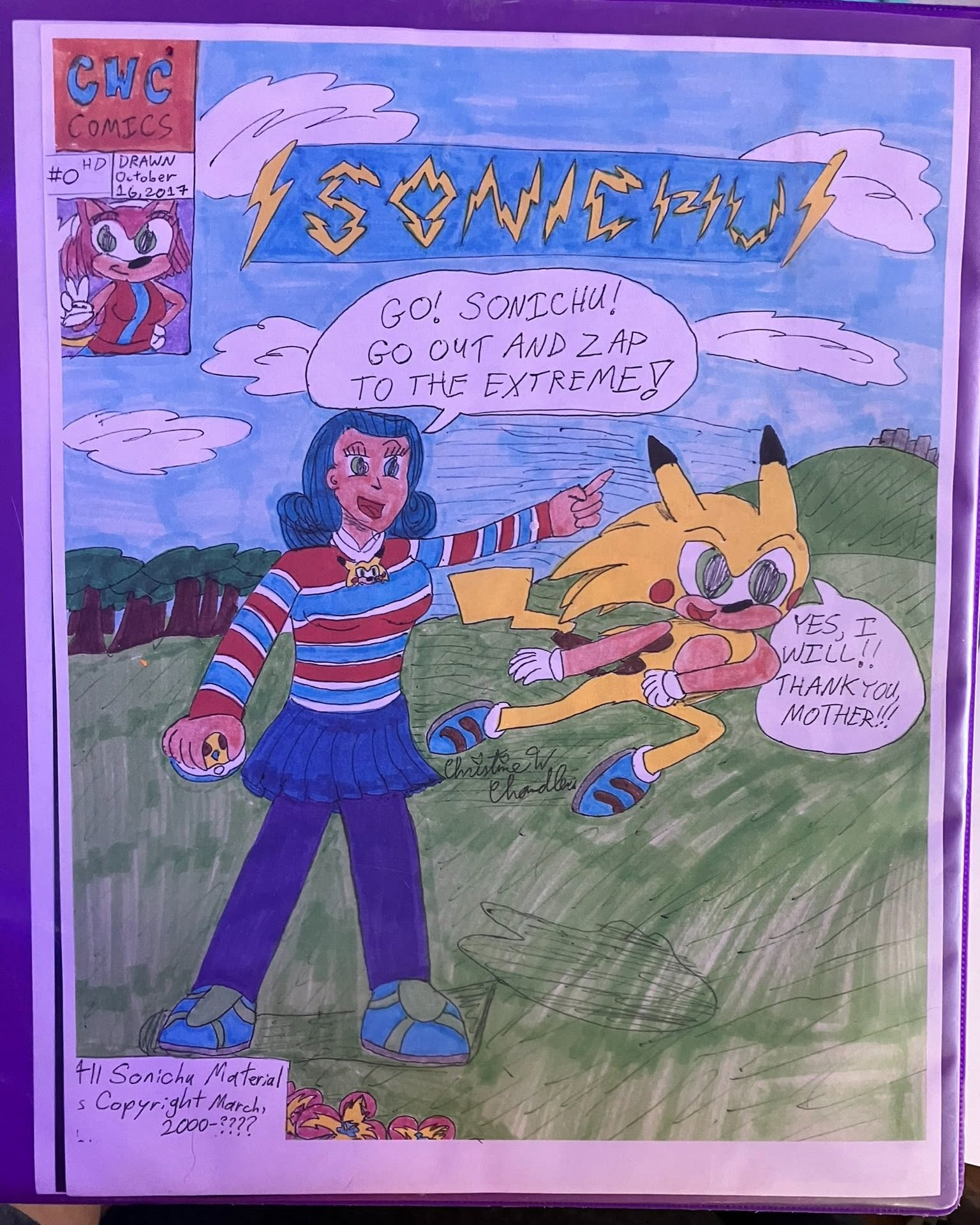
It seems that the best one can wish for a person with profound autism is that they finally develop language and can then tell the truth and say no to exploitation. If only it were that simple. A timeline published by Business Insider tells the story of the most trolled person on the internet: Chris Chan, then a young man diagnosed with autism in childhood, verbal but with expected peculiarities in someone with functional autism; his intense interest in video games and a webcomic he started developing at eighteen, mashing up Sonic and Pikachu into a new concept: Sonichu. By 2007, Chris caught the attention of the most psychopathic corners of the internet. It was the era of organized trolls, and they subjected him to all kinds of humiliations. They wouldn't leave him alone. They approached him as friends to extract information, make him produce sexual material, steal money from him, and manipulate him in every imaginable way. It was so excessive that some trolls felt pity and tried to wake him up.
His father died, and a few years later, Chris came out as a trans woman. By then, everything had been falling apart for a long time. In one of the last manipulations, a person who had gained his trust recorded and leaked a conversation in which Chris claimed to be having sexual relations with his 79-year-old mother. He ended up in prison for almost twenty months, but the case was ultimately dismissed under a special regime provided by Virginia law for people with autism or developmental disabilities, without any criminal conviction.
Thinking about these things is hell for families with a profoundly autistic member. How to care, how to protect, how to be there to help them regulate their behavior, to socialize, in a world full of predators of all kinds, both outside and within neurodiversity. In our family, there is a little person who has become the center of our lives. No one knows how it will go on. We are separated by a hallway. We see each other almost every day: I sing to him, I dance for him, I developed an app for him, I make him smile, I get him to look me in the eye. He doesn't speak, but he sings. Still, in this village we've built to give him all the care and support he needs, we won't be here forever. We've just lost someone incredibly important in the village, to top it off. The question never goes away: what happens next?
Neuro-wars
We must acknowledge that it's comfortable to stay in this thing of being special. When I received my diagnosis, a friend encouraged me to "tell my story." Suddenly, you have an excuse to talk for hours about yourself and all your peculiarities (which you assume others don't have), without having done anything to justify that they should listen to you for so long. Neurodivergence is the fairy godmother that makes you interesting. In exchange for your soul. Fortunately, a few days later, I felt secondhand embarrassment and deleted everything. The scourge of content wreaks havoc on people's beliefs and behaviors. We have witnessed the birth of the lumpencognitariat amidst lies, community inventions, the romanticization of disorders, and the incomprehensible quest for a psychiatric stamp to then rebel against that stamp.
Many times, the obsession with diagnosis can create a feedback loop where we infantilize ourselves more and more. I had to leave the WhatsApp patient group when functional adults with children started sharing links to teething rings and sensory toys they were buying for themselves.
It's comfortable to stay in this thing of being special. Suddenly, you have an excuse to talk for hours about yourself and all your peculiarities, without having done anything to justify that they should listen to you for so long. Neurodivergence is the fairy godmother that makes you interesting. In exchange for your soul.
It's not hate towards neurodivergence, of which I am a part. Sometimes I wonder if perhaps there was a mistake, like what happened to Christina Buttons, who received an autism diagnosis as an adult but self-diagnosed out when she saw the attacks from the neurodiversity community against families of profoundly autistic individuals for taking them to therapies and for using the forbidden language of disability. Perhaps living with someone with profound disabilities makes me step down from the cross because others need the wood. It's recognizing that you can have a thousand times more in common with someone you assume is "neurotypical" than with another neurodivergent, and that the visibility and dissemination we dedicate to people who are an inch away from neurotypicality could be used to help those without a voice.
The internet has been generating digital tribes born from psychiatric discourse for years. At some point, Dissociative Identity Disorder gained momentum: they make videos and tell you they have multiple personalities like in the movies, showing them off with different outfits and makeup, even though DID doesn't work that way. The Tourette syndrome also started to "spread." A TikToker racked up millions of views showing her unbelievable tics until she was called out for lying.
I propose we stop being complicit. Let's do a massive unfollow of psychiatric shows and focus on people with disabilities and their families. We need visibility, funding, legal, media, and institutional support to confront the neglect, invisibility, and trivialization that the most vulnerable face every day.
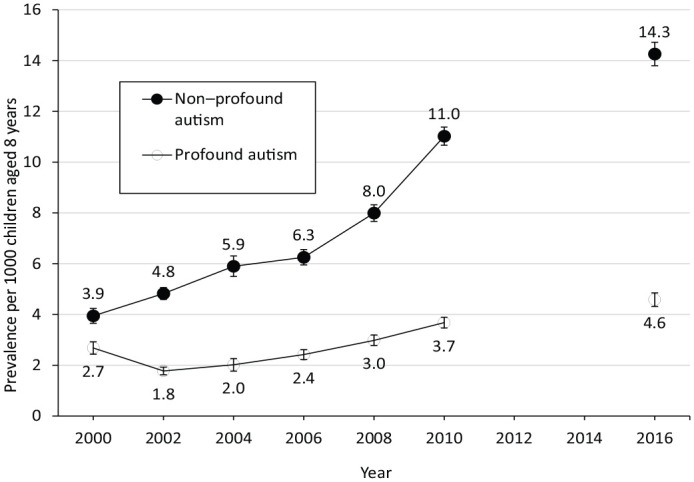
They might say it's not one thing or the other, that the neurodiversity movement isn't antithetical to disability activism, but I hope I've made the case that they are hardly reconcilable. Especially when cases of profound autism have remained relatively stable over the last few decades, while cases of less severe autism continue to rise.
As we've seen, since its inception, the neurodiversity discourse has not been particularly kind to people with disabilities, their families, and specialists. But for the first time, criticisms within the scientific community are gaining visibility due to the blatant attacks on any progress toward treatment or cure. In the words of neurobiologist Moheb Costandi:
Ironically, a social justice movement aimed at highlighting how autistic individuals are mistreated by society is now directly responsible for the mistreatment of the most vulnerable among all autistics, many of whom are so severely affected by their condition that they cannot speak for themselves. In fighting for their own rights, a group of marginalized individuals is effectively hyper-marginalizing those they claim to advocate for. They have monopolized the public discourse on autism and continue to do what they can to silence any dissent; this inability to debate and reach agreements is a problem not only for the autistic community but for society as a whole.
And where does the fight for cognitive sovereignty fit into all of this? Is it a futile task? Quite the opposite: our cognitive functions are not ruined but colonized. If we manage to detach ourselves from the devices, all indications are that, in time, we will be more or less intact. A few years ago, I started jokingly referring to neurocolonialism. The devices trap us while we use them, and the system is designed for us to use them all day long. No one needs to touch our brains, just occupy them permanently. It doesn't seem like we're facing technologies like those of the aliens in Zak McKracken that dumbed down the global population with a 60 Hz buzz. Walter Ong, in his classic Orality and Literacy, recounts that the emergence of an older technology, literacy, also faced resistance: Socrates feared that writing would weaken the mind. And here we are. In the meantime, we could think as a community about how to reclaim our lives to, in turn, reclaim our minds. The way out is collective.
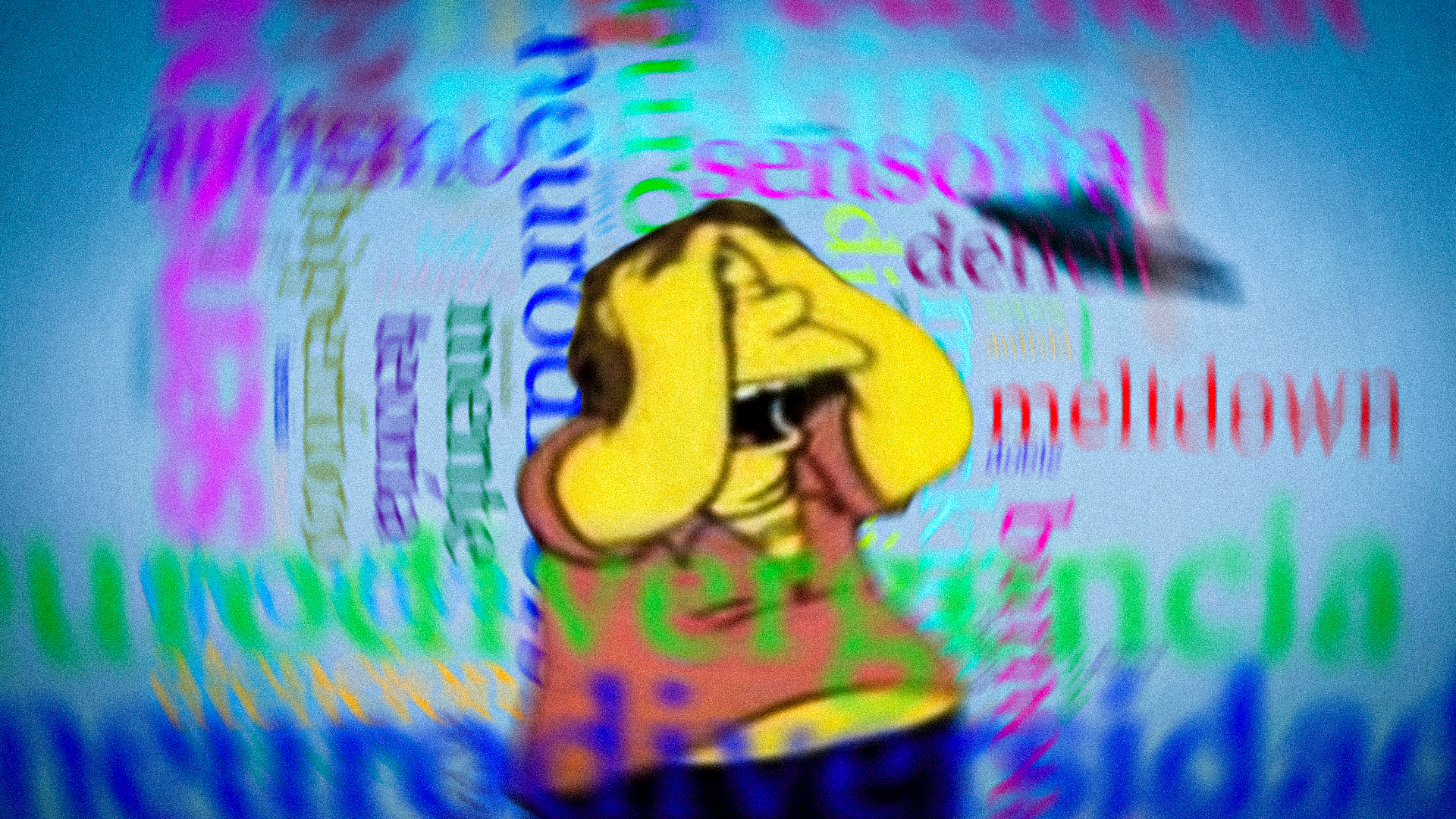
Finally, I want to propose a simple act of sovereignty: to say that, perhaps, no. Perhaps, you are not an alien. Perhaps, you are not on the wrong planet. Perhaps, your parents are not impostors. Perhaps, what you feel is normal. Perhaps, throughout your endless compendiums of discomfort, your stories of inadequacies, your lists of indelible embarrassments, you were never out of place. You are home.
Las notas de 421 no tienen paywall
Y a cada colaborador se le paga por su trabajo. Las dos cosas dependen de los suscriptores.