The Weird Western: Mexica Gods and Spanish Vampires
From Howard's pulp vampire to Ana Paula Maia's sertão: how the frontier horror of the weird western was built.

Defining the Weird Western isn't especially hard. It's a subgenre that takes the settings and tropes of western literature and film and crosses them with elements, atmospheres and creatures from genres like horror, science fiction or fantasy. If the video game Red Dead Redemption is the realistic, classic take on the genre, Red Dead Redemption: Undead Nightmare is its weird version. In this downloadable content, the saga gets tangled up in a zombie plague and becomes a sibling of another video game, Weird West, which features five stories with a range of characters that includes a man who had a pig's head implanted on him, a bounty hunter, a werewolf, an Indigenous shaman and a witch. Films like the classic The Curse of the Undead from 1959, the first of the subgenre; the equally classic sci-fi Westworld (the 1973 movie, not the series), in which an android goes haywire and starts shooting the tourists at a cowboy theme park; on through Purgatory, Jarmusch's Dead Man or even From Dusk till Dawn by Rodriguez and Tarantino, albeit with a more updated aesthetic, can all be considered weird western films. Preacher is probably the most accomplished graphic novel of the subgenre. And in Argentina, for example, the local pulp magazine from San Martín de los Andes, Salvaje Sur, devoted its seventh issue to horror in 2023. All of the above, along with other references left out here, starts in the 1930s with the magazine Weird Tales and with one author in particular: Robert E. Howard, recently reissued by Walden Editora in El rey del pulp.
The Horror from the Mound and Spud and Cochise
Steve Brill, a true son of the pioneers who settled Texas, asks his Mexican neighbor one ordinary afternoon about a mound the man always avoids and walks around. Juan López, the Mexican in question, tells him it's best to steer clear of the mound because it hides a terrible secret. López stresses that his ancestors lived on that land before Brill's own forebears did. There were others on this land who were not Indians. Strange things happened here in the old days. I have heard the stories of my people, passed down from generation to generation. And my people were here long before yours, Señor Brill. So begins The Horror from the Mound, a story Robert E. Howard wrote in 1932 for Weird Tales. And with it, the West turns strange and, by general consensus, weird western literature is born. I try to give my regions a spectral atmosphere, framed in a realistic setting; "The Horror from the Mound," published in Weird Tales, was a failed attempt at it, Howard wrote in 1932 to his friend H. P. Lovecraft.
Brill ignores López's warnings and digs into the mound, figuring it's just an Indian grave. Howard writes his characters as beings shaped by a national idiosyncrasy: Brill, the greedy, impulsive gringo; López, the fearful, superstitious Mexican. Steve, like most men of his kind, lived largely by his impulses, and his current urge was to open that mysterious mound and see what it hid, if it hid anything at all. Of López he says the following: It would be no surprise if, even knowing there was treasure there, the old Mexican refrained from looking for it. Ruled by gloomy, superstitious fears, he might well lead a life of fruitless toil rather than risk incurring the wrath of whatever ghosts or devils lurked there, for Mexicans say hidden gold is always cursed, and surely some special curse must hang over the mound.
Howard writes his characters as beings shaped by a national idiosyncrasy: Brill, the greedy, impulsive gringo; López, the fearful, superstitious Mexican.
For now, though, we can hit pause on the plot (we'll come back to it later) to talk about what many consider the second founding text of the weird western.
Spud and Cochise was written in 1936 by the American anthropologist Oliver La Farge, who spent time among the Apache and Navajo survivors of the era. La Farge, who wasn't a genre writer, published his story in a New York magazine called The Forum, which was more of a general-interest magazine that also ran pieces on politics and culture. La Farge didn't write speculative fiction and even won a Pulitzer for a coming-of-age novel titled Laughing Boy (1929), which tells the story of a Navajo boy going through acculturation at an American school. La Farge, who isn't free of controversy either, given accusations of paternalism toward the Indigenous communities he (suspiciously) wanted to speak for, nonetheless wrote a story about a fictional encounter between a cowboy and the legendary, historical Apache leader Cochise.
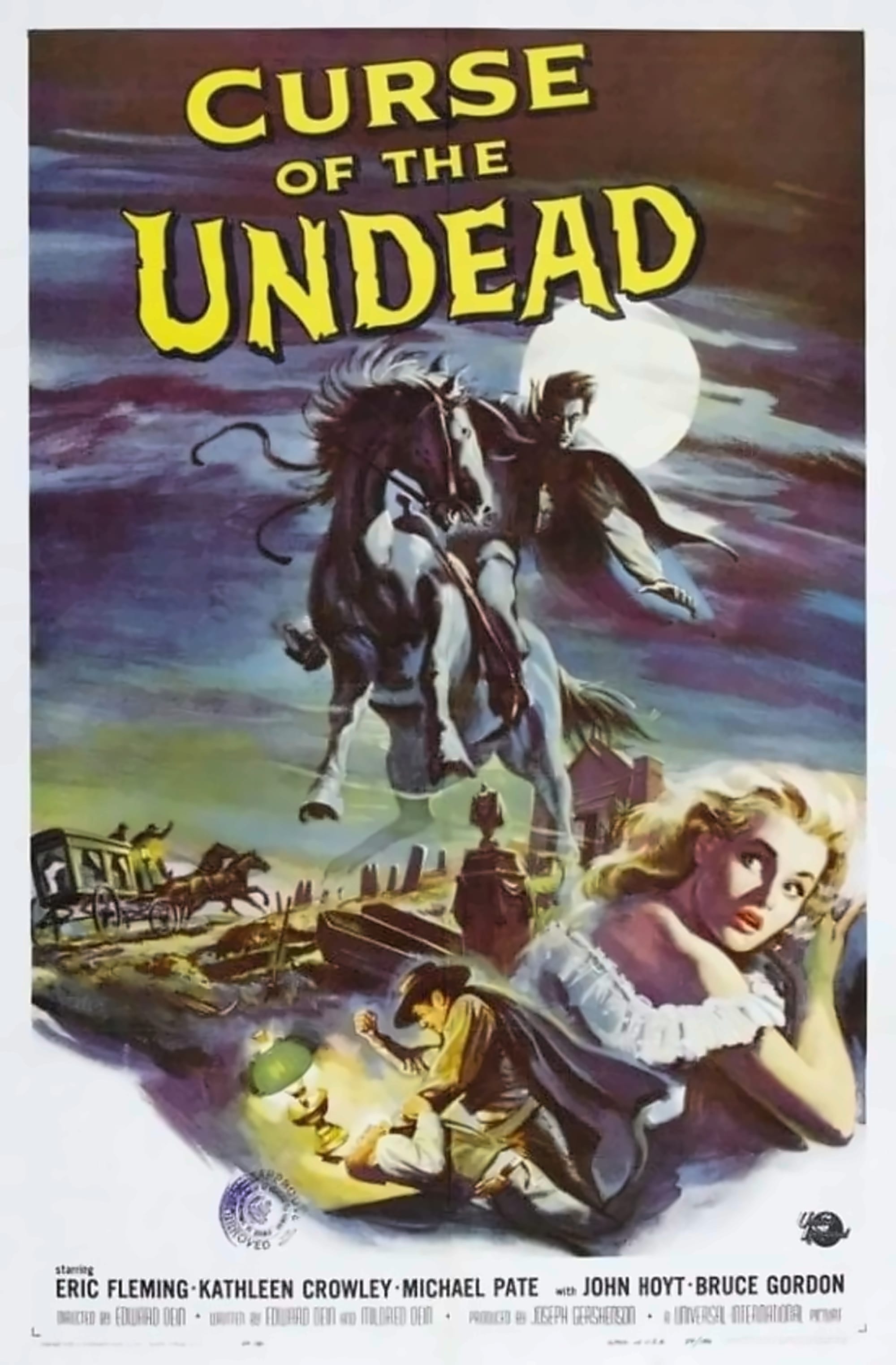
Spud is a Western guy who falls head over heels for a woman he meets in a saloon. She tells him that a man named Snakeweed will only let her work the mining land she bought (land she acquired after driving the Indians off it) if she marries him. So Spud goes looking for him to face him down and be the one who marries her instead. But Snakeweed is dangerous and can only be killed by a bullet a Navajo gave him. Our hero heads into the desert to find Cochise. Spud brings along a couple of bottles of liquor, which he drinks with the shaman when he finds him. He proposes an alliance, since Snakeweed is a threat to them both. Up to this point, the story is an ordinary western. It turns fantastic, however, when Cochise stops the sun. The sun overhead stopped, waited and, reluctantly, went back. Spud saw the shadow he was sitting under swing westward, away from him. The sun was forced to travel its own road back toward morning; it sank and hung over the eastern mesas. Time trembled. The next fantastic event comes right when Cochise cuts a piece out of the blue sky. Cochise made a negative gesture with his hand. He slowly drew his knife and, turning slightly to the left, raised his hand. With the point against the blue of the upper sky he cut; the blade moved with a soft resistance, as if slicing cheese.
La Farge's intent wasn't Howard's: he used fiction as a means to tell what he himself thought needed telling, based on his experience as an anthropologist and his closeness to the Navajo people. That's also why there's no direct showdown between the Apache leader and the white man. Spud draws closer to Cochise's mysticism and never once fears him or accuses him of witchcraft. Spud looked at the hole and couldn't stop looking. He hadn't known such a blue existed; he could hardly believe any color could be so wonderful. The blue was transparent and let more blue through, an endless depth. Behind the sky, through that hole, something was about to appear. The two men end up becoming friends, and the latter agrees to help the former get rid of Snakeweed. Cochise sends one of his people who can shapeshift, and he steals the Navajo bullet that can kill Snakeweed. The climax comes down to the gunshot.
Tezcatlipoca, Iron Heart and a Spanish vampire
Let's get back to The Horror from the Mound.
As with the earliest zombie movies (White Zombie, from 1932, and I Walked with a Zombie, from 1943), Howard's story follows a formula similar to the horror of the zombie genre's beginnings: a white man, living on appropriated land, covets the riches hidden in the locals' secrets. The locals warn him, but the white man brushes off the warning and unleashes the terror. This white man, in turn, regards the locals' beliefs with suspicion and a bit of mockery. Juan López had warned Brill to stay away from the mound, but Brill pays it no mind. Steve set to work with the savage energy typical of his race.
Brill starts digging. The first thing he finds is a Spanish spur rowel; then he comes across a stone serving as the door to a tomb. Steve Brill hears the sound of something dragging itself on the other side and thinks it's snakes. He goes home for a lantern, but when he comes back he discovers the stone has been removed and behind it is a cell big enough to hold a man's body. Brill thinks López opened the tomb and made off with the treasure. But when he goes to the Mexican's cabin, all he finds is a corpse with bite marks on its neck. Looking more closely, he found the source: three or four tiny wounds on López's throat, from which the blood had slowly oozed. Next to the body, Brill finds a piece of paper López had scrawled on. On it is the truth the mound hides.
The following quotes make it clear that the weird western isn't a merely gringo genre; it's built on ancient, dispossessed land; it's the superstitions that couldn't be broken or wiped off the map. For some strange reason, the idea crept into Brill's chaotic mind that although this country was new to Anglo-Saxons, it was in truth very old. That broken, desecrated tomb was mute proof that the land was far older than man, and suddenly the night, the hills and the shadows seemed to crush Brill with a sense of horrible antiquity. Before Brill's ancestors had ever heard of it, long generations of men had lived and died on this land. At night, among the shadows of this very creek, men had no doubt breathed their last in a thousand ghastly ways.
The mound hid the body of a vampire named Santiago Valdez, a former Spanish nobleman who, back in the days of the Moors, fled the mountains of Castile in Spain for the Caribbean, where he was taken in by a fictional Spanish explorer, Hernando de Estrada. And Brill read of the wanderings of the cavalier Hernando de Estrada and his men, armed with pikes and armor, who ventured into the deserts of the Southwest when all was strange and unknown. As they pushed deeper into the mainland, the men of the expedition began dying, because the undead was killing them off one by one to feed in the desert. The survivors end up killing the vampire during one of his long post-feeding slumbers; they drive a stake through his heart and loot an Indian grave found in the Texas desert to hide the European vampire inside it.
The western, and therefore its weird version too, wasn't born speaking English; it was also born speaking Spanish and a number of the languages and dialects of the continent's northern Indigenous peoples.
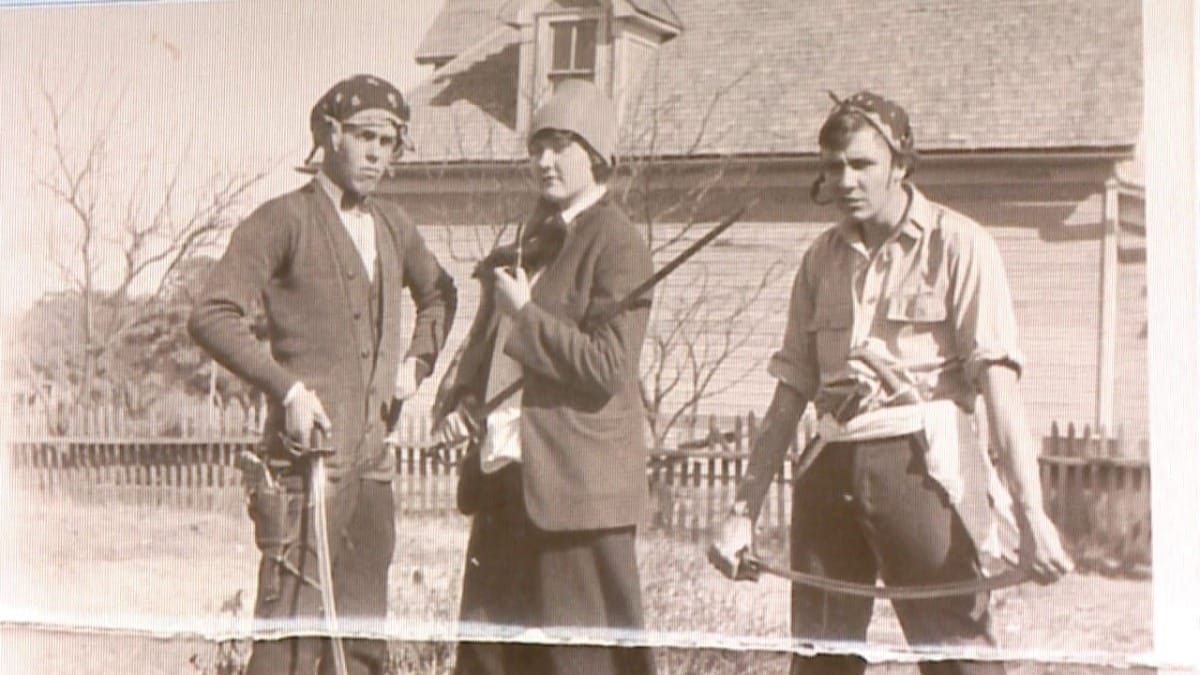
The desecration of that Indigenous tomb clearly illustrates and sums up the Spanish invasion and conquest of the Americas. The local dead are pulled out of their own soil, and a different mythology is planted in the empty hollow carved into the earth. The terror that is the white man's body, the specter that migrates and establishes its vampiric parasitism on foreign soil (new soil, to Northern eyes). The western, and therefore the weird one too, wasn't born speaking English; it was also born speaking Spanish and several languages and dialects of the Indigenous peoples of the continent's north. We know borders are crossroads, meeting points for beliefs and superstitions that end up blending together, opening third paths for building local identities and mythologies. It's a Mexican, a descendant of the Indigenous people who lived in the area, who knows and warns of the dark secret at the genre's foundation. The premise of a Spanish vampire in the American West also shows up in the first weird western film, The Curse of the Undead (released in Spanish as La maldición de los no muertos), from 1959, directed by Edward Dein, whose events revolve around a mysterious vampire bounty hunter (Drake Robey/Drago Robles) whose origins trace back to the Spanish aristocracy of the mid-1800s.
Two other Howard stories in which the fantastic appears as an encounter between the white man and local mythologies are The Thunder-Rider, written in 1936 but published posthumously in 1972, and Old Garfield's Heart, written in 1933 for Weird Tales. In the first, a city office clerk has memories and dreams in which he is Iron Heart, an ancient Comanche warrior. I, John Garfield, am a man who belongs to two worlds. My spirit is neither wholly red nor wholly white; yet it has a confused knowledge of both races. This clerk, John Garfield (not to be confused with the Garfield of the other story), travels and meets a shaman with whom he performs a ritual that lets him see his past lives. As Iron Heart he fights battles against the Pawnee, and in those adventures he remembers his encounter with the Mexica god Tezcatlipoca, who fled Mesoamerica northward and settled in the territory of the Pueblo peoples, whom he turned into his servants. Shortly afterward, the Lord of the Mist appeared. He walked with the bearing of a god, wrapped in his strange cloak of brightly colored feathers. A diadem held back his black hair… A diadem shaped like a serpent whose golden head rose above his brow.
In Old Garfield's Heart, meanwhile, we get the story of Jim "Old" Garfield, the first of the white settlers in a Texas town, who despite his age never seems to grow old and whose heart will keep beating even after he's dead. That's because a Lipan warrior named Ghost Man gave him his own heart in gratitude when, many years earlier, Garfield saved his life. Old Garfield's heart is a precious stone that Ghost Man will reclaim after the old man dies.
Sudaca western: Ana Paula Maia
In a 2025 interview with the outlet La Voz, Brazilian writer Ana Paula Maia said: In Brazil we have a strong idea of the western. The sertão had the cangaceiros, and the country is ruled by the notion of the rural or city man who owns a gun for self-defense. There's a gunslinger energy in Brazil. Maia, who grew up watching the westerns of Sergio Leone and John Ford, is the author of a series of books set in the Brazilian sertão, starring rough, violent men whose jobs usually have something to do with death: cattle slaughterhouse workers, roadkill collectors, and so on. Her characters are simple killers, lacking heroism or big dramas that drive them to kill to resolve their tensions. They kill because where they live they can't find any other way, and because justice there belongs to the strongest.
What makes Ana Paula Maia's writing truly special, though, and steers it away from the clichés of Latin American social realism, is the strangeness of things. The arrival of plagues and demons, cows hurling themselves one after another into the abyss, a clairvoyant girl who might be an angel or a demon, or a headless rooster that, along with the girl, is the main attraction of a rural circus. He pulls off the cloth covering the cage and opens it. Boris, the rooster, steps out with short, wobbly steps. Headless, his head was torn off months ago during a slaughter, and he's still alive. All eyes are on the monster that is Boris. Edgar Wilson is finally won over by the spectacle. Boris, the headless rooster, struts around the ring.

That scene can be found in Búfalos salvajes, the latest of Maia's books published in Argentina by Eterna Cadencia. Reading Maia isn't quite the experience of reading speculative fiction proper, maybe because the fantastic is always subtler, even with a headless rooster on stage. The fantastic is told in a pared-down, unadorned prose that matches the simplicity of the characters it portrays. Maia's are not humble men narrated with grand attributes or rich inner worlds (often born of the good conscience of the people writing them), and in that sense they're told under a strong western premise: actions do the talking, and justice can be dealt out according to a personal moral code. Add to that the arid landscapes of a sertão forgotten by the big cities, and a string of events that don't belong to everyday reality.
Maybe something is happening in Ana Paula Maia's writing that, while not exactly weird western, does resemble it. In Latin America, however, those Anglo labels are viewed with suspicion, because cannibalizing Northern genres often produces something else that, despite obvious influences, rests on the intention of running them through a local filter. That's given us a ghost novel like Pedro Páramo and, at the same time, the refusal to read it as a horror novel. The heavy influence of social realism and of a harsh day-to-day reality has led us to read non-realist fiction with the same static seriousness with which we read realism. The first part of The Vortex (1925) by José Eustasio Rivera, the Colombian novel Latin America still hasn't finished discovering, can be read as a western. The story takes place in the Llanos Orientales, a flat stretch of the Orinoco basin shared by Colombia and Venezuela whose cultural essence is that of the llaneros (Colombian-Venezuelan vaqueros, or cowboys, or gauchos, or huasos, or cangaceiros).
The heavy influence of social realism and of a harsh day-to-day reality has led us to read non-realist fiction with the same static seriousness with which we read realism.
Another Colombian case worth bringing up is Peregrino transparente, a novel by Juan Cárdenas published in Argentina in 2023 by Editorial Sigilo. Cárdenas's fiction is set around the mid-19th century in New Granada (today's Colombia) and follows the journey of an English watercolorist named Henry Price, who has been commissioned to record the landscapes of the fledgling country on a chorographic mission meant, among other things, to attract foreign investment. Price, who is also working on a Spanish translation of the poems of English Lake Poet Wordsworth, heads to the southwest of New Granada in search of an Indigenous painter named Pandiguando, who has stirred something strange in him. The author uses this gesture to say his novel is also a western. On his journey, Price arrives at a big old house in the city of Popayán, nestled between Colombia's Western and Central Andes. There, on a night with all the trappings of a gothic tale, he meets a wealthy woman known as the widow. With her appearance, the story shifts away from realism. The climactic ending of the book's first part could be read as the author's cross-eyed wink at the gothic in a story that a strict purist would never file under the genre.
GORGONA! the widow shouts again.
The watercolorist sees a creature emerge, climbing up from the depths of the cabinet.
But what is that? An animal? A demon?
It looks like a four-legged spider, but it has a head that could well be human. A misshapen face, like a chick fresh out of its shell, in which a pair of doll's or angel's eyes glowed. Tufts of bristly hair partly cover its bald head.
Price screams. His voice comes out very faint. Barely a kitten's growl.
The creature moves on all fours, its limbs bent in impossible ways. The widow breaks her silence again: hello, mamita, she says. Hello, my darling mamita.
On the other hand, the novel has clear genre traits, like one man hunting another, the pursuit of an Indian turned into a bandit by the white man, or the journey to define the borders of a newborn country. The final scenes of Cárdenas's novel unfold in a fantastic register, landing with a reading effect closer to Maia's than to that of other authors of what's known as the Latin American weird, or Latin American strange fiction. Maybe that's also because neither author is part of that movement or wants to be, obviously, but also because in both of them realism gets dislocated, and both are suspicious of the plasticity with which many works of the Latin American weird are developed or written.
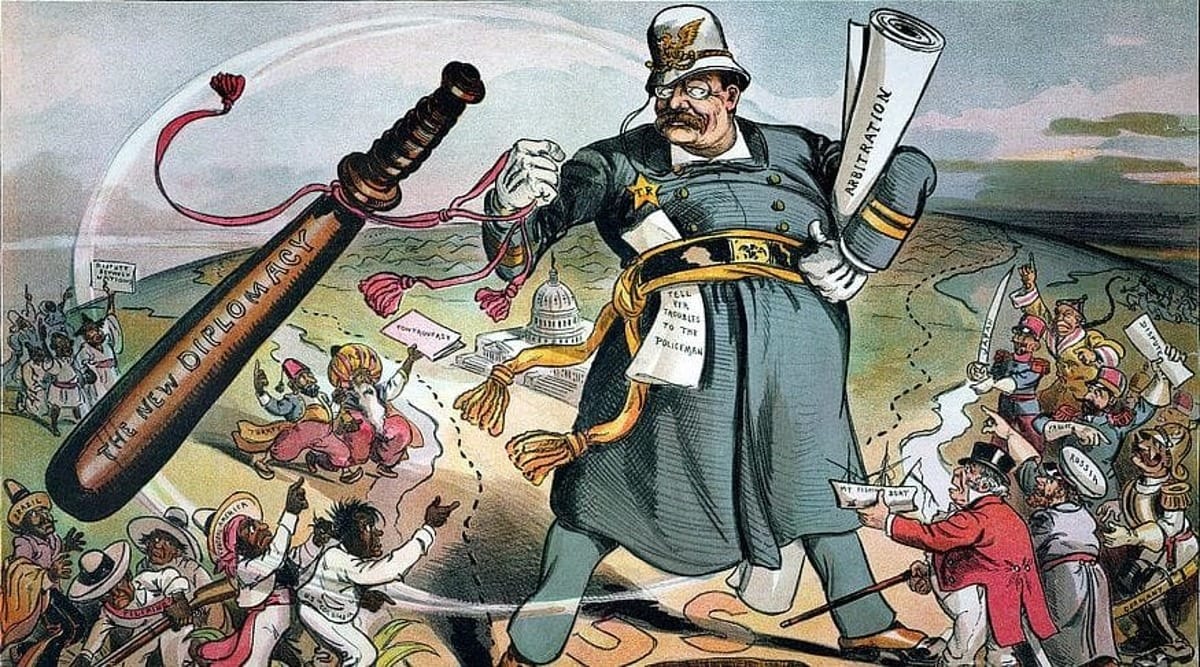
As a subgenre of the western, the weird western is a border genre. It's built on the violent code of honor the white man brought to the conquest and colonization of lands that were Indigenous, explored by the Spanish, once part of Mexico, and eventually absorbed by the United States within its borders. The gringo ethos is forged with bullets and in the conquest of new territories that push its frontier outward, so it needs that constant movement to sustain itself; the United States needs war to survive, and in that sense, the marine invading the Middle East is a modern John Wayne. Frederick Jackson Turner's 1893 essay, The Significance of the Frontier in American History, argues that the United States made itself as it discovered and conquered the West, while moving away from the East Coast and its maritime border with Europe.
The United States needs war to survive and, in that sense, the marine invading the Middle East is a modern John Wayne.
In the West, the pioneer sheds his Europeanness and is forced to fend for himself in rough country. Maybe that's where the gringo's almost atavistic dependence on guns, and his constant need to expand his borders, began to take shape. Just look at the ugly but blunt simplicity of the Trumpist "Shield of the Americas" logo, which looks like it was ripped off a sheriff's shirt, and which is also the invasion mechanism the United States claims to be using to protect its hemisphere and a chunk of the world: the reconquest of what it considers its backyard, a backyard that had been gaining more independence in recent decades. All of this matters because, even though Frederick J. Turner argues otherwise, with the uncritical romanticism the North tends to have toward displays of the white man's will, the western is a genre that unfolds on lands (as was said at the start) taken by force, whose ghosts and mythologies refuse to vanish beneath the layers of sand covering the US-Mexico border. Nobody of sound political mind wants Clint Eastwood or the aforementioned John Wayne operating off the screen.
Las notas de 421 no tienen paywall
Y a cada colaborador se le paga por su trabajo. Las dos cosas dependen de los suscriptores.