Did you know that He-Man was created to sell toys? Now it's all about nostalgia: the recent release of Masters of the Universe shows how marketing transformed the idealization of the past into the perfect fetish.
Yes, folks, Marx said it, and I apologize for starting an article on such a cheerful topic with the bearded pessimist: if there’s one thing that characterizes our relationship with commodities, it’s their phantasmagoria, that is, the almost divine aura that a product has, bringing it closer to a religious object than to a mere tool meant to improve our lives. In the tension between use value and exchange value: we know that the former never determined the latter, and that even the actual time of production of a good doesn’t allow us to establish a sensible exchange value for it when it hits the market. The big question that Marx couldn’t resolve, but managed to describe in all its complexity, is the one that asks how the price of things is constituted. There he noted that there was a plus that had nothing to do with the production chain or that other mysterious surplus, surplus value, which was at the heart of the matter: there was something else, another ghost that not only roamed Europe but all of the West, which is commodity fetishism. There’s something in the price that relies on that imaginative, divine, mystical plus we deposit in the commodity, which resembles a talisman more than a mere item at hand. If the key to a product is that of a magical object: what better way to understand our consumption practices than by pausing to examine the workings of toys? Because it’s there, of course, that all the machinery of cultural consumption (a horrendous expression) of our time is concentrated, initiated, and supported. And the magical fixation on the object begins somewhere.
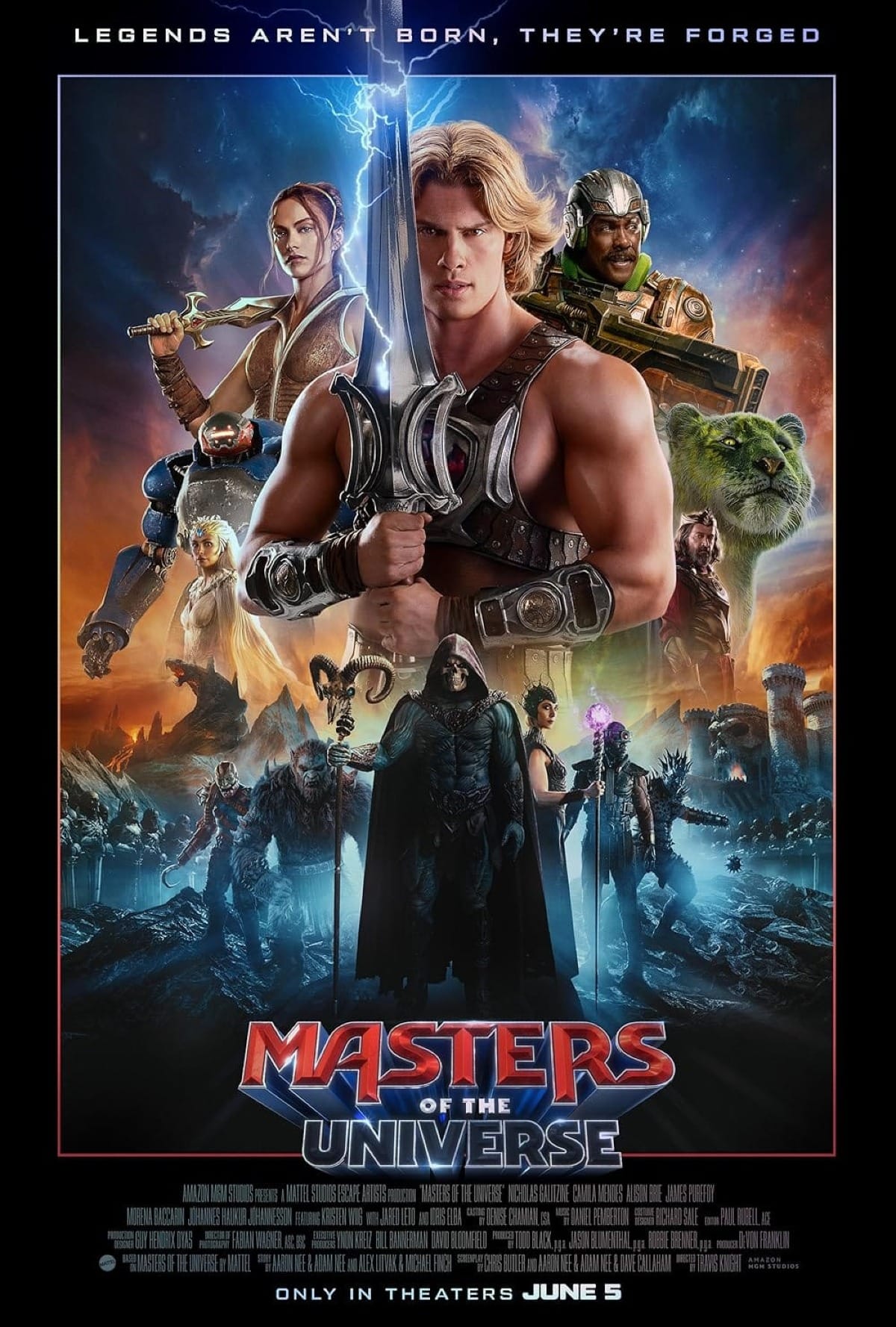
The recent release of the movie Masters of the Universe (2026) is the most compelling proof of the influence of 80s cartoons on 21st-century mass culture, which is why the so-called "melancholy" in our relationship with cultural goods has deep roots in that period. As I pointed out in a brief analysis of the figure of the nerd on these very pages, returning to the 80s is a way to get closer to the origins of our present. In political, economic, but above all, yes, I’m going to say it, cultural terms.
The recent release of the movie Masters of the Universe (2026) is the most compelling proof of the influence of 80s cartoons on 21st-century mass culture.
What happened in the 80s, in the hegemonic country of the period (the U.S.), for me to lay out this entire introduction? A deregulation, yet another one that neoliberalism has accustomed us to: in this case, the deregulation of advertising aimed at children. Let’s get to the facts!
Blame it on dad... or on the potato
To understand the deregulatory practices of the 80s, the first thing to grasp is what the field of mass culture was on which Reagan’s policy was based, or rather, which it came to sideline. Child marketing had already become a public matter since the mid-20th century, especially due to two phenomena that began to intertwine with each other.
Masters of the Universe (2026, Mattel, Amazon, Sony).
The first was the prosperity of American society after World War II, primarily due to the fact that the U.S. involvement in the conflict did not entail any destruction within its own geographical boundaries and that the Welfare State model allowed a vast number of people to enter a burgeoning middle class, living in the "suburbs," diligently paying their mortgage, and filling their lives with a plethora of newly released products. This economic stability gave rise to the second factor to consider: the expansion of the consumer world included new segments of society. In other words, in the rigid scheme of the typical family (well anchored in the 50s and in the process of dissolution in the 60s: didn’t you see Mad Men?), once we sold dad the car and mom the appliance, who else could we sell something to? Well, to the kid.
The first commercial specifically aimed at children aired in 1952 and aimed to introduce a toy that still forms part of the charming childhood imaginary on our side of the world: "Mr. Potato Head." While the functioning of commercials for kids would begin to be perfected by the late 50s and early 60s, we can already find all the expected clichés of the consumer world in a humble commercial aimed at captivating the little ones and promoting what in marketing has the specific name of "pester power", that is, that nagging in the heads of the little ones that they have to have that toy that appeared on television (the main medium of this period of capitalism). Through tantrums, insistences, and dubious promises ("I promise I’ll walk the dog every day..."), the child became a strong vector of consumption that, sooner or later, encouraged the purchase of a particular cultural good.
Beyond the occasional parody of this behavior (the 1996 filmJingle All The Way, known here as The Promised Gift, is nothing more than the fictionalization of pester power in its most concrete nature: the purchase of a Christmas toy), we all remember what it meant to receive the toy we saw on TV in our tender childhood. That unconditional love, which fostered our primitive way of bonding, was premeditated by a marketing strategy. We were all a variable in some graph of a heartless sales executive. Talk to me later about base and superstructure.
"Mr. and Mrs. Potato Head", the first television commercial focused on children (1952).
As the 60s progressed, various civil society agents understood that the high exposure of children to these television advertisements was detrimental to the development of quality content that had a more educational role and was less aligned with pure consumption, which had already triggered the consolidation of two products closely linked: toys and junk food, from ultra-processed cereals to a variety of snacks. Thus, Action For Children’s Television (ACT from now on) was born in 1968 in Newton, Massachusetts, an association of parents seeking to regulate the content shown on television and, above all, how to limit the amount of advertising dedicated to toys, which could also have their animated versions. Because let’s remember that, from a strictly commercial point of view, programs, with their twists and the strategy of product placement, are nothing but excuses to sell merchandise.
From a strictly commercial point of view, programs, with their twists and the strategy of product placement, are nothing but excuses to sell merchandise.
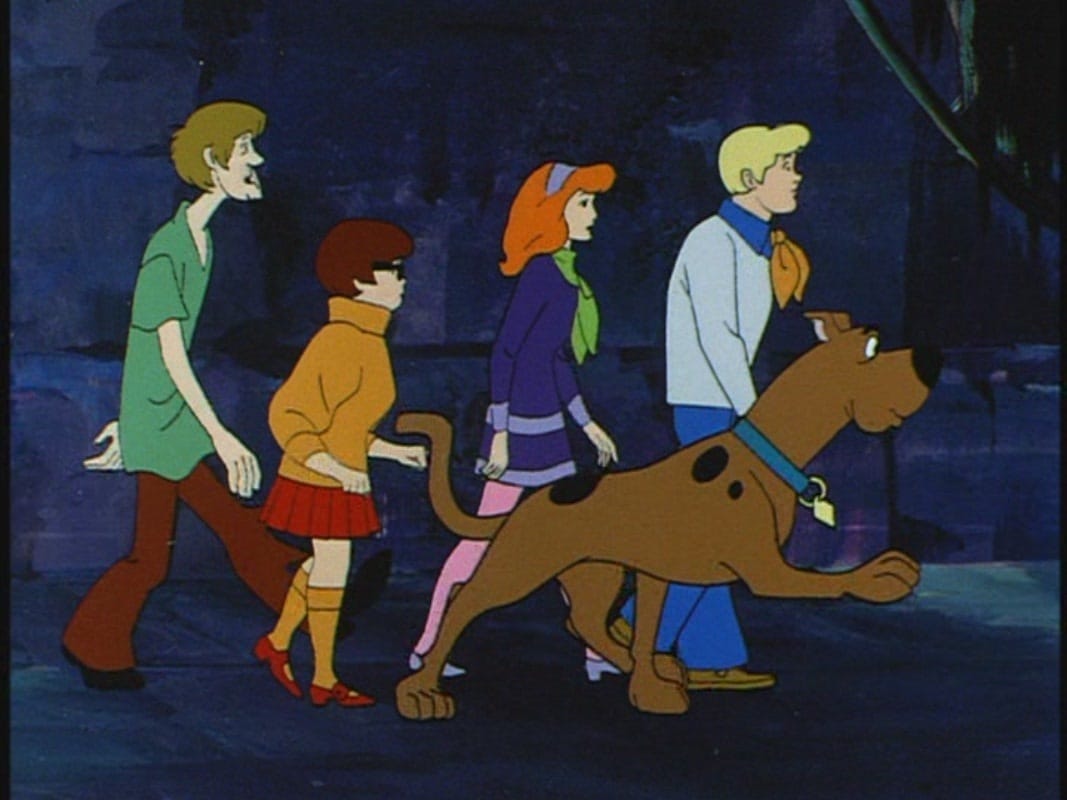
The regulation of televised cartoons produced a change in the structure and content of animations. Between the 50s and 60s, productions that did not affect children’s sensibilities were favored (Scooby-Doo, for example), with the criterion of "not harming childhood." Just as after World War II there was a disastrous review of the content of comic books, especially after the publication of the book Seduction of the Innocent (1954) by German-American psychiatrist Fredric Wertham, which led the medium to self-regulate with the creation of the Comic Code Authority (a seal that ensured the content did not harm the rich imagination of minors); we can also see that the ACT responded to this censorial logic very typical of the puritanism of American society, a prude nature that tends to create self-convened civil censorship bodies (have you read The Scarlet Letter by Nathaniel Hawthorne?).
Scooby-Doo, Where Are You! (1969-1970, 1978, Hanna-Barbera, CBS).
I mean: let’s not believe in the good intentions of either of the two warring sides, as both respond to specific interests and have produced phenomena as complex as the superhero revival of the late 50s (the Silver Age, yes) and then, between the 70s and especially in the 80s, the emancipation of comics from the Comic Code thanks to the development of new sales avenues, such as specialized bookstores or comic shops. As we will see later, in cartoons, that "emancipation" from the ACT directives had, like everything, its moment of glory (for example, broadening the themes of cartoons, thinking of them for a mass audience), as well as its dark moment, allowing the market to invent cartoons solely to sell dolls. And I’m not saying it’s all suffering, hey, one participates as best as one can in these contradictions: tell that to my collection of dolls and comics, if not.
Reagan could do it all
Throughout the 70s, the influence of ACT led several animations to adjust to a set of principles that favored the development of educational themes, with very specific restrictions regarding content. For example, it was prohibited to promote toys in commercial breaks that had any connection to the cartoon. In other words, if character X hopped into their new vehicle, the "Dinosaur Helicopter 2000" in the cartoon, and right in the break, the release of a new toy from the character X series, the "Dinosaur Helicopter 2000," was promoted, well, it was pretty obvious that the pester power would be outrageous and that imaginary little boy wouldn’t stop throwing tantrums until his parents bought him that darn helicopter.
The issue is that, after the Democratic administration of Jimmy Carter ended, a new American era was approaching: that of the former actor and governor of California, the ineffable Republican Ronald Reagan (whose foundation extends to this day with its particular legacy), who quickly set about placing Mark S. Fowler in the Federal Communications Commission (a position he held from 1981 to 1987), which had the mission, among others, to dismantle the regulations of ACT and let the free market decide what to do with children’s content. This led to a rapid increase in the number of licenses for cartoon characters by 300% (as can be read in this article by Jamie Logie for the site Medium): all companies wanted to link their products to a flashy and entertaining cartoon that guaranteed sales. Toys and junk food had their revenge.
What was the consequence of this move? Initially, it allowed toy production companies to create animated series that were directly linked to the IPs (Intellectual Property) they wanted to push in the market. The series The Toys That Made Us addresses this issue and tells the story of the flood of toys that emerged after this shift. Series like G.I. Joe and Transformers have essentially been massive advertisements for selling new toys. One of the most iconic is the one that tugs at our heartstrings these days: the animated series Masters of The Universe was merely Mattel's excuse to sell action figures that drew inspiration from both comics (Conan, The Barbarian) and the success of certain film franchises (Star Wars: hello, princes wielding unknown magic who must battle dehumanized foes among spaceships!), all tied into the new model of masculinity of the eighties, filled with hyper-muscular, tanned men in leather.
From Dolls to Action Figures
Photo: Alejandra Morasano.
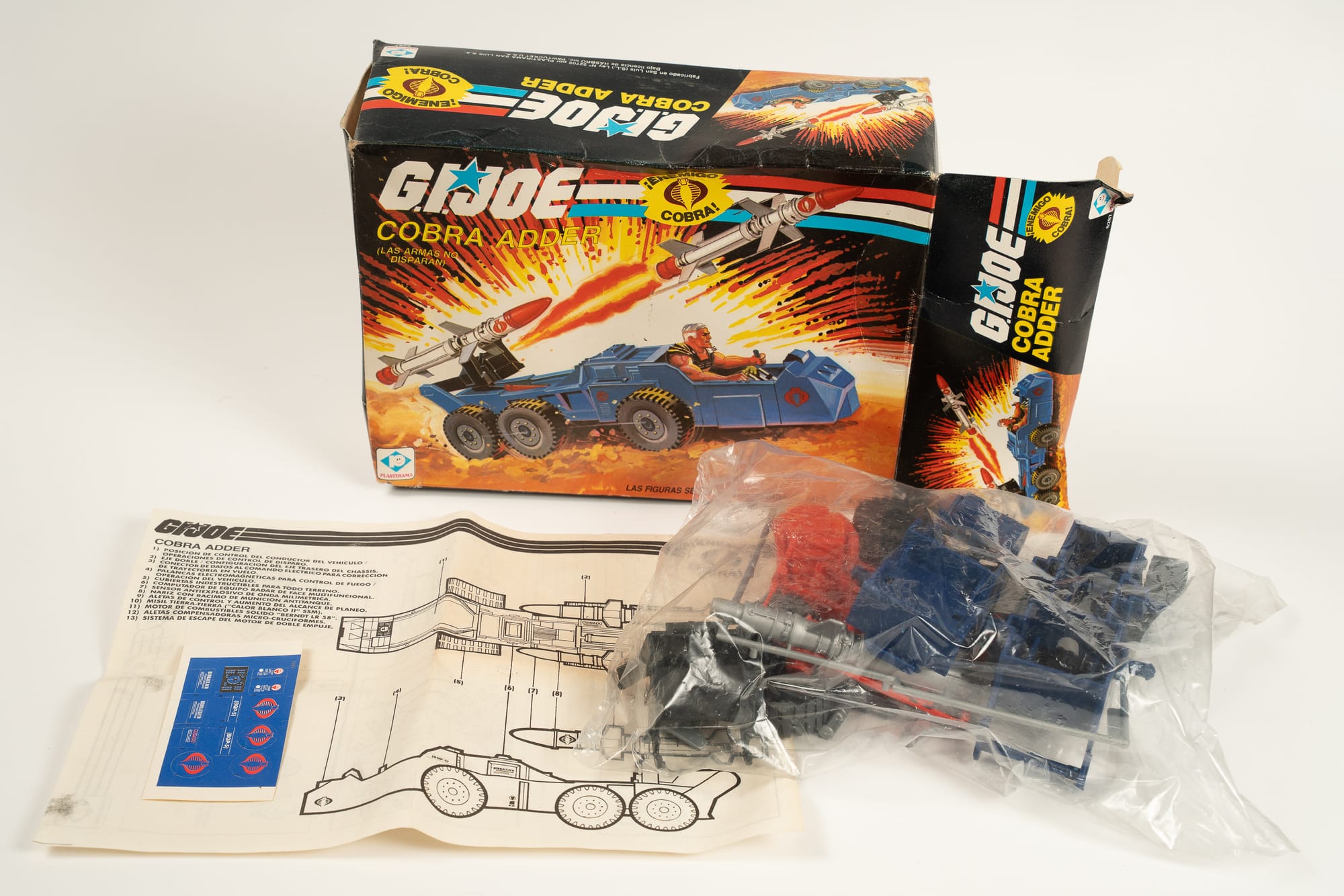
Indeed, in the mid-sixties, just as the ACT was starting to take effect, a significant change occurred in the toy world. Up until that point, the category of "dolls" included both dolls for girls and action figures for boys, adhering to a rigid gender framework, despite the ambiguity of the term. It was Hasbro, in 1964, that decided to market its new toy, the globally recognized G.I. Joe, drawing on American military imagery, with a new term that opposed doll: this is where the concept of action figure was coined, a term still used today to refer to toys with an "action" theme (fantasy, military, whatever) whose mobility, thanks to technological advancements, became key to product identification. Unlike the rigid initial models, the G.I. Joe figures of the eighties featured multiple articulated parts and came with a wide array of vehicles and bases. The action figure became so iconic that various countries, for reasons ranging from local marketing strategies to the cleverness of license marketers, would develop their own versions, as happened in Argentina (as we read in this article about the G.I. Joe Argen Seven).
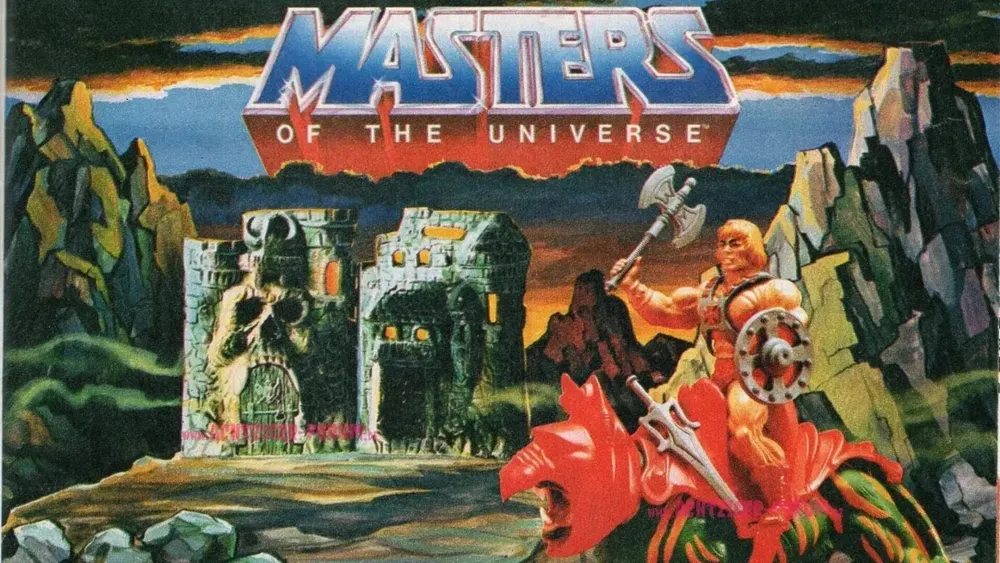
In reality, what really took off in our country was Masters of The Universe, popularly known as He-Man. Its uniqueness lies in the fact that, in addition to the animated series, there is a narrative background (now referred to as "lore") constructed through a series of mini-comics that came with each of the action figures released since 1982 (the podcast La Batea has produced an impeccable episode, linked above, dedicated to revisiting the comics of this franchise).
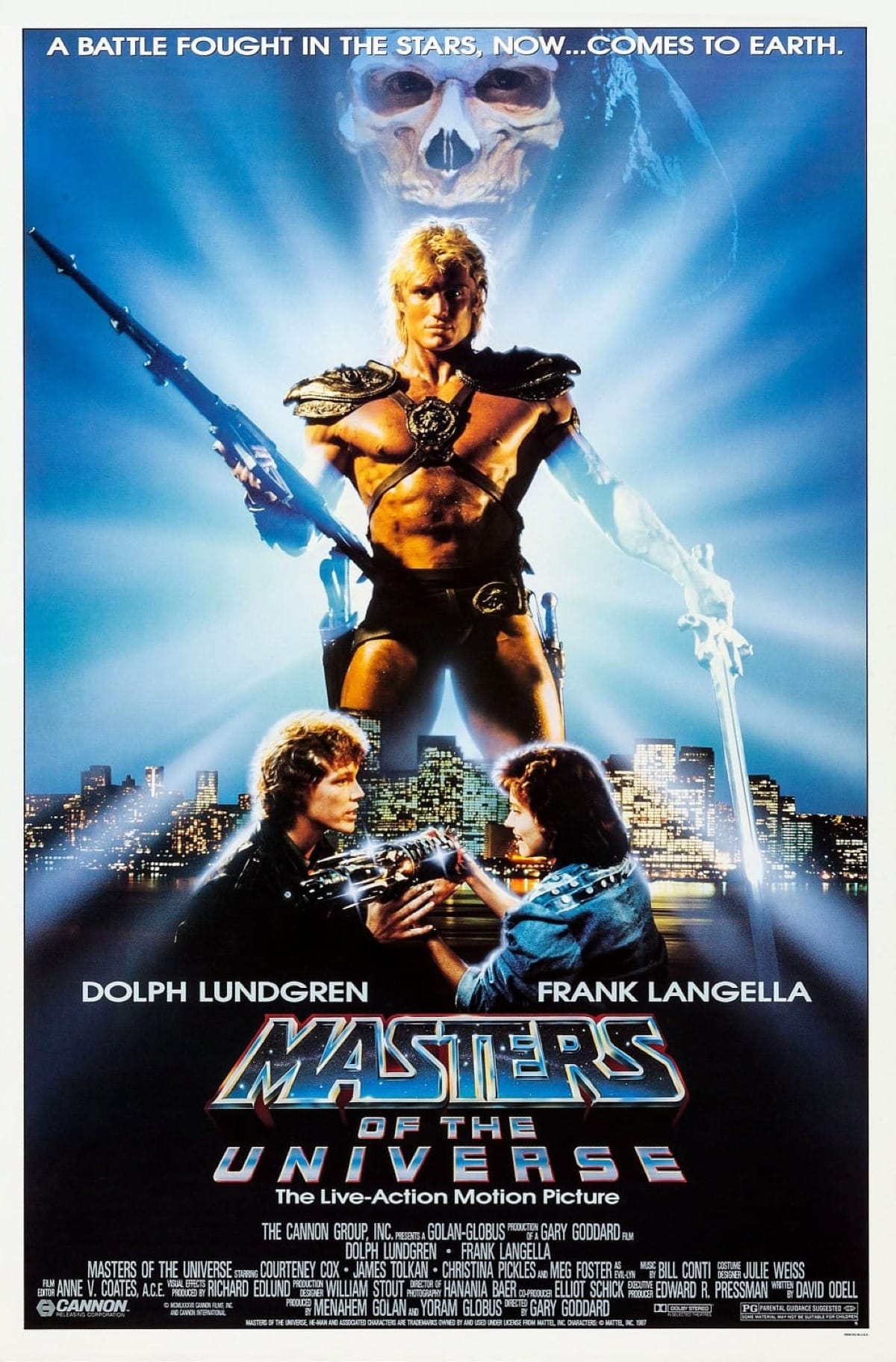
In 1983, the Filmation animated series was launched, which organized various elements of the story and removed some of the darkness and violence. The 130 episodes aired until 1985, and the imaginative world expanded with the inclusion of the She-Ra series (which lasted until 1987), prompting the brave entrepreneurs behind Mattel to try their luck with a movie that was no longer animated, but rather live-action. The live action version, featuring He-Man played by action hero Dolph Lundgren (and Courtney Cox in her second film role!), is a prime example of a disastrous transition from animated series and comics to the big screen. The IP now has its chance for redemption with the 2026 version, which, of course, will also have its own extensive merchandising. But it took forty years to try again.
Poster for the first live-action adaptation of Masters of the Universe (1987)
The common thread behind all these iconic characters that marked our childhood is one: nostalgia. Marketing understood that the key to longevity lies in the eighties. It's no longer about creating fast-consumption products that require immediate renewal, but rather about offering intangible goods that evoke a lasting emotional connection, an unbreakable bond. This is the essence of George Lucas's successful experience with Star Wars (and its immense array of action figures and derivative products). This is what the new Masters of The Universe is all about. In short, nostalgia is nothing more than the charm of fetishism doing what it has always done: capturing us in its irresistible magic.
✦ Suscribite
Las notas de 421 no tienen paywall
Y a cada colaborador se le paga por su trabajo. Las dos cosas dependen de los suscriptores.
Colabora en Radar de Página/12. Publicó, entre otros, los libros Jazmín paraguayo (poesía) y Lebensraum (novela), y la historieta Las guerras metódicas. Lleva adelante el podcast El cuartito de Bogado. Da clases en la UBA. Juega Mono Red.